Wrestling programs cultivate some of the most dedicated student-athletes in high school sports. State champions, tournament winners, and career record holders represent years of discipline, sacrifice, and commitment to excellence on the mat. Yet many athletic directors and wrestling coaches struggle to recognize these outstanding grapplers adequately when physical space limitations, changing rosters, and growing achievement lists outpace traditional recognition options.
Championship plaques mounted on hallway walls eventually fill available space. Trophy cases overflow with state medals and tournament hardware. Static displays fail to capture the complete stories behind remarkable wrestling careers. Meanwhile, outstanding wrestlers from past decades risk being forgotten as newer achievements demand visibility.
This comprehensive guide explores wrestling hall of fame ideas that honor your program’s greatest grapplers effectively, from traditional recognition approaches to modern digital solutions that eliminate space constraints while celebrating every state qualifier, conference champion, and program record holder your wrestling tradition has produced.
Wrestling hall of fame programs serve multiple purposes beyond simple recognition. They inspire current wrestlers by showcasing program excellence, engage wrestling alumni by preserving their achievements visibly, strengthen wrestling community pride by celebrating mat success, and attract quality recruits by demonstrating the program’s championship tradition and commitment to honoring individual excellence.

Effective wrestling halls of fame celebrate individual excellence while preserving complete program history
Why Wrestling Programs Need Dedicated Recognition
Understanding the unique characteristics of wrestling programs helps explain why dedicated hall of fame recognition matters particularly for this sport.
The Individual Nature of Wrestling Achievement
Wrestling Success Differs from Team Sports
Unlike football or basketball where championship recognition focuses primarily on teams, wrestling generates extensive individual achievements deserving celebration:
Individual Accolades Requiring Recognition:
- State championship medalists and placers across multiple weight classes
- Conference tournament champions competing throughout the season
- Undefeated season wrestlers achieving perfect records
- Career win leaders accumulating victories over four-year careers
- Multiple-time state qualifiers demonstrating sustained excellence
- Record holders for pins, technical falls, or takedowns
- All-state and all-conference selections
- Academic all-state wrestlers balancing athletic and academic excellence
Each achievement represents individual dedication worthy of lasting recognition beyond team championship celebrations.
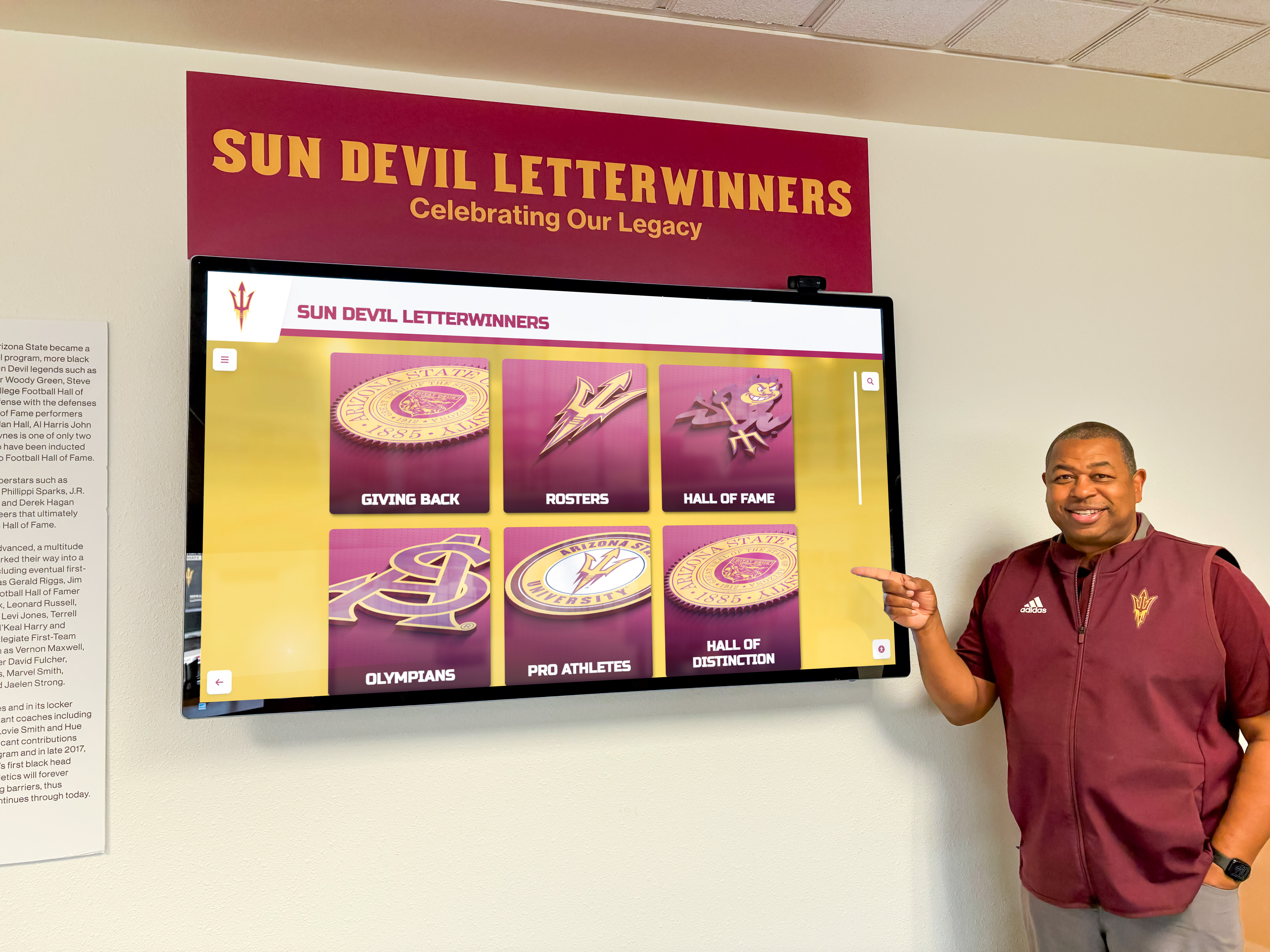
Wrestling halls of fame honor individual achievement while connecting grapplers to program tradition
Weight Class Recognition Complexity
Wrestling programs recognize excellence across 14 different weight classes, each with unique champions and achievement histories:
- Historical weight class champions spanning decades of competition
- Evolution of weight class standards requiring contextual explanation
- Multiple champions at same weight class across different eras
- Cross-weight class comparison challenges
- State tournament placement across all weight classes
- Career achievement tracking by weight class
Traditional plaques cannot adequately represent this complexity, while digital recognition systems enable comprehensive filtering and exploration by weight class, achievement type, and era.
Wrestling’s Strong Alumni Connection
The Brotherhood of Wrestlers
Wrestling creates uniquely strong bonds among participants:
Wrestling Community Characteristics:
- Former wrestlers maintain lifelong connection to the sport
- Wrestling alumni actively support program development and fundraising
- State tournament appearances create shared experiences binding alumni across decades
- Wrestling coaches often return as assistant coaches or volunteers
- Tournament-watching traditions unite current and former wrestlers
- Wrestling families with multi-generational program participation
- Strong social media communities among wrestling alumni
Recognition programs honoring wrestling excellence strengthen these community connections by maintaining visibility of historical achievement.
Inspiring Current Wrestlers
Making Wrestling History Visible
Current wrestlers benefit from understanding program tradition:
Motivational Impact of Recognition:
- State champions from past decades inspire current competitors
- Career win records create aspirational goals
- Seeing predecessors’ achievements builds program pride
- Historical context demonstrates program quality to recruits
- Understanding championship tradition motivates commitment
- Visual reminders of excellence influence training dedication
- Connection to wrestling legacy strengthens program culture
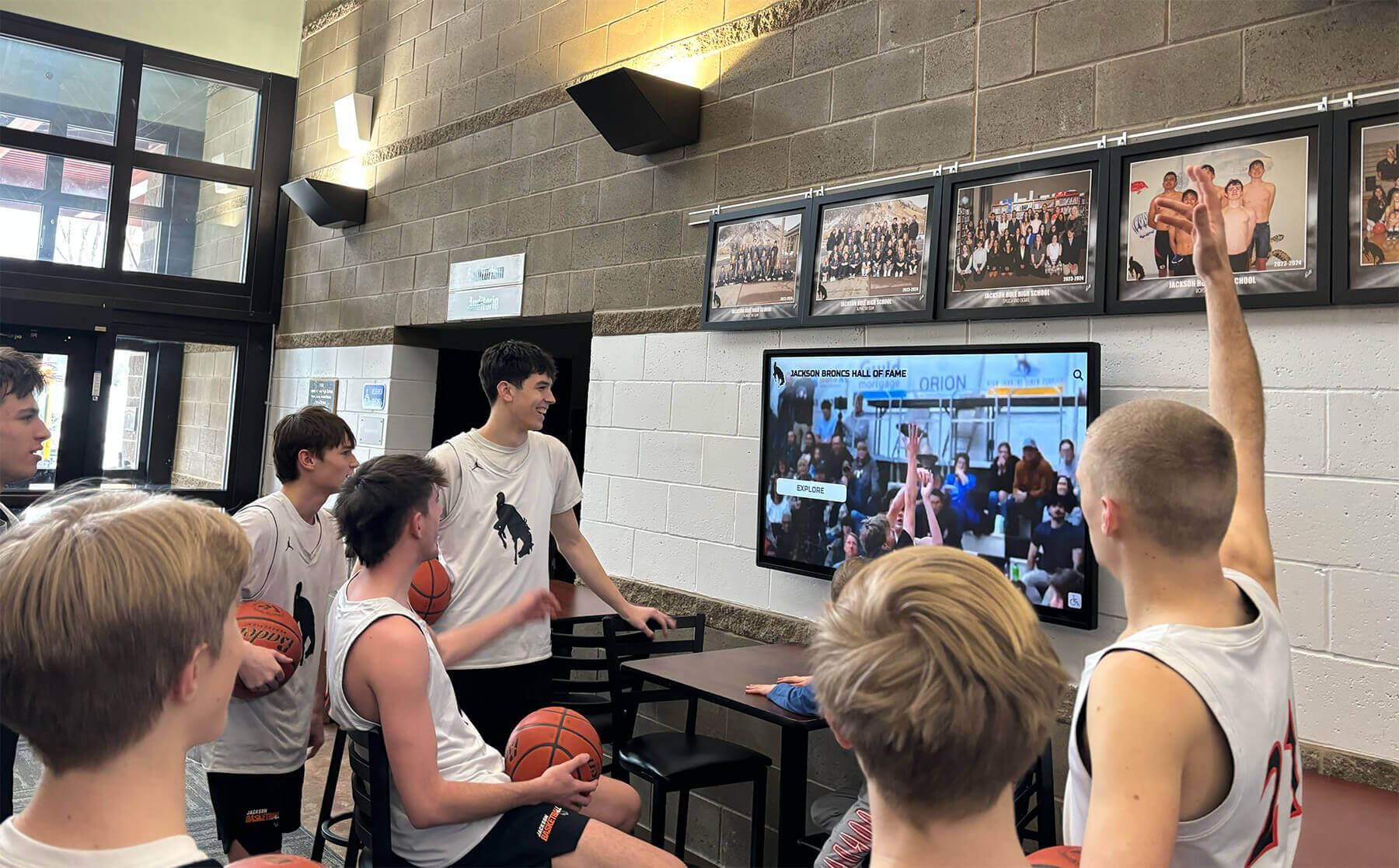
Current wrestlers draw inspiration from seeing their program's championship tradition displayed
Schools with visible wrestling recognition report stronger retention, increased participation, and heightened commitment from wrestlers who see themselves as part of larger tradition.
Traditional Wrestling Hall of Fame Approaches
Understanding conventional recognition methods provides foundation for evaluating both traditional and innovative solutions.
Wrestling Wall of Fame Plaques
Individual Achievement Plaques
Standard wall-mounted plaques have served wrestling programs for decades:
Traditional Plaque Recognition:
- Individual plaques for state champions (approximately $75-$200 per plaque)
- Engraved information including name, year, weight class, and achievement
- School colors and wrestling program branding
- Chronological or weight class organization
- Dedicated hallway wall space near wrestling room or main gym
- Annual additions as new wrestlers earn recognition
- Permanent mounting creating institutional commitment
Space Constraint Challenges:
Successful wrestling programs quickly fill available wall space:
- Multiple state champions annually across 14 weight classes
- 20-40 years of wrestling history requiring recognition
- 50-200+ plaques needed for comprehensive historical recognition
- Wall space limitations forcing difficult decisions about inclusion criteria
- Removal of older recognition to accommodate recent achievements
- Cost accumulation as plaque installations expand
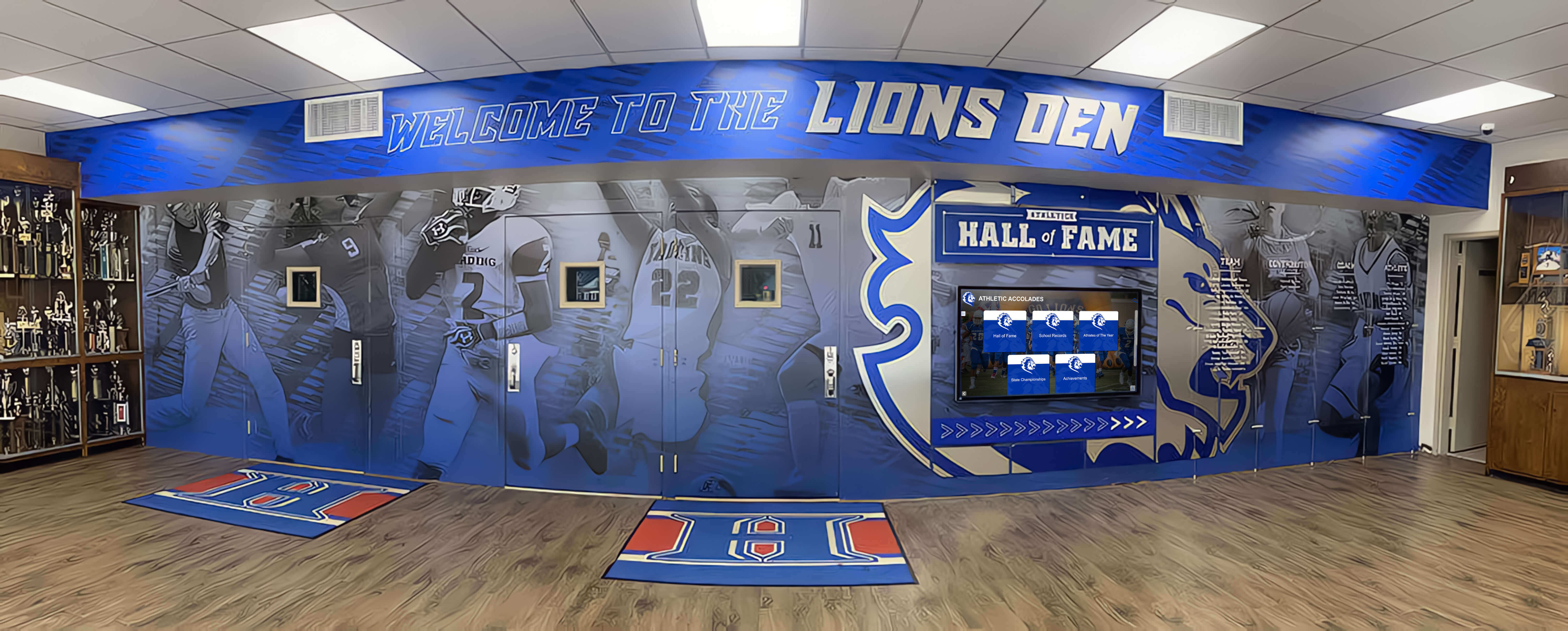
Traditional wall plaques honor wrestling excellence but face inevitable space constraints
Schools establishing hall of fame programs often coordinate wrestling recognition with broader athletic recognition initiatives creating comprehensive celebration of achievement.
Wrestling Trophy and Medal Display Cases
Showcasing Championship Hardware
Trophy cases display physical wrestling achievements:
Wrestling Trophy Display Options:
- Glass display cases holding state tournament medals
- Championship team trophies from dual meet competitions
- Conference tournament trophies across weight classes
- Individual achievement awards and special recognition
- Varsity letter jackets or other memorabilia
- Historical wrestling equipment and uniforms
- Tournament brackets showing championship progression
Display Case Limitations:
Physical displays face practical constraints:
- Limited capacity filling within 2-4 years of successful seasons
- Maintenance requirements including dusting and reorganization
- Medals displayed by pin often fall or require adjustment
- Locked cases preventing direct interaction
- Minimal context beyond trophy engraving
- No ability to search for specific wrestlers or achievements
- Space competition with other athletic programs
Wrestling Record Boards
Tracking Career and Season Achievements
Record boards highlight statistical excellence:
Common Wrestling Record Categories:
- Career wins leaders (top 10 or 20)
- Single season win records
- Career pin records
- Most state tournament appearances
- Undefeated season wrestlers
- Fastest pins in program history
- Most takedowns in season or career
- State tournament placement totals
Record Board Challenges:
Static boards require constant updating:
- Manual updates as records fall requiring physical access
- Professional re-printing for permanent boards ($200-$500 per board)
- Information density limitations restricting comprehensive statistics
- No ability to view complete wrestler profiles or career details
- Difficulty showing ties or multiple record holders
- Historical context often missing
Wrestling programs embracing digital solutions for awards and recognition often extend those platforms to hall of fame programs.
Modern Digital Wrestling Hall of Fame Solutions
Technology transforms wrestling recognition from static displays to interactive, unlimited celebration of grappler excellence.
Interactive Touchscreen Wrestling Recognition
Comprehensive Digital Wrestling Halls of Fame
Modern touchscreen displays eliminate traditional constraints:
Digital Wrestling Recognition Capabilities:
- Unlimited wrestler profiles without space constraints
- Complete career statistics and achievement details
- High-resolution photos from matches, tournaments, and celebrations
- Video highlights from state championship matches
- Search functionality finding specific wrestlers, weight classes, or years
- Filter options by achievement type, era, or weight class
- Individual wrestler profile pages with comprehensive biographies
- Team championship recognition with complete roster details
- Coach recognition connecting to wrestlers they developed
- Weight class historical champions spanning decades
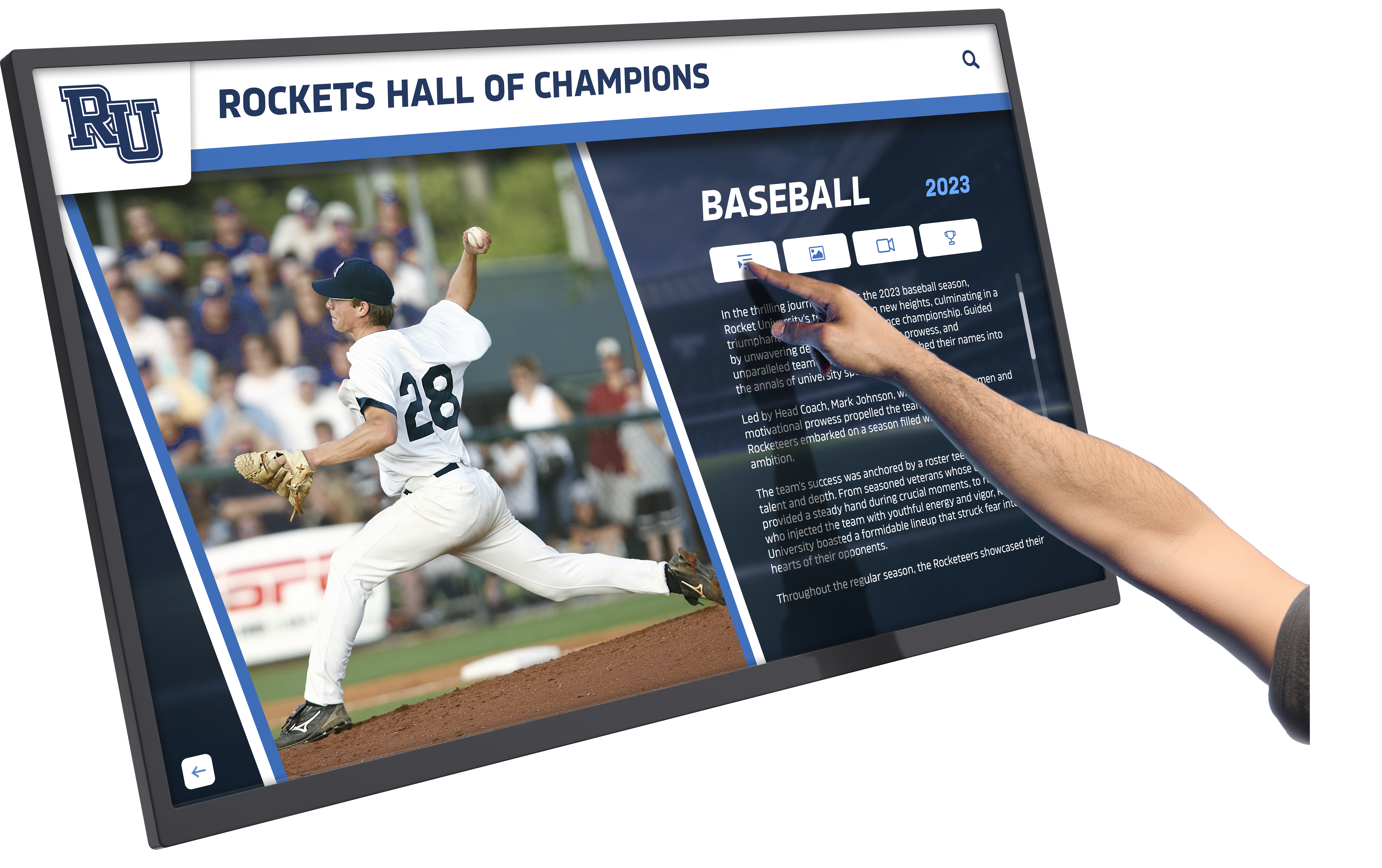
Touchscreen displays enable deep exploration of wrestling achievement across all weight classes and eras
Schools implementing digital wrestling recognition report 85-90% of visitors interact with displays during campus tours—dramatically higher than observation rates for static plaques.
Wrestling-Specific Features:
Digital platforms accommodate wrestling’s unique recognition needs:
- Weight class filtering showing champions across all classes
- Tournament bracket displays showing progression to championships
- Head-to-head records between historic wrestlers
- Career trajectory visualization from freshman to senior year
- Multi-year state qualifier recognition
- Academic achievement integration for scholar-wrestlers
- Post-high school career updates (college wrestling, coaching careers)
- Family wrestling tradition connections (siblings, parent-child wrestlers)
Remote Content Management
Simplifying Wrestling Recognition Updates
Cloud-based management transforms recognition workflows:
Digital Management Advantages:
- Update content remotely from any internet-connected device
- Add state tournament results immediately after conclusion
- Include season statistics as records are established
- Correct errors or update information easily
- No physical campus access needed for content changes
- Role-based permissions for head coach, assistant coaches, or administrators
- Bulk content import for historical wrestler digitization
- Scheduled content displays for current season highlights
Wrestling coaches report 75-85% reduction in recognition management time compared to maintaining physical plaques and trophy cases.
Wrestling Season Integration:
Digital systems support season-long engagement:
- Current season roster displays with wrestler profiles
- Live tournament results and bracket updates
- Season schedule and upcoming competition information
- Dual meet records and team standings
- Individual wrestler season statistics
- Senior recognition and career highlights
- Recruiting class announcements
- Practice schedules and team announcements
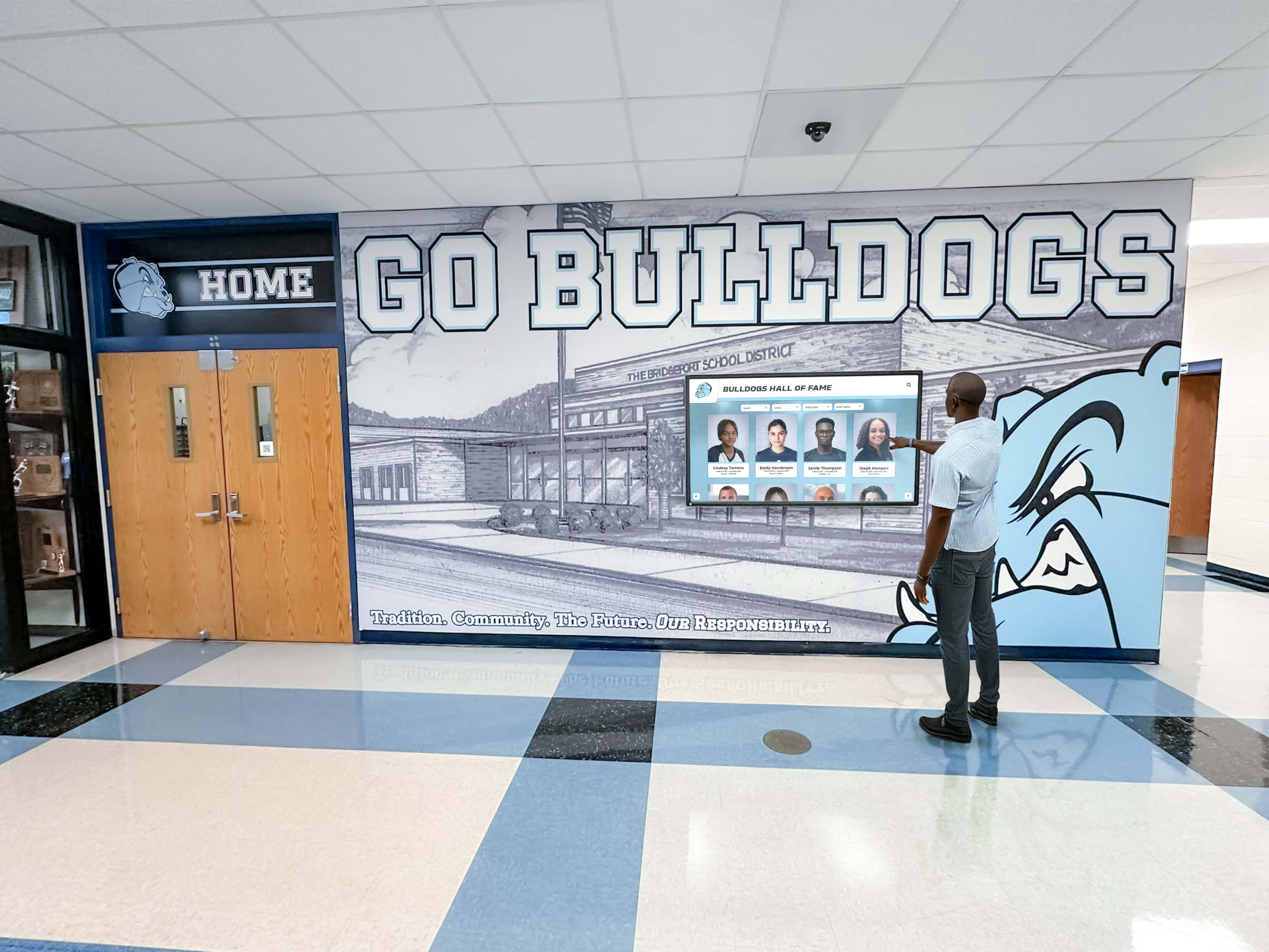
Digital platforms simplify wrestling recognition management while enhancing community engagement
Web-Based Wrestling Recognition Extensions
Extending Beyond Physical Campus
Modern platforms amplify wrestling recognition reach:
Web Platform Capabilities:
- Wrestling alumni worldwide can view hall of fame content
- Prospective wrestlers explore program history during recruitment
- Parents access complete wrestler profiles and achievements
- Social media sharing celebrating individual accomplishments
- Mobile-optimized displays working across all devices
- Wrestling community engagement beyond physical location
- Search engine visibility improving program reputation
- Integration with wrestling program website
Solutions like digital recognition displays typically include both physical touchscreen installations and web-accessible platforms creating comprehensive wrestling celebration.
Essential Wrestling Hall of Fame Content
Effective wrestling halls of fame include specific content types honoring individual and team excellence.
Individual Wrestler Recognition
Comprehensive Wrestler Profiles
Quality wrestler profiles include multiple content elements:
Core Wrestler Information:
- Full name with graduation year
- Weight class(es) wrestled
- Varsity years of participation
- Overall career record (wins-losses)
- Career pins, technical falls, and decision victories
- State tournament placements by year
- Conference tournament championships
- Significant tournament victories
- Notable opponent victories
- Team captain or leadership positions
- Academic honors and achievements
- College wrestling career or other post-graduation updates
Visual Content:
Photos bring wrestler profiles to life:
- Action shots from competitive matches
- State tournament podium photos
- Team photos showing wrestler with championship teammates
- Senior portraits or individual wrestler photos
- Celebration photos after significant victories
- Video highlights from memorable matches (digital platforms)

Comprehensive wrestler profiles celebrate complete careers beyond single championship moments
Team Championship Recognition
Celebrating Wrestling Team Success
Wrestling halls of fame honor both individual and team achievement:
Team Recognition Elements:
- Conference championship team seasons
- State dual meet tournament appearances and placers
- State traditional tournament team point totals
- Dual meet season records
- Complete team rosters with links to individual wrestler profiles
- Head coach and assistant coach recognition
- Team photos from championship seasons
- Significant dual meet victories
- Undefeated team seasons
- Tournament team championship recognition
Tournament Results Archives:
Historical tournament documentation preserves program tradition:
- State tournament results by year and weight class
- Conference tournament champions across all weight classes
- Invitational tournament team and individual champions
- Tournament brackets showing wrestler progression
- Historical placement trends across weight classes
- Most successful tournament performances
Wrestling programs with comprehensive sports recognition systems coordinate hall of fame recognition with annual banquet celebrations.
Wrestling Coach Recognition
Honoring Wrestling Coaches
Coaching excellence deserves systematic recognition:
Head Coach Recognition:
- Career record and winning percentage
- State champions developed
- Conference championships won
- Years of service to program
- Coaching philosophy and program development contributions
- Significant career milestones (100, 200, 300+ career wins)
- Coach of the year honors
- Personal wrestling background and achievements
- Coaching tree (wrestlers who became coaches)
- Legacy contributions to program development
Assistant Coach and Volunteer Recognition:
Supporting coaches merit acknowledgment:
- Years of program service
- Specialized coaching roles (technique, conditioning, mental preparation)
- Wrestler development contributions
- Tournament coordination and management
- Alumni status and personal wrestling background
- Continued program involvement
Wrestling Record and Achievement Archives
Documenting Statistical Excellence
Comprehensive records preserve achievement context:
Career Record Categories:
- Most career wins (overall and by weight class)
- Best winning percentage (minimum matches)
- Most career pins
- Most career technical falls
- Fastest pins in program history
- Most state tournament appearances
- Best state tournament records
- Most state medals earned
- Career takedown leaders
- Best freshman, sophomore, junior, or senior season records
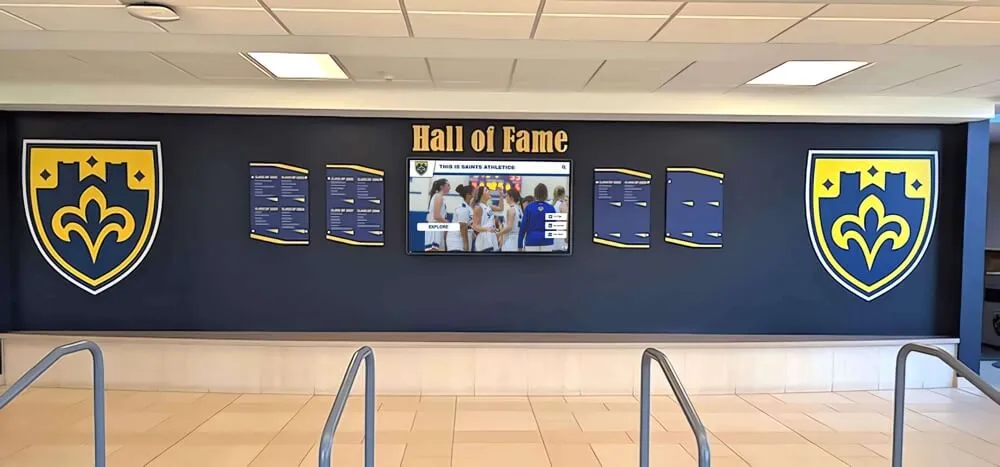
Comprehensive record displays provide context for individual wrestling achievements
Season Record Categories:
- Single season win records (overall and by weight class)
- Undefeated seasons
- Most pins in a season
- Best tournament performances
- Most significant wins in season
- Improvement from previous season records
Digital platforms enable automatic record board updates as achievements occur, eliminating manual maintenance traditional boards require.
Wrestling Hall of Fame Selection Criteria
Establishing clear, transparent criteria ensures fair wrestler recognition and program credibility.
Standard Wrestling Hall of Fame Categories
State Champions
State championship recognition represents most common criterion:
- All state champions regardless of weight class or era
- Multiple-time state champions receiving enhanced recognition
- State championship runners-up or placers in some programs
- Minimum waiting period (typically 5-10 years after graduation)
- Character and citizenship standards ensuring worthy representation
Career Achievement-Based Selection
Programs establish achievement thresholds:
- Minimum career wins (often 100+ or 125+)
- Multiple-year state qualifiers
- All-state or all-conference selections
- Conference champions across multiple years
- Significant tournament championship victories
- Combined achievement criteria (career wins plus state placement)
- Record holders in various statistical categories
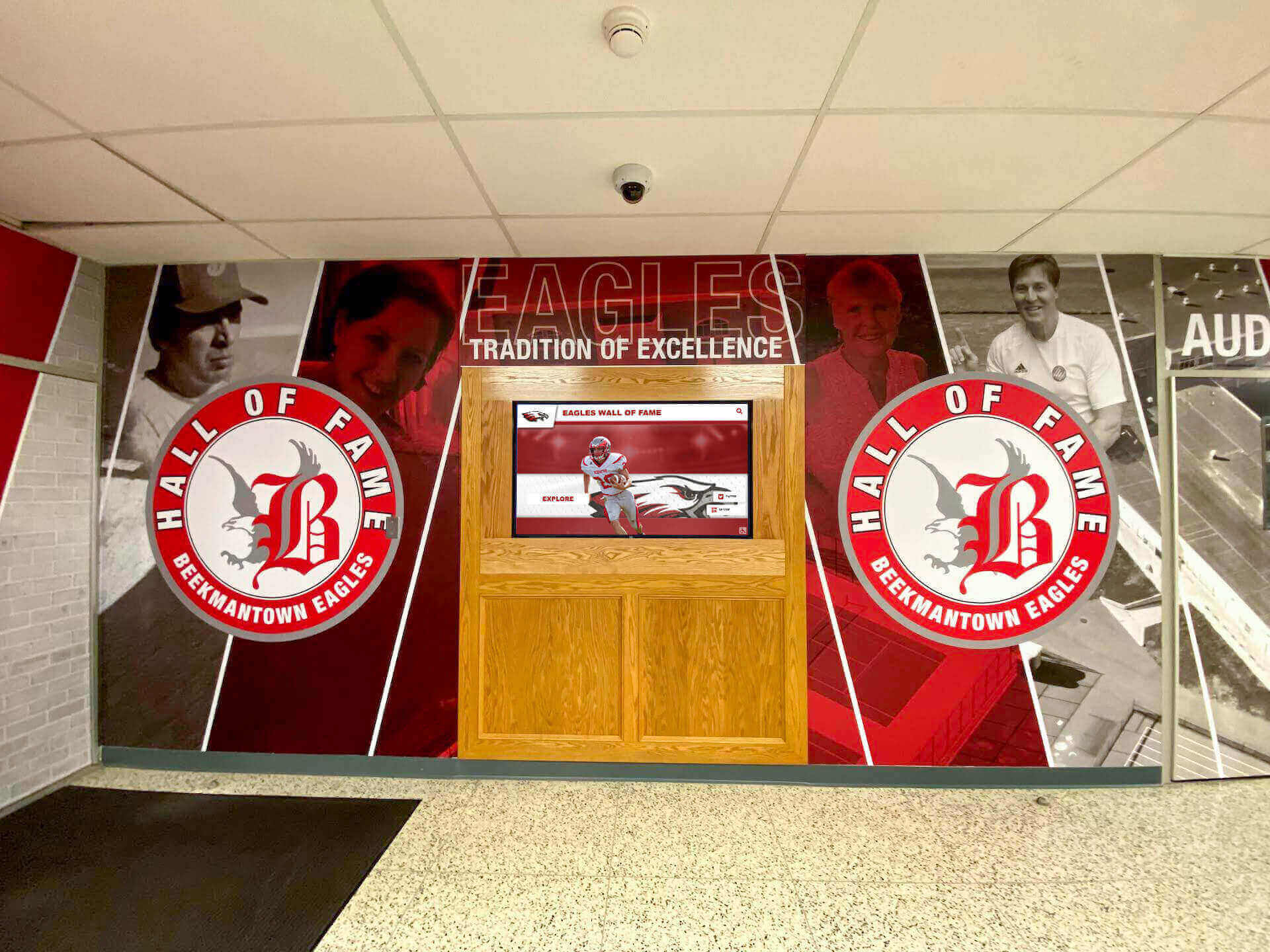
Clear selection criteria ensure wrestling hall of fame programs maintain credibility and fairness
Special Contributor Recognition
Beyond wrestlers, contributors deserve acknowledgment:
- Head coaches with significant program tenure and success
- Assistant coaches with career-long dedication
- Wrestling parents or boosters providing exceptional support
- Officials or administrators advancing program
- Wrestling alumni maintaining program connection
Balancing Inclusivity with Selectivity
Determining Recognition Standards
Criteria should match program tradition and values:
Inclusive Approaches:
- Recognize all state qualifiers or placers
- Celebrate conference champions and significant achievement
- Lower thresholds ensuring regular recognition opportunities
- Broader recognition maintaining wrestler engagement
- Emphasis on comprehensive program history preservation
Selective Approaches:
- Limit recognition to state champions or high achievement thresholds
- Higher standards ensuring hall of fame prestige
- Emphasis on truly exceptional wrestling careers
- Maintain exclusivity and honor significance
- Create aspirational recognition motivating current wrestlers
Most programs establish tiered recognition balancing these approaches—comprehensive online archives preserving all wrestlers with featured recognition for exceptional achievement.
Wrestling Hall of Fame Display Location Strategies
Strategic placement maximizes wrestling recognition visibility and impact.
Wrestling Room and Training Facility Displays
Primary Wrestling Spaces
Dedicated wrestling areas create ideal recognition environments:
Wrestling Room Display Advantages:
- Daily visibility inspiring current wrestlers during practice
- Natural gathering space for wrestling community
- Environment where wrestling culture thrives
- Easy integration with practice schedules and team activities
- Accessibility for coaching staff managing content
- Connection between current and historical wrestlers
Wrestling Room Display Considerations:
- Space often limited by equipment and mat storage
- Environmental conditions (humidity, temperature fluctuations)
- Security during off-season when room may be less supervised
- Appropriate technology infrastructure (network, power)
- Display durability in high-activity environment
Main School Lobby or Athletic Entrance
High-Visibility Locations
Central placement extends wrestling recognition reach:
Lobby Display Benefits:
- Maximum visibility for entire school community
- Prominence during campus tours and prospective family visits
- Demonstration of school-wide athletic excellence
- Integration with broader athletic recognition programs
- High-quality facility environment for professional displays
- Network and power infrastructure typically available
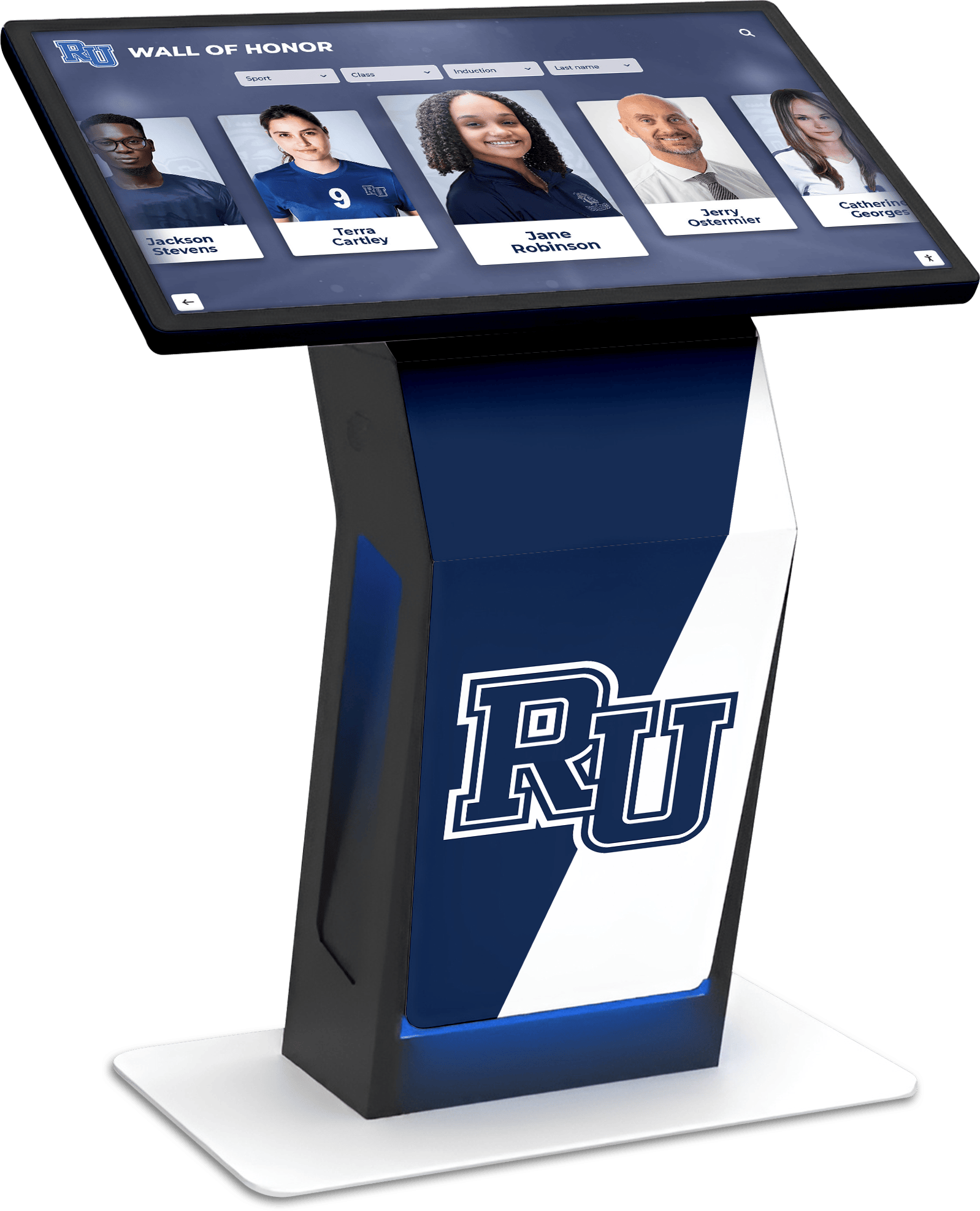
Prominent lobby placement elevates wrestling program visibility across entire school community
Balance Considerations:
Wrestling-specific placement versus athletic department integration:
- Stand-alone wrestling recognition celebrating program tradition
- Integrated athletic hall of fame including all sports equally
- Multiple displays serving different locations and purposes
- Hybrid approaches combining wrestling room and lobby displays
- Budget allocation across wrestling and other sports
Competition Venue Displays
Gymnasium or Arena Recognition
Competition locations provide strategic recognition placement:
- Visible to tournament attendees and visiting teams
- Creates home mat advantage through visible tradition
- Inspires wrestlers during competition
- Accessible during tournaments when alumni often attend
- Reinforces program quality to recruiting families
- Integration with championship banners and team displays
Schools implementing recognition in competition venues often coordinate with championship celebration strategies building overall school pride.
Budget Considerations for Wrestling Halls of Fame
Understanding costs helps wrestling programs plan appropriate recognition matching available resources.
Traditional Wrestling Recognition Costs
Physical Display Investment Requirements
Conventional approaches involve specific expenses:
Individual Plaque Costs:
- Custom engraved plaques: $75-$200 each
- 50 state champions across 20 years: $3,750-$10,000
- Installation hardware and mounting: $500-$1,500
- Wall preparation and painting: $500-$2,000
- Professional design fees: $300-$1,000
- Total Traditional Plaque System: $5,000-$14,500
Trophy Case Costs:
- Commercial display case (72"W): $3,500-$7,000
- Installation and setup: $500-$1,500
- Interior organization and displays: $200-$500
- Ongoing maintenance: $300-$600 annually
- Initial Trophy Case Investment: $4,200-$9,000
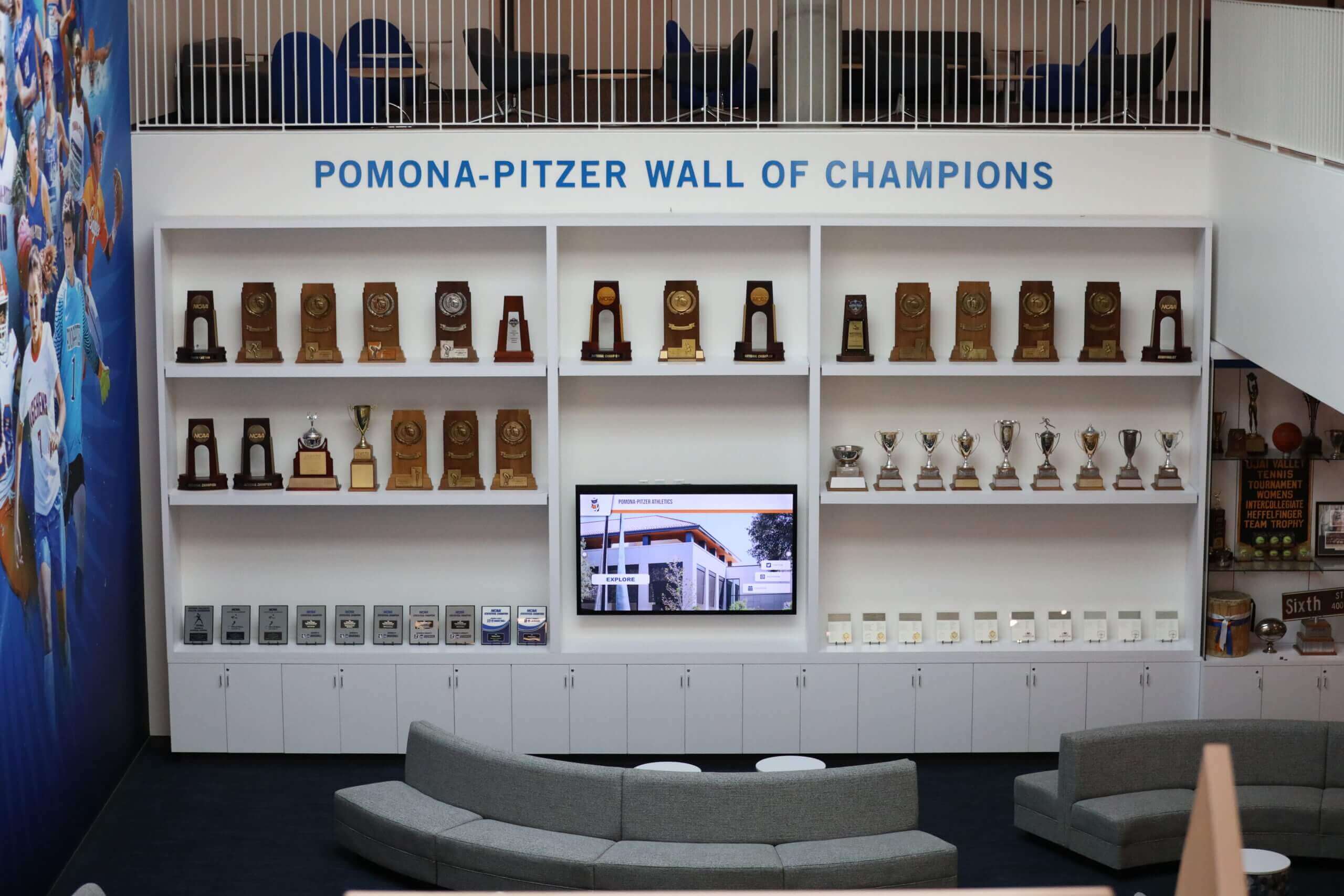
Traditional wrestling recognition requires ongoing investment as programs expand and achievements accumulate
Digital Wrestling Hall of Fame Costs
Technology-Based Recognition Investment
Digital platforms have different cost structures:
Digital Display System Costs:
- 65" commercial touchscreen display: $4,000-$6,000
- Content management software (annual): $1,500-$3,000
- Installation and mounting: $800-$2,000
- Initial wrestler content development: $1,500-$3,500
- Training and technical support: Often included in software subscription
- Initial Digital Investment: $7,800-$14,500
- Annual Ongoing: $1,500-$3,000 (software subscription)
Long-Term Value Comparison:
Digital systems offer advantages over 5-year timeframe:
- Unlimited capacity eliminating future expansion costs
- Remote management reducing administrative time 70-85%
- Enhanced engagement creating superior recognition value
- Web platform extending reach beyond physical campus
- Sustainable maintenance without physical upkeep
5-Year Cost Analysis:
Traditional approach (assuming program growth):
- Initial plaque system: $10,000
- Additional plaques as achievements accumulate: $3,000-$5,000
- Trophy case: $5,000
- Maintenance and updates: $2,000
- 5-Year Traditional Total: $20,000-$22,000
Digital approach:
- Initial system: $12,000
- Annual software subscription (5 years): $10,000-$15,000
- Content updates and additions: $2,000
- 5-Year Digital Total: $24,000-$29,000
While digital systems show moderately higher 5-year costs, unlimited capacity, enhanced engagement, and administrative time savings often justify the investment for comprehensive wrestling programs.
Funding Wrestling Recognition Projects
Securing Wrestling Hall of Fame Support
Multiple funding sources support wrestling recognition:
Wrestling-Specific Funding:
- Wrestling booster club donations and fundraising
- Wrestling alumni association contributions
- Annual wrestling banquet fundraising campaigns
- State champion recognition sponsorships
- Wrestling tournament host proceeds
- Memorial donations honoring deceased wrestlers or coaches
- Wrestling camp proceeds allocation
Broader Funding Sources:
- Athletic department budget allocations
- School capital improvement funds
- Alumni association general giving
- Corporate sponsorships from wrestling equipment vendors
- Grant applications to athletics foundations
- Naming opportunities for display areas
Wrestling programs with active booster organizations often successfully fund hall of fame projects through targeted campaigns.
Maintaining Wrestling Hall of Fame Programs
Sustainable recognition requires ongoing management and content development.
Content Update Workflows
Systematic Recognition Maintenance
Establish regular update schedules:
Post-Season Updates:
- State tournament results and placement additions
- New state champion recognition within one week
- Season statistics and career records updates
- Senior career summaries and final statistics
- Team season records and achievement documentation
- Photo additions from tournaments and celebrations
Annual Content Maintenance:
- Historical wrestler research and additions
- Photo quality improvements and replacements
- Biographical narrative enhancements
- Record board updates as achievements surpass previous marks
- Post-graduation career updates (college wrestling, coaching)
- Deceased wrestler memorial updates
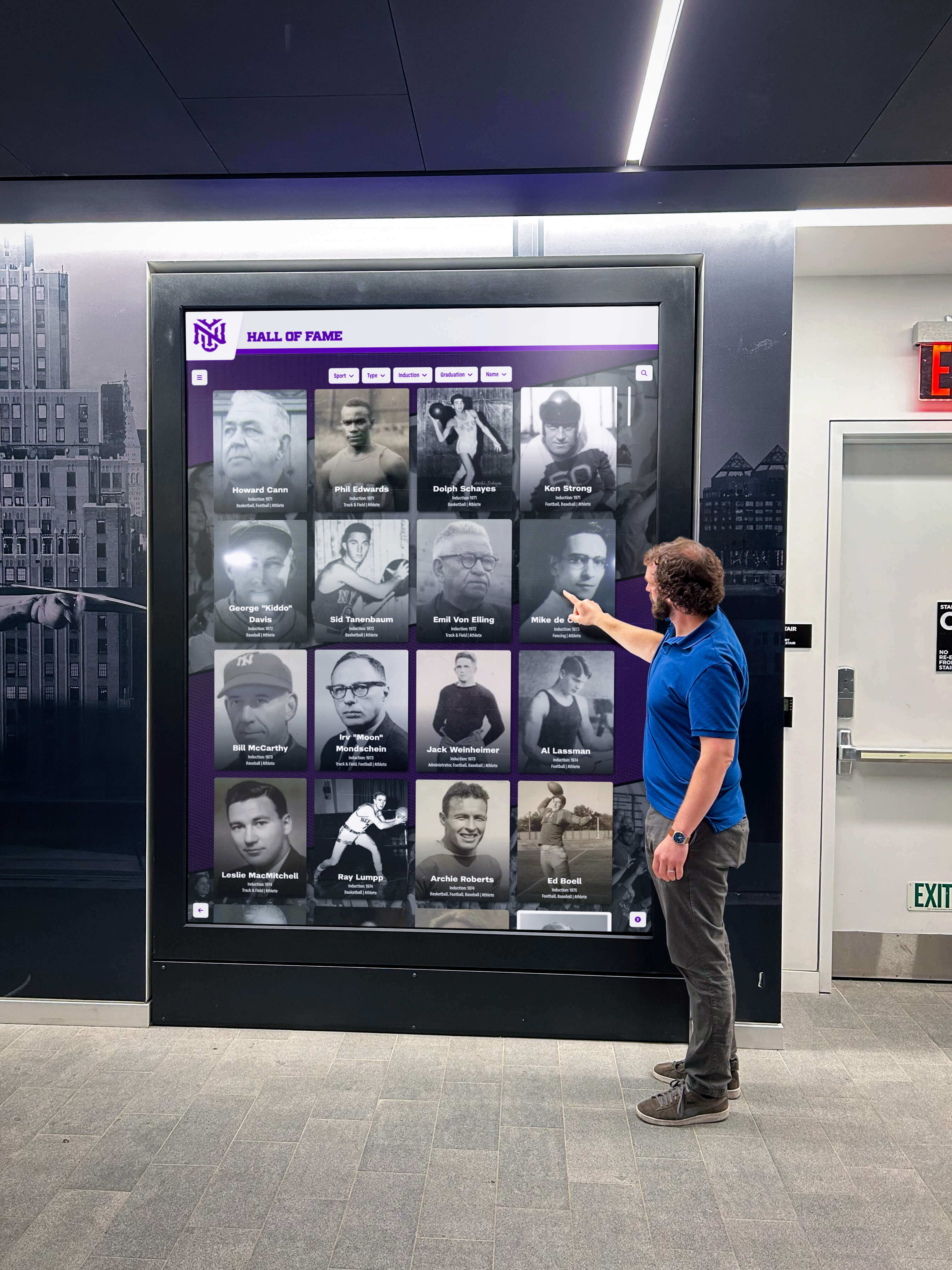
Sustainable wrestling recognition requires systematic content maintenance and regular updates
Responsibility Assignment
Wrestling Recognition Management Roles
Clear ownership prevents neglect:
Head Wrestling Coach:
- Overall hall of fame vision and content direction
- Selection of wrestlers meeting recognition criteria
- Content accuracy verification
- Communication with wrestling alumni
- Integration with current season promotion
Assistant Coach or Athletic Department Staff:
- Day-to-day content updates and additions
- Photo collection and organization
- Historical research and documentation
- Display technical maintenance coordination
- Statistical record keeping
Technology Coordinator:
- Software platform management
- Technical troubleshooting and support
- Display hardware maintenance
- User training for authorized staff
- Analytics monitoring and reporting
Engaging Wrestling Alumni Through Recognition
Building Community Connection
Hall of fame programs strengthen alumni relationships:
Alumni Engagement Strategies:
- Social media posts celebrating individual wrestler recognition
- Email notifications when classmates or teammates are added
- Annual reunion events featuring hall of fame presentations
- Induction ceremonies honoring recent additions
- Wrestling alumni networking through shared platform access
- Fundraising campaigns leveraging recognition visibility
- Career mentoring connections between wrestling alumni
Schools with comprehensive wrestling recognition report 40-60% higher wrestling alumni engagement in program support and fundraising.
Combining Wrestling Recognition with Broader Programs
Wrestling halls of fame often integrate with comprehensive athletic recognition.
Multi-Sport Athletic Halls of Fame
Integrated Recognition Approaches
Combined athletic recognition serves multiple programs:
Integration Advantages:
- Shared technology and display infrastructure reducing costs
- Equal visibility for all athletic programs
- Comprehensive school athletic tradition celebration
- Broader stakeholder support across athletic department
- Unified content management and maintenance
- Enhanced community engagement across multiple sports
Wrestling-Specific Sections:
Within broader platforms, wrestling maintains distinct identity:
- Wrestling-specific landing pages and navigation
- Weight class filtering unique to wrestling
- Wrestling record categories and achievement types
- Wrestling coach recognition and program history
- Wrestling tournament result archives
- Sport-specific branding and visual identity
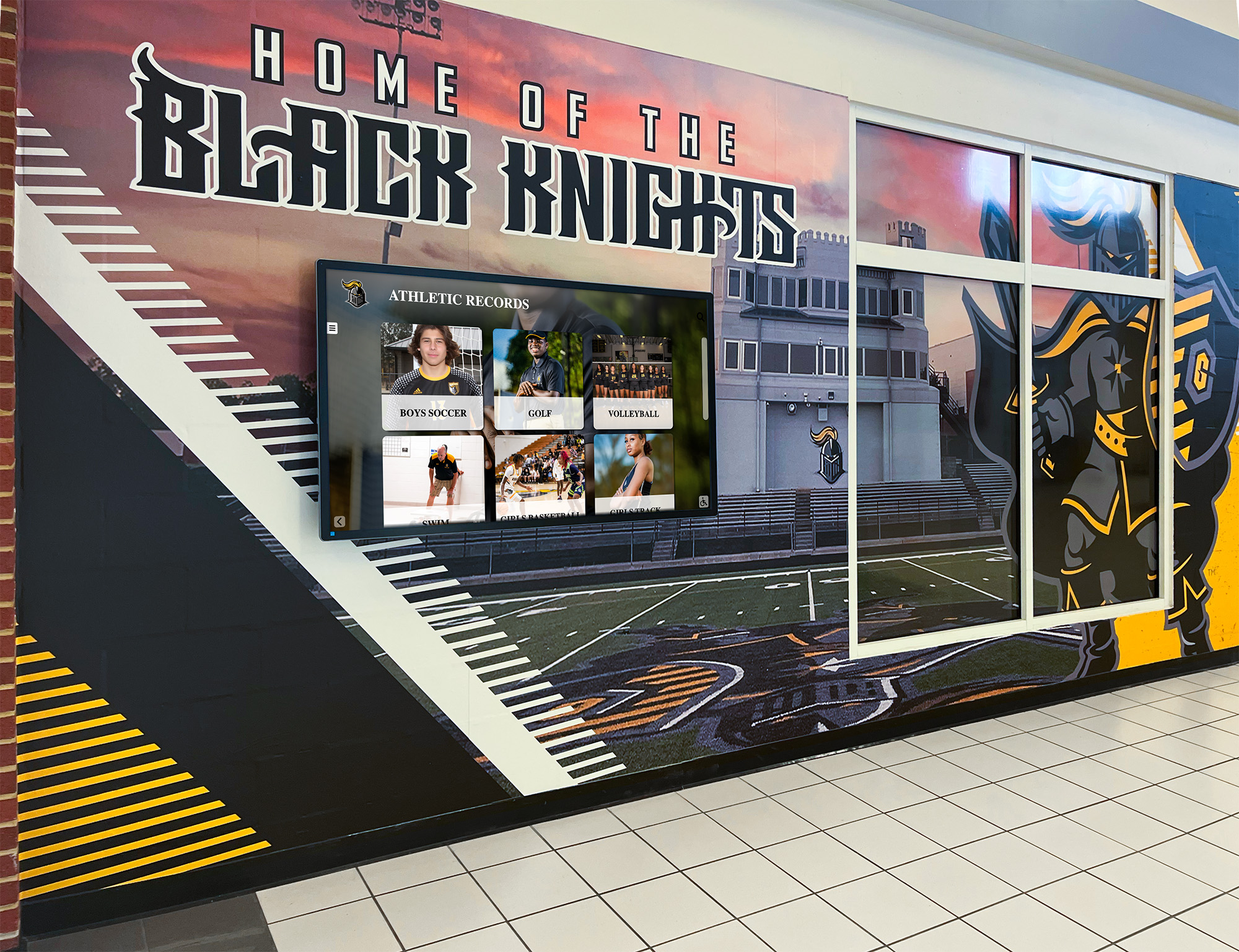
Multi-sport athletic recognition platforms serve wrestling alongside other programs comprehensively
Schools implementing comprehensive athletic halls of fame ensure wrestling receives proportional recognition reflecting program achievement and tradition.
Academic Recognition Integration
Scholar-Wrestler Celebration
Wrestling programs often emphasize academic achievement:
- Academic all-state wrestler recognition
- GPA requirements for hall of fame eligibility
- Scholar-athlete awards alongside athletic achievement
- College academic scholarship recognition
- Career achievement post-wrestling highlighting education
- Student-athlete balance messaging
Donor Recognition Coordination
Fundraising and Wrestling Recognition
Donor acknowledgment can integrate with wrestling recognition:
- Wrestling facility naming opportunities
- Display system donor recognition
- Scholarship donor acknowledgment near wrestling hall of fame
- Booster club member recognition
- Major gift donors supporting wrestling program
Digital platforms serving multiple recognition purposes—athletic achievement, academic excellence, and donor appreciation—provide comprehensive community celebration through unified systems.
Launching Your Wrestling Hall of Fame
Systematic implementation ensures successful wrestling recognition programs.
Planning Phase Activities
Initial Program Development
Begin with comprehensive planning:
Step 1: Establish Goals and Criteria (Months 1-2)
- Define hall of fame purpose and selection criteria
- Determine recognition categories (state champions, career achievement, coaches)
- Set waiting period requirements
- Establish character and citizenship standards
- Gain administrative and coaching staff alignment
Step 2: Budget Development (Month 2)
- Research traditional versus digital option costs
- Identify funding sources and timeline
- Develop phased implementation if budget requires
- Secure initial funding commitments
- Plan for ongoing annual costs
Step 3: Technology and Vendor Selection (Months 3-4)
- Evaluate display options and locations
- Compare vendor proposals and capabilities
- Check references from similar wrestling programs
- Review demo installations or portfolios
- Negotiate contracts and implementation timelines
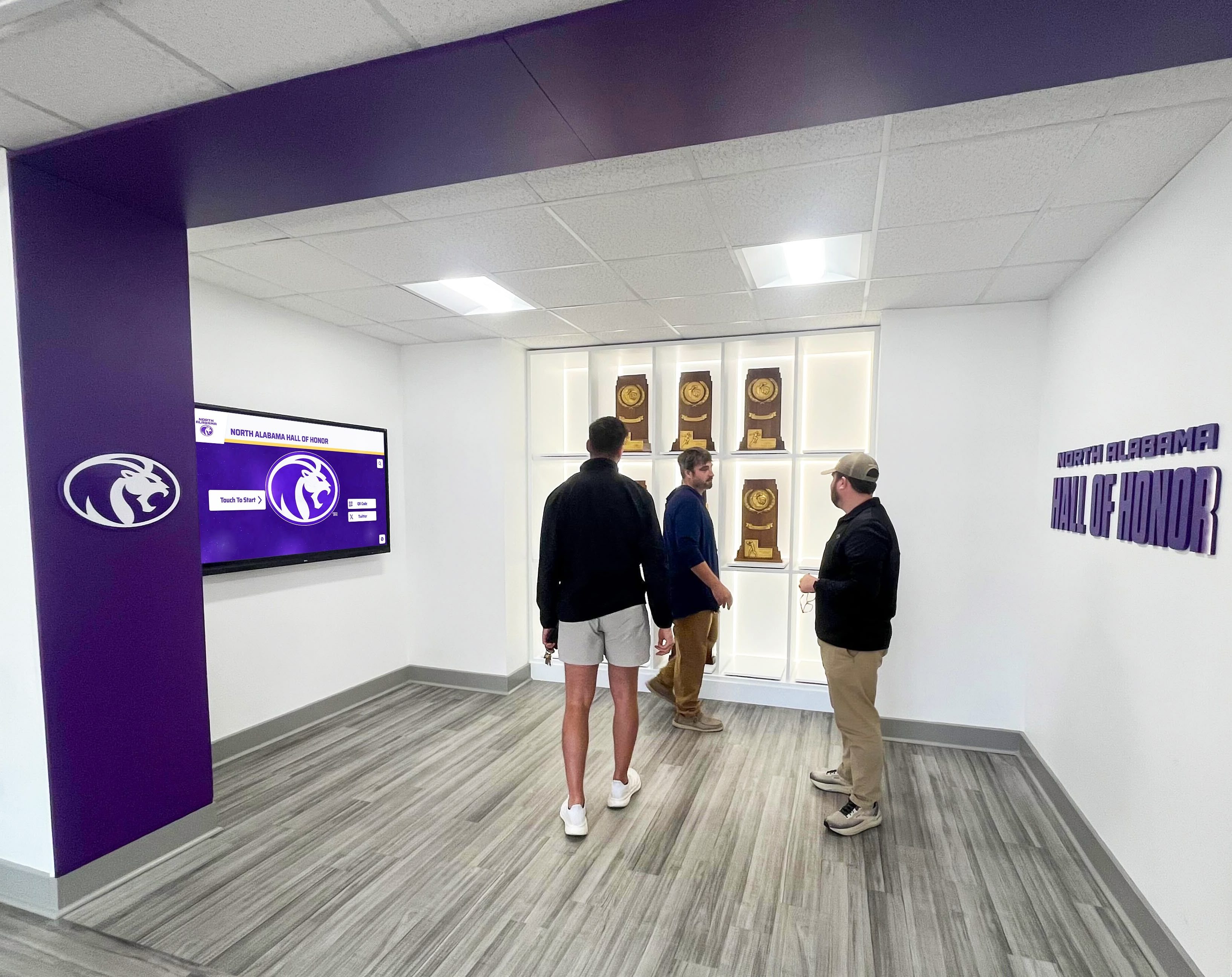
Successful wrestling halls of fame begin with comprehensive planning addressing criteria, budget, and technology
Implementation Phase Activities
Content Development and Launch
Step 4: Historical Wrestler Research (Months 4-6)
- Compile historical state champion list
- Research career records and statistics
- Collect historical photos from yearbooks and archives
- Contact wrestling alumni for biographical information
- Document team championships and tournament results
- Verify achievement accuracy through multiple sources
Step 5: Content Creation (Months 5-7)
- Develop wrestler profile content following standards
- Professional photography of current recognition needs
- Video creation if platform supports multimedia
- Quality control review ensuring accuracy
- Batch content import to platform
- Test user experience and navigation
Step 6: Installation and Launch (Month 7-8)
- Physical display installation and testing
- Staff training on content management
- Soft launch with limited promotion
- Gather initial feedback and refine
- Formal launch announcement and celebration
- Wrestling alumni communication about new recognition
- Social media campaign building awareness
Ongoing Program Management
Sustainable Wrestling Recognition
Annual Maintenance Cycle:
- March-April: Post-season content updates with state tournament results
- May-June: Senior career summaries and final statistics
- July-August: Historical research and content additions during off-season
- September-October: New season roster and schedule updates
- November-February: In-season highlights and achievement additions as they occur
Continuous Improvement:
- Gather stakeholder feedback annually
- Review usage analytics identifying popular content
- Refine navigation and search features
- Expand historical archives systematically
- Enhance content quality through better photos and narratives
- Assess technology performance and plan upgrades
Conclusion: Honoring Wrestling Excellence Permanently
Wrestling hall of fame programs represent meaningful acknowledgment of individual excellence, program tradition, and community connection unique to wrestling culture. When schools establish systematic recognition celebrating state champions, career achievers, dedicated coaches, and championship teams, they create traditions inspiring current wrestlers while honoring those whose dedication built program foundations.
The wrestling hall of fame ideas explored in this guide provide comprehensive options spanning traditional plaques and trophy cases to innovative digital solutions eliminating space constraints. From conventional wall-mounted recognition to interactive touchscreen systems showcasing unlimited wrestler profiles across all weight classes and eras, these approaches enable wrestling programs to celebrate achievement appropriately regardless of budget, facility limitations, or technical capabilities.
Most significantly, modern digital wrestling halls of fame solve the fundamental space limitation plaguing traditional recognition. Rather than forcing impossible decisions about which state champions warrant continued visibility, digital solutions showcase every wrestler meeting criteria while adding context, engagement features, and accessibility impossible with physical plaques alone. Wrestling programs adopting comprehensive digital approaches honor complete program history while remaining sustainable long-term.
Building effective wrestling recognition requires moving beyond assumptions that simple plaques constitute adequate acknowledgment. Understanding wrestling’s unique characteristics—individual achievement across multiple weight classes, strong alumni connections, achievement accumulation requiring unlimited capacity—enables recognition programs matching sport-specific needs. Strategic location selection, appropriate technology, systematic content development, and integration with broader athletic recognition transform wrestling halls of fame from afterthought accessories into meaningful celebration of grappling excellence central to program culture.
Start with wrestling hall of fame approaches your program can implement given available budget and resources, then systematically expand toward comprehensive solutions your wrestling tradition deserves. Every state champion, career win leader, and dedicated coach representing wrestling excellence merits recognition creating lasting pride among wrestlers, families, and communities who made those achievements possible.
Your wrestling program’s legacy deserves preservation and celebration. With thoughtful planning, clear criteria, appropriate technology, and consistent implementation, you can build wrestling hall of fame programs that honor every achievement while inspiring future champions who will add their names to your growing tradition of wrestling excellence on the mat.
Ready to explore modern wrestling hall of fame solutions? Discover how solutions like Rocket Alumni Solutions provide schools with unlimited digital wrestling recognition eliminating space constraints while creating engaging, accessible displays celebrating comprehensive grappling achievement across all weight classes, tournaments, and eras.