School hallways and common spaces shape daily student experiences in ways that extend far beyond simple wayfinding. The visual environment communicates institutional values, celebrates achievement, reinforces identity, and creates atmosphere influencing mood, motivation, and community connection. Yet many schools struggle with bland, uninspiring corridors featuring dated bulletin boards, peeling paint, and generic institutional aesthetics that do nothing to engage students or strengthen school culture.
Wall wraps represent a practical solution that transforms ordinary school spaces into vibrant, engaging environments reflecting institutional identity and educational mission. These large-format vinyl graphics cover entire walls with custom designs incorporating school colors, mascots, inspirational messages, educational content, achievement recognition, and branded elements creating cohesive visual experiences throughout campus facilities.
This comprehensive guide explores everything administrators, facilities managers, and design coordinators need to know about wall wraps for schools—from understanding available options and design approaches to planning installation, managing costs, maintaining graphics, and integrating wall wraps with complementary digital recognition displays.
School wall wraps go beyond simple decoration. When thoughtfully designed and strategically placed, these graphics reinforce school identity during daily transitions, inspire students through motivational content and achievement celebration, support wayfinding and campus navigation, create Instagram-worthy photo opportunities building social media presence, and transform institutional spaces into branded environments reflecting educational values.
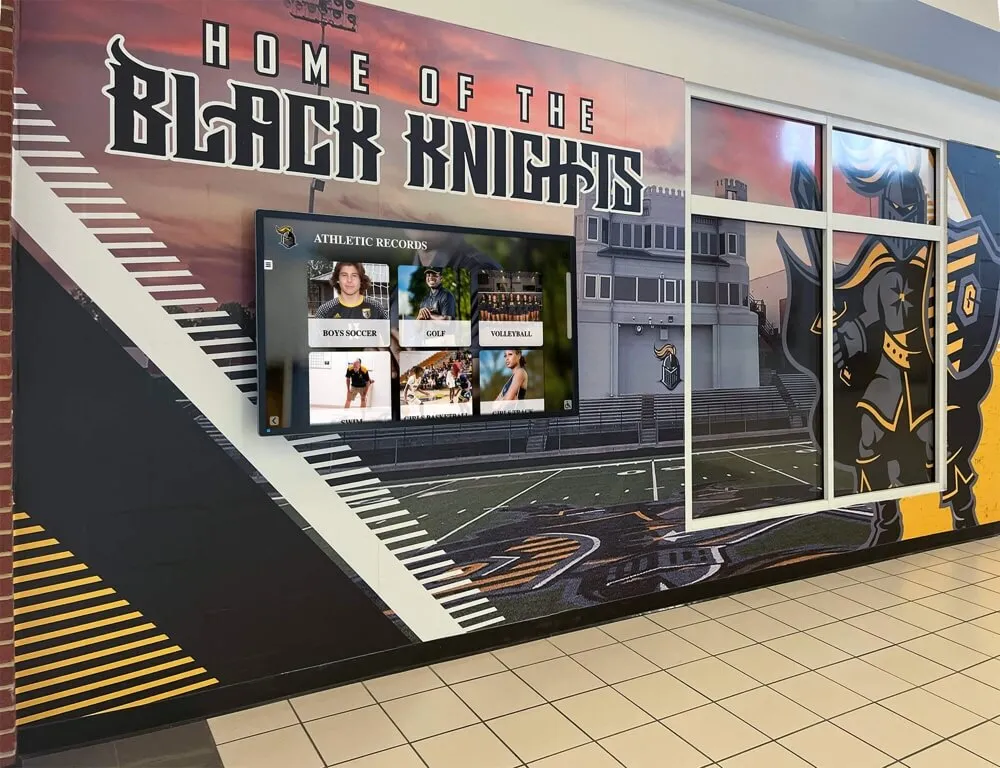
Modern school hallways blend custom wall wraps with digital displays creating engaging recognition environments
Understanding Wall Wraps for Educational Environments
Wall wraps consist of large-format vinyl graphics professionally installed directly onto wall surfaces, creating seamless visual experiences that can span entire hallways or focal wall sections.
What Are School Wall Wraps?
Technical Definition
Wall wraps use commercial-grade adhesive vinyl materials printed with custom designs, then professionally installed onto prepared wall surfaces:
Material Components:
- Self-adhesive vinyl substrate with removable or permanent adhesive backing
- Digital printing using UV-resistant inks preventing fading
- Optional protective laminate extending durability and cleanability
- Textured or smooth finishes depending on aesthetic preferences
- Custom sizing accommodating any wall dimensions and configurations
Installation Process:
- Wall surface preparation ensuring clean, smooth application areas
- Precise measurement and template creation for accurate sizing
- Professional installation using specialized tools eliminating bubbles
- Seam management for multi-panel installations maintaining visual continuity
- Edge sealing preventing peeling in high-traffic areas
According to industry sources, interior vinyl wall wraps typically last 5-10 years depending on material quality, location exposure, and maintenance practices, providing long-term value compared to traditional painting that requires refreshing every 2-3 years.
Types of Wall Wrap Applications
Full Wall Wraps
Complete wall coverage creating immersive branded environments:
- Entire hallway transformations with continuous graphic treatments
- Gymnasium and cafeteria feature walls showcasing athletic achievement
- Stairwell wraps utilizing vertical spaces for maximum visual impact
- Locker room designs creating motivating athlete-focused environments
- Library wraps featuring educational themes and literary inspiration
Partial Wall Graphics
Strategic placement focusing on high-impact areas:
- Wainscot-height graphics protecting high-traffic wall sections
- Upper wall bands maintaining painted surfaces below
- Focal wall accents drawing attention to specific areas
- Corner wraps marking transitions between spaces
- Door surrounds creating branded entryways
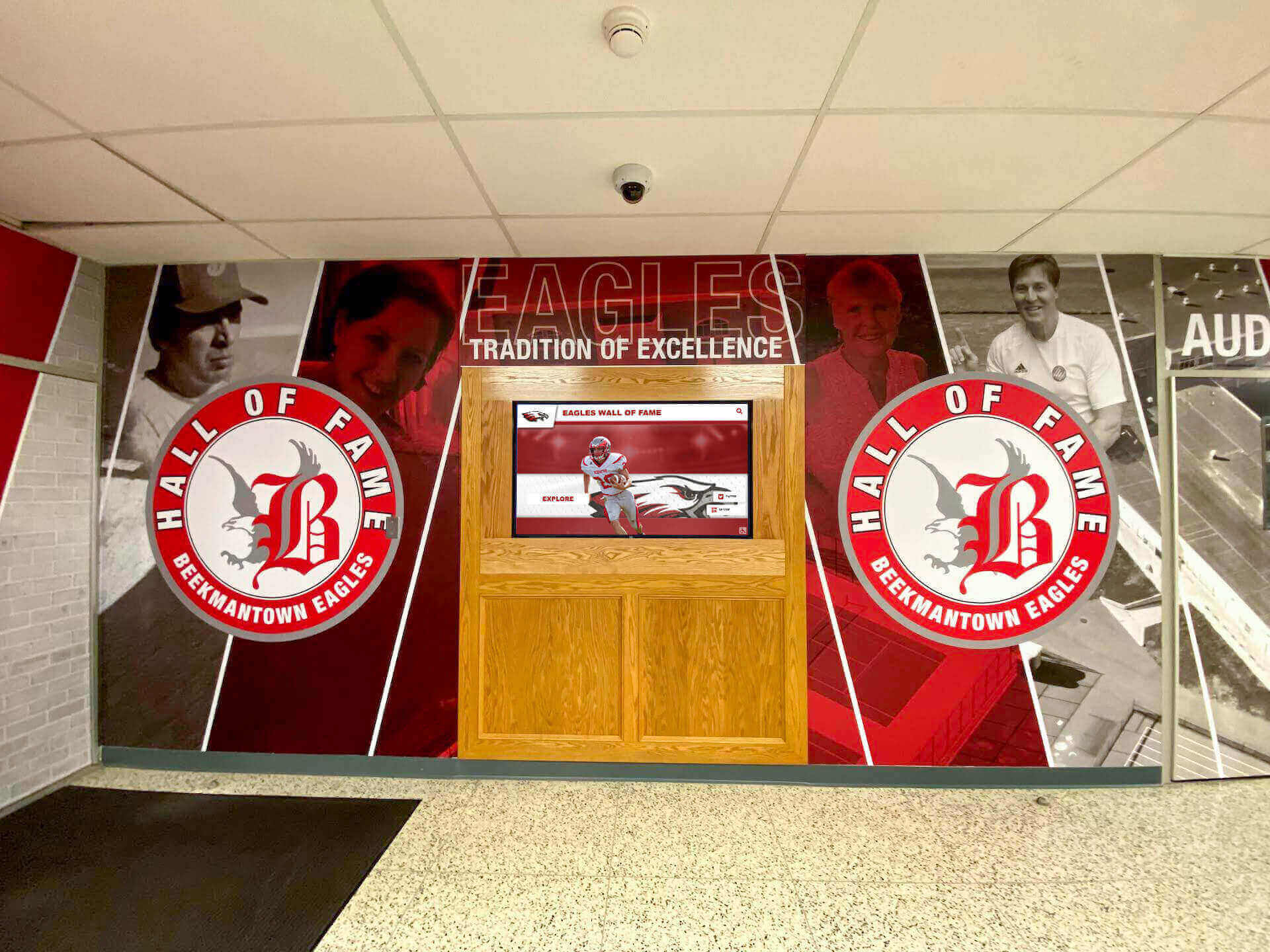
Athletic-themed wall wraps celebrate school spirit and tradition in high-visibility lobby areas
Specialty Applications
Purpose-specific wall wrap solutions:
- Floor-to-ceiling timeline displays showing institutional history
- Achievement galleries celebrating student accomplishments
- Wayfinding graphics incorporating directional information
- Educational content teaching curriculum concepts through environmental design
- Safety messaging integrated into attractive visual designs
Schools implementing comprehensive school branding programs often use wall wraps as foundational elements connecting visual identity across multiple campus spaces.
Wall Wraps Versus Traditional Alternatives
Understanding how wall wraps compare to conventional wall treatments helps administrators make informed decisions:
Wall Wraps vs. Paint
Paint remains the standard wall treatment but has significant limitations:
- Paint requires multiple coats and drying time spanning days
- Complex graphics need expensive custom muralists
- Touch-ups and repainting needed every 2-4 years
- Limited design complexity and photographic reproduction capability
- Paint alone cannot achieve high-resolution imagery or intricate details
Wall wraps install in hours or days rather than weeks, reproduce any design including photographs and complex graphics, maintain appearance for 5-10 years without touch-ups, and allow future design changes without extensive surface preparation.
Wall Wraps vs. Traditional Murals
Hand-painted murals create artistic impact but face practical constraints:
- Custom murals cost $15-$50 per square foot for professional artists
- Painting timelines extend weeks or months for complex designs
- Modification or updates require complete repainting
- Consistent replication across multiple locations proves difficult
- Quality depends heavily on individual artist skill and availability
Wall wraps reproduce consistent designs across unlimited locations, install in fraction of time required for painting, allow design revisions and proofing before production, and maintain perfect consistency for school-wide branding initiatives.
Wall Wraps vs. Mounted Graphics
Framed posters and mounted prints offer flexibility but limited impact:
- Individual frames create visual clutter and inconsistent appearance
- Hardware installation damages walls requiring maintenance
- Limited sizing constrains design impact and presence
- Frame edges accumulate dust and create cleaning challenges
- Theft and vandalism concerns in unsupervised areas
Wall wraps create seamless edge-to-edge coverage without frames or mounting hardware, eliminate individual elements that can be removed or damaged, and simplify cleaning with wipeable surface finishes.
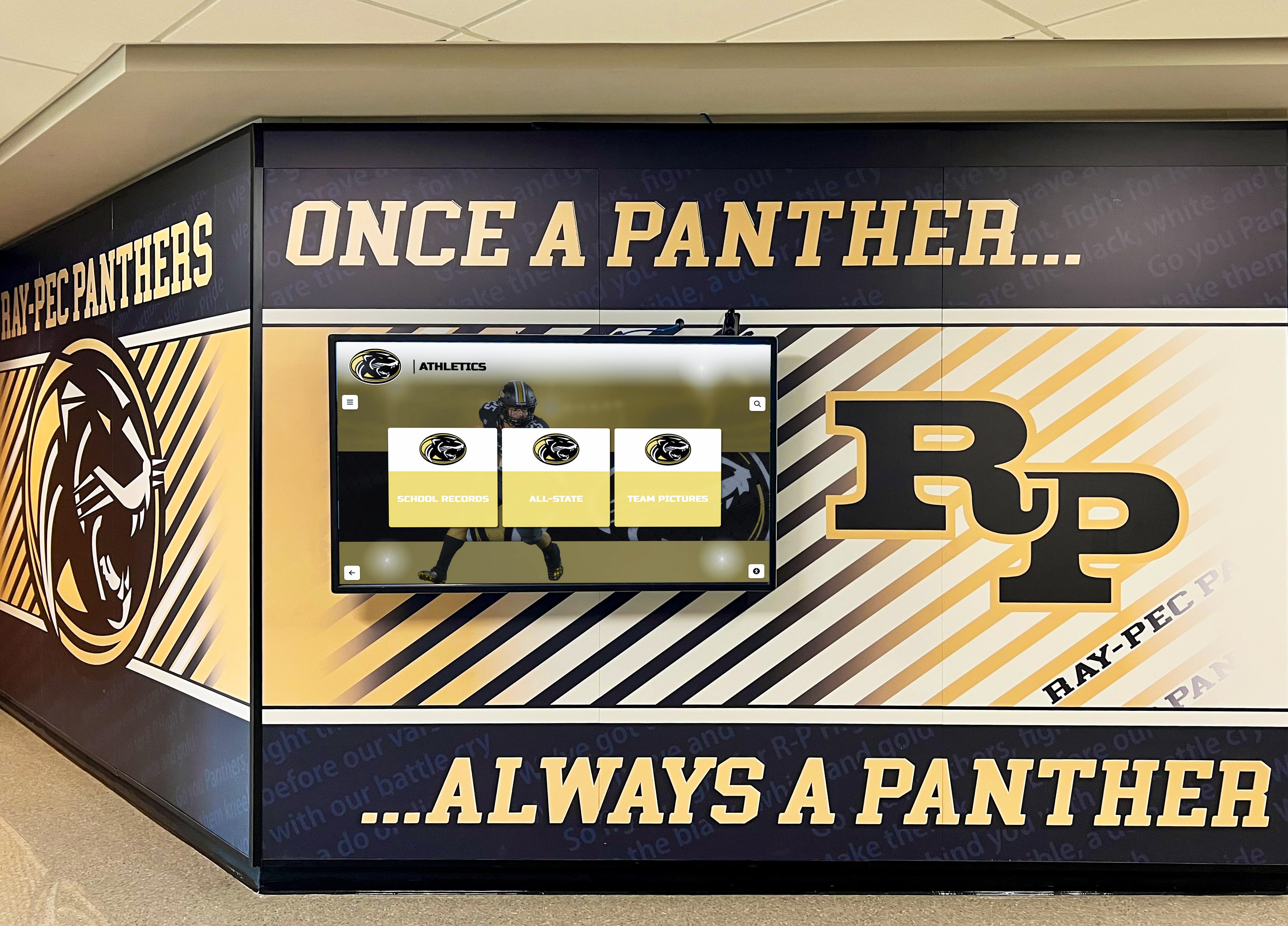
Custom wall wraps create cohesive branded environments throughout athletic facilities and common areas
Design Approaches for School Wall Wraps
Effective wall wrap designs balance aesthetic impact with functional communication, creating engaging environments that serve educational mission.
School Spirit and Branding Designs
Identity-focused wall wraps strengthen institutional connection:
Mascot-Centered Designs
Large-scale mascot graphics create immediate visual identity:
- Oversized mascot illustrations dominating feature walls
- Action poses showing mascots in athletic or academic contexts
- Historical evolution timelines showing mascot changes over decades
- Stylized graphic treatments modernizing traditional mascots
- Mascot integration with motivational messaging and school mottos
Color and Pattern Systems
School colors create cohesive visual environments:
- Bold color blocking using institutional color palettes
- Geometric patterns incorporating school colors and shapes
- Gradient treatments creating dynamic visual movement
- Textured backgrounds suggesting materials like brick or concrete
- Abstract designs allowing color dominance without literal imagery
Logo and Typography Integration
Branded elements reinforce institutional identity:
- School logos scaled as architectural elements rather than small symbols
- Typography treatments using school wordmarks as design foundations
- Commemorative year markers celebrating founding dates and anniversaries
- Taglines and mottos integrated into graphic compositions
- Athletic department logos creating program-specific environments
Schools developing comprehensive digital recognition systems coordinate wall wrap branding with digital display visual identity for cohesive campus-wide aesthetics.
Achievement and Recognition Designs
Celebration-focused wall wraps honor student and program accomplishments:
Championship Recognition Walls
Athletic achievement graphics create inspiration:
- Championship banners listing conference and state titles by year
- Team photo displays celebrating championship squads
- Record board graphics showing top performances and statistical achievements
- Coach recognition honoring program leadership throughout history
- Tournament bracket displays documenting playoff runs and victories
Academic Excellence Displays
Intellectual achievement receives equal prominence:
- Honor roll recognition listing distinguished students
- Scholarship award winners celebrating academic achievement
- Perfect attendance recognition acknowledging commitment and consistency
- National Merit Scholar displays honoring standardized testing excellence
- Academic competition results from Science Olympiad to debate championships
Arts and Activities Recognition
Non-athletic achievements deserve visible celebration:
- Theatre production posters featuring cast and crew recognition
- Music program concert highlights and competition placements
- Visual arts showcases displaying student work and award winners
- Robotics and STEM competition achievements and team photos
- Service learning projects and community impact recognition
Comprehensive academic recognition programs combine physical wall wraps with digital displays providing unlimited capacity for achievement celebration.
Educational and Curriculum Content
Learning-focused wall wraps extend instruction into common spaces:
Subject-Specific Educational Graphics
Content reinforcement throughout campus:
- Periodic table displays in science corridors
- Historical timeline graphics in social studies areas
- Mathematical formulas and concepts in math department hallways
- Literary quotes and author portraits in English department spaces
- World maps and geography content in classroom buildings
- STEM concepts and engineering principles in technical areas
Inspirational and Motivational Content
Character development through environmental design:
- Inspirational quotes from historical figures and thought leaders
- Growth mindset messaging encouraging persistence and effort
- Character value graphics highlighting integrity, respect, and responsibility
- College and career readiness messaging in counseling areas
- Leadership principles in student government and activity spaces
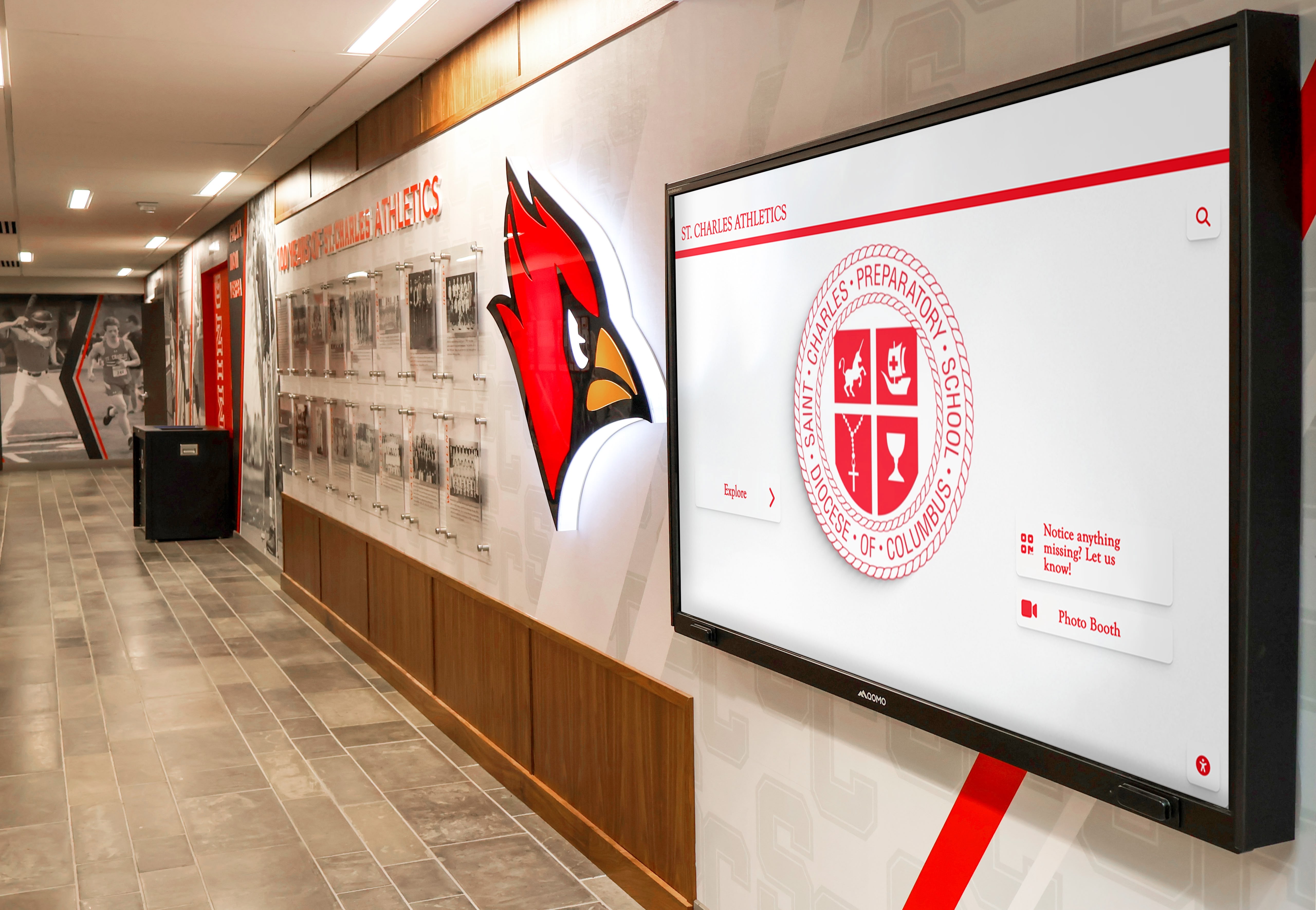
Branded hallways create distinctive identity while celebrating athletic programs and achievements
Cultural and Diversity Celebration
Inclusive environment creation:
- Multilingual welcome messages in diverse language programs
- Cultural celebration graphics honoring heritage months
- World cultures exploration featuring traditional art and imagery
- Historical figure recognition from diverse backgrounds
- Global citizenship themes promoting international awareness
Historical and Tradition Designs
Heritage-focused wall wraps connect current students to institutional legacy:
Timeline and Chronology Displays
Historical progression visualization:
- Founding through present day institutional timelines
- Decade-by-decade photo progressions showing campus evolution
- Administrative leadership chronologies honoring past principals
- Facility construction and renovation documentation
- Historical event markers commemorating significant milestones
Alumni Achievement Recognition
Notable graduate celebration:
- Famous alumni profiles highlighting post-graduation accomplishments
- Professional achievement showcases in various career fields
- Military service recognition for veteran graduates
- Community leadership highlighting civic contributions
- Distinguished alumni hall of fame displays
Historical preservation benefits from digital archiving approaches that complement physical wall wrap installations with searchable online content.
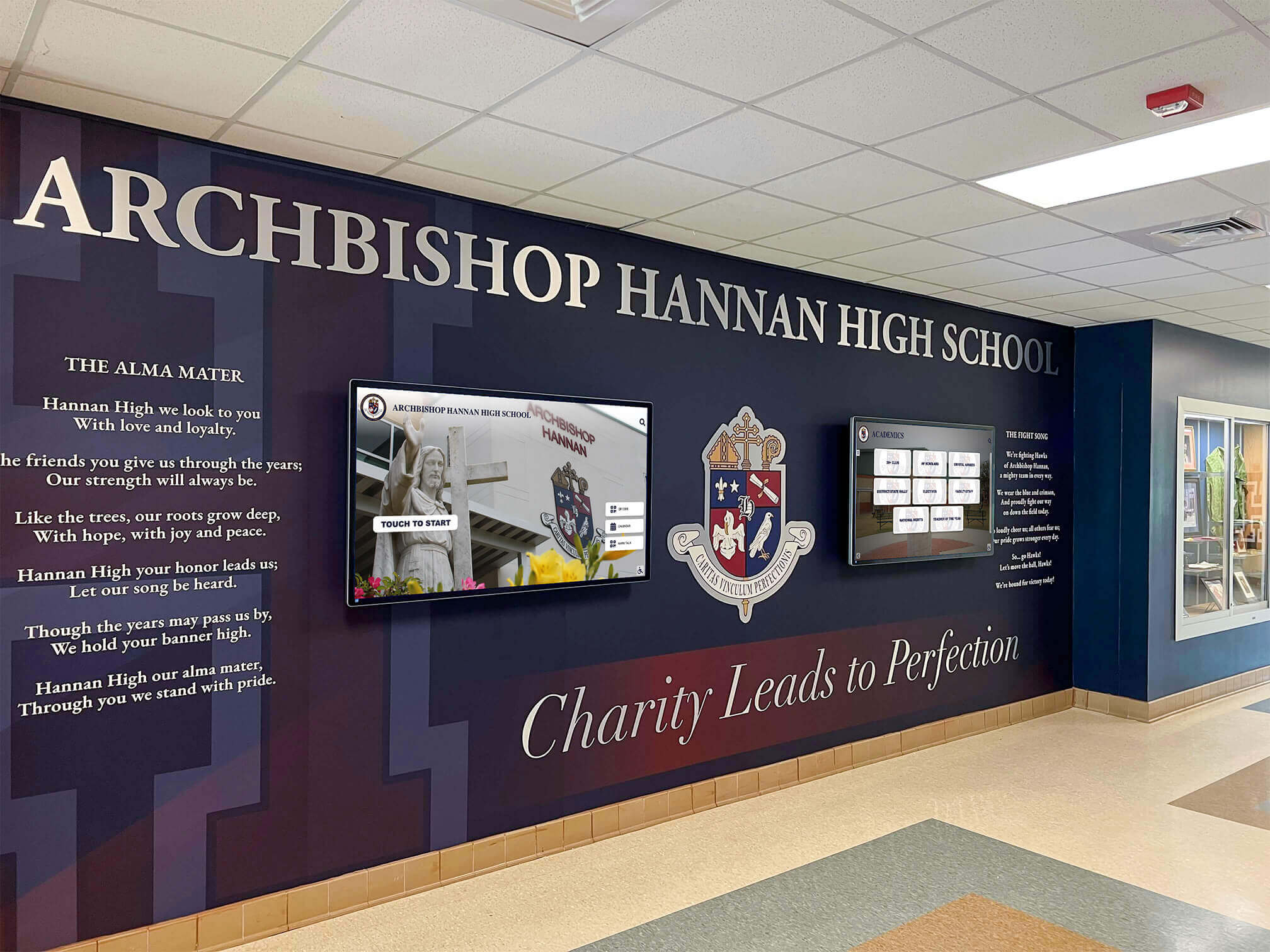
Lobby installations combine traditional architectural elements with modern wall graphics and digital displays
Planning Your School Wall Wrap Project
Successful implementations require systematic planning addressing design, logistics, budget, and stakeholder engagement.
Needs Assessment and Goal Setting
Clear objectives guide design decisions and measure success:
Defining Project Objectives
Establish specific outcomes wall wraps should achieve:
- School spirit enhancement building pride and community connection
- Wayfinding improvement helping visitors navigate campus efficiently
- Achievement celebration honoring student and program accomplishments
- Brand consistency creating unified visual identity across campus
- Educational reinforcement extending curriculum into common spaces
- Facility modernization updating dated institutional aesthetics
Stakeholder Input Collection
Gather perspective from diverse constituencies:
- Administrative leadership setting vision and priorities
- Facilities management addressing maintenance and durability needs
- Athletic directors defining sports recognition requirements
- Academic department chairs identifying subject-specific content
- Student government representatives providing student perspective
- Parent organizations supporting funding and implementation
- Alumni associations connecting to tradition and history
Space and Location Selection
Prioritize high-impact areas for maximum effect:
- Main entrance lobbies creating first impressions for all visitors
- Primary student circulation hallways with highest daily traffic
- Athletic facility corridors serving athletes and spectators
- Cafeteria and common areas with extended student presence
- Gymnasium walls creating inspiring competition environments
- Stairwells utilizing often-overlooked vertical spaces
Schools implementing interactive display technology often coordinate wall wrap locations with digital display placement for integrated recognition environments.
Design Development Process
Professional design ensures wall wraps achieve intended impact:
Working With Design Professionals
Most schools partner with experienced designers:
Internal Design Resources:
- School marketing or communications staff with graphic design experience
- Student art classes creating designs as curriculum projects
- Local graphic designers supporting schools as community service
- Alumni designers contributing pro bono professional services
External Design Services:
- Sign companies offering turnkey design, production, and installation
- Graphic design firms specializing in environmental graphics
- Architectural firms incorporating wall wraps into renovation projects
- Specialized school branding agencies understanding educational environments
Design Process Stages:
- Initial concept development with multiple design directions
- Stakeholder review and feedback collection
- Design refinement incorporating requested revisions
- Final approval and production file preparation
- Color matching and material selection
- Installation planning and logistics coordination
Technical Specifications
Proper specifications ensure quality results:
File Preparation Requirements
Professional printing demands high-resolution artwork:
- Resolution: 100-150 DPI minimum at actual print size
- Color mode: CMYK for accurate color reproduction
- File formats: Vector (AI, EPS, PDF) or high-resolution raster (TIFF, PSD)
- Bleed allowance: 3-6 inches beyond final trim dimensions
- Font handling: All text converted to outlines preventing font substitution
- Image quality: Sharp focus without compression artifacts
Material Selection Considerations
Different materials suit various applications:
- Smooth vinyl: Best for detailed graphics and photographs
- Textured vinyl: Creates dimensional interest and hides wall imperfections
- Wall-fabric material: Provides acoustic properties in noisy environments
- Removable adhesive: Allows future changes without wall damage
- Permanent adhesive: Provides strongest bond for long-term installations
- Laminate options: Matte, gloss, or anti-graffiti protective finishes
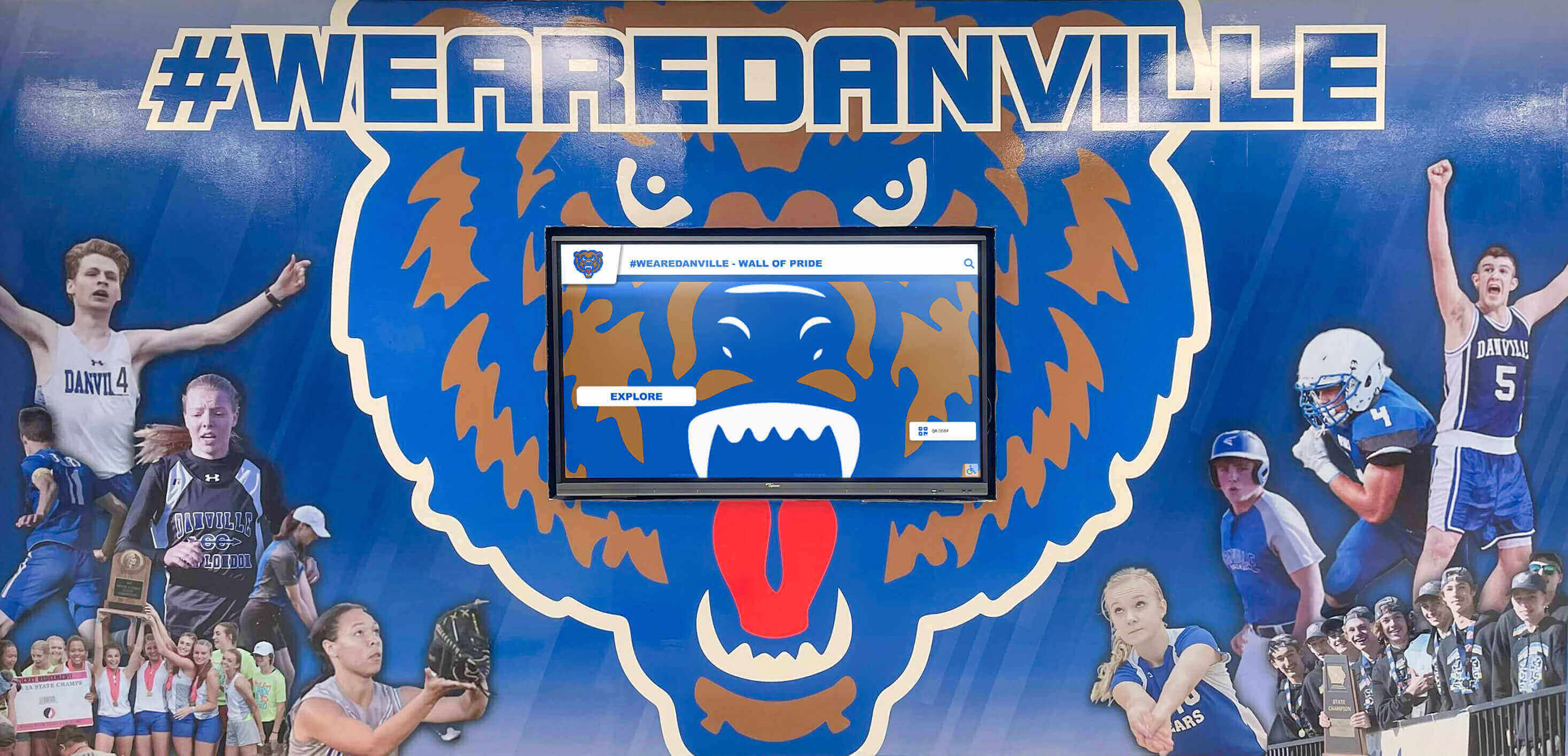
Athletic facilities benefit from mascot-centered wall wraps paired with digital recognition displays
Wall Surface Evaluation
Existing wall conditions affect installation success:
- Painted surfaces: Must be clean, fully cured (30+ days), and non-porous
- Concrete block: Often requires smooth wall-liner or coating preparation
- Drywall: Works well when properly finished and painted
- Brick: Requires special adhesives and may show texture through vinyl
- Previously painted surfaces: Lead paint testing required in older buildings
- Damage repair: Holes, cracks, and imperfections must be patched before installation
Budgeting and Cost Considerations
Understanding complete project costs prevents budget surprises:
Wall Wrap Production Costs
Material and printing expenses vary by specification:
- Basic vinyl printing: $3-$6 per square foot for simple designs
- Premium materials and finishes: $6-$10 per square foot for specialized vinyl
- Complex graphics: $8-$12 per square foot for intricate multi-color designs
- Protective laminates: Add $1-$2 per square foot for durability enhancement
- Rush production: Expedited timelines may incur 15-25% premium pricing
According to industry sources, professional installation typically costs $2.50-$4 per square foot depending on wall condition, with complex or textured surfaces at the higher end of the range.
Installation Labor Costs
Professional installation ensures quality results:
- Smooth walls: $1.50-$2.50 per square foot for straightforward installations
- Textured surfaces: $2.50-$4 per square foot requiring additional skill
- Small projects: Under 200 square feet may incur minimum charges or premium rates
- Wall preparation: Surface cleaning, repair, or priming adds $0.50-$2 per square foot
- Site conditions: Working after hours or in occupied spaces may increase costs
- Travel and logistics: Remote locations may include travel expenses
Total Project Budget Examples
Complete project costs for typical installations:
Small Project (200 square feet, single hallway feature wall):
- Design development: $500-$1,000
- Material and printing: $1,200 ($6/sq ft)
- Installation: $500 ($2.50/sq ft)
- Total: $2,200-$2,700
Medium Project (800 square feet, multiple hallway sections):
- Design development: $1,500-$2,500
- Material and printing: $5,600 ($7/sq ft)
- Installation: $2,400 ($3/sq ft)
- Wall preparation: $800
- Total: $10,300-$11,300
Large Project (2,500 square feet, comprehensive campus installation):
- Design development: $3,000-$5,000
- Material and printing: $17,500 ($7/sq ft)
- Installation: $8,750 ($3.50/sq ft)
- Wall preparation: $3,000
- Project management: $2,000
- Total: $34,250-$36,250
Budget Planning Strategies
Funding approaches for wall wrap projects:
- Capital improvement budgets for facility enhancement projects
- Booster club fundraising supporting athletic area installations
- Alumni association donations funding historical and tradition displays
- Corporate sponsorships from local business partners
- Memorial gift opportunities for major donors
- Bond proceeds from facility improvement or construction projects
- Grant funding for arts, athletics, or educational enhancement initiatives
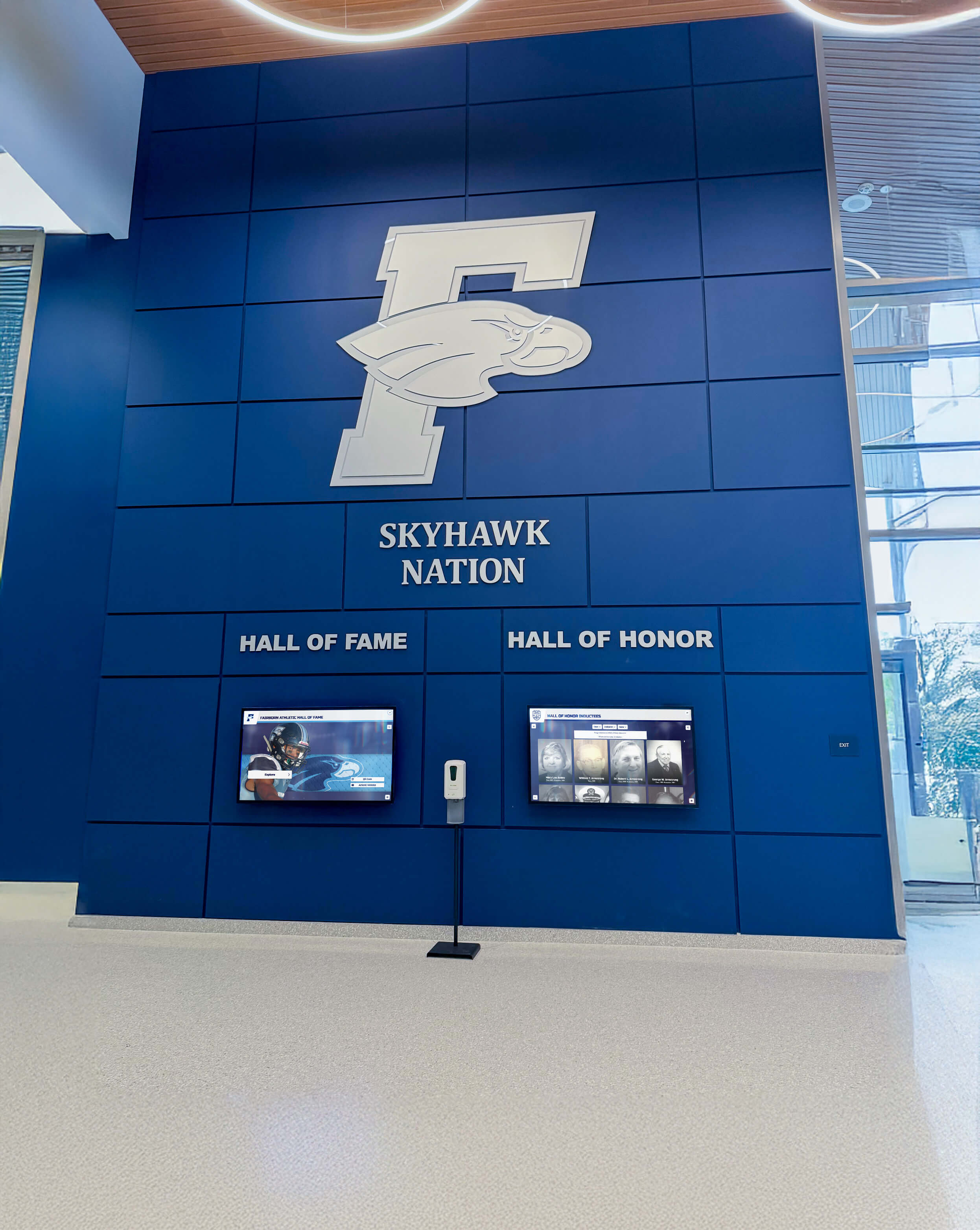
Lobby installations create prominent recognition spaces honoring institutional achievement and tradition
Installation Process and Timeline
Professional installation ensures wall wraps look exceptional and last for years.
Pre-Installation Preparation
Proper preparation prevents installation problems:
Wall Surface Preparation
Clean, smooth walls are essential for quality adhesion:
- Cleaning: Remove dirt, dust, grease, and contaminants using appropriate cleaners
- Repair: Patch holes, cracks, and imperfections with spackling compound
- Sanding: Smooth patched areas and rough textures creating uniform surface
- Priming: Apply bonding primer on porous or problematic surfaces
- Curing: Allow all repairs and primers to fully cure per manufacturer recommendations
- Final inspection: Verify surface readiness before installation appointment
Site Logistics Coordination
Installation requires planning for minimal disruption:
- Scheduling: Install during low-traffic periods like evenings, weekends, or breaks
- Access: Ensure installers can reach walls without obstruction
- Furniture: Remove or relocate items near installation areas
- Protection: Cover floors and adjacent surfaces preventing damage
- Ventilation: Adequate airflow helps adhesive curing and reduces odors
- Security: Coordinate building access for after-hours installations
Environmental Conditions
Temperature and humidity affect installation success:
- Ideal temperature range: 65-80°F for optimal adhesive performance
- Humidity: 30-70% relative humidity preventing application problems
- HVAC considerations: Maintain climate control during installation
- Seasonal timing: Avoid extreme temperature periods if possible
- Acclimatization: Allow vinyl materials to reach room temperature before installation
Professional Installation Process
Certified installers follow systematic processes ensuring quality:
Installation Steps
Professional techniques deliver flawless results:
- Final measurement and surface verification
- Vinyl positioning and alignment using reference marks
- Initial tack application along top edge or starting point
- Gradual application working methodically across surface
- Squeegee technique removing air bubbles and ensuring adhesion
- Seam alignment for multi-panel installations
- Edge trimming and sealing at boundaries
- Final inspection and touch-up as needed
- Adhesive curing time before full use
Quality Control Measures
Professional installers ensure proper application:
- Bubble-free surface achieved through proper technique and tools
- Seamless alignment across multiple panels maintaining design continuity
- Edge sealing preventing premature peeling in high-traffic areas
- Color matching verified under various lighting conditions
- Protection from damage during final stages of installation
- Customer walkthrough confirming satisfaction before completion
Installation Timeline
Typical project durations by scope:
Small Project (200 square feet):
- Wall preparation: 1-2 days
- Design and production: 5-10 business days
- Installation: 4-8 hours
- Total timeline: 2-3 weeks
Medium Project (800 square feet):
- Wall preparation: 2-4 days
- Design and production: 7-14 business days
- Installation: 2-3 days
- Total timeline: 3-5 weeks
Large Project (2,500 square feet):
- Wall preparation: 1-2 weeks
- Design and production: 10-20 business days
- Installation: 5-10 days
- Total timeline: 6-10 weeks
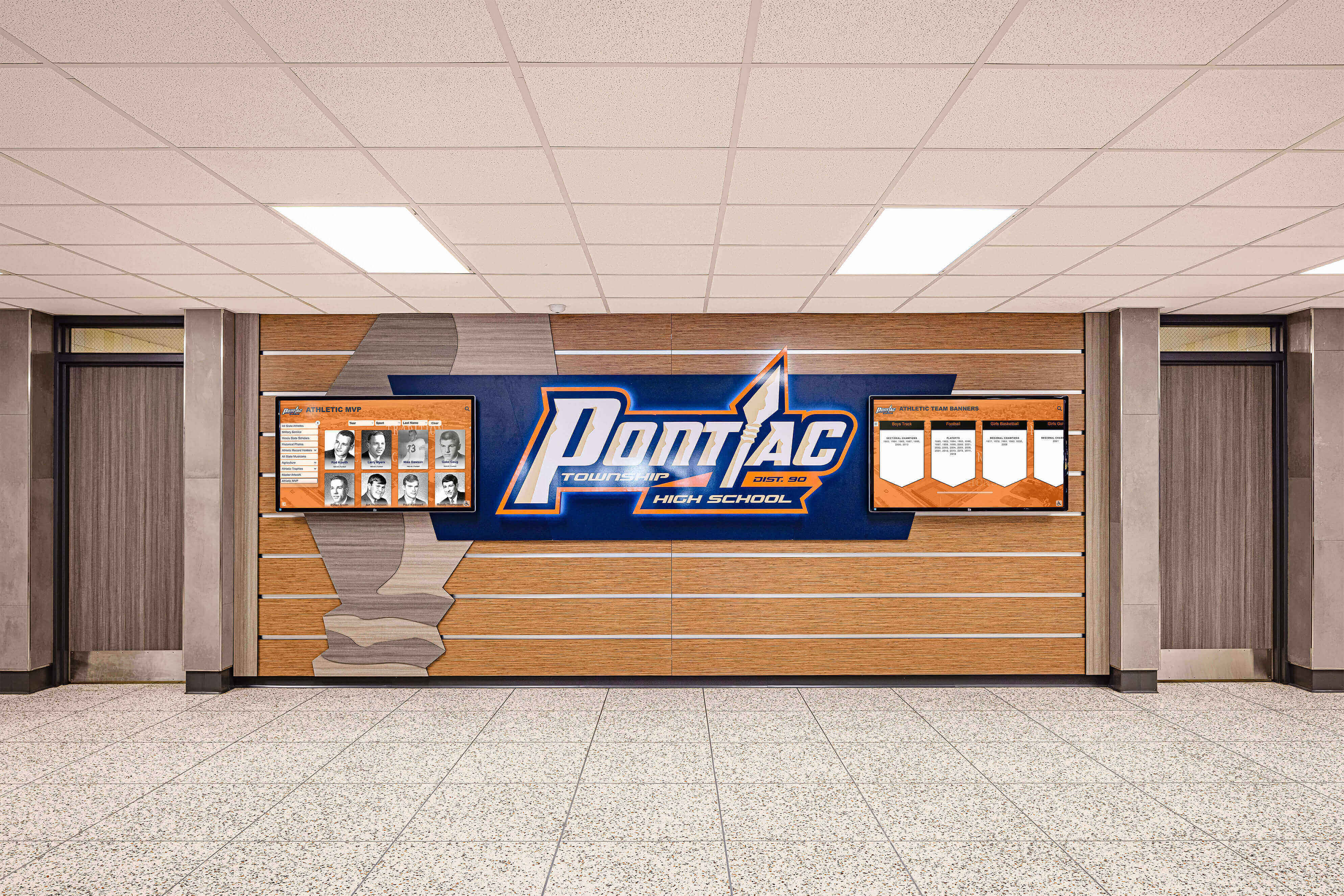
Athletic honor boards combine wall graphics with recognition displays celebrating program achievement
Timing Considerations
Strategic scheduling optimizes project success:
- Summer installations: Ideal timing with minimal student disruption
- Holiday break projects: Windows for installation with reduced campus activity
- Phased approaches: Breaking large projects into manageable sections
- Deadline planning: Homecoming, dedications, or other events requiring completion
- Production lead time: Rush fees avoided with adequate planning time
- Weather factors: Temperature and humidity considerations for optimal conditions
Schools implementing memorial recognition programs often combine wall wraps with digital displays providing flexible, updateable recognition.
Maintenance and Long-Term Care
Proper maintenance extends wall wrap lifespan and preserves professional appearance.
Regular Cleaning and Care
Routine maintenance keeps wall wraps looking new:
Cleaning Procedures
Appropriate cleaning methods prevent damage:
- Routine dusting: Soft cloth or microfiber duster removing surface dust weekly
- Spot cleaning: Damp cloth with mild soap addressing localized marks
- General washing: Gentle cleaning solution with soft sponge for overall cleaning
- Graffiti removal: Specialized products removing markers without damaging vinyl
- Avoid abrasives: No scrubbing pads, harsh chemicals, or abrasive cleaners
- Drying: Pat dry or air dry preventing water spots and streaking
Cleaning Frequency Recommendations
Traffic levels determine maintenance needs:
- High-traffic hallways: Weekly dusting, monthly deep cleaning
- Moderate-traffic areas: Bi-weekly dusting, quarterly deep cleaning
- Low-traffic locations: Monthly dusting, semi-annual deep cleaning
- Athletic facilities: Weekly cleaning during active seasons
- After events: Immediate spot cleaning following large gatherings
- Annual maintenance: Comprehensive cleaning and inspection yearly
Protective Measures
Preventing damage extends wall wrap life:
- Protective barriers: Wall corner guards in heavy-traffic areas
- Furniture placement: Maintain clearance preventing scuffs and tears
- Student awareness: Education about respecting wall graphics
- Monitoring: Regular inspection identifying issues early
- Quick response: Immediate attention to graffiti, stickers, or damage
- Environmental control: Consistent temperature and humidity levels
Repair and Touch-Up Options
Addressing damage preserves overall appearance:
Minor Damage Repair
Small issues often receive field repairs:
- Lifted edges: Re-adhesion using heat gun and pressure
- Small tears: Patch application matching original material
- Scratches: Depending on severity, may require panel replacement
- Staining: Cleaning or localized replacement of affected sections
- Bubbles: Post-installation bubbles can often be smoothed or pierced
- Color fading: Touch-up panels replacing sun-damaged sections
Major Damage Response
Significant issues may require professional intervention:
- Panel replacement: Reprinting and replacing damaged sections
- Design modifications: Updates incorporating repairs invisibly
- Complete removal: Severe damage may warrant full replacement
- Insurance claims: Vandalism or disaster damage documentation
- Warranty coverage: Manufacturing defects addressed by producers
- Vendor coordination: Professional assistance for complex repairs
Replacement and Refresh Strategies
Long-term planning for wall wrap updates:
- Planned refresh cycle: Budgeting for replacement every 7-10 years
- Phased replacement: Updating high-wear areas more frequently
- Design evolution: Periodic updates reflecting changing priorities
- Technology integration: Adding digital elements to static installations
- Seasonal rotation: Removable sections allowing periodic changes
- Funding strategies: Reserve funds for ongoing maintenance and replacement
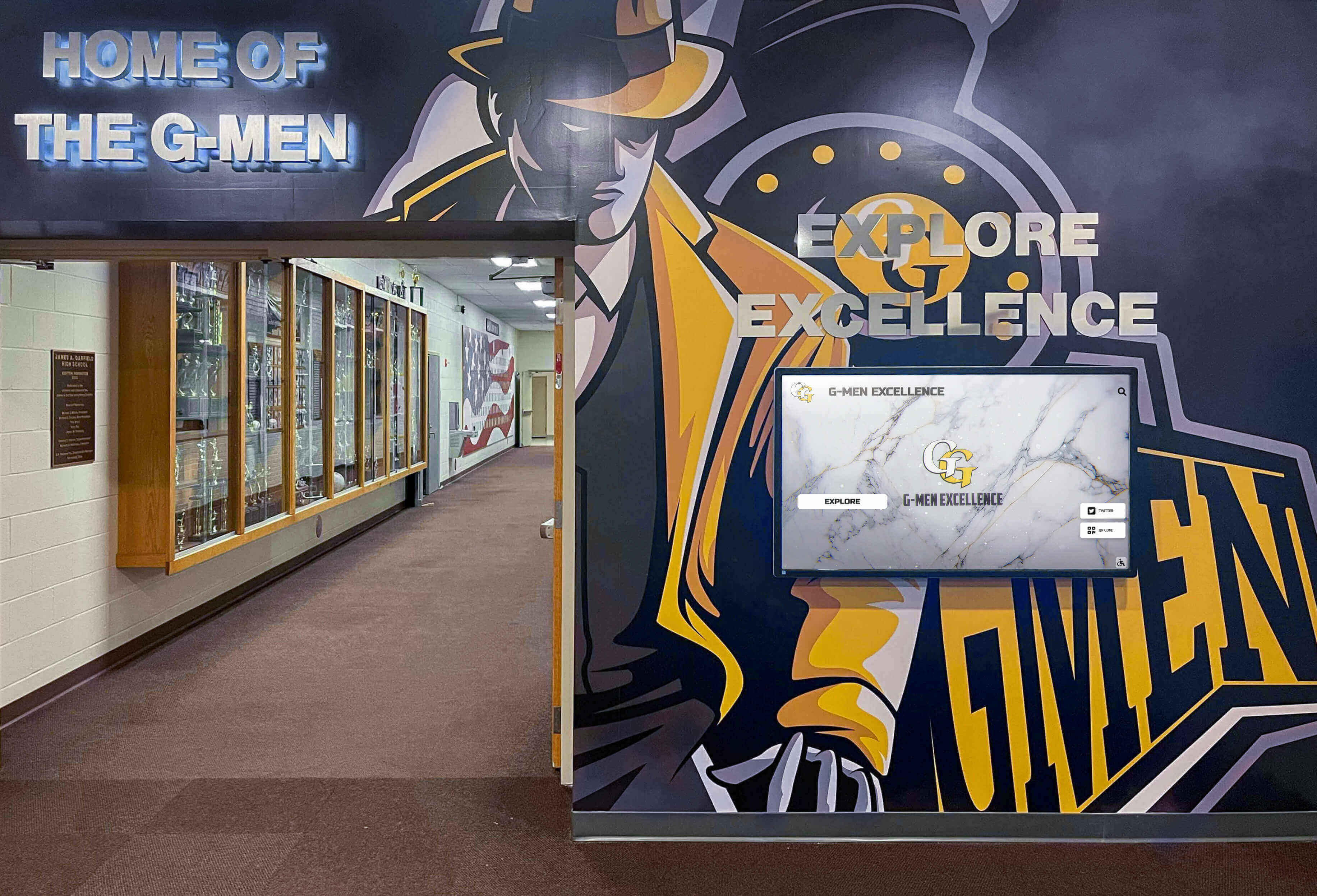
Comprehensive hallway installations blend wall graphics, digital displays, and traditional trophy recognition
Integrating Wall Wraps With Digital Displays
The most effective school recognition environments combine static wall graphics with interactive digital technology.
Hybrid Recognition Approaches
Coordinated systems leverage strengths of both mediums:
Complementary Design Strategies
Wall wraps and digital displays serve different functions:
Wall Wraps Provide:
- Branded environmental context setting overall aesthetic
- Permanent recognition elements not requiring updates
- Large-scale visual impact creating dramatic focal points
- Historical context and tradition reinforcement
- Cost-effective coverage of large wall areas
Digital Displays Enable:
- Unlimited recognition capacity without space constraints
- Easy content updates for current achievements and information
- Interactive exploration of detailed biographical content
- Searchable databases enabling visitor discovery
- Multimedia content including photos, videos, and documents
Schools implementing athletic hall of fame programs benefit from hybrid approaches where wall wraps create branded context while touchscreens provide comprehensive recognition archives.
Physical Layout Integration
Coordinated placement maximizes impact:
- Digital displays positioned as focal points within wall wrap designs
- Wall graphics framing touchscreens with complementary branding
- QR codes on wall wraps linking to digital content for mobile access
- Architectural integration treating both elements as unified design
- Lighting coordination highlighting both static and digital elements
- Wayfinding integration directing visitors to interactive displays
Content Coordination Strategies
Unified messaging across physical and digital elements:
Visual Identity Consistency
Cohesive design creates professional impression:
- Color palette alignment matching wall graphics to digital interfaces
- Typography systems using consistent fonts across mediums
- Logo treatment maintaining brand standards in all applications
- Photography style creating unified aesthetic in physical and digital content
- Graphic elements repeating patterns from wall wraps in digital templates
- Mascot illustrations using consistent style across all applications
Content Hierarchy Planning
Strategic distribution of information:
- Wall wraps: Inspirational messaging, school history, major achievements
- Digital displays: Detailed recognition, current information, searchable databases
- Print materials: Portable information extending digital content offline
- Website extensions: Online access to all recognition and historical content
- Social media: Shareable highlights driving engagement and awareness
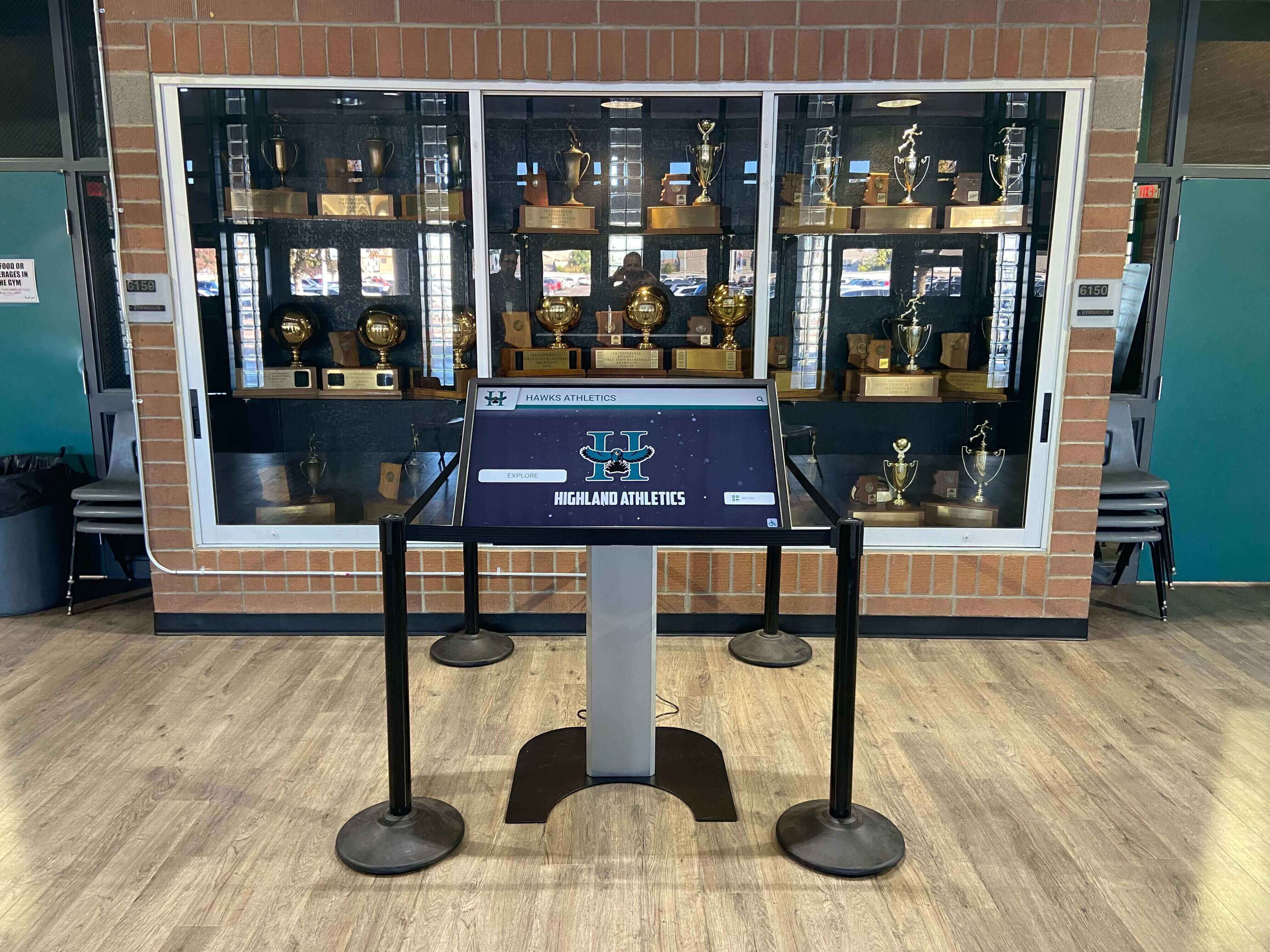
Modern recognition environments integrate touchscreen technology with traditional wall graphics and trophy displays
Phased Implementation Planning
Systematic rollout spreads investment:
Phase One: Wall Graphics Foundation (Year 1)
- Install wall wraps creating branded environmental context
- Establish visual identity system throughout priority spaces
- Generate excitement about facility improvements
- Build support for additional technology investment
Phase Two: Digital Display Integration (Year 2)
- Add interactive touchscreens in high-priority locations
- Coordinate digital content with existing wall graphics
- Train staff on content management systems
- Promote combined physical and digital recognition
Phase Three: Network Expansion (Year 3+)
- Extend wall graphics to additional campus locations
- Install digital displays in secondary priority areas
- Launch web-based recognition extending beyond campus
- Implement mobile access with QR code integration
Comprehensive recognition solutions like Rocket Alumni Solutions provide platforms integrating seamlessly with physical wall wrap installations, creating unified environments celebrating achievement through both static graphics and dynamic digital content.
Best Practices and Success Strategies
Learning from successful implementations helps schools avoid common pitfalls and maximize wall wrap effectiveness.
Common Mistakes to Avoid
Design and Planning Errors
Preventable problems undermining results:
- Insufficient stakeholder input creating designs lacking support
- Neglecting wayfinding and functional requirements
- Overcomplicated designs losing impact at viewing distances
- Poor color choices not matching actual school brand standards
- Text too small to read from typical viewing distances
- Design trends that will date quickly rather than timeless aesthetics
- Failing to plan for future updates and modifications
Installation and Technical Issues
Quality problems from improper execution:
- Inadequate wall preparation causing adhesion failures
- Rushing installation during inappropriate weather or temperature
- Unqualified installers lacking specialized wall wrap experience
- Insufficient quality control during installation process
- Neglecting edge sealing in high-traffic areas
- Installing over problematic wall surfaces without proper preparation
- Poor seam alignment on multi-panel installations
Budget and Procurement Challenges
Financial issues derailing projects:
- Underestimating total project costs causing funding shortfalls
- Failing to budget for wall preparation and repair
- Accepting lowest bids without quality verification
- Insufficient contingency funds for unexpected issues
- Neglecting long-term maintenance and replacement budgeting
- Missing grant deadlines or funding opportunities
- Inadequate fundraising planning and timeline
Maximizing Impact and Value
Strategic approaches ensure wall wraps achieve intended benefits:
Student and Community Engagement
Involving stakeholders builds ownership:
- Student design competitions generating ideas and buy-in
- Community input sessions gathering feedback on concepts
- Dedication ceremonies celebrating completion and donors
- Social media campaigns building awareness and excitement
- Photography opportunities encouraging student interaction
- Alumni engagement highlighting historical content and tradition
- Ongoing recognition updates maintaining relevance and interest
Measuring Success and Impact
Assessment demonstrates value and guides improvements:
- Before and after surveys measuring school pride and culture impact
- Visitor feedback on wayfinding and navigation effectiveness
- Social media mention tracking measuring digital engagement
- Campus tour feedback from prospective families
- Student behavior observation in wrapped versus control areas
- Damage and vandalism comparison tracking respect for environment
- Alumni connection metrics showing engagement with historical content
Continuous Improvement Planning
Long-term perspective ensures sustained value:
- Regular design refreshes keeping content current and relevant
- Technology integration additions enhancing static installations
- Expansion planning for additional campus locations
- Content updates reflecting new achievements and changes
- Maintenance schedules preserving professional appearance
- Budget planning for eventual replacement at end of life
- Documentation sharing successes and lessons learned
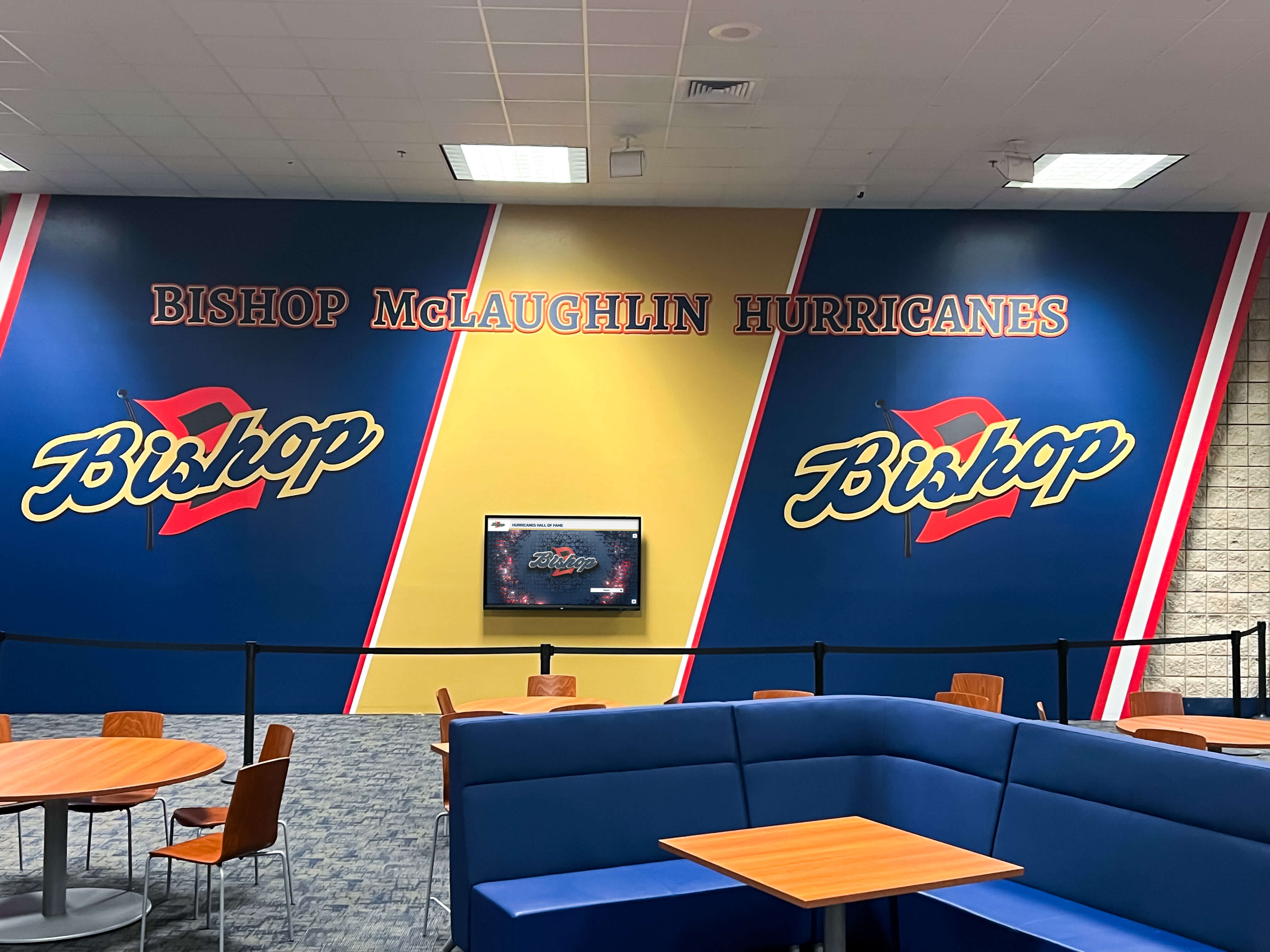
Cafeteria and lounge spaces benefit from large-scale wall graphics creating inviting, branded environments
Special Application Considerations
Different school facility types have unique wall wrap considerations and opportunities.
Athletic Facility Wall Wraps
Sports-focused spaces benefit from motivational and recognition-focused designs:
Gymnasium Wall Applications
High-ceiling spaces allow dramatic installations:
- End wall championship banners visible from bleachers and court
- Team motto and values statements inspiring athletes during competition
- Record boards celebrating top performances across program history
- Retired jersey recognition honoring legendary athletes
- Mascot graphics creating home court advantage through intimidation
- Sponsor recognition acknowledging corporate and community support
Locker Room Environments
Private team spaces support focused motivational content:
- Team values and expectations reinforcing program culture
- Inspirational quotes from coaches and former players
- Championship celebration graphics honoring past success
- Individual athlete motivation through personal achievement recognition
- Training and conditioning information supporting performance
- Schedule and opponent information for current season
Athletic facilities implementing digital trophy case solutions coordinate wall wrap branding with interactive recognition displays creating comprehensive celebration environments.
Academic Building Wall Wraps
Classroom and instructional areas benefit from educational and inspirational content:
Subject-Specific Hallways
Department areas receive customized content:
- Science wings featuring periodic tables, lab safety, and discovery timelines
- Mathematics corridors displaying formulas, concepts, and problem-solving strategies
- English and language arts halls showcasing literature, authors, and writing techniques
- Social studies areas highlighting historical timelines, geography, and civics
- Foreign language spaces incorporating multilingual content and cultural imagery
- Career and technical education graphics showing real-world applications
Library and Media Center Graphics
Learning commons receive literary and information literacy themes:
- Author portraits and biographical information inspiring reading
- Literary quotes and passages from classic and contemporary works
- Information literacy concepts supporting research skills
- Reading promotion campaigns encouraging lifelong learning habits
- Maker space themes supporting creativity and innovation
- Study skills and academic success strategies
Administrative and Common Area Applications
Support spaces communicate institutional values and information:
Main Office and Lobby Graphics
First impression spaces set institutional tone:
- Welcome messages in multiple languages reflecting community diversity
- Mission and vision statements communicating educational philosophy
- Historical timeline showing institutional evolution and tradition
- Notable alumni recognition highlighting graduate success
- Directional information and campus wayfinding
- School calendar highlighting upcoming events and activities
Cafeteria and Commons Graphics
Social spaces support community building:
- Nutrition and wellness information promoting healthy choices
- School spirit graphics creating energy and excitement
- Student artwork galleries showcasing creative talent
- Community values statements reinforcing character education
- Calendar and event promotion building awareness and participation
- Donor recognition acknowledging cafeteria improvement support
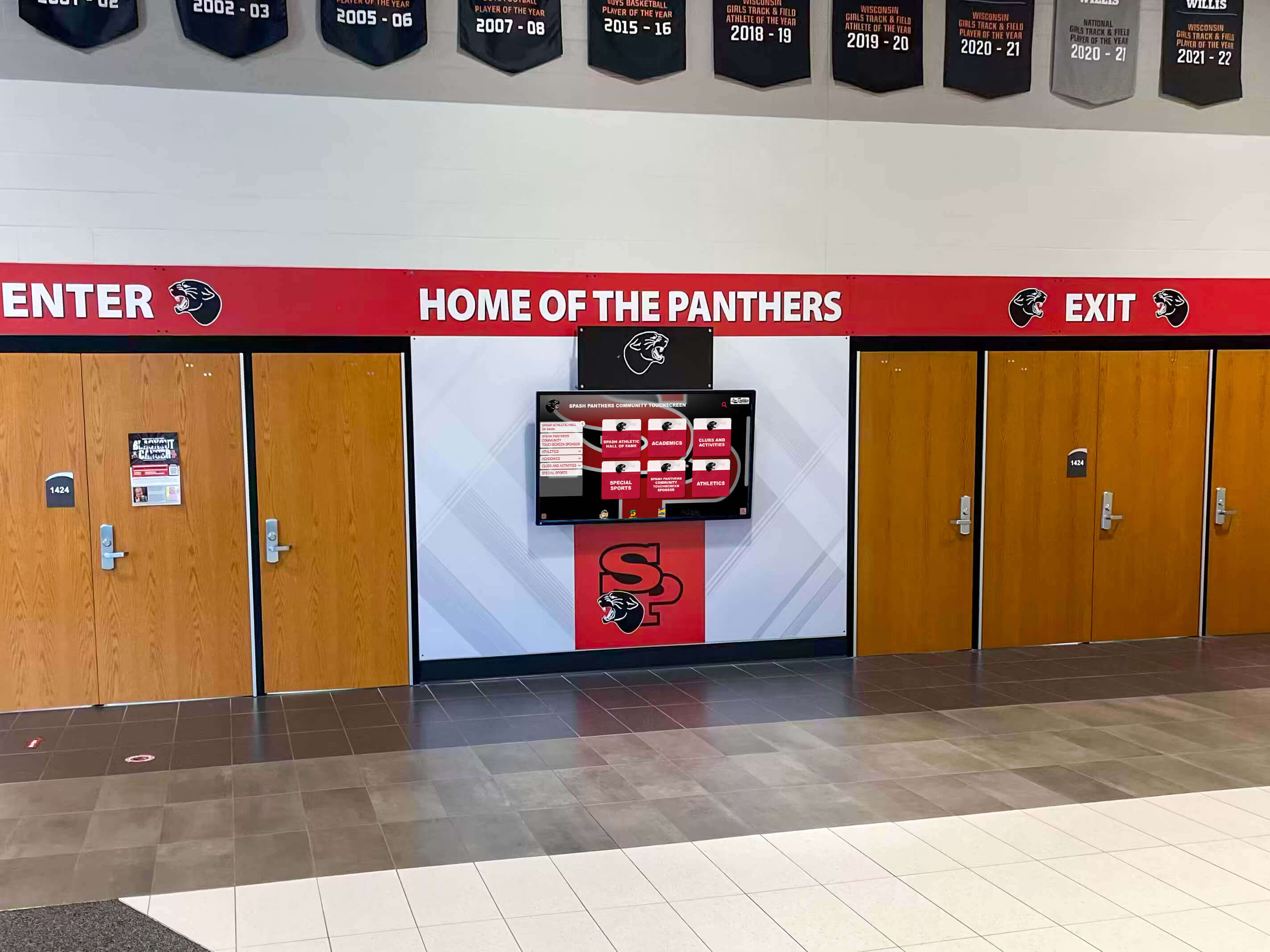
Entrance areas benefit from prominent branding and wayfinding graphics welcoming visitors and students
Vendor Selection and Procurement
Choosing qualified vendors ensures quality results and professional service.
Evaluating Wall Wrap Providers
Multiple factors determine vendor quality and suitability:
Experience and Expertise
Specialized knowledge matters in educational environments:
- Portfolio review showing previous school projects and quality
- Educational sector experience understanding unique school needs
- Installation certifications from vinyl manufacturers
- Design capabilities or partnerships with qualified designers
- Project management experience coordinating complex installations
- References from similar schools verifying satisfaction and quality
Quality and Materials
Premium materials justify investment:
- Commercial-grade vinyl specifications rated for longevity
- UV-resistant inks preventing premature fading
- Manufacturer warranties covering materials and installation
- Sample provision demonstrating material quality and finish options
- Color matching capabilities ensuring brand accuracy
- Environmental certifications for low-VOC materials
Service and Support
Ongoing relationships matter beyond installation:
- Design iteration responsiveness during development phase
- Project timeline reliability meeting school scheduling needs
- Installation flexibility accommodating school calendar constraints
- Warranty service addressing manufacturing or installation defects
- Maintenance guidance ensuring long-term appearance
- Repair and replacement services for future needs
Request for Proposal Development
Structured procurement ensures competitive and comprehensive proposals:
RFP Essential Components
Complete specifications enable accurate bidding:
- Project overview and objectives
- Detailed scope of work including locations and square footage
- Design requirements and existing brand guidelines
- Material specifications and quality standards
- Timeline requirements and deadline constraints
- Budget range or not-to-exceed amounts
- Installation conditions and access limitations
- Warranty expectations for materials and labor
- Payment terms and schedule
- Evaluation criteria and selection timeline
Proposal Evaluation Criteria
Systematic assessment ensures best vendor selection:
- Qualifications and experience: 20% weighting
- Design quality and approach: 25% weighting
- Cost and value: 25% weighting
- Timeline and project management: 15% weighting
- Warranties and ongoing support: 15% weighting
Contract Considerations
Proper agreements protect both parties:
- Clear scope preventing misunderstandings
- Change order procedures for modifications
- Payment milestone alignment with project progress
- Warranty terms and claim procedures
- Ownership of design files and reproduction rights
- Insurance and liability coverage requirements
- Dispute resolution procedures
Future Trends in School Wall Graphics
Understanding emerging technologies and approaches helps schools plan for long-term success.
Sustainable and Eco-Friendly Materials
Environmental considerations increasingly influence material selection:
Green Material Options
Sustainable alternatives to traditional vinyl:
- PVC-free substrates reducing environmental impact
- Recyclable materials minimizing waste
- Low-VOC adhesives and inks improving indoor air quality
- Bio-based materials from renewable resources
- Take-back programs enabling proper disposal and recycling
Lifecycle Planning
Comprehensive environmental thinking:
- Durable materials reducing replacement frequency
- Removable adhesives enabling clean wall restoration
- Modular designs allowing partial replacement
- Refurbishment options extending graphic life
- Responsible disposal coordinating with recycling programs
Interactive and Augmented Reality Integration
Technology enhances static wall graphics:
AR-Enhanced Wall Graphics
Mobile devices unlock additional content:
- QR codes linking to detailed information and videos
- Augmented reality apps overlaying digital content on physical graphics
- Interactive games and challenges built into wall designs
- Animated content bringing static graphics to life
- Historical photo comparisons showing campus evolution
Smart Wall Integration
Embedded technology creates responsive environments:
- Touch-sensitive wall panels detecting interaction
- Projection mapping transforming static walls dynamically
- LED lighting integration creating programmable displays
- Sensor-driven content responding to viewer presence
- Integration with school announcement and emergency systems
Modular and Updateable Systems
Flexible approaches accommodate change:
Design Systems for Evolution
Planning for updates from inception:
- Template-based designs allowing content swaps
- Modular panel systems enabling section replacement
- Digital display integration for dynamic content areas
- Magnetic receptive layers allowing temporary additions
- Frame systems accommodating interchangeable graphics
Schools planning comprehensive donor recognition walls increasingly combine static wall graphics with digital displays providing unlimited recognition capacity as supporter bases grow.
Conclusion: Transforming School Environments Through Wall Wraps
Wall wraps represent powerful tools for schools seeking to create engaging, branded environments that inspire students, communicate values, celebrate achievement, and strengthen institutional identity throughout campus facilities. When thoughtfully designed, professionally installed, and properly maintained, these large-format graphics transform ordinary hallways and common spaces into vibrant recognition and communication environments reflecting educational mission and community pride.
The comprehensive planning approaches outlined in this guide—from needs assessment and design development through installation management and long-term maintenance—provide frameworks ensuring successful wall wrap implementations that deliver lasting value. Understanding available design options, material specifications, cost considerations, and integration opportunities with digital technology enables administrators to make informed decisions matching wall wrap solutions to institutional needs, budget realities, and strategic priorities.
The schools achieving greatest success with wall wraps view these installations as foundational elements of broader school culture initiatives rather than isolated decoration projects. Wall graphics work most effectively when coordinated with complementary recognition programs, digital displays, wayfinding systems, and community engagement strategies creating cohesive environments where every element reinforces institutional identity and values.
Modern recognition increasingly combines static wall graphics with interactive digital displays, leveraging the strengths of both mediums. Wall wraps provide branded environmental context, permanent tradition reinforcement, and cost-effective coverage of large spaces. Digital displays add unlimited recognition capacity, easy content updates, interactive exploration, and multimedia storytelling impossible with static graphics alone. Solutions like Rocket Alumni Solutions specialize in creating integrated recognition environments where physical wall wraps and digital touchscreen systems work together seamlessly.
Your school’s hallways, gymnasiums, cafeterias, and common spaces represent valuable real estate in the daily experience of every student, staff member, and visitor walking through your doors. Wall wraps ensure these spaces actively contribute to school culture rather than serving merely as neutral passageways. Whether celebrating championship teams, recognizing academic excellence, reinforcing school values, honoring tradition, or simply creating attractive branded environments, wall graphics provide practical solutions transforming institutional spaces into engaging, inspiring environments supporting educational mission.
Ready to explore how custom wall wraps and integrated digital recognition can transform your school’s common spaces into vibrant celebration environments? Discover comprehensive solutions combining physical environmental graphics with interactive digital displays for complete recognition and communication systems.