Accurate volleyball court dimensions represent the foundation for competitive play, facility planning, and successful volleyball programs at every level. Whether you’re an athletic director preparing gymnasium specifications, a facilities manager planning multi-sport court configurations, or a volleyball coach ensuring competition-ready practice spaces, understanding official measurements, required clearances, and marking standards prevents costly mistakes while ensuring regulatory compliance.
Indoor volleyball courts require precisely 59 feet of length and 29.5 feet of width for the playing surface, yet the complete facility footprint extends significantly beyond these boundaries when accounting for free zones, run-off areas, and clearance heights. Outdoor and beach volleyball follow different dimensional standards altogether. Net heights vary by competitive level, age group, and gender, creating complexity for facilities serving multiple programs or transitioning between different types of play.
This comprehensive guide explains volleyball court dimensions across all settings—from high school gymnasiums to NCAA facilities to recreational beach courts—providing facility planners, athletic administrators, and program directors with authoritative measurements, marking specifications, and implementation considerations ensuring proper court construction and regulatory compliance.
Volleyball programs rely on properly dimensioned courts meeting competitive standards. Schools planning gymnasium construction or renovation, clubs establishing training facilities, and recreation departments developing volleyball programs all require accurate dimensional specifications ensuring spaces accommodate regulation play while maximizing facility functionality across multiple sports and activities.

Athletic facilities incorporating proper court dimensions create competitive venues while celebrating program achievement through digital recognition systems
Standard Indoor Volleyball Court Dimensions
Indoor volleyball courts follow standardized measurements established by governing bodies including USA Volleyball, the National Federation of State High School Associations (NFHS), and the Fédération Internationale de Volleyball (FIVB) for international competition.
Playing Court Surface Area
The official playing surface measures exactly 18 meters by 9 meters, equivalent to 59 feet by 29.5 feet in imperial measurements. This rectangular playing area is divided into two equal court halves measuring 9 meters (29.5 feet) square by the center line running underneath the net.
These dimensions remain consistent across competitive levels—high school, collegiate, club, and international play all use identical playing surface measurements. The standardization ensures athletes develop skills transferable between competition levels without adjustment to court size.
Court Orientation Considerations
- Length runs parallel to the net (59 feet)
- Width extends from net to back boundary (29.5 feet per side)
- Center line divides court into equal halves
- Court boundaries marked with 2-inch-wide contrasting lines
- All boundary lines are included within court measurements
Schools implementing digital athletic recognition displays often position touchscreen systems in gymnasium lobbies where visitors can explore volleyball championship records and athlete profiles before games.
Attack Lines and Court Zones
Beyond basic dimensions, volleyball courts feature designated zones marked by attack lines positioned precisely 3 meters (9 feet, 10 inches) from the center line on each side of the net.
Front Zone (Attack Zone)
- Extends from center line to attack line on each court half
- Measures 3 meters (9 feet, 10 inches) deep
- Back row players must jump from behind attack line when attacking above net height
- Critical for rotational positioning and back-row attack rules
- Marked with 2-inch-wide line matching court boundary color
Back Zone
- Extends from attack line to end boundary line
- Measures 6 meters (19 feet, 8 inches) deep
- Area where back row players maintain primary defensive positioning
- Serves must be executed from beyond the end line
- Contains service zone markings for competition rules
These zones fundamentally affect gameplay strategy, player positioning, and competitive tactics at all levels of play.
Service Zone Specifications
The service area extends the full width of the court behind the end boundary line:
Service Zone Dimensions
- Extends entire 9-meter (29.5-foot) court width
- Server must begin service motion completely behind end line
- Unlimited depth behind end line (within free zone)
- Service line markers positioned on sideline extensions
- Jump serves may land inside court after contact
Collegiate and International Standards Service zones at higher levels may include additional markings:
- Service zones marked 15 centimeters (6 inches) behind end lines
- Zone extends between theoretical sideline extensions
- Designated service areas indicated by short lines
- Officials use these markings for foot fault enforcement
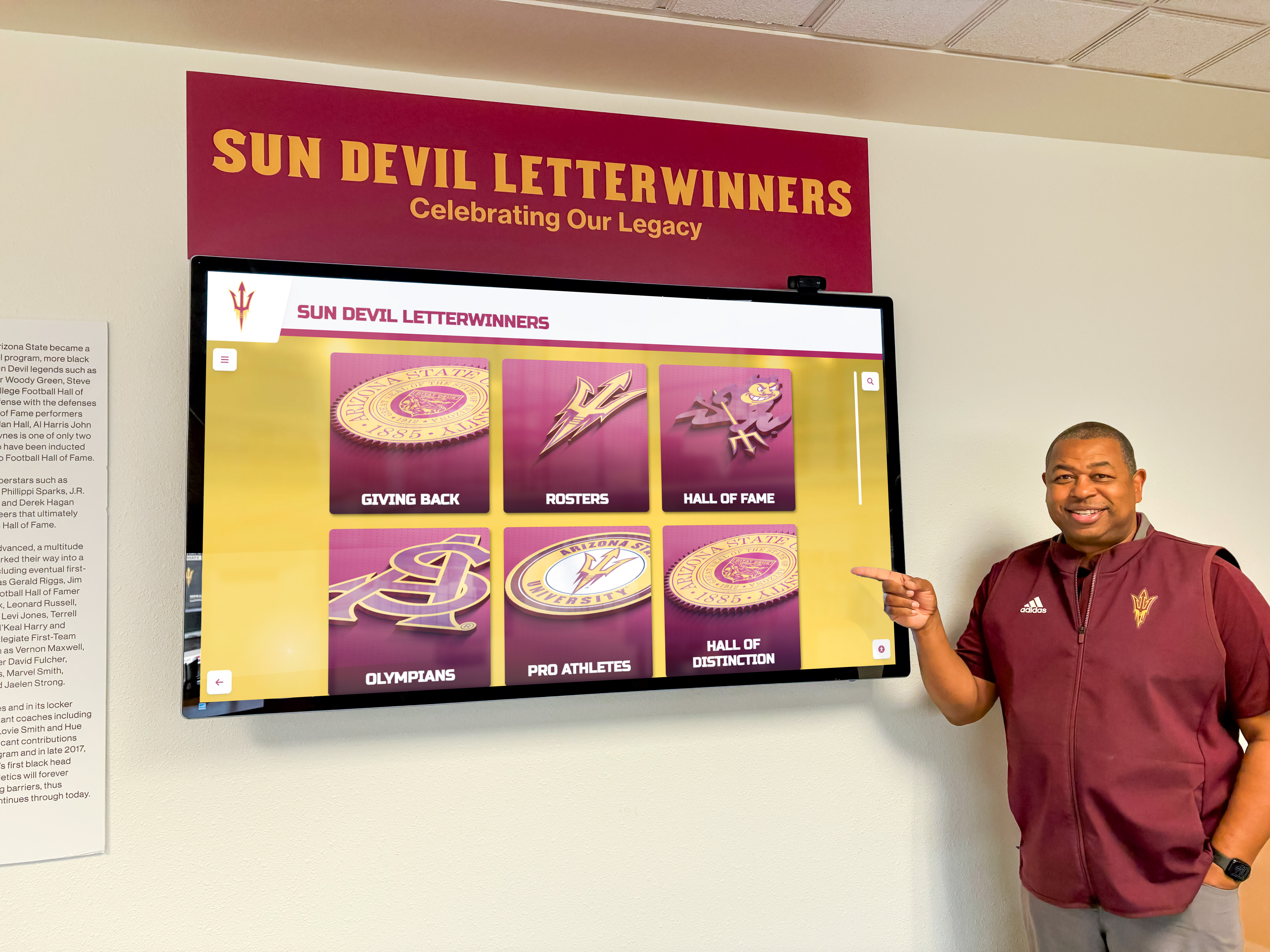
Volleyball programs display statistical leaders and record holders through interactive recognition systems positioned near courts
Free Zone Requirements Around Courts
The playing surface represents only the minimum space requirement. Competitive volleyball demands substantial additional space surrounding the court known as the free zone or clear space.
Minimum Free Zone Dimensions
Free zone requirements vary significantly by competition level and facility classification:
High School Competition (NFHS Standards)
- Minimum 6 feet of free space on all sides of court
- 10 feet preferred for optimal play and safety
- Unobstructed ceiling height minimum of 23 feet
- Greater clearance improves play quality and reduces interference
- Allows adequate run-off space for player safety
NCAA Collegiate Competition
- Minimum 2 meters (6 feet, 7 inches) on sidelines
- Minimum 2 meters (6 feet, 7 inches) behind end lines
- 3 meters (9 feet, 10 inches) strongly recommended
- Championship venues require expanded free zones
- Sufficient space for officials, team benches, and scorer’s table
International Competition (FIVB Standards)
- Minimum 3 meters (9 feet, 10 inches) on all sides for World competitions
- 5 meters (16 feet, 5 inches) preferred for major championships
- 6.5 meters (21 feet, 4 inches) behind end lines for FIVB World competitions
- Side clearances of 3 meters (9 feet, 10 inches) minimum
- Creates complete facility footprint significantly larger than playing surface
Athletic directors planning championship banner displays in gymnasium rafters must account for clearance heights ensuring banners don’t interfere with volleyball play.
Complete Facility Footprint Calculations
When calculating total space requirements for volleyball courts, add free zones to playing surface dimensions:
High School Gymnasium Minimum
- Playing surface: 59’ × 29.5'
- Free zones: 6’ on all sides
- Total minimum footprint: 71’ × 41.5'
- Recommended footprint: 79’ × 49.5’ (10-foot free zones)
Collegiate Competition Facility
- Playing surface: 59’ × 29.5'
- Free zones: 10’ on all sides (3-meter recommendation)
- Total recommended footprint: 79’ × 49.5'
- Championship venue: 85’ × 55’ or larger
Multi-Court Facilities When positioning multiple courts within single gymnasiums:
- Minimum 10 feet between adjacent court boundaries
- 15-20 feet preferred for simultaneous play
- Consider curtain dividers and protective netting
- Ensure adequate clearance from walls, bleachers, and equipment
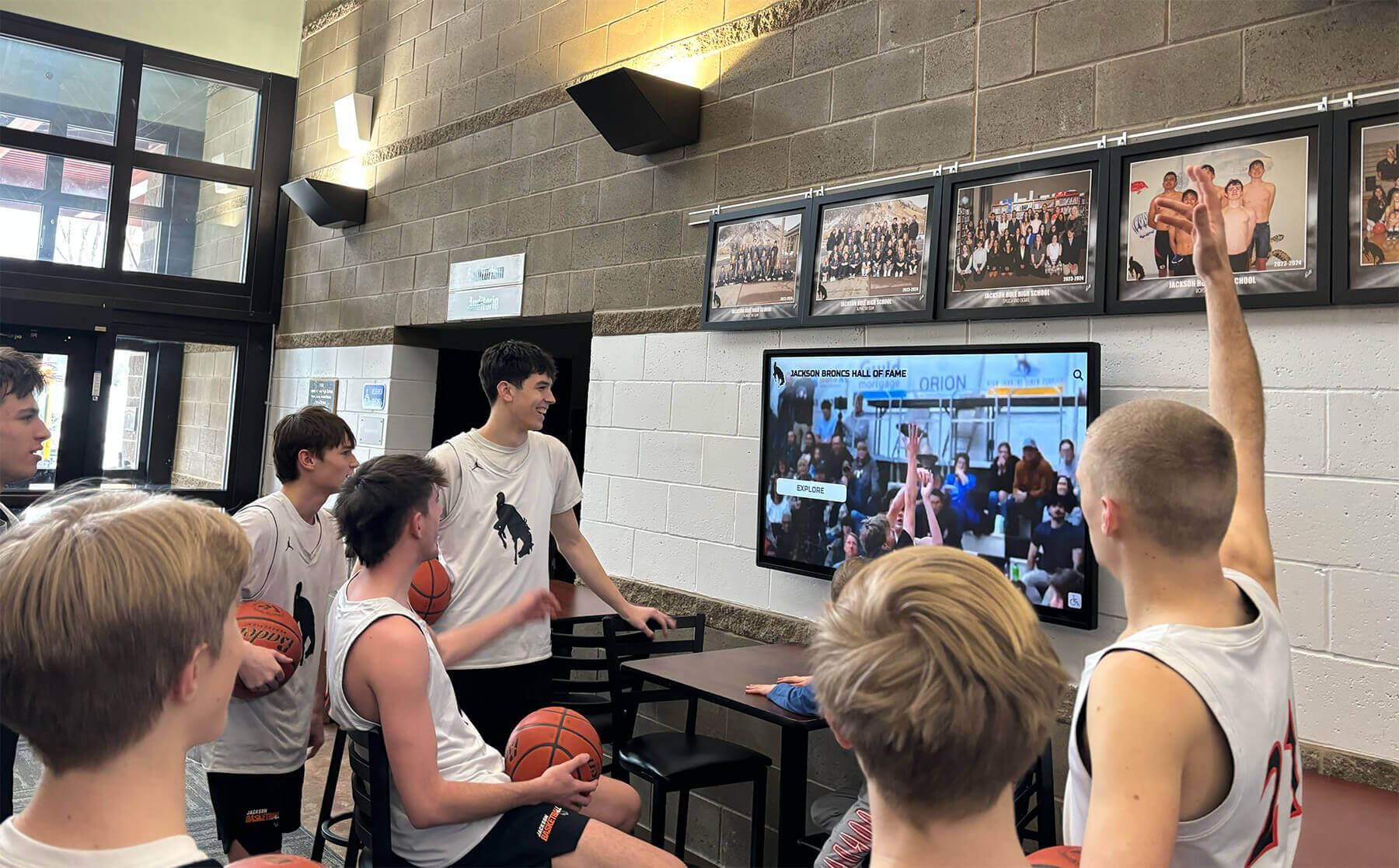
Multi-sport gymnasiums accommodate volleyball alongside basketball, with digital systems showcasing achievements across all programs
Overhead Clearance Heights
Vertical space requirements vary by competitive level:
Minimum Ceiling Heights
- High school competition: 23 feet minimum (NFHS)
- College competition: 23 feet minimum (NCAA)
- International competition: 7 meters (23 feet minimum, 12.5 meters/41 feet recommended for FIVB)
- Club and recreational: 20 feet minimum, 23 feet preferred
Overhead Obstructions
- Measure clearance from playing surface to lowest obstruction
- Basketball backboards, lighting fixtures, and HVAC systems affect clearance
- Banners and recognition displays must maintain required heights
- Replay rules apply when ball contacts overhead obstructions
Facilities planning athletic trophy display cases near courts create recognition spaces celebrating volleyball achievements without compromising playing area requirements.
Official Net Height Standards
Net height represents a critical specification varying by competitive level, age group, and gender classification.
Standard Net Heights by Level
Men’s and Boys’ Competition
- High school (NFHS): 7 feet, 11 5/8 inches (2.43 meters)
- NCAA collegiate: 7 feet, 11 5/8 inches (2.43 meters)
- International (FIVB): 2.43 meters (7 feet, 11 5/8 inches)
- Junior boys (ages 14-15): 7 feet, 4 1/8 inches (2.24 meters)
- Boys ages 11-12: 7 feet (2.13 meters)
- Boys ages 10 and under: 6 feet, 6 inches (1.98 meters)
Women’s and Girls’ Competition
- High school (NFHS): 7 feet, 4 1/8 inches (2.24 meters)
- NCAA collegiate: 7 feet, 4 1/8 inches (2.24 meters)
- International (FIVB): 2.24 meters (7 feet, 4 1/8 inches)
- Junior girls (ages 14-15): 7 feet, 4 1/8 inches (2.24 meters)
- Girls ages 11-12: 6 feet, 6 inches (1.98 meters)
- Girls ages 10 and under: 6 feet (1.83 meters)
Coed and Recreational Variations
- Reverse coed (female attackers): 7 feet, 11 5/8 inches
- Coed recreational: Often 7 feet, 6 inches as compromise height
- Youth development: Adjusted heights encourage skill development
- Sitting volleyball: 1.15 meters men, 1.05 meters women
Net Specifications and Measurement
Beyond height, net specifications include:
Net Dimensions
- Width: 1 meter (39.37 inches)
- Length: 9.5 to 10 meters (31-33 feet)
- Mesh size: 4 inches (10 centimeters) square
- Material: Black or dark brown preferred
- Top of net must span entire court width plus 0.5-1 meter sideline extensions
Height Measurement Standards
- Measured from playing surface to top of net at center
- Net tension creates natural sag at center
- Center height must meet specifications exactly
- Sideline net height maximum 2 centimeters (3/4 inch) higher than center
- Measured using official measuring device at center and both sidelines
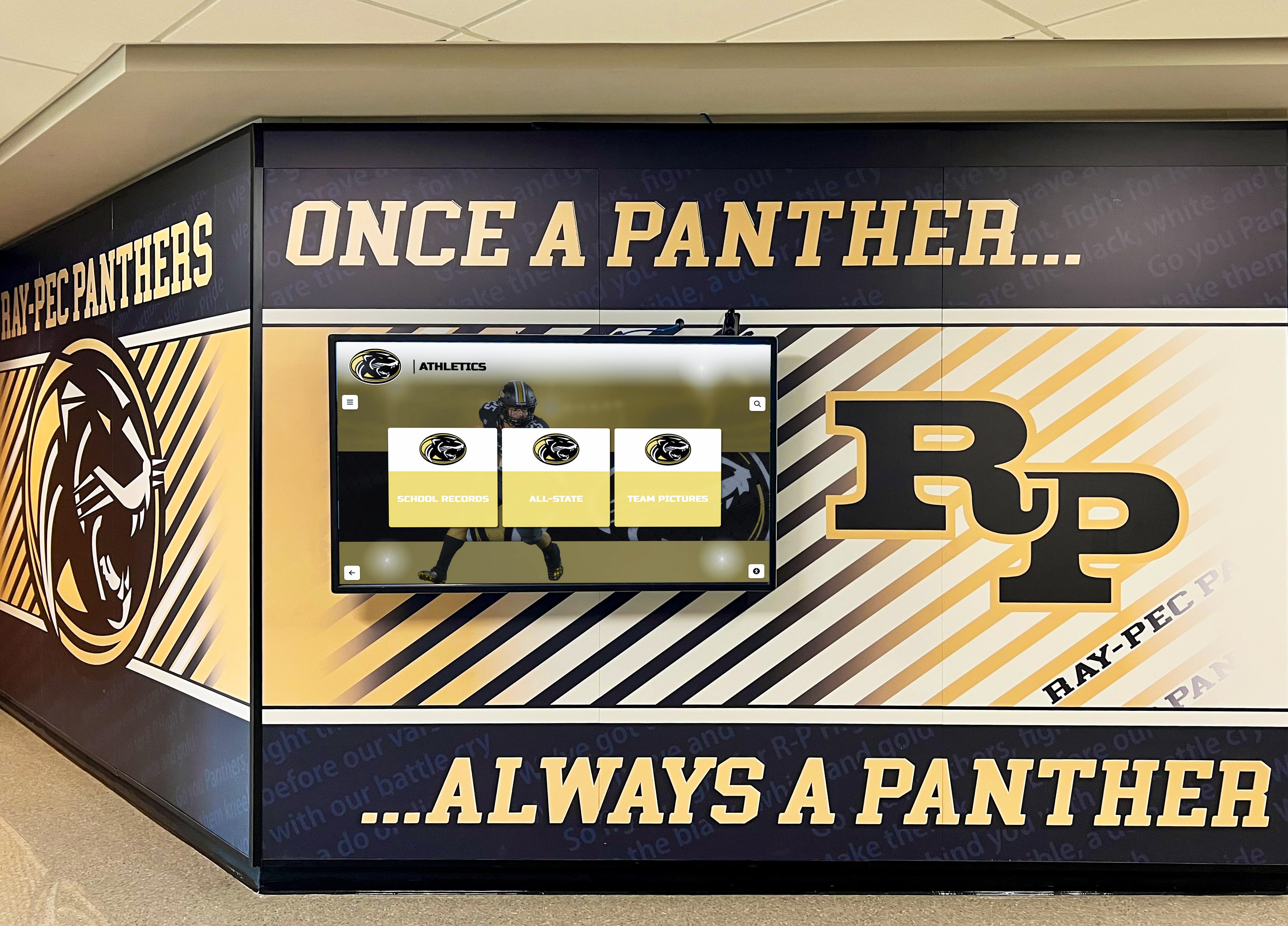
Volleyball programs integrate recognition displays showcasing team records, statistical leaders, and championship celebrations
Net Antenna Requirements
- Vertical rods attached to net directly above each sideline
- Extend 80 centimeters (31.5 inches) above net
- Red and white striped in 10-centimeter (4-inch) alternating colors
- Flexible fiberglass or similar material
- Mark vertical plane of sideline extending above net
Schools developing comprehensive athletics wall of honor programs recognize volleyball achievements alongside other sports, creating unified recognition celebrating all athletic programs.
Beach and Outdoor Volleyball Dimensions
Sand volleyball courts follow different dimensional standards than indoor facilities.
Beach Volleyball Court Specifications
Official beach volleyball uses slightly different measurements:
Playing Surface Dimensions
- Court length: 16 meters (52 feet, 6 inches)
- Court width: 8 meters (26 feet, 3 inches)
- Smaller than indoor courts by 2 meters length and 1 meter width
- Reduced size accounts for sand surface mobility challenges
- Two-player format requires less court coverage than six-player indoor
Beach Court Free Zones
- Minimum 3 meters (9 feet, 10 inches) on all sides for recreational play
- 5 meters (16 feet, 5 inches) recommended for competition
- No overhead obstruction within playing space
- Sand depth minimum 40 centimeters (15.75 inches)
- Level playing surface ensuring player safety
Beach Volleyball Net Heights
- Men’s competition: 2.43 meters (7 feet, 11 5/8 inches)
- Women’s competition: 2.24 meters (7 feet, 4 1/8 inches)
- Coed recreational: Various heights by program rules
- Net width 1 meter (39.37 inches)
- Extends 0.5-1 meter beyond court sidelines
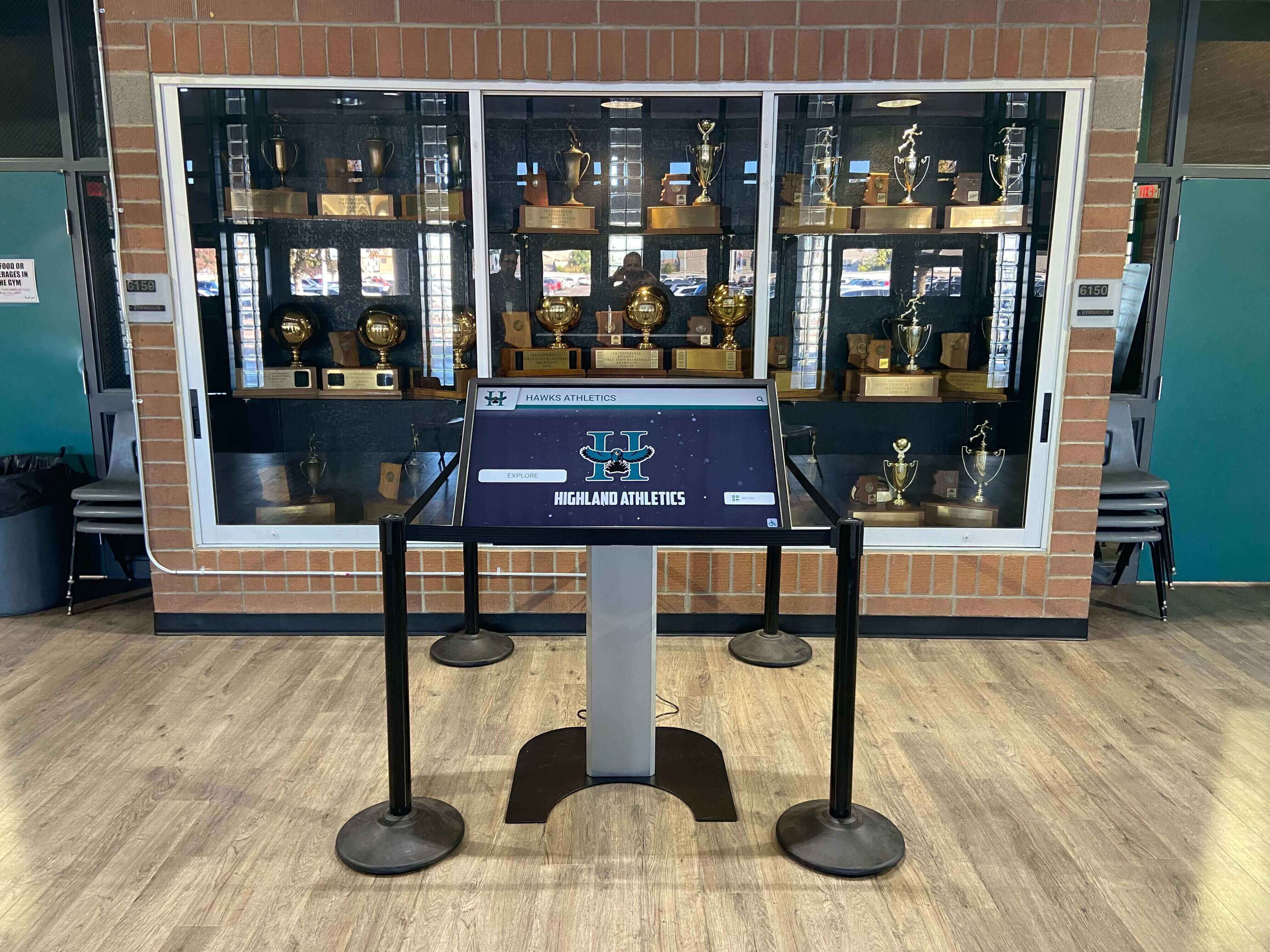
Athletic programs complement traditional trophy cases with interactive digital systems providing comprehensive recognition including volleyball achievements
Grass and Outdoor Court Variations
Outdoor grass volleyball commonly uses indoor court dimensions:
Standard Outdoor Court
- Uses full indoor dimensions (59’ × 29.5')
- Six-player format matching indoor rules
- Net heights match indoor standards by gender and age
- Requires level, properly drained surface
- Line markings using boundary tape or painted lines
Recreational and Youth Variations
- Smaller courts for younger age groups
- Modified dimensions for limited space
- Adjusted net heights appropriate to age
- Flexible boundary marking methods
- Emphasis on participation and skill development
High schools implementing senior night recognition programs celebrate graduating volleyball players through ceremonies featuring presentations on digital displays showcasing career statistics and achievements.
Court Marking Specifications and Standards
Proper court marking ensures regulatory compliance and facilitates accurate officiating.
Line Marking Requirements
All court boundary and zone lines follow specific standards:
Line Dimensions and Materials
- Width: 5 centimeters (2 inches) for all lines
- Color: Contrasting with playing surface (white on colored floors)
- Material: Paint or tape meeting friction standards
- Visibility: Clear distinction from playing surface
- Durability: Withstand regular play and cleaning
Line Inclusion in Court Measurements
- All lines are included within court dimensions
- Ball contacting any portion of line is “in”
- Inside edge of line defines playing area boundary
- Attack lines positioned 3 meters from center line’s outside edge
- Precise measurement ensures fair play
Required Court Lines and Markings
Complete volleyball courts include these marked lines:
Boundary Lines
- Two sidelines (59 feet each)
- Two end lines (29.5 feet each)
- Lines fully enclose rectangular playing area
- Corner intersections must be precise 90-degree angles
Zone Lines
- Center line underneath net separating court halves
- Two attack lines (3 meters from center line on each side)
- Attack lines extend from sideline to sideline
- Service zone marks (optional, 15 cm behind end lines)
Coaching and Team Areas
- Team bench areas outside free zone
- Warm-up area markings if designated
- Coaching boxes or areas by competition rules
- Scorer’s table placement between team benches
Substitution Zone Markings
- Extends from attack line to center line
- Located on sideline near team benches
- Marked with lines extending 15 cm from sideline
- Used for substitution protocols
Volleyball programs developing digital recognition displays showcase not only championship teams but also statistical record holders, all-conference selections, and athletes continuing competition at collegiate levels.
Multi-Sport Gymnasium Configurations
Most high school and recreational facilities accommodate multiple sports within shared gymnasiums.
Volleyball and Basketball Court Overlap
Volleyball courts commonly share space with basketball facilities:
Dimensional Considerations
- Basketball courts (84’ × 50’ high school) fully contain volleyball courts
- Volleyball court positioned within basketball boundaries
- Court orientation may run parallel or perpendicular to basketball
- Line colors differentiate sports (volleyball often uses red or blue)
- Removable net systems enable quick sport transitions
Shared Facility Challenges
- Multiple line sets can confuse players initially
- Color-coding and line width variations help differentiation
- Proper maintenance ensures all markings remain visible
- Scheduling coordinates court preparation between activities
- Equipment storage locations keep nets, standards, and antennas accessible
Permanent vs. Temporary Court Installations
Facilities choose between permanent and flexible systems:
Permanent Volleyball Courts
- Lines permanently painted on gymnasium floor
- Dedicated net sleeves installed in floor
- Ideal for programs with extensive volleyball schedules
- Reduced setup/takedown time between uses
- Professional appearance for competition hosting
Temporary Court Systems
- Removable boundary tape for flexible court positioning
- Portable net systems with weighted bases
- Accommodate multiple court configurations
- Enable facility multi-use without sport-specific commitments
- Cost-effective for programs with limited volleyball usage
Athletic programs using digital signage for school athletics position screens near gymnasiums to showcase schedules, real-time scoring, and athlete recognition content visible to spectators.
Facility Planning Considerations for Volleyball
Athletic directors and facilities managers planning volleyball-capable spaces should address multiple factors beyond basic court dimensions.
Spectator Seating and Viewing Areas
Successful volleyball facilities accommodate spectators effectively:
Seating Arrangements
- Bleacher placement must respect free zone requirements
- Minimum clearance between court boundaries and first seating row
- Sideline seating provides optimal viewing angles
- End zone seating requires greater distance for complete court visibility
- Elevated seating improves viewing perspective for elevated net play
Capacity Planning
- High school volleyball draws 100-500+ spectators for popular programs
- Tournament hosting requires expanded capacity considerations
- Standing room areas supplement fixed seating
- ADA-compliant accessible seating locations
- Emergency egress pathways maintained around seating areas
Flooring and Surface Requirements
Playing surface significantly affects game quality and player safety:
Indoor Court Surface Standards
- Hardwood provides optimal playing characteristics for volleyball
- Synthetic surfaces (rubber, vinyl) acceptable for multipurpose facilities
- Shock absorption reduces impact stress on athletes
- Friction coefficient prevents excessive sliding while allowing controlled movement
- Level surface essential (variations under 5mm per 3-meter measurement)
Surface Preparation
- Clean, dry surface ensures consistent ball bounce and player traction
- Regular maintenance preserves surface characteristics
- Dust mopping before matches removes debris
- Moisture control prevents dangerous slippery conditions
- Court sweeping during timeouts maintains playing quality
Beach Court Sand Specifications
- Fine-grain sand without rocks, shells, or dangerous materials
- Depth minimum 40 centimeters (15.75 inches)
- Level surface without depressions or mounds
- Regular raking maintains uniform playing conditions
- Border containment prevents sand migration
Schools celebrating volleyball achievements through team recognition programs often coordinate fundraising supporting program needs including facility improvements and equipment purchases.
Lighting and Environmental Factors
Proper lighting creates safe, fair playing conditions:
Lighting Standards
- Minimum illumination: 50 foot-candles (500 lux) for high school competition
- NCAA recommends 75 foot-candles (750 lux) for collegiate competition
- Uniform distribution across entire playing area and free zones
- Minimize shadows from net, players, and equipment
- Glare reduction protects player vision tracking ball flight
Environmental Controls
- Temperature range 60-80°F for optimal player performance
- Humidity control prevents excessively slippery floors
- Air circulation reduces stuffiness without creating ball drift
- Noise reduction improves communication between teammates
- Natural lighting considerations (avoid direct sun glare through windows)
Regulatory Compliance Across Governing Bodies
Different organizations establish rules requiring facilities managers to understand applicable standards.
NFHS High School Rules
The National Federation of State High School Associations governs most U.S. high school volleyball:
NFHS Court Specifications
- Standard court dimensions (59’ × 29.5')
- Minimum 6-foot free zones on all sides
- 23-foot minimum ceiling height
- Net heights: 7'11 5/8" (boys), 7'4 1/8" (girls)
- Line width 2 inches, contrasting color
Individual state athletic associations may modify NFHS rules slightly—verify specific state requirements when planning facilities for competition.
NCAA Collegiate Standards
NCAA volleyball rules govern collegiate competition:
NCAA Court Requirements
- Standard court dimensions (18m × 9m)
- Recommended 3-meter (10-foot) free zones
- Net heights: 2.43m (men), 2.24m (women)
- Specific equipment standards for nets and antennas
- Championship venue requirements exceed regular season minimums
USA Volleyball and FIVB International Rules
International and elite club competition follows FIVB specifications:
FIVB Standards
- Standard court dimensions (18m × 9m)
- Expanded free zones for World-level competition
- Minimum 3-meter side clearances
- 5-6.5 meter end line clearances for major events
- 7-meter minimum clear height (12.5m recommended)
- Specific standards for World and Olympic competitions
Understanding applicable rules ensures facilities meet requirements for intended competition levels and potential tournament hosting.
Planning Court Configurations for Different Programs
Program needs vary significantly affecting optimal court design:
High School Volleyball Programs
High school facilities balance volleyball with multiple sports:
High School Facility Priorities
- Accommodate six-player indoor volleyball
- Share space with basketball, physical education
- Meet NFHS and state athletic association requirements
- Host conference and potentially district tournaments
- Support JV and varsity practice schedules simultaneously
- Provide adequate spectator seating for community interest
Court Configuration Strategies
- Primary court aligned with basketball for spectator sight lines
- Practice courts with temporary systems if space permits
- Permanent net sleeves simplify setup for frequent use
- Color-coded lines distinguish volleyball from basketball boundaries
- Digital displays near courts showcase season schedules and record holders
Schools implementing honor roll recognition programs alongside athletic recognition create comprehensive student achievement displays celebrating both academic and athletic excellence.
Club Volleyball Training Facilities
Club programs require space optimized specifically for volleyball:
Club Facility Design
- Multiple courts enabling simultaneous team practices
- Court spacing 10-15 feet between adjacent boundaries
- Permanent volleyball-specific installations
- Expanded free zones supporting advanced play
- Spectator areas for parents and recruitment observations
- Video capability for player development and recruiting
Multi-Court Configurations
- Four to eight courts typical in dedicated club facilities
- Curtain dividers separate courts during simultaneous use
- Adequate ceiling height across entire facility
- Consider 10’ or 12’ free zones for elite skill development
- Storage for portable equipment and training aids
Recreational and Community Programs
Community centers balance volleyball with diverse recreational activities:
Flexible Court Systems
- Temporary court marking using removable tape
- Portable net systems with weighted bases
- Adjustable net heights accommodating multiple age groups
- Multi-purpose flooring supporting various activities
- Cost-effective solutions fitting limited budgets
Inclusive Programming
- Court dimensions adjusted for youth development programs
- Lower net heights for elementary age groups
- Smaller courts teaching fundamentals to beginners
- Open play times welcoming community participation
- Coed recreational leagues using compromise net heights
Modern recognition systems celebrate volleyball programs alongside all school athletics, preserving achievements and inspiring future players
Maintenance and Long-Term Court Management
Proper maintenance preserves court quality and extends facility lifespan:
Regular Maintenance Requirements
Daily Maintenance Tasks
- Sweep courts removing dust, dirt, and debris before play
- Check line visibility and touch up worn markings as needed
- Inspect net condition, tension, and antenna positioning
- Verify net height measurements remain accurate
- Clean floors using appropriate products for surface type
Periodic Maintenance
- Deep clean flooring monthly removing accumulated residue
- Inspect net sleeves and anchoring systems quarterly
- Touch up or repaint court lines annually or as needed
- Check net standards for stability and damage
- Service equipment storage systems ensuring functionality
Annual Court Evaluation
- Comprehensive floor condition assessment
- Line marking evaluation and repainting schedule
- Net and equipment replacement planning
- Free zone clearance verification after facility changes
- Safety inspection identifying hazards requiring correction
Equipment Inventory and Replacement
Volleyball programs maintain equipment supporting court use:
Essential Equipment
- Competition nets meeting specifications for levels played
- Practice nets for training courts
- Net standards and tensioning systems
- Boundary line tape for temporary courts
- Measuring devices verifying net height accuracy
- Antennas meeting color and size requirements
- Referee stands and officiating equipment
- Ball carts, storage containers, and training aids
Replacement Planning
- Competition nets: 3-5 years depending on use intensity
- Practice nets: 2-4 years with heavy training use
- Net standards and equipment: 10+ years with proper care
- Line tape: Annual replacement for temporary systems
- Playing surface refinishing: 8-12 years for hardwood floors
Schools showcasing athletic history through interactive timeline displays include volleyball program milestones, championship seasons, and distinguished athletes within comprehensive institutional history presentations.
Conclusion: Building Volleyball Success Through Proper Dimensions
Understanding and implementing correct volleyball court dimensions creates the foundation for successful programs at every competitive level. From precise 59-foot by 29.5-foot playing surfaces to critical free zone clearances, attack line positioning, and appropriate net heights, each specification contributes to safe, fair competition while meeting regulatory requirements for hosting tournaments and championships.
Athletic directors planning new facilities or renovating existing gymnasiums benefit from comprehensive dimensional knowledge ensuring spaces accommodate current program needs while providing flexibility for future growth. The measurements outlined in this guide—drawn from NFHS, NCAA, USA Volleyball, and FIVB standards—provide authoritative specifications supporting facility planning decisions worth hundreds of thousands of dollars in construction investments.
Beyond basic dimensions, successful volleyball facilities consider spectator accommodation, surface quality, lighting adequacy, environmental controls, and multi-sport functionality. The most effective gymnasiums balance volleyball-specific needs with broader facility utilization requirements, creating adaptable spaces serving diverse programs and communities.
Proper court dimensions coupled with quality equipment, adequate clearances, and appropriate markings demonstrate institutional commitment to volleyball programs. These facilities become venues where athletes develop skills, teams pursue championships, and schools create traditions celebrated for decades. Digital recognition displays positioned near courts preserve these achievements, connecting current players to the program’s legacy while inspiring pursuit of excellence.
Whether planning a high school gymnasium renovation, establishing a dedicated club volleyball training facility, or developing community recreational courts, the dimensional specifications and planning considerations in this guide provide the foundation for facilities supporting competitive excellence and program growth.
Your volleyball program deserves a properly dimensioned facility meeting regulatory standards while creating an environment where athletes thrive. Investing in correct court specifications from the beginning prevents costly corrections while establishing a venue where championships are won and traditions are built.
Ready to celebrate your volleyball program’s achievements through modern recognition solutions? Discover how interactive displays from Rocket Alumni Solutions can showcase your volleyball records, championship teams, and outstanding athletes in your gymnasium, creating engaging recognition that inspires current players while honoring program history.