Athletic directors and school administrators researching digital hall of fame displays often encounter a frustrating pattern: vendors provide hardware specifications and software licensing costs, but pricing for the complete solution—including content setup, training, installation, and ongoing support—remains vague or requires multiple phone calls to piece together. You need a working hall of fame display, not a technology project requiring months of coordination between hardware vendors, software companies, installers, and content developers.
Turnkey digital hall of fame displays solve this complexity by bundling hardware, software, content development, installation, training, and support into single comprehensive packages. Instead of managing five separate vendors, schools work with one provider accountable for delivering an operational display ready to showcase athletes, achievements, and school history from day one.
This comprehensive guide explores turnkey pricing for digital hall of fame displays serving schools nationwide, covering hardware investment ranges, content setup costs, training components, installation services, and total package pricing that enables realistic budget planning without hidden surprises.
Schools evaluating digital recognition systems need transparent pricing that reflects real-world implementation costs. A 55-inch touchscreen listing at $3,000 seems affordable until you discover separate charges for mounting brackets, installation labor, content management software subscriptions, initial content development, administrator training, and network configuration support. Understanding complete turnkey pricing prevents budget shortfalls that stall projects midway through implementation.
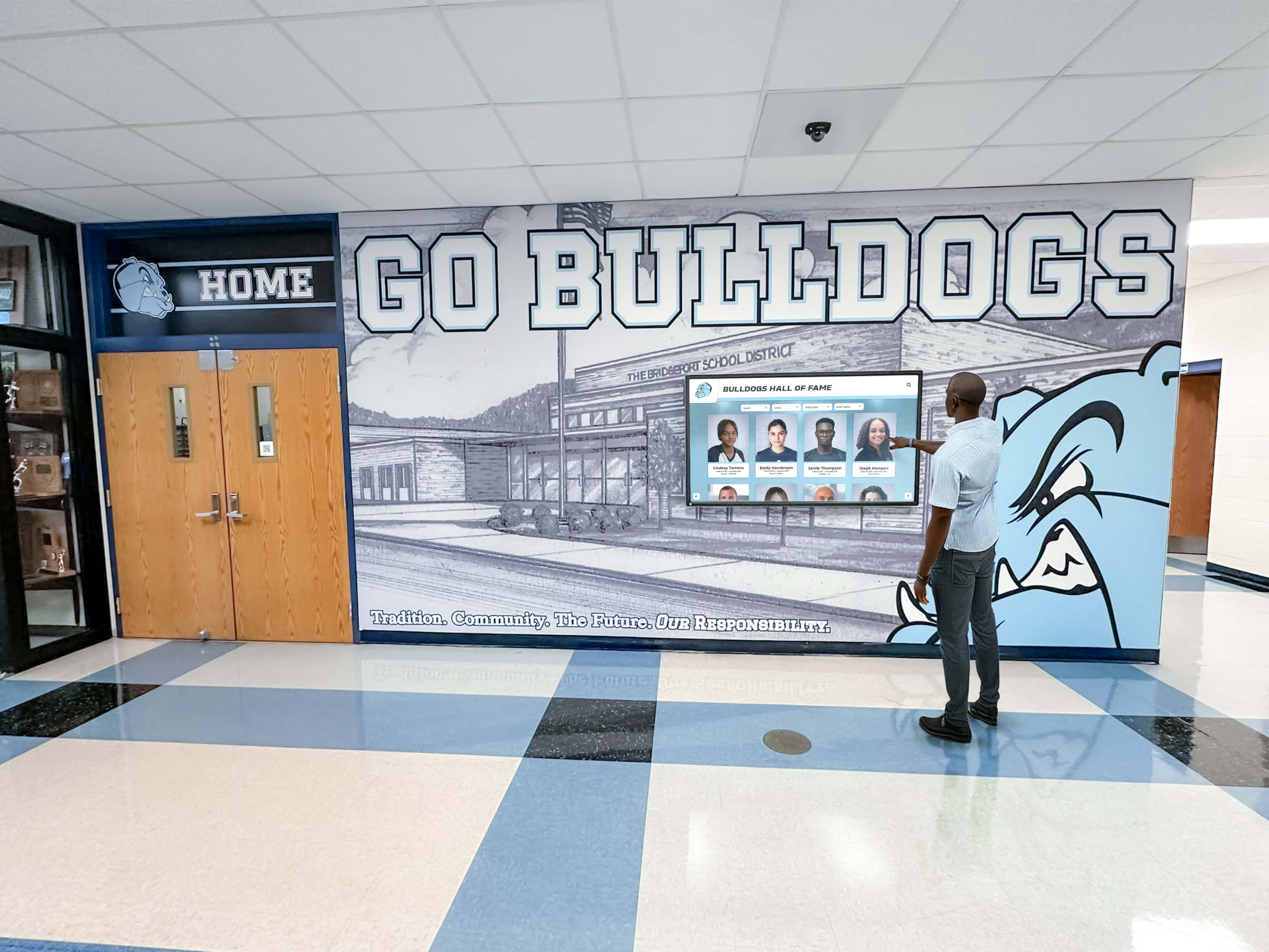
Turnkey digital hall of fame displays integrate seamlessly into school athletic facilities with professional installation and content already configured
Understanding Turnkey vs. Piecemeal Digital Display Solutions
Before exploring specific pricing, understanding the fundamental differences between turnkey packages and component-based approaches clarifies why cost structures vary significantly across vendors.
What “Turnkey” Actually Means for Digital Displays
Turnkey refers to comprehensive solutions delivered ready for immediate operation—the customer figuratively “turns the key” and the system works without additional vendors, integration work, or technical configuration.
Complete Turnkey Package Components
- Commercial-grade touchscreen hardware (display, computer, mounting)
- Content management software (cloud-based platform)
- Initial content development (uploading photos, biographical data, achievements)
- Professional installation (mounting, cabling, network configuration)
- Administrator training (live sessions teaching content updates)
- Ongoing technical support (help desk, troubleshooting, maintenance)
- Warranty coverage (hardware replacement, software updates)
True turnkey providers deliver these elements as integrated services from one organization. The customer avoids coordinating between hardware suppliers, software companies, installation contractors, graphic designers, and IT consultants—all relationships managed internally by the turnkey vendor.
Component-Based Approaches and Hidden Costs
Many vendors advertise “affordable” digital display solutions by quoting only hardware or software costs while omitting complementary services. Schools pursuing these apparent bargains discover significant additional expenses:
Hardware-Only Purchases
- Display unit: $2,500-$8,000 depending on size
- Mounting brackets: $100-$400 separately purchased
- Computer or media player: $300-$800 additional cost
- Installation labor: $400-$1,200 contracted separately
- Network configuration: IT staff time or consultant fees
- Total hidden costs: $800-$2,400 beyond display price
Software-Only Subscriptions
- Annual licensing: $500-$3,000 per display
- Compatible hardware: Customer sources separately
- Content development: DIY or hire designers ($1,500-$5,000)
- Training materials: Self-service documentation only
- Technical support: Email-only or per-incident charges
- Implementation timeline: 3-6 months of coordination
Schools comparing a $3,000 display quote against a $12,000 turnkey package may assume the piecemeal approach saves $9,000. However, after accounting for mounting hardware, installation contractors, content development time, administrator training hours, and multi-vendor coordination costs, the actual savings often disappear while implementation complexity increases dramatically.
Advantages of Integrated Turnkey Solutions
Single Point of Accountability When displays malfunction, turnkey customers contact one vendor responsible for resolution regardless of whether hardware, software, or network issues cause problems. Piecemeal approaches force schools to diagnose root causes and contact the appropriate vendor—hardware manufacturer, software company, or installation contractor—often with each party blaming others.
Faster Implementation Timelines Turnkey providers manage all coordination internally. Schools avoid sequential delays waiting for hardware delivery before ordering mounting brackets, then scheduling installers, then configuring software, then developing content. Comprehensive vendors execute these phases concurrently, compressing timelines from months to weeks.
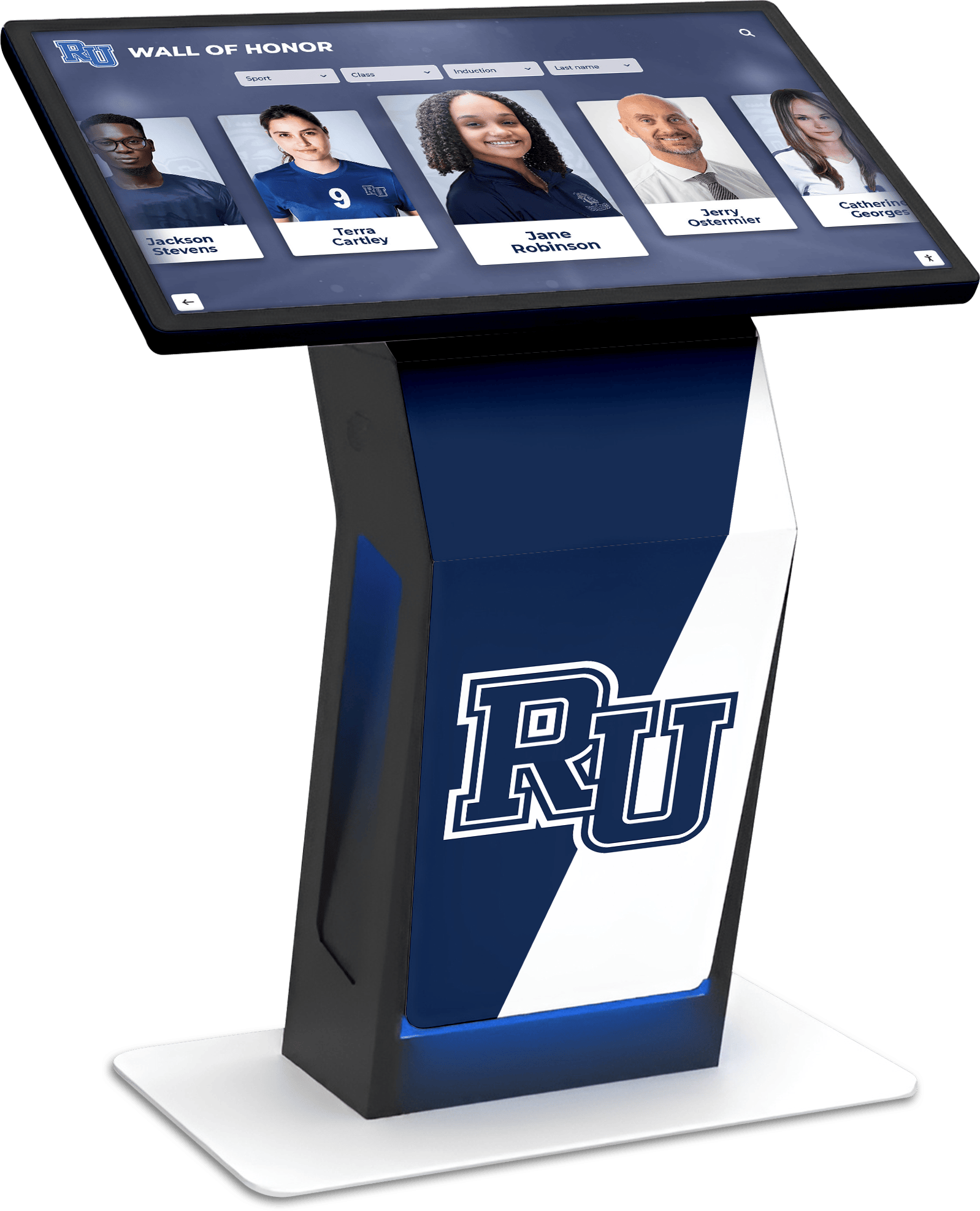
Turnkey installations include professional mounting, cable management, and network configuration handled by single vendor teams
Professional Content Quality DIY content development produces inconsistent results. Turnkey packages include graphic design expertise, photography standards, biographical writing guidelines, and quality control that ensures professional presentation matching the hardware investment. Schools without design staff benefit significantly from these services.
Comprehensive Training and Support Learning content management systems requires time and expertise. Turnkey providers deliver live training sessions, recorded tutorials, ongoing support, and direct access to technical teams—not just user manuals. This training investment prevents situations where displays sit unused because staff never learned to update content effectively.
Turnkey Pricing Ranges: What Schools Actually Pay
Digital hall of fame display pricing varies based on display size, content complexity, feature sets, and service levels. Understanding typical ranges enables realistic budget planning.
Entry-Level Turnkey Packages ($8,000-$15,000)
Basic turnkey solutions serve schools with straightforward recognition needs and limited budgets.
Typical Package Contents
- 55-inch commercial touchscreen display
- Wall mounting hardware and professional installation
- Cloud-based content management system (annual subscription)
- Initial content setup (25-50 inductee profiles)
- Two-hour administrator training session
- Email technical support during business hours
- One-year hardware warranty
Best For
- Small to mid-size high schools (300-800 students)
- New hall of fame programs with limited historical content
- Single-sport focus (basketball, football, wrestling)
- Schools with some internal technical capabilities
- Budget-conscious districts prioritizing basic functionality
Service Limitations Entry-level packages typically include limited content development hours (loading existing photos and biographical data rather than creating original content), basic training (overview sessions rather than extensive hands-on practice), and standard support (business hours email response rather than 24/7 availability). Schools comfortable managing routine content updates independently after initial setup find these packages sufficient.
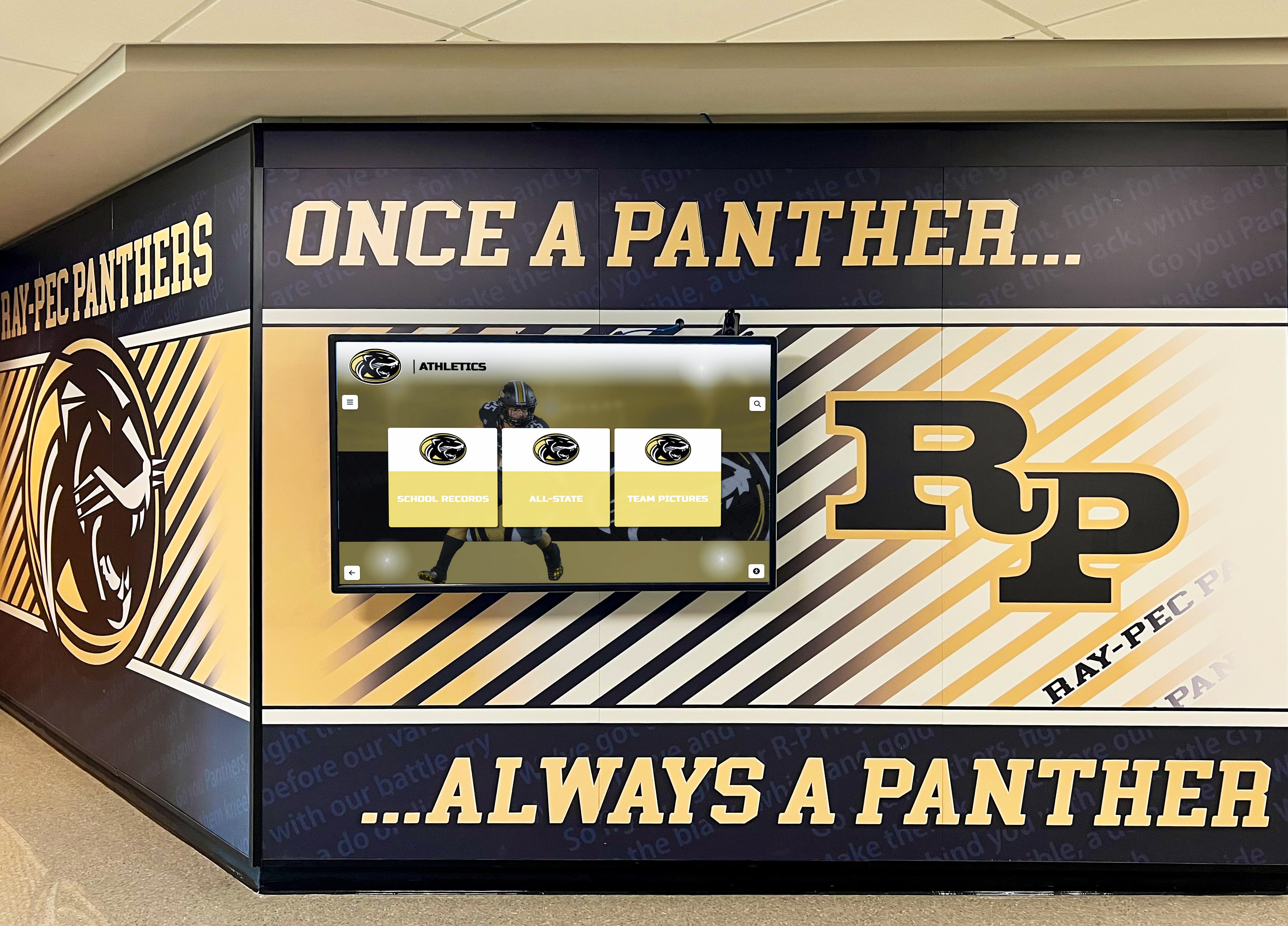
Entry-level installations provide professional quality suitable for schools with straightforward hall of fame recognition needs
Mid-Range Turnkey Packages ($15,000-$30,000)
Mid-range solutions accommodate schools requiring larger displays, extensive content development, and enhanced support services.
Typical Package Contents
- 65-inch or 75-inch commercial touchscreen display
- Professional installation with cable concealment and finishing
- Comprehensive content management platform (multi-year licensing)
- Extensive content development (100-200 inductee profiles)
- Multiple training sessions for different staff roles
- Priority technical support (phone and email)
- Three-year extended warranty
- Annual content refresh services
Best For
- Medium to large high schools (800-2,000 students)
- Established hall of fame programs with extensive historical records
- Multi-sport athletic programs requiring comprehensive coverage
- Schools wanting professional content development assistance
- Districts prioritizing long-term vendor relationships
Enhanced Services Mid-range packages often include professional content migration services transferring existing records from physical plaques, paper files, and legacy databases. Content specialists scan photographs, write biographical narratives following school style guidelines, organize achievement categories, and create visual layouts that showcase athletic excellence professionally.
Training components expand beyond basic operation to include advanced features: creating custom galleries, managing permissions for multiple administrators, integrating social media feeds, scheduling content rotations, and troubleshooting common issues independently. This deeper training investment reduces ongoing reliance on vendor support for routine tasks.
Premium Turnkey Packages ($30,000-$60,000+)
Premium solutions serve schools requiring largest display sizes, complex multi-display installations, extensive customization, and white-glove service levels.
Typical Package Contents
- 75-inch or 86-inch commercial touchscreen displays (single or multiple units)
- Custom architectural integration with facility renovations
- Enterprise content management platform with advanced features
- Comprehensive content development (300+ profiles with multimedia)
- Dedicated project manager coordinating all implementation phases
- On-site training and ongoing quarterly support visits
- Premium 24/7 technical support with guaranteed response times
- Five-year comprehensive warranty and maintenance program
- Content production services (videography, photography, interviews)
Best For
- Large high schools and preparatory academies (2,000+ students)
- Universities and colleges with extensive athletic traditions
- Schools implementing multiple synchronized displays
- Facilities undergoing major renovations integrating digital displays
- Institutions prioritizing highest quality recognition experiences
- Programs requiring custom software development and unique features
Premium Service Differentiators Premium packages typically include custom interface design matching school branding precisely, dedicated account management providing personalized attention, priority feature development addressing specific school requirements, and professional content production creating original video interviews, photo sessions, and multimedia presentations rather than simply organizing existing materials.
Schools implementing multiple networked displays benefit from centralized content management enabling simultaneous updates across locations, synchronized presentations for coordinated messaging, and consistent branding across campus facilities—capabilities requiring sophisticated platform architecture typically available only in premium packages.
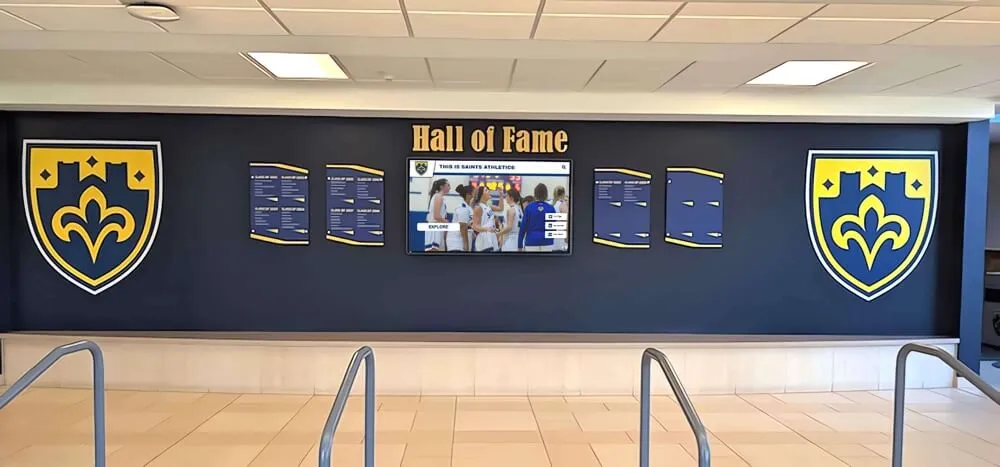
Premium installations integrate digital displays with custom architectural elements creating cohesive recognition environments
Breaking Down Turnkey Component Costs
Understanding how vendors structure turnkey pricing helps schools evaluate whether quoted packages reflect reasonable value or contain inflated margins.
Hardware Components and Actual Costs
Display Technology
- 55-inch commercial touchscreen: $2,500-$4,000 (vendor cost $1,800-$3,000)
- 65-inch commercial touchscreen: $3,500-$5,500 (vendor cost $2,500-$4,000)
- 75-inch commercial touchscreen: $5,000-$8,000 (vendor cost $3,500-$6,000)
- 86-inch commercial touchscreen: $8,000-$12,000 (vendor cost $6,000-$9,000)
Commercial displays cost significantly more than consumer televisions due to industrial components rated for continuous operation, extended warranties (three to five years versus one year), and durability features like tempered glass and reinforced mounting points. Schools occasionally question why displays cost more than comparable consumer TVs purchased at electronics retailers—the answer lies in reliability over years of high-traffic institutional use rather than months of home entertainment.
Computing and Connectivity
- Industrial media player or computer: $300-$800
- Network connectivity hardware: $50-$200
- Cables, adapters, and accessories: $100-$300
- Remote management software licenses: $100-$300 annually
Mounting and Installation Materials
- Commercial-grade wall mounts: $150-$500
- Cable management systems: $100-$300
- Electrical components and surge protection: $100-$250
- Installation labor (professional): $400-$1,200
Total hardware costs for complete installations typically range $3,500-$14,000 depending on display size and installation complexity. Turnkey packages incorporate these costs plus software licensing, content services, and support—not just hardware markup.
Software Licensing and Platform Access
Annual Subscription Models
- Basic content management: $500-$1,500 annually
- Mid-range platforms with enhanced features: $1,500-$3,000 annually
- Enterprise solutions with unlimited capacity: $3,000-$6,000 annually
Software costs often surprise schools accustomed to one-time purchases. Cloud-based platforms require ongoing infrastructure (servers, bandwidth, security, backups), continuous development (new features, bug fixes, compatibility updates), and operational support (technical assistance, monitoring, troubleshooting)—all funded through recurring subscriptions rather than single payments.
Some vendors offer multi-year prepayment discounts (three-year subscriptions at 15-20% savings) or perpetual licenses with annual maintenance fees (larger upfront cost, lower annual expense). Schools should evaluate total cost of ownership over expected system lifespans (typically 7-10 years) rather than focusing exclusively on year-one costs.
Platform Feature Differences Affecting Price
- Content capacity limits (50 profiles vs. unlimited)
- Multimedia support (text/photos only vs. video integration)
- Search and filtering capabilities (basic vs. advanced)
- Mobile access (none vs. QR code scanning vs. full web access)
- Multi-display management (single vs. unlimited networked displays)
- Customization options (templates only vs. custom interface design)
- Accessibility compliance (basic vs. WCAG 2.1 AA certification)
Schools implementing comprehensive athletic hall of fame programs with unlimited growth capacity over decades benefit from platforms without artificial content limits—even if annual costs run slightly higher than capped alternatives that require expensive upgrades when approaching capacity.
Content Development Services and Time Investment
Initial Content Setup Pricing
- Basic data entry (existing photos and text): $500-$1,500
- Professional content organization and formatting: $1,500-$3,500
- Comprehensive content creation with research: $3,500-$8,000
- Multimedia production (video, photography): $5,000-$15,000
Content development represents the most variable turnkey component. Schools with organized digital archives (spreadsheets listing inductees, scanned photographs, written biographies) require only data entry and formatting. Institutions beginning with paper files, physical photographs requiring scanning, and minimal biographical information need extensive research, writing, and organization—services requiring professional expertise and significant time investment.
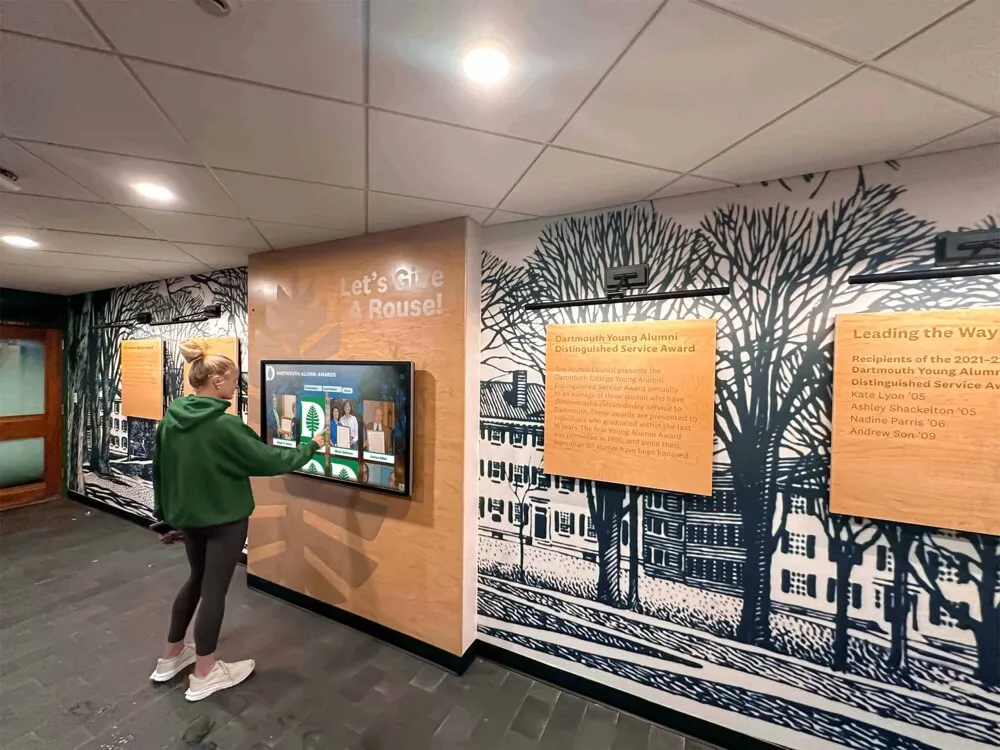

Professional content development ensures biographical profiles, photos, and achievements display with consistent quality and formatting
Typical Time Requirements
- Data entry per inductee profile: 15-30 minutes
- Research and writing per profile: 45-90 minutes
- Photo scanning and optimization: 10-20 minutes per image
- Quality control and approval cycles: 20-40% of development time
Loading 100 inductee profiles with basic data entry requires approximately 25-50 hours of work. Comprehensive research, writing, and multimedia production for the same 100 profiles expands to 100-200 hours. Turnkey packages typically include defined content development hours rather than unlimited services—schools should understand included time and additional hourly rates for work exceeding package allocations.
Training and Support Service Costs
Administrator Training Components
- Initial orientation session: $300-$600 (2-3 hours)
- Hands-on training with practice exercises: $600-$1,200 (full day)
- Role-specific training for multiple staff: $1,000-$2,000 (customized)
- On-site training at school facilities: Add $500-$1,500 for travel
Effective training extends beyond software demonstrations. Comprehensive sessions include content strategy (organizing information hierarchies), photography standards (image requirements and formatting), writing guidelines (biographical style and tone), quality assurance (review processes before publishing), and troubleshooting (resolving common issues independently). Schools with staff turnover benefit from recorded training materials enabling self-service onboarding when new administrators inherit content management responsibilities.
Ongoing Support Service Models
- Email-only support (48-hour response): $300-$800 annually
- Business hours phone and email: $800-$1,500 annually
- Extended hours support (evenings/weekends): $1,500-$2,500 annually
- 24/7 support with guaranteed response times: $2,500-$5,000 annually
Support costs correlate with response time expectations and availability windows. Schools needing displays operational for Friday night games, weekend tournaments, and evening alumni events value extended support hours despite higher costs. Institutions comfortable waiting until Monday morning for technical assistance find business-hours support sufficient.
Many turnkey packages include first-year support as part of base pricing, then transition to annual support fees for subsequent years. Schools should clarify what year-one pricing includes and budget for ongoing support costs in future years.
Major Turnkey Providers Serving Schools
Understanding vendor options helps schools evaluate which providers offer turnkey packages matching specific needs and budgets.
Rocket Alumni Solutions - Comprehensive Turnkey Platform
Rocket Alumni Solutions provides complete turnkey digital recognition systems designed specifically for schools and educational institutions. The company offers integrated hardware, software, content development, installation coordination, administrator training, and ongoing Customer Success support through single comprehensive packages.
Platform Capabilities
- Commercial touchscreen displays (55" to 86" options)
- Cloud-based content management with unlimited capacity
- Mobile-accessible content via QR codes and web browsers
- Multi-display management for networked installations
- Automatic record board ranking for athletic achievements
- WCAG 2.1 AA accessibility compliance
- Professional content development services
- 24/7 technical support with dedicated account representatives
Typical Turnkey Package Pricing
- Entry-level installations: $10,000-$15,000
- Mid-range comprehensive packages: $18,000-$30,000
- Premium multi-display installations: $35,000-$60,000+
Rocket’s turnkey approach emphasizes Customer Success as single point of contact for all issues—hardware malfunctions, software questions, content updates, or training needs—eliminating vendor coordination complexity. Schools receive dedicated representatives familiar with their specific programs rather than generic help desk queues.
The platform accommodates schools planning digital trophy case implementations that expand beyond hall of fame recognition to showcase current team achievements, championship banners, and athletic program history in interactive digital formats replacing traditional trophy cases.
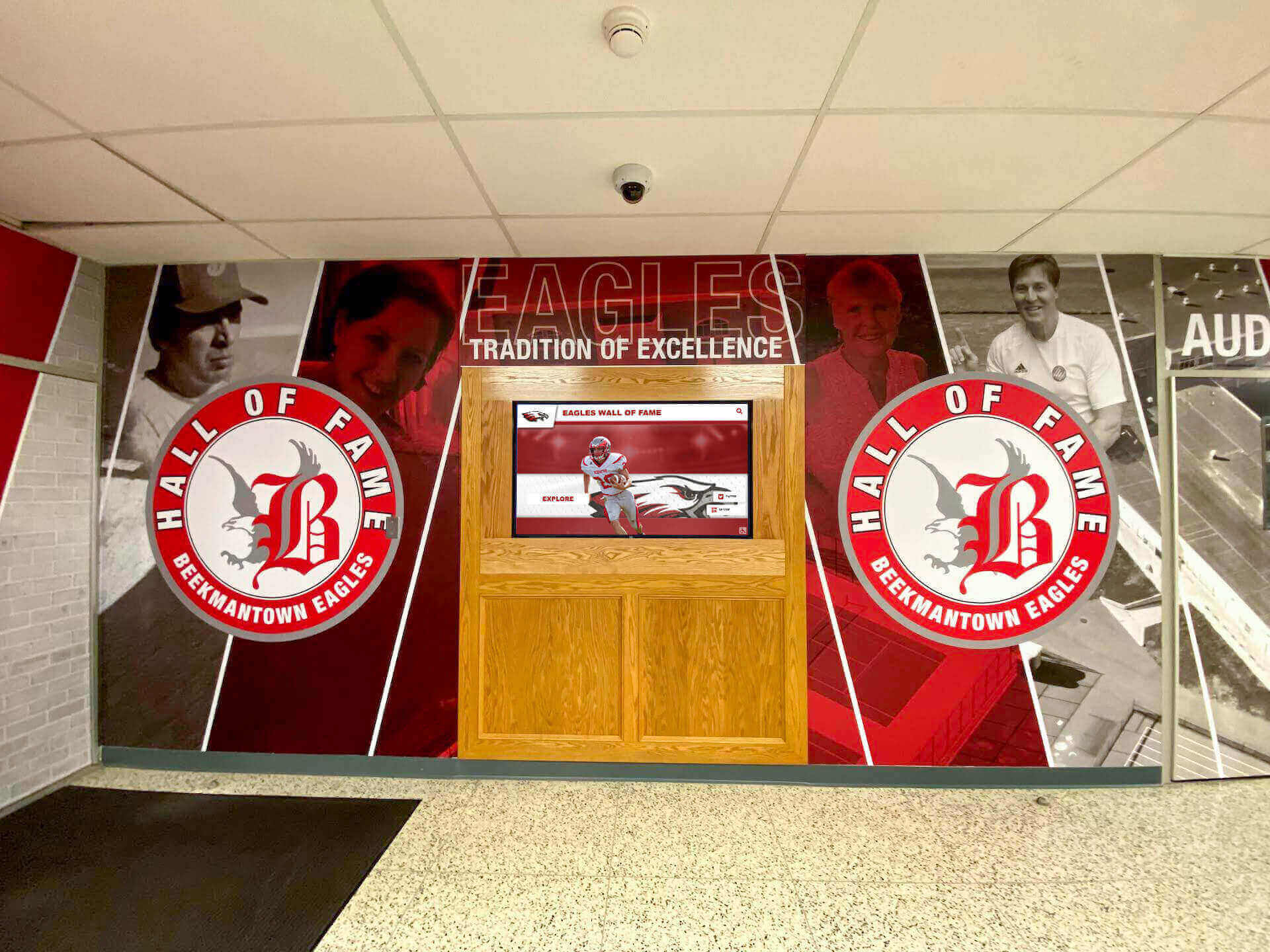
Turnkey installations coordinate digital displays with existing architectural elements and school branding
TouchHallOfFame.us - Specialized Recognition Displays
TouchHallOfFame.us focuses specifically on hall of fame and recognition display solutions for athletic programs and schools. The company provides turnkey packages emphasizing content development assistance and long-term platform support.
Service Approach
- Touchscreen hardware sourcing and installation coordination
- Recognition-focused content management software
- Content migration from existing plaque systems
- Training focused on sports achievement organization
- Support packages scaled to school needs and budgets
TouchHallOfFame.us targets schools transitioning from physical plaque systems to digital alternatives, offering services that transfer historical recognition data into searchable digital formats accessible to current students, alumni, and visitors.
HallOfFameWall.com - Custom Integration Solutions
HallOfFameWall.com provides turnkey packages with emphasis on custom architectural integration matching existing facility design. Services include hardware specification, installation coordination with renovation projects, content platform access, and ongoing support.
Differentiators
- Custom wall design integrating displays with surrounding architecture
- Coordination with construction and renovation timelines
- Multiple display configurations for large-scale installations
- Content development emphasizing visual design and branding consistency
Schools implementing hall of fame displays as part of broader facility renovations benefit from vendors capable of coordinating with contractors, architects, and project managers throughout construction timelines.
TouchWall.us - Multi-Purpose Digital Recognition
TouchWall.us offers turnkey touchscreen solutions serving various recognition purposes beyond athletics—donor walls, academic honors, community partnerships, and institutional history. The platform flexibility accommodates schools wanting single displays showcasing multiple content types.
Platform Versatility
- Content categories for athletics, academics, arts, and community
- Donor recognition templates integrating fundraising displays
- Event promotion and calendar integration
- Custom branding and interface design options
Schools implementing donor recognition alongside athletic achievements benefit from platforms supporting multiple recognition purposes through single installations rather than requiring separate displays for different programs.
ChaseKee.com - Boutique Custom Installations
ChaseKee.com provides high-touch turnkey services for schools prioritizing custom interface design, unique feature development, and personalized implementation support. The boutique approach serves institutions wanting digital displays that precisely match brand identity and specific program requirements.
Service Model
- Custom software development addressing unique school needs
- Dedicated project management for complex implementations
- Premium content production including professional photography and videography
- Ongoing content refresh services maintaining display currency
Premium service levels accommodate schools and universities viewing digital hall of fame displays as flagship recognition installations representing institutional excellence—situations justifying higher investment for custom experiences unavailable through standard platforms.
Hidden Costs and Long-Term Ownership Considerations
Beyond initial turnkey package pricing, schools should budget for ongoing operational costs and eventual system updates affecting total cost of ownership.
Recurring Annual Expenses
Software Subscriptions Most cloud-based platforms charge annual licensing fees ranging $500-$6,000 depending on features, content capacity, and support levels. These recurring costs fund infrastructure maintenance, security updates, feature development, and technical support—essential services ensuring displays remain operational and secure over time.
Schools should clarify whether turnkey package pricing includes multi-year software licensing or only year-one subscriptions. Discovering $3,000 annual renewal fees after budgeting for one-time turnkey investment creates financial surprises that strain technology budgets.
Support and Maintenance Contracts Comprehensive support typically requires annual contracts after initial setup periods expire. Costs range $500-$5,000 annually depending on service levels (business hours versus 24/7), response time guarantees (48-hour versus same-day), and included services (remote assistance only versus on-site visits for major issues).
Content Update Services Some schools prefer outsourcing routine content updates rather than managing internally. Annual content management retainers range $1,200-$6,000 depending on update frequency, content complexity, and included services (data entry versus professional design).
Electricity and Operating Costs
Digital displays consume power continuously during operational hours.
Annual Electricity Estimates
- 55-inch display (8 hours daily): $75-$120 annually
- 65-inch display (8 hours daily): $100-$150 annually
- 75-inch display (8 hours daily): $130-$200 annually
- 86-inch display (8 hours daily): $180-$280 annually
Calculations assume $0.13 per kWh average U.S. electricity rates. Actual costs vary based on local utility pricing and operational schedules. Schools operating displays 12-16 hours daily should increase estimates proportionally.
Ongoing operational costs including electricity, software subscriptions, and support contracts affect total ownership expenses
Hardware Replacement and Upgrade Timelines
Commercial displays typically operate reliably for 7-10 years before requiring replacement due to component wear, technology obsolescence, or changing requirements.
Long-Term Hardware Planning Schools should establish replacement reserves anticipating eventual hardware updates:
- $15,000 initial turnkey investment ÷ 8-year lifespan = $1,875 annual reserve
- Annual software subscriptions: $2,000
- Annual support contract: $1,000
- Annual electricity: $150
- Total annual ownership cost: $5,025
This calculation reveals that schools investing $15,000 in turnkey installations actually commit to roughly $5,000 annually over system lifespans when accounting for all ownership costs. Understanding total financial commitment prevents situations where displays become neglected due to insufficient budget for ongoing subscriptions, support, and eventual replacement.
Network Infrastructure and IT Support
Digital displays require network connectivity and occasional IT support even with turnkey vendors managing primary technical responsibilities.
School IT Requirements
- Network port access and IP address assignment
- Firewall configuration allowing cloud platform communication
- Physical security (preventing tampering or theft)
- Periodic assistance with network changes or facility moves
- Coordination during school-wide technology updates
Schools with limited IT staff should discuss network requirements during turnkey vendor evaluations. Some vendors provide detailed network specification documents simplifying IT coordination, while others assume schools possess technical expertise—assumptions that create friction during implementation.
Evaluating Turnkey Proposals and Vendor Contracts
Schools receive varying proposal formats when soliciting turnkey quotes. Understanding what comprehensive proposals should contain prevents accepting incomplete packages requiring expensive supplements during implementation.
Essential Contract Components
Hardware Specifications
- Exact display model numbers and technical specifications
- Included accessories (mounts, cables, computers, etc.)
- Warranty duration and coverage details (parts, labor, on-site service)
- Shipping costs and delivery timelines
- Installation services scope (mounting, configuration, testing)
Software and Licensing Terms
- Platform capabilities and included features
- Content capacity limits (if any)
- License duration (included years)
- Annual renewal costs after initial period
- Data ownership and export rights
Content Development Scope
- Number of included inductee profiles or entries
- Services provided (data entry versus full research and writing)
- Quality standards and revision processes
- Additional content pricing beyond included amounts
- Client responsibilities (providing source materials, approvals)
Training and Support Details
- Initial training hours and format (remote versus on-site)
- Included support duration and service levels
- Support channels (phone, email, chat, video)
- Response time commitments
- After-hours and emergency support availability
- Annual support costs after included period
Implementation Timeline
- Project milestones and completion dates
- Dependencies requiring school coordination
- Content delivery deadlines
- Training session scheduling
- Go-live date and launch support
Comprehensive contracts protect both parties by establishing clear expectations about deliverables, timelines, responsibilities, and costs. Schools should request written proposals rather than verbal quotes to ensure mutual understanding before signing agreements.
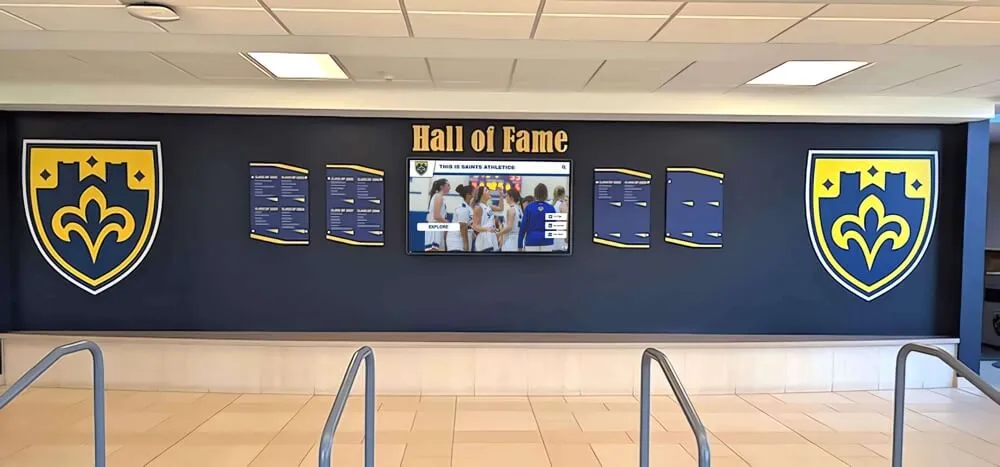
Complete turnkey proposals specify all deliverables preventing misunderstandings about included services and additional costs
Questions to Ask Turnkey Vendors
Implementation Process
- What timeline from contract signing to operational display should we expect?
- What specific tasks require school staff time during implementation?
- How do you coordinate installation with school calendars and facility access?
- What happens if we miss content delivery deadlines—does implementation pause?
Content Development
- Exactly how many inductee profiles are included in quoted pricing?
- What information do you need from us for each profile?
- Do you provide writing and research services or just data entry?
- How many revision rounds are included before additional charges apply?
- Can we add more content after launch—at what cost?
Training and Support
- How many people can attend training sessions?
- Do you provide recorded training materials for future reference?
- What happens if our administrator leaves—do you retrain replacements?
- What issues does included support cover versus chargeable services?
- How quickly do you typically respond to support requests?
Long-Term Costs and Changes
- What are annual software renewal costs after the included period?
- Do renewal costs increase over time—by how much historically?
- Can we add additional displays later—how does pricing work?
- What happens to our content if we discontinue service?
- Do you offer data export allowing migration to other platforms?
References and Examples
- Can you provide references from schools similar to ours?
- May we see example installations before deciding?
- Do you have case studies showing typical project outcomes?
- What challenges do schools commonly encounter—and how do you address them?
Schools should interview multiple turnkey vendors comparing not just pricing but service approaches, communication styles, technical capabilities, and cultural fit. The vendor relationship extends years beyond initial installation—selecting partners aligned with school values and communication preferences matters as much as upfront costs.
Funding Strategies for Turnkey Hall of Fame Displays
Turnkey package costs ranging $10,000-$60,000 require strategic funding approaches for budget-conscious schools.
Booster Club and Alumni Association Funding
Athletic booster clubs and alumni associations frequently fund hall of fame displays as signature recognition projects celebrating program traditions. These organizations raise money specifically for athletic facility improvements—purposes perfectly aligned with digital recognition displays.
Fundraising Campaign Approaches
- Named sponsorship opportunities ($1,000-$10,000 per donor)
- Inductee family contributions ($250-$500 per honored athlete)
- Corporate sponsor recognition on displays
- Alumni reunion fundraising campaigns
- Capital campaign inclusion during facility renovations
Schools implementing booster club fundraising campaigns benefit from digital displays offering sponsor recognition opportunities that encourage business and individual contributions funding the projects.
Capital Budgets and Facility Improvement Funds
Many schools include digital recognition displays within larger capital projects:
Integration Opportunities
- Athletic facility renovations
- School lobby remodels
- New building construction projects
- Technology infrastructure upgrades
- Americans with Disabilities Act compliance improvements
Bundling hall of fame displays with broader capital projects often secures approval more easily than standalone technology requests. Administrators presenting displays as modern recognition infrastructure supporting athletic programs for decades rather than discretionary technology purchases frame requests more compellingly.
Grant Funding and Foundation Support
Several grant sources support school technology and athletic program investments:
Grant Categories
- Education technology grants for innovative learning tools
- Community foundation grants supporting youth development
- Corporate giving programs emphasizing school partnerships
- State athletic association grants for facility improvements
- National grants supporting educational technology adoption
Schools should emphasize how digital displays serve educational purposes beyond athletics—showcasing student achievement, promoting school history literacy, encouraging goal-setting among current students, and fostering alumni connections supporting mentorship programs.
Multi-Year Budget Allocation
Some schools spread turnkey investments across fiscal years:
Phased Funding Approach
- Year 1: Hardware and installation ($8,000-$12,000)
- Year 2: Content development and launch ($3,000-$5,000)
- Year 3: Expansion and additional content ($2,000-$4,000)
This approach requires vendors willing to phase deliverables across budget cycles rather than demanding complete payment upfront. Schools should discuss phased payment options during proposal negotiations—some vendors accommodate these arrangements while others require single payments upon project completion.
Implementation Success Factors Beyond Pricing
Schools achieve best outcomes when they evaluate vendors on factors beyond lowest cost.
Content Readiness and Organization
Turnkey projects proceed smoothly when schools provide organized source materials:
Preparation Steps
- Compile inductee lists with correct spelling and dates
- Gather existing photographs in digital formats
- Document achievements, statistics, and biographical details
- Obtain permissions for photo usage and biographical information
- Establish content review and approval processes
Schools beginning projects with organized content databases complete implementations faster and consume fewer vendor content development hours—translating to lower costs and quicker launches.
Administrator Commitment and Training Engagement
Digital displays require ongoing content management. Schools should designate specific administrators responsible for:
Management Responsibilities
- Adding new inductees annually
- Updating biographical information as needed
- Maintaining photo quality standards
- Responding to content correction requests
- Coordinating with IT for technical issues
Administrators attending training sessions actively and budgeting time for ongoing content work ensure displays remain current and valuable. Displays become neglected when launched with enthusiasm but no sustainable management plan—situations where even excellent turnkey implementations fail to deliver long-term value.
Realistic Timeline Expectations
Quality turnkey implementations require adequate time:
Typical Project Phases
- Planning and vendor selection: 2-4 weeks
- Contract negotiation and approval: 1-3 weeks
- Content gathering and preparation: 4-8 weeks
- Hardware procurement and delivery: 2-4 weeks
- Installation and configuration: 1-2 weeks
- Content development and loading: 3-6 weeks
- Training and launch preparation: 1-2 weeks
- Total timeline: 14-29 weeks (3.5-7 months)
Schools planning hall of fame unveilings for homecoming weekends or athletic banquets should begin vendor discussions 6-9 months in advance. Rushing implementations to meet arbitrary deadlines typically results in incomplete content, insufficient training, and stressful launches that diminish project success.
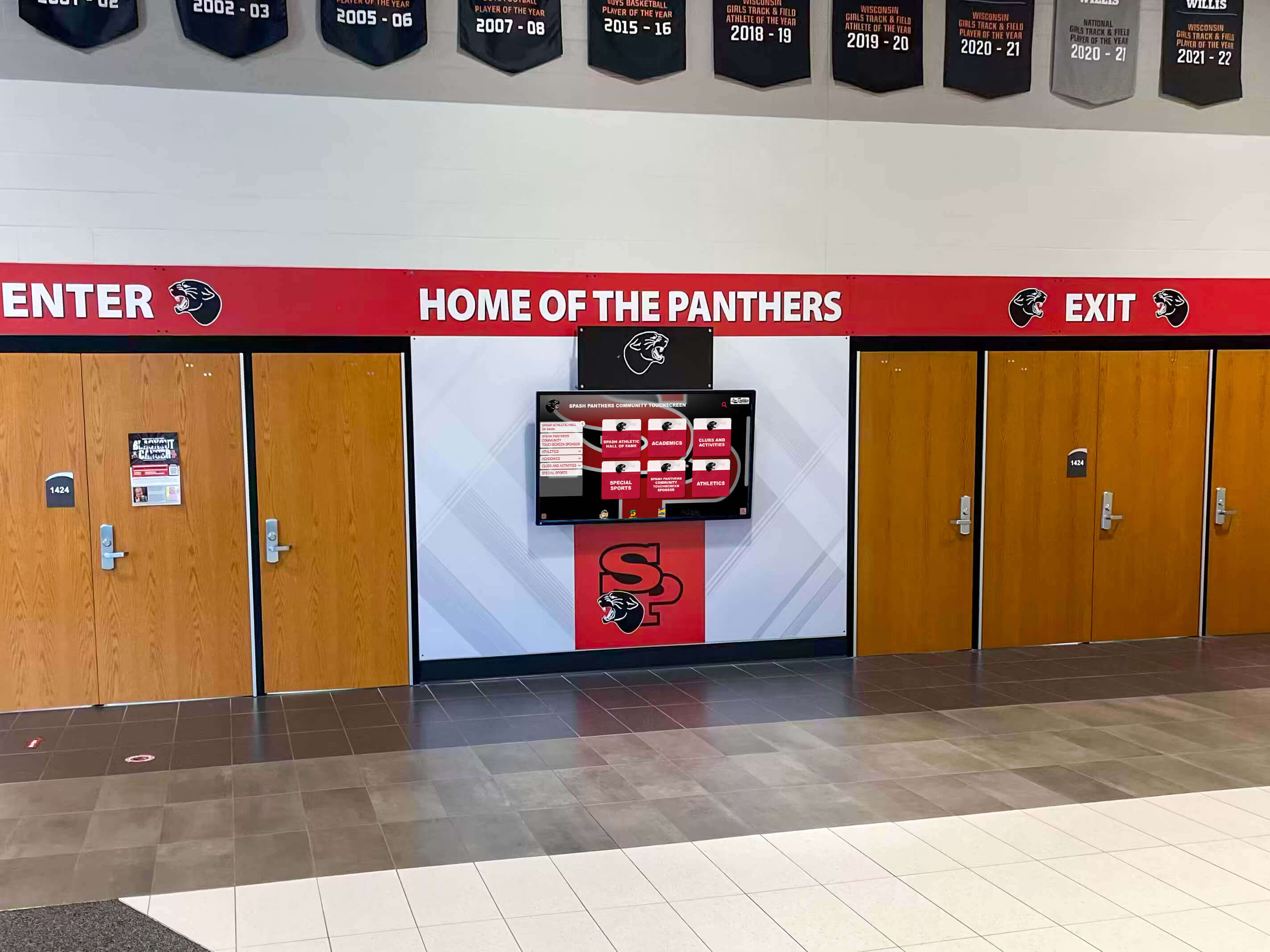
Successful implementations allow adequate time for content development, training, and coordination ensuring quality launches
Conclusion: Investing Wisely in Turnkey Hall of Fame Solutions
Turnkey digital hall of fame displays represent significant investments ranging $8,000-$60,000 depending on display size, content scope, customization needs, and service levels. Schools achieve best value by understanding complete package components—hardware, software, content development, installation, training, and support—rather than comparing prices divorced from service quality and implementation success factors.
The vendors serving schools most effectively provide transparent pricing breakdowns, realistic timeline expectations, comprehensive contracts specifying all deliverables, responsive communication throughout implementation, and long-term support ensuring displays remain valuable for years beyond initial installation. Schools should evaluate turnkey proposals on total value delivery rather than lowest upfront cost, recognizing that seemingly expensive packages often provide better outcomes and lower total ownership costs than bargain solutions requiring extensive supplemental spending.
Whether showcasing athletic excellence, preserving institutional history, recognizing student achievement, or celebrating school traditions, digital hall of fame displays create engagement possibilities that static plaques cannot match. Cloud-based content management enables instant updates from anywhere, touchscreen interactivity encourages exploration beyond passive viewing, unlimited digital capacity eliminates space constraints, and multimedia capabilities tell richer stories through photos, videos, and detailed narratives that honor inductees appropriately.
Start evaluating turnkey options by clarifying your school’s specific needs: display size requirements based on viewing distances, content scope reflecting inductee populations, budget constraints determining feasible investment ranges, timeline expectations for project completion, and internal technical capabilities affecting required support levels. Armed with this clarity, request comprehensive proposals from multiple vendors, interview reference schools, review example installations, and select partners committed to your recognition program success—not just equipment sales.
Ready to explore turnkey digital hall of fame solutions for your school? Book a demo to discuss hardware options, content development services, implementation timelines, and complete package pricing that fits your athletic program recognition needs and budget reality.