Every school athletic program faces the same inevitable question: where do we put all these trophies? Championship hardware accumulates season after season, conference titles stack up, and individual achievement awards multiply faster than available shelf space. Meanwhile, athletic directors must choose between purchasing additional trophy display cases, rotating older awards to storage rooms, or watching recognition become so crowded that individual achievements disappear into cluttered shelves.
The trophy display case has been the traditional solution for decades—glass-fronted cabinets lining hallways and lobbies, showcasing championship memories and athletic excellence. Schools choose between materials like glass and wood, freestanding versus wall-mounted configurations, and illuminated versus basic designs. Yet regardless of these choices, every physical trophy case shares one fundamental limitation: finite capacity.
This comprehensive guide examines traditional trophy display case options including glass and wood configurations, explores their strengths and constraints, and introduces modern digital alternatives that eliminate space limitations while preserving the recognition purpose these displays serve.
Schools install trophy display cases to honor student-athletes, preserve institutional athletic history, inspire current teams through visible excellence, and demonstrate program quality to prospective families during campus visits. The right display solution balances these goals with practical considerations like available space, budget constraints, maintenance requirements, and long-term program growth.
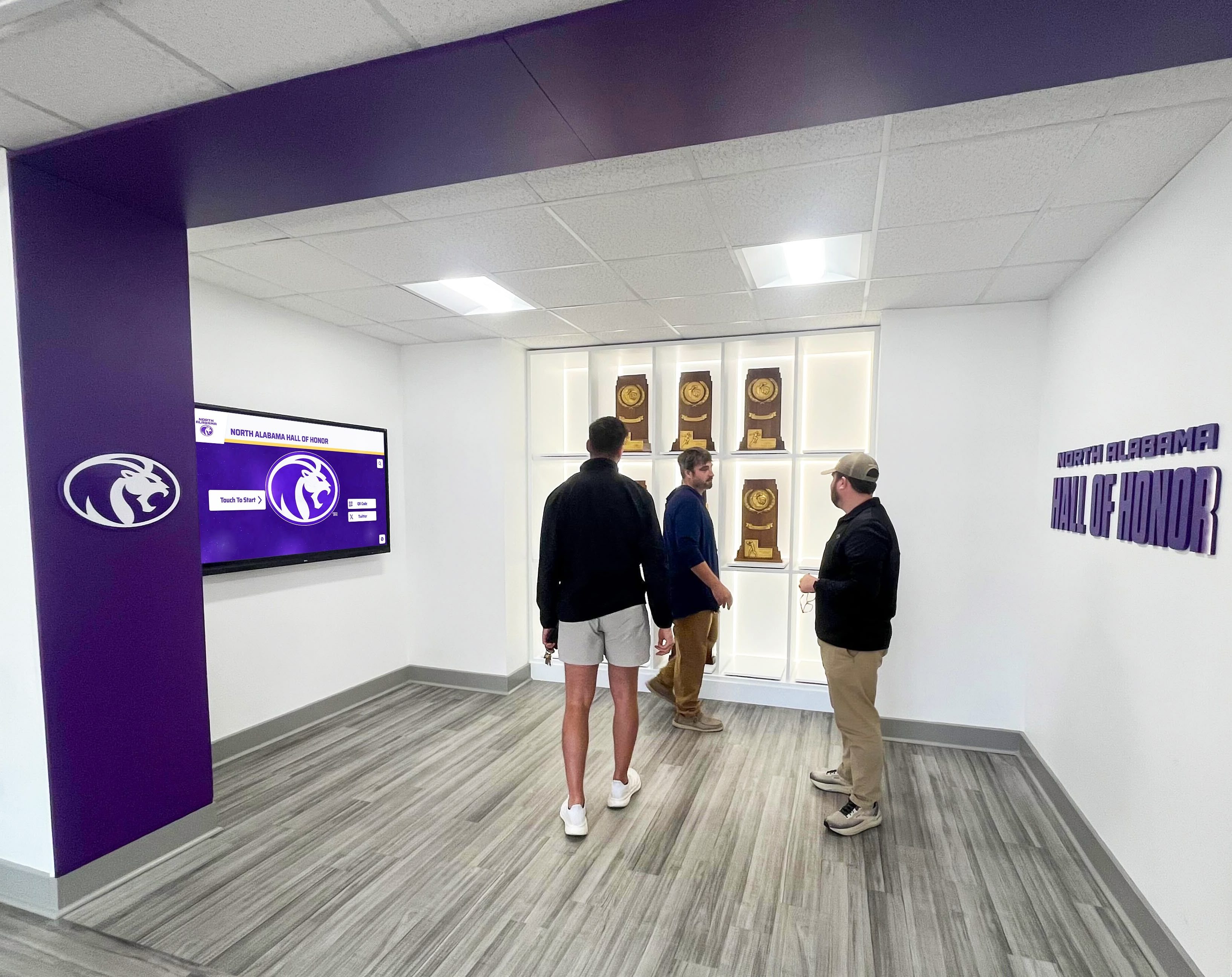
Traditional trophy display cases create tangible connections to athletic achievement and institutional history
Understanding Traditional Trophy Display Case Options
Schools have relied on physical trophy cases for generations, with options spanning multiple materials, configurations, and price points.
Glass Trophy Display Cases
Glass cases remain the most popular choice for athletic recognition displays, offering clear visibility and professional presentation.
Standard Glass Case Configurations:
Freestanding Floor Models:
- Width options: 36", 48", 60", 72", 96"
- Height typically: 72" to 84"
- Depth range: 16" to 24"
- Tempered safety glass on front, sides, or all four sides
- Adjustable shelving accommodating various trophy heights
- Interior LED or fluorescent lighting
- Locking doors with key or combination locks
- Mirrored or fabric-lined backs
- Leveling feet for uneven floors
Wall-Mounted Glass Cases:
- Space-efficient designs minimizing floor footprint
- Depths from 6" (shallow) to 16" (deep)
- Custom sizing fitting specific wall dimensions
- Recessed installation creating flush wall appearance
- Surface-mounted options for brick or block walls
- Sliding or hinged glass doors
- Interior lighting integrated into frame
Investment Range:
- Basic glass cases: $1,200-$2,500
- Mid-range commercial models: $2,500-$5,000
- Premium custom installations: $5,000-$15,000+
Glass cases provide excellent visibility from multiple angles, professional appearance that parents and alumni appreciate, familiar traditional aesthetic fitting most school environments, and protection keeping trophies dust-free and secure.
Wood Trophy Display Cases
Wooden trophy cabinets offer traditional elegance and custom design flexibility.
Wood Case Characteristics:
Construction Materials:
- Oak: durable, traditional appearance
- Cherry: rich color, premium aesthetic
- Maple: light color, contemporary look
- Walnut: dark finish, formal presentation
- Plywood or MDF: budget-friendly options with veneer
Design Features:
- Glass front panels with wooden frames
- Solid wood or veneer exterior finishes
- Custom staining matching school colors or facility woodwork
- Crown molding and decorative trim options
- Built-in or freestanding configurations
- Interior shelving in glass, wood, or metal
- Integrated lighting within wooden frames
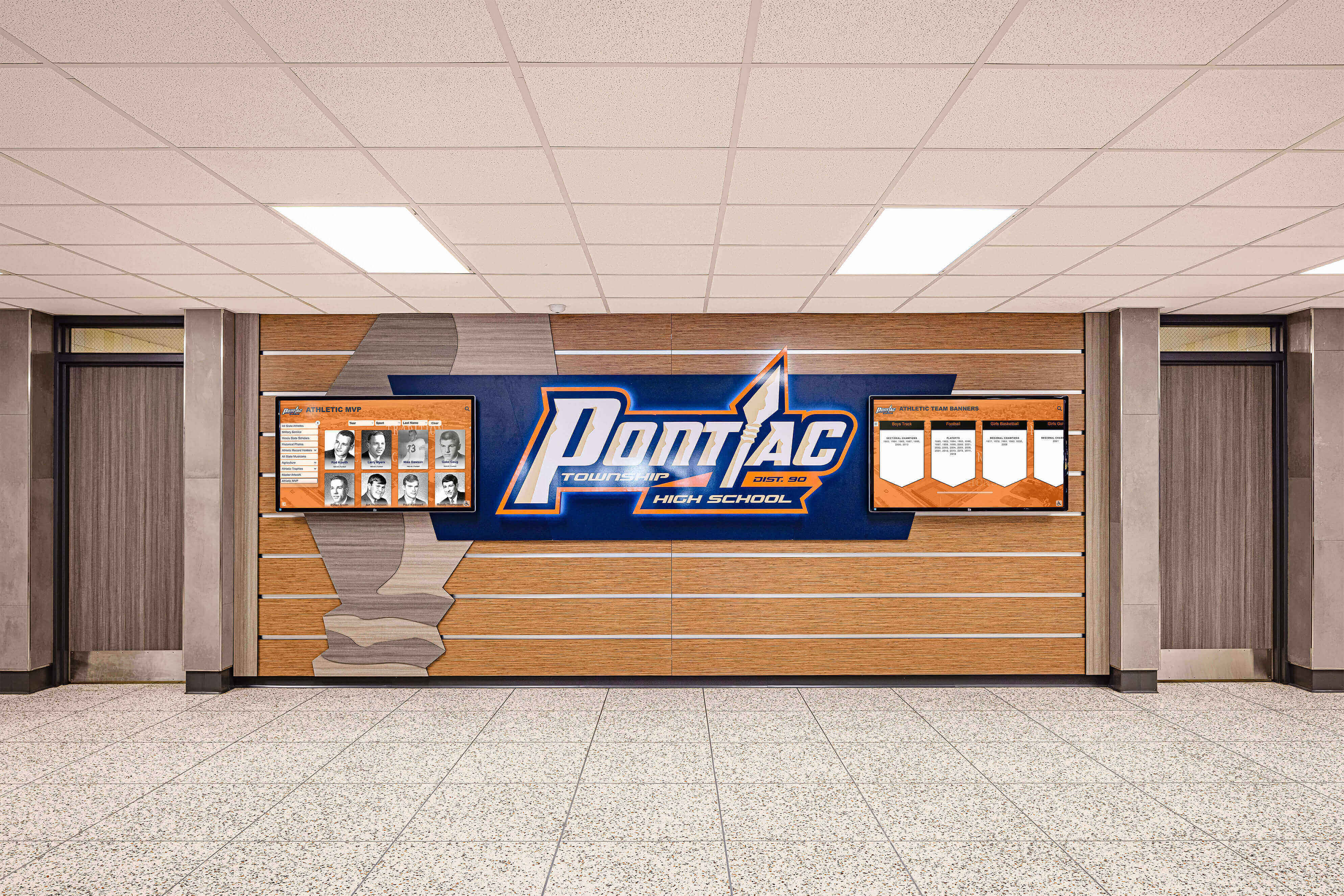
Wood frames add architectural warmth while maintaining trophy visibility
Investment Considerations:
- Stock wood cases: $2,000-$4,500
- Semi-custom cabinets: $4,500-$8,000
- Fully custom millwork: $8,000-$25,000+
Wood trophy cases integrate seamlessly with traditional architecture, provide customization matching existing school woodwork, offer warmth and character beyond utilitarian metal frames, and appeal to stakeholders valuing classic aesthetics. Many schools implementing recognition programs choose wood frames that complement their existing facility design.
Trophy Case Sizing and Capacity Planning
Understanding capacity helps schools plan for program growth.
Typical Trophy Dimensions:
- Small individual awards: 8"-12" height
- Medium team trophies: 14"-20" height
- Large championship trophies: 24"-36" height
- Oversized state championship hardware: 36"-48" height
Capacity Estimates by Case Size:
- 36"W x 72"H case: 15-25 trophies
- 48"W x 72"H case: 25-35 trophies
- 60"W x 72"H case: 35-50 trophies
- 72"W x 84"H case: 50-75 trophies
- 96"W x 84"H case: 75-120 trophies
Annual Trophy Accumulation:
- Small programs (1-5 sports): 5-15 trophies annually
- Medium programs (6-12 sports): 15-30 trophies annually
- Large programs (13+ sports): 30-50+ trophies annually
This accumulation rate means even large trophy cases reach capacity within 2-4 years for successful athletic programs, forcing difficult decisions about which championships warrant continued visibility.
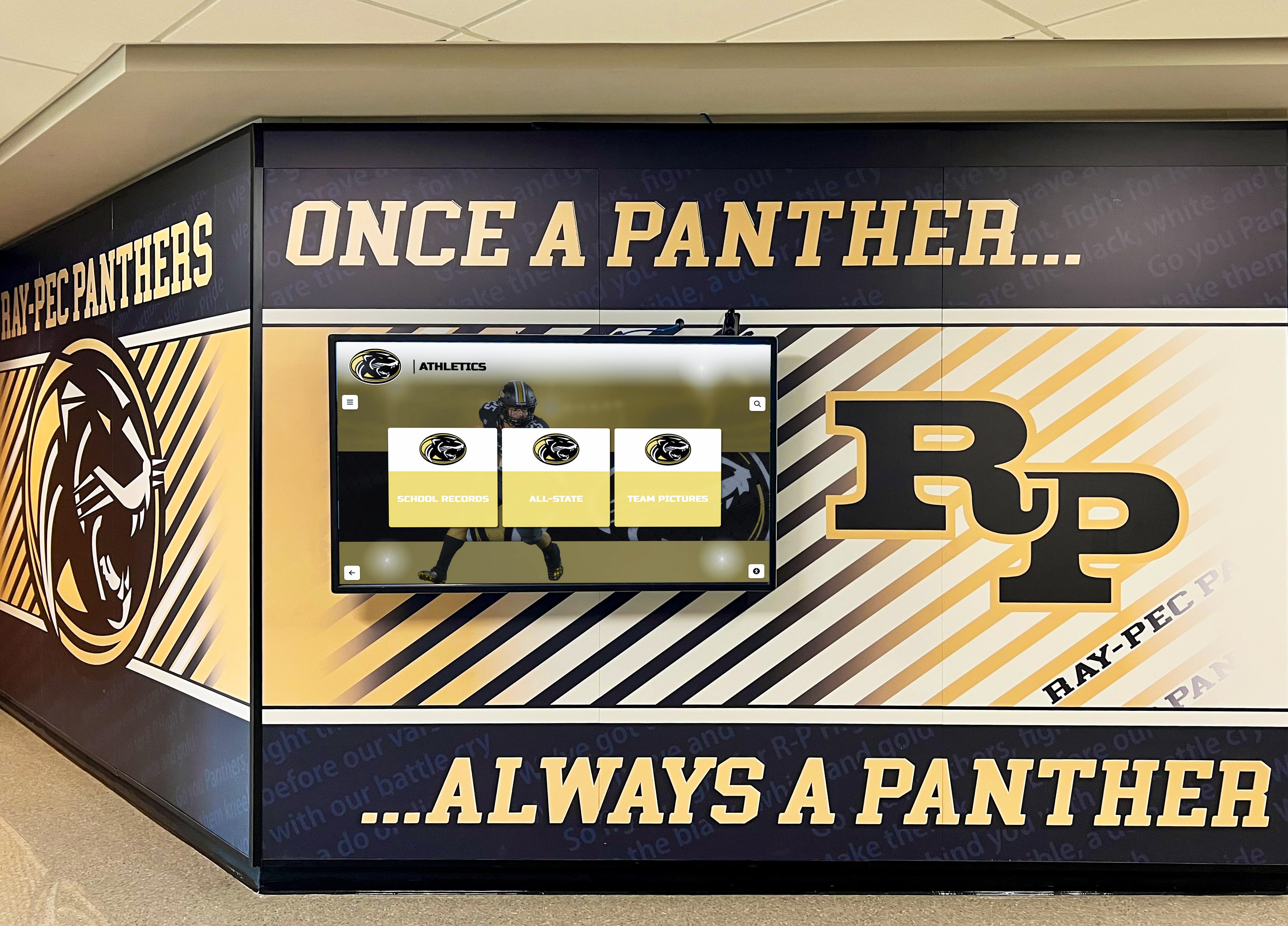
Successful programs quickly outgrow available trophy case space regardless of initial sizing
Advantages of Traditional Trophy Display Cases
Physical trophy cases offer benefits that explain their continued popularity across thousands of schools.
Tangible Recognition Presence
Real trophies create authentic connections:
- Physical championship hardware students and athletes can point to with pride
- Three-dimensional presence creating visual impact flat displays cannot match
- Trophy craftsmanship and detail visible up close
- Authentic artifacts representing actual achievement moments
- Nostalgic appeal resonating with older alumni and traditional stakeholders
- Familiar recognition format requiring no explanation
No Technology Requirements
Traditional cases require minimal infrastructure:
- No network connectivity, servers, or software licensing
- No concerns about digital obsolescence or platform changes
- No staff training on content management systems
- No electricity costs beyond optional interior lighting
- Straightforward procurement through standard furniture vendors
- Installation requiring basic carpentry rather than technical coordination
Established Procurement Processes
Schools know how to buy trophy cases:
- Familiar vendors and purchasing procedures
- Standard delivery and installation expectations
- Clear specifications and competitive bidding
- Proven durability and expected lifespan
- Established warranty and service arrangements
These advantages explain why trophy cases remain standard in schools implementing athletic hall of fame programs and other recognition initiatives.
Limitations of Traditional Trophy Display Cases
Despite their advantages, physical trophy cases face inherent constraints that increasingly challenge schools.
Space Constraints and Capacity Limitations
The fundamental problem: space runs out.
The Space Depletion Cycle:
- Year 1: New trophy case looks spacious and well-organized
- Years 2-3: Shelves fill with conference championships and tournament trophies
- Years 4-5: Case reaches capacity, trophies become crowded
- Years 6+: No room for new achievements without removing older recognition
Difficult Decisions:
- Which championships move to storage versus remaining visible?
- Do recent achievements displace historical recognition?
- Should individual athlete awards take space from team championships?
- How do you explain to alumni why their trophies disappeared?
The Expansion Trap:
- Purchase additional case ($2,000-$5,000)
- New case fills within 2-3 years
- Purchase another case
- Hallways fill with trophy cases consuming valuable wall space
- Eventually no more room for additional cases
This cycle never ends as long as programs continue achieving success.
Maintenance and Cleaning Requirements
Physical trophy cases demand ongoing attention:
Regular Maintenance Tasks:
- Weekly dusting of individual trophies and shelves
- Quarterly glass cleaning for streak-free visibility
- Annual deep cleaning removing accumulated grime
- Trophy reorganization when items shift or topple
- Lighting bulb replacement
- Lock mechanism maintenance
- Shelf adjustment as trophy sizes change
- Wood polish or refinishing for wooden cases
Time Investment:
- 3-5 hours monthly for single case
- 8-12 hours monthly for multiple cases
- Additional time during reorganizations
- Costs $75-$300 monthly in staff time or custodial services
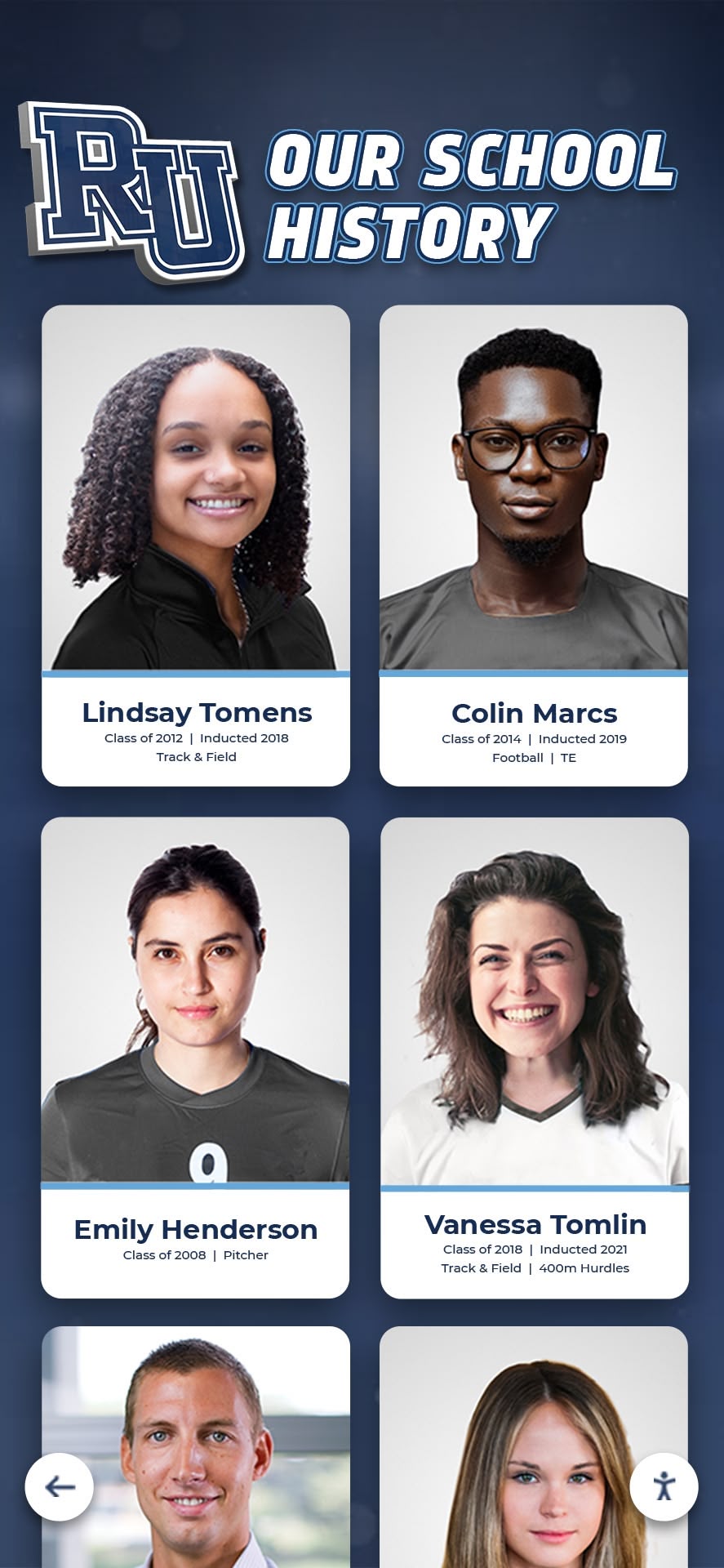
Digital alternatives eliminate physical maintenance while preserving comprehensive recognition
Limited Information and Context
Physical trophies tell incomplete stories:
Information Gaps:
- Trophy plates provide minimal details: year, championship, team name
- No team rosters identifying which athletes contributed
- Missing championship game scores or tournament results
- No photos of teams or memorable moments
- Absent context about record-breaking performances
- No connection to related achievements or historical significance
- No ability to search for specific athletes or years
Visitors see trophies but miss the stories behind championships, the athletes who earned recognition, and the context making achievements meaningful. Schools with comprehensive digital recognition displays can showcase the complete story behind each achievement.
Static, Non-Interactive Experience
Traditional cases offer only passive viewing:
- Visitors walk past and glance briefly rather than engaging
- No ability to search for personal connections or specific interests
- No filtering by sport, year, or achievement type
- Impossible to share or celebrate digitally
- No video highlights or championship moment replays
- Limited accessibility for visitors with visual impairments
- Engagement typically lasts seconds rather than minutes
Update Complexity and Inflexibility
Adding recognition involves physical processes:
Update Challenges:
- Requires physical campus access to add new trophies
- Reorganization disrupts entire display
- Time-consuming placement and spacing adjustments
- Errors on engraved plates are permanent or expensive to correct
- Seasonal rotation demands repeated physical handling
- No remote updates from home or while traveling
- Lead time for ordering new cases or shelving
The update process for athletic record boards and trophy displays becomes increasingly burdensome as programs grow.
Digital Trophy Display Case Alternatives
Modern touchscreen technology transforms trophy recognition from limited physical storage to unlimited interactive celebration.
How Digital Trophy Displays Work
Digital systems replace physical cases with interactive touchscreen displays:
Hardware Components:
- Commercial-grade touchscreen displays (55", 65", 75", or 86")
- Wall-mounted or freestanding kiosk configurations
- Professional mounting systems and vandal-resistant enclosures
- Network connectivity via ethernet or WiFi
- Media players running display software
- Professional installation by qualified technicians
Software Platform Capabilities:
- Cloud-based content management systems
- Unlimited trophy recognition capacity
- High-resolution trophy photographs from multiple angles
- Championship team photos with complete rosters
- Individual athlete profiles with biographical information
- Video highlights from championship games
- Search and filter functionality
- Web-accessible extensions beyond physical displays
- Mobile-responsive design for all devices
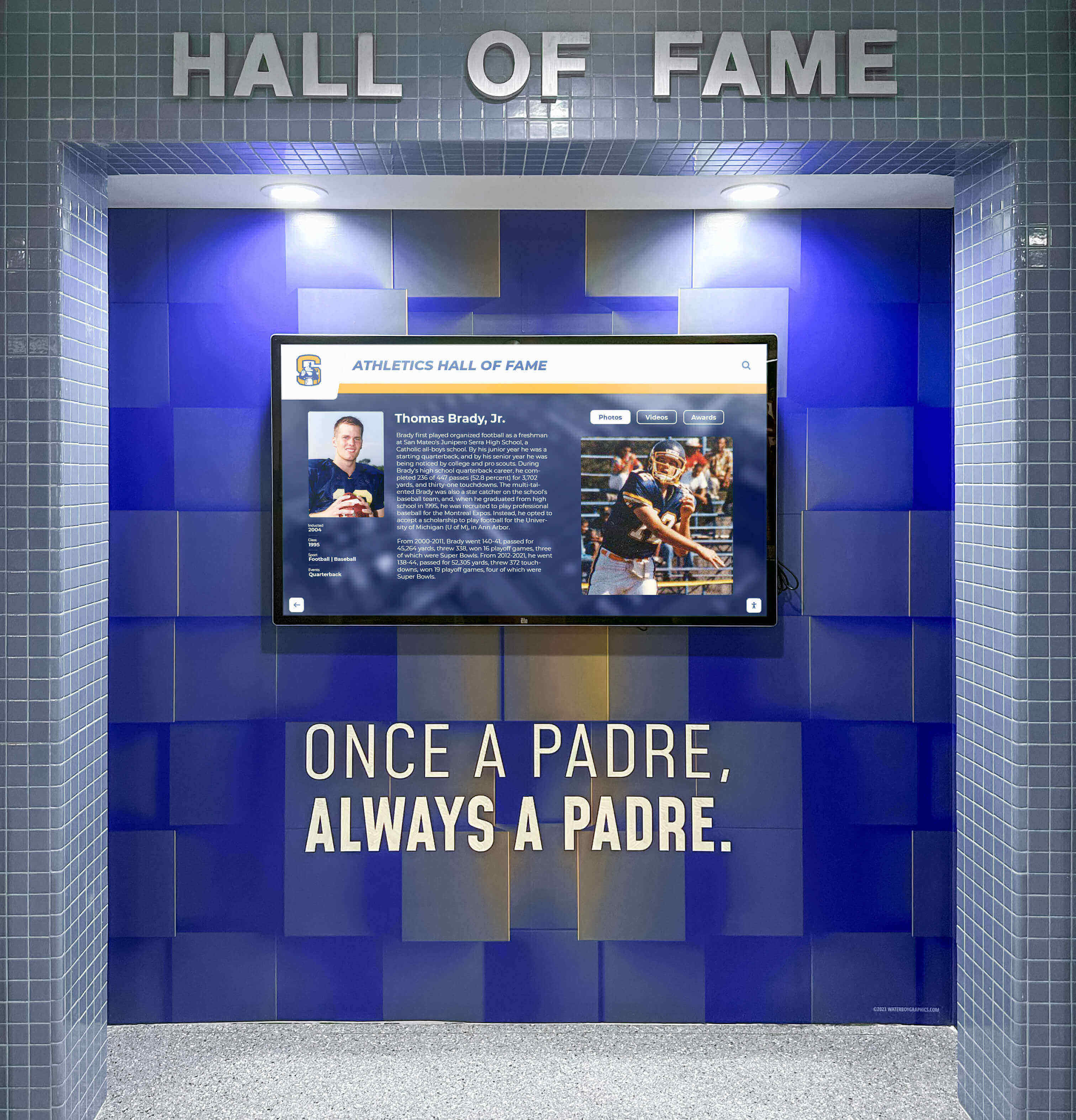
Digital displays showcase unlimited trophies and achievements without physical space constraints
Unlimited Recognition Capacity
Digital displays eliminate the space constraint problem entirely:
Capacity Advantages:
- Single 65" display accommodates unlimited trophies
- Every championship ever won remains permanently visible
- Complete team rosters with individual athlete profiles
- Unlimited photos documenting championship moments
- Video highlights from memorable games
- Historical archives spanning decades
- Future achievements added without removing anything
- No capacity planning or expansion costs
Programs with 10 trophies or 1,000 trophies use the same hardware investment. Growth becomes an advantage rather than a space problem.
Enhanced Engagement Through Interactivity
Digital displays transform passive observation into active exploration:
Interactive Features:
- Touchscreen navigation inviting hands-on interaction
- Search functionality finding specific athletes, teams, or championships
- Filter options by sport, year, or achievement category
- Related content suggestions connecting similar accomplishments
- Photo galleries viewers can browse at their own pace
- Video highlights from championship moments
- QR codes extending content to personal mobile devices
- Social sharing capabilities amplifying celebration
- Accessibility features serving visitors with diverse abilities
Engagement Metrics:
- Visitors spend 5-12 minutes interacting versus 5-15 seconds observing static cases
- 85-95% of campus tour visitors engage with digital displays
- Alumni report stronger connection to comprehensive digital recognition
- Students reference specific athlete achievements more frequently
This engagement advantage makes digital displays particularly effective for schools implementing hall of fame displays and interactive recognition programs.
Rich Multimedia Content
Digital platforms showcase achievements comprehensively:
Content Types:
- Professional trophy photography from multiple angles
- Championship team photos with identified rosters
- Individual athlete action shots
- Video highlights and championship game footage
- Coach profiles and program milestone recognition
- Historical timelines connecting decades of achievement
- Biographical narratives telling athlete stories
- Statistics and records providing context
- Newspaper clippings and media coverage
- Alumni achievement updates beyond high school
Information Depth:
- Unlimited text capacity for detailed descriptions
- Multiple photos per trophy or achievement
- Complete season results and tournament brackets
- Championship game box scores and highlights
- Related achievements linking team and individual recognition

Touchscreen interfaces invite exploration and create meaningful engagement with athletic recognition
Remote Content Management
Cloud-based platforms simplify recognition updates:
Update Capabilities:
- Add new trophies immediately after championships
- Update content from any internet-connected device
- No campus visit required for recognition changes
- Instant corrections to errors or outdated information
- Seasonal content rotation without physical handling
- Multiple authorized users managing different sports
- Content approval workflows ensuring accuracy
- Scheduled publishing for future recognition events
Administrative Efficiency:
- 70-85% reduction in recognition management time
- Updates completed in minutes versus hours
- No physical trophy handling or reorganization
- No lead time for engraving or production
- Changes visible immediately across all access points
Web-Accessible Extensions
Modern digital platforms extend recognition beyond physical displays:
Multi-Platform Access:
- Website integration creating online trophy archive
- Mobile-responsive design working on all devices
- Alumni access from anywhere in the world
- Prospective family exploration during recruitment research
- Social media sharing amplifying celebration
- QR code links from physical trophies to extended digital content
- Search engine visibility bringing recognition to broader audiences
Community Reach:
- 24/7 accessibility versus campus visit requirements
- Global audience versus local facility constraints
- Shareable content multiplying recognition visibility
- Alumni engagement regardless of geographic location
- Recruiting advantages through comprehensive online presence
Schools implementing donor recognition programs alongside athletic displays benefit from unified platforms serving multiple recognition purposes.
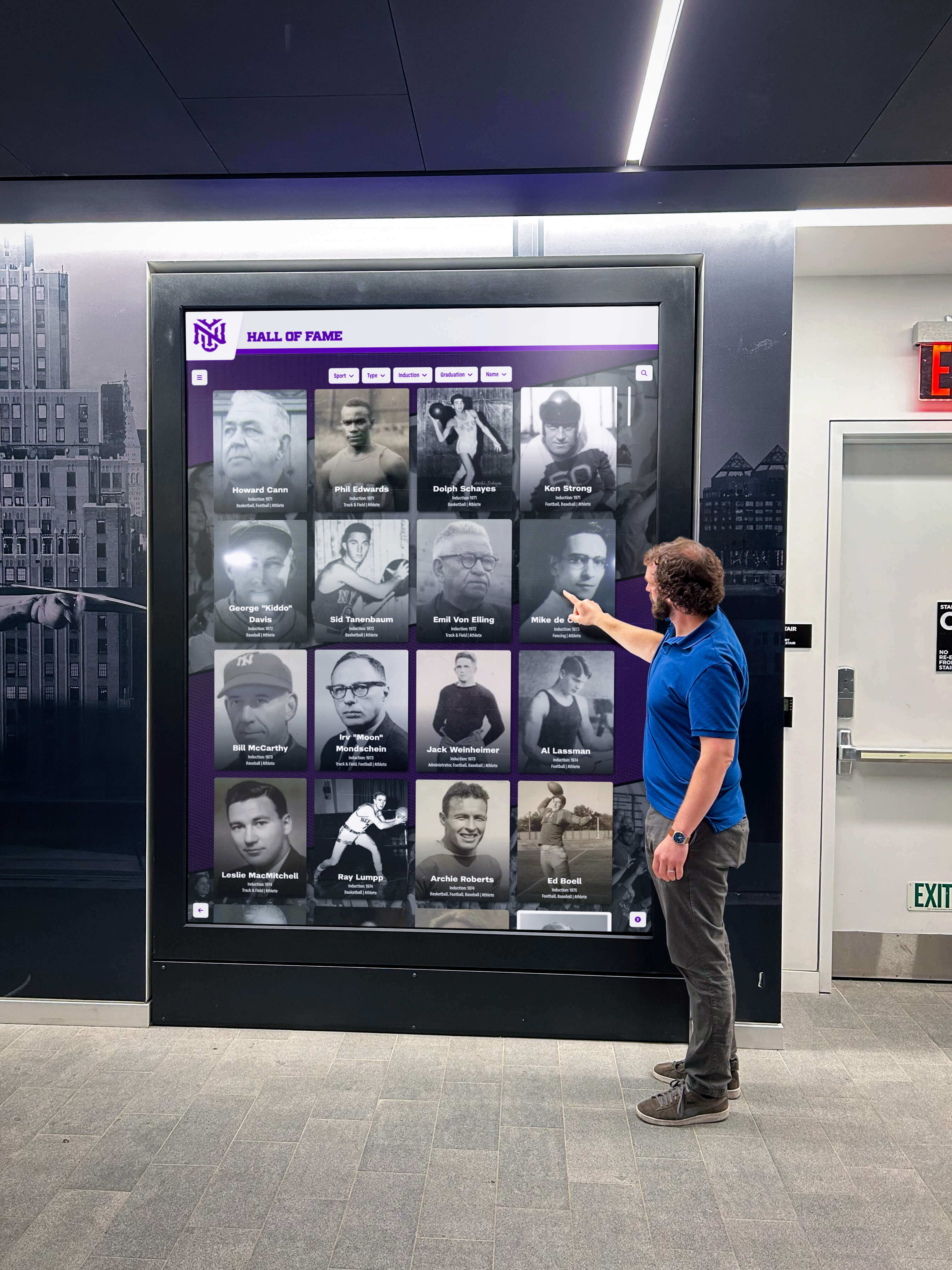
Digital recognition displays create engaging visitor experiences while extending access beyond physical campus
Comparing Costs: Traditional vs. Digital Trophy Display Cases
Understanding total cost of ownership helps schools make informed decisions.
Traditional Trophy Case Investment
Initial Costs:
- Large glass trophy case (72"W x 84"H): $4,500-$6,500
- Professional installation and mounting: $500-$1,000
- Interior lighting (if not included): $200-$400
- Initial trophy organization and placement: $200-$500
- Total Initial Investment: $5,400-$8,400
Annual Ongoing Costs:
- Cleaning and maintenance supplies: $150-$300
- Maintenance labor (custodial time): $400-$800
- Administrative time for trophy management: $800-$1,500
- Trophy reorganization: $200-$400
- Annual Ongoing: $1,550-$3,000
5-Year Total Cost:
- Additional cases as space fills (2-3 @ $6,000): $12,000-$18,000
- Five years of ongoing costs: $7,750-$15,000
- 5-Year Total: $25,150-$41,400
This assumes successful programs requiring additional cases every 2-3 years as trophies accumulate.
Digital Display System Investment
Initial Costs:
- 65" commercial touchscreen display: $4,500-$6,500
- Professional mounting and installation: $1,000-$2,000
- Content management platform (Year 1): $1,800-$3,000
- Initial content development and trophy digitization: $1,500-$3,000
- Total Initial Investment: $8,800-$14,500
Annual Ongoing Costs:
- Software subscription: $1,800-$3,000
- Electricity (continuous operation): $120-$180
- Minimal maintenance (screen cleaning): $100-$200
- Administrative time (minimal with remote updates): $200-$400
- Annual Ongoing: $2,220-$3,780
5-Year Total Cost:
- Five years of ongoing costs: $11,100-$18,900
- 5-Year Total: $19,900-$33,400
While initial investment runs higher for digital displays, unlimited capacity eliminates future case purchases, and the total 5-year cost becomes competitive or lower—especially for successful programs requiring multiple traditional cases.
Return on Investment Considerations
Beyond direct costs, digital displays provide value through:
Administrative Time Savings:
- 70-85% reduction in recognition management time
- Remote updates eliminating campus visits
- No physical trophy handling or cleaning
- Instant changes versus weeks for engraving
Enhanced Recognition Effectiveness:
- 90%+ visitor engagement versus passive observation
- Comprehensive athlete recognition beyond trophy plates
- Alumni connection through web-accessible content
- Recruiting advantages through professional digital presence
Infinite Capacity Value:
- No future trophy case purchases
- No difficult decisions removing achievements
- All historical recognition preserved permanently
- Growth becomes advantage rather than constraint
Schools implementing basketball recognition programs and other sport-specific displays often find digital platforms provide superior long-term value.
Hybrid Approaches: Combining Traditional and Digital
Many schools implement strategic combinations leveraging benefits of both approaches.
Featured Physical Trophies with Digital Archive
Implementation Strategy:
- Maintain small traditional case displaying 15-25 most significant championships
- Install adjacent digital display showcasing comprehensive historical archive
- QR codes on physical trophies linking to extended digital content
- Featured championships rotate seasonally while digital archive remains complete
- Physical presence satisfies stakeholders valuing tangible trophies
- Digital platform eliminates space constraints
This approach costs $12,000-$20,000 initially but satisfies diverse stakeholder preferences while solving the capacity problem.
Phased Transition from Traditional to Digital
Schools can gradually evolve recognition approaches:
Phase 1: Assessment (Months 1-3)
- Audit existing trophy collection
- Evaluate available display space and constraints
- Gather stakeholder input on recognition priorities
- Develop budget and timeline
Phase 2: Digital Archive Launch (Months 4-9)
- Install first digital display
- Digitize priority trophies with photos and information
- Maintain existing traditional cases unchanged
- Gather feedback and refine content
Phase 3: Optimize Balance (Year 2)
- Reduce physical trophy case footprint to featured championships
- Expand digital displays if desired
- Store non-displayed physical trophies appropriately
- Integrate web access extending recognition reach
Phase 4: Mature System (Years 3+)
- Digital platform becomes primary recognition system
- Physical displays feature rotating highlighted achievements
- Sustainable workflows for ongoing updates
- Comprehensive historical archives preserved permanently
This gradual approach spreads investment over multiple years while building stakeholder comfort with digital recognition. Schools implementing comprehensive recognition programs often coordinate digital display launches with these high-visibility events.
Location-Specific Strategies
Different spaces may warrant different approaches:
Main Lobby Recognition:
- Large digital display (65"-75") showcasing comprehensive achievements
- Small featured physical case with rotating championships
- Interactive exploration engaging prospective families during tours
Athletic Facility Displays:
- Sport-specific traditional cases near relevant gymnasiums
- Digital displays providing complete program history
- Video capability showing game highlights and memorable moments
Hallway Recognition:
- Space-efficient wall-mounted digital displays
- Championship banners complementing digital content
- Minimal floor footprint in high-traffic corridors
Making the Right Choice for Your School
Several factors influence which trophy display approach serves specific schools best.
Key Decision Factors
Budget Considerations:
- Available capital budget for initial investment
- Ongoing operational budget for maintenance and subscriptions
- Multi-year planning enabling phased implementations
- Funding sources (booster clubs, capital campaigns, technology budgets)
- Total cost of ownership versus immediate spending preferences
Space and Facility Constraints:
- Available wall space or floor area for displays
- Network connectivity and electrical infrastructure
- Architectural style and aesthetic preferences
- ADA accessibility requirements
- Building renovation opportunities
Program Characteristics:
- Current trophy accumulation rate
- Number of sports and achievement categories
- Historical archive depth and preservation priorities
- Growth trajectory and expansion plans
- Current space challenges and backlog
Stakeholder Priorities:
- Alumni preferences for traditional versus modern approaches
- Athletic director vision for recognition programs
- Administrative staff technology comfort and capacity
- Booster club supporter engagement preferences
- Student athlete inspiration and pride considerations
When Traditional Trophy Cases Make Sense
Certain situations favor conventional approaches:
- Small programs with limited trophy accumulation (fewer than 10 annually)
- Strong stakeholder preference for tangible physical trophies
- Limited budgets unable to support digital investment
- Facilities lacking network infrastructure or technical support
- New programs building initial trophy collections
- Complementary role alongside primary digital displays
When Digital Alternatives Excel
Digital solutions particularly benefit schools facing:
- Space constraints with trophy cases at or near capacity
- Successful programs generating 20+ trophies annually
- Desire for interactive, engaging recognition experiences
- Multiple sports deserving equal recognition visibility
- Need for remote content management and updates
- Alumni engagement priorities requiring web-accessible content
- Renovation projects creating opportunities for modern installations
- Comprehensive historical archives requiring preservation
When Hybrid Approaches Work Best
Strategic combinations suit schools with:
- Diverse stakeholder groups valuing both physical and digital recognition
- Phased budget availability supporting gradual implementation
- Multiple facility locations warranting different approaches
- Large historical archives plus continued achievement growth
- Balanced priorities between honoring tradition and embracing innovation
Conclusion: Choosing Trophy Display Solutions That Serve Your Program
The trophy display case remains a central element of athletic recognition in schools, honoring championships, preserving institutional history, and inspiring current student-athletes toward excellence. Whether schools choose traditional glass cases, elegant wood cabinets, or modern digital alternatives, the goal stays constant: celebrating every achievement while serving program needs effectively and sustainably.
Traditional trophy display cases in glass or wood configurations offer tangible championship hardware presence, require no technical infrastructure, and provide familiar recognition approaches that stakeholders understand and appreciate. These conventional solutions serve schools well when trophy accumulation remains modest, space constraints prove manageable, and stakeholders strongly value physical trophy presence.
However, successful athletic programs inevitably face the space limitation challenge. Physical trophy cases fill, difficult decisions about which championships warrant continued visibility become necessary, and recognition becomes constrained by arbitrary square footage rather than achievement merit. Additional case purchases provide temporary relief but perpetuate the fundamental capacity problem.
Digital trophy display alternatives eliminate space constraints entirely while enhancing recognition through interactive exploration, comprehensive multimedia content, simplified remote management, and web-accessible extensions reaching beyond physical campus. While initial investment runs higher than basic trophy cases, unlimited capacity eliminates future expansion costs, and total 5-year costs prove competitive—especially for programs requiring multiple traditional cases.
Most importantly, digital platforms position programs for unlimited growth. Every championship team, record-setting athlete, and coaching milestone receives lasting recognition rather than eventual storage room retirement. Schools can showcase complete historical archives while continuously adding current achievements without ever facing capacity constraints.
Many schools find hybrid approaches combining featured physical trophy displays with comprehensive digital archives provide optimal solutions, satisfying diverse stakeholder preferences while solving the capacity challenge. Phased implementations spread investment over multiple years while building comfort with digital recognition.
Your choice of trophy display case options should reflect your program’s specific situation: current space challenges, trophy accumulation rate, budget realities, stakeholder priorities, and growth projections. Whether implementing traditional cases, adopting digital platforms, or strategically combining both approaches, thoughtful planning ensures your recognition displays honor every achievement while serving your program’s needs for decades to come.
Ready to explore modern trophy display solutions that preserve every championship while eliminating space constraints? Discover how solutions like Rocket Alumni Solutions provide comprehensive digital recognition platforms showcasing unlimited athletic achievements through interactive touchscreen displays that engage students, alumni, and communities while growing with your program indefinitely.