Trophy cases hold decades of athletic history, but most visitors walk past them without stopping. A volleyball championship from 1998. A state swim title from 2004. A football trophy with no names, no context, and no connection to the athletes who earned it. The physical object exists—but the story behind it has long since faded from institutional memory.
Trophy case QR codes change that equation. By placing a small, scannable code alongside each award, schools and athletic programs create a direct path from a physical trophy to the digital content that gives it meaning: team photos, full rosters, season recaps, coach biographies, game scores, and donor acknowledgment. The trophy stays in the case. The story lives online and on screen—accessible to anyone with a smartphone.
QR codes are not new technology, but their practical application to physical recognition spaces has accelerated as scanning became effortless on every modern phone. What was once a technical novelty is now a standard bridge between the physical and digital world—one that athletic directors, advancement teams, and booster clubs can implement without specialized expertise.
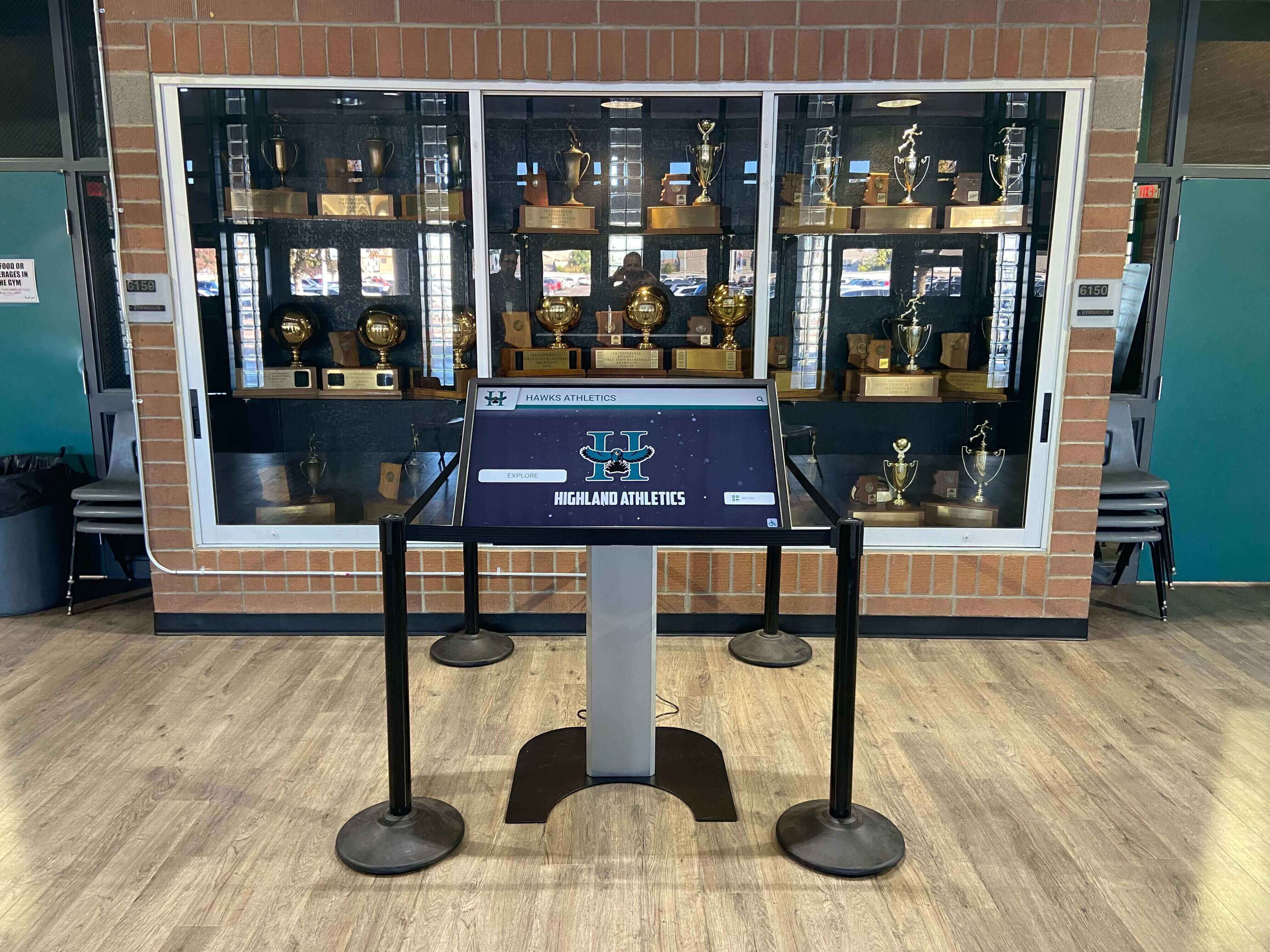
Physical trophy cases and digital displays work together to deliver the context a trophy alone cannot communicate
Why Physical Trophy Cases Lose Their Story
Athletic hardware accumulates quickly. Schools with fifty years of competitive history may have hundreds of trophies, plaques, banners, and awards across multiple sports. The physical constraint is obvious: a standard trophy case has finite space, and labels—when they exist—typically include only sport, year, and perhaps a division or final score.
What gets lost:
- Roster depth: The name on the trophy base (if any) rarely represents the full team. Supporting players, assistant coaches, and managers go unnamed.
- Photographic history: Championship team photos exist somewhere—yearbooks, athletic department archives, parent albums—but are rarely connected to the trophy itself.
- Game narratives: The score of the final, the comeback in the semifinal, the athlete who made the decisive play—these details fade within a decade.
- Donor context: If a booster, family, or business funded the program that won, that acknowledgment rarely appears anywhere near the trophy.
- Successor connection: Current athletes passing by a trophy from 1987 have no way to learn from it. The achievement is present; the lesson is absent.
A QR code on the trophy case doesn’t require more physical space. It requires a destination—a web page or digital profile—rich enough to deliver what the label cannot.
What Trophy Case QR Codes Can Link To
The effectiveness of QR codes on trophy cases depends entirely on the quality and relevance of the destination content. The following categories represent the most valuable digital content types for athletic trophy case QR programs.
Team Photos and Season Media
Championship photos—formal team portraits, action shots from the final game, celebration images—give visitors the human connection that trophies alone cannot. When linked directly from a QR code on the relevant trophy, these images transform a bronze figurine into a recognizable group of people.
Content to include in a photo-linked QR destination:
- Full team photo from the championship season
- Action shots from key games (if available in school archives)
- Coaching staff and support personnel photos
- Facility or venue photos providing geographic and historical context
- Any newspaper or media coverage photos that can be legally archived
Full Season Rosters
The most fundamental gap in trophy display is the absence of complete rosters. A championship trophy may list a coach’s name—or none at all. A QR destination page should include:
- Every athlete on the varsity roster, with graduation year
- Coaching staff: head coach, assistants, and volunteer coaches
- Athletic trainers, team managers, and other program contributors
- Senior athletes who contributed across multiple years without necessarily playing in the final
- Jersey numbers where records permit
When a 1994 athlete returns to campus and scans a QR code on their team’s trophy, finding their own name on a full roster is a genuinely powerful recognition moment—one that static plaques almost never deliver.
Season Recaps and Game Narratives
Sports season recap content serves multiple purposes: it documents institutional history, provides context for the championship win, and gives current athletes something to read and learn from. A QR destination page might include:
- Season record (wins, losses, ties)
- Key games with scores and brief descriptions
- Tournament or playoff bracket progression
- Individual statistical leaders for the season
- State or regional context: conference rankings and strength of schedule
For sport-specific awards, providing relevant background for visitors unfamiliar with the sport adds meaningful context. A softball championship page, for instance, benefits from factual context about regulation softball field dimensions and layout that helps visitors understand the competitive environment the team operated in—details that make the achievement more tangible than a trophy and score alone.
Not every trophy in a case represents a championship. Sportsmanship trophies, character awards, and community recognition pieces are common in athletic cases—and understanding what a sportsmanship award means is especially important when writing the QR destination copy, since these awards require more narrative explanation than a wins-and-losses record can provide.
Donor and Sponsor Acknowledgment
Many athletic program successes have a financial backstory. A booster who funded travel to a national tournament. A business that purchased new equipment. A family that endowed a scholarship generating college-bound athletes. QR codes provide a natural vehicle for connecting this financial support to the recognition that resulted.
When donors see their acknowledgment on a QR-linked page alongside the team they helped support, it reinforces the relationship between giving and athletic achievement. Best practices for donor thank-you communication in school and nonprofit contexts apply directly to how acknowledgment language should be written on trophy case QR destination pages—specific, genuine, and tied to outcomes rather than generic.

Mobile phone access to digital content transforms passive trophy viewing into active exploration that alumni want to share
Coach Biographies and Career Milestones
Championship trophies earned under long-tenured coaches carry significant legacy value. A QR code linking to a coach biography page documents not just one championship but a career arc: the years at the institution, program changes implemented, athletes mentored, and the broader impact on program culture.
Academic and All-Institution Awards
QR codes are not limited to athletic trophy cases. Schools with academic recognition displays—honor boards, dean’s list walls, and awards cases honoring students across disciplines—apply the same approach. Students recognized for high academic standing, including those honored with distinctions like the salutatorian title that identifies the second-highest academic achiever in a graduating class, deserve the same depth of archived context as athletic champions.
How to Implement Trophy Case QR Codes
Implementation does not require an enterprise software platform. Many schools begin with free or low-cost tools before transitioning to integrated recognition management systems.
Step 1: Audit the Trophy Case
Before generating QR codes, document what exists:
- Photograph each trophy, plaque, and award in the case
- Record sport, year, and any existing identifying information on the physical piece
- Note which items have NO identifying information (these require historical research before QR content can be created)
- Prioritize items: recent championships first, then work backward by significance or public visibility
Step 2: Build Digital Destination Pages
Each QR code needs a destination. Common hosting options include:
- School athletics website: A dedicated subpage per award (e.g.,
/athletics/championships/basketball-2003/) - Recognition platform: Purpose-built platforms that host award profiles, roster lists, and media galleries with administrative access controls
- Cloud-hosted documents: Simple hosted documents for programs beginning with limited technical resources
Quality destination pages include at minimum: trophy photo, sport and year, full roster, and one paragraph of season context. Adding photos, media, and donor acknowledgment elevates the page from archive to celebration.
Step 3: Generate and Print QR Codes
Free QR code generators create scan-ready codes in seconds. Key decisions:
- Static vs. dynamic QR codes: Dynamic codes allow the destination URL to change without reprinting the code—useful if content will be migrated to a new platform later
- Size: Print codes at minimum 1" × 1" for reliable scanning at typical viewing distance
- Placement: Label-sized QR codes can be affixed directly to trophy plaques, shelving below trophies, or mounted on an adjacent information panel
- Instructions: Include brief text beneath the code (“Scan to see the full roster and story”) for visitors who may not immediately recognize the code
Step 4: Assign Content Maintenance Ownership
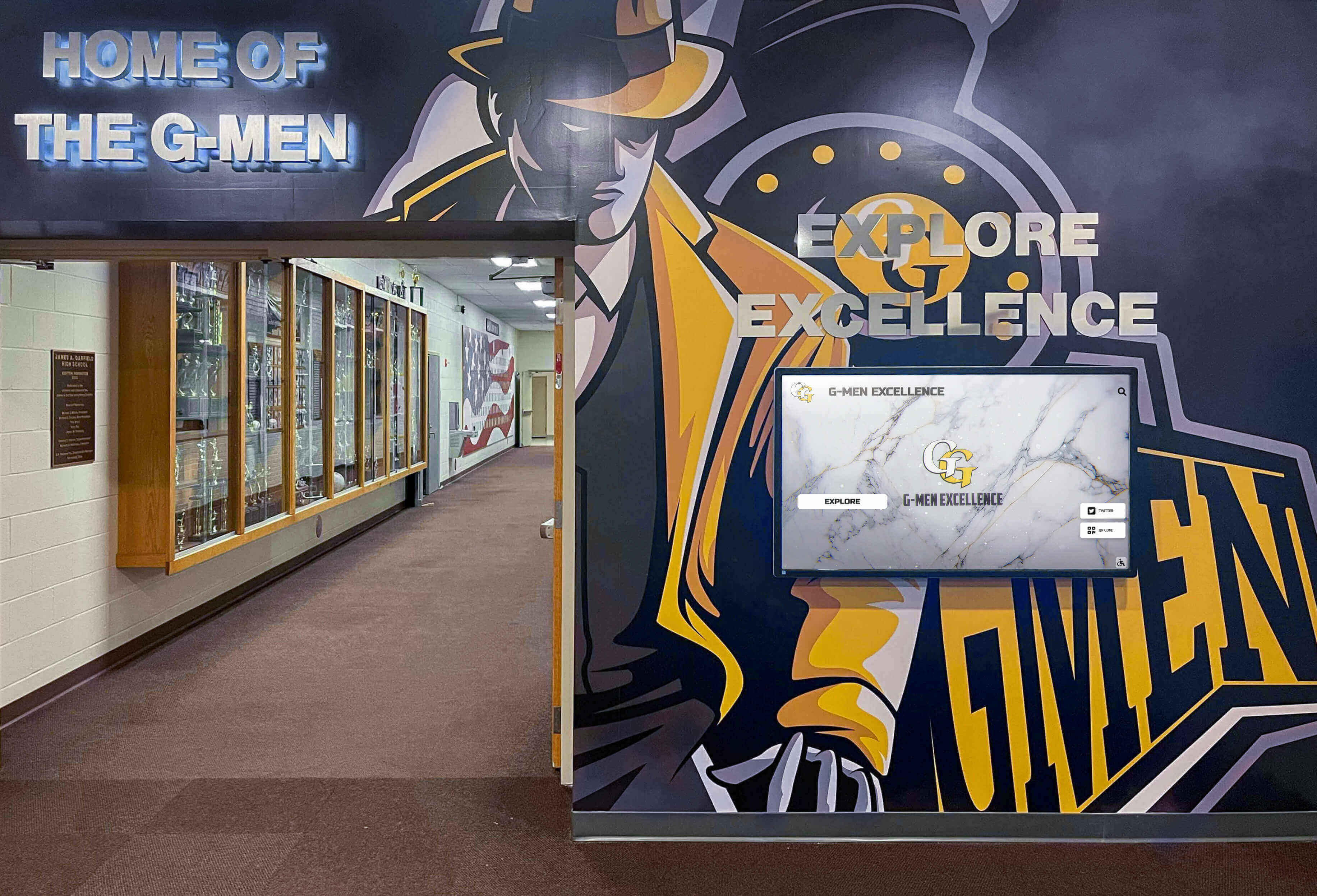
Trophy cases integrated into recognized athletic corridors benefit from QR codes that activate the silent history displayed behind glass
The most common failure mode is QR codes that scan to broken or empty pages after a website migration or platform change. Assign one person—typically the athletic secretary or communications coordinator—responsibility for maintaining QR destinations. Document assigned URLs and the hosting platform so transitions between staff members don’t result in dead links.
Budgeting for Trophy Case QR Implementation
QR code implementation ranks among the most cost-effective recognition enhancements available to athletic programs. Physical materials—printed QR labels or small plaques—cost pennies to dollars per trophy. The real investment is staff time: building digital destination pages and gathering historical content.
For schools building QR programs alongside broader recognition technology upgrades, athletic director budget planning for tight budgets covers prioritization frameworks that help programs sequence investments across records boards, trophy displays, and digital walls of fame.
| Implementation Tier | Approximate Scope | Primary Costs |
|---|---|---|
| Basic | QR labels on recent trophies; destination pages on existing school website | Staff time for page creation; label printing |
| Standard | All trophy cases covered; hosted recognition platform with roster management | Platform subscription; staff time; label fabrication |
| Advanced | QR codes integrated with adjacent touchscreen kiosk or digital display | Display hardware; platform integration; content development |
| Full Digital | Touchscreen kiosk becomes primary browsing interface; QR codes supplement mobile access | Kiosk hardware and installation; platform licensing |
The advanced and full-digital tiers represent investments that serve multiple functions simultaneously: QR codes, walk-up browsing on a touchscreen, and searchable alumni archives accessible from any device.
Integrating QR Codes with Touchscreen Displays
For schools ready to go beyond QR codes alone, an adjacent touchscreen display eliminates the friction of phone scanning entirely. Visitors can browse the same championship profiles, roster lists, and photos that QR codes link to—without taking out a phone.
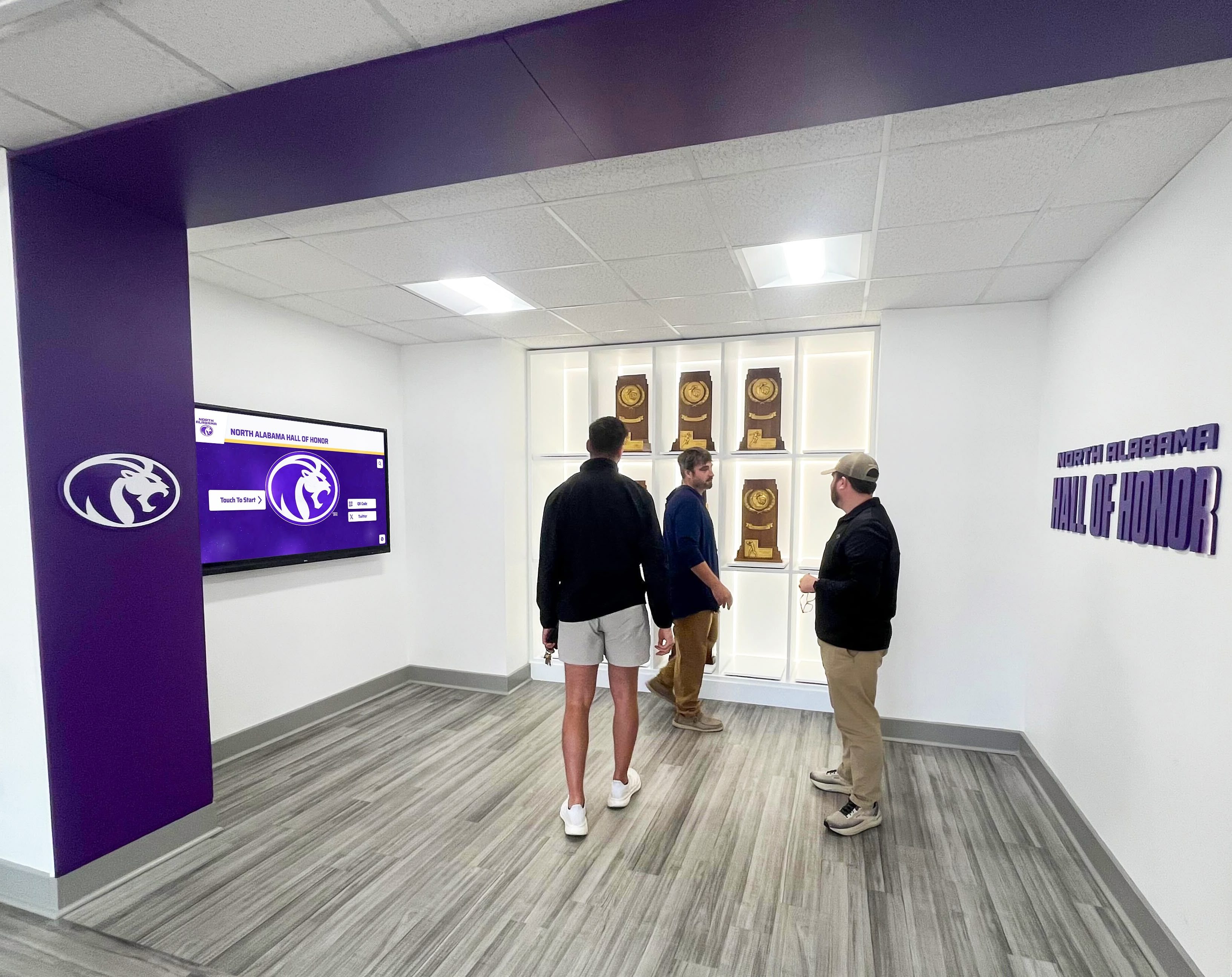
Visitors exploring trophy display areas benefit from touchscreen access to the same content QR codes deliver on mobile
The QR-to-touchscreen integration creates a dual-access system:
- Phone scanning: Best for visitors who arrive knowing what they’re looking for, or alumni who want to share content with former teammates
- Touchscreen browsing: Best for walk-up visitors exploring the trophy case who discover context they didn’t know to look for
Both experiences draw from the same content library, so a staff member updating a championship page in the content management system automatically updates both the QR destination and the touchscreen display profile.
Country clubs and private membership organizations have led adoption of this dual-access model, with touchscreen member recognition programs demonstrating how the same physical-to-digital bridge works across institutional types—from school trophy cases to member honor walls.
Building a Searchable Digital Archive from Physical Awards
Trophy cases are accidental archives. Hardware accumulates over decades without an organizing logic—a 1973 baseball trophy sits beside a 2019 volleyball plaque because that’s where there was space. QR codes, and the digital platforms they link to, allow programs to impose organizational structure on this physical accumulation.
A well-structured digital archive behind a trophy case QR program supports:
- Filtering by sport: View all basketball championships in one search
- Filtering by decade: Browse program achievements by era
- Alumni search: Find the years a specific name appears across multiple trophies
- Coaching lineage: View all championships under a specific coach’s tenure
- Donor history: See all trophies associated with a specific sponsor or booster contribution
For colleges building recognition archives that extend beyond athletics—into residence halls, student organizations, and academic programs—interactive informational display systems across campus demonstrate how institutions create consistent digital infrastructure that connects all recognition touchpoints under one searchable system.
Trophy Case QR Codes Across Institutional Types
The QR-to-digital approach works across several institutional categories, each with distinct content priorities.
High Schools
High school trophy cases typically span multiple decades of a single institution. Content priorities: complete rosters (supporting the many athletes who never received individual recognition), coach tenure documentation, and connections to current students who can learn from their predecessors’ achievements.
Colleges and Universities
College programs manage more complex histories—more sports, longer institutional timespans, and stronger alumni giving programs that depend on recognition. QR codes in college athletic facilities serve advancement teams as much as they serve sports fans—linking donor acknowledgment to championship hardware builds the case for continued giving.
Community Athletic Associations
Regional leagues, booster organizations, and community athletic associations maintain trophy cases without dedicated IT or communications staff. Simple QR implementations—labels linked to hosted pages—provide meaningful digital depth without requiring ongoing technical maintenance.
Beyond Athletics
Schools extending QR implementation to arts showcases, academic competitions, and community service recognition find that the same workflow applies. Whether the trophy recognizes a debate team championship or a state academic competition title, the QR destination structure—photos, roster, context, donor acknowledgment—remains consistent.
Content Planning for Trophy Case QR Destinations
Consistent content structures make destination pages easier to build, maintain, and expand. The following template applies across sports and award types.
Required elements:
- Award name and year
- Sport or program
- Full roster with graduation years
- Head coach name and tenure notation
- Season record (wins/losses or equivalent)
- One paragraph of season narrative
Recommended elements:
- Team photo (primary)
- Action photos from key games (if available)
- Donor or sponsor acknowledgment with brief context
- Conference or regional ranking that season
Optional enrichments:
- Video highlight clip (school broadcast or local media, with rights clearance)
- Newspaper headline screenshot or archival scan
- Alumni quote from a team member (with written permission)
- Link to broader athletic history page for the sport
Building even the required elements for a case holding 50 trophies represents meaningful staff time. Schools that prioritize recent trophies first and work backward systematically find the project manageable—even without dedicated communications staff.
Frequently Asked Questions
Do QR codes work on all trophy case styles?
Yes. QR codes print on labels, small plaques, or information panels that can be affixed to any surface—glass case doors, shelf edges, wall panels adjacent to cases, or directly to trophy bases. No modification to the trophy itself is required.
What happens if the destination URL changes?
Dynamic QR codes—available through most QR code management services—allow the destination URL to be updated without reprinting the physical code. Static QR codes encode the URL permanently; changing the destination requires reprinting. Dynamic codes are strongly recommended for programs that anticipate website migrations or platform changes.
How long does it take to build QR destination pages for a full trophy case?
Time varies significantly depending on available historical records. A recent championship with photos and roster documentation in digital format may take 30–60 minutes to build a complete destination page. Historical trophies requiring research—contacting alumni, scanning yearbook photos, reviewing paper records—may take several hours per item. Prioritizing recent awards and working backward is the most efficient approach.
Can QR codes replace trophy case labels entirely?
A QR code works best as a supplement to a label, not a replacement. Physical labels provide immediate identification for visitors who won’t scan. QR codes provide depth for visitors who want more. Programs that remove labels in favor of QR-only identification risk frustrating visitors who encounter poor scanning conditions or limited data connectivity.
What’s the best way to handle trophies with no existing records?
For trophies with minimal identifying information, QR destinations can document the research process itself: “This trophy was awarded to [School] in [approximate decade]. If you have information about this award, contact the athletic office at [email].” Crowdsourcing historical information from alumni via QR destinations has helped schools recover records that no longer exist in institutional archives.
Moving from QR Codes to a Full Digital Trophy Case
Trophy case QR codes represent the entry point of a broader physical-to-digital recognition strategy. As content libraries grow, many schools find that the infrastructure built for QR destinations—hosted profiles, roster databases, media galleries—naturally expands into a full digital trophy case accessible from any device, anywhere.
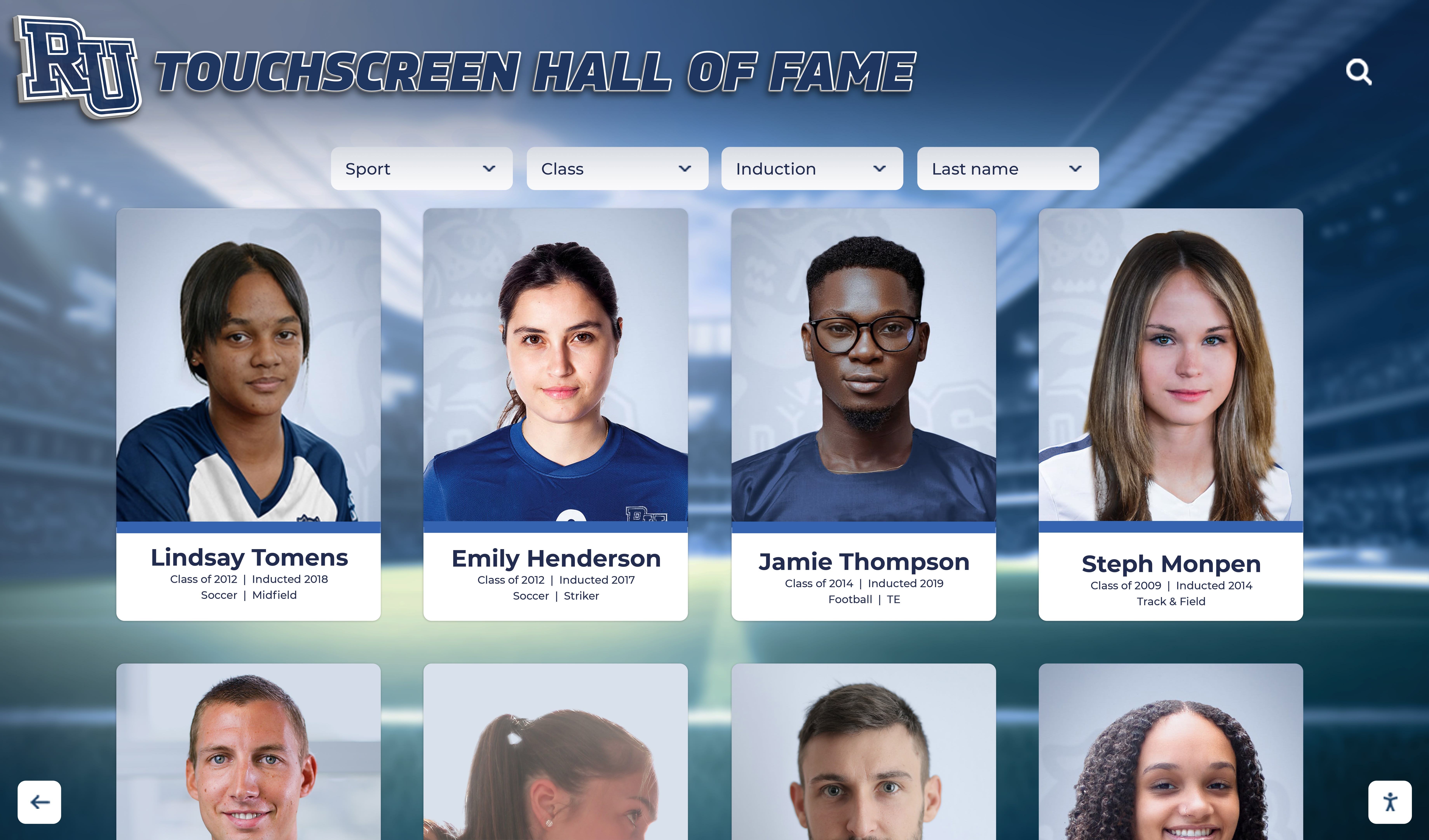
Digital trophy case platforms display the same content accessible via QR codes in a browsable, searchable format for any walk-up visitor
A full digital trophy case adds:
- Walk-up browsing: Visitors explore awards without phone scanning
- Search and filtering: Find content by sport, year, athlete name, or coach
- Alumni portal: Former athletes access their own recognition profiles and share them with family
- Donor integration: Development offices access recognition data for major gift conversations
- Administrative controls: Athletic directors update profiles from any device without technical assistance
The transition from QR labels to a managed digital platform is incremental—the content created for QR destinations becomes the foundation of the digital trophy case. Schools that invest in quality destination pages from the beginning create an asset that serves multiple purposes: QR destinations today, searchable digital archive and touchscreen wall of fame tomorrow.
Conclusion: From Glass Case to Living Archive
A trophy sitting behind glass without context is a monument to a moment no one can access. Trophy case QR codes change that—not by replacing the physical award, but by unlocking the story it represents. Full rosters, championship photos, season narratives, coach biographies, and donor acknowledgment all become accessible the moment a visitor raises their phone.
The implementation path is accessible at any budget level: start with QR labels and hosted destination pages, build content systematically, and expand toward integrated touchscreen displays and searchable digital archives as resources allow. The story your trophy case contains has been waiting years to be told.
When you’re ready to connect physical awards to a managed digital recognition platform—one that combines QR accessibility, touchscreen browsing, and searchable alumni archives in a single system—request a demo from Rocket Alumni Solutions to see how schools transform trophy cases into living institutional histories.