Intent: decide — this guide helps school administrators, athletic directors, front office coordinators, and advancement teams evaluate touchscreen directory systems that combine wayfinding maps, staff listings, and recognition content in a single cloud-managed display.
A touchscreen directory for schools is a wall-mounted or freestanding interactive display that lets visitors tap to find offices, browse staff profiles, and explore achievement and recognition content — all from a single screen managed remotely through a browser-based content management system (CMS). Schools place them in lobbies, main hallways, athletic wings, and near trophy cases to orient first-time visitors, replace outdated printed boards, and surface student and alumni accomplishments to everyone who walks through the building.
Unlike a laminated staff list or a PDF floor plan taped to a wall, a touchscreen directory is updated in the CMS and rendered on the screen within minutes — without printing, mounting, or coordinating with facilities. This guide covers the modules that make up a school touchscreen directory, a buyer checklist for evaluating platforms, a comparison table for common deployment scopes, deployment steps, and a FAQ section.
Schools that install touchscreen directories most often reach that decision after a specific friction point becomes impossible to ignore. A newly appointed principal whose name still hasn’t appeared on the lobby board six months into the role. A substitute teacher wandering the hallway looking for the main office. A prospective family who walks past a trophy case full of nameplates with no photos, no stories, and no context for the achievements they represent. Each of those moments is a small failure of institutional communication — and all of them share the same root cause: a static information environment that cannot keep pace with a living school.
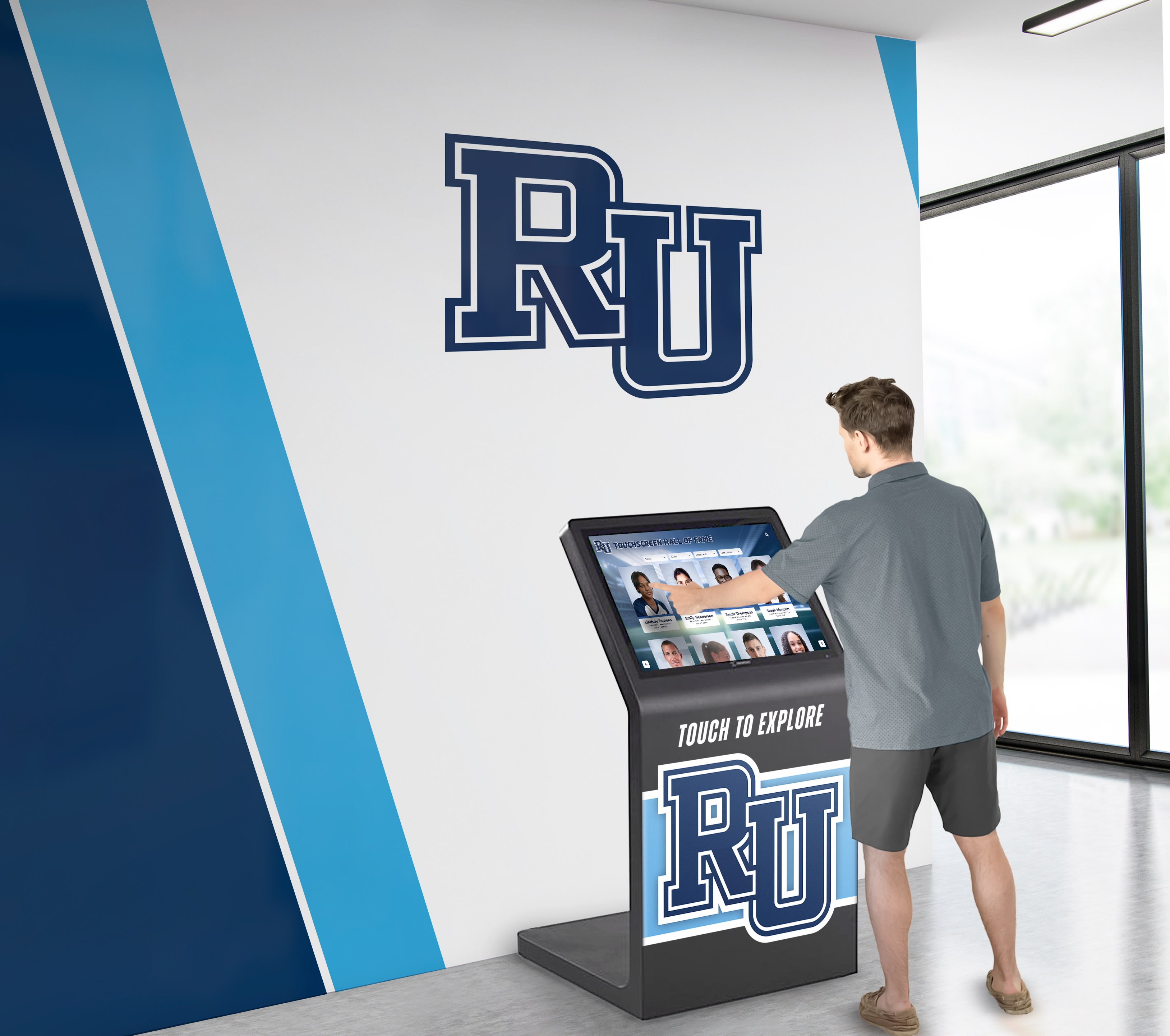
A touchscreen directory placed in a school lobby handles visitor orientation, staff lookups, and recognition content on a single cloud-managed display
What Is a Touchscreen Directory for Schools?
A touchscreen directory is interactive display hardware paired with cloud-based software that organizes and presents campus information in a touch-navigable interface. Visitors tap to find a room, search for a staff member by name or department, or browse hall of fame inductees and award content. Schools deploy them as standalone units or as part of a larger network of displays managed from one central CMS.
The hardware is typically a commercial-grade LCD panel — 55", 65", 75", or 86" — with an integrated or overlay touch layer. The software is a web-accessible CMS where designated staff update content by uploading photos, editing profiles, adjusting floor plans, or adding new recognition entries. The screen renders whatever the CMS holds; no vendor coordination required for routine updates.
What separates a touchscreen directory from a digital signage player or visitor check-in kiosk:
- A digital signage player pushes scheduled content to a screen for passive viewing; visitors cannot interact with it.
- A visitor check-in kiosk captures arrival data for safety logs and notifies host staff; it is not designed for browsing information.
- A touchscreen directory is an active, self-service information resource — visitors drive their own experience through touch navigation.
Some platforms combine two or three of these functions on shared hardware. Understanding which function is primary helps schools choose correctly and avoid paying for capabilities they will not use.
Core Modules in a School Touchscreen Directory
Not every deployment includes every module. Understanding what is available helps administrators scope a project accurately before speaking to vendors.
Wayfinding Maps
Campus wayfinding gives visitors a self-service answer to “where do I go?” without requiring a staff member to walk them there. Key capabilities to expect:
- Clickable floor plans — visitors tap an office, room, or department to see a highlighted path from the directory’s location
- Multi-floor and multi-building navigation for campuses with more than one structure or level
- QR code export so visitors can send directions to a mobile device before leaving the kiosk
- ADA-accessible route display shown separately from standard paths
- Room availability integration where the school’s scheduling system allows it
Floor plans are the module that most often requires upfront effort from the school. A clean digital floor plan file (PDF or vector format) dramatically shortens vendor setup time compared to scanned paper originals or hand-drawn diagrams.
Staff and Department Listings
Staff directories are the primary driver of purchase for most front office and administrative teams. What to expect from this module:
- Photo-driven profiles with name, title, department, phone extension, and email
- Search and filter by name, department, or keyword — eliminating the need to scroll alphabetically through a long list
- Bulk import or sync from HR platforms, student information systems (SIS), or existing spreadsheets
- Role-based CMS access allowing department leads to manage their own sections
- FERPA-compliant field controls that define which data is visible to public users versus internal staff
Staff directories benefit most from a clear content governance plan before launch. Schools that assign a named owner for each department’s listings — rather than routing every update through a central IT coordinator — see far fewer outdated entries over the display’s lifetime.
Recognition, Awards, and Achievement Content
Recognition modules transform a utilitarian wayfinding screen into a point of institutional pride. This layer is what distinguishes a school-focused touchscreen directory from a generic corporate lobby kiosk:
- Hall of fame inductee profiles with biographical detail, career highlights, graduation year, and photos or video
- Athletic record boards showing current season leaders and all-time marks
- Academic honor rolls listing students with GPA distinctions, National Honor Society membership, or scholarship recognition
- Team histories and championship archives organized by sport, year, or program era
- Fine arts and performing arts recognition for band, theater, choir, and dance programs
Schools that have already built structured recognition programs for student athletes will find that the documentation, photos, and narrative content from those programs transfer directly into an interactive directory’s recognition module. The guide to athletic hall of fame displays covers how to structure that content for both physical and digital presentation.
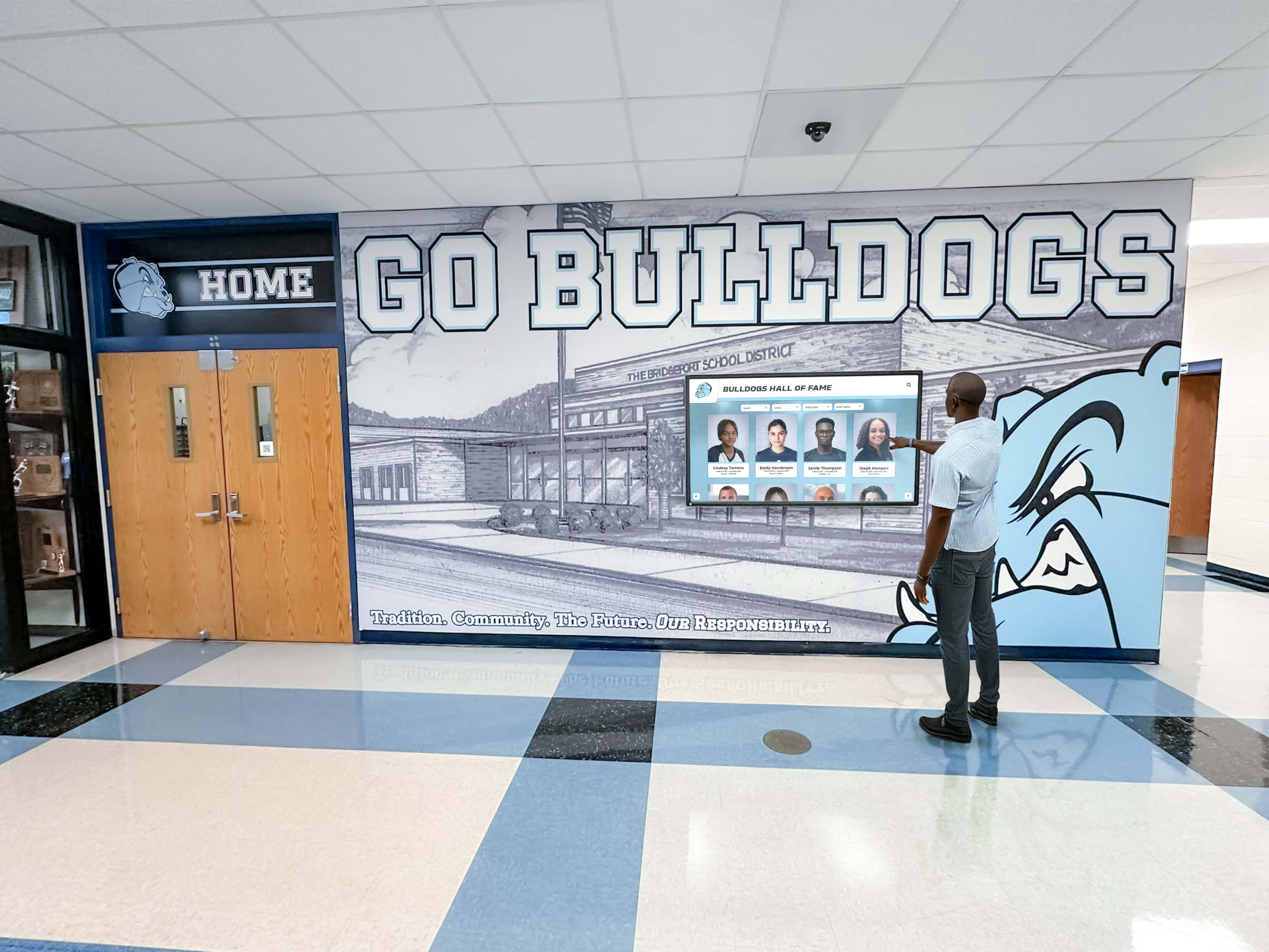
Recognition modules surface hall of fame profiles, athletic records, and award content alongside wayfinding and staff listings on shared hardware
Donor Recognition and Alumni Sections
Advancement teams and alumni offices use these modules to replace or supplement static donor walls:
- Named donor panels organized by giving tier, campaign, or named endowment
- Alumni spotlight profiles with career highlights, graduation year, and headshot
- Campaign progress displays for capital campaigns or annual fund drives
- Scholarship recipient histories linking a named fund to the students it has supported over time
For schools with active alumni engagement programs, the directory becomes a year-round ambient presence rather than an annual event — a persistent reminder to returning visitors that the school honors and celebrates its graduates.
Feature Checklist for Evaluating Touchscreen Directory Platforms
Use this checklist when comparing platforms, writing an RFP, or conducting vendor demonstrations. Mark each capability your school requires before entering conversations:
Content Management
- Cloud-based CMS with remote update capability from any browser, no IT action required
- Role-based access so each department manages its own section independently
- Bulk import or API sync with HR platforms, SIS, or athletic databases
- Content scheduling for announcements, seasonal content, and event promotions
- Version history or content rollback for error recovery
Wayfinding
- Interactive floor plan with tap-to-navigate room lookup
- QR code export so visitors can pull directions to a mobile device
- Multi-building and multi-floor navigation support
- ADA-accessible route display separate from standard paths
Staff Directory
- Photo-driven profiles with full name, title, department, and contact fields
- Full-text search and department or role filter
- Department group pages with shared contact information
- FERPA-compliant field visibility controls for sensitive data
Recognition and Awards
- Hall of fame profiles with no per-record entry fee or hard cap on entries
- Auto-ranking athletic record boards updated by CMS, not manual list edits
- Photo and video upload support for inductee profiles and highlight content
- Academic, fine arts, and performing arts recognition modules — not athletics only
- Alumni and donor recognition sections with flexible tier and naming structures
Hardware Compatibility
- Support for 55", 65", 75", and 86" commercial display sizes
- Portrait and landscape orientation options for the same platform
- Wall-mount, floor-standing kiosk, and tabletop or desk configurations
- Commercial-grade panels rated for 18/7 or 24/7 continuous operation
Accessibility
- WCAG 2.1 AA compliance for text contrast, tap target size, and navigation structure
- ADA-compliant mounting guidance supporting a maximum 48" reach range from the floor
- Screen reader or keyboard navigation support where state or district policy requires it
Multi-Device and Web Access
- Web-accessible directory version embeddable on the school website
- QR code linking to a mobile-friendly view of directory content
- Content viewable on tablets and laptops for staff reference
Support and Maintenance
- Vendor-managed software updates — no school IT action required for platform upgrades
- Remote diagnostics and uptime monitoring included in licensing
- Defined support response SLA for technical issues
- Onboarding training and ongoing support, not just a help-center article library
Comparing Deployment Scopes: Directory-Only, Recognition-Only, and Combined
Schools typically evaluate three scopes when entering the touchscreen directory market. The table below contrasts the key factors for each:
| Factor | Directory-Only | Recognition-Only | Combined Directory + Recognition |
|---|---|---|---|
| Primary Use Case | Visitor orientation, staff lookup | Celebrating alumni, donors, athletes | Full campus engagement hub |
| Typical Buyer | Front office coordinator, IT | Athletic director, advancement office | Administrative leadership, communications |
| Content Update Cadence | Weekly to monthly (staff changes) | Annual or seasonal (new inductees) | Mixed: daily to annual depending on module |
| CMS Complexity | Low — names, photos, rooms | Medium — profiles, media, rankings | High — multiple departments, workflows |
| Recommended Display Size | 55"–65" wall mount or kiosk | 65"–86" lobby or trophy-case panel | 75"–86" high-traffic lobby location |
| Content Ownership | Front office or registrar | Athletic director or alumni office | Multiple teams with role-based CMS access |
| Visitor Engagement Type | Transactional — find and leave | Narrative — browse and explore | Both: navigation and discovery |
| ADA Priority | High — visitor accessibility critical | Moderate — typically in public lobby | High — dual audience, multiple use patterns |
| Integration Needs | HR/SIS sync beneficial | Photo archive, sports database | Both, plus optional event calendar |
Planning note: Schools that launch with a directory-only scope and intend to add recognition content later typically spend 15–25% more in total than schools that plan for combined deployment from the start. The second phase requires content migration, template reconfiguration, and sometimes hardware repositioning — all avoidable costs with integrated initial planning.
The interactive kiosk display comparison for schools evaluates the hardware side of this decision, including commercial panel specifications and mounting configurations for each deployment scope.
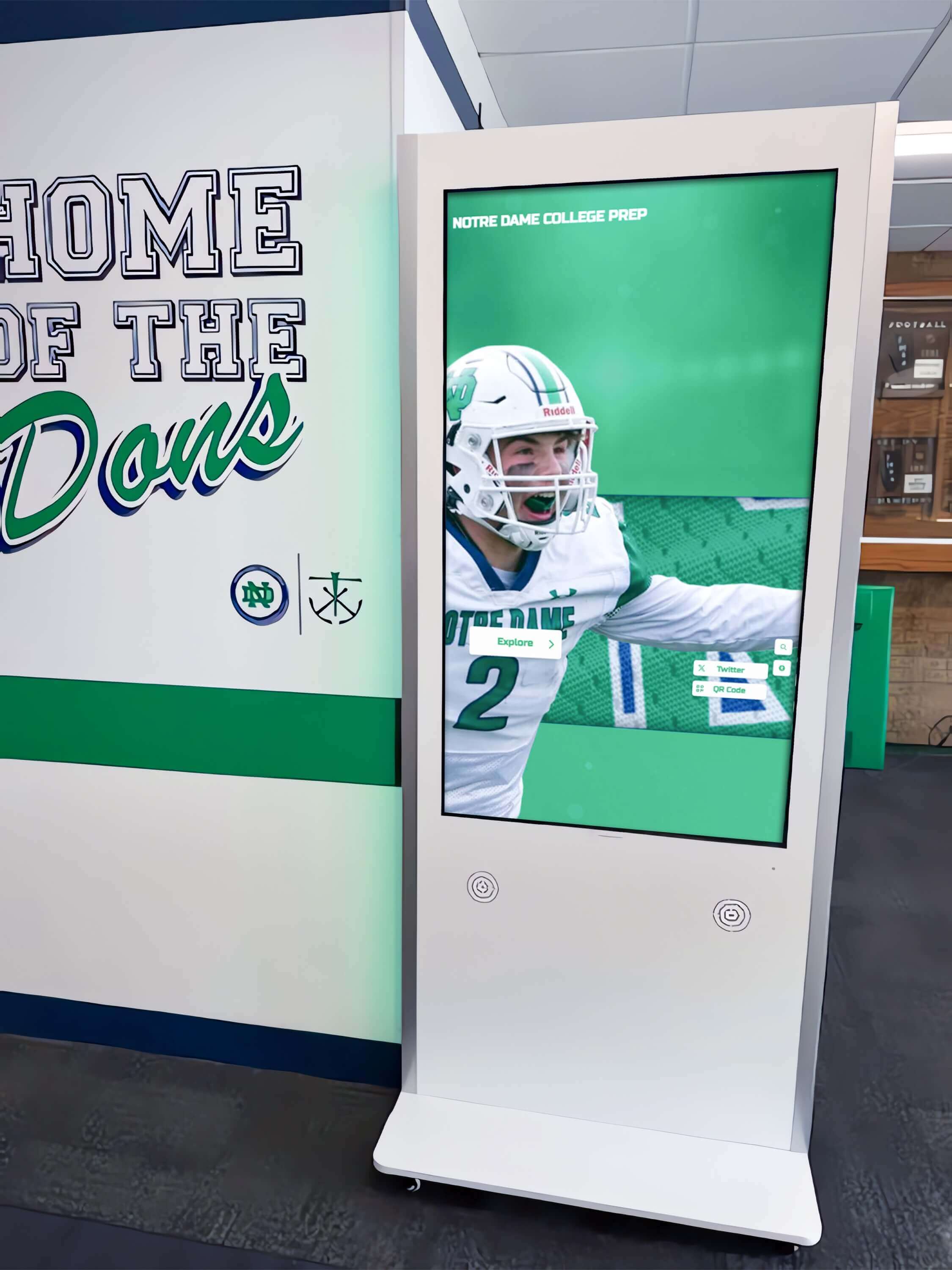
Athletic wing installations often combine a sport-specific recognition display with a directory layer that serves visitors, parents, and recruits in a single session
How to Plan and Deploy a School Touchscreen Directory
Step 1: Define Content Ownership Before Any Vendor Conversations
The most common reason touchscreen directory projects stall after purchase is undefined content ownership. Before the first vendor demo, answer three questions in writing:
- Who approves content changes? Name a role, not a specific person.
- Which department controls the budget? Front office, advancement, athletics, or shared?
- Who handles first-level troubleshooting? IT coordinator or the department lead managing content?
Schools that skip this step often end up with a screen that shows day-one content for years because everyone assumes someone else is responsible for updates.
Step 2: Audit Existing Content
Before scoping the project, take inventory of what you already have:
- Staff list: format, completeness, and photo availability
- Hall of fame records: spreadsheet, binder, database, or only physical plaques
- Donor wall lists: spreadsheet, database, or transcription from physical signage
- Floor plans: PDF, CAD, scanned image, or only a paper original
Content gaps are far easier to close before a launch deadline than after go-live. Schools that have already organized structured recognition archives — for sports programs, academic honors, or fine arts — can migrate that content directly into a recognition module with minimal reformatting. The interactive school directory guide covers how to structure content across all module types before beginning vendor conversations.
Step 3: Choose Hardware and Location
Location determines hardware requirements. Key siting factors:
- Traffic flow — place where visitors naturally pause, not where they are moving quickly past
- Natural light — lobbies with windows or skylights need higher-brightness commercial panels (700–1,000 nits or higher)
- Wall construction — concrete and CMU walls require different anchoring methods than metal-stud drywall
- Network access — wired Ethernet is more reliable than WiFi for consistent CMS connectivity and video playback
- Viewing distance — a 75" panel is comfortably readable at 10–14 feet; a 55" panel suits closer, counter-depth interactions
- Electrical circuits — a dedicated circuit prevents interference and properly supports surge protection
The interactive kiosk solutions guide covers mounting, network, and electrical considerations for school lobbies and athletic facilities in more detail.
Step 4: Establish a Content Governance Plan
Assign a named owner to every module before the display goes live:
| Module | Suggested Owner | Recommended Update Cadence |
|---|---|---|
| Staff directory | Front office coordinator | As staff changes occur |
| Campus map | IT coordinator or facilities manager | Per semester or as rooms are reassigned |
| Athletic hall of fame | Athletic director | Annually at induction ceremony |
| Donor recognition | Advancement director | Per campaign or quarterly |
| Academic honor roll | Registrar or principal designee | Per marking period |
| Fine arts and performing arts | Department lead | Per production or annually |
Platforms with role-based CMS access allow each owner to update their module independently, eliminating the IT bottleneck that turns simple text changes into multi-day work requests.
Step 5: Configure, Test, and Launch
Before the display goes live publicly:
- Populate a content baseline — at least 80% of staff profiles, a complete floor plan, and one fully populated recognition section
- Test ADA reach and touch accuracy at the installed mounting height before anchoring permanently
- Brief all content owners on CMS access and their responsibilities before turning the screen on publicly
- Add a QR code linking to the web-accessible directory version for visitors with mobility limitations or who prefer to navigate on their own device
- Schedule a 30-day review to surface missing profiles, navigation gaps, and layout adjustments based on actual use
A soft launch with front office staff using the system for a week before public unveiling catches most friction points without creating a visible failure in front of visitors or prospective families.
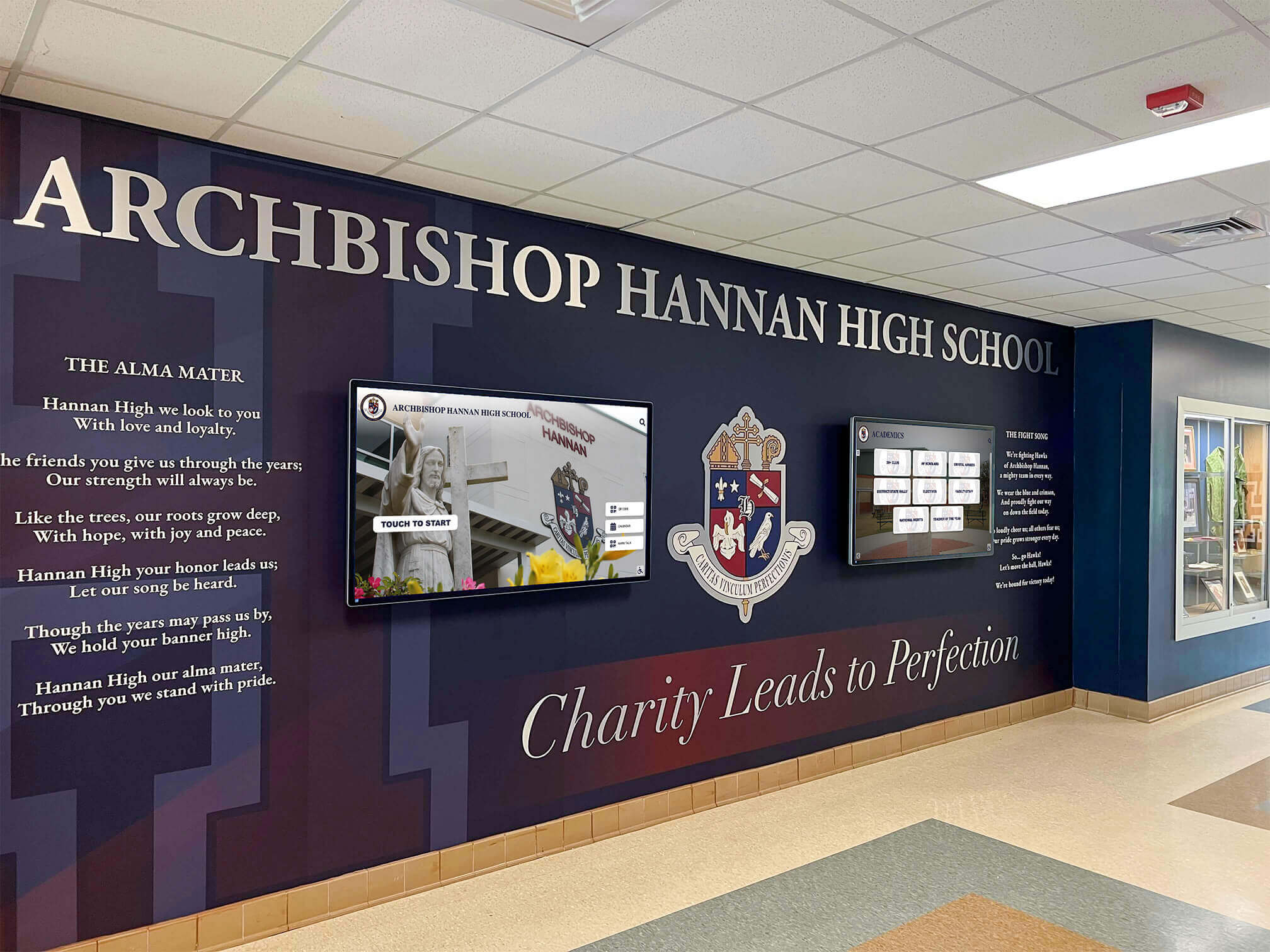
Effective lobby installations integrate the touchscreen directory into the broader physical environment — alongside murals, crests, and trophy case displays — rather than treating it as a standalone addition
Keeping the Directory Current Over Time
Hardware lasts 7–10 years. Content freshness requires attention every week or month. Schools that sustain the highest engagement from their touchscreen directories treat content updates as a recurring workflow — not a one-time setup project.
Practices that prevent stale directories:
- Add directory profile creation to the staff onboarding checklist so new hires appear on day one, not month three
- Tie hall of fame and award additions to the annual recognition calendar rather than waiting until the screen looks visibly outdated
- Include directory content review in back-to-school preparation alongside parent portal updates and handbook distribution
- Designate a backup updater for every module so coverage is maintained through vacations, leaves, and staff transitions
For schools evaluating the software side of this workflow in detail, the best touch screen kiosk software comparison guide reviews how leading platforms handle role-based access, content scheduling, and remote management for multi-department environments.
Frequently Asked Questions
What is a touchscreen directory?
A touchscreen directory is an interactive display — typically a wall-mounted or freestanding commercial panel — that gives visitors self-service access to staff listings, campus maps, and achievement or recognition content. Unlike a printed directory, it is managed through a cloud-based CMS and updated remotely without any changes to the hardware.
What is the difference between a touch screen directory and a regular digital sign?
A regular digital sign pushes pre-scheduled content to a screen for passive viewing — visitors watch but cannot interact. A touch screen directory is actively navigated by the visitor: they search for a staff member, tap a room on a floor plan, or browse hall of fame inductee profiles. The interaction model is fundamentally different, and the hardware must support multi-touch input rather than just display output.
Can one touchscreen directory display handle maps, staff listings, and recognition content together?
Yes. Combined deployments on a single 75" or 86" panel are common in school lobbies that serve both first-time visitors and returning alumni. A well-designed home screen with clear module tiles — “Find a Staff Member,” “Campus Map,” “Hall of Fame,” “Donors & Alumni” — lets each user type navigate to their content without friction. Planning a combined deployment from the start is more cost-effective than adding recognition to a directory-only installation later.
Who manages content on a school touchscreen directory?
Ownership typically splits by module. Front office staff manage staff listings and campus maps. Athletic directors or alumni offices manage hall of fame and recognition content. Advancement offices manage donor walls and campaign content. Registrars or principal designees manage academic honor rolls. A CMS with role-based access allows each group to update their section independently without routing changes through central IT.
How long does it take to deploy a school touchscreen directory?
A single-module deployment — staff directory only or recognition wall only — typically runs 4–8 weeks from purchase order to operational display, covering site assessment, hardware delivery, mounting, software configuration, content migration, and staff training. Combined deployments with significant content migration from legacy physical records typically run 8–12 weeks. Schools with structured digital archives and existing floor plan files move faster than those starting from paper records or physical plaques.
What accessibility requirements apply to school touchscreen directories?
ADA guidelines require that forward-approach interactive displays have a maximum touch height of 48 inches from the finished floor. WCAG 2.1 AA governs on-screen content: minimum text contrast ratios of 4.5:1, sufficient touch target sizes for users with limited dexterity, and logical navigation structure. Schools in states with supplemental accessibility requirements should verify local compliance before finalizing mounting height and display configuration.
How much does a touchscreen directory cost for a school?
Total cost depends on hardware size, software licensing model, and content migration scope. A single-module, 55" wall-mounted directory-only deployment typically ranges from $3,000 to $8,000 in hardware, plus annual software licensing. A combined 75"–86" deployment with maps, staff listings, and recognition content typically ranges from $8,000 to $20,000 in hardware, with licensing varying by platform and module count. Schools that already have digital floor plans and structured recognition archives in spreadsheet or database format reduce implementation cost compared to those beginning from physical records. The interactive touchscreen display comparison guide compares hardware cost tiers and deployment configurations across common school scenarios.