Walk down any school hallway built before 2010 and you’ll pass the same fixture: a glass-fronted sports display case lined with trophies, laminated photos, and plaques that haven’t changed since the previous decade’s championship run. That case serves a real purpose — visible, permanent recognition of athletic achievement — but it also has real limits. It fills up. It can’t tell the story behind the trophy. And adding a new inductee means a fabrication order, an installation appointment, and several hundred dollars.
Today’s athletic directors, facilities leaders, and advancement teams face a practical decision: keep the physical case, replace it with an interactive touchscreen recognition system, or run both side by side. This guide breaks down each option, identifies the scenarios where each format performs best, and provides a straightforward decision matrix so your team can match the display format to your program’s actual needs.
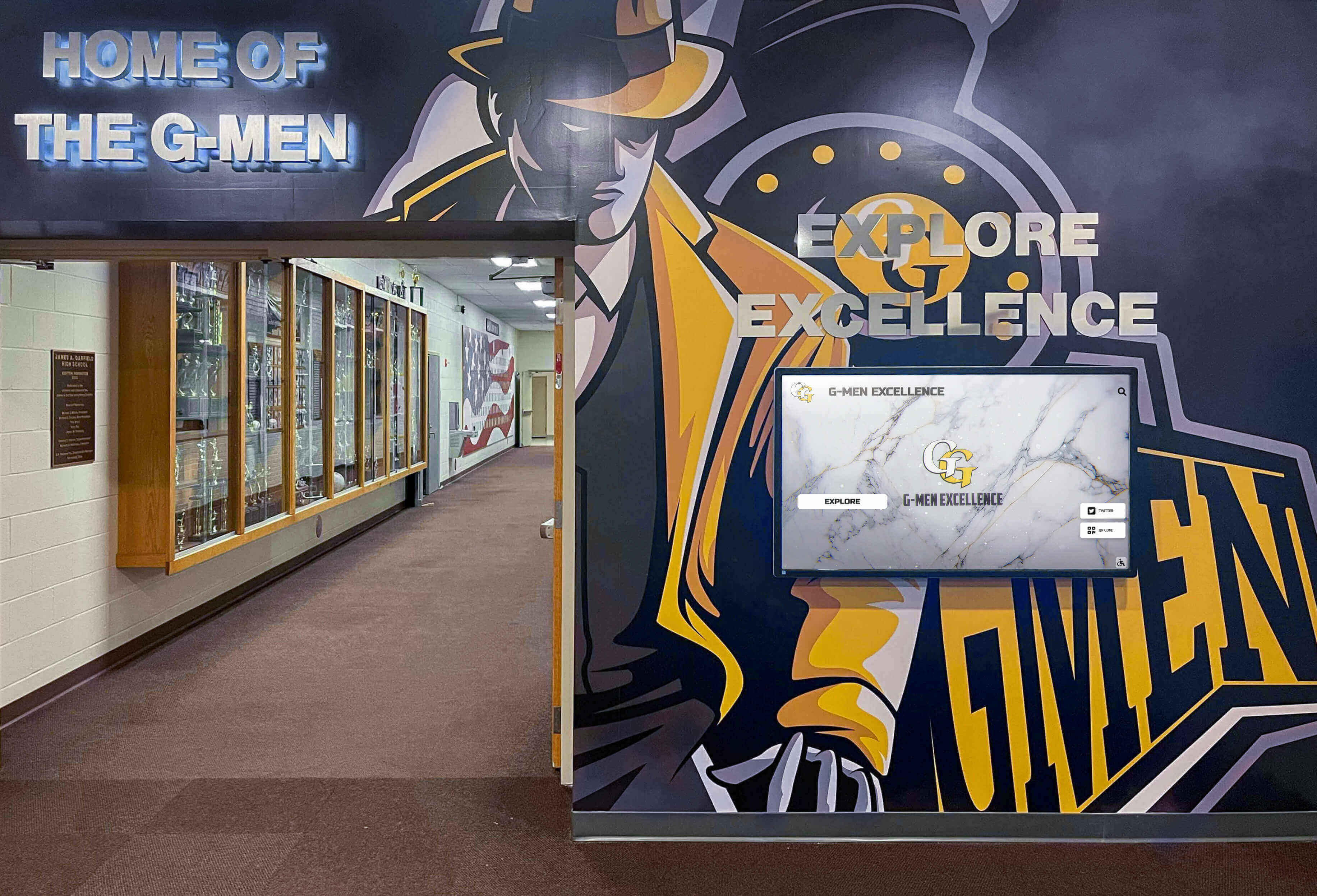
Many schools run physical trophy cases and digital displays in the same hallway — understanding when each format adds value helps you invest wisely
What a Sports Display Case Actually Does
Before comparing formats, it helps to be precise about what a traditional sports display case is designed to accomplish. The physical case has three distinct functions:
- Artifact preservation — Trophies, game balls, championship rings, and retired jerseys are tangible objects. The case protects and presents them in a way no screen can replicate.
- Passive credentialing — A case full of hardware signals program tradition instantly to any visitor walking past, even one who never stops to read a label.
- Ceremonial permanence — A plaque or nameplate on a case feels definitively official in a way a digital entry doesn’t always convey to older alumni or community members.
These are genuine strengths. They’re also narrow strengths. The physical case does exactly these three things and nothing else — it cannot search, update, play video, expand to accommodate a growing record book, or be accessed from the gym lobby and the athletic office at the same time.
Understanding this profile helps clarify when a traditional sports display case is the right tool, when a touchscreen system serves better, and when the two complement each other without duplicating effort.
Traditional Sports Display Cases: Strengths and Limitations
Where Physical Cases Excel
Artifact-forward displays. Championship trophies, retired uniform numbers, game balls, and signed memorabilia exist as physical objects. A well-lit, climate-appropriate display case presents these items in a way that commands attention and conveys weight. Visitors can see the actual hardware from a program’s most significant moments — something a digital image of that same trophy cannot fully replicate.
High-traffic, low-interaction contexts. Gymnasium lobbies, main entrance corridors, and visitor check-in areas benefit from displays that communicate immediately without requiring visitor engagement. A case delivers that instant visual credibility. Visitors who walk past without stopping still absorb the signal.
Small programs with stable rosters. Athletic departments inducting two or three individuals per year into a modest hall of fame — or maintaining a focused trophy display from a single sport — often find that physical cases meet their needs without ongoing administrative overhead. If the display won’t change significantly for years, the static format imposes no practical penalty.
Donor and alumni events where objects matter. Reunion weekends, booster dinners, and hall of fame induction ceremonies often center on the physical artifacts themselves. Presenting a championship trophy or original jersey to inductees and their families carries ceremonial weight that a screen-based presentation doesn’t replicate in that same context.
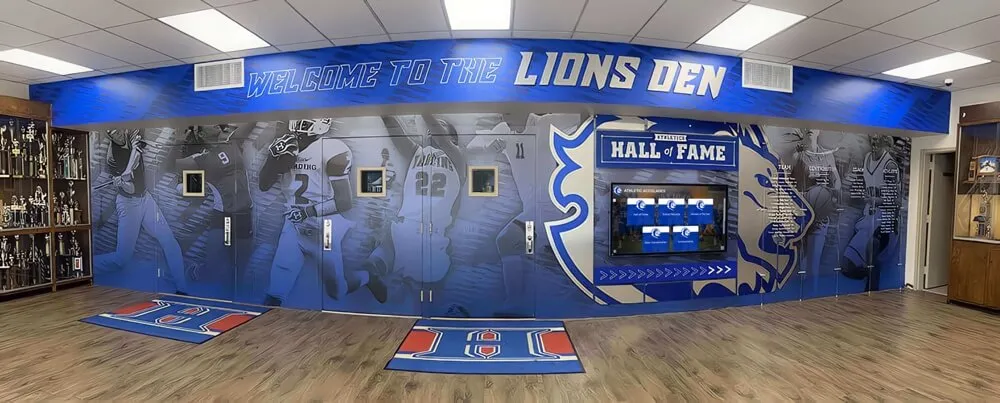
Physical trophy cases and wall murals remain effective for artifact-forward recognition when the collection is stable and space permits
Where Physical Cases Fall Short
Growing programs. A school that inducts 10–15 athletes annually, or that hosts multiple sports with overlapping record books, typically exhausts available case space within a decade. Adding cases requires construction budget, facilities coordination, and a permanent commitment of wall space that may conflict with other campus priorities.
Media-rich recognition. A physical case can hold a photo and a nameplate. It cannot show the game-winning shot, play the athlete’s senior highlight film, or display career statistics alongside biographical context. Programs that want visitors to understand why an athlete belongs in the hall of fame — not just confirm that they’re in it — need a medium capable of storytelling.
Multi-location accessibility. Physical displays exist in one place. If your athletic recognition content needs to be viewable on your athletics website, accessible via QR code in the lobby, browsable from the gymnasium and the main building simultaneously, or updated without an on-site visit, the static case imposes structural limitations that no amount of polish can overcome.
Budget over time. The upfront cost of a fabricated case often appears manageable. The recurring cost — new plaques, installation appointments, re-labeling, case expansions, and physical maintenance — compounds over years in ways that digital systems do not.
Useful context on what comprehensive athletic recognition program planning looks like across different formats can help schools think through long-term recognition strategy before committing to a particular display approach.
Touchscreen Recognition Systems: What Changes and What Doesn’t
What Touchscreen Systems Add
A touchscreen recognition system replaces the static label-and-artifact model with an interactive interface that visitors control. The practical differences are significant:
Unlimited content capacity. Digital platforms accommodate every inductee, every season record, and every award category without physical space constraints. A school with 60 years of athletics history can present all of it in the same footprint a physical case would use for one decade.
Searchable, filterable navigation. Visitors arrive at digital displays with specific people in mind — a parent looking for their child’s era, an alumnus searching for a former teammate, a recruit exploring program history. Touchscreen interfaces enable search by name, sport, graduation year, or achievement type, making the display responsive to visitor intent rather than fixed to whatever happens to be visible through glass.
Media integration. Video highlights, audio clips, action photographs, statistical career summaries, and biographical profiles all live in the same interface. Recognition becomes a story rather than a label.
Remote content management. Staff can add new inductees, update records, and publish content from any computer with a browser — without physical access to the display, without a fabrication order, and without an installation appointment. This is particularly significant for schools where IT resources are limited and athletic staff don’t want to depend on district support for routine content updates.
Multi-device accessibility. Many platforms publish the same content to a web-accessible version, enabling alumni, students, and community members to browse recognition displays from their phones or laptops. The sports display case extends beyond the hallway wall.
For a thorough overview of how athletic recognition platforms compare across these dimensions, the 10 best hall of fame tools for athletics, donors, arts, and history resource covers platform categories worth evaluating.
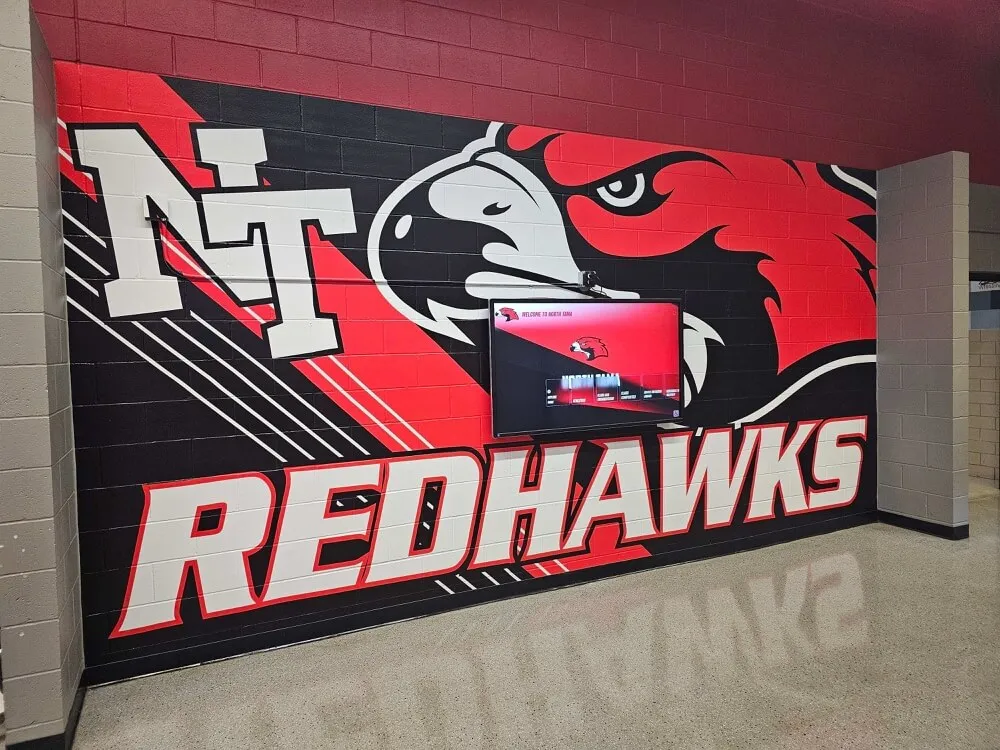
Touchscreen systems integrate into existing hallway environments, adding searchable recognition content without requiring permanent physical case expansion
What Touchscreen Systems Don’t Replace
Touchscreen displays are not a perfect substitute for everything a physical case accomplishes:
Physical artifacts require physical housing. Championship trophies, retired jersey frames, game-worn equipment, and signed memorabilia cannot live in a touchscreen. If these objects are central to your recognition program — and in many programs they are — you need a physical case or display case for the objects themselves, regardless of what digital system you use alongside it.
Some audiences expect permanence. Alumni from earlier generations, major donors, and community members whose connection to the school spans decades sometimes associate digital displays with impermanence — the assumption that entries can be deleted as easily as they were added. Programs that need to reassure these stakeholders that recognition is lasting and official may need to maintain some physical recognition component alongside digital platforms.
Power and network dependency. Touchscreen systems require reliable power and, for cloud-managed platforms, network connectivity. Installations in older buildings with limited infrastructure, or in outdoor or semi-outdoor environments, require more planning than standard hallway deployments.
The 100 youth sports award ideas resource is useful context for schools thinking about how recognition formats connect to broader award and celebration workflows beyond the display itself.
The Hybrid Model: Running Both
Many schools that evaluate this question carefully end up running physical and digital recognition in parallel — not because they can’t decide, but because the two formats address genuinely different needs without meaningful overlap.
The physical case holds the objects. The touchscreen holds the context.
A trophy case displaying championship hardware from the last six decades tells visitors that the program has a real history. A touchscreen mounted in the same hallway tells them what that history actually contains — who the athletes were, what records they set, what happened in the 1987 state championship game, and where those athletes went after graduation.
This division of function means neither format is redundant. The case does what screens can’t do; the screen does what cases can’t do.
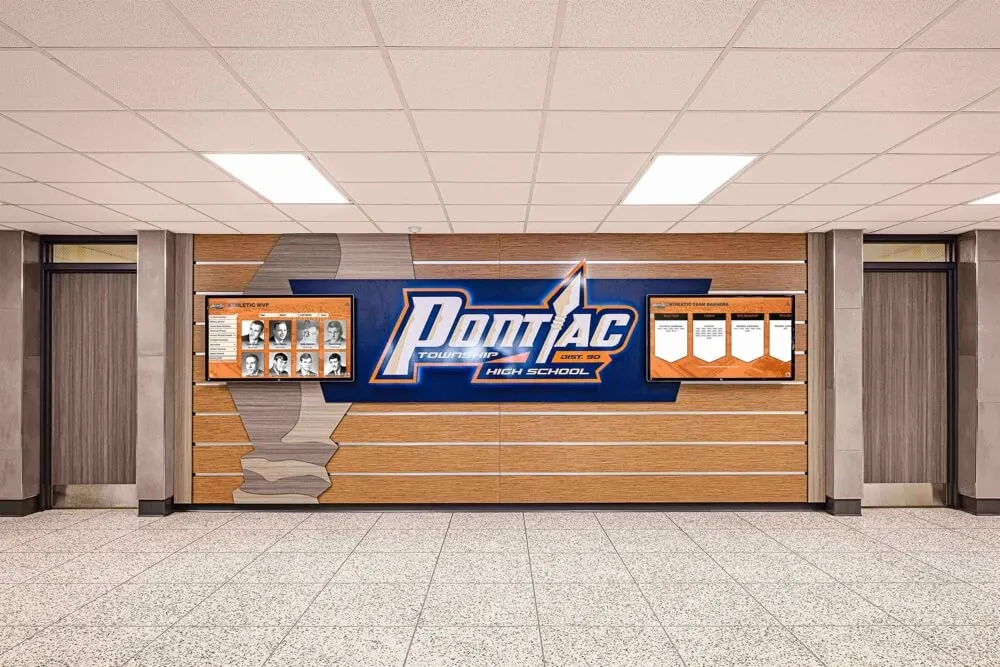
Static honor walls remain effective for credentialing a program's tradition — digital systems add the searchable, expandable layer on top
Hybrid Configurations That Work in Practice
Entry-hall case + hallway touchscreen kiosk. A display case at the main athletic entrance presents the program’s most prominent physical artifacts — state trophies, championship banners, retired numbers. A touchscreen kiosk in the main hallway handles the hall of fame browsing experience, sports record histories, and year-by-year team archives. Visitors interact with both without either display feeling redundant.
Physical induction wall + digital archive. Some programs maintain a physical plaque wall for formal hall of fame inductees — a permanent, fabricated acknowledgment of each inductee’s status — while using a digital platform for the complete historical record including athletes who don’t yet meet induction thresholds. The plaque wall serves ceremonial and permanence functions; the digital system serves depth and discoverability.
Trophy case + QR-linked web portal. A simpler hybrid: maintain the existing physical case with its artifacts, but add QR codes that link visitors directly to a web-accessible digital recognition platform. This approach is low-cost, minimally disruptive to existing physical installations, and dramatically expands the amount of information available to any visitor who wants more than the nameplate provides.
The 10 best hall of fame tools overview at touchhalloffame.us walks through several platform types that support hybrid workflows, which is useful reading for schools evaluating how a digital layer would sit alongside their existing physical recognition environment.
Decision Matrix: Matching Display Format to Program Context
Use the matrix below to evaluate which format — static case, touchscreen, or both — fits your program’s specific situation. Each row represents a practical factor. Score your program on each, then see which pattern fits best.
| Factor | Static Case Only | Touchscreen Only | Both |
|---|---|---|---|
| Program size | Small (1–3 sports, modest history) | Medium to large (4+ sports, 20+ years of records) | Any size with significant artifact collection |
| Physical artifacts | Central to recognition identity | Few or no significant physical objects | Significant artifact collection that benefits from context |
| Annual inductees/additions | Fewer than 5/year | 5 or more/year | Any, when artifacts and digital content serve different audiences |
| Content richness needed | Name, photo, basic credential | Statistics, video, biographical profiles, career records | Both — artifacts + rich digital context |
| Budget profile | Low upfront, rising long-term fabrication costs | Higher upfront, lower long-term per-addition cost | Higher upfront investment; long-term digital additions are low-cost |
| Multi-location access needed | No — one location sufficient | Yes — web, mobile, or multi-screen access required | Yes — physical is primary, digital extends reach |
| Visitor engagement goal | Passive credentialing — visitors absorb while walking past | Active exploration — visitors search, browse, discover | Both — objects catch attention, screen rewards engagement |
| Staff capacity for updates | Infrequent — vendor or fabrication required for changes | Regular — cloud CMS enables staff updates without IT support | Digital layer handled by staff; physical layer updated occasionally |
Evaluating Touchscreen Recognition Platforms: What to Look For
If your decision matrix points toward a touchscreen component — standalone or alongside a physical case — the next question is which platform fits your program. Platforms vary significantly in how they handle content structure, hardware requirements, accessibility compliance, and long-term content ownership.
Key criteria worth evaluating:
Content ownership and portability. If you stop using a platform, do you retain your data in a usable format? Platforms that lock content into proprietary formats create long-term dependency that can be costly if needs change.
ADA and WCAG compliance. Publicly accessible touchscreen displays in educational settings are subject to accessibility standards. Look for platforms that explicitly address WCAG 2.1 AA compliance for touchscreen interfaces — including contrast ratios, text sizing, and alternative input options.
Hardware flexibility. Some platforms require proprietary hardware; others run on standard commercial displays. Understanding hardware requirements before signing a contract prevents expensive surprises during installation planning.
Content management without technical barriers. Athletic directors and administrative staff — not IT departments — manage recognition content in most schools. Cloud-based platforms with browser-based content management are substantially more practical for this context than locally-installed software requiring technical administration.
Record board functionality. Programs that want to display auto-updating sports records — tied to season outcomes rather than manually entered — benefit from platforms with record board features built in, rather than requiring manual updates every time a record falls.
For schools that want to see what a comparison of athletic recognition hall of fame tools looks like across these dimensions, this review of top hall of fame tools covers platform types worth including in your evaluation.
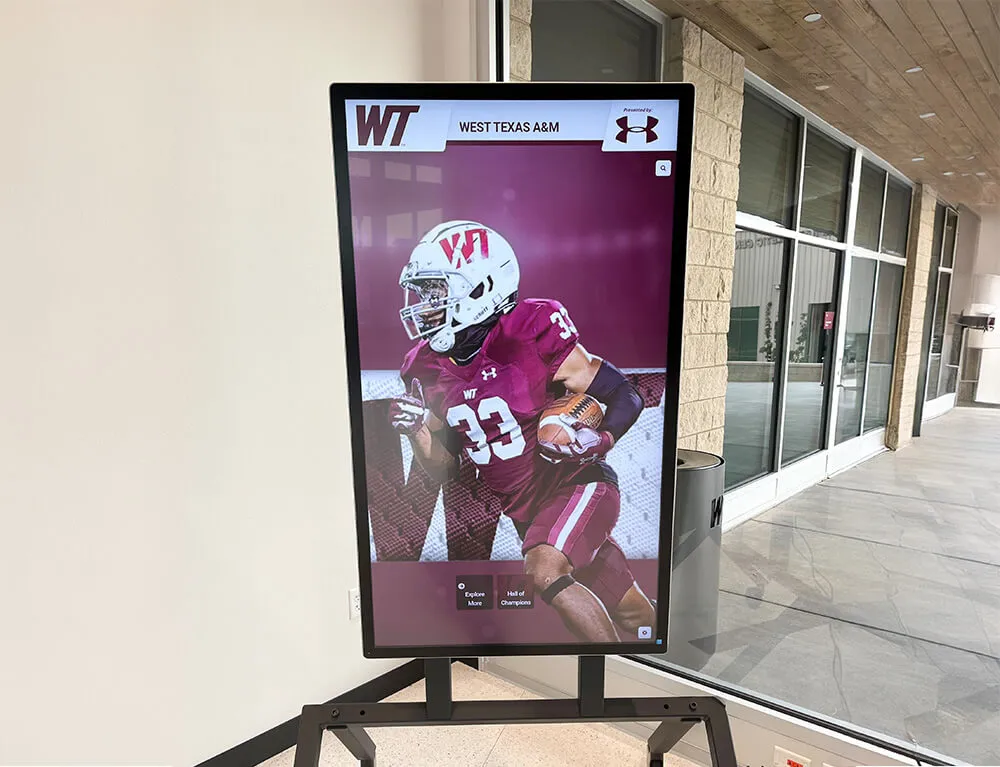
Large-format digital displays can present individual athlete profiles with photos, statistics, and career context — capabilities a traditional sports display case cannot match
Rocket Alumni Solutions: A Platform Worth Evaluating
Among platforms designed specifically for school athletic recognition, Rocket Alumni Solutions is a purpose-built option worth including in your evaluation process. The platform is designed for K–12 and higher education athletic programs and includes several features relevant to the static-vs-digital comparison:
- Touchscreen hall of fame software that allows schools to present athlete profiles, career statistics, championship histories, and year-by-year records on standard commercial displays
- Web-accessible publishing so the same recognition content is browsable on the school’s athletics website and on mobile devices — extending the sports display case beyond the hallway wall
- Auto-ranking record boards that update athletic records as new achievements are entered, eliminating manual scoreboard updates
- QR code integration that allows physical cases or display areas to link visitors directly to digital content, enabling hybrid installations without requiring separate hardware at every recognition location
- Cloud-based content management so athletic staff can add inductees, update records, and publish new content remotely without relying on IT support
For schools operating a hybrid model — physical artifacts in a case, digital context on a nearby screen — this kind of platform handles the digital layer while leaving physical display decisions in the hands of the athletic department.
Reviews of award ideas and recognition frameworks, like this 100 youth sports awards resource, can also help athletic directors connect their display strategy to broader celebration and recognition programming.
Alumni Relations and Advancement Applications
The sports display case question isn’t limited to athletic directors. Alumni relations teams, advancement offices, and facilities leaders increasingly have a stake in how athletic achievement is displayed — because recognition environments affect alumni engagement, donor relationships, and event programming.
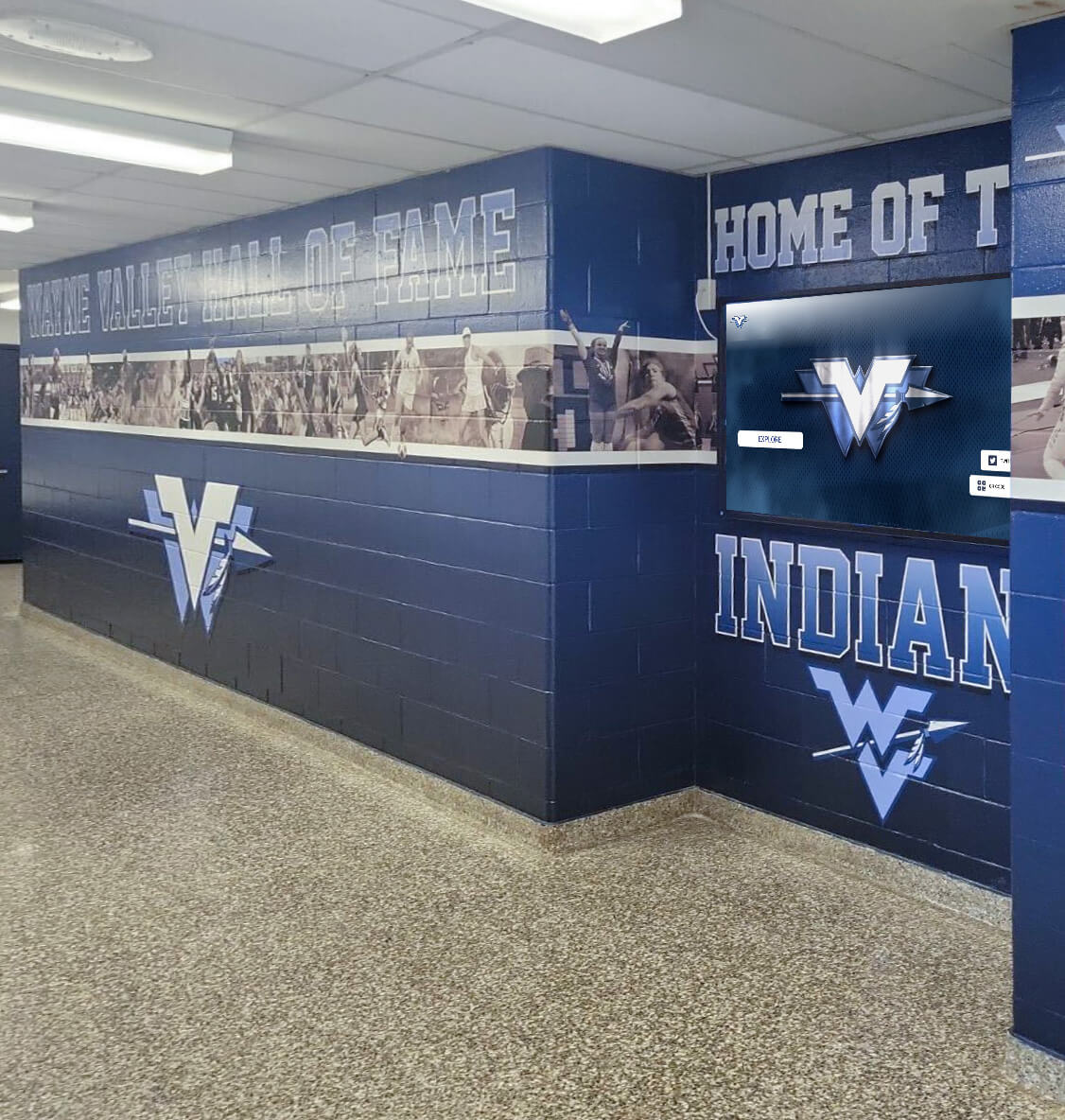
Recognition environments serve multiple audiences — alumni, current students, recruits, and community visitors — and the display format affects how each group engages
Alumni reunions and engagement events. A digital hall of fame that alumni can browse before attending reunion events drives pre-event engagement. Alumni who discover their former teammates are in the hall of fame become advocates for the induction process and donors to the programs that funded recognition upgrades. The 10-year reunion planning resource is relevant reading for advancement and alumni teams thinking about how recognition connects to event programming.
Donor recognition integration. Some platforms support donor walls alongside athletic halls of fame — displaying major donors and sponsors within the same interface that hosts athlete recognition. For development offices managing both athletic and institutional giving, a unified recognition platform can consolidate what would otherwise be two separate display systems. Donor recognition wall tools address this intersection specifically.
Facilities planning for recognition spaces. Facilities leaders planning new athletic facilities, lobby renovations, or corridor redesigns need to know the power, network, and mounting requirements for touchscreen systems before design drawings are finalized. Including display system requirements in early architectural conversations prevents costly retrofits — and recognizing that digital and physical cases have different infrastructure footprints helps facilities teams plan appropriately.
Common Mistakes to Avoid
Schools that struggle with sports display case decisions typically make one of a few predictable errors:
Treating the physical case as the only option by default. Many athletic directors inherit a physical case and assume replacement isn’t feasible. In practice, touchscreen systems are regularly installed alongside existing cases without disrupting current displays — and digital platforms have reached price points accessible to school athletic department budgets.
Purchasing a touchscreen system without planning physical artifact management. A school that removes all physical displays to install touchscreen kiosks often loses the artifact-forward credentialing function that the case provided. If trophies, jerseys, and hardware need a home, that home needs to be planned before the physical case is decommissioned.
Underestimating long-term fabrication costs for static cases. The recurring per-inductee cost of physical case additions — custom plaques, installation labor, case expansion — often exceeds the annualized cost of a digital platform subscription over a 5-year horizon. Comparing initial purchase price to subscription fee without factoring in fabrication costs skews the analysis toward static cases even when the economics favor digital.
Choosing a platform without evaluating accessibility compliance. WCAG 2.1 AA compliance affects schools with federally funded programs and is increasingly expected for any publicly accessible school facility. Platform accessibility should be confirmed before signing contracts rather than assumed.
Reviewing comprehensive youth sports awards frameworks alongside display format decisions helps athletic directors align their recognition programming holistically rather than treating the display as an isolated infrastructure question.
Questions to Ask Before Making a Decision
1. What is the primary purpose of our recognition display? If the answer is “to show visitors our championships,” a physical case does this well. If the answer is “to tell the complete story of our program’s athletes,” a touchscreen system does this better.
2. How many athletes or achievements do we need to recognize in the next five years? Programs expecting to add fewer than 25 entries over five years can often manage with physical displays. Programs expecting to add 50 or more — particularly across multiple sports — benefit substantially from digital capacity.
3. Who will manage content updates? If the answer is “our athletic director or an administrative assistant,” ensure that any platform you select provides genuinely non-technical content management. If the answer is “IT staff,” confirm their availability and willingness before signing.
4. Do alumni need to access the display remotely? If yes — for website browsing, pre-reunion engagement, or mobile access during events — a web-accessible digital platform is the only format that accomplishes this.
5. What are our physical artifacts? Trophies, hardware, retired jerseys, and signed memorabilia are objects that deserve physical housing. If your recognition program is built around these objects, the physical case remains a required component regardless of what digital system you add.
The hall of fame program evaluation guide offers additional criteria for evaluating recognition programs across formats, which is useful reading when preparing for internal stakeholder conversations about display decisions.
Similarly, youth sports award ideas from touchhalloffame.us can help your team think about how display format choices connect to your broader culture of athletic celebration throughout the school year.
Summary: Matching Format to Function
The sports display case question doesn’t have a single correct answer — it has a correct answer for each program’s specific combination of artifacts, scale, budget, audience, and staff capacity.
Choose a static case when:
- Physical artifacts are central to your recognition identity
- Your program is small and stable, with infrequent additions
- Visitors primarily need passive credentialing rather than interactive exploration
- Your budget favors low upfront cost over long-term flexibility
Choose a touchscreen system when:
- Your program is large, growing, or multi-sport with extensive records
- Visitors benefit from searchable, media-rich recognition experiences
- Staff need to manage content without technical support or on-site visits
- Alumni, website visitors, or mobile users need access to recognition content
Choose both when:
- Physical artifacts deserve protection and presentation alongside richer digital context
- Hybrid audiences — some who want to see the trophies, some who want to explore the full record — need both formats to be satisfied
- The digital layer can handle additions at low recurring cost while the physical case handles ceremonial permanence
For programs ready to evaluate a digital recognition platform that was built specifically for school athletics and supports hybrid installations, Rocket Alumni Solutions is a practical starting point — whether you’re replacing an outdated physical case, supplementing an existing one, or building an athletic recognition program from the ground up.