What transforms an ordinary school building into an inspiring learning environment that motivates students, impresses families, and strengthens community connection? The answer lies in thoughtful design choices that extend far beyond paint colors and furniture arrangements.
School design ideas today encompass strategic approaches to creating spaces that actively support learning, celebrate achievement, communicate institutional values, and foster belonging. Modern educational environments recognize that every square foot—from main entrance lobbies to hallway transitions, cafeterias to athletic facilities—represents opportunities to inspire, inform, and engage.
This comprehensive guide explores practical school design ideas covering lobby design principles, recognition display strategies, wayfinding solutions, flexible learning spaces, and technology integration approaches that transform educational buildings into dynamic environments supporting student success while building lasting school culture and community pride.
Effective school design creates more than aesthetically pleasing buildings. Thoughtful design decisions influence student behavior, academic performance, school pride, family perceptions, and community connections in measurable ways that justify strategic investment in creating inspiring learning environments.
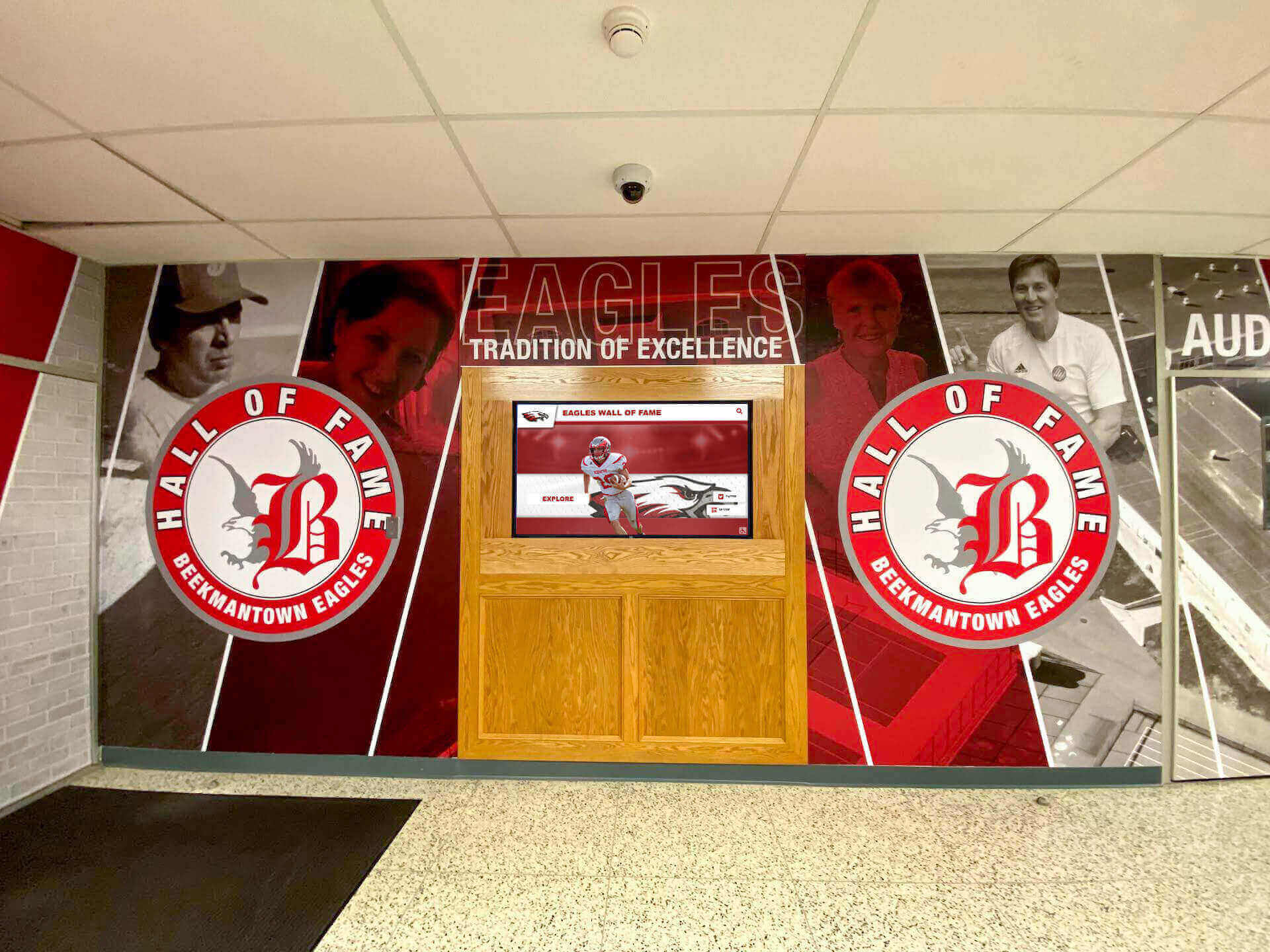
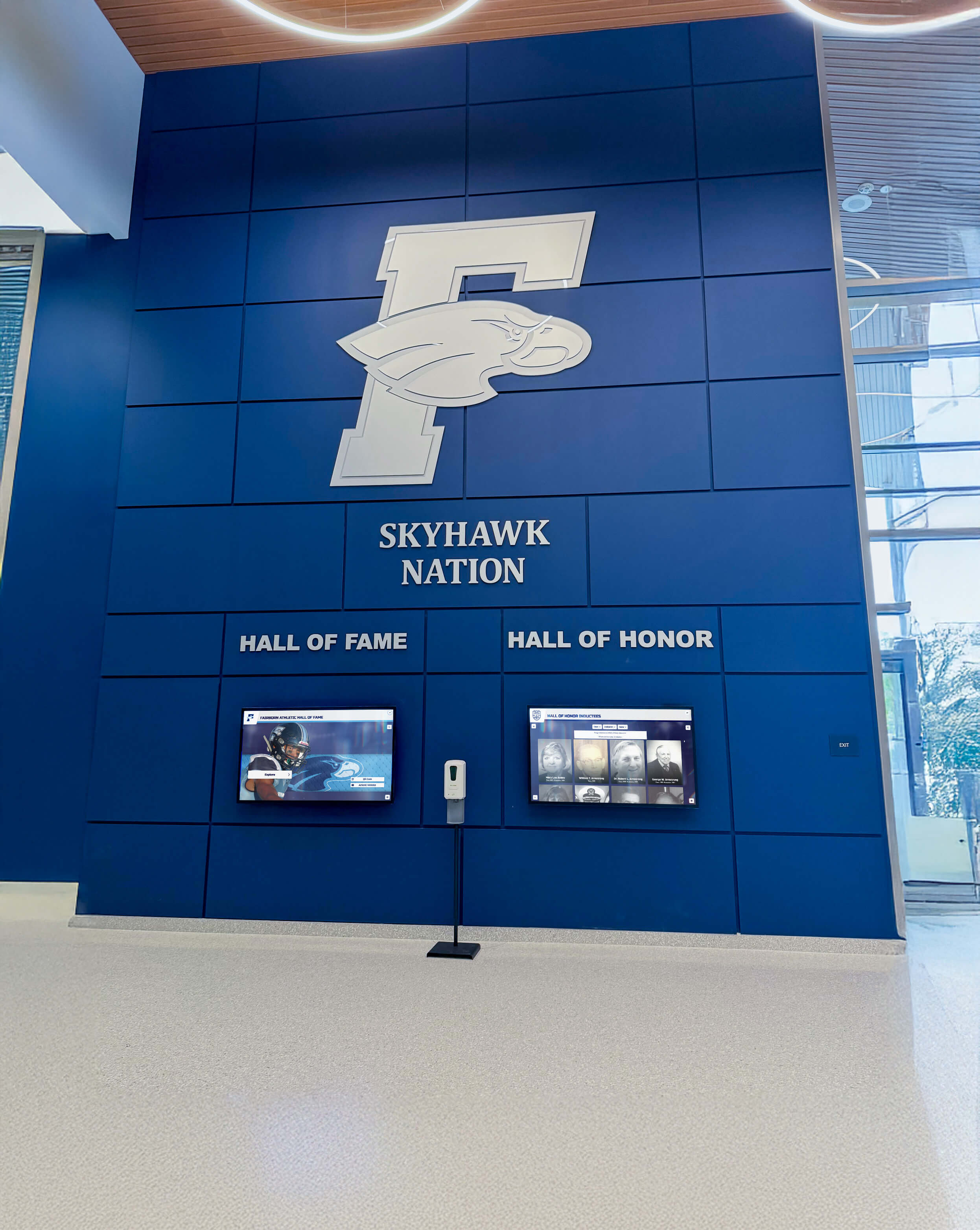
Contemporary school design seamlessly blends traditional architectural elements with modern recognition systems to create inspiring entrance environments
Foundational Principles of Effective School Design
Understanding core design principles ensures educational spaces serve both functional requirements and broader institutional objectives.
Creating First Impressions Through Entrance Design
School lobbies and entrance areas establish immediate impressions for every visitor:
Strategic Lobby Design Elements
- Clear sight lines guiding visitors to main office and key destinations
- Welcoming seating areas creating comfortable waiting spaces
- School branding elements reinforcing identity and pride
- Achievement displays celebrating student accomplishments
- Information displays communicating programs, values, and opportunities
- Natural lighting creating open, inviting atmospheres
- Durable, professional finishes withstanding high-traffic conditions
Recognition and Cultural Display Opportunities
Entrance areas provide premium real estate for showcasing institutional values:
- Hall of Fame displays honoring distinguished alumni and student achievements
- Mission statement and core values presented prominently
- Historical timeline displays connecting current students to tradition
- Donor recognition walls acknowledging supporter contributions
- Student artwork galleries showcasing creative talents
- Athletic championship banners celebrating competitive excellence
- Academic achievement boards highlighting scholarly accomplishments
Schools implementing comprehensive interactive touchscreen displays create dynamic lobby experiences that engage prospective families during campus tours while providing ongoing inspiration for current students.
Color Psychology and Institutional Identity
Strategic color selection influences mood, behavior, and perception:
Color Theory Applications in Schools
- School colors in appropriate contexts reinforcing institutional identity
- Calming blues and greens in learning spaces promoting concentration
- Energizing reds and oranges in common areas encouraging interaction
- Neutral backgrounds preventing visual overstimulation
- Accent colors directing attention to important features
- Consistent color palettes creating cohesive environments
Balancing Tradition and Contemporary Design
- Respecting historical architecture and design heritage
- Modernizing spaces while maintaining institutional character
- Integrating technology without compromising aesthetic integrity
- Creating timeless designs avoiding trendy elements with short lifespans
- Satisfying diverse stakeholder preferences through inclusive planning
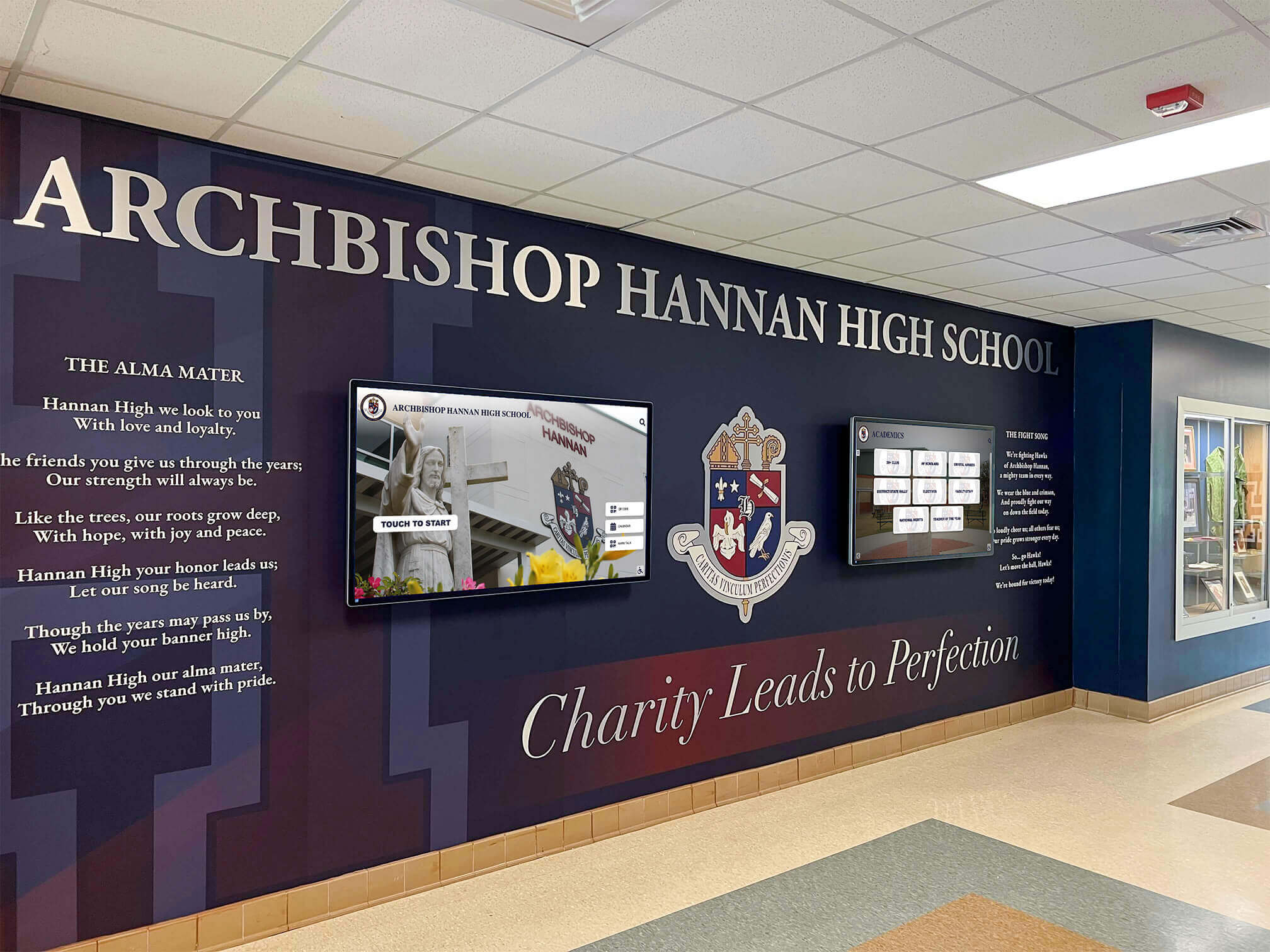
Successful school design honors tradition while embracing contemporary elements that enhance function and engagement
Wayfinding and Navigation Systems
Clear navigation reduces visitor confusion while improving operational efficiency:
Effective Wayfinding Components
- Main directory displays in entrance lobbies with building maps
- Hallway signage using consistent typography and placement
- Room number systems following logical, intuitive patterns
- Color-coded wings or floors for easier navigation
- Digital displays showing room locations and schedules
- Accessible signage meeting ADA height and contrast requirements
- Multilingual options serving diverse communities
Interactive Wayfinding Solutions
Modern schools implement digital wayfinding systems that visitors can search for specific rooms, staff members, or programs, significantly improving the experience for families attending events, prospective students touring campus, and substitute teachers navigating unfamiliar buildings.
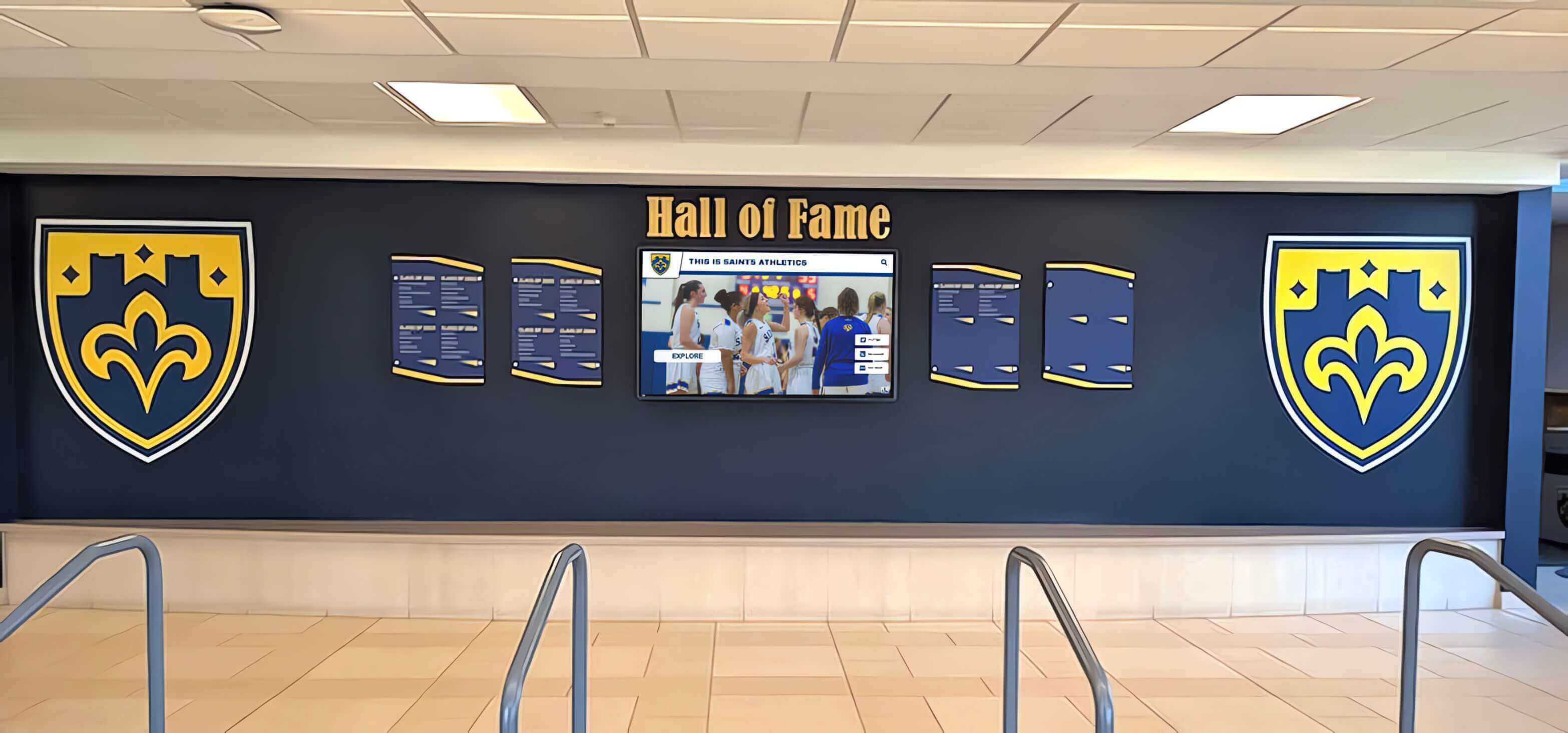
Integrated digital systems serve dual purposes, providing wayfinding assistance while celebrating school achievements
Common Area Design Strategies
Beyond classrooms, common spaces significantly influence school culture and student experience.
Cafeteria and Dining Space Design
Cafeteria design affects student behavior, social connections, and meal program participation:
Functional Cafeteria Design Elements
- Adequate seating capacity preventing overcrowding during lunch periods
- Multiple serving line configurations reducing wait times
- Varied seating arrangements supporting different group sizes
- Natural lighting creating pleasant dining atmospheres
- Acoustic treatments controlling noise levels
- Durable, easily cleaned surfaces and furniture
- Clear traffic patterns separating entry, seating, and disposal areas
Creating Community Atmosphere
- Student artwork displays celebrating creativity
- Recognition boards highlighting achievements across all programs
- School history displays connecting students to tradition
- Motivational messaging reinforcing positive values
- Comfortable seating encouraging extended social interaction
- Outdoor dining options when weather and space permit
Library and Media Center Design
Modern library spaces support diverse learning modalities and technology integration:
Contemporary Library Design Features
- Flexible furniture supporting individual study and collaborative work
- Technology-rich zones with charging stations and connectivity
- Quiet study areas separated from collaborative spaces
- Comfortable reading areas with varied seating options
- Maker spaces supporting creative and hands-on projects
- Display areas showcasing student work and new materials
- Natural lighting supplemented by task-appropriate artificial lighting
Technology Integration in Library Spaces
- Interactive displays featuring digital archives and school history
- Online catalog access points throughout the space
- Presentation areas with multimedia capabilities
- Digital reading resources accessible on multiple devices
- Technology checkout systems for equipment lending
Schools implementing digital history archives in library spaces create research opportunities for students while preserving institutional memory in engaging, accessible formats.
Athletic Facility Lobby Design
Athletic facility lobbies serve athletes, families, spectators, and community members:
Athletic Lobby Design Priorities
- Trophy cases displaying championship hardware and memorabilia
- Digital recognition displays celebrating individual and team achievements
- Championship banners hanging from ceilings or mounted on walls
- Team photo displays showing current rosters and coaching staffs
- Record boards highlighting top performances across all sports
- Donor recognition acknowledging booster support
- Seating areas for families waiting before and after events
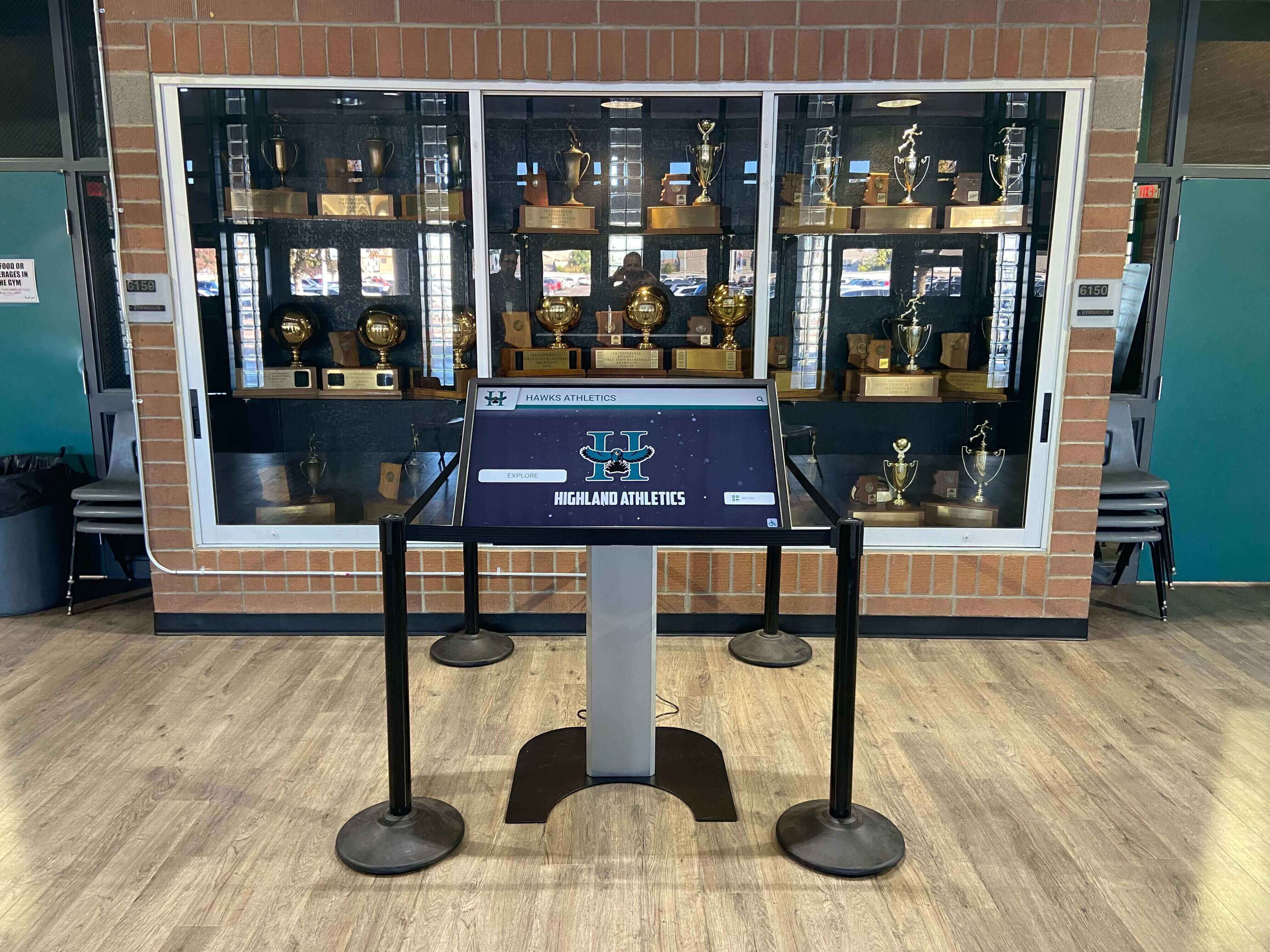
Athletic lobbies combine traditional trophy cases with interactive displays providing comprehensive program recognition
Celebrating All Athletics Programs Equitably
- Proportional recognition across all sports, not just revenue-generating programs
- Gender equity in display prominence and space allocation
- Individual athlete achievement celebration alongside team recognition
- Coaching staff acknowledgment and program history
- Championship tradition display showing sustained excellence
- Current season information promoting upcoming events
Many schools discover that team photo displays on interactive platforms provide more flexibility than static prints, allowing programs to update rosters immediately while providing detailed athlete profiles that traditional photos cannot accommodate.
Hallway and Transition Space Design
Hallways represent more than mere passageways between destinations:
Maximizing Hallway Functionality
- Display cases showcasing student work, awards, and achievements
- Historical photo displays connecting students to school heritage
- Student locker organization preventing hallway congestion
- Adequate width accommodating high-traffic volume between classes
- Natural lighting from windows or strategic skylights
- Localized recognition areas for specific departments or programs
Creating Gallery-Style Hallway Experiences
- Rotating student artwork displays celebrating creativity
- Science fair project showcases highlighting research
- Writing samples from English classes displayed prominently
- Club and organization promotion boards
- College acceptance and scholarship announcements
- Community service project documentation
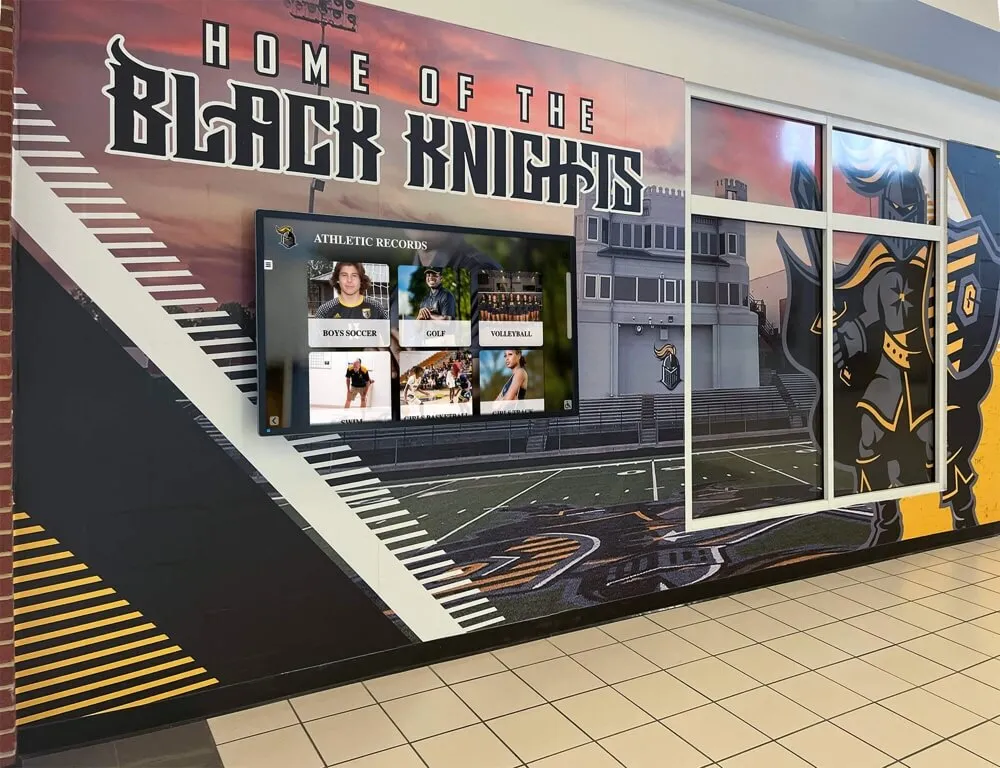
Thoughtfully designed hallways transform transitional spaces into engagement opportunities that inspire and inform
Academic Department Identity Areas
Dedicated hallway sections for specific departments create learning-focused environments:
- Math hallway displays featuring famous mathematicians, formulas, and student problem-solving
- Science wing showcasing experimental results, STEM competitions, and career pathways
- Arts corridors displaying student work, performance photos, and program achievements
- World language sections celebrating cultural diversity and student exchange programs
- Career and technical education areas highlighting student projects and industry certifications
Administrative Area Design
Main office design significantly affects parent and visitor experience:
Welcoming Administrative Spaces
- Clear sight lines allowing staff to greet visitors immediately
- Comfortable waiting areas with adequate seating
- Privacy areas for confidential conversations
- Professional finishes communicating organizational competence
- Student work displays humanizing administrative spaces
- Information materials readily accessible to visitors
- Technology enabling efficient check-in and communication
Security Integration Without Institutional Feel
- Visitor management systems that feel welcoming, not intimidating
- Clear protocols communicated through signage and staff interaction
- Secure areas preventing unauthorized building access
- Camera systems integrated discretely into design
- Emergency communication systems tested regularly
- Balance between security necessity and welcoming atmosphere
Technology Integration in School Design
Modern school design seamlessly incorporates technology supporting learning and communication.
Interactive Display Technology Applications
Strategic placement of interactive displays throughout schools serves multiple purposes:
Lobby and Common Area Applications
- Hall of fame displays celebrating distinguished alumni and achievements
- Digital recognition systems showcasing current student accomplishments
- Event calendars promoting upcoming activities and opportunities
- Daily announcements replacing outdated PA system messages
- Emergency communication systems for school-wide alerts
- Social media feeds showcasing authentic student voice
- Interactive directories helping visitors navigate campus
Schools implementing solutions like Rocket Alumni Solutions benefit from cloud-based platforms that allow multiple administrators to update content remotely, ensuring lobby displays remain current without requiring physical access or technical expertise.
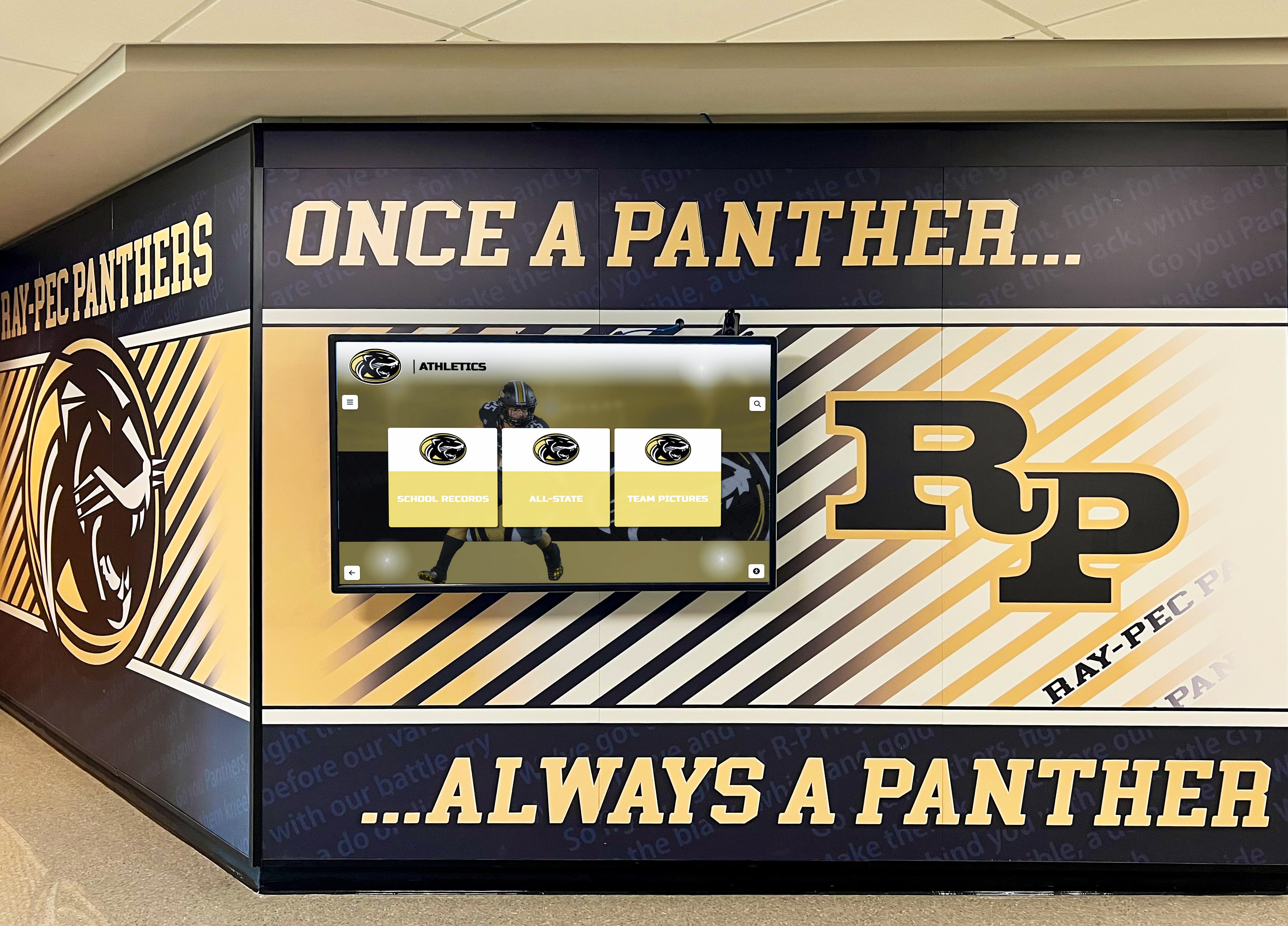
Modern schools integrate digital technology thoughtfully within traditional design aesthetics for cohesive visual environments
Classroom Technology Integration
- Interactive whiteboards replacing traditional chalkboards
- Document cameras enabling real-time work sharing
- Student device charging stations throughout buildings
- Wireless connectivity supporting BYOD initiatives
- Flexible furniture accommodating varied technology uses
- Cable management preventing trip hazards and visual clutter
Academic Achievement Recognition Systems
Digital recognition displays celebrating honor roll students, National Merit Scholars, perfect attendance, and other academic achievements provide visibility for intellectual accomplishment equivalent to athletic recognition, creating balanced institutional values.
Accessibility and Universal Design
Inclusive design ensures all students, staff, and visitors can navigate and utilize facilities:
ADA Compliance Requirements
- Wheelchair-accessible entrances at all building access points
- Elevators or ramps providing access to all building levels
- Accessible restroom facilities on every floor
- Appropriate door widths and hallway clearances
- Tactile and visual signage meeting accessibility standards
- Assistive listening systems in auditoriums and large gathering spaces
- Height-appropriate drinking fountains, switches, and controls
Universal Design Beyond Minimum Standards
- Flexible furniture accommodating diverse physical needs
- Multiple means of accessing information (visual, auditory, tactile)
- Adjustable-height work surfaces in science labs and maker spaces
- Gender-neutral restroom options
- Sensory-friendly spaces for students with sensory processing needs
- Clear pathways free from obstacles for students with visual impairments
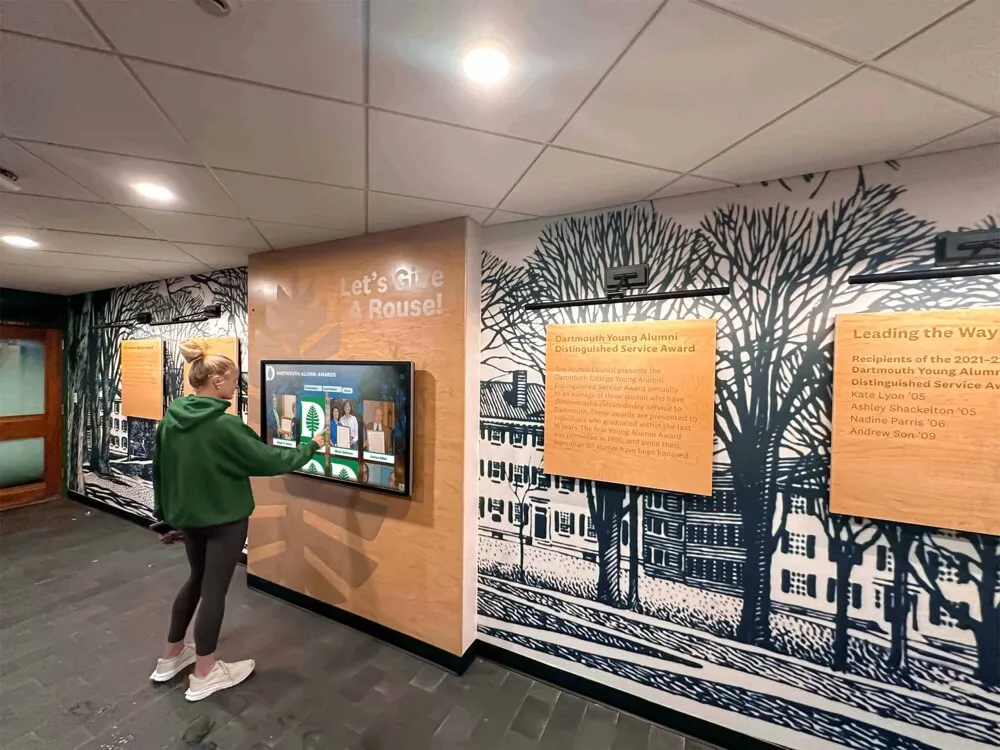
Thoughtful design ensures interactive displays meet accessibility standards through appropriate height placement and interface design
Outdoor Space Design Considerations
Exterior spaces significantly contribute to overall school environment and student experience.
Entrance Landscaping and Curb Appeal
Exterior design creates lasting first impressions:
Entrance Landscape Design
- Professional landscaping communicating institutional pride
- Seasonal color through annual flower rotations
- Low-maintenance plant selections reducing ongoing costs
- Appropriate scale for building size and architectural style
- Exterior lighting illuminating entrances safely after dark
- Signage clearly identifying school name and main entrance
- Accessibility ensuring all visitors can navigate entry areas
Drop-Off and Parking Area Design
- Adequate parent drop-off zones preventing traffic congestion
- Clear traffic patterns separating buses, cars, and pedestrian movement
- Covered drop-off areas protecting from weather when possible
- Adequate visitor parking near main entrances
- Staff parking separate from student and visitor areas
- Athletic event parking overflow planning
- Emergency vehicle access maintained at all times
Outdoor Learning and Recreation Spaces
Exterior spaces extend learning beyond classroom walls:
Outdoor Learning Environment Features
- Covered outdoor classroom spaces with seating and teaching areas
- Garden spaces for science education and environmental study
- Amphitheater-style seating for outdoor performances and gatherings
- Walking paths encouraging physical activity and outdoor connections
- Outdoor reading areas with comfortable seating
- Weather-resistant storage for outdoor learning materials
Athletic and Recreation Facilities
- Competition-quality athletic fields for various sports
- Practice areas separate from game fields when possible
- Spectator seating and accessibility accommodations
- Lighting enabling evening practices and events
- Field house or storage facilities for equipment
- Walking tracks open to community when school is not in session
Sustainable and Future-Forward Design
Forward-thinking schools incorporate sustainability and flexibility into design decisions.
Energy Efficiency and Environmental Responsibility
Sustainable design reduces operational costs while modeling environmental stewardship:
Energy-Efficient Building Systems
- LED lighting throughout facilities reducing energy consumption
- Occupancy sensors preventing energy waste in unoccupied spaces
- High-efficiency HVAC systems with zoned climate control
- Solar panel installations offsetting electricity costs
- Energy-efficient windows reducing heating and cooling loads
- Building automation systems optimizing energy use
- Green building certifications (LEED, etc.) when feasible
Sustainable Materials and Practices
- Recycled content materials in construction and renovation
- Low-VOC paints and finishes improving indoor air quality
- Durable materials reducing replacement frequency
- Water-efficient plumbing fixtures throughout facilities
- Recycling programs with convenient collection locations
- Composting programs for cafeteria waste
- Educational signage explaining sustainability features
Flexible Design for Evolving Needs
Adaptive spaces accommodate changing educational approaches:
Design Flexibility Strategies
- Movable walls allowing space reconfigurations
- Furniture on wheels enabling rapid room rearrangements
- Electrical and data infrastructure supporting multiple configurations
- Neutral color schemes allowing easy refreshing
- Modular storage systems adapting to changing needs
- Technology infrastructure supporting emerging tools and approaches
- Spaces designed for multiple simultaneous uses
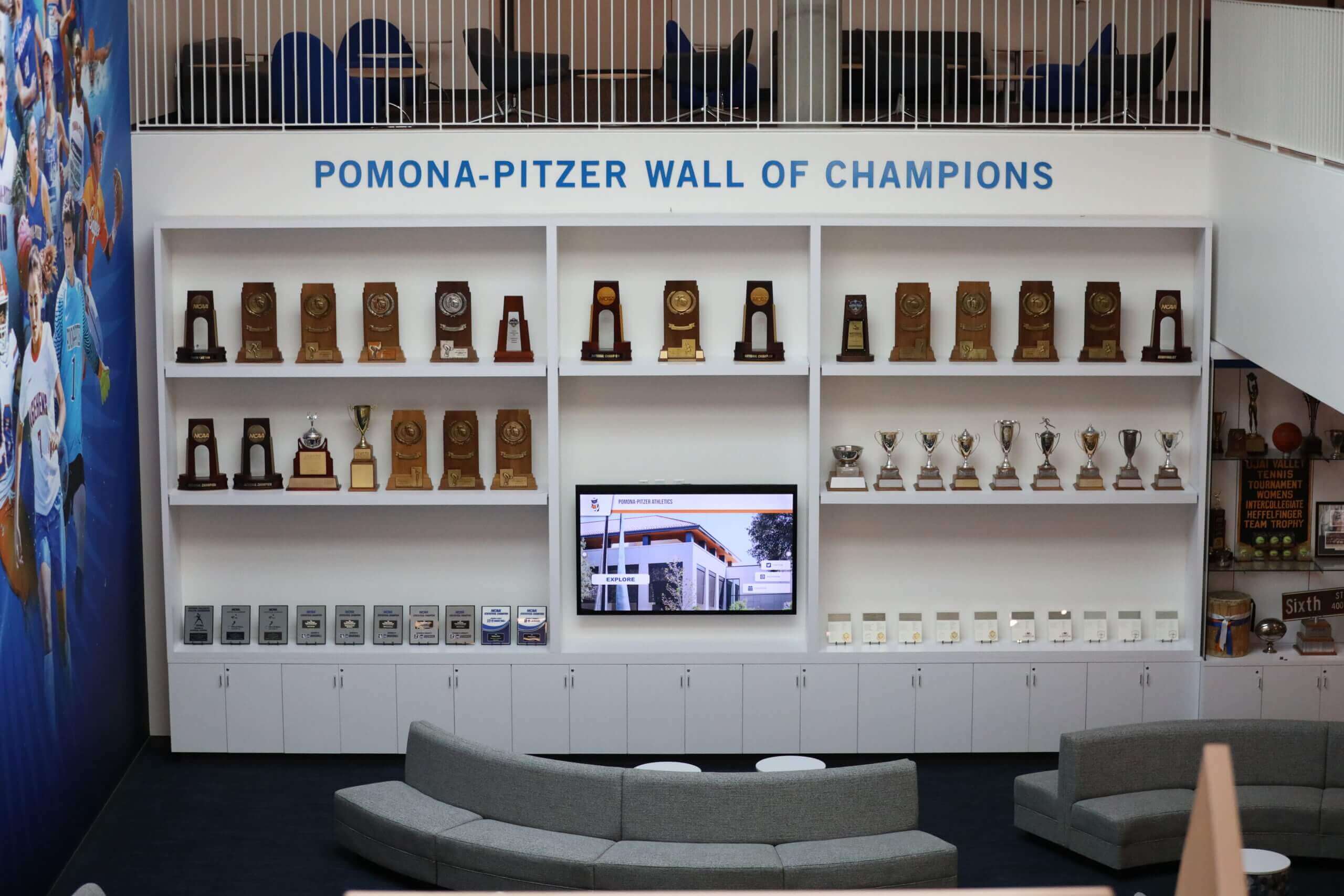
Well-designed common areas serve multiple functions through flexible furniture and thoughtful space planning
Budget-Conscious Design Implementation
Strategic prioritization enables impactful improvements within realistic budget constraints.
Phased Implementation Approaches
Systematic phasing distributes costs while delivering visible progress:
Phase One: High-Impact Entrance Improvements (Year 1)
- Main lobby renovation creating welcoming first impressions
- Professional signage establishing clear wayfinding
- Digital recognition display celebrating achievements and preserving history
- Fresh paint and updated lighting in entrance areas
- Landscaping improvements enhancing curb appeal
Phase Two: Common Area Enhancements (Year 2)
- Cafeteria improvements creating more pleasant dining environment
- Library modernization supporting contemporary learning approaches
- Athletic facility lobby upgrades celebrating program achievements
- Additional recognition displays in high-traffic hallways
- Technology infrastructure improvements supporting ongoing needs
Phase Three: Comprehensive Building Refresh (Years 3-5)
- Systematic hallway improvements throughout building
- Classroom technology upgrades supporting instruction
- Exterior improvements including athletic facilities
- Sustainability features reducing long-term operating costs
- Accessibility enhancements exceeding minimum compliance
Funding Strategy Development
Creative funding approaches make comprehensive improvements achievable:
Traditional Funding Sources
- Capital improvement budgets in annual district planning
- Bond initiatives for major renovation projects
- State facility improvement grants and programs
- Federal grants supporting specific objectives (technology, accessibility)
- Energy efficiency rebates from utility companies
Alternative Funding Mechanisms
- Naming opportunities for major donors supporting specific spaces
- Alumni association support for lobby and recognition projects
- Booster club funding for athletic facility improvements
- Parent organization grants for specific enhancement projects
- Corporate partnerships supporting career and technical education spaces
- Memorial giving programs honoring deceased community members
Schools implementing donor recognition walls often discover that visible acknowledgment of supporters encourages additional giving, creating sustainable funding cycles for ongoing facility improvements.
Planning and Stakeholder Engagement
Successful design projects require systematic planning and broad stakeholder involvement.
Assessment and Needs Identification
Comprehensive assessment reveals priorities and opportunities:
Facility Assessment Components
- Systematic building walkthrough documenting current conditions
- Stakeholder surveys gathering input from students, staff, parents, and community
- Focus groups exploring specific needs in greater depth
- Benchmark analysis comparing facilities to peer institutions
- ADA compliance audit identifying required accessibility improvements
- Safety and security assessment addressing vulnerabilities
- Enrollment projection impact on space requirements
Prioritization Framework Development
- Ranking improvements by impact, urgency, and feasibility
- Identifying quick wins delivering visible progress
- Sequencing projects logically (infrastructure before finishes)
- Aligning improvements with strategic institutional goals
- Considering timing to minimize disruption to educational programs
Design Team Assembly
Effective projects involve appropriate expertise:
Professional Design Resources
- Architects experienced in educational facility design
- Interior designers specializing in institutional environments
- Technology consultants advising on infrastructure and systems
- Accessibility specialists ensuring universal design
- Sustainability experts recommending green building strategies
- Project managers coordinating timeline and budget
Internal Stakeholder Representation
- Administrative leadership providing institutional vision
- Facilities staff advising on maintenance and operational implications
- Technology coordinators ensuring infrastructure adequacy
- Teachers representing instructional needs and preferences
- Students providing authentic user perspective
- Parent representatives communicating community expectations
Schools planning administrator office spaces benefit from understanding administrative workflow requirements, ensuring design supports efficient operations while creating welcoming environments for families and visitors.
Effective administrative area design balances operational efficiency with welcoming atmosphere for visitors and families
Measuring Design Impact and Success
Assessment ensures improvements deliver intended benefits and inform future decisions.
Quantitative Success Metrics
Objective measurement documents impact:
Operational Metrics
- Energy consumption changes following efficiency improvements
- Maintenance cost trends for renovated versus unrenovated spaces
- Space utilization rates for flexible learning environments
- Technology usage tracking for interactive displays and systems
- Visitor center traffic and campus tour metrics
- Cafeteria meal program participation rates
- Library circulation and usage statistics
Perception and Satisfaction Metrics
- Student satisfaction surveys comparing pre- and post-renovation
- Staff feedback on workspace functionality and environment
- Parent perception of facilities during campus visits
- Prospective family enrollment decision factors
- Community pride indicators in broader surveys
- Alumni engagement and reconnection rates
Qualitative Impact Assessment
Stakeholder feedback provides important context:
Stakeholder Interviews and Focus Groups
- Student experiences navigating and utilizing improved spaces
- Teacher perspectives on instructional support from renovated environments
- Staff observations of student behavior changes in redesigned areas
- Parent feedback on campus visit experiences
- Community member perceptions of institutional quality
- Alumni reactions to updated facilities during return visits
Observational Assessment
- Photography documenting improvements and ongoing conditions
- Behavioral observation noting how students use redesigned spaces
- Traffic pattern analysis showing wayfinding effectiveness
- Technology engagement observation with interactive displays
- Social interaction patterns in reconfigured common areas
Conclusion: Creating Learning Environments That Inspire
Thoughtful school design creates more than visually appealing buildings. Strategic design decisions influence student motivation, academic performance, school pride, community perception, and institutional culture in measurable ways that extend far beyond aesthetics.
The most successful school design projects share common characteristics: clear vision connecting improvements to educational mission, systematic assessment identifying genuine needs and priorities, broad stakeholder engagement building ownership and support, creative funding strategies making comprehensive improvements achievable, and commitment to quality execution that delivers lasting value.
Modern design approaches recognize that every space communicates institutional values and creates opportunities for inspiration and engagement. Entrance lobbies establish lasting first impressions while celebrating achievement and preserving tradition. Hallways transform from mere passageways into gallery spaces showcasing student work and school heritage. Common areas become vibrant hubs supporting diverse activities and fostering community connections.
Technology integration extends design impact beyond physical spaces, with interactive recognition displays providing unlimited capacity for celebrating students while offering remote content management that eliminates the geographic and technical barriers preventing regular updates with traditional approaches.
Start where you are with improvements matching available resources and identified priorities. High-impact lobby enhancements create visible progress quickly. Phased approaches distribute costs across multiple budget cycles while maintaining momentum. Creative funding strategies involving alumni, donors, and community partners make comprehensive improvements achievable even with constrained institutional budgets.
Your school building represents significant institutional investment and shapes daily experience for every student, staff member, and visitor. Thoughtful design ensures this investment delivers maximum value through spaces that inspire learning, celebrate achievement, strengthen community, and communicate the educational excellence occurring within your walls.
Ready to transform your school’s entrance and common spaces with modern recognition displays that celebrate achievement while strengthening community connections? Explore digital solutions designed specifically for schools that make comprehensive recognition achievable within realistic budgets.