Traditional recognition approaches using physical plaques, static displays, and trophy cases face fundamental limitations—finite wall space forcing difficult decisions about what to honor, expensive updates requiring professional engraving every time new achievers deserve acknowledgment, and zero engagement beyond brief glances at names mounted on walls. Rocket Recognition represents a comprehensive alternative: interactive touchscreen display systems that eliminate space constraints, enable instant remote updates, and transform passive wall plaques into engaging digital experiences celebrating unlimited achievements across all recognition categories.
Organizations implementing Rocket Recognition systems report dramatic increases in community engagement with recognition content. Where traditional plaques receive seconds of attention from passing visitors, interactive digital displays capture 5-10 minutes of exploration as users search for themselves, friends, family members, and notable achievers while discovering institutional history through photos, videos, and biographical content impossible to display on static walls.
This comprehensive guide examines Rocket Recognition systems including core capabilities, implementation considerations, content management approaches, and how these interactive platforms address recognition challenges facing schools, universities, nonprofits, membership organizations, and corporations seeking modern solutions that honor unlimited achievements while creating genuine engagement.
Recognition programs serve essential functions across diverse organizations—schools celebrate student achievement and alumni distinction, nonprofits acknowledge donor generosity and volunteer service, membership organizations honor career accomplishments and professional contributions, corporations recognize employee excellence and customer loyalty. Yet traditional physical recognition approaches impose severe constraints limiting what organizations can honor and how communities engage with these important acknowledgments.
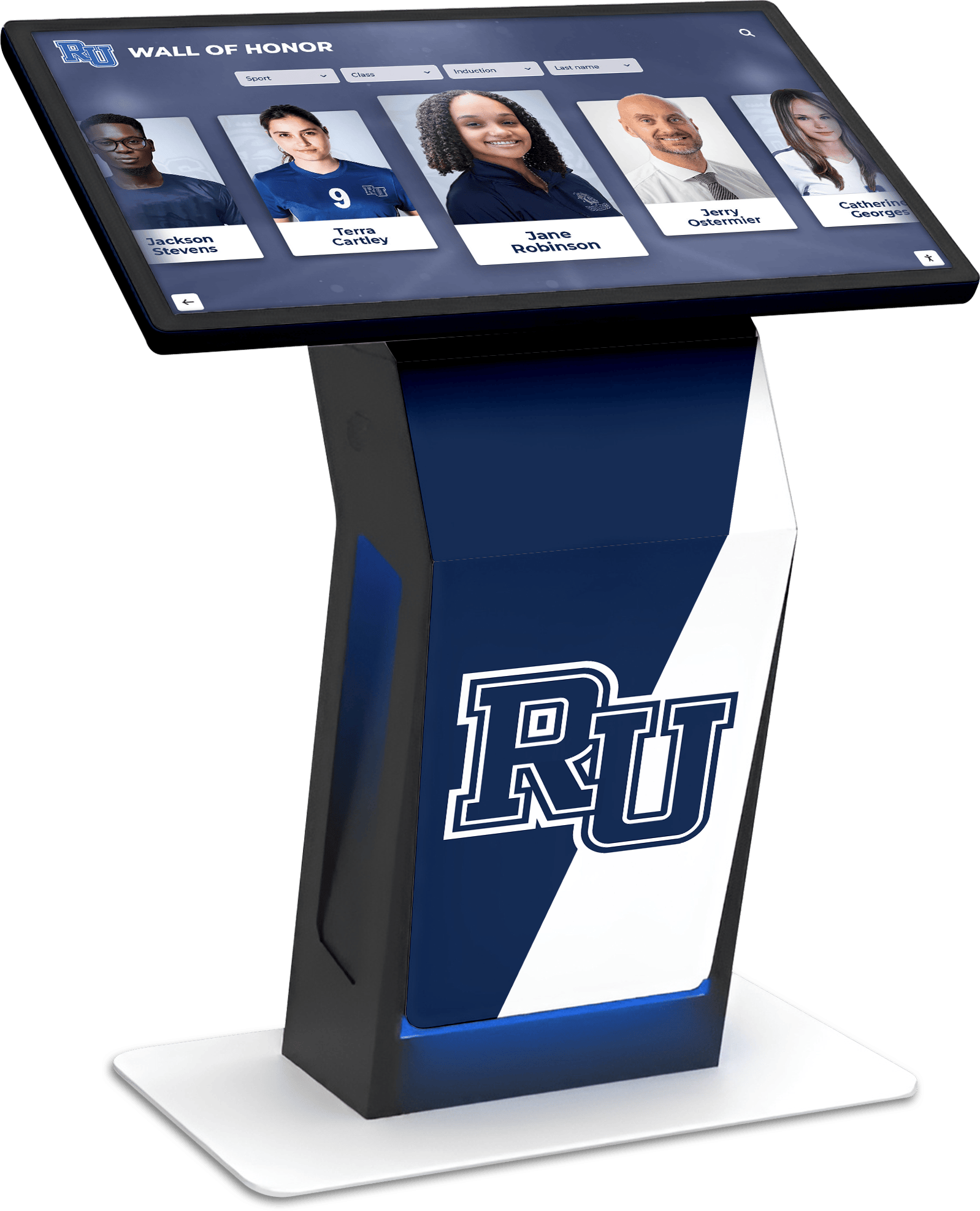
Rocket Recognition systems provide interactive touchscreen displays for comprehensive digital recognition
Understanding Rocket Recognition Systems
Rocket Recognition represents the flagship product platform from Rocket Alumni Solutions, a Boston-based technology company serving over 600 schools, universities, nonprofits, and organizations with interactive digital recognition solutions.
Core System Components
Comprehensive Rocket Recognition implementations integrate several key elements creating complete recognition experiences:
Interactive Touchscreen Hardware
- Commercial-grade touchscreen displays from 55 to 86 inches diagonal
- Purpose-built for 16-18 hours daily operation in high-traffic environments
- Enhanced brightness (400-700 nits) ensuring visibility in well-lit spaces
- Capacitive touch technology supporting multi-touch gestures and intuitive interaction
- Portrait or landscape orientation options matching architectural requirements
- Wall-mounted or free-standing kiosk configurations based on spatial constraints
Cloud-Based Recognition Software
- Proprietary content management system accessible from any internet-connected device
- Unlimited data storage capacity for recognition profiles, photos, videos, and multimedia content
- Pre-designed templates for athletics, academics, donors, alumni, service, military, history, and custom categories
- Advanced search and filtering enabling users to find specific individuals or browse by category, year, achievement type, or custom fields
- Auto-ranking capabilities for athletic record boards automatically sorting top performances
- QR code generation extending recognition access to mobile devices
- Multi-language support serving diverse communities
The system architecture separates content management from display hardware, meaning organizations update recognition content remotely through web-based interfaces without requiring physical access to touchscreen displays or technical expertise in software configuration.
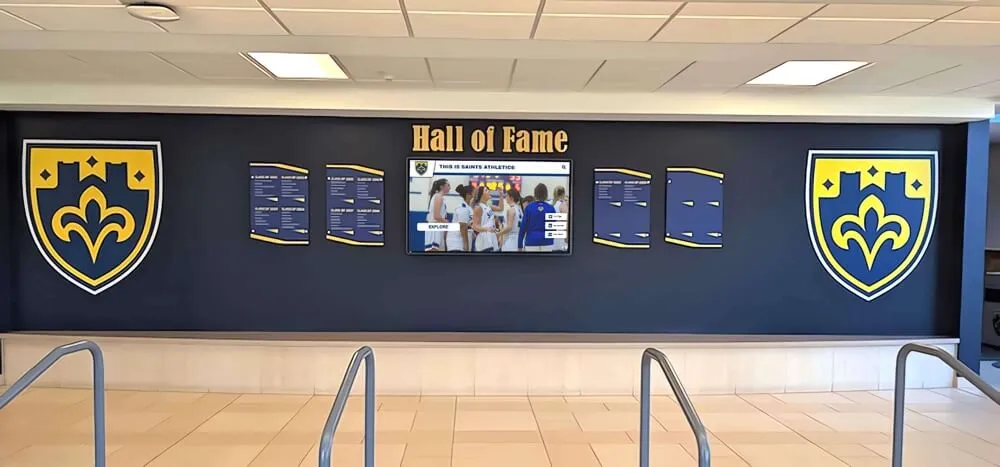
Rocket Recognition systems integrate with existing architectural elements and traditional recognition displays
Content Development and Migration Services
- Professional content development teams assisting with recognition program digitization
- Historical content migration from physical plaques, programs, yearbooks, and archives
- Biographical research and writing services for consistent narrative quality
- Photo digitization and enhancement ensuring appropriate resolution and formatting
- Database structuring organizing decades of recognition content systematically
- Launch support ensuring high-quality public debut
Web Accessibility Extensions
- Mobile-responsive web access enabling recognition viewing on smartphones, tablets, and computers
- Social sharing capabilities allowing users to celebrate achievements on personal platforms
- Integration options with organizational websites and communication systems
- 24/7 accessibility extending recognition beyond building hours and physical location constraints
- ADA WCAG 2.1 AA compliance ensuring accessibility for users with disabilities
This comprehensive approach distinguishes Rocket Recognition from basic digital signage solutions that require organizations to build custom recognition functionality on top of generic display platforms. Purpose-built features address specific recognition program needs without requiring custom development or technical expertise.
Recognition Categories and Applications
Rocket Recognition systems accommodate diverse achievement types across multiple organizational contexts:
Educational Institution Recognition
- Athletic halls of fame celebrating championship teams and individual accomplishments with complete statistics, photos, and career highlights
- Academic excellence programs honoring honor roll students, National Merit Scholars, valedictorians, and subject-specific achievements
- Distinguished alumni showcases featuring notable graduates across all career fields
- Arts recognition for theatre, music, visual arts, dance, and creative achievements
- Service awards acknowledging community contributions and volunteer leadership
- Historical timelines documenting institutional milestones and evolution
- Faculty and staff recognition honoring educator excellence and dedicated service
- Student leadership programs celebrating elected officers, club leaders, and peer mentors
Schools and universities represent primary Rocket Recognition customers, using systems to consolidate scattered physical recognition across gymnasiums, hallways, lobbies, and administrative offices into comprehensive interactive experiences accessible from central high-traffic locations.
Nonprofit and Foundation Applications
- Donor recognition walls acknowledging financial supporters across giving levels
- Volunteer appreciation celebrating service hours and program contributions
- Impact storytelling showcasing programs, beneficiaries, and mission accomplishments
- Campaign progress displays tracking fundraising goals and participation
- Board member and leadership recognition honoring governance contributions
- Historical archives documenting organizational evolution and achievements
- Community partner acknowledgment recognizing collaborative relationships
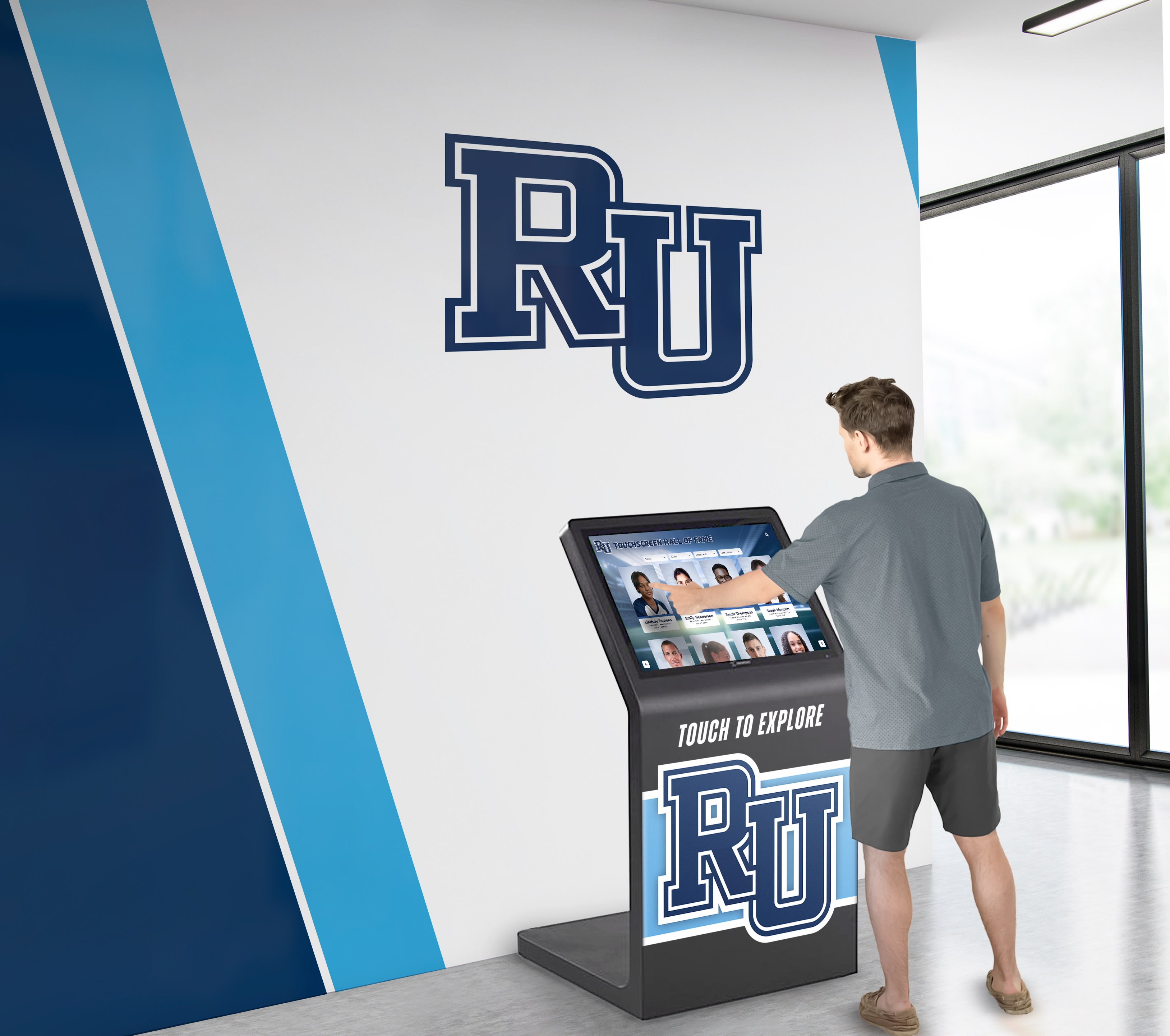
Strategic lobby placement maximizes visibility and community engagement with recognition content
Membership Organization Recognition
- Professional achievement halls of fame honoring career accomplishments
- Industry awards and competition results celebrating excellence
- Certification and credential achievement recognition
- Leadership position acknowledgment for elected and appointed roles
- Conference and event highlights documenting gatherings and presentations
- Historical membership records preserving organizational legacy
- Special recognition programs for lifetime achievement and distinguished service
Corporate Recognition Programs
- Employee achievement celebrations for performance, innovation, and tenure milestones
- Customer appreciation showcasing relationships and loyalty
- Partner and vendor recognition acknowledging collaborative success
- Safety records and workplace excellence
- Corporate social responsibility accomplishments
- Company history and milestone documentation
- Leadership team and board member profiles
The versatility of Rocket Recognition systems allows single installations to serve multiple recognition purposes simultaneously. A high school implementation might showcase athletic achievements, academic honors, distinguished alumni, and institutional history through organized navigation enabling visitors to explore all categories or focus on areas matching their interests.
Key Features and Capabilities
Understanding specific capabilities helps organizations evaluate how Rocket Recognition addresses their recognition needs compared to traditional approaches or alternative digital solutions.
Unlimited Recognition Capacity
The most transformative Rocket Recognition capability involves eliminating physical space constraints entirely:
No Content Limitations Traditional recognition faces hard limits—trophy cases fill completely, hallway walls run out of space, and plaques become so crowded individual honors lose visibility. Organizations face painful decisions about removing older recognition to accommodate new achievers, limiting biographical content to fit available space, or restricting how many individuals receive acknowledgment.
Rocket Recognition eliminates these constraints through unlimited digital capacity. A single 55-inch touchscreen can showcase:
- Thousands of individual achievement profiles with complete biographical information
- Unlimited photos, videos, and multimedia content supporting each honor
- Complete historical archives spanning decades or centuries of organizational recognition
- Multiple achievement categories without prioritizing certain types of recognition
- Detailed statistics, career highlights, and contextual information impossible to display physically
Schools implementing comprehensive digital recognition commonly migrate 50-100 years of athletic, academic, and alumni achievements into systems accessed through single touchscreen displays. What previously required 20-30 trophy cases distributed across facilities becomes searchable through intuitive digital interfaces occupying fraction of physical space.
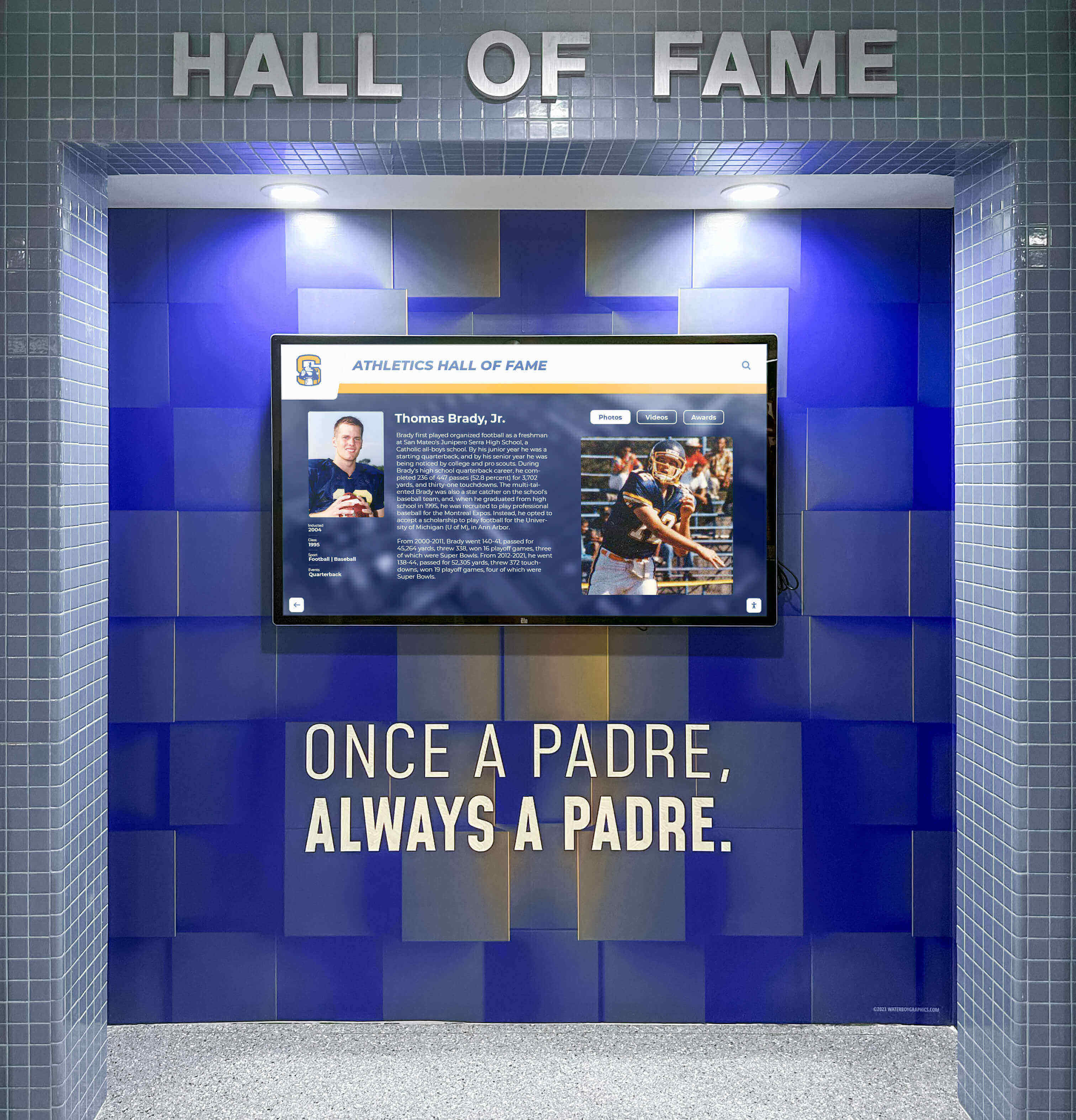
Single touchscreen displays showcase unlimited athletic achievements replacing multiple physical trophy cases
Growth-Ready Architecture Unlimited capacity means recognition programs grow indefinitely without requiring system replacement or content migration. Organizations adding recognition categories, expanding eligibility criteria, or increasing annual induction numbers never hit platform limitations requiring difficult decisions about what historical content to remove.
This future-proof approach contrasts sharply with digital signage platforms imposing content caps through pricing tiers or technical limitations. Organizations should verify whether systems truly offer unlimited capacity or whether “unlimited” carries hidden restrictions when certain thresholds are reached.
Remote Content Management
Cloud-based content management represents another core capability transforming recognition program administration:
Web-Based Administrative Access Traditional recognition updates require physical access to displays, professional engraving or printing services, and installation work to mount new plaques or replace updated materials. Even basic corrections become expensive, time-consuming projects.
Rocket Recognition provides web-based content management accessible from any internet-connected device without requiring specialized software, technical expertise, or physical access to displays:
- Login from desktop computers, laptops, tablets, or smartphones
- Intuitive editing interfaces using familiar web browser functionality
- Drag-and-drop photo uploads and media management
- Template-based biographical editing ensuring formatting consistency
- Bulk import capabilities for adding multiple honorees simultaneously
- Preview functionality showing exactly how content appears on touchscreen displays before publishing
Administrative access includes role-based permissions allowing multiple team members to manage recognition content with appropriate access levels. Athletic directors update sports records without accessing donor recognition, development officers manage philanthropic acknowledgment without editing academic content, and administrators maintain oversight across all categories.
Instant Updates Without Technical Expertise Organizations report 80-90% reduction in time required for recognition maintenance after implementing digital systems. What previously required weeks of coordination with engraving services, printing vendors, and installation contractors becomes minutes of web-based editing published instantly across displays.
This agility enables recognition programs to stay genuinely current. Athletic records update immediately after competitions, academic honors publish following grading periods, donor acknowledgment reflects gifts within days rather than months, and errors correct instantly without requiring expensive plaque replacement.
Schools particularly appreciate this capability during year-end recognition when dozens or hundreds of students earn academic honors, athletic achievements, and awards requiring acknowledgment. Instead of months producing and installing physical recognition, digital systems update in hours through straightforward content entry processes.
Interactive Search and Filtering
Static displays organize recognition chronologically or alphabetically, forcing visitors to scan entire displays hoping to find specific individuals or browse content sequentially without ability to focus on particular interests.
Advanced Search Capabilities Rocket Recognition systems provide sophisticated search enabling visitors to find exactly what interests them:
- Name search locating specific individuals instantly
- Graduation year or era filtering showing achievers from particular time periods
- Achievement type filtering (athletics, academics, arts, service, etc.)
- Sport or activity filtering for athletic and activity-specific recognition
- Award or honor type filtering showing recipients of particular distinctions
- Custom field filtering based on organizational recognition structures
- Keyword search across biographical content and descriptions

Intuitive search and filtering enable visitors to quickly find recognition content matching their interests
Browse and Discovery Features Beyond targeted search, browsing interfaces encourage exploration and discovery:
- Featured content highlighting notable achievers or recent additions
- Random profile suggestions encouraging serendipitous discovery
- Related content linking individuals to teams, events, and associated achievers
- Timeline visualizations showing recognition history chronologically
- Category landing pages providing entry points to different recognition types
- Visual galleries showcasing photos before biographical details
These capabilities create engagement impossible with static displays. Visitors spend minutes exploring connections between achievers, discovering historical context, and learning about accomplishments they didn’t specifically seek when approaching displays.
Auto-Ranking Record Boards
Athletic organizations particularly value automatic record board functionality:
Dynamic Performance Tracking Traditional athletic record boards require manual research determining top performances, professional production creating updated displays, and installation replacing outdated materials whenever records break. Many schools abandon systematic record maintenance due to administrative burden.
Rocket Recognition auto-ranking capabilities automatically sort athletic performances determining top results across every sport, event, gender, and time period:
- Automatic ranking showing current record holders and all-time top performances
- Multiple record categories (school records, meet records, personal records)
- Gender-separated and combined records based on program preferences
- Seasonal and all-time performance tracking
- Individual and relay records for team sports
- Contextual information showing when, where, and against whom performances occurred
As new performances enter systems, rankings automatically recalculate determining whether new records deserve acknowledgment. Athletic directors appreciate eliminating manual research and production work while ensuring record recognition stays genuinely current rather than years out of date.
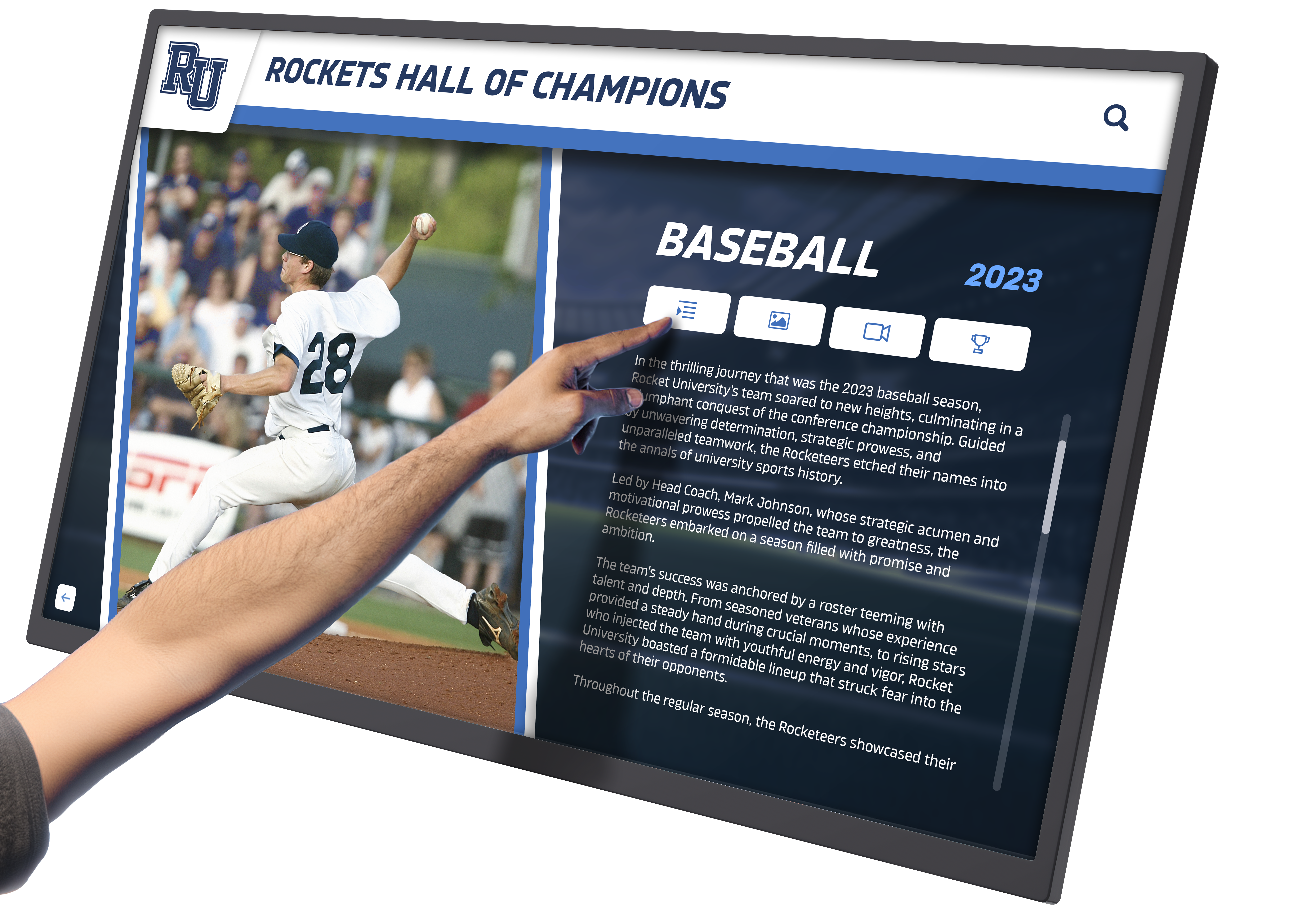
Auto-ranking record boards automatically maintain top performance lists across all sports and events
QR Code Mobile Access
Modern recognition extends beyond physical touchscreen displays through mobile accessibility:
Smartphone and Tablet Access QR codes positioned near touchscreen displays or printed in programs, newsletters, and communications enable anyone with smartphones to access complete recognition content:
- Mobile-optimized interfaces working seamlessly across devices
- Full access to profiles, photos, videos, and biographical content
- Social sharing capabilities enabling users to celebrate achievements on personal platforms
- Bookmarking features allowing users to save favorite profiles
- Remote access from anywhere enabling alumni, families, and community members to explore recognition without physical visits
This multi-channel approach significantly extends recognition reach. Alumni living across the country explore their alma mater’s digital hall of fame from home, prospective families research school culture before visits, donors see how institutions acknowledge supporters, and achievement recipients share their recognition with distant relatives unable to attend in-person celebrations.
Organizations report recognition viewing extending far beyond building visitors after implementing mobile-accessible systems. What was previously limited to those physically present in specific locations becomes available globally to anyone with internet access.
ADA WCAG 2.1 AA Accessibility Compliance
Educational institutions, nonprofits, and organizations receiving government funding face legal obligations under the Americans with Disabilities Act requiring digital accessibility. Beyond compliance, accessible design ensures all community members engage with recognition regardless of ability.
Built-In Accessibility Features Rocket Recognition systems include accessibility capabilities addressing diverse needs:
- Text alternatives for all images, photos, and graphic content
- Sufficient color contrast meeting WCAG standards for users with low vision
- Keyboard navigation enabling complete touchscreen functionality without touch interaction
- Screen reader compatibility ensuring biographical content accessibility
- Text resizing without loss of functionality for users requiring larger fonts
- Captions for video content ensuring accessibility for deaf and hard-of-hearing users
- Clear navigation structures supporting users with cognitive disabilities
These features integrate into core platform architecture rather than requiring custom development or add-on accessibility accommodations. Organizations receive compliant systems without additional work implementing accessibility features independently.
Comprehensive touchscreen accessibility guides provide detailed information about accessibility standards and implementation approaches.
Implementation and Deployment
Understanding implementation processes helps organizations plan realistic timelines and resource commitments:
Complete System Implementation
Comprehensive Rocket Recognition deployments involve several coordinated phases:
Phase 1: Planning and Design (4-6 weeks)
- Recognition program goals and category definition
- Content scope assessment determining recognition to include
- Hardware selection including display size, mounting approach, and location
- Branding and visual design aligning with organizational identity
- Navigation structure organizing recognition categories and content
- Content development approach (professional services vs. do-it-yourself)
- Budget finalization and contract execution
Organizations should involve stakeholders representing different recognition interests—athletic directors, development officers, academic administrators, marketing teams, and IT staff—ensuring systems serve diverse needs while maintaining cohesive user experiences.
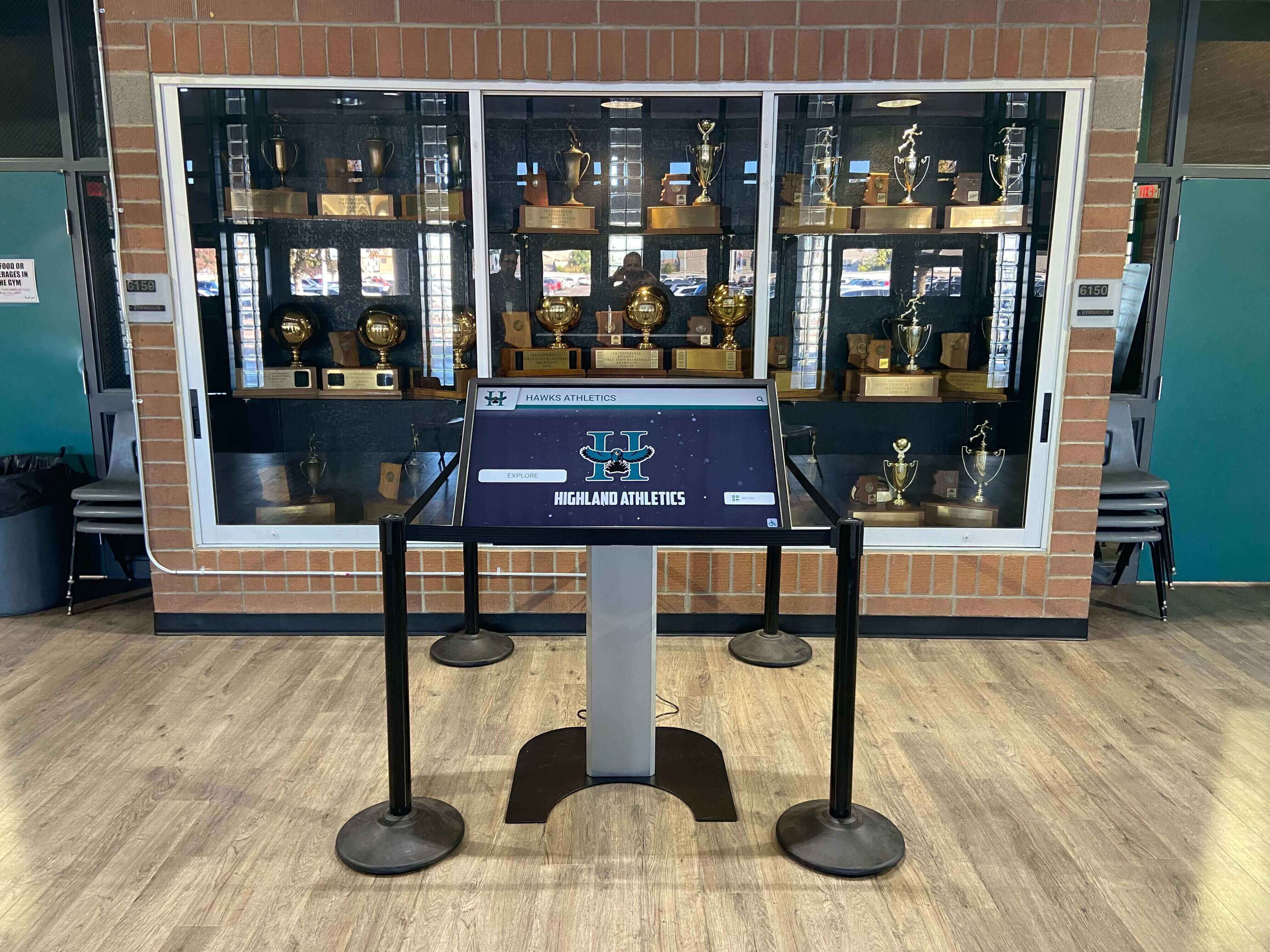
Professional installation ensures optimal hardware placement and seamless facility integration
Phase 2: Content Development (8-12 weeks) This phase typically represents the longest implementation stage:
- Historical recognition inventory cataloging existing plaques, trophies, programs, and archives
- Biographical information gathering from honorees, families, and institutional records
- Photo collection, digitization, and enhancement ensuring appropriate quality
- Video content creation when applicable for prominent honorees or special features
- Database structuring organizing content systematically
- Quality control ensuring consistency, accuracy, and appropriate formatting
- Review and approval cycles with organizational stakeholders
Organizations choosing professional content development services typically achieve higher quality results faster than do-it-yourself approaches. While professional services increase initial investment, the time savings and quality outcomes often justify costs compared to opportunity costs of internal staff time consumed by manual content development spanning months.
Phase 3: Hardware Procurement and Installation (4-6 weeks)
- Commercial touchscreen display procurement
- Media player and connectivity equipment specification
- Mounting hardware and kiosk fabrication when applicable
- Electrical work and network connectivity preparation
- Professional installation ensuring proper mounting and configuration
- System testing verifying hardware and software integration
- Final adjustments addressing any technical issues
Phase 4: Launch and Training (2-3 weeks)
- Administrative training for content management
- Public launch event or soft opening announcement
- Communication materials (signage, QR codes, promotional content)
- Integration with organizational websites and communications
- Initial feedback collection and minor adjustments
- Ongoing support transition to standard operations
Organizations should expect 4-6 months from initial planning to public launch for comprehensive implementations. Rushed timelines compromise content quality or delay launches when realistic schedules prevent surprises or stress.
Hardware Options and Configurations
Rocket Recognition implementations accommodate various spatial and architectural requirements:
Display Size Selection
- 55-inch displays: Suitable for smaller spaces, alcoves, or secondary locations
- 65-inch displays: Popular size balancing visibility with space efficiency
- 75-inch displays: Enhanced visibility for larger lobbies and high-traffic areas
- 86-inch displays: Maximum impact for prominent locations and large spaces
Larger displays improve visibility from distance and accommodate more simultaneous users, while smaller displays fit spaces where larger screens overwhelm architectural scale.
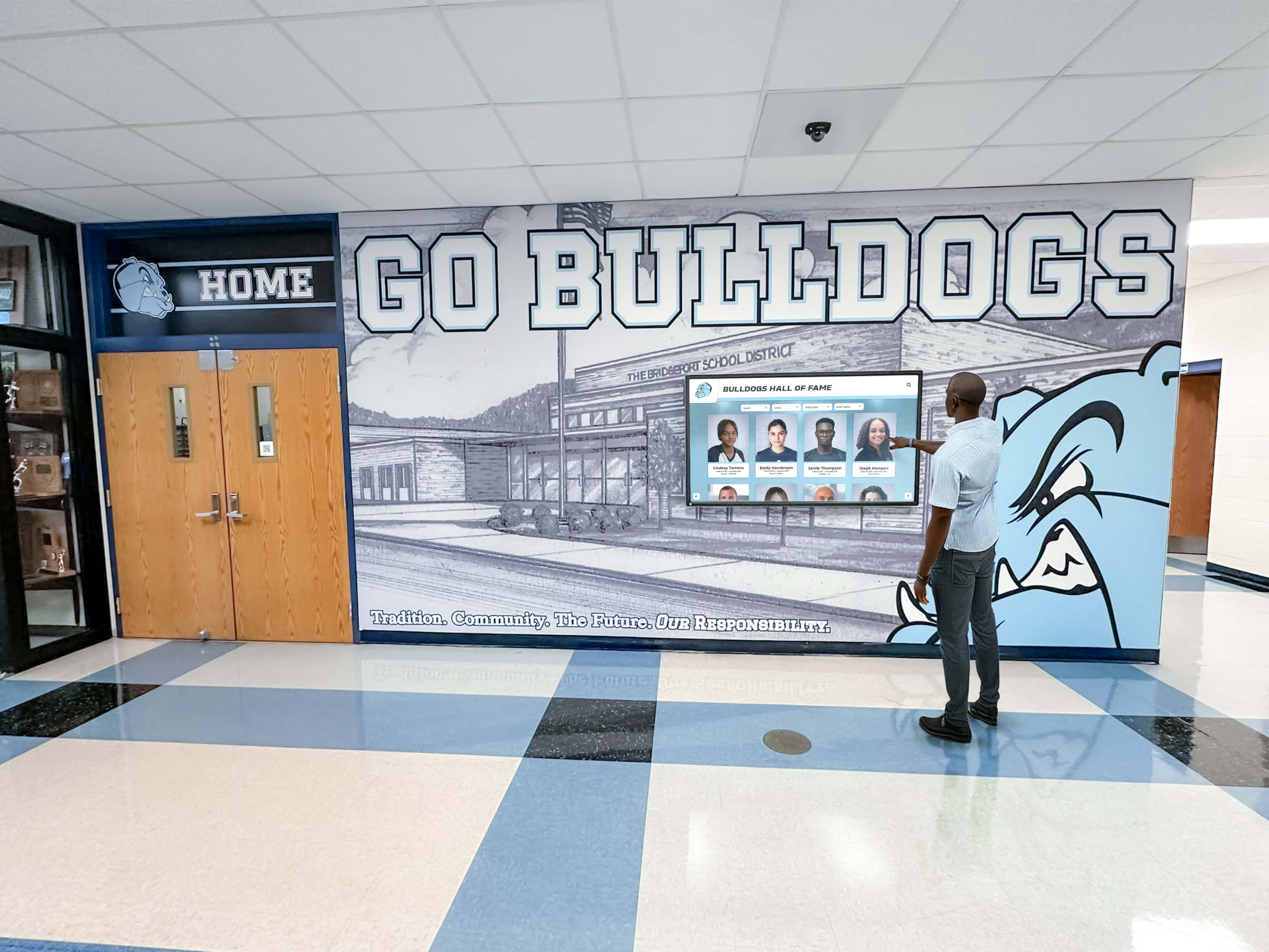
Hallway-mounted configurations provide recognition visibility in high-traffic areas
Mounting Approaches
- Direct wall mounting: Clean installation integrating displays into existing walls
- Recessed mounting: Displays set into walls for flush integration with surrounding architecture
- Free-standing kiosks: Self-contained units not requiring wall mounting, offering flexibility for spaces with limited wall access
- Custom architectural integration: Displays incorporated into larger recognition walls combining digital and traditional elements
Location selection significantly impacts system effectiveness. High-traffic areas like main lobbies, gymnasium entrances, cafeteria approaches, and visitor reception areas maximize community exposure. Organizations should avoid locations where displays compete with other activities or receive inadequate visibility.
Network Connectivity Requirements
- Wired ethernet connection (preferred for reliability)
- Wi-Fi connectivity (acceptable for locations where wired connections are impractical)
- Minimum bandwidth requirements for content updates and usage analytics
- IT department coordination ensuring network access and firewall configuration
Modern schools and organizations typically have adequate network infrastructure supporting touchscreen installations without significant additional work. IT teams should verify connectivity at proposed locations during planning phases avoiding surprises during installation.
Content Management and Administration
Once systems launch, ongoing content management ensures recognition stays current and relevant:
Administrative Training and Support Rocket Alumni Solutions provides comprehensive training ensuring administrators confidently manage recognition content:
- Web-based training sessions covering core functionality
- Video tutorials available on-demand for reference
- Written documentation explaining common tasks and procedures
- Ongoing technical support via phone, email, or chat
- User community forums connecting administrators across organizations
Most administrators require only 1-2 hours of initial training to manage routine content updates confidently. The intuitive interfaces follow familiar web-based conventions requiring minimal technical expertise.
Routine Maintenance Activities
- Adding new honorees following induction ceremonies or achievement qualifying events
- Updating biographical information as career accomplishments occur
- Adding photos, videos, and multimedia content as materials become available
- Correcting errors or updating information as needed
- Managing featured content highlighting seasonal recognition or special occasions
- Publishing scheduled content tied to specific dates or events
- Reviewing usage analytics understanding which content engages visitors most
Organizations typically designate specific staff members responsible for different recognition categories—athletic directors manage sports content, development officers oversee donor recognition, alumni relations staff maintain distinguished alumni profiles, and academic administrators publish honor roll and academic awards.
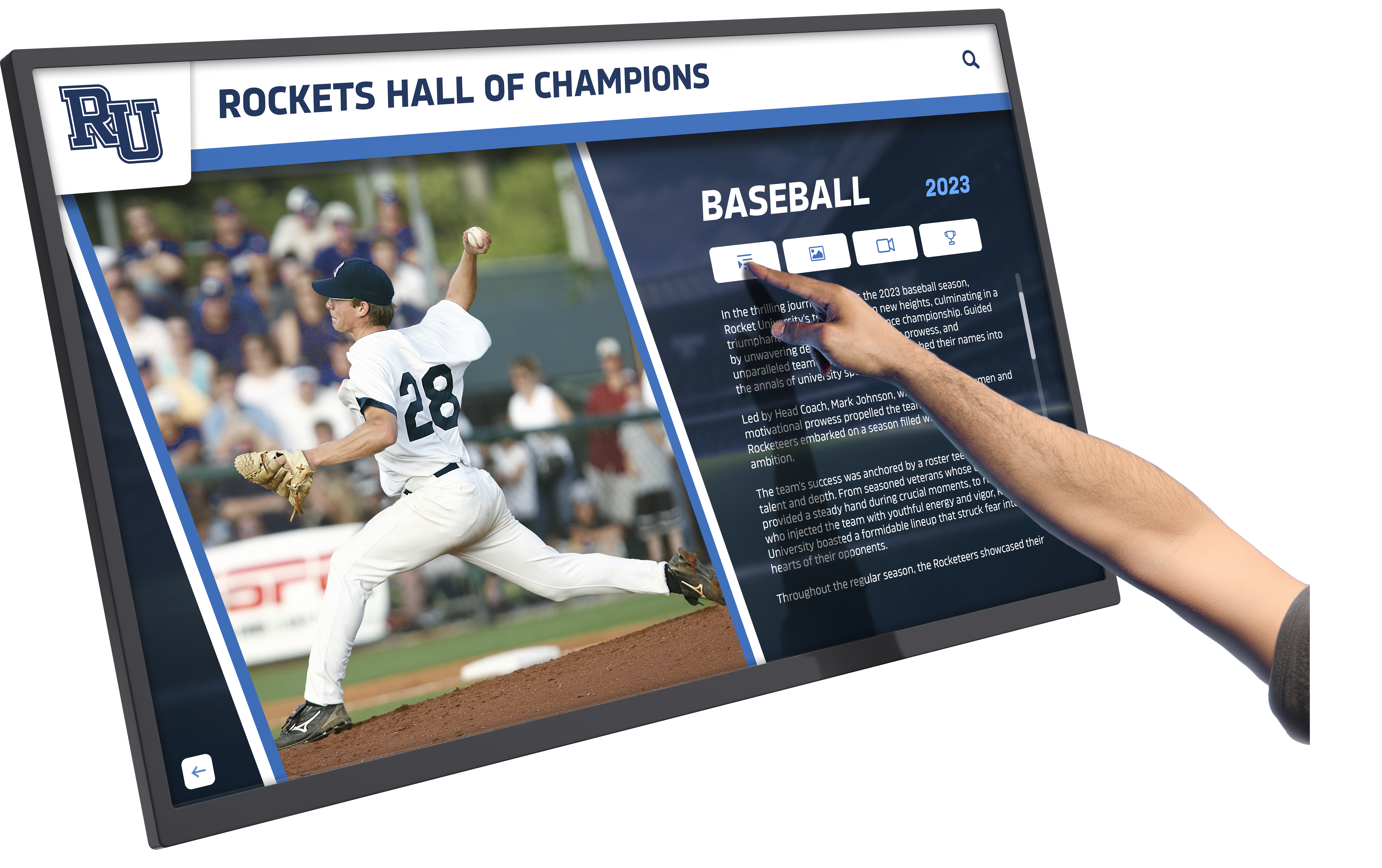
Rich biographical profiles with statistics, photos, and achievements create engaging recognition experiences
Bulk Update Capabilities Rocket Recognition systems support bulk data operations making large-scale updates efficient:
- CSV import for adding multiple honorees simultaneously
- Batch photo uploads organizing images by filename conventions
- Duplicate detection preventing accidental double entries
- Global edits updating common information across multiple profiles
- Archive functions preserving outdated information without deletion
Schools adding entire honor roll lists spanning hundreds of students, organizations migrating decades of historical recognition, or programs updating annual achievement cohorts benefit significantly from bulk capabilities avoiding tedious individual entry for large content volumes.
Comparing Rocket Recognition to Alternative Approaches
Organizations evaluating recognition solutions should understand how Rocket Recognition compares to traditional approaches and alternative digital options:
Traditional Physical Recognition Limitations
Space and Capacity Constraints Physical plaques and trophy cases impose hard limits on recognition:
- Finite wall space and display capacity forcing selection of what to honor
- Difficult decisions removing historical recognition to accommodate new achievers
- Inability to include comprehensive biographical information due to space limitations
- No room for photos, videos, or multimedia content enriching recognition
- Multiple scattered displays across facilities rather than consolidated experiences
Rocket Recognition eliminates these constraints entirely through unlimited digital capacity replacing 20-30 physical displays with single interactive touchscreens.
Maintenance and Update Challenges Physical recognition requires significant ongoing work:
- Professional engraving or printing services for each new honor
- Installation work mounting new plaques or replacing updated materials
- Expensive corrections when errors occur requiring replacement
- Months-long timelines from achievement qualification to public recognition
- Accumulated costs across years of ongoing maintenance
Digital systems reduce maintenance time by 80-90% while eliminating ongoing engraving and production costs. Organizations report return on investment within 2-4 years as saved maintenance costs offset initial system investment.
Limited Engagement and Accessibility Static displays provide minimal information and interaction:
- Brief glances at names on walls without deeper engagement
- No search capabilities requiring visitors to scan entire displays
- Inaccessible to community members unable to visit physical locations
- No social sharing or digital distribution extending recognition reach
- Zero accessibility accommodations for visitors with disabilities
Interactive digital systems increase average engagement time from 30 seconds to 5-10 minutes as visitors explore content, while mobile accessibility extends reach globally to anyone with internet connection.
Comprehensive digital vs. traditional recognition comparisons provide detailed analysis of long-term costs, maintenance requirements, and engagement outcomes.
Generic Digital Signage Limitations
Some organizations consider adapting general digital signage platforms for recognition purposes:
Recognition-Specific Feature Gaps Digital signage platforms lack purpose-built recognition functionality:
- No inductee database management or biographical templates
- Limited search and filtering capabilities requiring custom development
- No auto-ranking functionality for athletic or performance records
- Generic templates requiring extensive customization for recognition contexts
- Accessibility features depending on custom implementation work
Purpose-built recognition platforms provide these capabilities out of box without requiring technical expertise or custom development consuming months of time and technical resources.
Content Management Complexity Generic signage platforms treat recognition as unstructured content requiring manual organization:
- No standardized biographical formats ensuring consistency
- Limited relationship management connecting individuals to teams, events, or associated achievers
- Cumbersome update processes for large recognition programs
- No bulk import capabilities for adding multiple honorees simultaneously
Organizations with limited technical resources typically achieve better results faster using purpose-built recognition platforms than attempting to customize generic signage solutions for recognition needs.
Platform Limitations and Restrictions Many digital signage platforms impose content restrictions through pricing tiers:
- Storage limits capping photos, videos, and multimedia content
- Screen limits restricting how many displays connect to systems
- User limits restricting how many administrators access content management
- Feature limitations requiring upgrades to access advanced capabilities
Rocket Recognition provides unlimited content storage, unlimited administrative users, and comprehensive features without tiered restrictions forcing organizations to choose limited implementations or pay premium prices for full functionality.
Detailed signage platform comparisons evaluate purpose-built recognition systems against adapted signage solutions.
Pricing and Investment Considerations
Understanding comprehensive system costs helps organizations budget appropriately and evaluate return on investment:
Complete System Investment
Rocket Recognition implementations include multiple cost components:
Hardware Costs
- Commercial-grade touchscreen displays: $3,000-$8,000 depending on size
- Media players and connectivity equipment: $500-$1,500
- Mounting hardware or kiosk fabrication: $1,000-$5,000
- Installation labor and electrical work: $500-$2,000
Total hardware investment typically ranges $5,000-$15,000 for single-display systems, with higher costs for larger displays, custom kiosk fabrication, or complex installation requirements.
Software and Services
- Annual software licensing: $2,000-$5,000 depending on features and support level
- Content development services: $3,000-$10,000 for professional migration and development
- Training and launch support: Often included in software licensing
- Ongoing technical support: Included in annual licensing
Professional content development represents optional investment. Organizations with internal resources and time can perform content development independently, while those seeking faster launches or higher quality results often choose professional services.
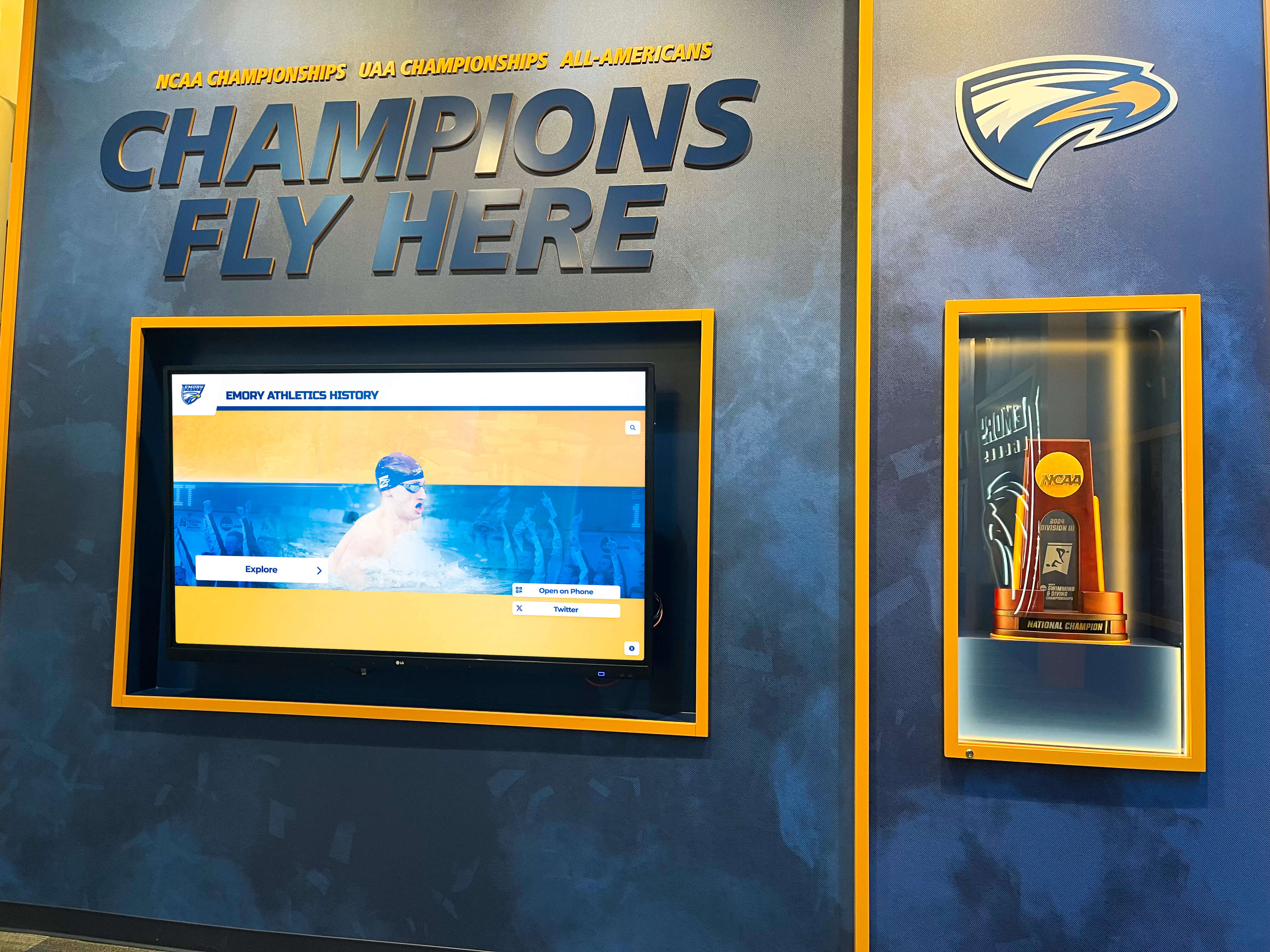
Comprehensive recognition systems create lasting value celebrating achievements across decades
Total Investment Ranges
- Basic implementations (do-it-yourself content): $7,000-$12,000 first year
- Standard implementations (some professional services): $12,000-$20,000 first year
- Comprehensive implementations (full professional services): $18,000-$30,000 first year
- Ongoing annual costs after first year: $2,000-$5,000 for software licensing
Organizations should compare these investments to ongoing costs of traditional recognition requiring professional engraving, printing, and installation for every new honor added over 10-15 year periods. Digital systems typically achieve cost parity within 2-4 years while providing dramatically superior engagement and accessibility.
Return on Investment Considerations
Beyond direct cost comparisons, organizations should evaluate qualitative and quantitative returns:
Quantitative Benefits
- Elimination of ongoing engraving and plaque production costs
- 80-90% reduction in staff time maintaining recognition displays
- Reduced physical space requirements as digital systems replace multiple trophy cases
- Extended useful life of recognition content remaining accessible indefinitely
- Increased alumni engagement measurable through analytics and interaction tracking
Schools and nonprofits implementing comprehensive recognition programs often report measurable increases in alumni engagement and philanthropic support offsetting system costs within 2-3 years through improved donor relationships and enhanced institutional pride.
Qualitative Benefits
- Dramatically increased community engagement with recognition content
- Enhanced institutional pride and culture celebration
- Improved accessibility ensuring all community members engage with recognition
- Professional appearance modernizing institutional image
- Flexibility accommodating recognition program evolution without system replacement
These qualitative benefits prove difficult to quantify but represent substantial value contributing to organizational goals beyond direct recognition functions.
Detailed pricing and ROI guides provide comprehensive analysis helping organizations evaluate investment decisions.
Real-World Applications and Use Cases
Examining specific implementation contexts demonstrates how diverse organizations apply Rocket Recognition systems:
High School Athletic and Academic Recognition
Typical Implementation Scope High schools commonly implement comprehensive recognition covering:
- Athletic halls of fame with individual inductees and championship teams
- Seasonal record boards for all sports (football, basketball, track, swimming, etc.)
- Academic honor roll displays updating quarterly or by semester
- Distinguished alumni showcasing notable graduates
- Student leadership recognition for elected officers and award recipients
- Historical timeline documenting school evolution and milestones
Single touchscreen displays consolidate recognition previously scattered across gymnasium trophy cases, hallway plaques, and administrative office displays into unified interactive experiences accessible from central lobbies or athletic facility entrances.
Content Development Approach Schools typically prioritize:
- Athletic hall of fame with 20-50 inductees spanning decades
- Current season rosters and statistics for all sports programs
- Honor roll lists for current academic year
- 10-20 distinguished alumni profiles to establish category
- Historical photos and milestones creating school heritage context
This foundation launches systems quickly while establishing frameworks for ongoing expansion as additional historical content digitizes and annual recognition continues adding achievers.
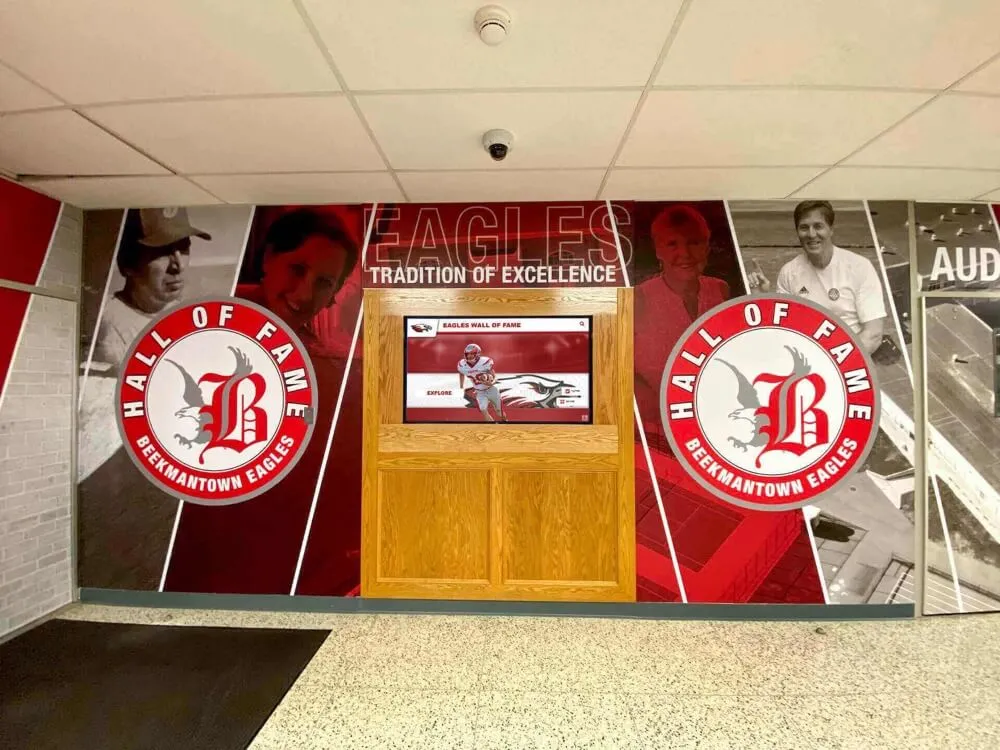
High school implementations consolidate athletic, academic, and historical recognition into engaging experiences
Impact and Engagement Schools report:
- Student athletes spending 5-10 minutes exploring records and identifying what performances they need to reach record board status
- Alumni returning to campus specifically to explore their recognition and share with family members
- Prospective families researching school culture and traditions through recognition content
- Current students connecting with institutional history and tradition
- Athletic departments eliminating months of work previously required maintaining physical record boards
Educational institutions find particularly strong value in athletic recognition programs celebrating both team and individual excellence.
University Alumni and Development Programs
Comprehensive Recognition Scope Universities implement recognition serving multiple institutional priorities:
- Distinguished alumni showcasing notable graduates across all disciplines
- Donor recognition walls acknowledging philanthropic supporters
- Faculty achievement celebrating teaching excellence and research contributions
- Athletic halls of fame for varsity program history
- Student leadership recognizing campus engagement and service
- Academic excellence including Rhodes Scholars, Fulbright recipients, and honor society members
- Historical timelines documenting institutional evolution across decades or centuries
Large universities often install multiple displays across campus—development offices showcase donor recognition, athletic facilities highlight competitive achievements, academic buildings celebrate scholarly excellence, and alumni centers provide comprehensive access to all recognition categories.
Strategic Development Applications Development officers leverage recognition systems for:
- Donor stewardship demonstrating how institutions honor supporters
- Campaign visualization showing progress toward fundraising goals
- Naming opportunity documentation showcasing endowed positions and facilities
- Event displays during fundraising gatherings highlighting supporter community
- Virtual tours enabling prospects to explore institutional recognition remotely
- Impact storytelling connecting philanthropy to program success
Universities report improved donor relationships and increased giving participation after implementing comprehensive recognition systems making philanthropic acknowledgment more visible and accessible than traditional donor wall plaques.
Nonprofit Donor and Volunteer Recognition
Mission-Aligned Recognition Nonprofits use systems acknowledging supporters while advancing mission:
- Donor walls showing financial supporters across all giving levels
- Volunteer recognition celebrating service hours and program contributions
- Board member profiles honoring governance leadership
- Impact stories showcasing programs and beneficiary success
- Community partnership recognition acknowledging collaborative relationships
- Historical documentation celebrating organizational evolution
- Special campaign recognition for capital projects or endowment initiatives
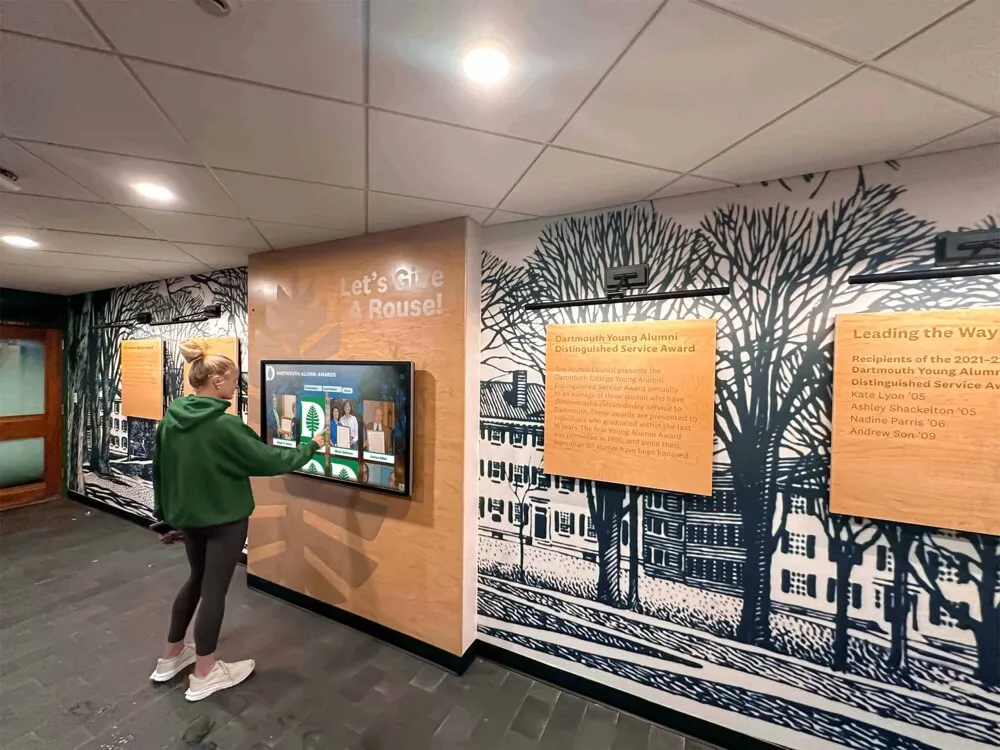
Nonprofit implementations combine donor stewardship with mission storytelling
Stewardship and Cultivation Recognition systems serve donor relationship functions:
- Demonstrating organizational gratitude through permanent acknowledgment
- Providing tangible visibility showing how nonprofits honor supporters
- Creating conversation opportunities during facility tours
- Enabling donors to see themselves among community of supporters
- Social sharing capabilities allowing donors to celebrate involvement
- Anonymous giving options respecting privacy preferences
Nonprofit organizations appreciate flexibility accommodating diverse recognition preferences while creating professional presentations suitable for fundraising contexts and board meetings.
Comprehensive nonprofit recognition guides provide detailed implementation frameworks for development programs.
Future Developments and Platform Evolution
Rocket Alumni Solutions continues enhancing recognition platform capabilities:
Emerging Features and Capabilities
Enhanced Multimedia Integration Future development priorities include:
- Video interview capabilities embedding multimedia storytelling
- Virtual reality connections creating immersive recognition experiences
- Live social media feeds showcasing current achievements and community celebrations
- Integration with streaming platforms displaying game footage and performance highlights
- Augmented reality features enabling mobile users to overlay historical content on physical spaces
Advanced Analytics and Insights Organizations increasingly value data understanding recognition engagement:
- User interaction tracking showing which content receives most attention
- Search analytics revealing what visitors seek most frequently
- Geographic data showing where mobile users access recognition
- Demographic insights understanding which community segments engage most actively
- Content performance metrics identifying recognition types generating strongest engagement
These analytics help organizations refine recognition programs focusing resources on content types generating meaningful community engagement while understanding which recognition categories might benefit from enhanced visibility or expanded content.
Artificial Intelligence Applications AI technologies offer recognition enhancement potential:
- Automated biographical drafting from structured data inputs
- Photo enhancement and restoration improving historical image quality
- Content recommendations suggesting related recognition to explore
- Natural language search enabling conversational queries
- Automatic categorization organizing content systematically
- Translation capabilities serving multilingual communities
As AI capabilities mature, recognition platforms incorporating these technologies reduce administrative burden while enhancing user experiences through intelligent content discovery and organization.
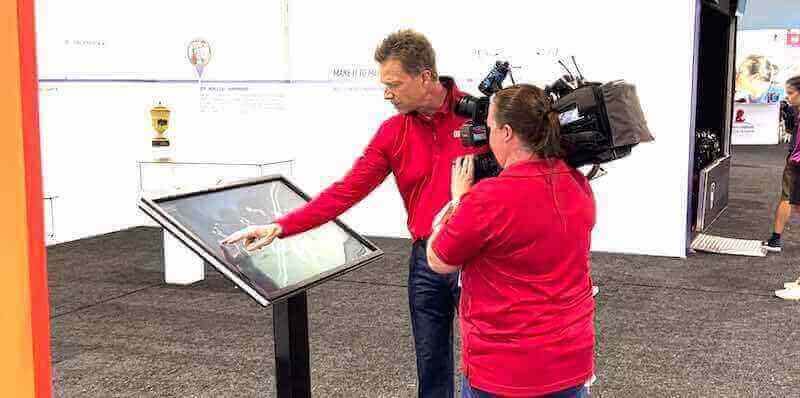
Continued innovation expands recognition platform capabilities serving evolving organizational needs
Frequently Asked Questions
How long does Rocket Recognition system implementation take?
Complete implementations typically require 4-6 months from initial planning to public launch. This timeline includes planning and design (4-6 weeks), content development (8-12 weeks), hardware procurement and installation (4-6 weeks), and launch preparation (2-3 weeks). Organizations choosing professional content development services often achieve faster launches than those managing content development internally. Timeline flexibility exists for urgent needs or phased implementations launching with core content while continuing historical digitization afterward.
Can we manage content updates ourselves without technical expertise?
Yes, Rocket Recognition provides intuitive web-based content management requiring no technical expertise or coding knowledge. Administrative interfaces use familiar web browser functionality with drag-and-drop features, template-based editing, and preview capabilities. Most administrators confidently manage routine updates after 1-2 hours of initial training. Comprehensive documentation, video tutorials, and ongoing technical support ensure administrators receive assistance when questions arise.
How much content can systems accommodate?
Rocket Recognition systems provide genuinely unlimited content capacity without restrictions on profiles, photos, videos, or multimedia content. Organizations commonly showcase thousands of individual achievement profiles, decades of historical recognition, and extensive multimedia libraries through single touchscreen displays. Unlike platforms imposing content caps through pricing tiers or technical limitations, unlimited capacity means recognition programs grow indefinitely without hitting platform constraints or requiring system upgrades.
What accessibility features are included?
Systems include comprehensive ADA WCAG 2.1 AA accessibility compliance features: text alternatives for all images and graphics, sufficient color contrast for users with low vision, keyboard navigation enabling complete functionality without touch interaction, screen reader compatibility for biographical content, text resizing without functionality loss, and video captions. These accessibility capabilities integrate into core platform architecture rather than requiring custom development. Organizations serving educational institutions, nonprofits, or government entities receive legally compliant systems meeting accessibility obligations.
Can recognition extend beyond physical touchscreen displays?
Yes, systems provide mobile-responsive web access enabling recognition viewing on smartphones, tablets, and computers from anywhere. QR codes positioned near displays or distributed through communications allow community members to access complete recognition content on personal devices. Social sharing capabilities enable users to celebrate achievements on personal platforms. This multi-channel approach significantly extends recognition reach beyond building visitors to global audiences including alumni, distant family members, and prospective community members researching organizational culture remotely.
How does pricing compare to ongoing traditional recognition costs?
Complete Rocket Recognition implementations typically range $15,000-$30,000 for first year including hardware, software, installation, and professional content development, with ongoing annual licensing of $2,000-$5,000 for subsequent years. When compared to ongoing costs of traditional recognition requiring professional engraving, printing, and installation for each new honor over 10-15 year periods, digital systems typically achieve cost parity within 2-4 years while providing dramatically superior engagement, unlimited capacity, and reduced maintenance burden. Organizations should evaluate total cost of ownership across realistic timeframes rather than focusing solely on initial investment.
What happens if hardware fails or requires replacement?
Commercial-grade displays typically last 7-10 years with normal use. Rocket Alumni Solutions provides hardware warranty coverage during initial periods, and replacement displays integrate with existing cloud-based content without requiring content migration or system reconfiguration. Organizations own recognition content independently of hardware, meaning display replacement involves only hardware costs without content recreation or migration expenses. This architecture differs from proprietary systems tying content to specific hardware creating expensive replacement scenarios.
Can we showcase multiple recognition types in single system?
Absolutely. Single installations commonly accommodate diverse recognition categories including athletics, academics, donors, alumni, arts, service, leadership, and historical content. Organized navigation enables visitors to explore all categories or focus on specific interests. Organizations appreciate consolidating scattered physical recognition across facilities into unified interactive experiences rather than requiring multiple displays for different recognition types. Systems accommodate unlimited categories without artificial restrictions or additional costs for expanded recognition scope.
Conclusion: Transforming Recognition Through Interactive Technology
Recognition serves essential functions across diverse organizations—acknowledging achievement, reinforcing values, building community pride, and creating cultures celebrating excellence. Yet traditional physical recognition approaches impose severe limitations constraining what organizations can honor and how communities engage with these important acknowledgments.
Rocket Recognition represents comprehensive alternative eliminating space constraints through unlimited digital capacity, enabling instant remote content management replacing expensive engraving and production cycles, and transforming passive wall plaques into engaging interactive experiences creating genuine community connection with organizational history and achievement.
Organizations implementing Rocket Recognition systems report dramatic increases in community engagement, significant reductions in administrative burden maintaining recognition programs, improved accessibility ensuring all community members participate regardless of ability, and enhanced institutional pride visible through measurable engagement metrics and qualitative feedback.
For schools consolidating scattered athletic trophies and academic plaques into unified experiences, universities creating comprehensive alumni and donor recognition serving development objectives, nonprofits acknowledging supporters while advancing mission, membership organizations preserving professional heritage, or corporations celebrating employee and customer excellence—interactive touchscreen recognition provides future-proof platforms serving recognition needs not just today but across decades of organizational evolution.
The combination of unlimited recognition capacity, intuitive remote content management, purpose-built features addressing specific recognition needs, comprehensive accessibility ensuring inclusive participation, and professional implementation support distinguishes Rocket Recognition as leading solution for organizations serious about honoring unlimited achievements while creating genuine community engagement with recognition content.
Ready to explore how interactive touchscreen recognition can transform your organization’s approach to honoring achievement? Book a demo to see Rocket Recognition capabilities and discuss how comprehensive digital systems can serve your recognition program goals while eliminating constraints imposed by traditional physical approaches.