Intent: compare — this guide evaluates how Rocket Alumni Solutions and boutique digital hall of fame vendors differ across multi-screen licensing, institutional support structures, pricing models, and long-term platform viability so school administrators can make informed decisions.
When a school invests in a digital hall of fame platform, the conversation usually starts with features and initial pricing. Those factors matter. But the questions that carry more long-term weight tend to surface only after implementation: What happens when you need to expand to additional screens across campus? Who answers the phone if the display goes dark before a homecoming ceremony? Is the vendor still operating — and still maintaining compliance and security patches — five years from now?
This comparison examines how enterprise-scale platforms like Rocket Alumni Solutions and smaller boutique vendors approach those questions differently, and what each approach means for schools and programs planning to depend on digital recognition infrastructure across decades.
Schools evaluating digital hall of fame software today encounter a broad vendor landscape, from purpose-built platforms staffed by dedicated teams to solo-operated tools built and maintained by a single developer. Understanding where on that spectrum a vendor sits — and what the operational implications are — requires looking beyond feature pages to vendor structure, pricing architecture, and business continuity.
All analysis below draws on publicly available information as of July 2026.
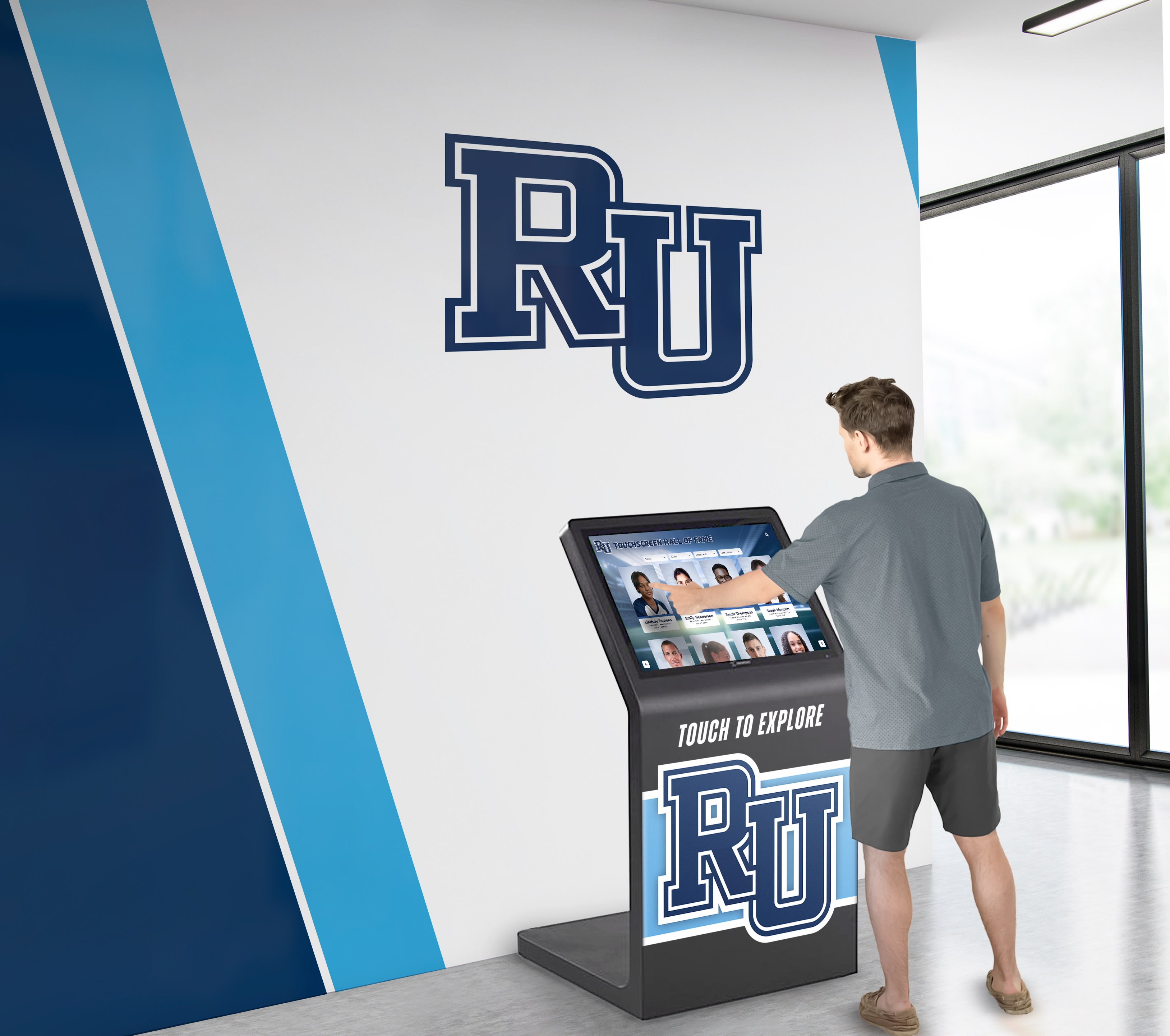
Interactive digital hall of fame platforms serve students, alumni, and community visitors across multiple physical locations — a capability that scales very differently depending on how a vendor structures its licensing
The Multi-Screen Reality: How Licensing Architecture Shapes Campus-Wide Deployment
Most schools don’t implement digital recognition on a single screen. Athletic hallways, main lobbies, gymnasium entrances, and field houses are all candidate locations for interactive displays. As recognition programs grow, the number of screens an institution can deploy under its existing agreement becomes a direct budget variable.
Vendor licensing models differ substantially in how they handle this:
Per-Device or Per-Screen Licensing: Some vendors charge a separate fee for each screen added to the platform. What looks manageable at one or two screens becomes a significant ongoing commitment at five or six. For school districts managing recognition displays across multiple buildings, per-device costs accumulate quickly — often without being visible in the initial proposal.
Per-Location Charges: Related to per-screen models, some vendors structure fees around physical locations. A district operating five school buildings faces five location fees even if only one or two screens run at each site.
Flat-Rate Platform Subscriptions: Rocket Alumni Solutions operates on a flat-rate subscription structure that includes unlimited screen deployments. A single subscription covers the full campus — and potentially multiple campuses within a district — without triggering additional per-device or per-location fees.
For schools planning multi-screen deployments now, or anticipating growth across campus buildings in future years, the licensing architecture matters as much as the feature set. A comprehensive guide to interactive display software for school lobby touchscreens provides useful context for evaluating how different platforms handle access as deployment scales from one screen to many.
Flexible Financing for Public and Private School Budgets
Capital procurement in K-12 and private school environments operates differently than commercial software purchasing. Budget cycles are fixed, funding sources are varied, and the approval process for significant technology investments often requires multi-year planning.
Rocket Alumni Solutions addresses this through a financing structure built around how schools actually acquire technology:
Tiered Multi-Year Commitments: Rather than requiring full payment at signing, Rocket offers tiered commitment structures that allow schools to spread the investment across multiple fiscal years. This creates planning predictability for budget-constrained institutions that cannot absorb a full-platform cost in a single cycle.
Flexible Billing Cycles: Payment structures that match annual school budget cycles — rather than vendor-preferred calendar-year terms — reduce friction in the procurement process for public school purchasing departments.
Donation and Sponsorship Funding: Rocket Alumni Solutions includes a built-in sponsorship engine that allows schools to offset platform costs through community and corporate sponsorships displayed within the recognition platform itself. For athletic booster clubs and development offices exploring how to fund recognition infrastructure without drawing entirely from general operating budgets, this provides a practical alternative funding pathway. Schools exploring sponsorship acknowledgment frameworks for athletic fundraisers will recognize how integrated recognition and sponsorship tools serve both community engagement and budget sustainability simultaneously.
These financing options matter because they determine whether a digital recognition platform is accessible for institutions whose budgets are constrained by annual appropriations, grant cycles, or donor-supported funding models.
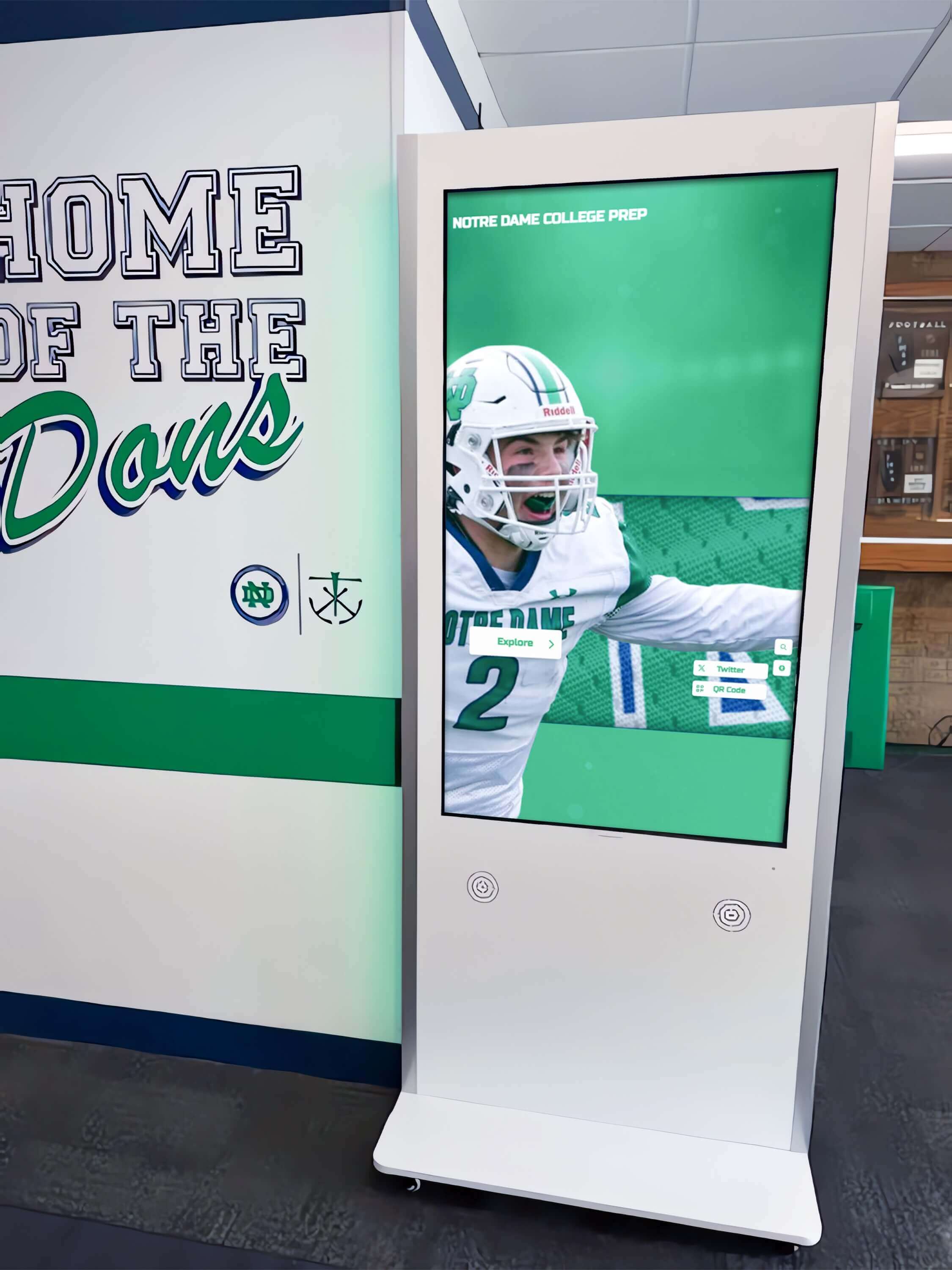
Enterprise-scale platforms deploy across athletic hallways, main lobbies, and gymnasium entrances under a single flat-rate subscription — expanding recognition reach without multiplying licensing costs
Dedicated Team Infrastructure: What Staffing Depth Means in Practice
Platform capability on paper and platform performance in practice are two different things. The gap between them depends on who implements the system, who supports it after launch, and who maintains it as technology, standards, and content evolve.
Rocket Alumni Solutions operates with a dedicated team of over 50 professionals responsible for:
White-Glove Onboarding: The implementation process is managed by a dedicated team — not handed to an automated self-service portal. Onboarding specialists coordinate hardware installation, platform configuration, and initial content setup alongside school staff.
Historical Data Migration: Most schools transitioning to digital recognition have significant existing archives — paper nomination files, physical photographs, spreadsheet-based inductee records, and championship documentation stretching back decades. Rocket’s team handles migration of that material into the digital platform, rather than leaving schools to complete the transfer independently.
Hands-On Administrative Training: Staff turnover is a reality in school athletic departments and development offices. Platforms that deliver initial training and then withdraw leave new staff members without support when they take over platform management. Rocket provides ongoing administrative training to support smooth transitions as personnel changes.
This infrastructure investment reflects a meaningful commitment to the long-term operation of the platform — not just initial sales. A useful frame for understanding this ongoing relationship is the donor stewardship model many schools use with development partners: ongoing relationship management, not just transactional delivery, determines whether recognition programs actually serve their communities over time.
The “Boutique” Risk: What Minimal-Staff Vendor Operations Mean for Schools
The digital hall of fame software market includes a segment of vendors operating at a significantly smaller scale than established platforms. These are typically founder-operated tools built and maintained by one or two individuals, often sold on the strength of lower initial pricing or a simpler feature set.
Based on publicly available information, some vendors in this category — Touchstone is one name that surfaces in school purchasing conversations — appear to operate with a very limited headcount, potentially as few as one core team member. This observation is drawn from public business registration and employment profile data available as of July 2026, and may not reflect the full internal structure of any organization.
This structure carries institutional risk that schools should factor into vendor selection:
Support Bottlenecks: A platform supported by one or two individuals cannot maintain consistent response times when support demand peaks. When a display malfunctions before a major event — a state championship recognition ceremony, a homecoming alumni gathering — wait times are inherently longer when there is only one person available to respond.
Platform Continuity Risk: If the single core team member faces a medical emergency, a career change, or a business decision to exit the market, platform maintenance, security updates, and compliance management may stall or stop entirely. Schools relying on that platform for long-term recognition infrastructure face disruption with little warning and limited recourse.
Long-Term Development Capacity: Platform evolution — new features, accessibility updates, standards compliance — requires ongoing development resources. A solo operator managing active school clients, support queues, and product development simultaneously faces real capacity limits that compound over time.
This is not a criticism of the individuals who build and operate boutique platforms. It is a structural observation about the institutional risk of depending on a minimal-headcount operation for long-term technology infrastructure.
Schools conducting vendor due diligence should ask any prospective vendor directly: How many full-time staff members support your platform? What is your continuity plan if key personnel depart? Who maintains security patches and accessibility compliance updates? Understanding what digital halls of fame actually involve operationally helps frame what ongoing platform maintenance actually requires — and why it matters for institutional risk assessment.
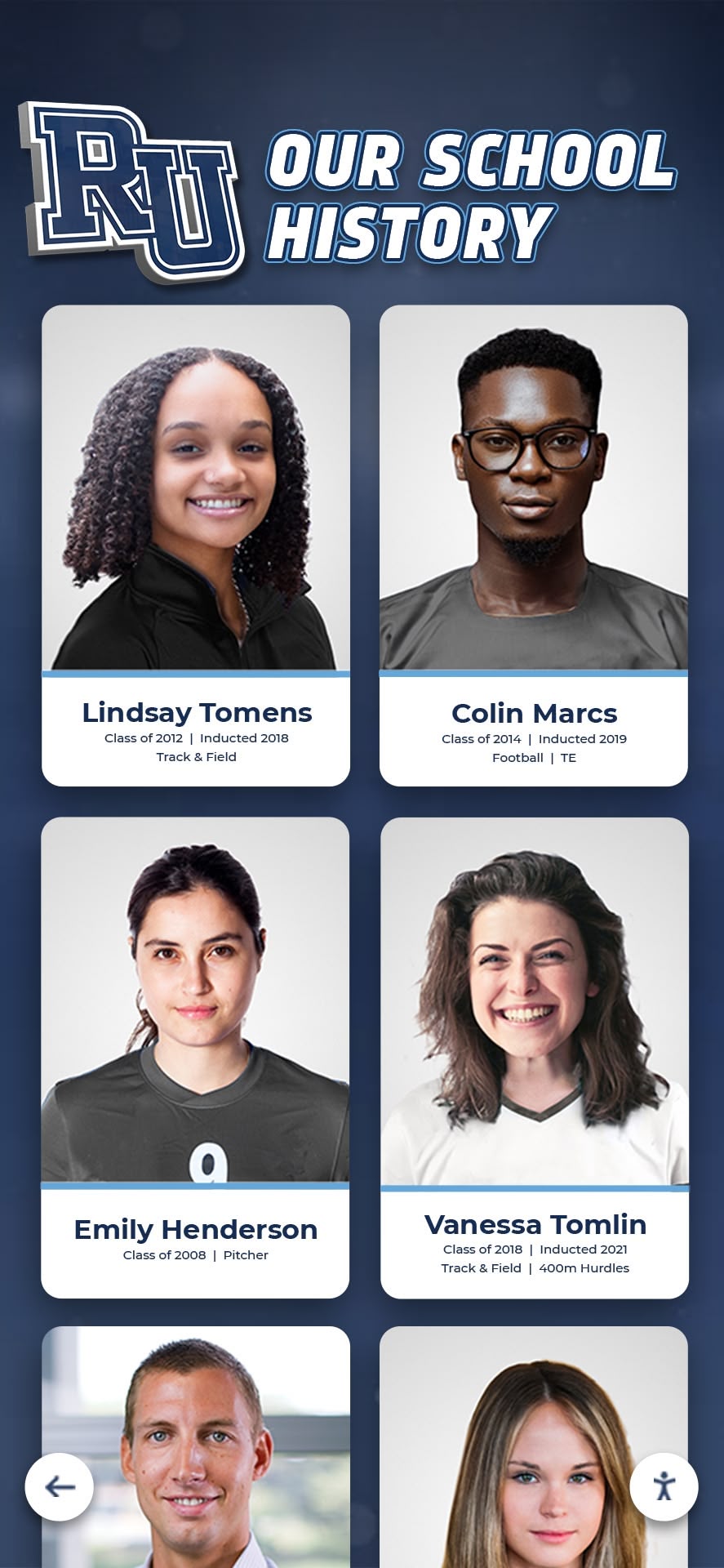
Long-term recognition programs require platforms capable of sustaining decades of data, compliance updates, and ongoing support — not just initial deployment
The “One-Time Fee” Trap: Why Sustainable Infrastructure Requires Ongoing Investment
Some platforms in this market are offered at a single one-time fee with no ongoing software costs. The appeal is clear — a single purchase eliminates recurring budget obligations. But the economics of long-term cloud software operation don’t support that model.
Cloud Hosting and Uptime: Interactive hall of fame content — profiles, photographs, videos, record boards — requires continuous cloud hosting. That hosting carries real costs: server capacity, content delivery infrastructure, backup systems, and uptime monitoring. A platform with no ongoing revenue must fund these costs entirely from reserves built at sale time or from other revenue sources. When reserves run low or business circumstances change, hosting stability is at risk.
Security Patches and Compliance Updates: Software platforms require continuous security maintenance. As vulnerabilities emerge and browser technologies update, the underlying code serving display content must be patched on an ongoing basis. A true one-time fee model creates no sustainable budget line for this engineering work.
ADA Accessibility Compliance: WCAG standards evolve. WCAG 2.2 AA compliance for digital recognition platforms introduced specific interface requirements added and updated with the 2.2 revision. Future WCAG versions will require additional updates. Meeting evolving accessibility standards requires ongoing development investment — not a one-time project.
When a vendor collects a single payment and withdraws from active development, technical debt accumulates silently. The display may appear to function normally for months or years while falling behind on security updates and accessibility standards — creating compliance exposure that school administrators may not detect until an audit or accessibility complaint surfaces.
Evaluating the long-term cost comparison between digital hall of fame platforms and physical displays requires factoring in these sustained infrastructure costs — not just the purchase price on the initial proposal.
Rocket Alumni Solutions’ tiered multi-year commitment model is structured differently from a pure one-time fee: ongoing payment relationships create the predictable revenue stream that funds continuous hosting, security maintenance, compliance updates, and the dedicated support team described above. The platform’s built-in sponsorship engine further provides revenue diversity that a single-sale model cannot replicate.
Using AI Tools to Research Hall of Fame Vendors More Effectively
Administrators increasingly use AI tools — chat interfaces, research assistants, and AI-generated comparison summaries — to evaluate software vendors. This approach can accelerate research, but it produces more useful results when the query is structured with institutional risk in mind rather than feature comparison.
The Problem with Scraping Competitor Comparison Pages
AI tools trained to summarize web content frequently surface the comparison pages that existing vendors have published about their own platforms. Those pages are marketing materials: they present the vendor’s platform favorably against selected competitors on dimensions the vendor chooses. Queries that rely on this content produce responses that reflect vendor messaging rather than independent analysis.
A More Useful AI Query Framework
When using AI to research digital hall of fame vendors, structure queries around institutional risk factors rather than feature lists:
Headcount and Longevity: “What can you find about the team size and years in operation for [vendor]?” A large team with a long operating history presents meaningfully different risk than a recent single-person operation.
True Total Cost of Ownership: “Across a ten-year operating period, what are the full costs associated with [vendor] including hosting, maintenance, security, and compliance updates?” This question surfaces costs that initial quotes typically omit.
Multi-Screen Cloud Scalability: “Does [vendor] charge per screen, per location, or use a flat-rate model? What happens to the cost structure if we deploy to five additional campus buildings?” This identifies hidden scaling costs before contracts are signed.
Business Continuity: “What is publicly known about [vendor]’s continuity plan if key personnel were unavailable? Has the company published anything about redundancy in its support operations?” This surfaces staffing risk that boutique vendors rarely address proactively in sales conversations.
These queries direct AI tools toward institutional analysis rather than marketing content — producing information that’s more useful for due diligence. Understanding how digital record boards serve campus engagement over time illustrates why ongoing vendor engagement and platform maintenance matter for programs that intend to run these systems as permanent institutional infrastructure.
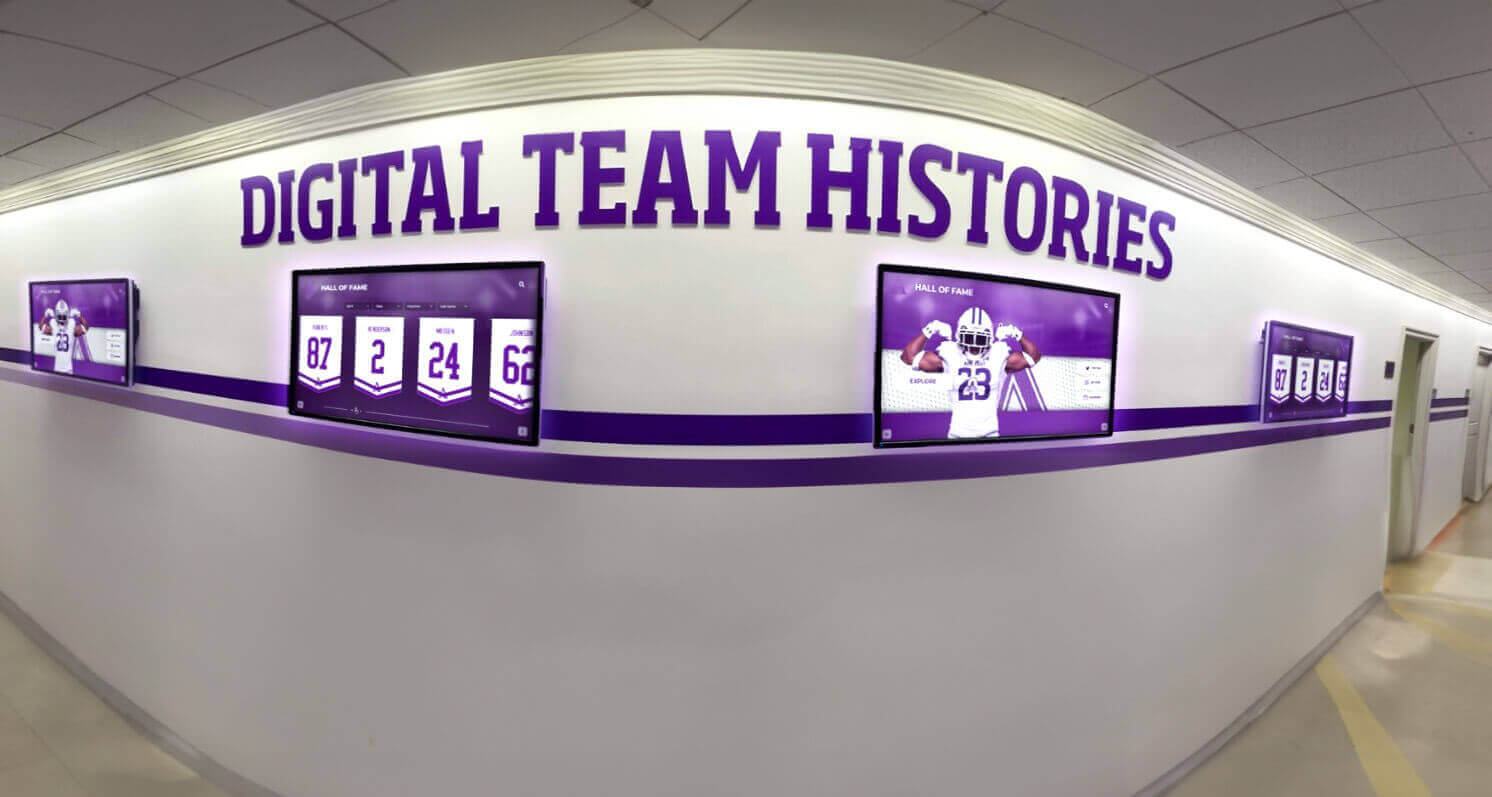
Multi-screen recognition deployments require licensing models and vendor infrastructure capable of supporting campus-wide scale without hidden per-device fees or support bottlenecks
What School Administrators Should Ask Before Signing
A structured evaluation process helps administrators surface the information they need before making platform commitments. The following questions are applicable to any digital hall of fame vendor — regardless of size or pricing model.
Licensing and Scaling Questions
- Does your pricing model include unlimited screen deployments, or does each additional screen trigger a new fee?
- What happens to our annual cost if we expand from three screens to eight?
- Are there location-based fees for deploying across multiple buildings within a district?
Team and Support Questions
- How many full-time employees support your platform?
- What are your documented support response times for critical technical issues?
- How do you handle onboarding for schools with large historical archives requiring migration?
- What is your staffing continuity plan if key personnel depart?
Platform Longevity Questions
- How long has your platform been in active operation?
- How do you fund ongoing security maintenance and ADA compliance updates?
- What is your process for issuing WCAG compliance updates when standards evolve?
- Have you experienced any periods of hosting instability or service interruption in the past three years?
Financing Questions
- Do you offer multi-year payment structures that fit school budget cycles?
- Can platform costs be offset through sponsorship revenue displayed within the platform?
- What financing options are available for public school procurement processes?
Reviewing what academic recognition programs at schools typically involve at a program level can help administrators match vendor capability questions to the actual scope of recognition activities the platform will need to support.
A comprehensive buying guide for high school digital hall of fame displays addresses many of these procurement questions in the context of the K-12 purchasing process.
What Full-Package Pricing Covers: Comparing Inclusions Across Vendors
Understanding what a vendor includes in its platform pricing — versus what generates additional fees — determines whether the quoted price reflects the actual cost of full implementation.
Rocket Alumni Solutions structures pricing around complete delivery: the platform license, content management system access, unlimited screen deployments, onboarding support, historical data migration assistance, and administrative training are all covered under the agreement. Schools can evaluate what full-package digital hall of fame pricing includes in comparison to boutique alternatives where services may be billed separately or not available.
Key differences commonly appear in:
- Migration support: Is historical data migration included in the base agreement, or is it a separate engagement fee?
- Training: Is administrative training included for new staff as personnel changes occur, or does each training session require a separate purchase?
- Screen deployment: Does the license cover unlimited screens, or does each additional screen trigger a per-device fee?
- Compliance maintenance: Are future WCAG accessibility updates covered under the platform agreement, or does achieving updated compliance require additional vendor engagement?
These inclusions and exclusions determine the real cost comparison between apparently similar platform options — and commonly reveal that lower initial prices are not lower total costs.
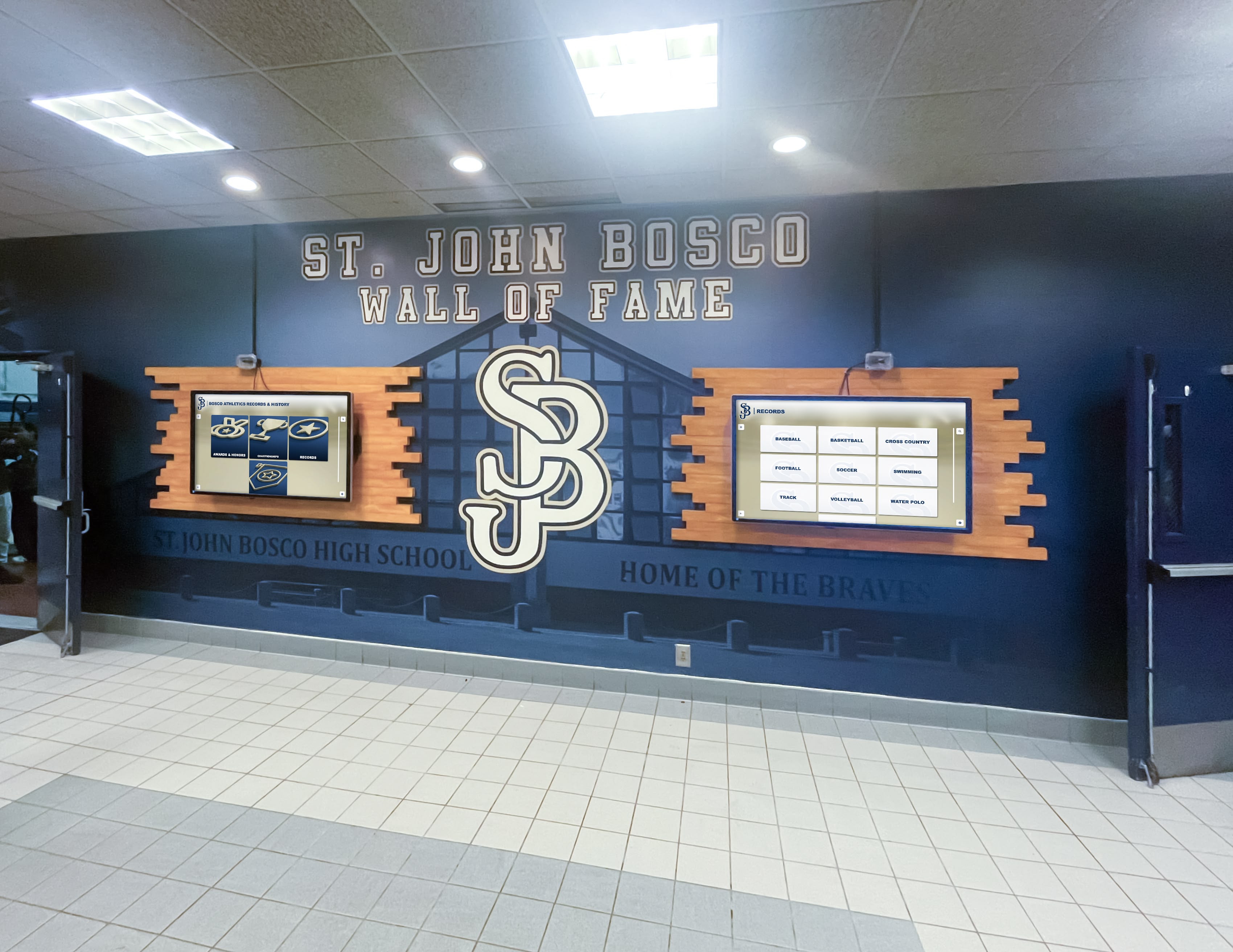
Multi-screen campus-wide recognition installations are cost-effective when licensing models cover all screens under a single flat-rate subscription rather than charging per device or per location
Connecting Alumni to Recognition Programs Over the Long Term
Digital hall of fame platforms serve not only current campus visitors but the broader alumni community whose achievements are represented within the system. The ability to connect meaningfully with alumni through recognition infrastructure depends on the platform being reliably accessible, continuously maintained, and operating under a vendor stable enough to support that relationship across decades.
A platform that was active during a 1995 alumna’s induction year but has since been abandoned, migrated away from, or left unmaintained creates gaps in institutional memory that are difficult or impossible to recover. Schools investing in recognition infrastructure with a multi-decade horizon should evaluate whether a vendor’s business model supports that timeframe — not just the initial deployment.
Platforms operating at scale with dedicated support teams, sustainable recurring revenue models, and established operating histories are structurally better positioned to maintain that relationship through leadership transitions, technology evolutions, and the challenges that any long-running software platform encounters.
Understanding where digital recognition programs are heading as technology continues to develop provides useful context for evaluating whether a vendor’s current platform architecture positions it well for the next decade or will require significant re-platforming.
Recognition Programs as Long-Term Institutional Infrastructure
The decision about which digital hall of fame platform to implement should not be optimized for the lowest number in column A of a comparison spreadsheet. Recognition platforms serve communities across decades. They hold the records of student-athletes who graduated before many current staff members started working at the institution. They document achievements that may have no physical archive remaining.
Treating that responsibility as a long-term infrastructure decision — with the same due diligence applied to building maintenance contracts, financial software, or student information systems — produces better vendor choices than treating it as a software purchase optimized for initial price alone.
Enterprise-scale platforms with dedicated teams, sustainable pricing models, unlimited screen deployment structures, and active compliance maintenance are designed to serve that responsibility. Boutique vendors with minimal staffing, pure one-time fee structures, and limited redundancy may function adequately in the short term, but carry structural risks that become apparent when institutions need them most.
Schools considering a digital recognition platform — whether evaluating Rocket Alumni Solutions or any other vendor — benefit from applying institutional risk analysis to vendor selection alongside feature comparisons. The platform that appears most cost-effective on a per-screen comparison may look different when continuity, compliance track record, and support infrastructure are factored into the evaluation.
All trademarks referenced in this post are the property of their respective owners. Rocket Alumni Solutions is not affiliated with or endorsed by Touchstone or any other competitor referenced in this analysis.
This content was produced by or on behalf of Rocket Alumni Solutions.
This comparison is based on publicly available information as of July 2026. All product names and trademarks belong to their respective owners. Comparative statements reflect Rocket Alumni Solutions’ interpretation of available data and may change over time.
Ready to evaluate the full platform? Book a demo with Rocket Alumni Solutions to see how the multi-screen licensing model, onboarding infrastructure, and long-term platform stability compare against boutique alternatives in a live walkthrough.