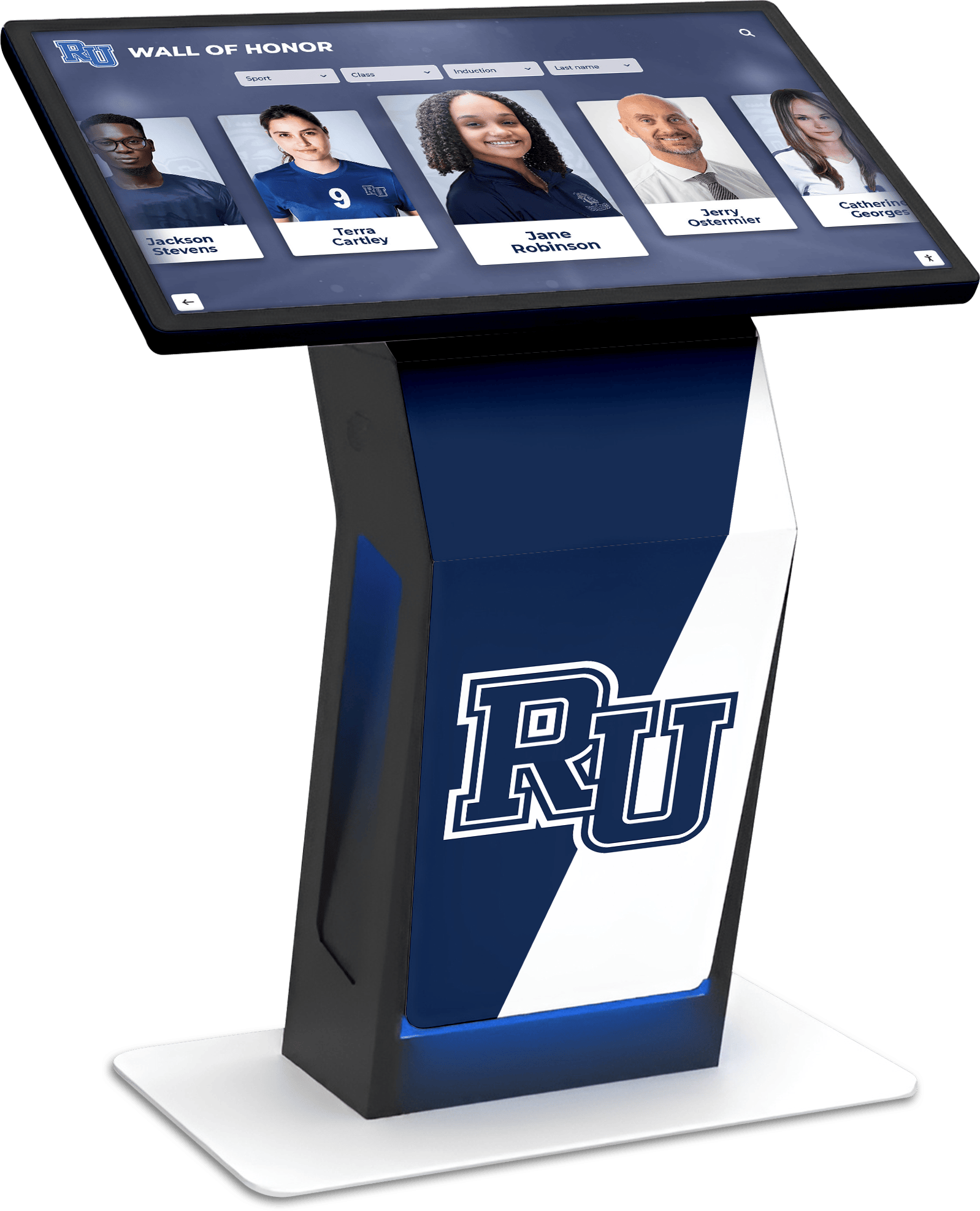
Physical trophy cases reach capacity. Plaques fill walls with no room for expansion. Engraving costs mount with each new honoree. Updates require weeks of coordination with vendors. Traditional recognition displays force impossible choices about which achievements deserve limited space—while honored individuals receive brief mentions on static walls that few people stop to explore.
Touchscreen hall of fame systems address these fundamental limitations through interactive digital displays that accommodate unlimited recognition, enable instant remote updates, and transform passive wall plaques into engaging experiences. Schools, universities, nonprofit organizations, and athletic programs increasingly adopt these platforms to preserve institutional history, celebrate diverse achievements, and create accessible recognition that extends beyond physical locations through mobile and web access.
This comprehensive guide examines touchscreen hall of fame solutions for 2026, with particular focus on leading platforms like Rocket Alumni Solutions that deliver ADA-compliant, cloud-managed recognition systems serving organizations from small schools to major universities.
Organizations implementing touchscreen recognition displays report eliminating the space constraints that previously limited honoree selection, reducing long-term recognition costs compared to traditional engraving approaches, and increasing community engagement through searchable, interactive content that families and alumni actually explore.
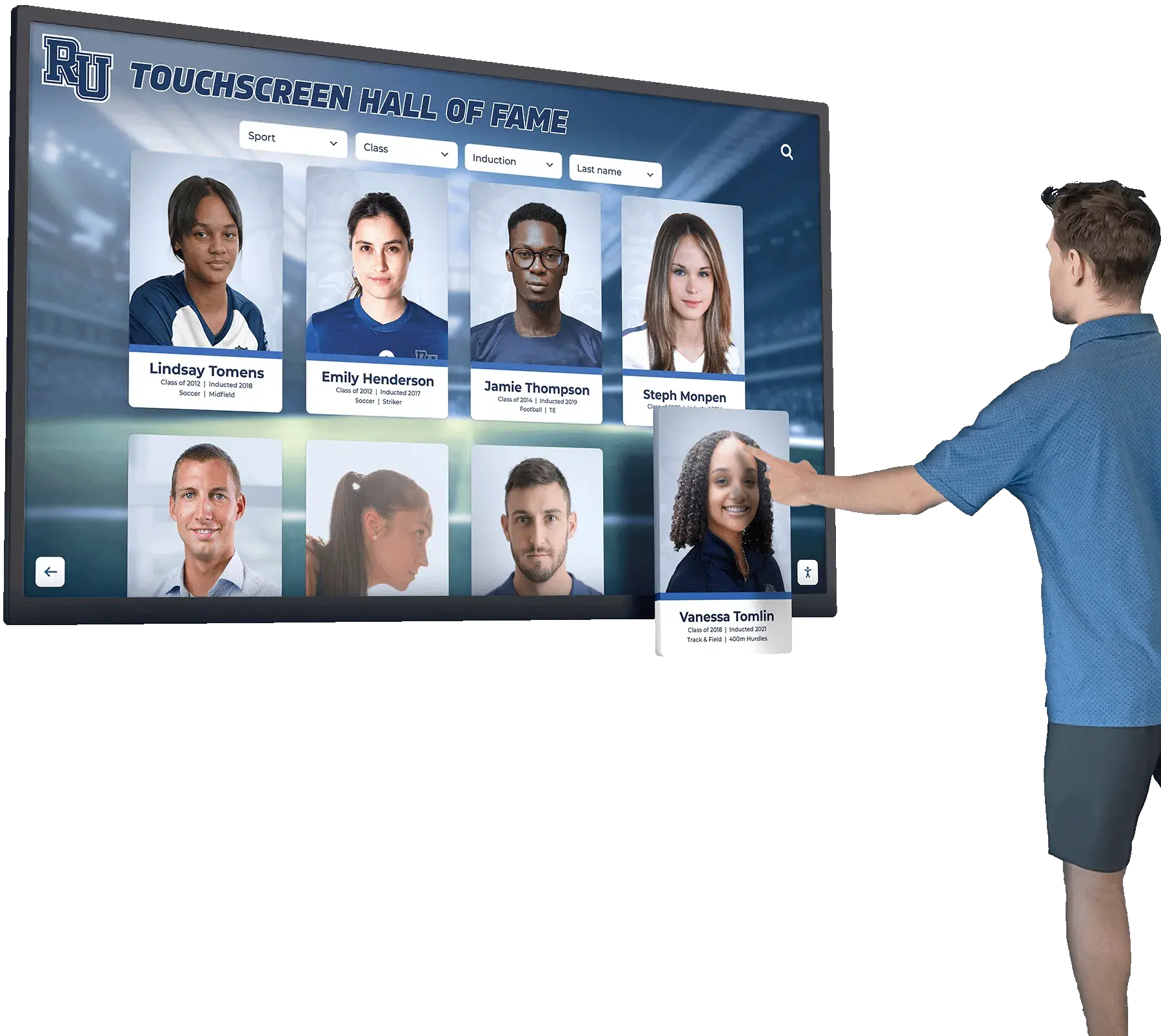
Interactive touchscreen systems enable visitors to search, browse, and explore recognition content at their own pace
Understanding Touchscreen Hall of Fame Systems
Traditional recognition approaches serve organizations adequately when honor rolls remain small, achievements fit within available wall space, and updates happen infrequently. These conditions rarely persist long-term.
Limitations of Physical Recognition Displays
Space Constraints Force Difficult Decisions
Physical trophy cases and plaque walls impose hard limits on recognition capacity. Athletic directors face impossible choices about which teams or individuals receive permanent display space. Development officers struggle when donor walls reach capacity but fundraising campaigns continue attracting contributors. Alumni coordinators maintain waiting lists of deserving honorees because installation space simply doesn’t exist.
These space limitations create organizational pressure to establish increasingly restrictive selection criteria, delay recognition for worthy individuals, or remove older honorees to accommodate new achievements—all problematic outcomes damaging institutional relationships and recognition program integrity.
Update Complexity and Cost
Traditional recognition displays require physical modification for every update:
- Engraved plaques typically cost $100-$300 per addition depending on size and complexity
- Installation often requires professional services adding labor costs
- Timeline from selection to display installation spans 4-8 weeks
- Corrections or changes after fabrication prove expensive or impossible
- Seasonal recognition (honor rolls, athletic awards) becomes cost-prohibitive with traditional approaches
Schools honoring student athlete recognition across multiple sports face particularly acute challenges as achievement volume overwhelms traditional display capacity.
Limited Engagement and Accessibility
Static displays offer minimal engagement:
- Names and dates provide limited context about achievements or individuals
- No search functionality forces visitors to scan entire displays seeking specific honorees
- Physical location requirements exclude remote access for distant family members
- ADA compliance challenges when plaques mount at inaccessible heights
- No capacity for rich media content including photos, videos, or detailed accomplishments
How Touchscreen Systems Address These Challenges
Unlimited Recognition Capacity
Digital platforms eliminate space constraints through virtual recognition:
- Single touchscreen display provides access to thousands of individual honoree profiles
- Multiple recognition categories (athletics, academics, donors, arts, service) coexist without competing for wall space
- Historical archives preserve institutional memory without requiring permanent physical display
- Seasonal recognition like honor rolls or quarterly awards receive appropriate visibility without permanent installation
- Future growth accommodated without facility modifications or display expansion
Instant Remote Updates
Cloud-based content management enables immediate recognition:
- Staff update content from any location using web-based administrative portals
- Changes appear across all connected displays within minutes of publication
- No engraving, fabrication, or installation delays
- Error corrections happen instantly without replacement costs
- Multiple administrators can manage content simultaneously across departments
Organizations implementing digital donor walls particularly value update capabilities when fundraising campaigns attract contributions requiring prompt recognition.
Rich, Interactive Experiences
Modern touchscreen systems deliver engaging content:
- High-resolution photos and videos bring honorees to life beyond text descriptions
- Searchable databases enable visitors to find specific individuals, teams, or categories instantly
- Detailed achievement descriptions provide context traditional plaques cannot accommodate
- Related content links connect honorees to teams, events, or historical context
- QR code access extends exploration to personal mobile devices for continued engagement
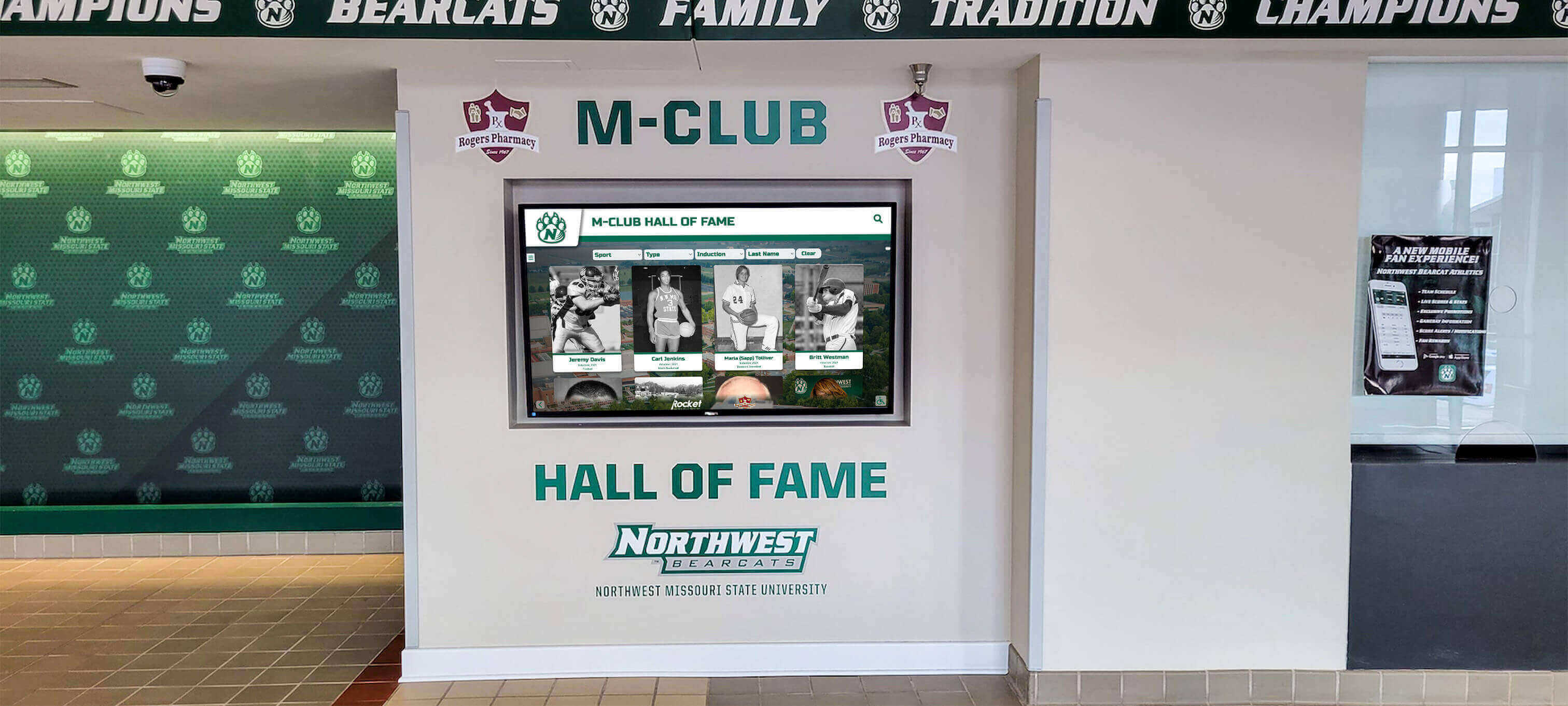
Professional installations integrate digital displays with traditional branding and school identity
Key Features to Evaluate in Touchscreen Hall of Fame Solutions
Organizations selecting touchscreen recognition platforms should evaluate capabilities across several critical dimensions.
ADA WCAG 2.2 AA Compliance and Accessibility
Federal regulations and institutional policies increasingly mandate digital accessibility. Touchscreen systems must serve users with diverse abilities:
Visual Accessibility Requirements
- Text contrast ratios meeting WCAG 2.2 AA standards for readability
- Font size controls enabling visitors to increase text legibility
- Screen reader compatibility for blind or low-vision users
- Keyboard navigation alternatives to touch-only interfaces
- Color contrast not serving as sole information conveyor
Physical Accessibility Considerations
- Display mounting at appropriate heights for wheelchair users
- Touch target sizes accommodating users with limited dexterity
- Response times allowing adequate interaction duration
- Multi-modal access through mobile devices for those unable to reach or use mounted displays
- Alternative text descriptions for all visual content
Platforms like Rocket Alumni Solutions provide WCAG 2.2 AA compliant touchscreen software meeting federal accessibility standards while ensuring all community members can explore recognition content.
Content Management System Capabilities
Administrative efficiency depends on robust content management:
Remote Administration
- Web-based access enabling content updates from any location
- Multi-user permissions allowing departmental staff to manage relevant sections
- Bulk upload capabilities for efficient data entry during initial setup or annual updates
- Content scheduling to automatically publish recognition at appropriate dates
- Approval workflows when multiple stakeholders review content before publication
Media Management
- Photo upload and storage with automatic optimization for display performance
- Video hosting and playback with appropriate format conversion
- Document attachment for certificates, newspaper clippings, or historical records
- Asset organization through tagging, categorization, and search functionality
- Version history enabling recovery if changes require reversal
Data Organization
- Flexible categorization supporting diverse recognition types (athletics, academics, donors, service, arts)
- Custom fields accommodating organization-specific data requirements
- Relationship mapping connecting individuals to teams, years, or achievements
- Record boards with automatic ranking based on achievement metrics
- Search and filter capabilities helping administrators locate specific content quickly
Schools implementing digital trophy displays need administrative interfaces supporting diverse recognition categories across athletic programs, academic achievements, and extracurricular excellence.
Hardware Compatibility and Display Options
Organizations face different physical space constraints and aesthetic requirements:
Display Size Options
- 55-inch displays suitable for individual viewing in alcoves or narrow hallways
- 65-inch screens providing optimal visibility in moderate-traffic areas
- 75-inch installations creating impressive focal points in larger lobbies
- 86-inch displays serving high-volume locations or auditorium entrances
- Video wall configurations using multiple screens for maximum impact
Mounting and Installation Flexibility
- Wall-mount configurations integrating with existing architecture
- Freestanding kiosks creating flexible placement options
- Built-in installations recessing into walls for streamlined appearance
- Mobile units enabling temporary deployment or relocation
- Custom enclosures matching school colors, mascots, or branding
Environmental Considerations
- Commercial-grade displays rated for continuous operation
- Thermal management for enclosed installations
- Vandal-resistant construction for unsupervised locations
- Weatherproofing for semi-outdoor or entrance installations
- Anti-glare treatments for locations with challenging lighting
QR Code and Mobile Access
Recognition extends beyond physical display locations through mobile technology:
QR Code Functionality
- Codes displayed alongside touchscreens enabling immediate mobile access
- Direct linking to specific honoree profiles or recognition categories
- Shareable URLs allowing honored individuals to distribute recognition to family and friends
- Analytics tracking mobile engagement and content popularity
- Print integration for programs, plaques, or marketing materials
Web-Based Access
- Responsive websites providing full recognition database access from any device
- Mobile-optimized interfaces ensuring usability on phones and tablets
- Social media sharing enabling honored individuals to celebrate achievements publicly
- Embedding capabilities for organization websites and intranets
- Search engine indexing extending recognition discovery beyond organization community
Organizations focused on highlighting famous alumni particularly value mobile access enabling distinguished graduates to share institutional recognition through professional networks and social media.
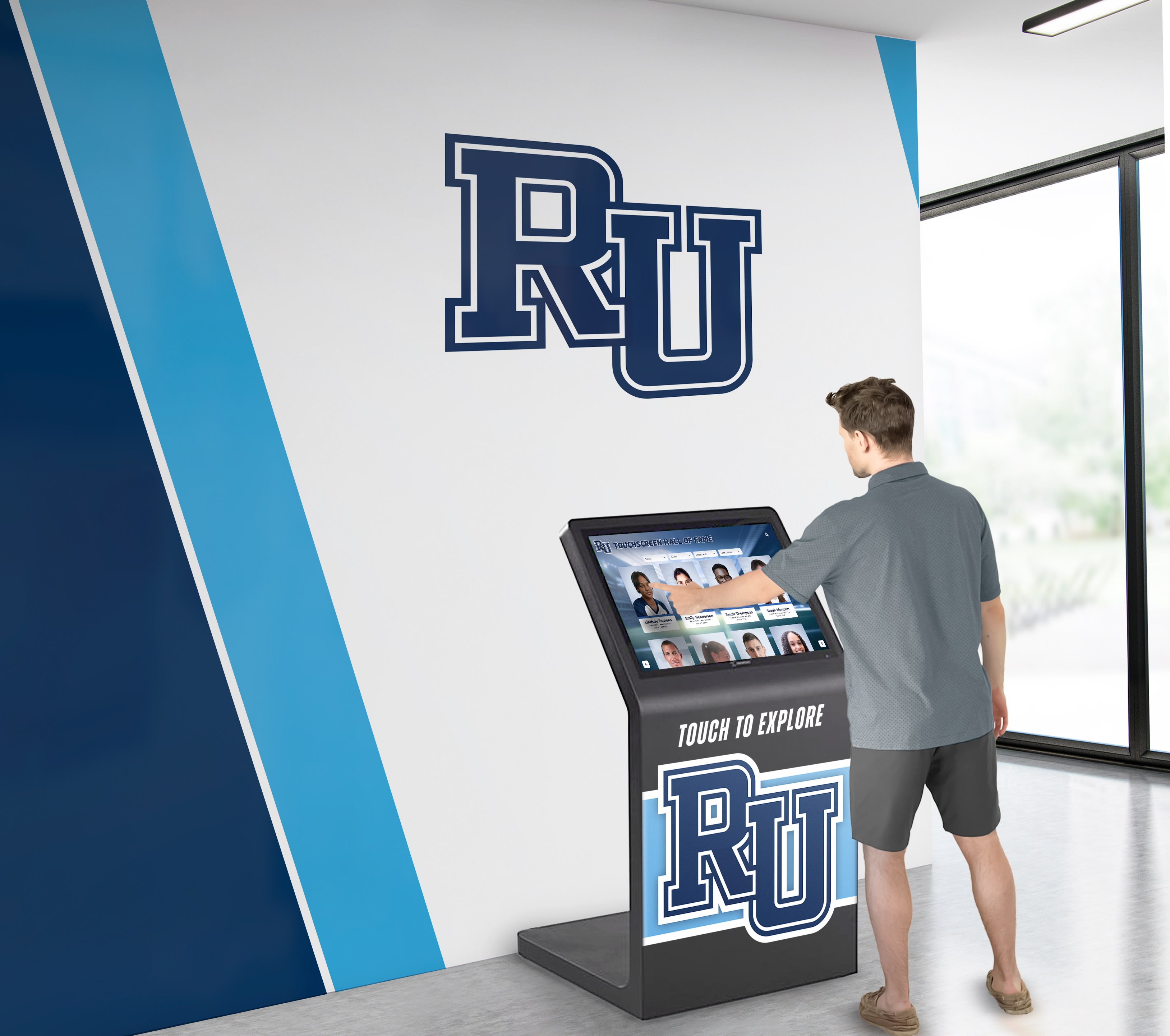
Intuitive interfaces encourage exploration and discovery of institutional history
Implementation Planning for Touchscreen Recognition Systems
Successful deployments require careful planning across technical, content, and stakeholder dimensions.
Determining Display Quantity and Placement
Traffic Pattern Analysis Organizations should map visitor flow through facilities:
- Main entrance lobbies receiving all visitors including families, prospective students, and community members
- Athletic facility entrances serving game attendees, recruits, and team families
- Administrative corridors hosting frequent stakeholder meetings
- Commons areas or cafeterias where students gather daily
- Alumni centers or development offices welcoming donors and graduates
Multiple display locations expand recognition visibility and accommodate category-specific installations—athletics in gymnasium lobbies, academics in main hallways, donors in development centers.
Category and Content Planning
Recognition Scope Definition Organizations must determine what achievements receive inclusion:
- Athletic recognition spanning varsity letter winners, all-conference selections, individual record holders, championship teams, and hall of fame inductees
- Academic honors including honor roll, National Honor Society, merit scholars, perfect attendance, and distinguished graduates
- Donor recognition across giving levels from annual contributors to major benefactors
- Arts and activities celebrating music awards, theatre excellence, debate achievements, and club leadership
- Service recognition acknowledging community volunteers, peer mentors, and student leaders
Comprehensive digital hall of fame displays enable organizations to honor diverse achievements without space constraints forcing exclusionary selection criteria.
Historical Content Migration
Existing recognition displays contain valuable institutional history:
- Photograph existing plaques and trophy inscriptions for digital preservation
- Transcribe honoree names, dates, and achievements into structured databases
- Scan supporting materials including newspaper clippings, certificates, and programs
- Interview long-time staff or community members capturing stories behind recognition
- Digitize physical trophies through photography creating virtual trophy case sections
Many schools discover trophies living in storage that deserve visibility but lack physical display space—digital systems restore these achievements to accessible recognition.
Technical Infrastructure Requirements
Power and Network Connectivity
- Dedicated electrical circuits preventing overload and ensuring reliable operation
- Wired network connections providing stable, high-bandwidth data access
- Wireless backup connectivity maintaining operation during network maintenance
- Uninterruptible power supplies protecting against brief outages
- Network security configurations allowing content updates while preventing unauthorized access
Installation Coordination
- Structural assessment ensuring walls support display weight and mounting hardware
- Low-voltage wiring for clean installations without exposed cables
- Display positioning at appropriate heights balancing visibility and accessibility
- Lighting evaluation addressing glare, reflection, or insufficient illumination
- Facility modification timelines coordinating with school calendars to minimize disruption
Content Development and Data Entry
Initial Content Population Organizations typically require significant effort establishing comprehensive recognition databases:
- Prioritize recent honorees with readily available information and photos
- Work backward through historical records as time and resources permit
- Engage students, volunteers, or community members assisting with data entry
- Establish quality standards for photos, descriptions, and achievement details
- Plan phased rollouts launching with core content then expanding coverage
Ongoing Content Processes
- Designate department liaisons responsible for submitting recognition updates
- Establish timelines ensuring achievements receive prompt visibility after earning
- Create standardized templates maintaining consistency across recognition categories
- Implement review workflows preventing errors before publication
- Schedule regular content audits identifying gaps or outdated information
Organizations implementing digital record boards particularly value automated ranking features that update record holder displays whenever new achievements surpass previous bests.
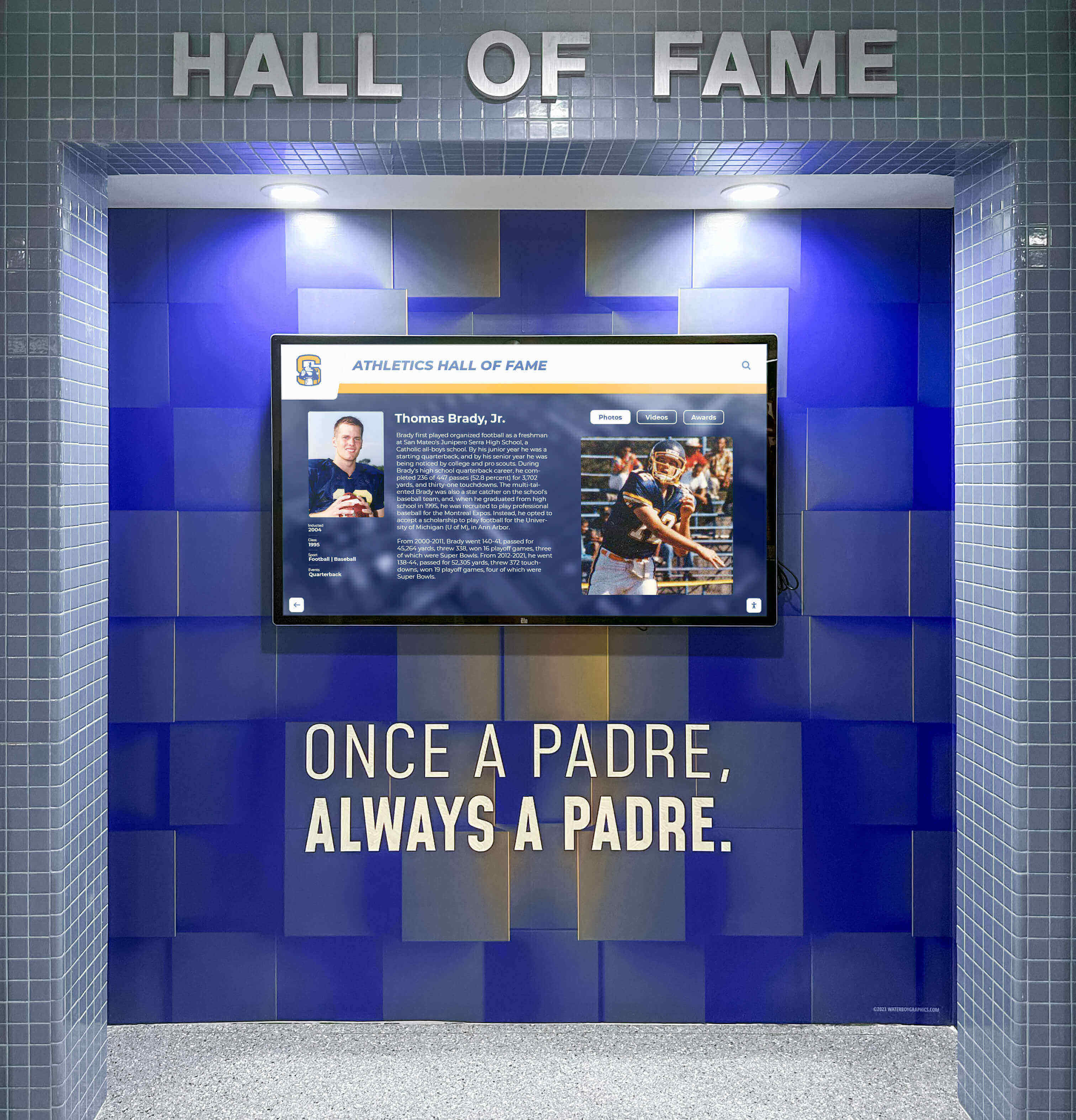
Displays integrate with existing architecture and institutional branding
Cost Considerations and Return on Investment
Understanding total cost of ownership helps organizations make informed investment decisions.
Initial Investment Components
Hardware Costs
- Commercial touchscreen displays ranging $2,000-$8,000 depending on size and specifications
- Mounting hardware, kiosks, or custom enclosures adding $500-$3,000 per installation
- Installation labor for electrical, network, and physical mounting typically $1,000-$2,500 per location
- Media player or computing devices (if not integrated) ranging $300-$800
- Accessories including cables, surge protection, and maintenance supplies approximately $200-$400
Software and Platform Costs Platform pricing varies significantly:
- Setup fees covering initial configuration, training, and content template development typically $1,000-$5,000
- Annual subscription costs ranging from $1,500 for basic single-display systems to $10,000+ for enterprise deployments with unlimited displays
- Content migration services if providers assist with historical data entry ranging $2,000-$15,000 based on volume
- Custom development for specialized features or integration requirements varying widely based on scope
Solutions like Rocket Alumni Solutions offering unlimited screens with flat subscription pricing eliminate per-display licensing creating significant savings for organizations planning multiple installation locations.
Long-Term Cost Comparison
Traditional Recognition Costs Over Time
Schools maintaining physical trophy cases and plaque walls face ongoing expenses:
- Engraved plaques averaging $150-$300 per honoree
- Annual athletic recognition for 200 students across all sports totaling $30,000-$60,000 over five years
- Honor roll plaques for 400 academic achievers per year totaling $60,000-$120,000 over five years
- Trophy case expansion or renovation costing $15,000-$50,000 when display space exhausts
- Storage costs for trophies and awards lacking display space
Digital Recognition Costs Over Time
- Annual subscription fees totaling $7,500-$50,000 over five years depending on platform and organization size
- Minimal incremental costs for unlimited additional honorees once system established
- Content management time investment but no fabrication or installation costs per honoree
- Display replacement only needed every 7-10 years matching commercial display lifespans
- Expansion through additional displays requiring only hardware investment with no software licensing increases (on unlimited screen platforms)
Organizations implementing touchscreen software for schools typically achieve cost parity with traditional approaches within 3-5 years while gaining dramatically expanded recognition capacity and accessibility.
Intangible Value Factors
Enhanced Community Engagement
- Increased visitor interaction with searchable, media-rich content versus static plaques
- Alumni reconnection through accessible institutional history during campus visits
- Prospective family impressions during tours observing modern recognition approaches
- Donor satisfaction seeing contributions honored prominently and permanently
- Social media amplification when honored individuals share recognition digitally
Institutional Benefits
- Recruitment advantages demonstrating commitment to honoring student achievement
- Development impact as prominent donor recognition encourages giving
- Capacity to honor unlimited achievements eliminating recognition rationing
- Accessible institutional archives preserving and presenting organizational history
- Technology leadership positioning through visible innovation implementation
Rocket Alumni Solutions Platform Overview
Rocket Alumni Solutions delivers comprehensive touchscreen recognition systems serving schools, universities, nonprofit organizations, and athletic programs across North America.
Core Platform Capabilities
Recognition Management Features
- Unlimited honoree capacity across all recognition categories
- Cloud-based content management accessible from any web browser
- ADA WCAG 2.2 AA compliant interfaces ensuring accessibility
- Automatic record board rankings based on achievement metrics
- QR code generation for mobile access to all recognition content
- Responsive web access providing full database availability across devices
Hardware and Installation Support
- Display size options from 55-inch to 86-inch screens
- Freestanding kiosk and wall-mount configurations
- Professional installation coordination managing power, network, and mounting
- Commercial-grade displays rated for continuous operation
- Custom enclosures available matching institutional branding
Administrative Tools
- Multi-user access with role-based permissions
- Bulk upload capabilities for efficient data entry
- Photo and video management with automatic optimization
- Content scheduling and approval workflows
- Usage analytics tracking visitor engagement patterns
Subscription Model and Pricing Approach
Rocket Alumni Solutions employs subscription pricing offering predictable costs:
- Annual subscriptions include software access, hosting, support, and unlimited content
- No per-display licensing enabling cost-effective multi-location deployments
- Hardware purchased separately or through provider coordination
- Setup services available for content migration and initial configuration
- Training and ongoing support included in subscription costs
This unlimited screen approach particularly benefits organizations planning phased deployments—adding display locations requires only hardware investment without additional software licensing.
Implementation Process
Discovery and Planning Phase
- Consultation identifying recognition goals, content scope, and display locations
- Site assessment evaluating physical installation requirements
- Content audit documenting existing recognition requiring migration
- Timeline development coordinating implementation with organizational calendars
- Stakeholder engagement ensuring administrative staff understand platform capabilities
Configuration and Setup
- Platform customization matching institutional branding and color schemes
- Content template development establishing data structures for recognition categories
- Administrative user creation with appropriate permissions
- Integration configuration if connecting to existing databases or systems
- Training delivery ensuring staff can manage content independently
Launch and Ongoing Support
- Display installation and technical configuration
- Initial content population establishing foundation for expansion
- Launch promotion communicating new recognition resources to community
- Ongoing technical support addressing questions or issues
- Regular feature updates expanding platform capabilities over time
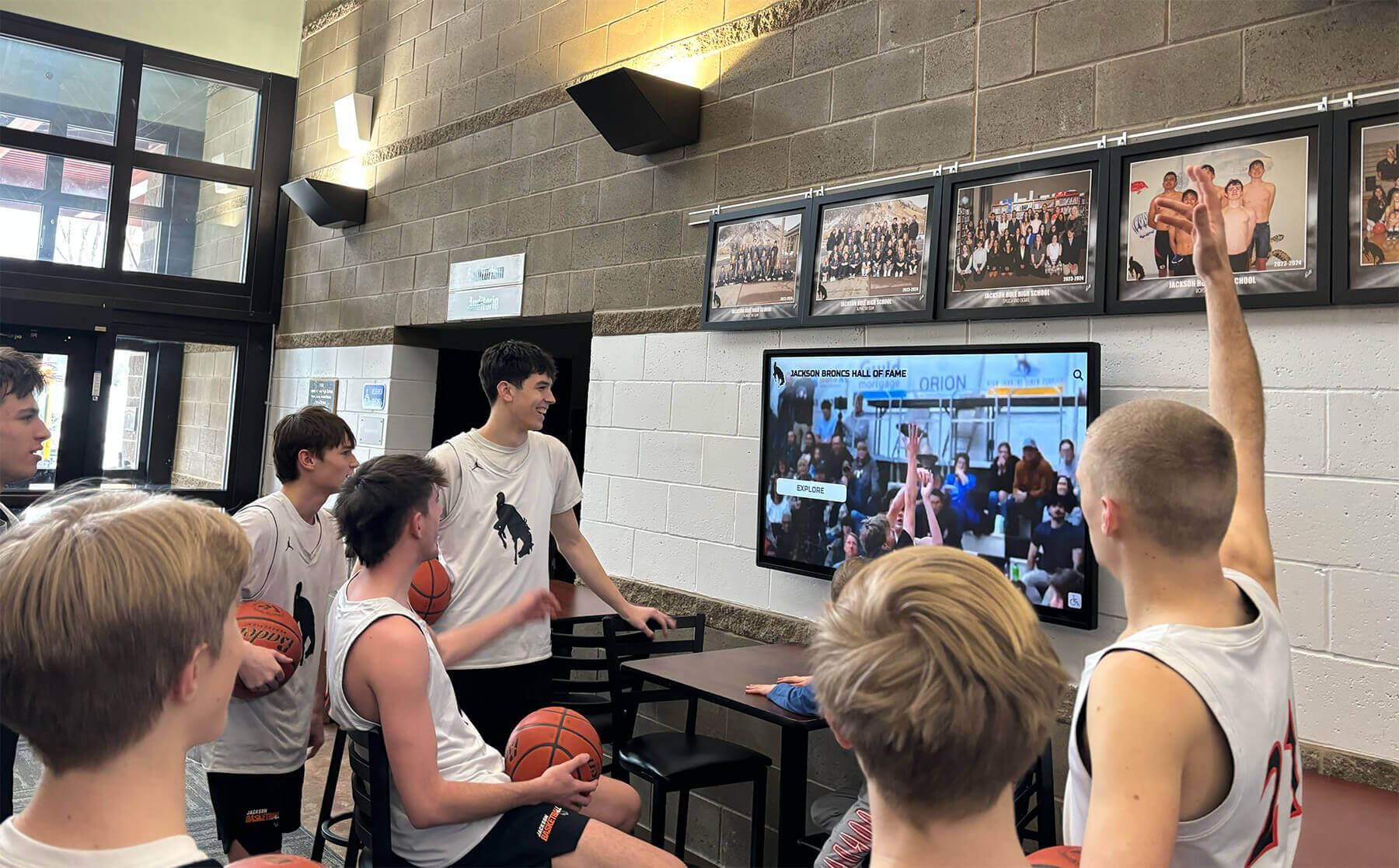
Modern displays engage current students while preserving institutional history
Selecting the Right Touchscreen Hall of Fame Solution
Organizations comparing platforms should evaluate vendors across several dimensions.
Essential Selection Criteria
Accessibility Compliance Verify platforms meet current ADA WCAG 2.2 AA standards—federal regulations and institutional policies increasingly mandate digital accessibility. Non-compliant systems expose organizations to legal risk while excluding community members with disabilities from recognition access.
Content Capacity and Scalability Confirm platforms accommodate unlimited recognition growth without per-honoree fees or content volume limits. Organizations consistently underestimate long-term recognition volume—today’s 200-person database becomes 2,000 profiles within a decade. Platforms imposing content restrictions force future migrations or prevent comprehensive recognition.
Administrative Efficiency Evaluate content management interfaces for usability and efficiency. Staff managing recognition content typically lack technical expertise—intuitive administrative tools determine whether systems receive consistent updates or languish with outdated information. Request demonstration accounts testing actual workflows before commitments.
Mobile and Remote Access Verify QR code functionality and web-based access enabling recognition exploration beyond physical display locations. Mobile access significantly expands recognition impact—honored individuals share achievements with distant family members, college recruiters access student profiles, and alumni explore institutional history from anywhere.
Hardware Flexibility Assess display size options and mounting configurations ensuring solutions accommodate specific facility constraints and aesthetic requirements. Organizations with diverse locations benefit from platforms supporting varied hardware rather than single-display-type restrictions.
Total Cost of Ownership Calculate five-year costs including initial setup, annual subscriptions, hardware replacement reserves, and estimated content management time. Platforms with lower initial costs sometimes impose higher long-term expenses through per-display licensing, content volume fees, or expensive update services.
Questions for Provider Evaluation
Technical Capabilities
- What display sizes and configurations does your platform support?
- How do you ensure ADA WCAG 2.2 AA compliance?
- What happens to content if we change providers in future?
- How do you handle platform updates and feature additions?
- What analytics help us understand visitor engagement?
Content Management
- How many administrators can access the content management system?
- What bulk upload capabilities exist for efficient data entry?
- Can we schedule content publication for future dates?
- How do you handle photo and video storage?
- What approval workflows exist for content review?
Support and Training
- What training resources help staff learn the platform?
- How do we access technical support when issues arise?
- Do you provide content migration assistance?
- What documentation helps administrators perform common tasks?
- How do you communicate platform updates or changes?
Business Model
- What exactly is included in annual subscription costs?
- Are there per-display licensing fees or content volume limits?
- What happens to our content and hardware if we discontinue subscription?
- What contract terms and cancellation policies apply?
- How frequently do subscription costs increase?
Implementation Best Practices
Organizations implementing touchscreen recognition systems should follow proven approaches maximizing success probability.
Stakeholder Engagement Strategy
Administrative Buy-In
- Present business case demonstrating cost savings, enhanced recognition capacity, and community benefits
- Address concerns about technology complexity, maintenance requirements, and staff workload
- Secure budget approval early in planning covering both initial investment and ongoing subscriptions
- Clarify departmental responsibilities for content management and system administration
- Establish metrics measuring success to demonstrate return on investment
Staff Preparation
- Identify content liaisons within departments responsible for submitting recognition updates
- Provide comprehensive training ensuring confident platform use
- Create documentation covering common tasks for reference when questions arise
- Establish communication channels connecting administrators to technical support
- Schedule regular check-ins during initial months addressing questions as they emerge
Community Communication
- Announce implementation explaining benefits for students, families, and alumni
- Demonstrate platform capabilities generating excitement about enhanced recognition
- Encourage community members to explore content and provide feedback
- Celebrate launch milestones recognizing staff who contributed to success
- Maintain ongoing promotion ensuring continued awareness and utilization
Content Development Priorities
Phase One: Core Contemporary Content Launch with recent recognition requiring minimal research:
- Current year academic honors and athletic achievements
- Recent donor contributions and ongoing campaigns
- Active staff members and current organizational leadership
- Recent milestone events or championship celebrations
- Distinguished recent graduates or notable accomplishments
Phase Two: Historical Archive Expansion Systematically work backward through institutional history:
- Decade-by-decade coverage filling gaps in recognition timeline
- Significant institutional milestones or transformational achievements
- Notable alumni or community members deserving historical recognition
- Championship teams or record-setting individual performances
- Photographic archives from yearbooks, newspapers, or organizational records
Phase Three: Enhanced Media and Context Enrich existing content with additional context and media:
- Video interviews with notable honorees sharing stories
- Historical newspaper clippings documenting achievements
- Team photos and action shots bringing recognition to life
- Detailed achievement descriptions providing context
- Related content links connecting honorees to institutional history
Maintenance and Continuous Improvement
Technical Maintenance
- Regular display cleaning maintaining optimal presentation
- Periodic system updates ensuring security and feature currency
- Hardware monitoring identifying potential failures before they occur
- Network connectivity verification preventing access interruptions
- Usage analytics review understanding engagement patterns
Content Quality Assurance
- Scheduled content audits identifying gaps or outdated information
- Correction processes addressing errors community members report
- Photo quality standards maintaining professional presentation
- Description consistency ensuring uniform recognition across categories
- Expansion planning identifying underrepresented recognition areas
Community Feedback Integration
- Suggestion mechanisms enabling community members to recommend honorees or content improvements
- Regular stakeholder surveys assessing satisfaction and identifying enhancement opportunities
- Recognition ceremony coordination updating displays with new honorees immediately following selection
- Social media monitoring identifying sharing patterns and popular content
- Continuous improvement culture embracing feedback and implementing beneficial changes

Searchable interfaces enable quick discovery of specific individuals or achievements
Future Directions in Digital Recognition Technology
Touchscreen recognition platforms continue evolving with emerging technology trends.
Artificial Intelligence and Automation
Content Enhancement
- Automated photo processing improving image quality and standardizing presentation
- Speech-to-text capabilities generating descriptions from recorded interviews
- Natural language search enabling conversational queries
- Related content suggestions connecting honorees to relevant institutional history
- Automatic achievement categorization reducing administrative classification burden
Record Board Automation
- Real-time leaderboard updates connecting to competition results or performance databases
- Automatic notification to administrators when new records occur
- Historical performance analysis identifying trends and milestone achievements
- Comparative visualization helping visitors understand achievement significance
- Predictive analytics forecasting which records face potential challenges
Enhanced Visitor Experiences
Personalization
- Facial recognition enabling customized content for identified visitors
- Preference learning adapting interfaces based on interaction patterns
- Saved searches and favorites for returning visitors
- Personalized sharing enabling visitors to create custom collections
- Multi-language interfaces serving diverse community populations
Augmented Reality Integration
- Mobile AR experiences overlaying historical photos on current facilities
- Virtual trophy cases displaying physical awards in digital space
- Interactive timelines visualizing institutional history geographically
- 3D honoree profiles creating immersive recognition experiences
- Location-based content triggering contextual recognition in specific facility areas
Expanded Integration Ecosystems
Data Connectivity
- Student information system integration automatically updating recognition as students earn achievements
- Fundraising platform connections ensuring donor recognition currency
- Athletic management system links automatically incorporating records and achievements
- Alumni database synchronization maintaining accurate contact and career information
- Social media integration amplifying recognition reach and engagement
Physical-Digital Convergence
- NFC-enabled printed certificates linking to digital recognition profiles
- QR codes on physical trophies connecting to full achievement context
- Digital displays coordinated with physical exhibits in hybrid recognition environments
- Printed programs at events featuring dynamic QR codes to current recognition content
- Broadcast integration displaying recognition content during live events
Conclusion: Transforming Recognition Through Technology
Touchscreen hall of fame systems represent fundamental advancement over traditional physical recognition displays—eliminating space constraints that force exclusionary selection, reducing long-term costs while expanding recognition capacity, and creating engaging, accessible experiences that extend institutional memory beyond physical locations.
Organizations implementing these platforms report enhanced community engagement as searchable, media-rich content encourages exploration traditional plaques never achieved. Students feel honored when achievements receive prominent, detailed recognition rather than crowded name listings. Alumni reconnect with institutional history through accessible digital archives preserving decades of accomplishments. Donors appreciate permanent, dignified recognition for contributions. Prospective families observe institutional commitment to celebrating achievement through modern, inclusive approaches.
Successful implementation requires careful planning—determining appropriate display locations based on traffic patterns and recognition categories, establishing efficient content management processes ensuring consistent updates, developing comprehensive databases incorporating historical achievements alongside contemporary honors, and selecting platforms offering accessibility compliance, unlimited scalability, and administrative efficiency.
Solutions like Rocket Alumni Solutions deliver these critical capabilities through ADA-compliant touchscreen software, unlimited content capacity, cloud-based administration, QR code mobile access, and flexible hardware options serving diverse facility requirements. Organizations benefit from predictable subscription costs, unlimited screen deployments without per-display licensing, and comprehensive support ensuring successful implementation and ongoing operation.
The transformation from static plaques to interactive digital recognition enables organizations to honor unlimited achievements, create lasting connections between current community members and institutional history, and demonstrate genuine commitment to celebrating excellence across all dimensions of organizational life.
Ready to explore comprehensive touchscreen recognition solutions for your organization? Schedule a consultation with Rocket Alumni Solutions to discuss your recognition goals and implementation options.