Every spring, graduating classes across the country walk across stages wearing gold cords, white stoles, and embroidered sashes that most families recognize as marks of distinction without always understanding exactly what separates them. The highest graduation honors—summa cum laude chief among them—represent the pinnacle of academic achievement within a graduating class, earned through years of sustained performance rather than any single impressive moment.
For schools and universities, these distinctions carry both academic significance and ceremonial weight. Understanding what the highest graduation honors actually mean, how GPA thresholds are determined, and how institutions recognize their top achievers is increasingly relevant as schools invest in recognition programs that serve both graduates earning these honors and the communities celebrating them.
This guide covers the full spectrum of highest graduation honors—from Latin distinctions to high school equivalents—how criteria vary across institutions, and how schools are building lasting recognition systems that honor academic excellence well beyond the ceremony itself.
When a graduate walks across the commencement stage wearing summa cum laude regalia, they carry the visual shorthand for their institution’s highest academic distinction. But the traditions behind these honors run deeper than the cords and stoles that mark them—and the way schools celebrate their top achievers reveals a great deal about what those schools value most.

Portrait-based academic recognition displays create a lasting visual record of student accomplishment that connects names and faces to the institution's highest honors
Understanding Latin Honors: The Foundation of Highest Graduation Honors
The Latin honors system used in American higher education traces its origins to Harvard University, which began awarding formal academic distinctions in the 19th century. The tradition adapted from practices at European universities and has since become a standard recognition framework across American colleges and universities—though with considerable variation in the specific criteria each institution applies.
Summa Cum Laude: The Highest Graduation Honor
Summa cum laude, which translates from Latin as “with highest praise,” represents the top tier of the Latin honors system. At most four-year institutions, summa cum laude is awarded to graduates whose cumulative grade point average falls at the highest range of the class—typically, though not universally, 3.9 or above on a 4.0 scale.
The exact threshold varies significantly by institution. Some universities reserve summa cum laude for the top 1–5% of the graduating class regardless of specific GPA, using a class-rank approach rather than a fixed cutpoint. Others apply a strict GPA minimum that may reach 3.95 at highly competitive institutions. Still others calculate honors designations based on a combination of GPA and completed credit hours—particularly for degree programs of varying academic demands.
What remains consistent across institutions is the meaning: summa cum laude graduates have demonstrated the most sustained academic excellence in their class. The distinction appears on the diploma, in the commencement program, and on the graduate’s official academic transcript.
Magna Cum Laude: With Great Praise
Magna cum laude—“with great praise”—represents the middle tier of the Latin honors system, awarded to graduates whose cumulative GPA places them in the high-performance range below summa. Typical thresholds at four-year institutions range from 3.7 to 3.89, though the specific cutpoint varies by institution and sometimes by academic department.
Many competitive universities use a percentile approach for magna cum laude as well, reserving the designation for the top 10–15% of the graduating class. This class-rank methodology ensures that the proportion of honorees remains consistent across graduating classes of different sizes and compositions.
Cum Laude: With Praise
Cum laude—“with praise”—is the entry-level Latin honor and recognizes graduates who have maintained strong academic performance throughout their studies. GPA thresholds typically fall between 3.5 and 3.69 at most institutions, though some schools set the bar as low as 3.2 depending on program difficulty and historical class performance data.
The three-tier structure—cum laude, magna cum laude, summa cum laude—provides a graduated recognition framework that allows institutions to honor a meaningful portion of their graduating class (typically 20–35% at most colleges and universities) while maintaining meaningful distinctions between performance levels.
How GPA Thresholds Vary Across Institutions
One of the most commonly misunderstood aspects of the highest graduation honors system is that there is no universal standard. Individual institutions set their own criteria based on historical data, institutional mission, and program-level academic standards.
Fixed GPA Thresholds The most transparent approach uses published GPA minimums that apply to all graduates. A typical fixed-threshold structure might award cum laude for 3.5–3.69, magna cum laude for 3.7–3.89, and summa cum laude for 3.9 and above. Fixed thresholds allow students to track their progress toward a specific honor throughout their academic career.
Class Rank Percentiles Rather than fixed GPAs, some institutions award honors to a fixed percentage of each graduating class—the top 5% earn summa, the top 15% earn magna, and the top 30% earn cum laude. This approach adjusts for variation in class difficulty and composition across cohorts.
Hybrid Approaches Some institutions combine a minimum GPA floor with a class-rank ceiling, awarding a given honor only to students who meet both the GPA minimum and fall within the top percentile band. This prevents grade inflation from artificially expanding the honors pool.
Department-Specific Criteria A smaller number of institutions allow individual academic departments or colleges within a university to set their own Latin honors thresholds, reflecting the different grading cultures and demands of fields like engineering, nursing, music, or liberal arts.

Interactive honor wall displays allow schools to recognize their highest academic achievers prominently in high-traffic areas, making achievement visible to current students, families, and visitors
Students seeking to earn the highest graduation honors at their specific institution should consult the registrar’s office or academic catalog for published criteria, as institutional variation is the norm rather than the exception.
High School Equivalent Honors: Valedictorian, Salutatorian, and Beyond
Latin honors are primarily associated with college and university graduation, but high schools have developed parallel recognition traditions that serve equivalent functions at the secondary level.
Valedictorian and Salutatorian
The high school valedictorian—the graduate with the highest academic standing in the class—is arguably the most visible form of highest graduation honors at the secondary level. Derived from the Latin “vale dicere” (to say farewell), the valedictorian traditionally delivers the commencement address on behalf of the graduating class. The salutatorian, typically the second-highest-ranked graduate, delivers the welcoming speech at the ceremony’s opening.
Many high schools award valedictorian status to a single student, but a growing number have moved toward co-valedictorian recognition that honors all students who achieve the highest GPA threshold—sometimes resulting in graduating classes with ten, twenty, or more valedictorians. This shift reflects both a desire to recognize genuine academic excellence more inclusively and concerns about competitive culture when class rank determines a single winner.
Honor Cords and Stoles
High school graduation regalia frequently communicates academic honors through visible accessories worn over the graduation gown:
Honor Cords: Gold or yellow cords worn around the neck at graduation typically indicate honor roll standing or grade point average achievement. The specific color coding varies by district, but gold almost universally signals the highest honor tier at a given school.
Graduation Stoles: Embroidered stoles draped over graduation gowns are used by many high schools to indicate honor society membership, subject-specific achievements, or academic program completion. A gold stole frequently signals the highest academic achievement level within the graduating class. Just as letterman jacket traditions carry meaning about athletic achievement and school identity, graduation stoles and honor cords carry meaning about academic distinction that the entire community can read at a glance. Graduation speech and commencement traditions are closely tied to how schools honor their highest graduates—and creating memorable recognition moments at commencement starts with understanding what those visible honors communicate.
Honor Society Membership: National Honor Society (NHS), National Beta Club, and similar organizations provide additional recognition frameworks at the high school level that complement the academic ranking-based honors system.
GPA-Based Honor Roll
Many high schools use a tiered honor roll system throughout the academic year that parallels the Latin honors structure at the collegiate level. A typical structure might designate students maintaining a 3.0–3.49 on the regular honor roll, a 3.5–3.89 on the high honor roll, and a 3.9 or above on the principal’s list or highest honors designation. These designations are announced by marking period and at graduation, creating ongoing recognition opportunities rather than concentrating all academic recognition at the end of the year.
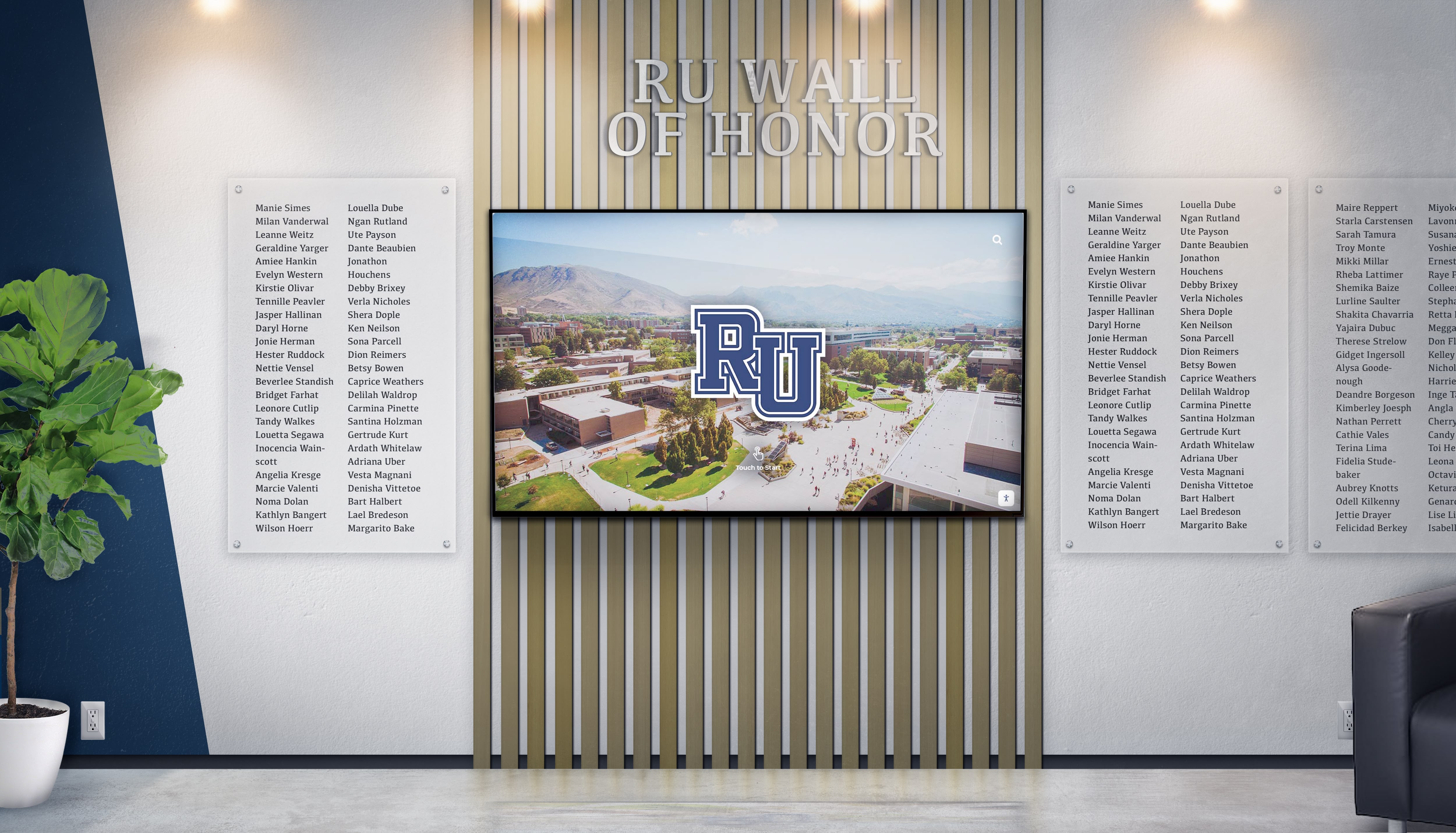
Name plaque recognition walls create permanent, visible records of achievement that graduates and families can revisit long after commencement day
How Schools Celebrate Their Highest Academic Achievers
Recognizing summa cum laude and equivalent honors at the graduation ceremony is only the beginning of how schools acknowledge their top graduates. The most effective recognition programs build on the ceremony with ongoing, lasting displays that honor the depth of student achievement.
Ceremony and Regalia Recognition
The graduation ceremony itself provides the most visible platform for recognizing highest graduation honors. Common ceremonial recognition practices include:
Distinct Regalia: Honor graduates wear differentiated cords, stoles, medallions, or pins that are visible to the entire assembled community. Many institutions use color-coded regalia to allow immediate identification of honor tier—gold for summa, silver for magna, blue or white for cum laude.
Name Announcements: Many commencement programs announce each graduate’s honor designation as they cross the stage, giving families and guests a moment to recognize the achievement. Some institutions have graduates from each honor tier cross as a cohort before the full procession, creating a concentrated moment of recognition.
Separate Academic Honors Ceremony: Some high schools and universities host a distinct event specifically celebrating academic achievers, separate from commencement. These smaller, more intimate events allow for individual recognition that can get lost in a large commencement ceremony. Planning memorable graduation celebration events requires thinking beyond commencement day to build recognition experiences that graduates and families remember for years.
Academic Recognition Displays
Permanent recognition displays that honor highest academic achievers create visibility that extends long beyond graduation day:
Dean’s List and Honor Roll Displays: Many universities maintain physical or digital displays of students who achieved academic honors each semester—making ongoing academic achievement visible throughout the year rather than only at graduation.
Summa Cum Laude Honor Walls: Some institutions create dedicated display areas honoring graduates who achieved the highest graduation honors, organized by graduating year. These displays in library lobbies, administration buildings, or alumni centers allow the institution to demonstrate the sustained value it places on academic excellence.
Portrait-Based Recognition: Digital portrait boards featuring photos, names, graduation years, and honor designations allow schools to create visually engaging recognition that humanizes academic achievement. Rather than a list of names buried in a program, portrait displays connect the honor to a face—making recognition more meaningful to the broader community.
Digital signage and kiosk systems designed for schools and organizations offer administrators flexible platforms for creating, updating, and managing academic recognition content without the ongoing cost and space constraints of physical displays.
The Role of Digital Recognition in Academic Honor Programs
Physical plaques and honor boards have served academic recognition programs for generations, but they carry significant limitations: they can’t be easily updated, they fill finite wall space, and they often sit in administrative areas where few students or visitors encounter them regularly.
Digital recognition platforms address these constraints by giving schools cloud-managed, touchscreen-accessible systems that:
- Display unlimited honorees across any number of graduating classes
- Allow remote content updates without physical hardware changes
- Present academic achievement content in high-traffic areas like lobbies and hallways
- Support web-accessible versions viewable on phones, tablets, and computers
- Integrate ADA/WCAG 2.1 AA compliance for accessible public displays
- Combine academic and athletic honor recognition in a unified platform
Schools that have moved academic recognition to interactive digital displays report that students and families engage with the content more actively than with static plaques—partly because the visual design is more compelling, and partly because searchable, browsable content lets visitors find specific names and explore the full depth of the recognition program.

University-level recognition displays create lasting connections between graduates and their institution, honoring academic distinction as part of enduring institutional identity
Campus directory and recognition systems increasingly incorporate academic achievement sections alongside traditional directory functions, allowing a single display system to serve multiple institutional communication and recognition needs simultaneously.
Why Recognizing the Highest Graduation Honors Matters to Schools
The decision to invest in robust recognition for summa cum laude and equivalent honors is more than ceremonial. Visible, public academic recognition influences culture, motivation, and community identity in meaningful ways.
Motivating Current Students
When students see classmates’ academic achievements publicly honored—in hallways, on digital displays, in graduation programs—it normalizes academic excellence as a visible, celebrated part of school identity. The same peer-influence dynamics that drive athletic recognition apply to academic honors: students who see achievement recognized publicly are more likely to pursue it themselves.
What motivates community members to pursue and sustain excellence is often the visibility of those who achieved it before them—a dynamic that applies directly to academic honor programs when schools make prior achievement accessible and prominent.
Signaling Institutional Values
An institution that invests in the infrastructure to honor academic achievement—whether through honors cords, dedicated ceremonies, or permanent recognition displays—signals clearly what it values. Schools known for strong academic recognition programs attract students and families who share those values, which can compound into meaningful long-term culture shifts.
Serving Alumni and Community Connection
Graduates who earned the highest graduation honors carry that distinction into their professional and civic lives. When a school maintains accessible, web-viewable records of its academic honorees across graduating classes, it creates a point of connection between the institution and its alumni—one that can be particularly meaningful for graduates whose academic achievement was a defining part of their school experience.
Alumni associations often center their work on maintaining these recognition connections—helping graduates feel their achievements remain honored and visible long after graduation day, and ensuring that the institution’s record of academic excellence is preserved for incoming students who aspire to earn similar distinctions.
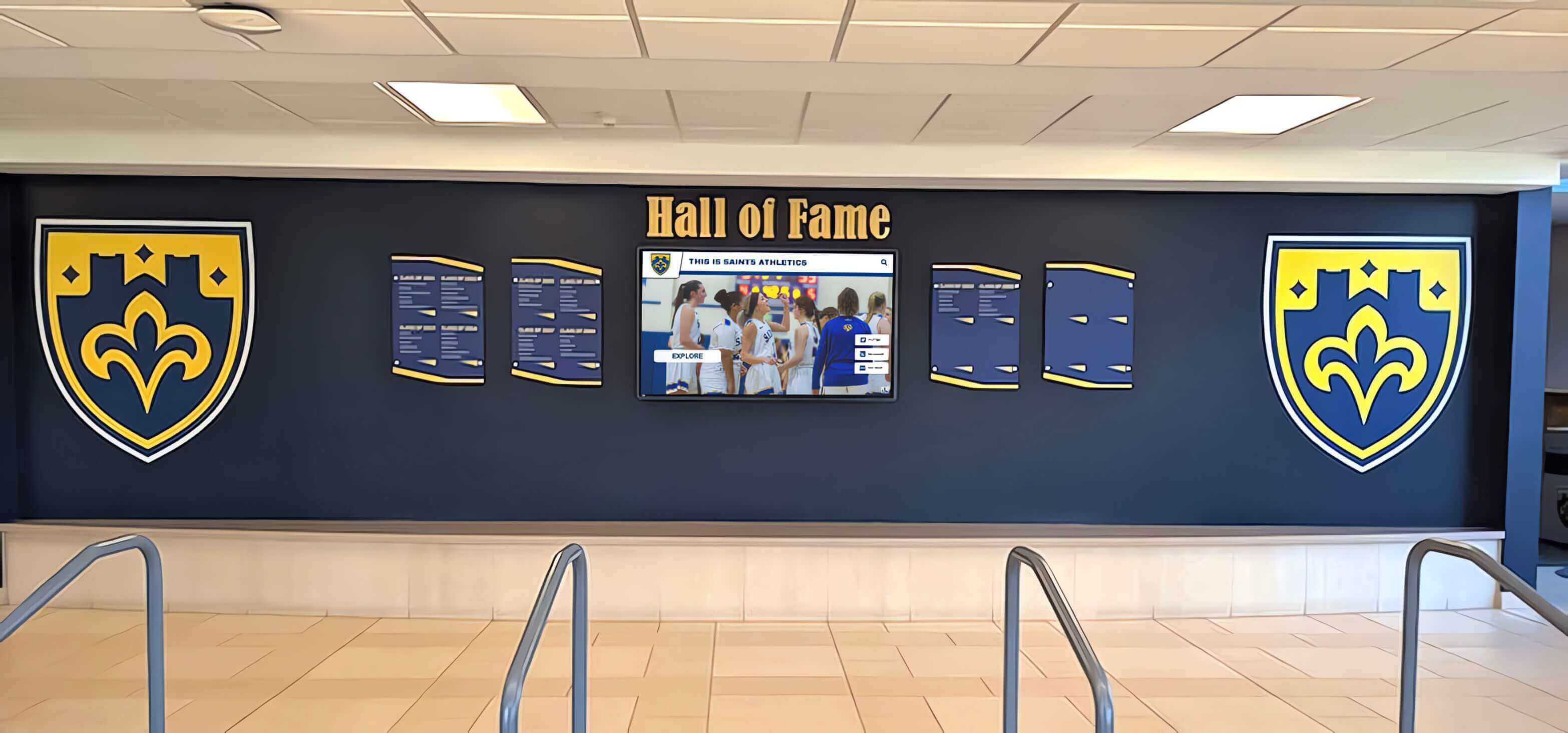
Lobby recognition displays that combine physical design elements with digital screens create welcoming, high-impact environments where academic achievers and their families see distinction honored permanently
Building a Comprehensive Academic Honors Recognition Program
Schools looking to strengthen how they recognize their highest graduation honors can build programs that serve graduates at multiple stages—during their academic career, at graduation, and in the years that follow.
During the Academic Year
Recognition for academic achievement doesn’t need to wait for graduation. Semester-by-semester honor roll announcements, dean’s list certificates, and mid-year academic recognition events build toward the highest graduation honors by making academic achievement visible as a continuous, celebrated journey rather than a single endpoint.
National College Signing Day celebrations that showcase student achievement can serve as models for how schools create community-wide recognition moments that honor accomplishment in engaging, memorable formats throughout the school year.
At Graduation
Commencement recognition should be both specific and visible. Beyond regalia, effective graduation-day recognition includes:
- Printing each graduate’s honor designation clearly in the commencement program with a brief explanation of what each tier represents
- Providing family packets that explain what each honor designation means and the criteria required to earn it
- Featuring honor graduates in pre-ceremony receptions or photo opportunities
- Publishing the complete list of honor graduates with their specific designations on the school’s website
After Graduation
Permanent recognition is where schools most often fall short. A graduate who earned summa cum laude should be able to return to their institution five, ten, or twenty years later and see their achievement still honored. This requires:
- Maintaining historical records of honor graduates in accessible digital formats
- Including graduate photos alongside names and honor designations when possible
- Creating web-accessible versions of recognition content that alumni can share and revisit
- Updating recognition displays annually as new classes graduate rather than allowing outdated installations to represent the institution
Art gallery and display traditions in educational settings demonstrate how schools create lasting visual recognition environments that honor achievement across time—principles directly applicable to building academic honor displays that remain meaningful and current for decades.
Frequently Asked Questions About the Highest Graduation Honors
What GPA is required for summa cum laude?
Summa cum laude GPA requirements vary by institution. At most four-year colleges and universities, the threshold is a cumulative GPA of 3.9 or above on a 4.0 scale, though specific requirements range from approximately 3.85 to 3.97 depending on the institution. Some universities award summa based on class rank percentile—typically the top 1–5% of the graduating class—rather than a fixed GPA, so students should verify the specific criteria at their institution through the registrar or academic catalog.
Is summa cum laude the same at every college?
No. Each college and university sets its own Latin honors criteria. A 3.9 GPA might earn summa cum laude at one institution and fall within the magna cum laude range at another, depending on how that school calculates and applies its thresholds. The meaning of the designation—the institution’s highest graduation honor—is consistent, but the underlying requirements are institution-specific.
Do high schools use Latin honors?
Most high schools do not formally use Latin honors (summa, magna, cum laude) as their primary recognition framework. High school equivalents include valedictorian and salutatorian recognition, honor cord and stole programs based on GPA thresholds, National Honor Society membership, and tiered honor roll designations. Some high schools have adopted Latin honors terminology for their own systems, but valedictorian recognition and GPA-based honor cords remain the more common convention at the secondary level.
Is the honor printed on the diploma?
At most colleges and universities, yes. Latin honors designations are typically printed on the official diploma and noted on the academic transcript. Whether the honor appears on the diploma varies by institution—some print the Latin phrase, others use English equivalents, and some note the distinction in an addendum. At the high school level, honor designations are more commonly noted in the commencement program and on the academic transcript rather than directly on the diploma itself.
What is the difference between honor roll and graduation honors?
Honor roll recognition is awarded periodically throughout the academic year based on grades earned in that period. Graduation honors such as summa cum laude are awarded at the end of the full degree program based on the cumulative GPA across all semesters. A student can be on the honor roll every semester without necessarily meeting the cumulative threshold for the highest graduation honors, and conversely, a student who had one difficult semester may still qualify for graduation honors based on their overall cumulative record.
Can a student lose summa cum laude after being told they’ve earned it?
It is possible, though uncommon. Most institutions calculate preliminary honor designations for commencement programs before all final grades are submitted. If a student’s final grades drop their cumulative GPA below the honors threshold after initial calculations, the institution may remove the designation from official records even if regalia was already distributed. Students should confirm their final cumulative GPA with the registrar before commencement to ensure their honor designation is accurate.
How do schools use digital displays to recognize their highest graduation honors?
Schools increasingly use cloud-managed touchscreen displays and web-accessible recognition platforms to honor their highest academic achievers permanently and prominently. These systems allow administrators to add summa cum laude and other honors graduates to a searchable digital display that presents photos, names, graduation years, and honor designations in high-traffic locations like lobbies, libraries, and administrative buildings. Unlike physical plaques, digital recognition displays can be updated annually without hardware replacements and made accessible to alumni online from anywhere.
Conclusion
The highest graduation honors—summa cum laude, magna cum laude, valedictorian, and their school-specific equivalents—represent the culmination of years of sustained academic commitment. How schools and universities recognize these achievements reflects what those institutions genuinely value: the ceremony of commencement regalia, the permanence of a name on a diploma, and the visibility of ongoing recognition displays all contribute to a culture that honors intellectual excellence alongside athletic and extracurricular achievement.
For schools that want to build recognition programs worthy of the achievement they celebrate, the foundation is consistent whether for athletics or academics: specificity, permanence, and visibility. A graduate who walks across the stage in summa cum laude cords deserves to know that their institution will still be honoring that achievement for the students who follow them.
Ready to build lasting recognition for your school’s highest academic achievers? Explore digital recognition solutions from Rocket Alumni Solutions that help schools create touchscreen displays, web-accessible honor profiles, and cloud-managed content systems designed to honor academic excellence permanently.