Every school year, thousands of high school students across the country earn recognition for their achievements, contributions, and character. From valedictorian honors to Most Improved Player awards, from National Merit scholarships to perfect attendance certificates, high school awards represent the diverse ways schools celebrate student excellence. Understanding the full range of recognition opportunities helps students set meaningful goals while giving parents and educators perspective on the comprehensive nature of modern student achievement.
Yet many students and families focus narrowly on a handful of prestigious awards—honor roll, athletic letters, or college admissions accolades—without realizing the breadth of recognition available. This limited awareness means students might not pursue achievements aligned with their unique strengths, schools might overlook meaningful recognition opportunities, and communities might undervalue the diverse ways young people demonstrate excellence.
This comprehensive guide explores the full spectrum of high school awards students can earn, from traditional academic honors to specialized recognitions that celebrate character, service, improvement, and contribution across every dimension of the high school experience.
High school recognition extends far beyond report cards and athletic trophies. Modern comprehensive recognition systems acknowledge that excellence manifests differently across students—through academic achievement, athletic competition, artistic expression, community service, leadership development, and personal growth. Schools excelling at recognition create systematic approaches ensuring diverse students find acknowledgment for their unique contributions.
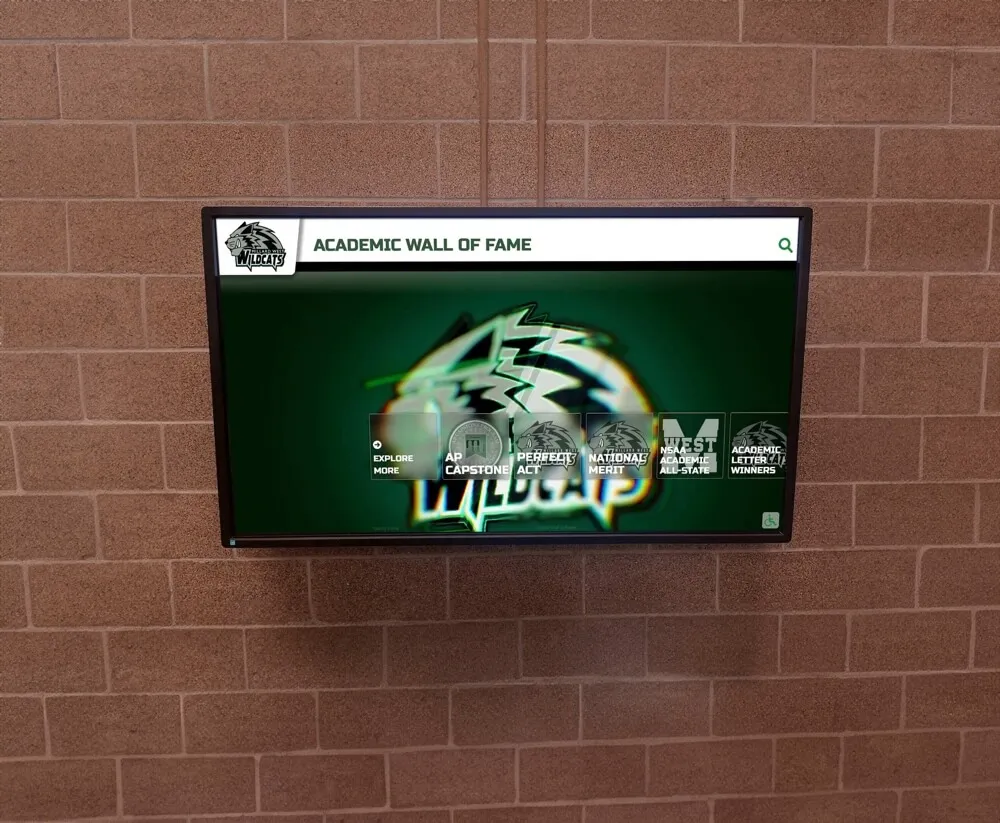
Modern recognition displays celebrate the full range of achievements students earn throughout high school
Academic Excellence Awards
Academic recognition forms the foundation of most school recognition systems, acknowledging intellectual achievement and scholastic dedication.
Honor Roll Recognition
Honor roll programs remain the most widespread academic recognition, celebrating students who maintain strong grade point averages:
Principal’s Honor Roll
- Typically requires 4.0 GPA or all A grades
- Represents the highest level of academic achievement
- Often published in school communications and local media
- May include special recognition ceremonies or privileges
- Creates distinction among top academic performers
High Honor Roll
- Generally requires 3.5-3.99 GPA or mostly A grades with few B grades
- Recognizes exceptional academic performance
- Demonstrates consistent strong achievement across subjects
- Often includes certificate or recognition letter
- May qualify students for academic recognition events
Honor Roll
- Usually requires 3.0-3.49 GPA or B average or better
- Celebrates above-average academic achievement
- Encourages continued academic focus and effort
- Provides recognition for solid academic performance
- Often the most inclusive academic recognition tier
Many schools calculate honor roll by marking period (quarterly), semester, or annually, with sustained honor roll achievement across multiple periods earning special recognition.
Subject-Specific Academic Awards
Excellence in individual disciplines deserves dedicated recognition:
Departmental Excellence Awards
- Top student in Mathematics, Science, English, History, World Languages
- Recognizes mastery in specific academic areas
- Often determined by teachers based on performance and engagement
- May include book awards or subject-specific recognition
- Honors students excelling in particular fields
Advanced Placement Recognition
- AP Scholar awards for passing multiple AP exams with scores of 3 or higher
- AP Scholar with Distinction for exceptional scores
- College Board National Recognition Programs
- Demonstrates college-level academic achievement
- Enhances college applications significantly
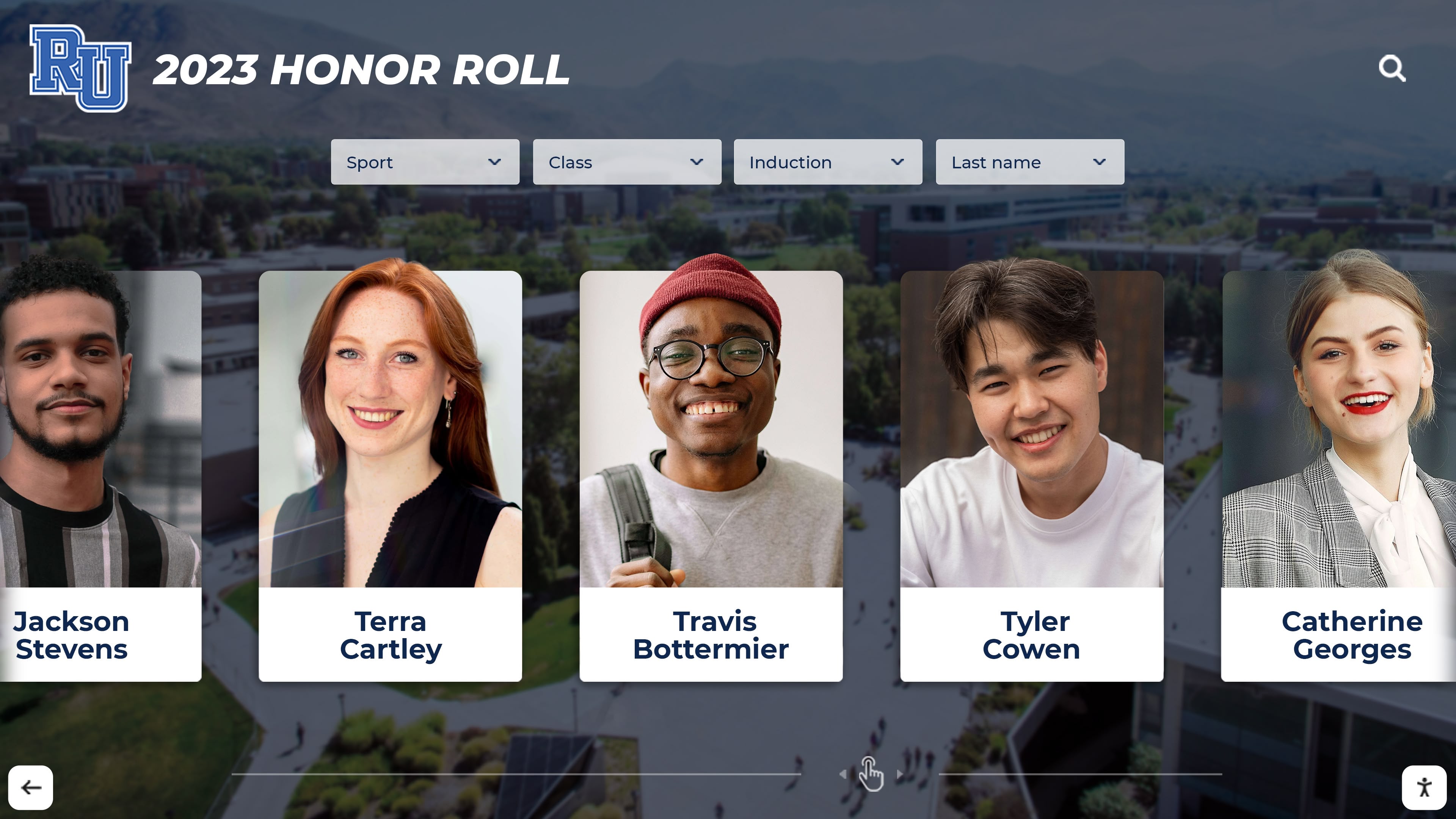
Individual recognition profiles celebrate specific academic achievements and student journeys
STEM Competition Awards
- Science Olympiad medals and team achievements
- Math competition honors at local, state, and national levels
- Robotics competition recognition
- Science fair awards and distinctions
- Engineering challenge accomplishments
Pinnacle Academic Achievements
The highest academic honors carry special prestige and recognition:
Valedictorian and Salutatorian
- Highest and second-highest cumulative GPA in graduating class
- Represents four years of sustained academic excellence
- Includes speaking role at graduation ceremonies
- Carries significant recognition and honor
- Often considered in scholarship decisions
National Merit Recognition
- National Merit Semifinalist designation (top 1% of PSAT scorers)
- National Merit Finalist status (continuing the application process)
- National Merit Scholar (receiving scholarship awards)
- Prestigious recognition enhancing college applications
- Based on standardized test performance and achievement
National Honor Society
- Membership based on scholarship, service, leadership, and character
- Requires maintaining GPA standards and service hours
- Includes induction ceremony and graduation recognition
- Demonstrates well-rounded achievement beyond academics alone
- May include leadership positions within NHS chapter
Schools increasingly implement digital recognition displays that showcase academic achievements alongside athletic and extracurricular recognition.
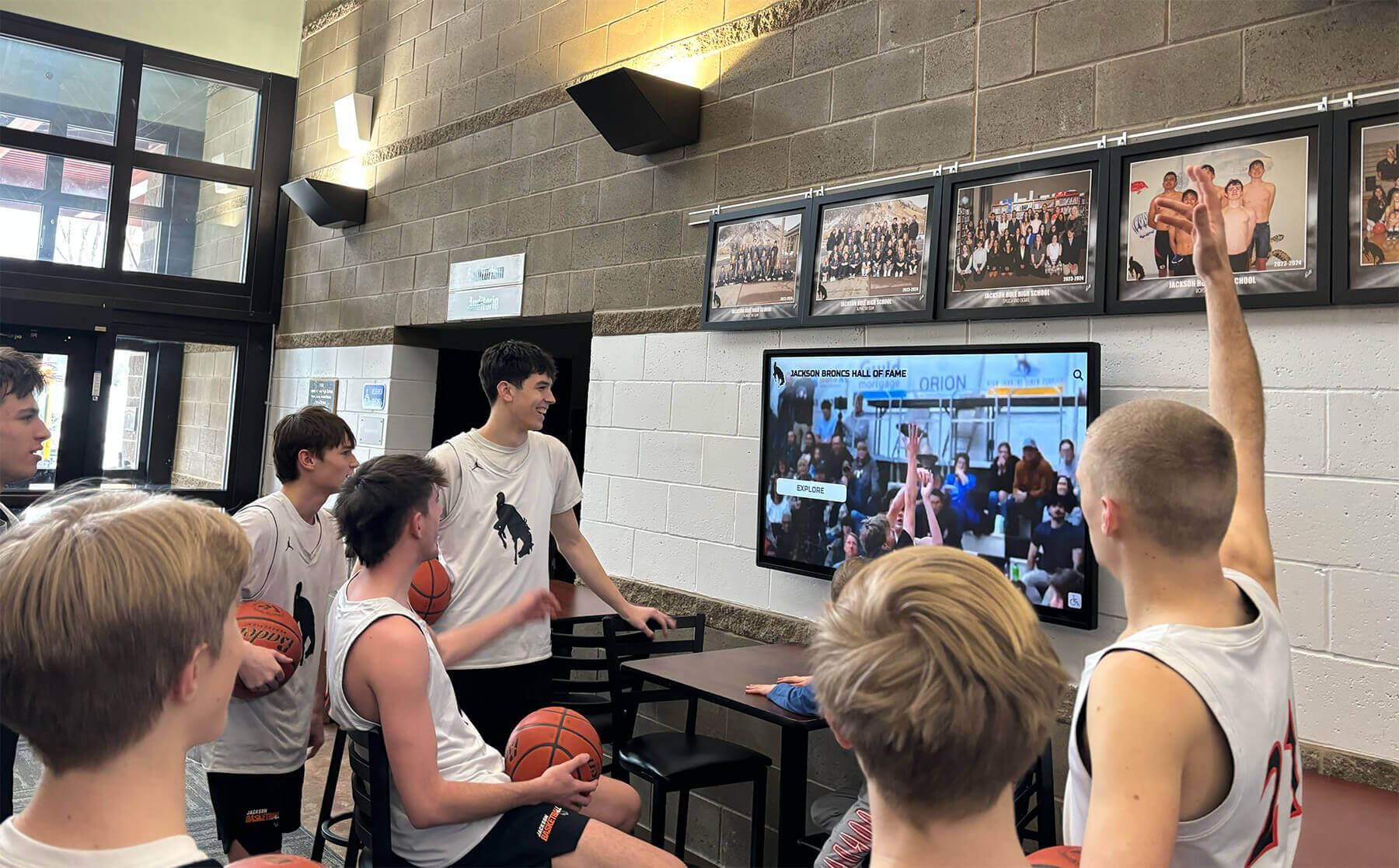
Interactive displays create opportunities for students to explore recognition across all achievement categories
Athletic Recognition and Awards
Athletic awards celebrate competitive achievement, improvement, team contribution, and sportsmanship across all high school sports.
Varsity Letter Recognition
The varsity letter represents one of the most traditional and valued high school awards:
First Varsity Letter
- Earned through meeting sport-specific requirements
- Typically includes participation standards and coach discretion
- Often involves purchasing letter jacket or sweater
- Marks transition to varsity-level competition
- Creates lasting connection to school athletic tradition
Multi-Year Letter Winners
- Recognition for earning letters in multiple seasons
- Often indicated by pins, bars, or patches
- Demonstrates sustained commitment and achievement
- May earn special senior recognition
- Shows dedication across high school career
Multi-Sport Athletes
- Special recognition for competing in multiple sports
- Celebrates versatility and year-round athletic commitment
- Demonstrates time management and dedication
- Often receives special acknowledgment at award ceremonies
- Represents well-rounded athletic participation
Team and Individual Performance Awards
Coaches typically distribute these awards at end-of-season banquets:
Most Valuable Player (MVP)
- Recognizes greatest overall contribution to team success
- Based on performance, leadership, and impact
- Highly prestigious team-level recognition
- Often includes trophy or plaque
- May be determined by coach selection or team voting
Most Improved Player
- Celebrates significant skill development and progress
- Acknowledges work ethic and commitment to improvement
- Ensures recognition beyond top performers
- Motivates continued development
- Values growth regardless of starting skill level
Team Captain Recognition
- Honors leadership, communication, and example-setting
- Often selected by coaches or teammates
- May include special uniform designation
- Demonstrates trust and respect earned
- Creates leadership development opportunity
Sportsmanship Awards
- Recognizes exemplary conduct and character
- Celebrates respect for opponents, officials, and game
- Highlights positive representation of school and team
- Often determined by opponent or official nominations
- Values character equal to competitive success
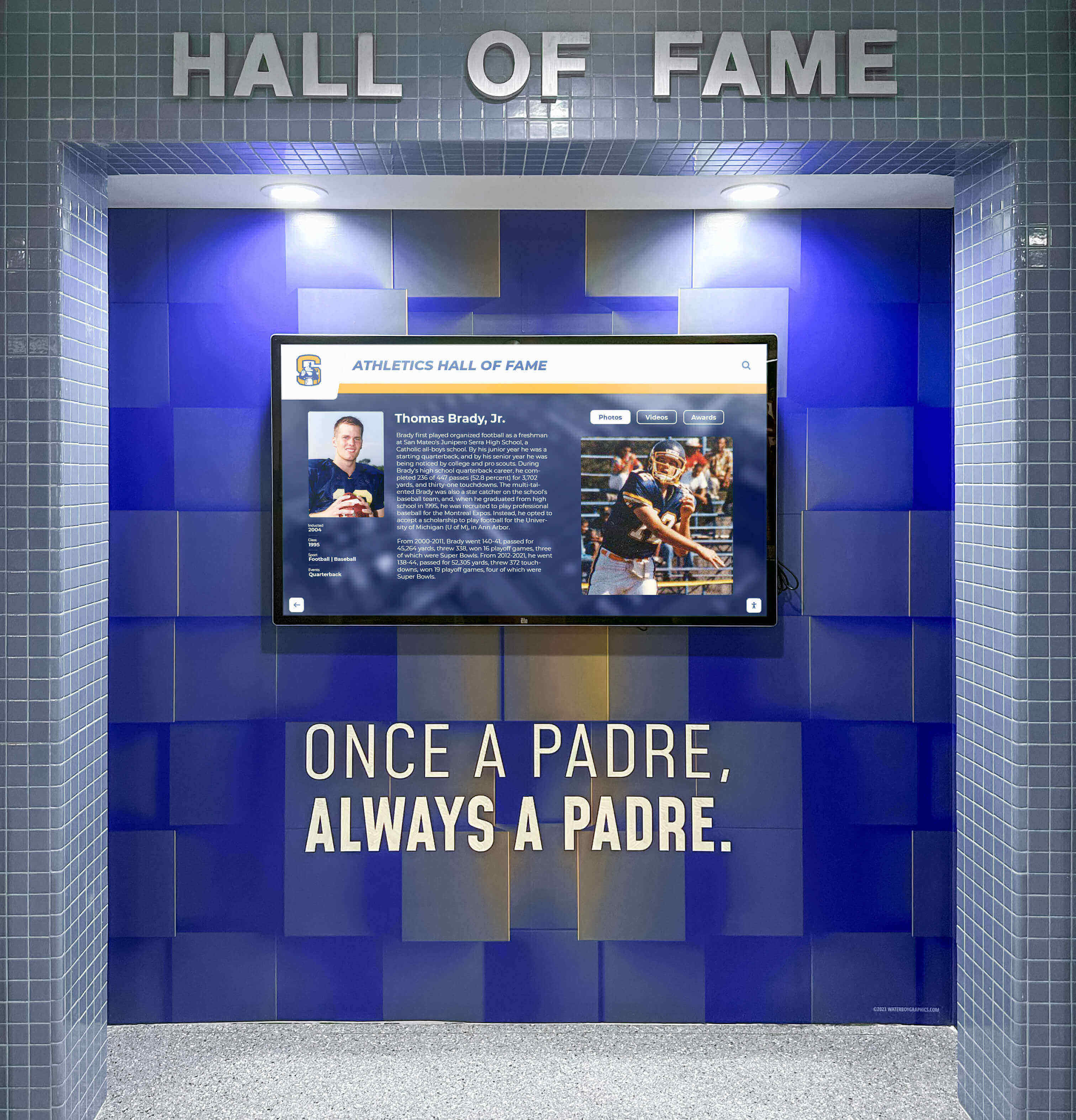
Comprehensive displays preserve athletic achievements across all sports and recognition categories
Championship and Competition Recognition
Team and individual competitive success earns special acknowledgment:
Conference Championships
- Team championships in league or conference competition
- Individual conference champion recognition
- All-conference team selections
- Often includes special recognition displays
- Represents achievement against regular opponents
State and Regional Recognition
- State championship team recognition
- Individual state qualifier or place-finisher awards
- Regional tournament achievements
- District competition success
- Highest level of high school athletic recognition
All-Star and Selection Teams
- All-conference, all-district, all-state selections
- Based on performance during competitive season
- Selected by coaches, media, or athletic associations
- Highly prestigious individual recognition
- Enhances college recruiting visibility
Many schools maintain digital trophy displays that celebrate athletic achievements across decades of school history.
Fine Arts and Performing Arts Recognition
Creative excellence deserves systematic celebration equal to academic and athletic achievement.
Music Awards and Recognition
Music programs offer diverse recognition opportunities:
All-State Music Selections
- Audition-based selection to state honor ensembles
- Available for band, orchestra, choir, and jazz
- Represents top musicians in the state
- Includes special performance opportunities
- Highly competitive and prestigious recognition
Solo and Ensemble Ratings
- Performance ratings at district and state festivals
- Superior ratings (I) represent highest achievement
- Applicable to solo performances and small groups
- Provides objective assessment of musical excellence
- Creates motivation for continued improvement
Music Honor Societies
- Tri-M Music Honor Society membership
- Based on musical achievement and academic standards
- Includes service requirements
- Demonstrates well-rounded musical dedication
- May include leadership opportunities
Theatre and Drama Recognition
All-State Theatre Recognition
- Selection to state theatre festivals and productions
- Based on auditions and performance quality
- Creates networking and development opportunities
- Represents top theatre talent in state
- Often includes workshops and masterclasses
Technical Theatre Awards
- Recognition for lighting, sound, set design, stage management
- Celebrates behind-the-scenes essential contributions
- Often overlooked but critically important
- May include special acknowledgment at productions
- Demonstrates diverse pathways in theatre arts
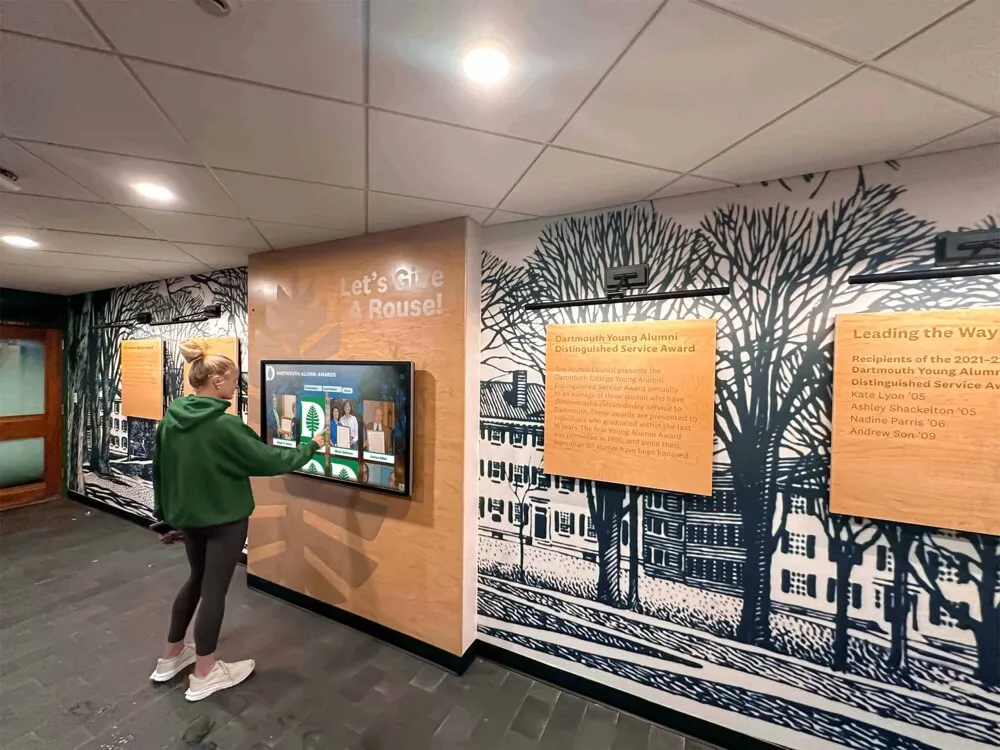
Recognition displays in high-traffic areas ensure arts achievements receive visibility equal to other accomplishments
Visual Arts and Creative Recognition
Art Competition Awards
- Regional and state art competition recognition
- Scholastic Art & Writing Awards
- Congressional Art Competition
- Museum and gallery exhibition opportunities
- Portfolio development recognition
Creative Writing Recognition
- Writing contest awards and publication
- Literary magazine contributions and leadership
- Poetry slam and spoken word recognition
- Journalism awards and recognition
- Creative expression across multiple formats
Digital displays can showcase arts achievements through photos, videos, and detailed profiles of student artists and performers.
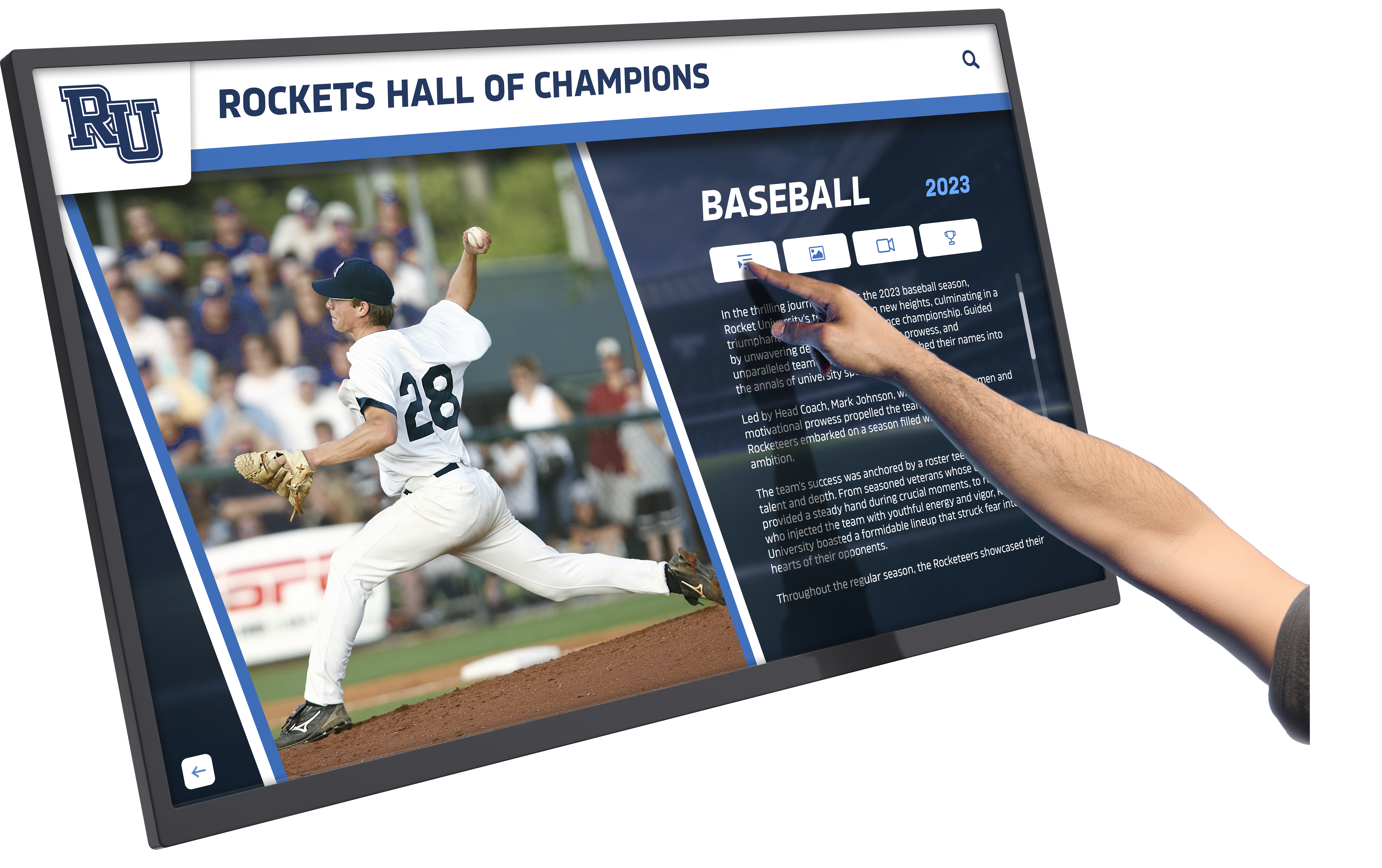
Interactive interfaces make exploring achievements across all categories engaging and accessible
Character, Leadership, and Service Awards
Recognition for personal qualities and contributions beyond measured performance strengthens school culture and student development.
Leadership Recognition
Leadership development represents a crucial dimension of the high school experience:
Student Government Recognition
- Elected positions (president, vice president, secretary, treasurer)
- Class officers and representatives
- Student council membership
- Demonstrates peer trust and leadership capability
- Creates opportunities for school improvement initiatives
Club and Organization Leadership
- President, vice president, secretary positions in clubs
- Committee chair and coordinator roles
- Founder recognition for students starting new organizations
- Event planning and execution leadership
- Sustained involvement demonstrating commitment
Peer Mentoring Awards
- Recognition for tutoring and academic support of peers
- New student orientation and buddy program participation
- Leadership in creating inclusive school environment
- Demonstrates maturity and investment in others
- Often involves formal recognition programs
Service and Community Contribution
Service recognition celebrates investment in community beyond self:
Presidential Volunteer Service Award The Presidential Volunteer Service Award recognizes Americans of all ages who contribute significant volunteer service:
- Bronze, Silver, and Gold award levels based on hours
- Teens (ages 11-15) and Young Adults (16-25) categories
- Includes personalized certificate and pin
- Federal recognition program adding prestige
- Hours tracked and verified through certifying organizations
Service Hour Milestones
- Recognition at 50, 100, 250, 500+ hour thresholds
- Documentation through school service programs
- Celebration at recognition ceremonies
- Demonstrates sustained community commitment
- Often connected to graduation requirements or honors
Community Service Project Leadership
- Recognition for organizing and leading service initiatives
- Celebrates impact beyond participation
- Develops project management and leadership skills
- Creates lasting community benefit
- Often includes presentation or showcase opportunities
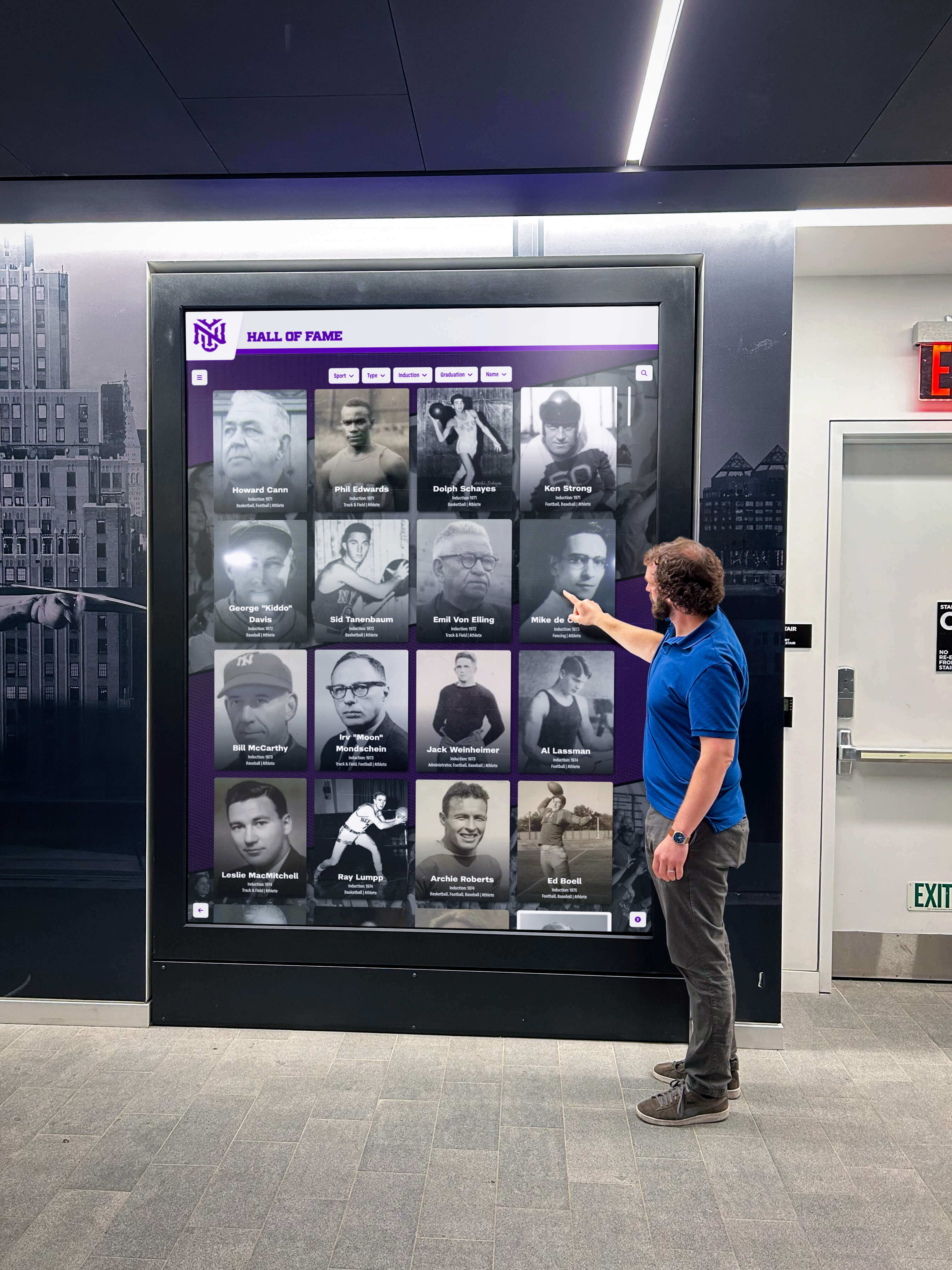
Recognition displays enable families and community members to explore the full range of student achievements
Character and Values Recognition
Character-based awards acknowledge essential personal qualities:
Respect and Kindness Awards
- Recognition for consistent positive treatment of peers and adults
- Celebrates inclusive behavior and empathy
- Nominated by teachers, staff, or peers
- Reinforces school values and culture
- Creates positive role models
Perseverance and Resilience Recognition
- Honors students overcoming significant challenges
- Celebrates academic or personal growth through adversity
- Demonstrates determination and grit
- Often selected through teacher or counselor nomination
- Inspires peers facing their own challenges
Integrity Awards
- Recognizes consistent ethical behavior and honesty
- Celebrates trustworthiness and reliability
- Selected through staff observation and nomination
- Reinforces character as equal to achievement
- Creates cultural expectation for ethical conduct
Schools can integrate character recognition into comprehensive recognition systems that celebrate achievements across all dimensions.
Attendance and Improvement Recognition
Acknowledging growth and consistency ensures students at all achievement levels find recognition opportunities.
Attendance Awards
Consistent school attendance represents an achievement deserving recognition:
Perfect Attendance
- Recognition for missing zero school days during year
- Often includes certificate or special acknowledgment
- May extend to perfect attendance across multiple years
- Demonstrates commitment and reliability
- Creates positive peer modeling
Improved Attendance Recognition
- Celebrates significant attendance improvement year-over-year
- Acknowledges students overcoming attendance barriers
- Reinforces importance of consistent school presence
- Creates motivation for continued improvement
- Values progress regardless of starting point
Academic Improvement Awards
Growth-focused recognition ensures diverse students receive acknowledgment:
Most Improved GPA
- Recognition for greatest GPA increase marking period to marking period
- Celebrates academic turnaround and renewed focus
- Motivates students starting from different achievement levels
- Often determined by grade level or department
- Values improvement as achievement
Subject-Specific Improvement
- Recognition within individual classes or departments
- Honors significant grade improvement in specific subject
- Acknowledges extra effort and commitment
- Determined by individual teachers
- Creates multiple recognition opportunities
From Struggle to Success Stories
- Special recognition for overcoming academic challenges
- May include students moving from failing to passing
- Celebrates resilience and determination
- Often includes personal story sharing
- Inspires peers facing similar challenges
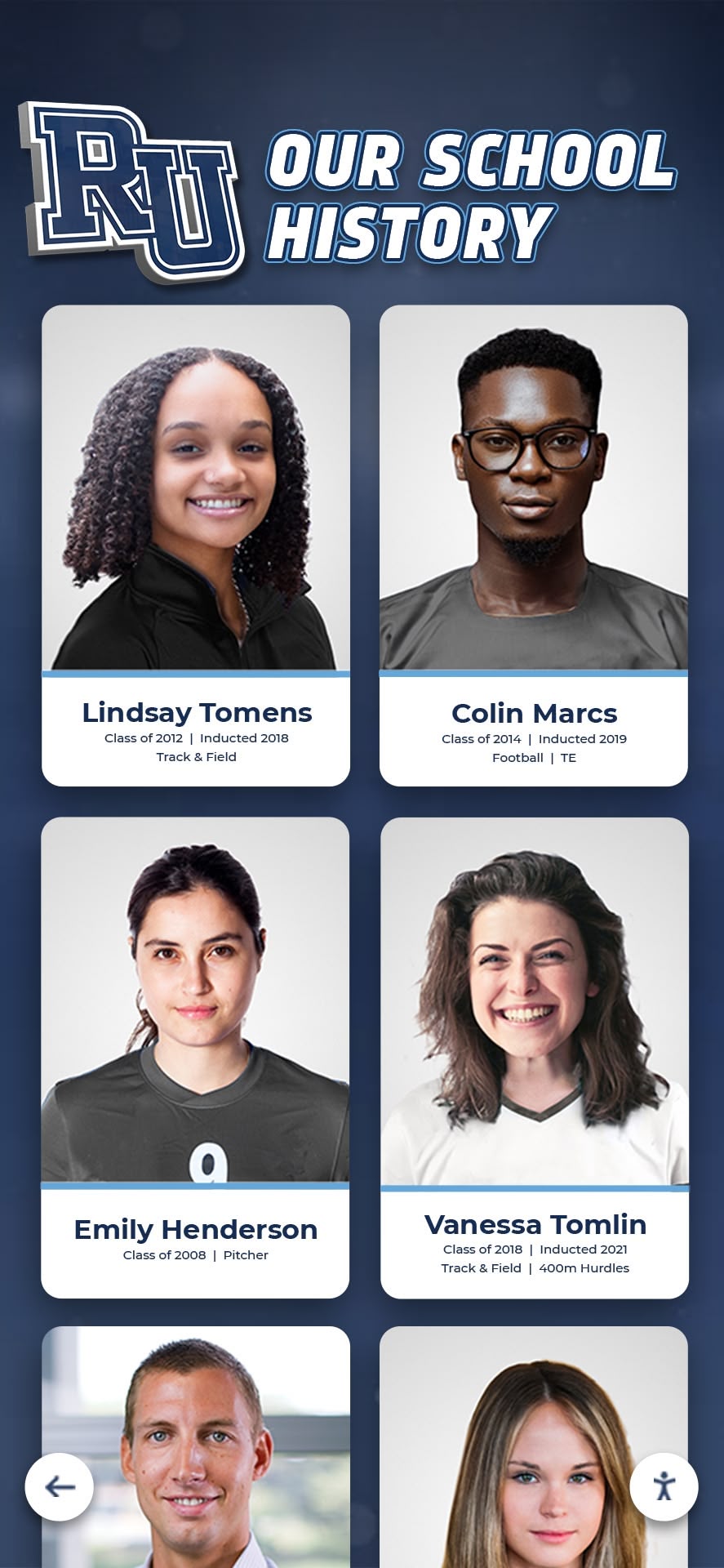
Recognition systems preserve achievement across multiple years, showing progression and improvement
College and Career Readiness Recognition
Awards acknowledging preparation for life beyond high school hold special significance for students and families.
College Admission and Scholarship Recognition
Scholarship Awards
- Local, state, and national scholarship recognition
- Merit-based and need-based awards
- Athletic and academic scholarship offers
- Often announced at senior recognition events
- Represents achievement translating to college opportunity
College Commitment Recognition Many schools celebrate college decisions through signing day events and displays:
- Athletic signing day ceremonies for collegiate athletes
- Academic decision day celebrations for all college-bound students
- Visual displays showing college destinations
- Creates excitement around post-secondary plans
- Celebrates diverse pathways (four-year, community college, vocational)
Advanced Credential Recognition
- Dual enrollment and concurrent credit completion
- Industry certifications earned during high school
- Apprenticeship program acceptance
- Technical skill credentials
- Demonstrates career readiness and planning
Career and Technical Education Awards
CTE programs provide essential preparation deserving systematic recognition:
Skills Competition Recognition
- SkillsUSA competition medals and achievements
- DECA, FBLA, FFA competition success
- Regional, state, and national competition placement
- Demonstrates technical excellence and preparation
- Often includes scholarship opportunities
Industry Certification Awards
- Professional certifications earned during high school
- Microsoft, Cisco, Adobe, and other industry credentials
- Welding, automotive, healthcare, and other technical certifications
- Creates immediate employment qualification
- Demonstrates technical competence and readiness
Internship and Work-Based Learning Recognition
- Completion of significant internship experiences
- Employer evaluations and recommendations
- Real-world skill application and development
- Creates networking and career pathway connections
- Demonstrates initiative and maturity
Special Recognition Categories
Creative award categories ensure all students find acknowledgment opportunities:
Improvement and Growth Awards
Comeback Student of the Year
- Recognizes significant academic or personal turnaround
- Celebrates resilience and renewed commitment
- Inspires peers through transformation story
- Often includes personal narrative sharing
- Creates hope for students facing challenges
Most Improved Across Multiple Areas
- Recognition for growth across academics, behavior, and engagement
- Celebrates holistic improvement
- Demonstrates comprehensive positive change
- Often selected through teacher collaboration
- Values transformation over single achievement
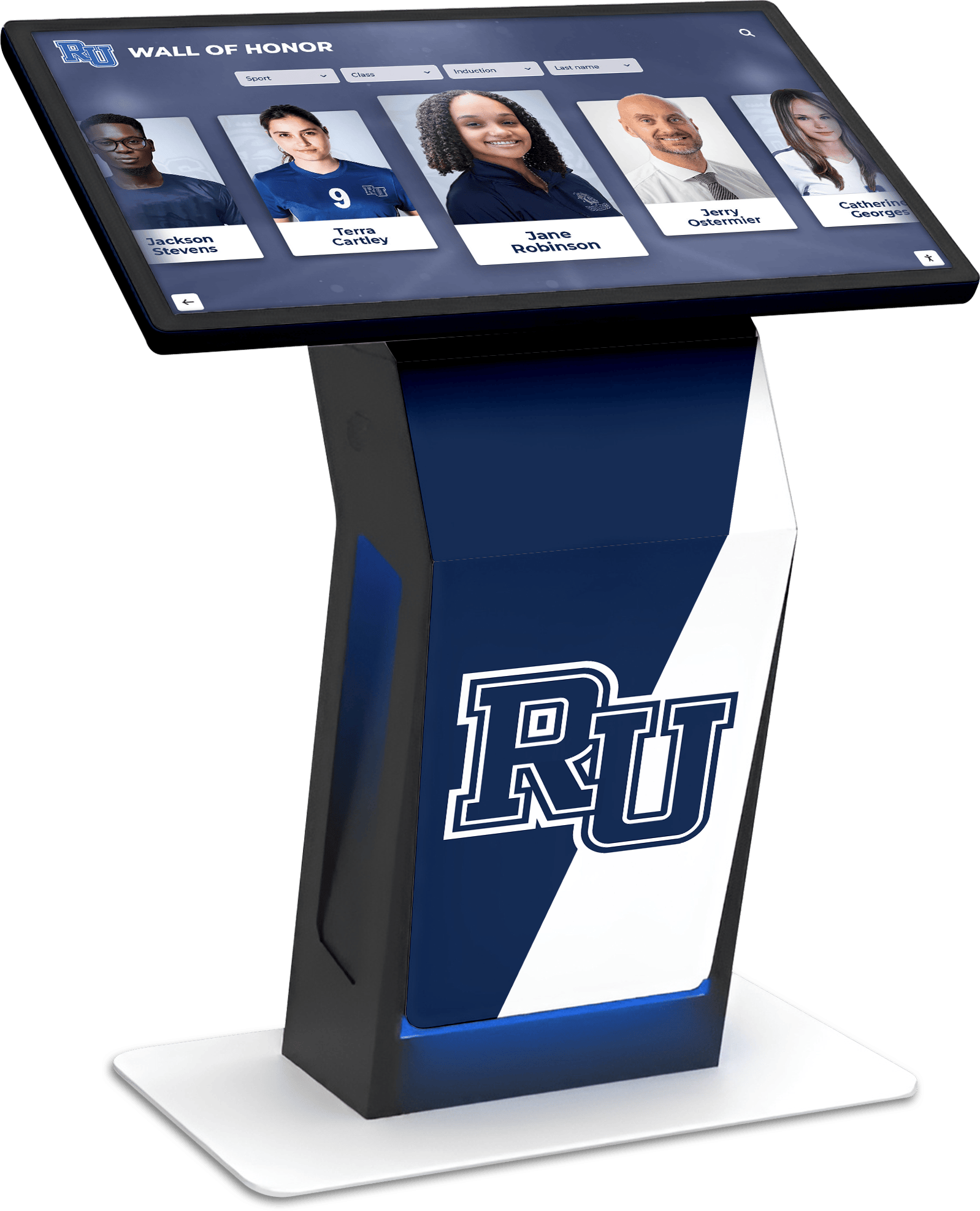
Modern recognition systems create engaging experiences celebrating achievements across all categories
Specialized Contribution Awards
Technology and Innovation
- Recognition for exceptional technology skills and contributions
- IT help desk participation and support
- Website, app, or technology project development
- Digital media creation and management
- Demonstrates modern essential skills
School Spirit and Pride
- Student section leadership and enthusiasm
- Homecoming and spirit week participation
- School tradition preservation and promotion
- Positive school culture contribution
- Creates infectious enthusiasm benefiting entire community
Environmental Stewardship
- Recycling and sustainability program leadership
- Environmental club participation and initiatives
- Campus beautification projects
- Conservation awareness and education
- Demonstrates civic responsibility and values
Modern Recognition Display Solutions
Traditional approaches to displaying awards—paper certificates in folders, static trophy cases, printed lists—struggle to showcase the comprehensive recognition modern students earn.
Digital Recognition Display Advantages
Modern touchscreen solutions transform how schools celebrate student achievement:
Unlimited Recognition Capacity Physical space constraints force schools to choose whose achievements receive visibility. Digital displays eliminate this limitation:
- Single touchscreen showcases unlimited students across all award categories
- Complete historical archives preserve recognition from previous years
- All achievement types receive equal display opportunity
- No need to remove historical recognition to accommodate current awards
- Students explore decades of school achievement history
Interactive Exploration Features Touchscreen systems create engagement impossible with static displays:
- Search functionality enabling students to find themselves and peers
- Filtering by award type, year, graduating class, or category
- Individual profile pages with photos and achievement details
- Related content connecting to broader school traditions
- QR code access enabling mobile sharing and viewing
Remote Content Management Cloud-based systems eliminate traditional maintenance challenges:
- Update recognition from any internet-connected device
- Bulk import award recipient data after ceremonies
- Schedule automated publishing for different periods
- Role-based permissions allowing appropriate staff access
- Drag-and-drop interfaces requiring no technical expertise
Schools implementing digital recognition systems report 80-90% reduction in time spent maintaining recognition displays.
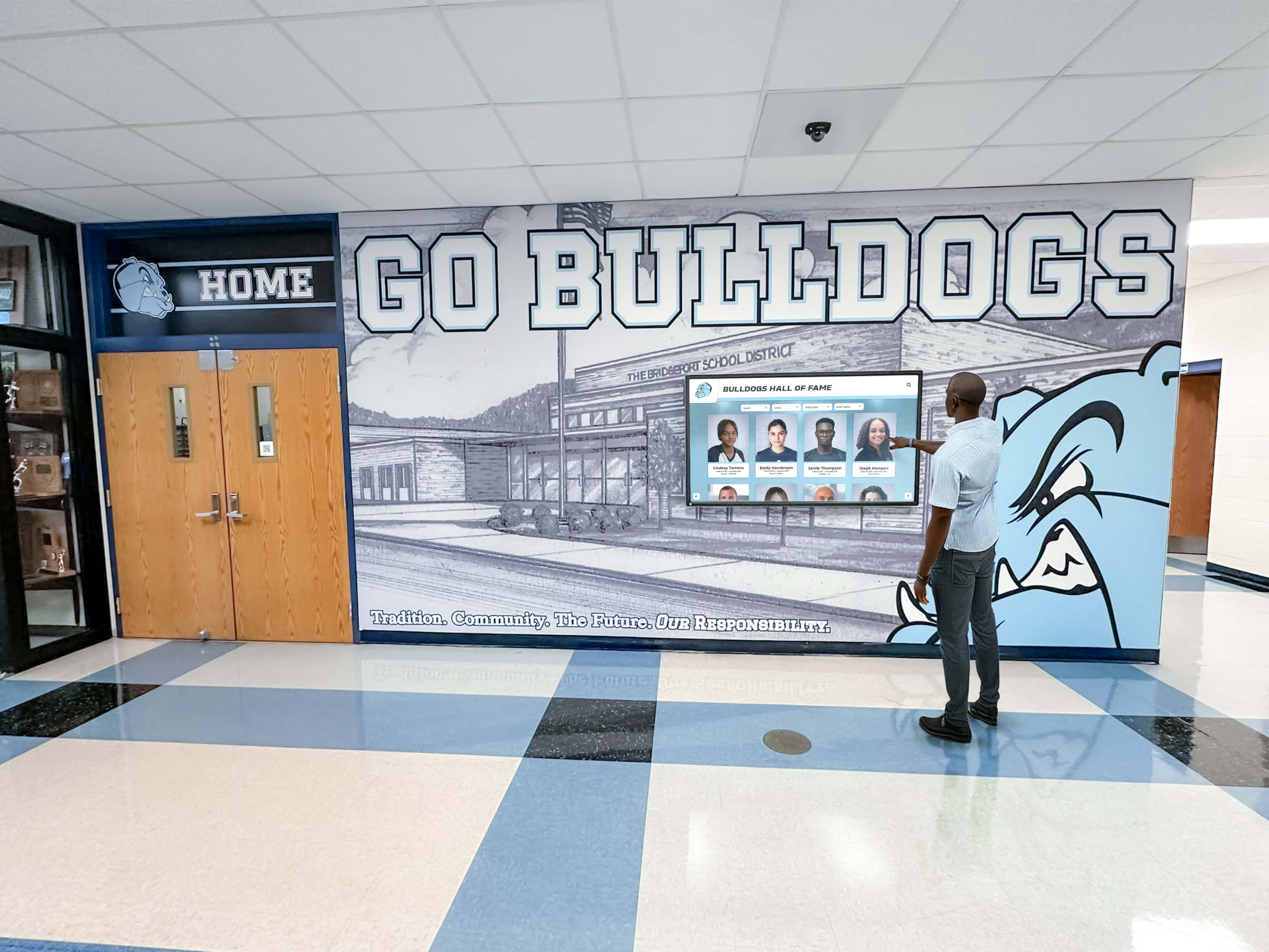
Interactive displays make exploring the full range of high school awards engaging and accessible
Web-Based Recognition Extensions
Recognition impact multiplies when accessible beyond physical campus:
Mobile and Remote Access
- Alumni and families worldwide view current achievements
- Students share recognition through social media
- College admissions officers explore student accomplishments
- Community members stay connected to school success
- 24/7 accessibility rather than campus-hours-only viewing
Multi-Channel Recognition Communication
- Automated email notifications when students earn recognition
- Social media posts celebrating award recipients
- Integration with morning announcements and newsletters
- Community media sharing extending recognition reach
- Systematic visibility ensuring achievements don’t go unnoticed
Comprehensive platforms enable schools to showcase achievements across all recognition categories in unified, accessible formats.
Creating Equitable Recognition Systems
Effective high school awards programs ensure recognition opportunities exist for students across all backgrounds, achievement levels, and areas of strength.
Distribution Equity Analysis
Schools should regularly assess recognition patterns:
Recognition Reach Assessment
- Percentage of students receiving some form of recognition annually
- Distribution across grade levels and demographic groups
- Balance between academic, athletic, and other categories
- Identification of students receiving no recognition
- Year-over-year pattern analysis and improvement
Multiple Pathway Recognition Creating diverse recognition opportunities ensures inclusive systems:
- Achievement recognition for students starting at all performance levels
- Growth and improvement measures alongside absolute achievement
- Character and contribution recognition beyond measurable outcomes
- Specialized awards for diverse strengths and talents
- Creating cultures where every student receives acknowledgment
Avoiding Recognition Pitfalls
Preventing Recognition Inflation
- Clear criteria distinguishing recognition levels
- Meaningful standards requiring genuine achievement
- Balance between inclusivity and prestige preservation
- Regular criteria review and adjustment
- Honest assessment rather than participation trophy approaches
Ensuring Meaningful Impact Recognition should motivate and celebrate authentically:
- Specific descriptions of why students earned awards
- Personalized acknowledgment rather than generic certificates
- Connection between recognition and future opportunities
- Celebration formats students and families value
- Follow-through creating lasting visibility beyond single ceremonies
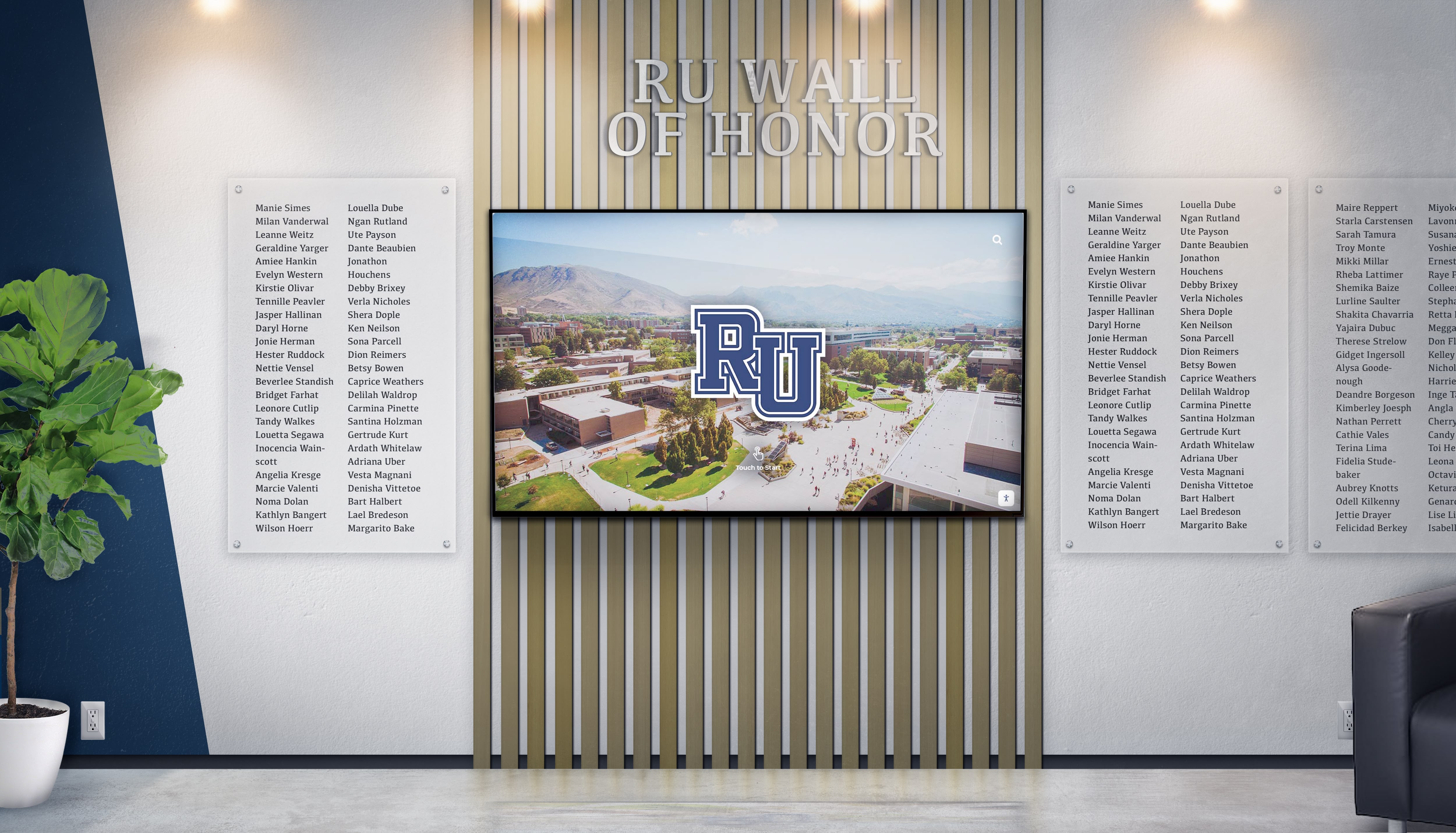
Integrated systems combine traditional recognition elements with modern digital displays for comprehensive celebration
Recognition Ceremonies and Communication
How schools present awards affects their perceived value and motivational impact.
Award Ceremony Best Practices
Timing and Format Considerations
- Quarterly academic recognition assemblies
- End-of-season athletic banquets
- Annual comprehensive awards nights
- Senior-specific recognition events
- Department or program-specific celebrations
Creating Meaningful Ceremonies
- Personal descriptions of achievements and contributions
- Student speakers sharing impact of recognition
- Photo slideshows and video highlights
- Family invitation and participation
- Appropriate ceremony length maintaining engagement
Recognition Communication Strategies
Multi-Channel Announcement
- Morning announcements celebrating recent awards
- Social media posts featuring recipients
- Newsletter features and spotlights
- Local media recognition announcements
- School website news and updates
Sustained Visibility Recognition shouldn’t disappear after initial announcement:
- Hallway displays featuring recent award recipients
- Digital screens rotating recognition throughout year
- Physical recognition spaces in common areas
- Website archives preserving historical achievement
- Permanent digital displays accessible indefinitely
Schools can implement comprehensive communication strategies ensuring awards receive appropriate visibility and celebration.
Measuring Recognition Program Effectiveness
Regular assessment ensures award systems achieve intended goals:
Quantitative Assessment Metrics
Participation Data
- Percentage of students earning recognition annually
- Distribution across different award categories
- Comparison to previous years’ patterns
- Representation across student populations
- Number of students receiving multiple awards
Cultural Impact Indicators
- Student motivation and goal-setting related to awards
- Parent engagement with recognition programs
- Alumni reflection on meaningful recognition received
- Community awareness of student achievements
- Correlation between recognition and sustained achievement
Qualitative Feedback Collection
Stakeholder Perspectives
- Student surveys about recognition fairness and meaning
- Family perception of award selection and presentation
- Teacher assessment of recognition impact on motivation
- Alumni perspective on lasting significance
- Community feedback on recognition visibility
Continuous Improvement
- Annual review of award categories and criteria
- Addition of new recognition types based on need
- Refinement of selection processes
- Enhancement of presentation formats
- Technology upgrades improving accessibility and engagement
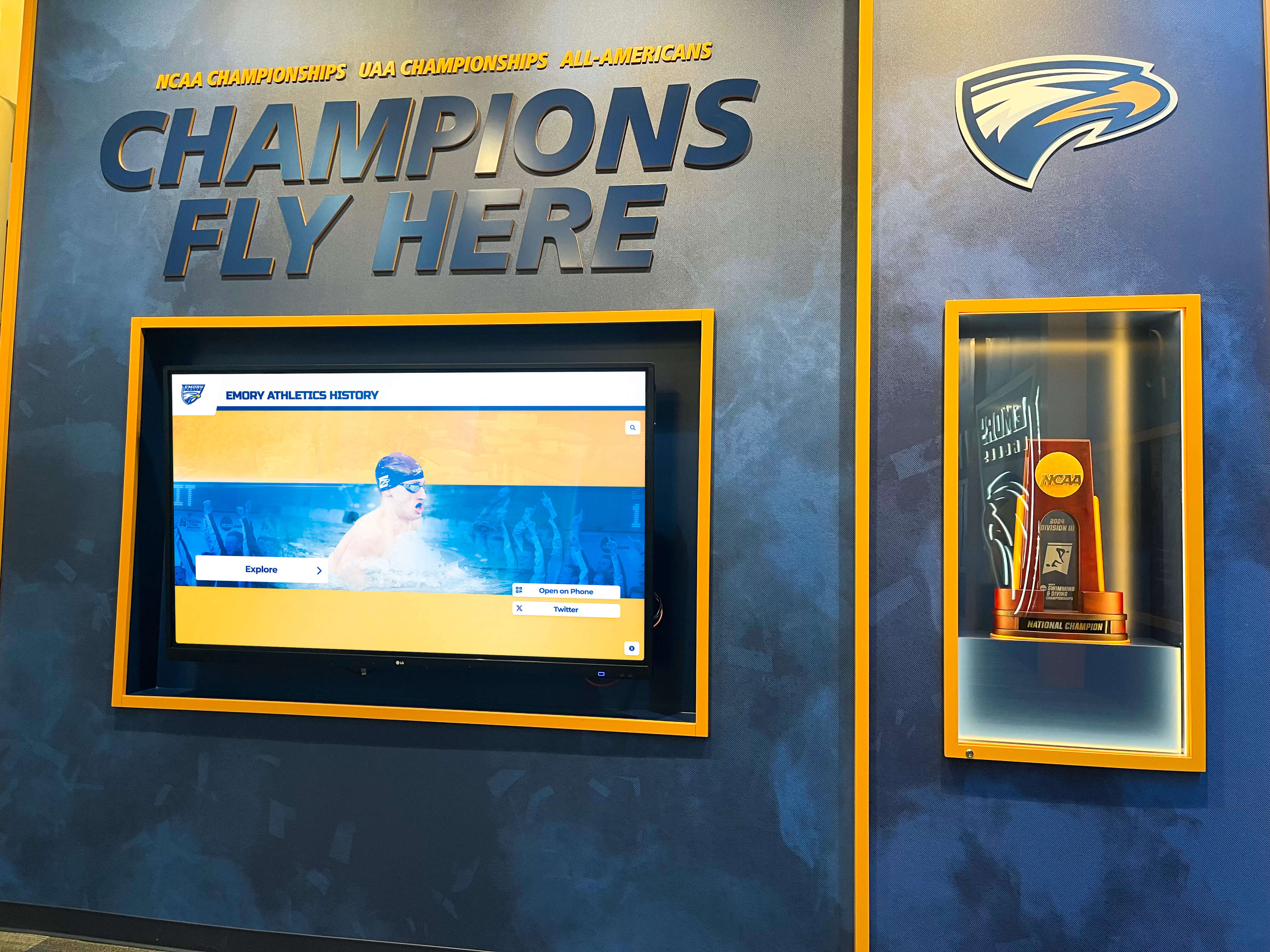
Professional displays preserve achievement recognition creating lasting celebration of student excellence
Conclusion: Celebrating Excellence Across All Dimensions
High school awards represent far more than certificates in folders or names on lists—they embody institutional values, motivate student achievement, and create positive memories students carry throughout their lives. When schools implement comprehensive recognition systems acknowledging excellence across academics, athletics, arts, character, service, improvement, and contribution, they create environments where every student finds opportunities for meaningful acknowledgment.
The diverse award categories explored in this guide demonstrate the rich landscape of recognition available to high school students. From traditional honors like valedictorian and National Merit Scholar to creative recognitions like Most Improved, Service Leadership, and Character Awards—each category celebrates different dimensions of excellence while ensuring students with varying strengths find pathways to recognition.
Modern digital platforms make comprehensive recognition achievable at scale. Schools no longer face the space constraints, maintenance challenges, and visibility limitations of traditional recognition displays. Touchscreen solutions enable unlimited student recognition across all categories while creating engaging interactive experiences that students, families, and communities can explore year-round.
Effective recognition requires intentional system design ensuring equitable distribution, meaningful selection processes, appropriate celebration, and sustained visibility. Schools that treat recognition systematically—establishing clear criteria, communicating opportunities widely, celebrating authentically, and maintaining permanent displays—create cultures where achievement receives the attention and motivation it deserves.
Start by auditing your current recognition programs to identify gaps and opportunities. Consider whether academic achievers receive visibility equal to athletes, whether improvement gets celebrated alongside absolute achievement, and whether character and service earn acknowledgment comparable to measurable outcomes. Then systematically expand recognition categories and implementation approaches to honor the full range of excellence your students demonstrate daily.
Your students’ achievements across all dimensions deserve celebration creating lasting positive impact. With thoughtful planning, inclusive category design, meaningful presentation, and appropriate technology ensuring ongoing visibility, you can build recognition systems honoring every achievement while strengthening the positive, motivating school culture where all students thrive.
Ready to transform your student recognition? Explore comprehensive digital recognition solutions that preserve student achievements permanently while creating engaging experiences your entire community can celebrate year-round.