Intent: compare. Gym wall decor in school athletic facilities has always done more than fill empty space—it signals what the program values, who it honors, and what it expects from athletes who train inside those walls.
Most schools start the same way: a motivational poster or two, a championship banner from a good season, maybe a painted school logo near center court. Then years pass. The banners multiply. The posters fade. The painted mural that went up in 2008 still looks like 2008. And somewhere along the way, the athletic director starts asking: what should actually be on these walls, and is any of it working?
This guide compares the full spectrum of gym wall decor options available to school athletic programs—from low-cost posters and vinyl decals to custom murals and interactive touchscreen recognition displays—so athletic directors and facilities teams can make deliberate choices rather than default ones.
The walls of a school gymnasium are one of the most visible athletic communication channels a program has. Every student-athlete who trains there sees that wall dozens of times per week. Visitors see it during games. Prospective athletes see it on campus tours. What appears on those walls either reinforces program identity or quietly undercuts it.
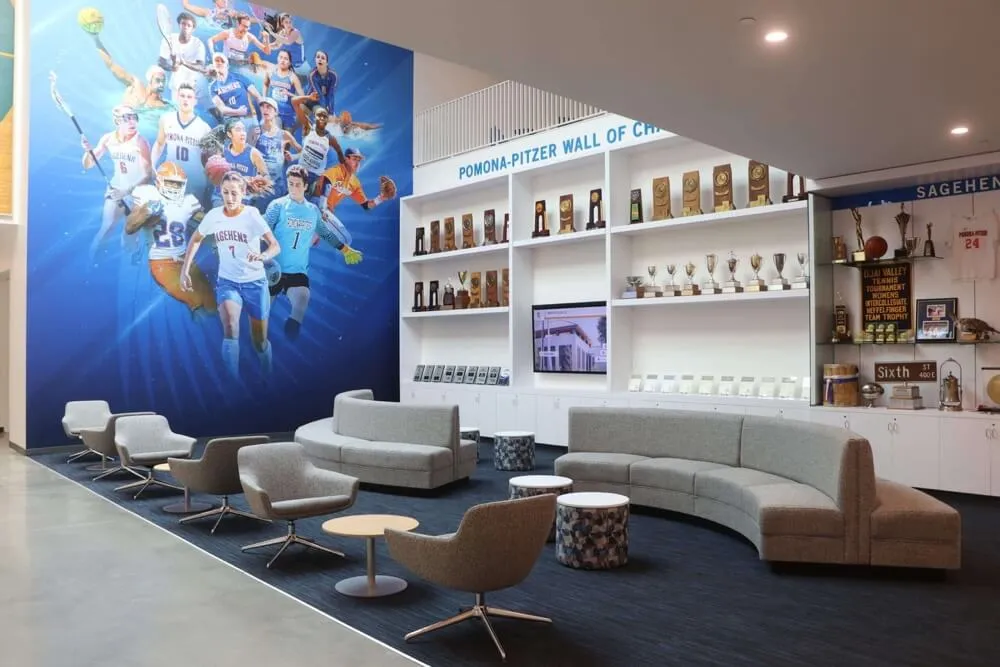
A well-considered athletic space combines multiple decor formats—murals for identity, trophy displays for legacy, and dedicated wall space for ongoing recognition
Why Gym Wall Decor Is an Athletic Program Decision, Not Just an Aesthetic One
Before comparing formats, it helps to understand what gym walls are actually being asked to do. At most schools, athletic wall displays serve three distinct functions simultaneously:
Identity and pride: Team colors, mascot imagery, school branding, and motivational messaging that communicates what the program stands for. This is what most people think of when they picture gym wall decor.
Recognition and legacy: Championships won, records set, individuals honored. This is where the history of the program lives—or should live.
Operational signage: Rules, schedules, emergency procedures, and functional information athletes and visitors need. Gym rules and facility signage often gets underweighted in planning conversations but represents a real communication requirement.
Different decor formats serve these functions with different effectiveness. A painted mural excels at identity. A banner is effective for championship recognition. An operational sign needs to be replaceable when policies change. Choosing a single format for all three functions usually means two of the three suffer.
Gym Wall Decor Option 1: Motivational Posters and Printed Wall Art
Posters are the starting point for most programs because the cost and commitment are minimal. Commercial motivational posters, custom-printed athlete photography, and large-format prints from local vendors all fall in this category.
What they do well: Posters are inexpensive, easy to replace, and can be refreshed seasonally. A well-chosen athlete photograph or motivational quote printed at large format can make a genuine visual impact without significant investment.
Where they fall short: Posters signal temporariness. They curl at corners, fade under gymnasium lighting, and communicate that what’s on the wall might change next semester. For permanent recognition—championships, records, hall of fame inductees—posters undercut the significance of what they’re trying to honor. Sports wall art ideas for gyms and locker rooms can help programs think through how to use printed art formats more strategically as part of a layered decor approach.
Best fit: Motivational messaging, seasonal program photography, locker room accent walls, and lower-traffic areas where visual freshness matters more than permanence.
Gym Wall Decor Option 2: Vinyl Decals and Graphic Wraps
Vinyl decals have become a standard tool for school athletic branding—large-format logo graphics, mascot cutouts, and full wall wraps produced by sign companies or sports branding firms. They’re more permanent than posters, more flexible than paint, and can achieve high-quality visual results at accessible price points.
What they do well: Vinyl graphics can replicate almost any visual design with sharp color reproduction. They’re repositionable during installation and can be removed and replaced without damaging painted surfaces. For schools rebranding or updating school colors, vinyl wraps allow the change without major construction.
Athletic locker room signage and motivational decor often relies heavily on vinyl graphics because the format handles the transition between identity messaging and functional space well.
Where they fall short: Vinyl graphics excel at decoration and identity but offer no recognition capability. They cannot display individual athlete names, championship details, or records. A logo graphic on a gymnasium wall doesn’t tell visitors anything about the program’s history or accomplishments.
Best fit: Mascot and logo graphics, wall branding zones behind team benches, locker room identity walls, and anywhere visual impact at scale is the goal.
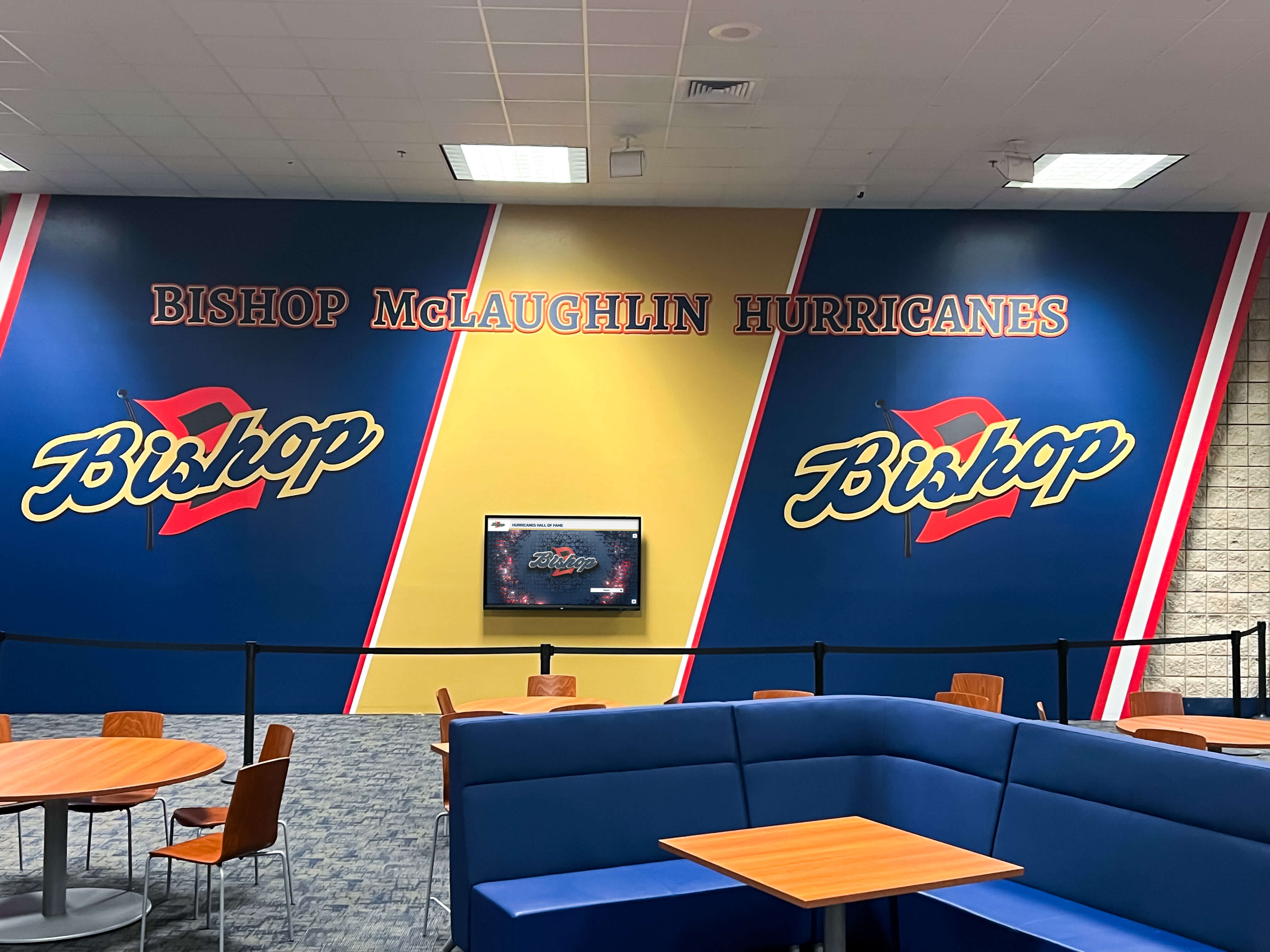
Painted murals and large-format graphics establish strong program identity in shared spaces, though they require professional work to update when branding or information changes
Gym Wall Decor Option 3: Painted Murals
Custom-painted murals are among the most visually impressive gym wall decor options available—and among the most logistically complex to maintain. Professional mural artists can create stunning facility-wide graphics incorporating mascots, athlete silhouettes, championship imagery, and school history. When done well, they transform athletic spaces into genuine destinations.
What they do well: Nothing creates a stronger first impression than a well-executed athletic mural. The physical permanence communicates investment and institutional commitment. Schools that have developed strong visual identities over decades often trace that identity to a mural installed at a key moment in program history.
Where they fall short: Murals are expensive to create and expensive to change. Adding a new record-holder’s name, updating a graduation year, or incorporating a new program means either accepting an incomplete mural or paying for professional repainting. Schools that depend on murals for recognition content often discover that their mural is accurate only at the moment it was painted—and quietly wrong for every season afterward.
The mural question also intersects with broader facility planning. Gym floor refinishing cost, process, and timing is one reference point for understanding how facility-level investments are sequenced—mural and wall work often follows floor refinishing as part of a coordinated athletic space upgrade.
Best fit: Permanent identity elements—mascots, school colors, historical imagery—that won’t need to change. Not appropriate for any recognition content that requires ongoing updates.
Gym Wall Decor Option 4: Championship Banners and Hanging Displays
Championship banners hanging from gymnasium rafters are one of the most recognized traditions in school athletics. Fabric banners, custom-printed hanging displays, and jersey retirement banners all belong to this category.
What they do well: Banners are spatially efficient—they use ceiling height rather than wall surface—and they carry unmistakable symbolic weight. A row of championship banners visible from the gym floor communicates program history at a glance.
Championship banner display ideas, from gym rafters to digital screens, covers how programs combine physical banners with digital supplementation—particularly relevant as programs accumulate banners faster than ceiling space becomes available.
Where they fall short: Physical banners have the same update challenges as murals. Missing seasons, faded fabric, and inconsistent sizing across vendor changes are common problems in programs that have maintained banner traditions for decades. Banners also offer no searchability—visitors see what’s directly above them and no additional context.
Best fit: Championship years and major program milestones where hanging format and rafter placement serve the recognition purpose.
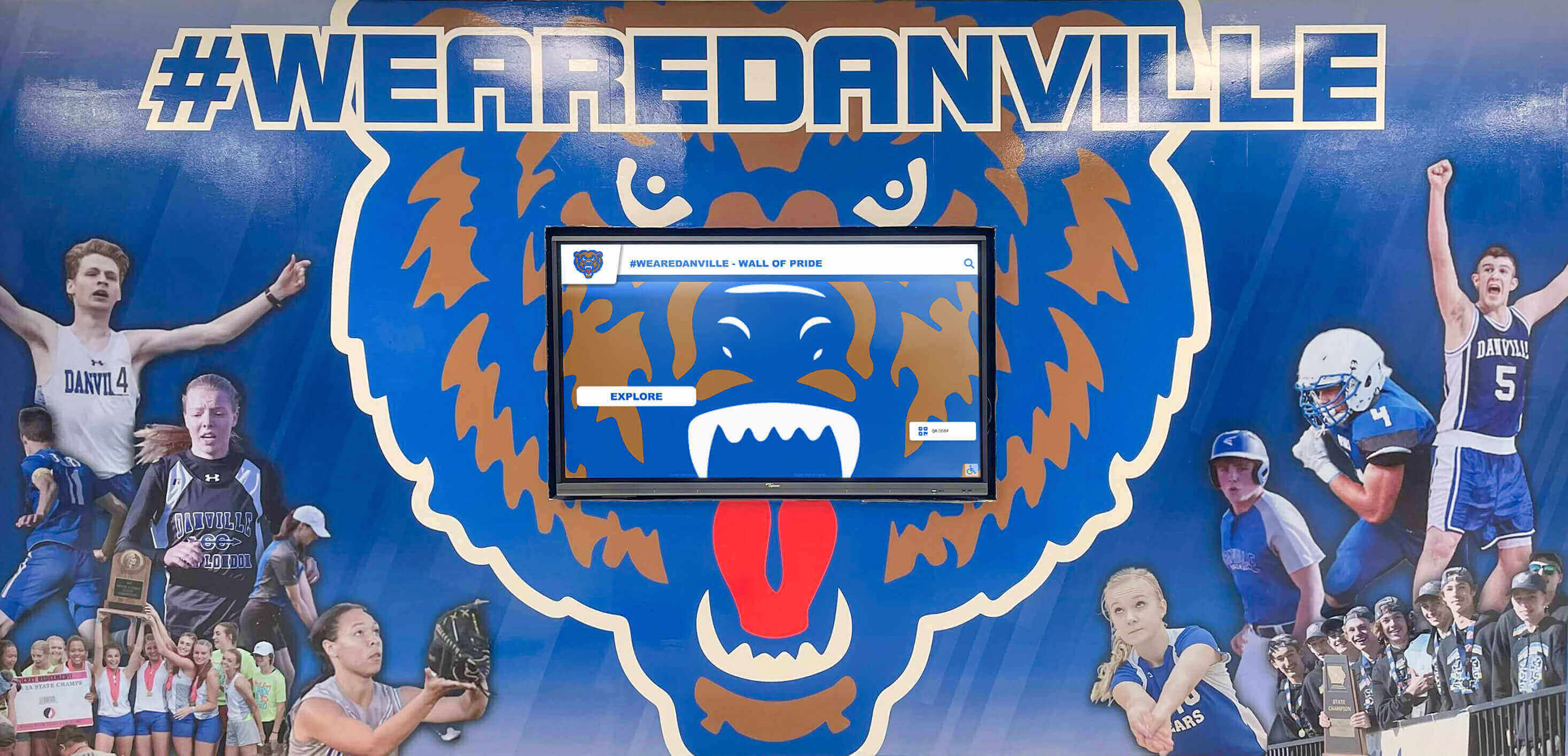
Schools increasingly integrate digital screens directly into mural designs, preserving the visual identity of painted graphics while adding updateable recognition content alongside them
Comparison Table: Gym Wall Decor Options for School Athletics
| Format | Initial Cost | Update Flexibility | Recognition Depth | Visitor Engagement | Best For |
|---|---|---|---|---|---|
| Motivational Posters | Low ($25–$200) | High — easy replacement | None — generic content only | Low — passive viewing | Seasonal messaging, locker rooms |
| Vinyl Decals | Low–Medium ($200–$2,000+) | Medium — removable but not DIY | None — branding only | Low — passive viewing | Mascot graphics, identity zones |
| Painted Murals | High ($2,000–$15,000+) | Very Low — professional repaint required | Low — static imagery only | Medium — strong first impression | Permanent identity, major installations |
| Championship Banners | Low–Medium ($75–$500 each) | Low — new banner per addition | Low — year and title only | Low — passive viewing | Championship milestones, rafter traditions |
| Touchscreen Displays | High (hardware + software) | Very High — CMS updates in minutes | Very High — records, profiles, media | High — interactive exploration | Records, hall of fame, team histories |
Gym Wall Decor Option 5: Digital Record Boards and Touchscreen Displays
Interactive touchscreen displays represent a fundamentally different category of gym wall decor—not because they look different, but because they behave differently. A touchscreen display doesn’t just sit on a wall; it responds to the people standing in front of it.
Purpose-built athletic recognition platforms allow schools to display athletic records sorted by sport and event, hall of fame inductee profiles with photographs and career details, championship histories, team rosters across seasons, and donor recognition—all within a single display that visitors can browse on demand. Touchscreen displays for high school gym lobbies cover how these systems are typically positioned in athletic facilities.
What they do well: Touchscreen displays eliminate the update problem that limits every other format on this list. A record broken in November appears on the display that same afternoon if staff choose to update it—no vendor order, no fabrication wait, no budget cycle. For schools that track records across swimming, track, cross-country, basketball, wrestling, and other programs, the ability to display comprehensive data without physical space constraints is the critical advantage.
Content management happens through web-based platforms accessible from any device, which means an athletic director updating records from a laptop at home applies the same immediately as one using a terminal in the athletic office.
Where they fall short: The upfront investment in commercial-grade hardware and software is real. Touchscreen systems require network connectivity and involve an ongoing vendor relationship for software support. These are legitimate considerations in any budget conversation.
Best fit: Programs that update records regularly, want to integrate recognition across athletics and academics, and need visitor engagement beyond what static surfaces can provide. Future trends in digital walls of fame offers additional context on where interactive recognition displays are heading.
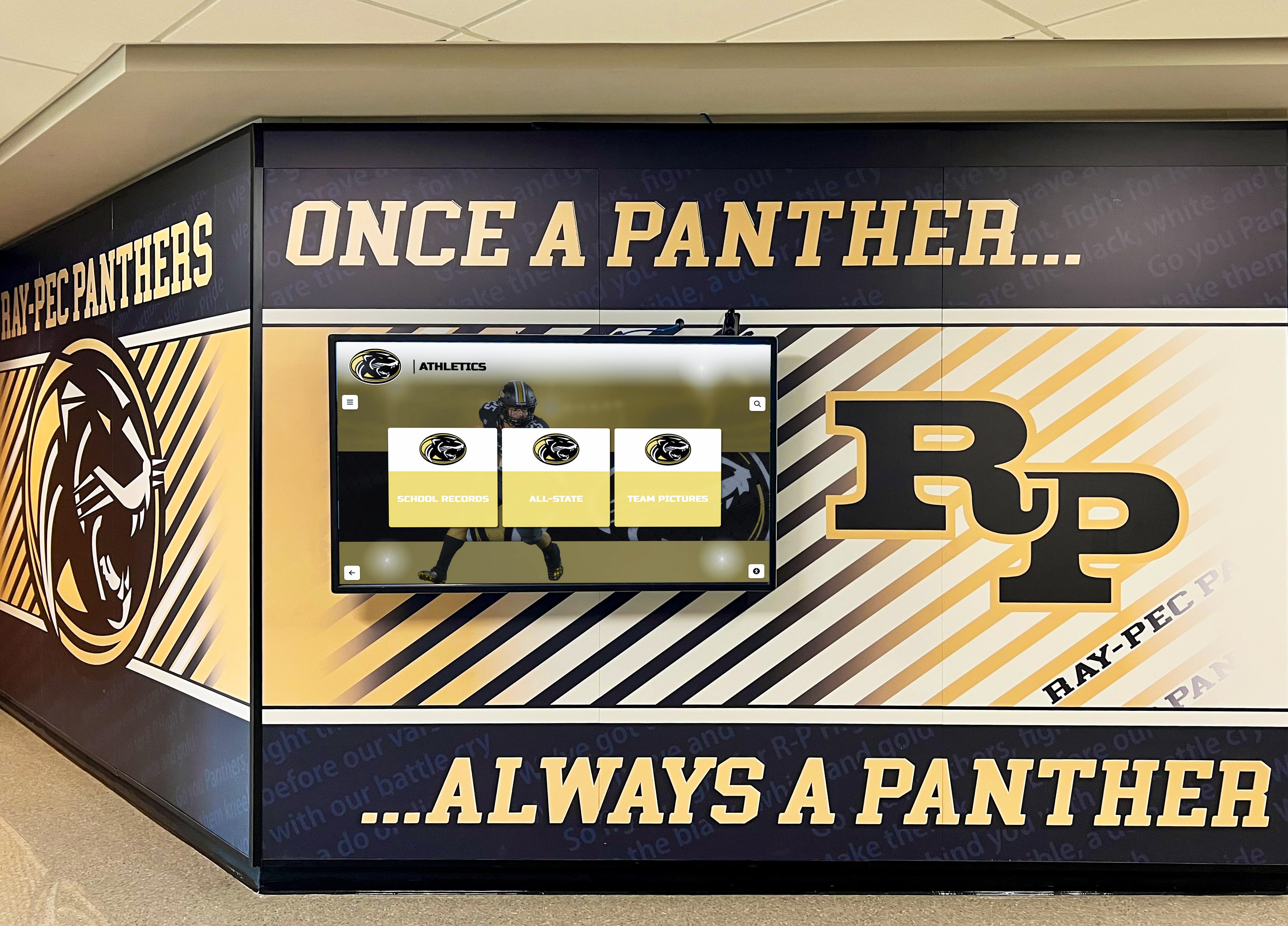
Integrating digital screens with existing mural artwork is a common approach for schools that want both visual identity and updateable recognition content in the same space
Building a Layered Gym Wall Decor Strategy
Most schools that achieve genuinely impressive athletic spaces don’t rely on a single format. They layer formats according to function:
For identity and atmosphere: Painted murals, large-format vinyl graphics, and school-color accents establish the visual character of the space. These elements change infrequently, so their high production cost amortizes over years of use.
For seasonal and motivational content: Printed posters, team photographs, and rotating graphic displays add visual freshness without requiring permanent installation.
For championship legacy: Physical banners in rafters and trophy cases honor major program milestones in the traditional format alumni expect to see.
For ongoing recognition and records: Digital displays handle the content that needs to change—records, hall of fame inductees, individual profiles, and team histories. Offloading this category to a digital platform prevents the situation where records go unupdated for years because repainting hasn’t been budgeted.
Budget-friendly high school gym makeover ideas addresses how schools sequence these investments when budget doesn’t allow all formats simultaneously. Basketball award categories schools can display is one example of how programs think about recognition content depth for a single sport—a useful model for any school building out record board content.
Schools undertaking broader athletic space upgrades also benefit from reviewing wall posters and digital display templates as a reference for how design and format decisions interact in practice.
Thinking about upgrading your athletic recognition displays? Rocket Alumni Solutions builds touchscreen recognition systems specifically for school athletic facilities—combining record boards, hall of fame displays, team histories, and donor recognition in a single interactive platform.
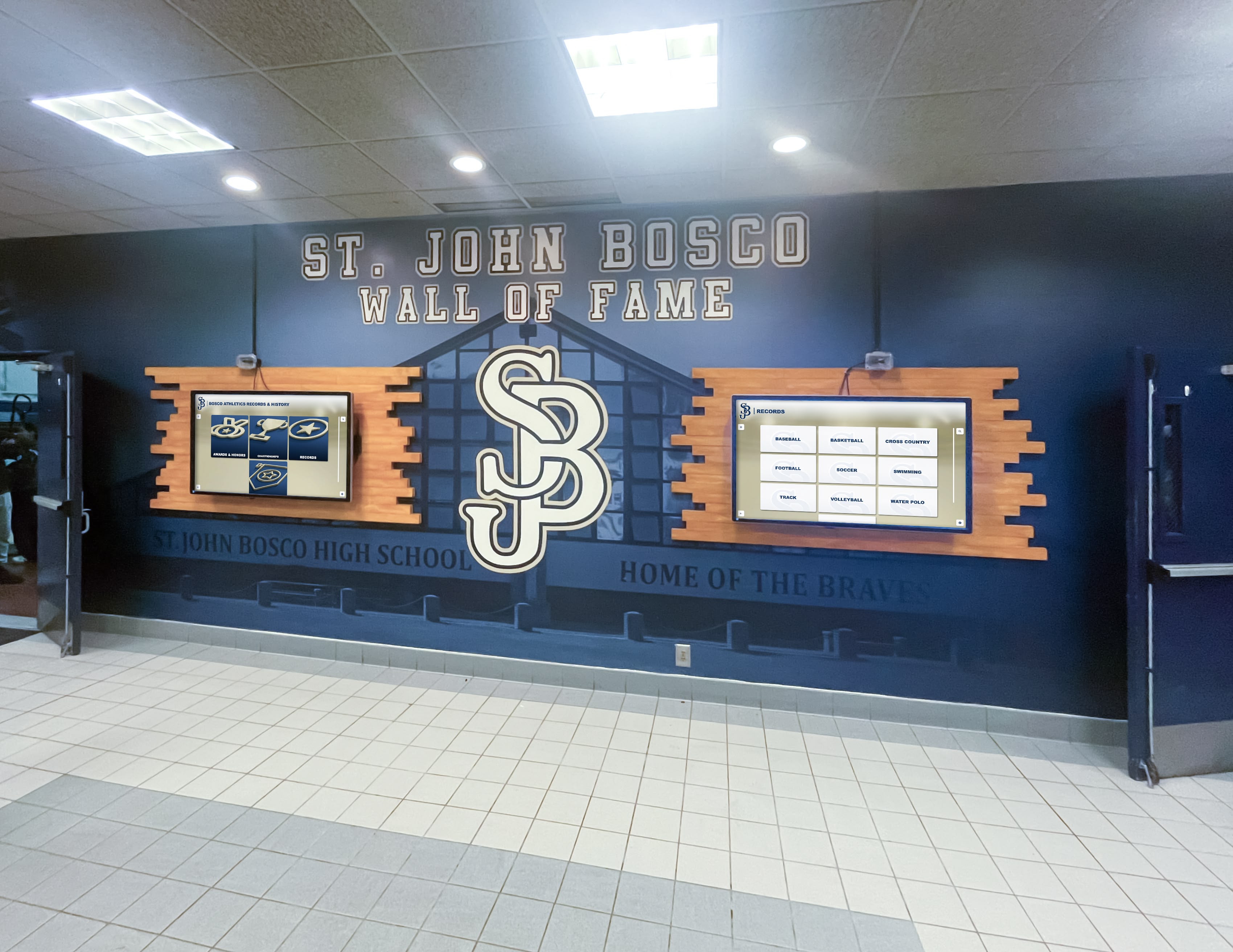
Schools with established wall of fame traditions can integrate digital displays alongside physical elements, adding interactive recognition capacity without removing legacy installations
What Goes on the Walls Beyond the Gym Floor
Gym wall decor often focuses on the main gymnasium, but athletic facilities include spaces where recognition content is equally valuable: lobby entrances, trophy corridors, locker rooms, athletic offices, and training areas. Each space serves a different audience at a different moment.
Lobby and entrance areas get the highest mix of traffic—athletes, parents, visiting teams, and community members. These spaces justify the highest-quality installations: strong visual identity combined with recognition displays that reward time spent browsing.
Trophy corridors and hallways connecting athletic areas are natural homes for records, hall of fame inductees, and team history displays. Visitors walking these corridors often have time to engage, making them well-suited for interactive touchscreen content.
Locker rooms are athlete-facing spaces where motivational content, team identity, and individual recognition have direct behavioral effects. Athletic locker room signage and motivational decor covers this space specifically with ideas for format and content.
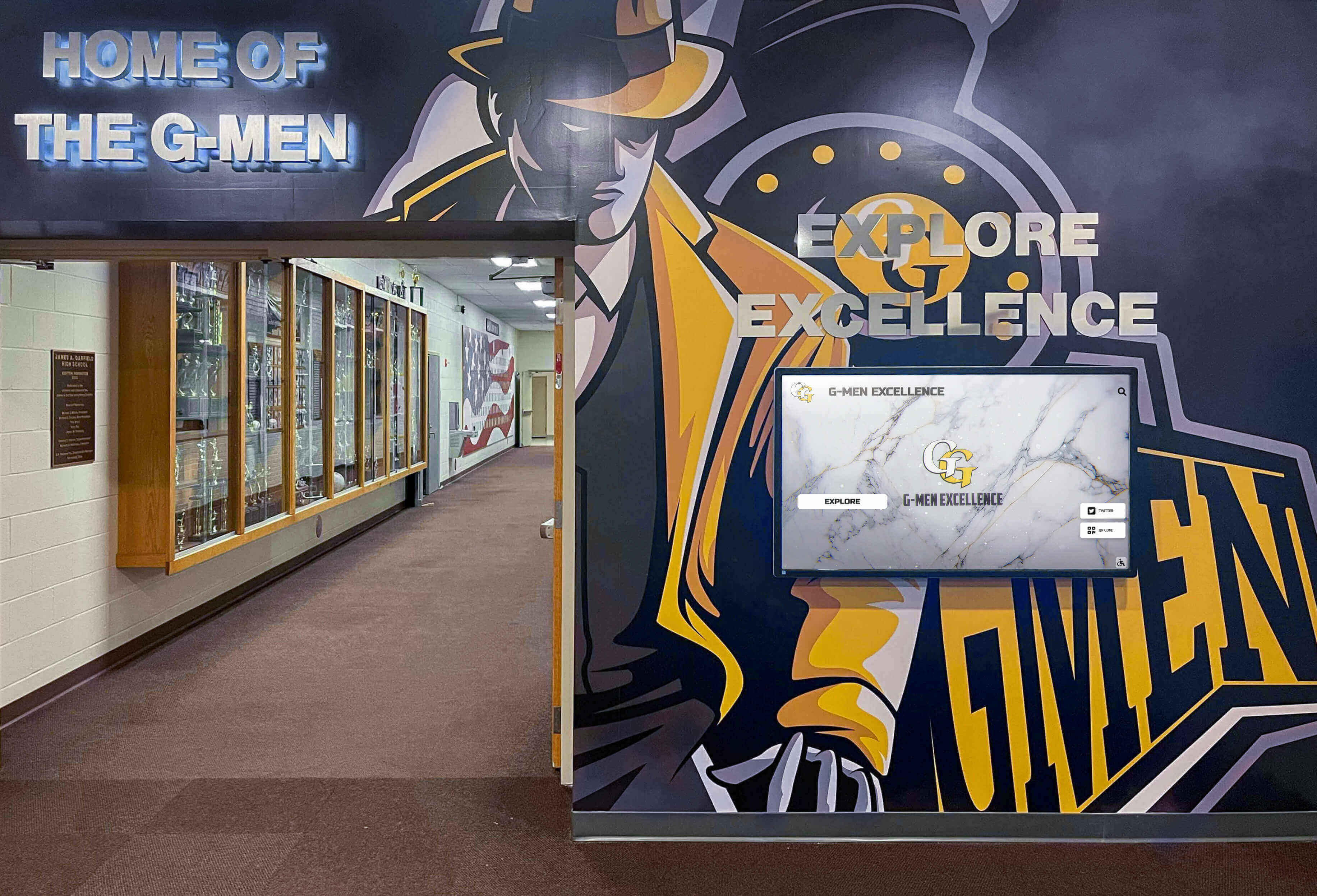
A complete athletic recognition environment layers painted identity graphics, physical trophy displays, and digital recognition screens in high-traffic corridors
Frequently Asked Questions About Gym Wall Decor for School Athletics
How do schools decide between murals and digital displays?
Most schools don’t choose one over the other—they use murals for identity content that won’t change (mascot graphics, school colors, historical imagery) and digital displays for recognition content that needs to stay current (records, inductees, team histories). The formats serve different functions and work well together.
What’s the typical update process for a school’s digital athletic record display?
Purpose-built platforms use web-based content management systems accessible from any browser. An athletic director can update a record, add a new inductee photo, or publish a team history update from a laptop or phone. Most routine updates take under five minutes once the initial content is entered.
How do schools handle gym wall decor when facility budgets are limited?
Sequencing investments by function helps. Identity elements (vinyl graphics, painted mascot artwork) can be phased in as budget allows. Championship banners accumulate naturally. Digital record displays often represent the largest single investment but also the one with the clearest operational payoff—since they eliminate ongoing costs associated with updating static formats.
Can digital displays work alongside existing murals and trophy cases?
Yes—this is among the most common installation configurations. Schools routinely integrate digital screens into mural-heavy hallways, mounting displays where they complement rather than replace existing graphic work. Some installations incorporate screens directly into mural designs.
What content should schools prioritize when first setting up a digital athletic display?
Athletic records by sport are typically the highest-priority content because they answer a specific question visitors ask—who holds the record in this event—and because that data exists somewhere in program records already. Hall of fame inductee profiles and championship histories are typically next, followed by team histories and broader program archive content.
The gym walls of a school athletic facility communicate something to everyone who sees them. What they communicate is determined by the choices made about what goes on those walls—and whether those choices are deliberate or default. Posters, decals, murals, and banners each serve specific purposes well. None of them serve the ongoing recognition purpose that athletic programs actually need: a surface that stays current, can be explored in depth, and honors the athletes who built the program without requiring a facilities project every time a record changes.
Ready to Take Athletic Recognition Beyond the Poster?
Rocket Alumni Solutions builds touchscreen recognition systems for school athletic facilities—combining record boards, hall of fame displays, team histories, and donor walls in a single interactive platform designed for the way schools actually work.
Request a Demo