Walk into any well-funded K-12 athletic facility today and you are likely to encounter gym digital signage doing work that painted banners and static trophy cases simply cannot. Schools are mounting screens in gymnasiums, hallways, lobbies, and locker rooms to display live scores, auto-updating athletic records, hall of fame inductees, motivational content, event schedules, and community recognition—all managed remotely and refreshed without printing a single sheet of paper.
The shift is driven by practical needs as much as aesthetics. Physical wall space fills up quickly across decades of championships. Updating engraved plaques costs money and time every season. Static displays give visitors nothing interactive to engage with during a lull between quarters. Digital signage solves all three problems while opening creative possibilities that traditional materials cannot match.
This guide covers more than 15 actionable gym digital signage ideas for K-12 athletic programs, along with guidance on placement, hardware selection, content management, and implementation planning. Whether your school is installing its first screen or expanding an existing network, these ideas provide a practical starting point.
K-12 athletic programs operate in spaces that are simultaneously performance venues, community gathering points, and living records of school history. Gymnasiums host state playoff games one night and middle school pep rallies the next. The signage inside those walls needs to serve both occasions—and gym digital signage systems are built to make that transition seamless.
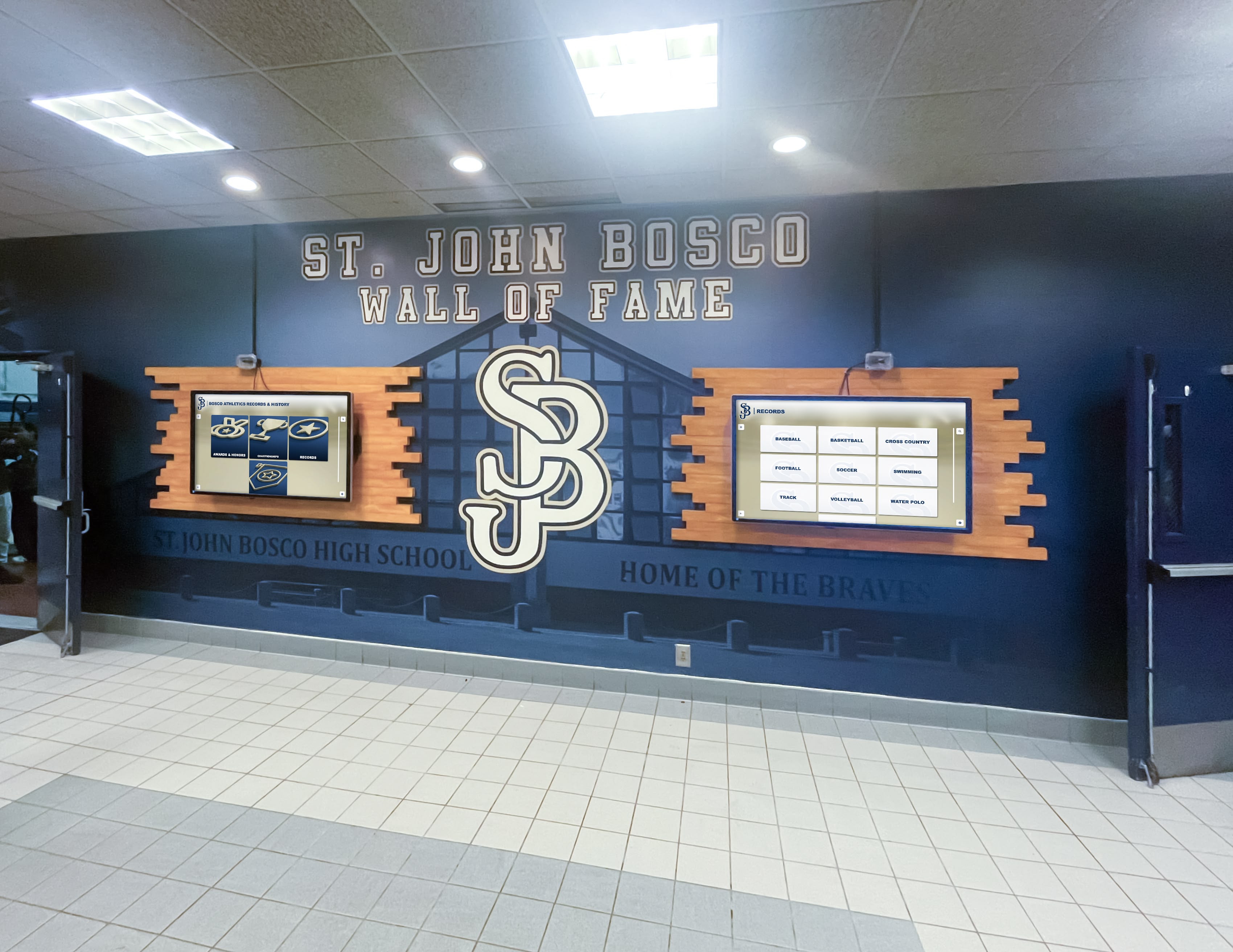
Modern schools use gym digital signage to create immersive athletic environments that honor history while engaging today's students and visitors
Why K-12 Schools Are Adopting Gym Digital Signage
Before exploring specific ideas, it helps to understand what problems gym digital signage actually solves for school athletic programs.
Space Constraints and Legacy Content
A gym that opened in 1975 may have 50 years of championship banners, individual award plaques, and record boards competing for the same wall space. Schools that have been competitive across multiple sports face a genuine capacity problem—there is simply no room to add more physical recognition without removing something.
Trophy case capacity planning is a real challenge administrators face regularly. A single digital display can surface the entire history of a program in a searchable, browsable format while occupying the footprint of one screen.
Update Costs and Accuracy
Engraving a new name on a record board or ordering a replacement plaque for a retiring coach costs time and money every season. Athletic directors sometimes delay updates for months due to budget cycles. Digital signage eliminates the physical production step—a content manager with CMS access can update a record board seconds after an athlete breaks a school mark.
Engagement During Events
Static walls give parents and visitors nothing to do while waiting for warmups to finish. Interactive gym digital signage invites people to explore athlete profiles, browse season statistics, watch highlight clips, or look up the history of a rivalry program. That added engagement deepens connection to the school’s athletic culture.
Community and Alumni Relations
A well-designed athletic recognition display tells every person walking into the gym—current students, prospective families, alumni returning for homecoming—that this school takes its history seriously. Digital displays that surface decades of achievement signal organizational pride in a way that an empty wall with four dusty plaques cannot.
15+ Gym Digital Signage Ideas for K-12 Athletic Programs
1. Auto-Updating Athletic Record Boards
Record boards are among the most compelling uses of gym digital signage because they solve a persistent pain point: keeping records current. Digital record boards pull data from a connected spreadsheet or content management system and automatically re-rank athletes when a new mark is posted.
Schools can display records by sport, gender, event type, and class year. Visitors browsing the display can sort by category, compare eras, and see not just who holds a record today but who broke it across the decades.
For programs tracking records in multiple sports simultaneously, a single touchscreen can host all of them in one organized interface rather than requiring separate physical boards for swimming, track, wrestling, and basketball.
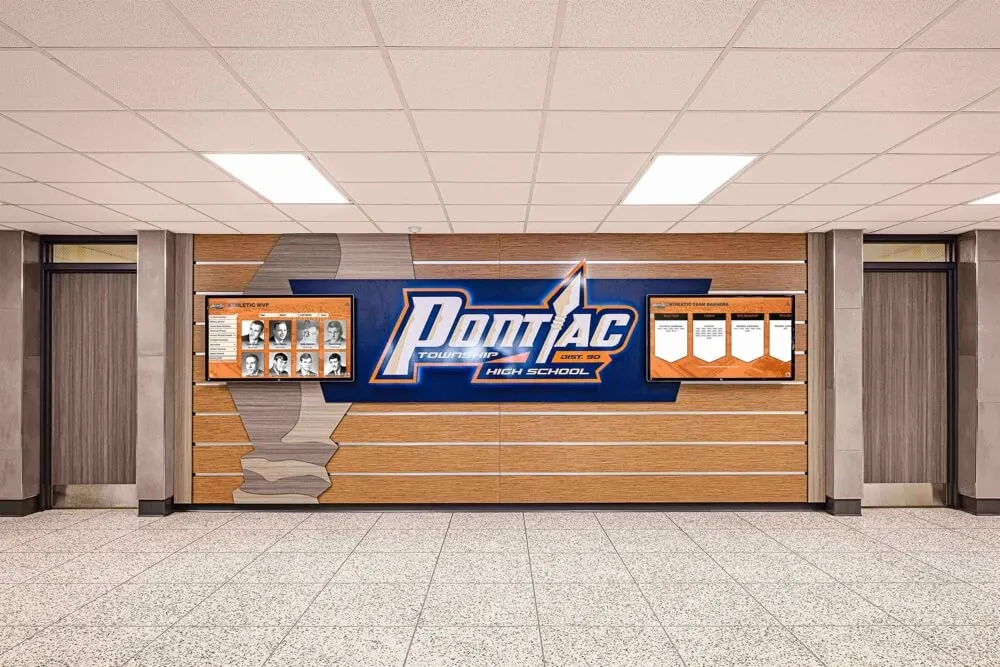
Athletic honor walls combine digital screens with traditional display elements to create comprehensive recognition environments
2. Championship Banner Displays
Physical championship banners remain an important tradition for many programs, but they are expensive, prone to fading, and difficult to hang safely at scale. Digital gym signage can supplement or expand the banner tradition by displaying championship seasons in vivid, animated formats.
Schools can present season rosters, game-by-game records, playoff brackets, and championship game highlights alongside the year and sport—details that a physical banner cannot hold. For sports where a school has won multiple titles, browsable digital archives let visitors explore each championship individually.
Schools looking to showcase championship teams through digital recognition have options ranging from standalone screens dedicated to this purpose to interactive kiosks where visitors can browse the full championship history themselves.
3. Live Score and Schedule Boards
During in-season competition, gym digital signage can display live scores from games in progress—both home contests and away games where student interest is high. Feeds from official scoring systems or sports data providers can update displays in real time without manual input.
Schedule boards showing upcoming home events, opponent records, game times, and transportation logistics serve students, parents, and staff. For programs running multiple sports concurrently (common in fall and spring), a unified schedule display eliminates the confusion of multiple printed flyers.
High school football season coverage is one of the highest-demand applications for school digital signage, with game week countdowns, matchup previews, and real-time score updates all possible through connected display systems.
4. Athletic Hall of Fame Displays
Hall of fame recognition represents one of the most powerful applications of gym digital signage. A well-designed hall of fame display allows visitors to search inductee profiles, filter by sport or graduation year, view career statistics, see photos across an athlete’s career, and explore the full class of inductees in each induction year.
For schools that already run an athletic hall of fame program, establishing clear hall of fame selection criteria gives the display content structure and helps communicate the standards that make recognition meaningful.
The athletic hall of fame complete guide for school administrators covers how to structure nomination processes, induction ceremonies, and digital display integration in ways that honor the tradition while making it accessible year-round.
5. Motivational Content and Athlete Spotlights
Between games and during practice periods, gym digital signage can rotate through motivational content—quotes from coaches, former athletes, and sports leaders—alongside athlete spotlight profiles that introduce current team members to the broader school community.
Weekly athlete spotlights featuring a photo, their sport, grade, position, and a brief personal quote humanize the program and give students a sense of pride seeing their peers recognized. Motivational content timed to playoff seasons or championship pushes builds collective energy around shared goals.
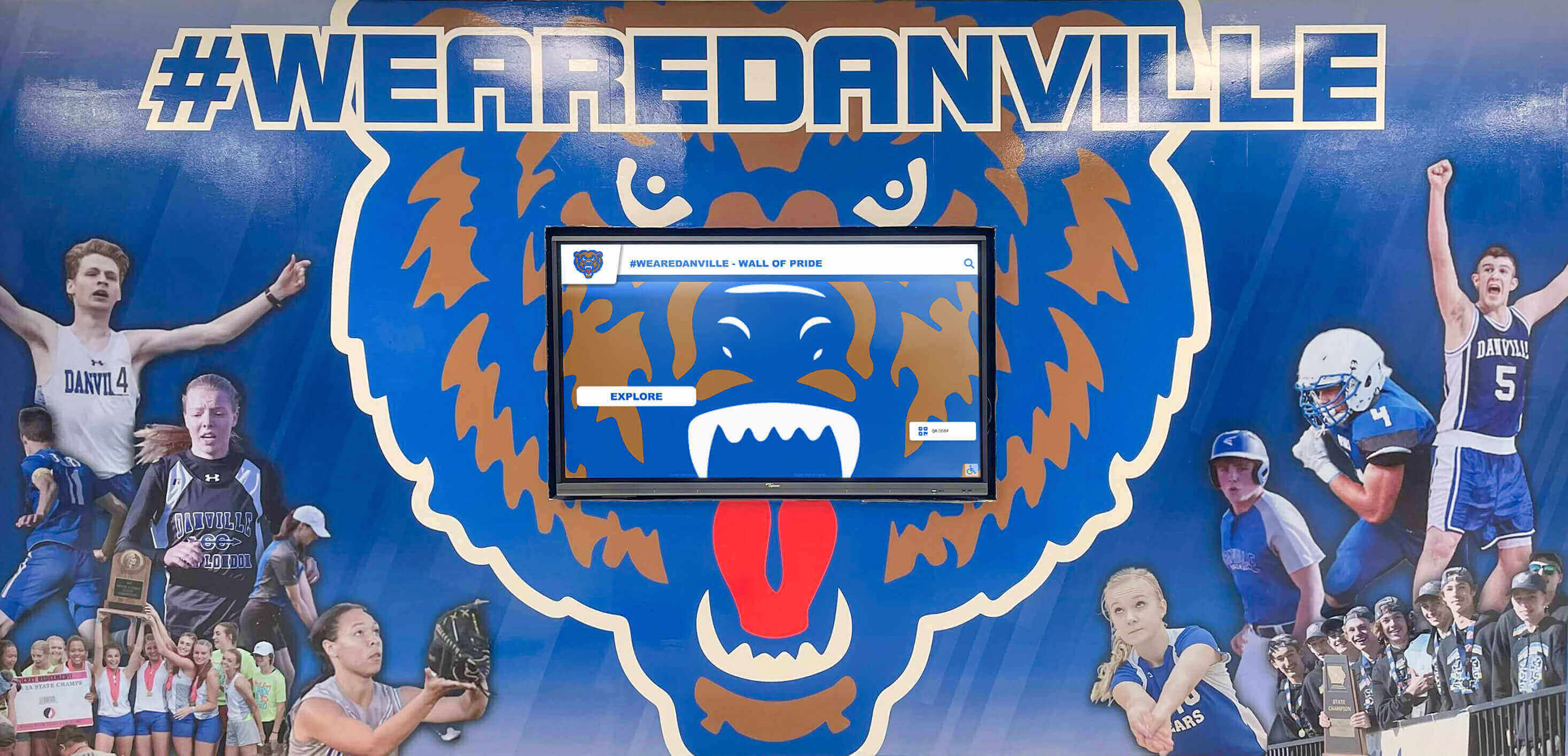
Integrating digital screens with branded athletic murals creates immersive environments that reinforce school identity and athletic culture
6. Game Day Hype and Countdown Content
The hours leading up to a home game are an opportunity gym digital signage handles particularly well. Countdown timers displaying hours and minutes until tipoff, player introduction slideshows, matchup statistics, previous series history, and crowd participation prompts all create excitement before the first whistle.
During halftime and between periods, screens can display stats from the half, fun facts about the opponent, spirit competition results, and queue for halftime performances. Content that makes the in-person experience richer encourages higher attendance and stronger fan culture.
7. Sponsor and Booster Recognition
Athletic programs depend heavily on booster club funding and community sponsorships. Gym digital signage provides a meaningful, highly visible recognition vehicle that sponsors value—particularly when compared to a name on a paper program that gets thrown away after the game.
Sponsor displays can rotate through business logos, sponsorship levels, and recognition messages in a dignified format that does not distract from the athletic experience. Schools can tier recognition screen time to sponsorship investment levels, creating a structured incentive for higher gifts.
For programs also recognizing major donors who funded facilities or equipment, dedicated screens that surface donor recognition in context—at the facility they funded—deliver more impact than a lobby plaque alone.
8. Community Heroes and Alumni Recognition
Gyms serve as gathering spaces where community identity is formed and reinforced. Community praise and touchscreen display programs extend recognition beyond student-athletes to include military veterans, first responders, community leaders, and alumni who have achieved distinction beyond graduation.
These displays tell the full story of what a school’s athletic program produces over time—not just championships, but citizens, professionals, and leaders who trace some of their formation back to the gym floor. Alumni who return for homecoming and find their names or photos on a community recognition display carry that memory forward for decades.
9. Locker Room Motivational Signage
The locker room is where athletes prepare mentally and emotionally before competition. Gym digital signage in locker rooms—whether mounted screens cycling through motivational content or dedicated displays showing the upcoming opponent’s tendencies—creates an environment that reinforces team identity and competitive focus.
Athletic locker room signage ideas range from simple motivational quote rotations to film session displays, scouting report presentations, and weekly team goals posted as visual reminders. The key is content tied directly to the team’s current identity and competitive context rather than generic messaging.
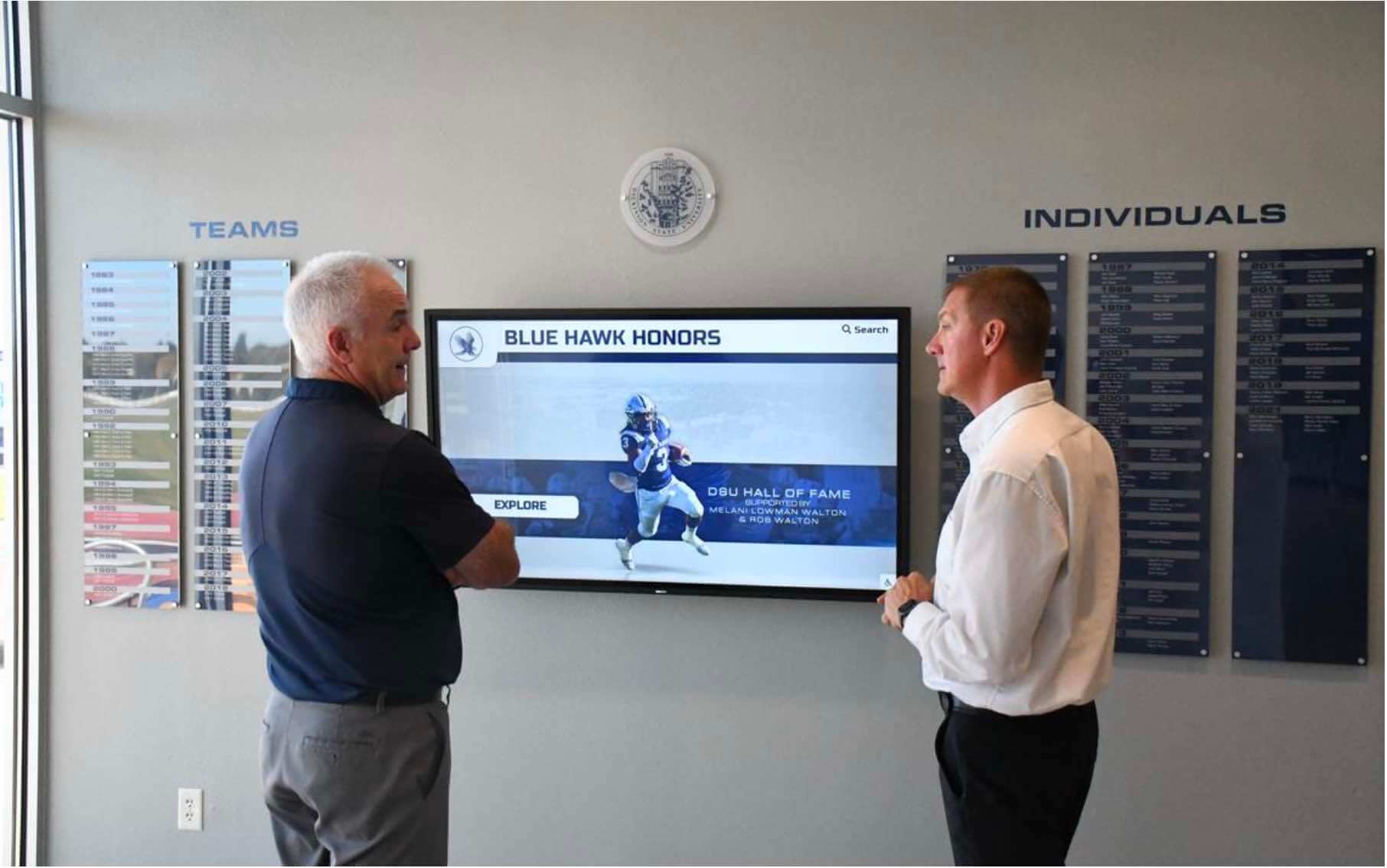
Interactive digital displays invite visitors to explore athletic program history in ways that static boards and plaques cannot support
10. Trophy and Memorabilia Digital Archives
Physical trophies and memorabilia items cannot always be displayed at the scale a successful program accumulates them. Schools managing football helmet display cases and other athletic memorabilia eventually face the same space challenge as trophy cases.
Digital archives allow schools to photograph and document every trophy, championship ring, worn jersey, signed ball, and piece of equipment—then display them in searchable, beautifully presented digital galleries accessible from any screen on campus. The physical originals can be stored safely while the digital record makes them permanently visible.
11. Team Rosters and Coaching Staff Profiles
Current season rosters displayed in the gym give attendees context about who is on the floor or field. Digital rosters can include player numbers, positions, heights, grade levels, hometowns, and career statistics—far more information than a printed game program accommodates.
Coaching staff profiles introduce the people building the program to families who may not know the coaching backgrounds. Athletic directors can surface coaching credentials, philosophy statements, and coaching tree connections that build credibility with parents making decisions about which sports their student participates in.
12. Season Statistics and Progress Tracking
For fans following a team through a season, ongoing statistical displays deepen engagement. Digital signage showing cumulative season stats, conference standings, win streak information, and historical comparisons to championship seasons gives informed fans data they want.
Athletic communications plans developed by athletic departments often identify in-venue signage as a key channel for keeping students and parents informed throughout a competitive season without requiring separate printed materials.
13. College Signing and Recruiting Showcases
College signing days represent milestone moments for student-athletes and deserve prominent recognition. Gym digital signage can display signing day ceremonies, the universities athletes are committing to, scholarship information (where appropriate), and highlight reels supporting each athlete’s recruitment story.
A permanent digital signing display updated each year over time builds an impressive visual record of the program’s college placement success—a recruiting tool that speaks to prospective student-athletes considering where to play.
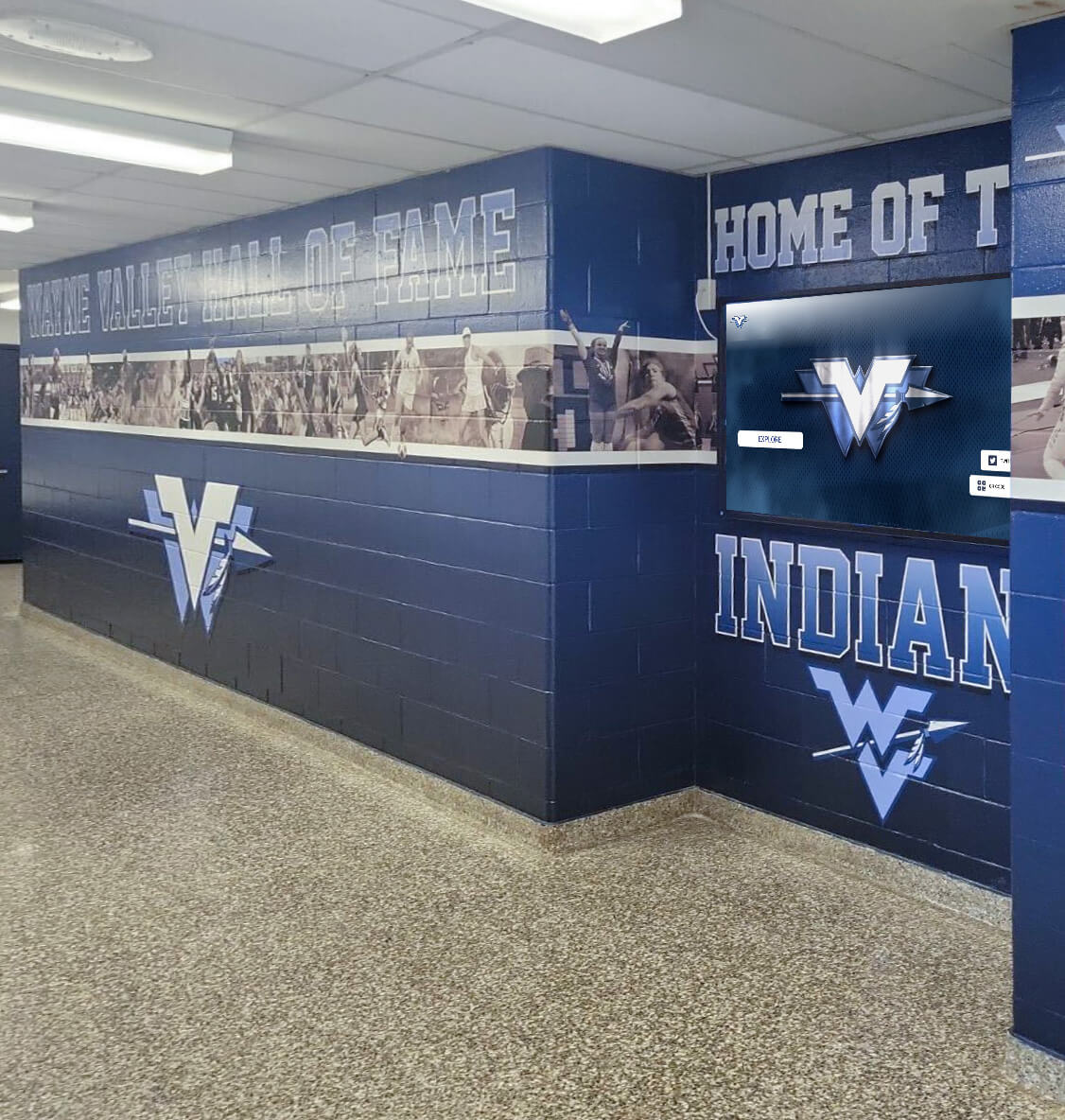
Branded athletic hallways combine school colors, mascot imagery, and digital recognition displays to create distinctive environments
14. Wayfinding and Event Information
Large gyms and multi-facility athletic complexes benefit from digital wayfinding during events when visitors unfamiliar with the campus arrive for competitions. Event-day screens displaying gym layouts, restroom locations, concession areas, parking instructions, and emergency exit paths reduce confusion and improve visitor experience.
Event schedule boards updated in real time as competition brackets progress—common in tournament formats—give attendees clarity about upcoming matchups without requiring printed bracket updates throughout the day.
15. School History and Milestone Timelines
Beyond current athletic achievement, gym digital signage can situate today’s program within the school’s broader athletic history. Interactive timeline displays allow visitors to explore the evolution of the program—when particular sports were introduced, when the gym itself was built or renovated, founding coaches, early championships, and other milestones that give the present context.
For schools approaching significant anniversaries, a digital history installation in the gym is a compelling centerpiece for reunion events and homecoming weekends. School lobby design ideas frequently incorporate historical timelines as a signature element of athletic facility entrances.
Placement Strategies for Gym Digital Signage
Where screens are positioned matters as much as what they display. Different locations within an athletic facility serve different functions and audiences.
Gymnasium Entrance and Lobby
The entry point to the gym is where first impressions form. Visitors arriving for a game, recruits taking official visits, and new families attending their first event all encounter the lobby before anything else. A well-designed lobby installation combining a prominent digital display with branded murals and recognition elements communicates program identity immediately.
High-traffic lobby placement maximizes exposure to the full range of stakeholders—students, parents, alumni, opponents, officials, and community members all pass through the same entrance. Best practices for digital walls of fame consistently identify entry lobbies as the highest-impact location for interactive recognition displays.
Main Gym Walls and Scorer’s Area
Screens mounted on gym walls visible from spectator seating serve event audiences. These displays are best suited for passive content—schedules, scores, sponsor recognition, and game day content—rather than interactive applications that require close viewing and touch interaction.
Positioning near scorer’s tables or at the end of bleacher sections ensures screens fall within natural sightlines. Commercial-grade displays rated for continuous operation handle the brightness levels needed to remain readable under athletic facility lighting.
Athletic Hallways and Corridors
The hallways connecting gym spaces, locker rooms, weight rooms, and team areas see heavy daily traffic from student-athletes who may spend two to four hours in the facility during practice. This captive audience is ideal for motivational content, team statistics, record displays, and recognition that might not be visible from the main gym floor.
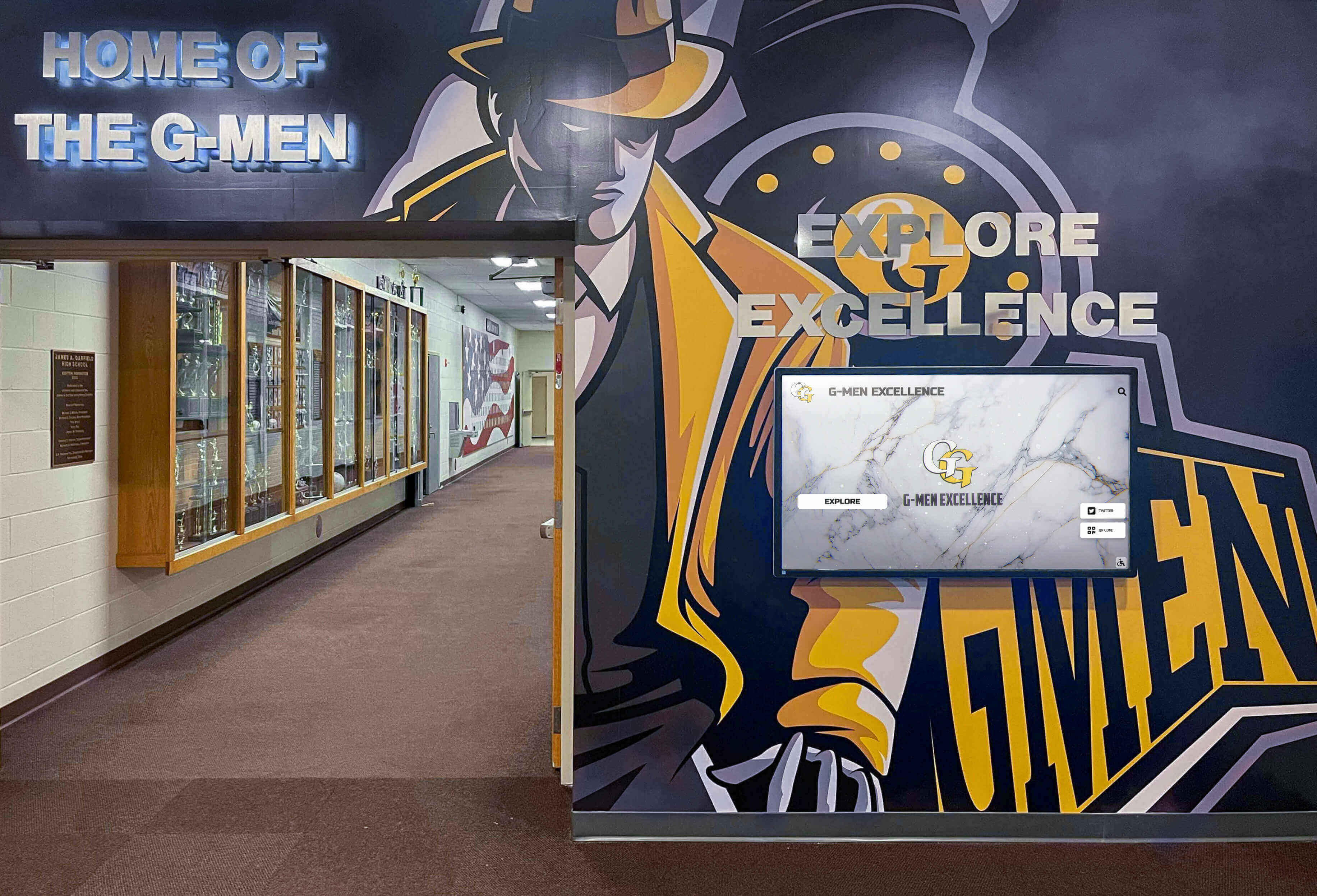
Athletic hallways provide consistent daily exposure to gym digital signage for student-athletes and staff moving through the facility
Locker Rooms and Team Meeting Areas
Smaller screens or displays in locker rooms serve the specific audience of athletes preparing for competition. This placement calls for content with a different tone—focused on the current team, current season, and immediate competitive purpose rather than historical recognition.
Team meeting areas where coaches deliver pre-game talks benefit from displays capable of showing presentation slides, scouting footage, or tactical diagrams integrated into the same screen infrastructure as recognition and schedule content.
Interactive Touchscreen vs. Passive Display Signage
Not all gym digital signage is the same. The distinction between passive and interactive systems is important for matching technology to use case.
Passive displays cycle through content playlists without requiring viewer interaction. They work well for:
- Concourse displays visible from seating areas
- Schedule and score boards updated centrally
- Sponsor recognition rotations
- Event wayfinding screens
- Locker room motivational content
Interactive touchscreen displays respond to user input and enable self-directed exploration. They are appropriate for:
- Athletic hall of fame installations where visitors browse profiles
- Historical archives and timeline displays
- Record boards with searchable, filterable data
- Alumni recognition walls users navigate at their own pace
- Recruiting information centers where prospective athletes explore program details
The choice between passive and interactive depends on viewing distance, audience behavior, and content depth. Interactive systems typically require closer placement—within arm’s reach—and content rich enough to reward exploration. Passive systems suit distance viewing and content that communicates effectively in 10-20 seconds per screen.
Schools deploying both types can install a touchscreen display in the high school gym lobby for interactive recognition while mounting passive displays on gym walls for event-day content—serving different audiences and purposes within the same facility.
Content Management for Gym Digital Signage
The most sophisticated screen installation delivers diminishing returns when content goes stale. Schools implementing gym digital signage need clear processes for content management.
Cloud-based content management systems allow authorized staff to update displays from any internet-connected device without physical access to the screen. Athletic directors can post updated schedules from their phones during a tournament. Coaches can add athlete spotlights after a strong performance. Administrative staff can manage sponsor rotations during the regular season.
Content ownership and scheduling should be defined before installation. Assign specific staff members ownership of each content category—one person managing schedule boards, another handling recognition content, a third overseeing sponsor relationships. Clear ownership prevents stale content from sitting on screens for weeks unnoticed.
Update frequency varies by content type. Schedules need updates within hours of changes. Record boards update when records fall. Motivational content rotates on weekly or monthly cycles. Historical recognition content requires infrequent but careful updates when new inductees are added.
Platforms that support role-based permissions allow schools to give multiple staff members content management access appropriate to their responsibilities without exposing full system configuration to every user.
Implementation Considerations
Schools evaluating gym digital signage installation face several practical decisions worth addressing in the planning phase.
Screen sizing for gymnasium spaces typically requires larger displays than standard office or classroom deployments. Main gym wall displays visible from bleachers often need 75" to 86" screens or larger to remain readable at distance. Hallway and lobby installations can typically use 55" to 65" displays positioned for closer viewing.
Commercial-grade hardware matters for gym environments. Consumer televisions are not rated for the continuous operation hours typical of school facilities. Commercial displays built for 16/7 or 24/7 operation offer significantly longer service life in high-demand settings.
Network requirements include reliable wired ethernet connections preferred over wireless for displays requiring consistent content delivery, adequate bandwidth for video content, and proper network security configuration separating display traffic from sensitive school systems.
ADA compliance applies to interactive touchscreen installations. WCAG 2.1 AA compliance standards address height requirements, text contrast ratios, screen reader compatibility, and alternative access methods for users who cannot interact with touch interfaces. Schools implementing interactive systems should verify compliance documentation from vendors before installation.
Budget planning should account for hardware, installation labor, content management software, and ongoing content creation resources. Schools frequently underestimate the staff time required to keep content fresh and relevant. Factoring content management into budget planning from the start prevents stale displays post-launch.
Frequently Asked Questions About Gym Digital Signage
What screen sizes work best in gymnasiums?
Main gym wall displays visible from spectator seating typically require 75" to 86" commercial displays or larger. Lobby and hallway installations positioned for 6 to 10 feet of viewing distance work well at 55" to 65". Interactive touchscreen kiosks in high-traffic areas often use 55" to 75" touch-enabled displays mounted at accessible heights.
How do auto-updating record boards work?
Athletic record boards connected to content management systems pull data from a linked spreadsheet, database, or sports information platform. When staff enter a new record, the board re-ranks automatically and updates the display without requiring manual redesign. Some platforms integrate with official sports data feeds for real-time updates during competition.
Can gym digital signage display content from multiple sports simultaneously?
Yes. Cloud-based content management systems allow schools to manage separate content playlists for different sports, display zones, and time periods within a single platform. A basketball game-day playlist can activate for home games while a standard recognition rotation runs on off-days.
How long does installation typically take?
Simple passive display installations involving wall mounting and network connection can be completed in a day or two per screen. Complex interactive installations requiring custom content development, database integration, and professional design typically involve longer lead times—often four to eight weeks from project kickoff to live display.
What software manages gym digital signage content?
Content management software for digital signage ranges from general-purpose platforms supporting basic playlist management to specialized recognition systems with database integration, searchable interfaces, and professional design capabilities. The right choice depends on the complexity of content you want to display and the interactive experience you want to deliver. Solutions like Rocket Alumni Solutions specialize in interactive recognition displays for school athletic programs, handling everything from custom interface design to content migration and ongoing management support.
Getting Started with Gym Digital Signage
Schools beginning the process of implementing gym digital signage benefit from starting with a clear use case before evaluating hardware or software options. Define what problem the display is solving and who the primary audience is. A screen serving game day visitors in a main gym has different requirements than an interactive hall of fame installation in the lobby.
Pilot installations—a single display in a high-traffic location with well-defined content—allow schools to build internal experience with digital signage workflows before committing to facility-wide deployments. Lessons learned from a pilot inform hardware selection, software configuration, content strategy, and staff training for subsequent phases.
For schools interested specifically in recognition-focused displays—hall of fame systems, record boards, and legacy content that honors program history—working with vendors who specialize in educational athletic recognition delivers better results than adapting general-purpose digital signage platforms to specialized needs.
Ready to explore how interactive recognition displays can transform your gym into a destination that celebrates every athlete who has competed for your school? Discover how Rocket Alumni Solutions designs custom touchscreen displays for K-12 athletic programs that honor history and engage today’s students, families, and alumni.