Schools across the country wrestle with yearbook challenges that grow more complex each year. Printing costs climb steadily, with professional yearbook services charging $40-$80 per book—costs that burden families and prevent some students from owning their school memories. Distribution logistics strain staff resources, storage takes up valuable space, and unsold copies eventually end up discarded. Traditional yearbooks freeze memories at a single moment, offering no way to add senior year updates, college acceptances, or career achievements that unfold after publication.
Digital yearbooks solve these persistent challenges while creating richer memory preservation experiences. These interactive systems—accessible through touchscreen displays, mobile devices, and web platforms—enable schools to celebrate student memories without print limitations, budget constraints, or storage headaches. Students access unlimited photos from throughout the year, not just the carefully curated selections that fit printed page counts. Updates happen instantly when students earn awards, commit to colleges, or achieve new milestones. Families save money while gaining permanent, searchable access to memories that traditional yearbooks cannot match.
This comprehensive guide examines digital yearbook options for schools in 2026—exploring interactive touchscreen displays, online platforms, hybrid approaches, implementation strategies, and practical considerations for schools transitioning from traditional printed yearbooks to modern digital solutions.
Print yearbooks served schools well for over a century. They provided tangible memories that students treasured throughout their lives. Yet escalating costs, environmental concerns, and student expectations shaped by digital experiences make traditional yearbooks increasingly difficult to sustain.
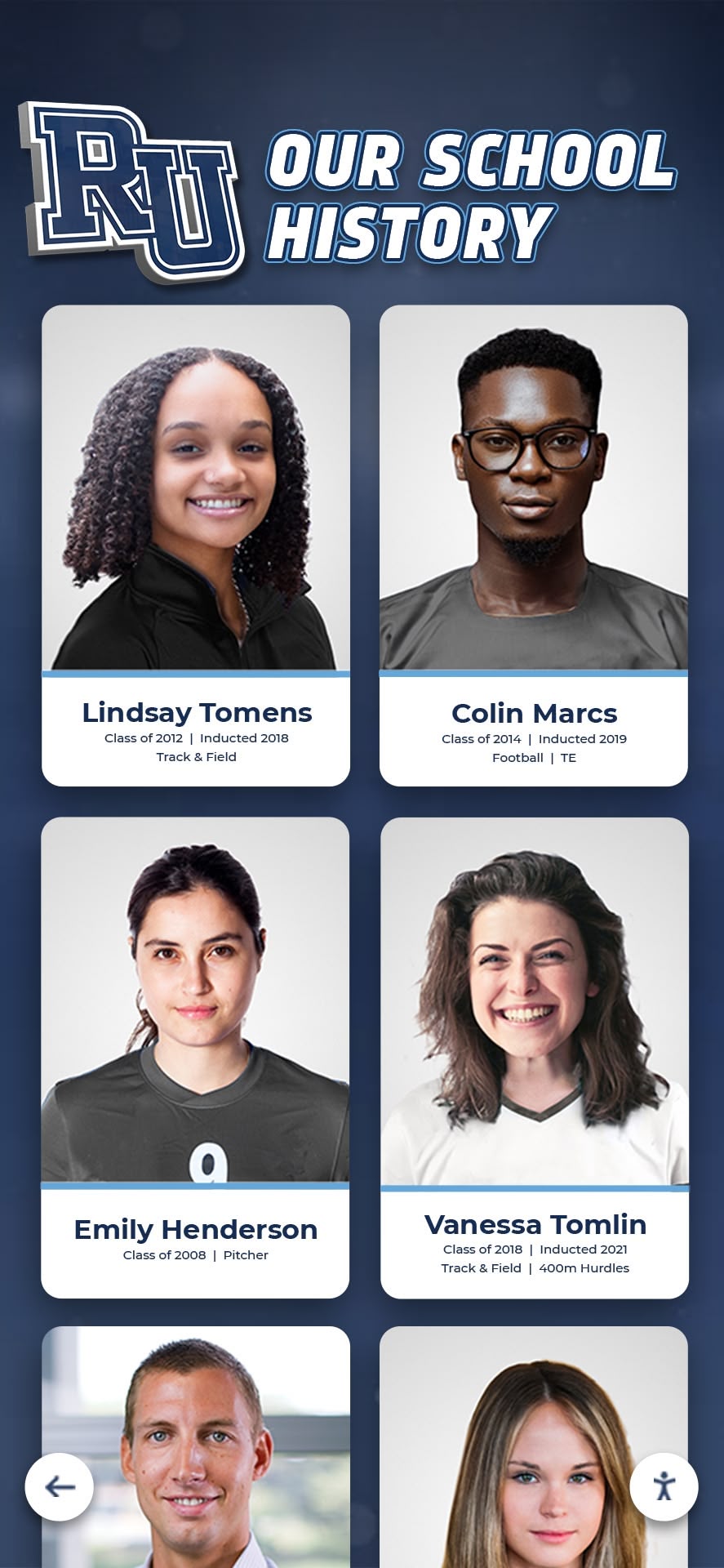
Digital yearbook displays preserve student memories while enabling ongoing updates and unlimited photo capacity
Understanding Digital Yearbook Options
Digital yearbooks encompass several distinct approaches, each serving different school needs and priorities. Understanding these options helps schools select solutions matching their goals, budgets, and technical capabilities.
Interactive Touchscreen Yearbook Displays
Physical touchscreen displays installed in school common areas function as permanent yearbook installations that students, staff, and visitors can explore.
How They Work Large-format touchscreen displays (typically 55-86 inches) mount in school lobbies, hallways, or alumni spaces. Cloud-based content management systems enable staff to upload student photos, achievements, club activities, and school events. Visitors tap, swipe, and search through content organized by year, class, activity, or custom categories.
Key Features
- Unlimited photo capacity without page count restrictions
- Searchable databases finding specific students, events, or activities instantly
- QR code access enabling students to view content on personal devices
- Continuous updates throughout the school year, not just annual publication
- ADA-compliant accessibility for all students and families
- Professional display quality showcasing student achievements prominently
Ideal For Schools seeking permanent memory preservation installations that serve multiple purposes—celebrating current students while honoring alumni history. Particularly valuable for schools with active alumni programs or facilities visited frequently by graduates, families, and community members.
Educational institutions implementing digital archives for school history create lasting institutional memory that extends far beyond single-year snapshots.
Web-Based Digital Yearbook Platforms
Online platforms publish yearbook content on websites accessible from any internet-connected device.
How They Work Schools work with digital yearbook service providers or use self-hosted platforms to create web-accessible yearbook pages. Students and families log in through personalized accounts to view photos, read messages, and explore memories.
Key Features
- Access from smartphones, tablets, and computers anywhere
- Social features enabling students to comment, share, and tag friends
- Optional print-on-demand services for families wanting physical copies
- Lower costs compared to traditional printed yearbooks
- Password-protected access ensuring privacy and appropriate content
- Mobile apps providing convenient smartphone access
Ideal For Schools prioritizing broad accessibility and cost savings. Particularly effective for schools with technology-savvy student populations and families comfortable with digital-first experiences.
Hybrid Print and Digital Approaches
Some schools combine traditional printed yearbooks with digital components, offering benefits of both formats.
How They Work Schools produce smaller print runs covering essential content while directing students to digital platforms for complete photo galleries, extended content, and ongoing updates.
Key Features
- Smaller printed books focusing on classic yearbook elements like senior portraits and major events
- Comprehensive digital galleries with unlimited photos from all activities and sports
- QR codes in printed books linking to video content, audio messages, and extended galleries
- Reduced printing costs from shorter books and smaller quantities
- Tangible keepsakes for families valuing physical yearbooks
- Digital flexibility for schools wanting to add content after print publication
Ideal For Schools transitioning from traditional yearbooks or serving communities with mixed preferences about print versus digital formats. Provides options while reducing costs compared to full traditional yearbooks.
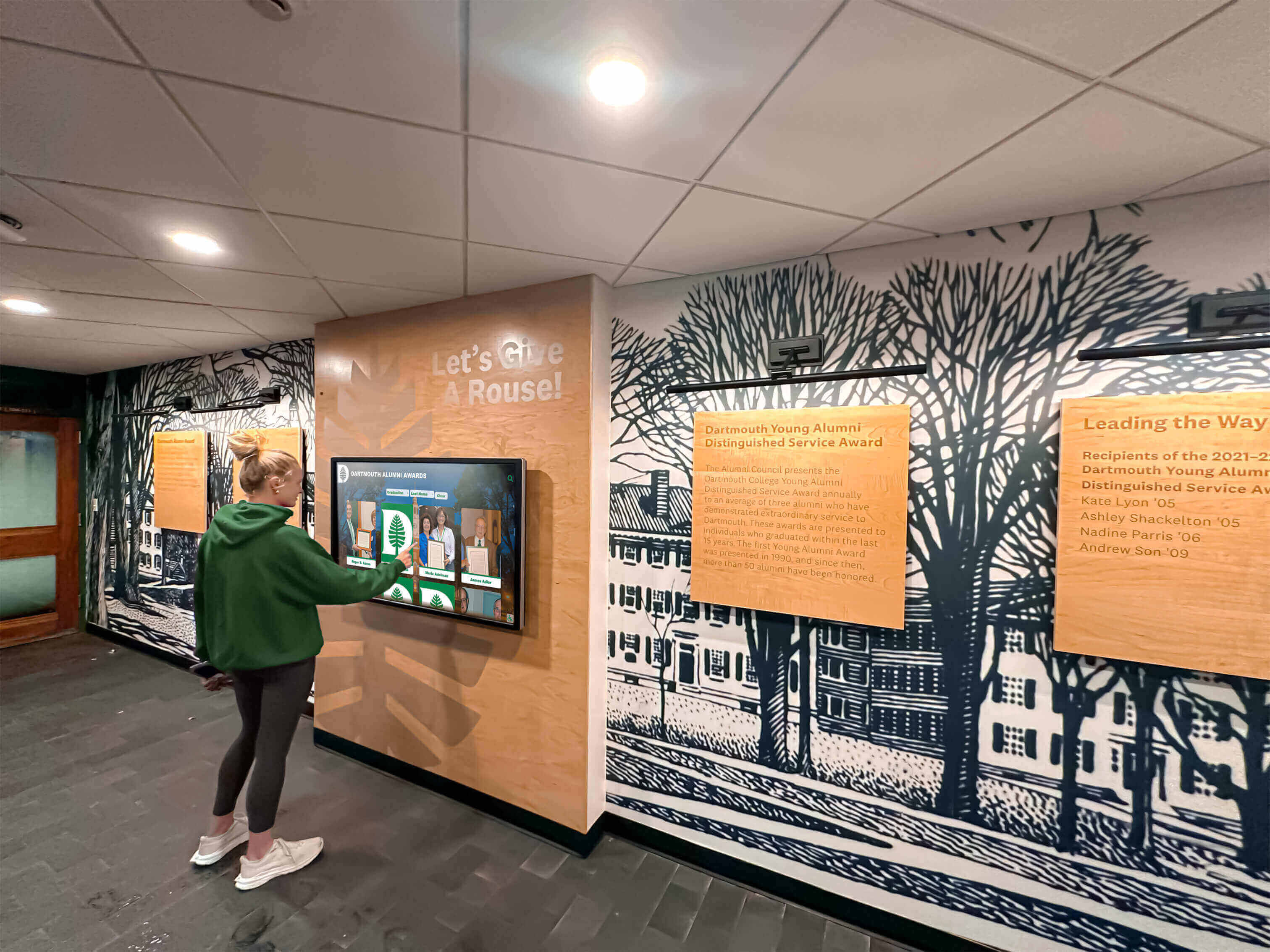
Interactive displays enable self-directed exploration of school memories and student achievements
Benefits of Digital Yearbooks Over Traditional Print
Digital yearbook solutions address fundamental limitations affecting traditional printed yearbooks while creating new memory preservation opportunities.
Unlimited Photo Capacity
Traditional yearbook page counts force difficult selection decisions. Schools receive thousands of photos from athletics, activities, events, and daily school life, yet printed yearbooks accommodate only a small fraction.
Traditional Limitations
- Printed yearbooks typically contain 200-400 photos maximum
- Photographers submit 5,000-15,000 photos annually
- Sports teams receive 2-4 pages regardless of season length
- Clubs and activities share limited space
- Candid photos capturing authentic school life get cut first
- Student editors spend months selecting which memories make the cut
Digital Solutions Digital platforms eliminate arbitrary photo limits entirely. Schools upload comprehensive galleries from every sport, activity, event, and club. Students find themselves in dozens or hundreds of photos rather than hoping they made the limited selections. Every moment deserves preservation, and digital formats make this achievable.
This comprehensive approach ensures no student feels invisible or overlooked—a persistent problem with traditional yearbooks where space constraints create unintentional but painful inequities in representation.
Significant Cost Savings
Yearbook budgets strain schools and families alike. Professional printing costs, staff time, and distribution expenses add up quickly.
Traditional Costs
- Professional yearbooks: $40-$80 per book
- Full-color printing: $15,000-$40,000 for typical school
- Storage space: 50-200 square feet for yearbook archives
- Unsold inventory: 10-20% of print runs never sell
- Staff time: 200-400 hours managing production and distribution
Digital Savings
- One-time display hardware: $3,000-$8,000 (serves multiple years)
- Annual software subscriptions: $500-$2,000
- Zero printing costs after initial setup
- No storage space required
- Minimal staff time with self-service upload tools
- No unsold inventory waste
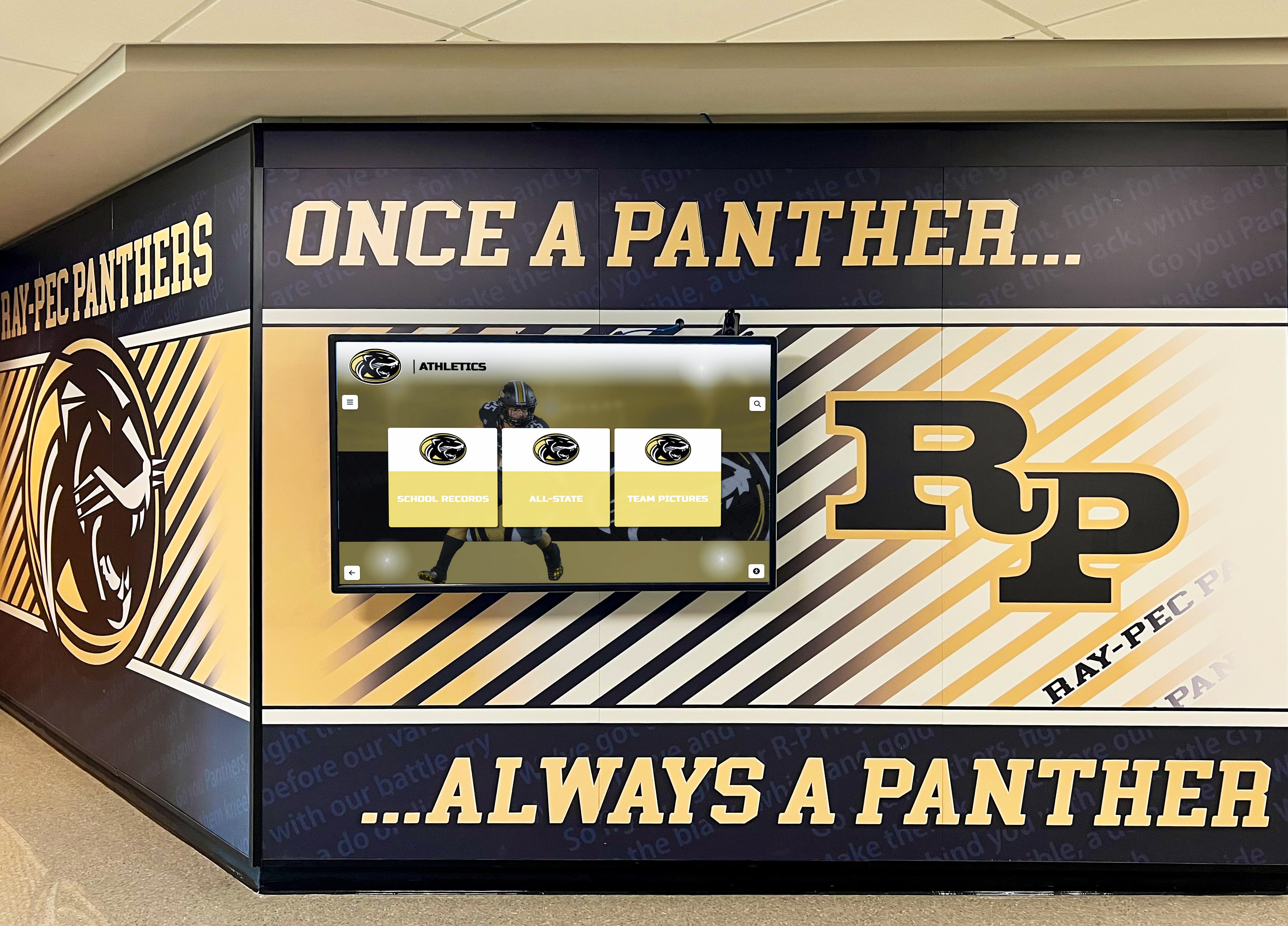
Permanent installations serve schools for years while accommodating unlimited photo additions
Five-year cost analysis typically shows digital solutions cost 50-70% less than traditional yearbooks when accounting for per-book fees, printing, distribution, and storage. These savings help schools redirect funds toward programs benefiting all students rather than expensive keepsakes many families cannot afford.
Real-Time Updates Throughout the Year
Traditional yearbooks capture memories only through a specific cutoff date, typically February or March. Everything happening in the final months of school—spring sports championships, academic awards, college acceptances, prom, and graduation—either gets omitted or receives minimal coverage in hastily added pages.
Digital Flexibility
- Add photos immediately after events occur
- Update student profiles with college commitments and scholarship awards
- Include championship victories even if they happen in late May
- Capture senior activities, prom, and graduation thoroughly
- Feature end-of-year academic recognition ceremonies
- Highlight students receiving unexpected honors or awards
Real-time capability transforms yearbooks from historical documents into living celebrations of the entire school year. Students check regularly to see new photos and updates rather than waiting months for printed delivery.
Schools implementing interactive school history displays extend yearbook functionality beyond single years, creating comprehensive institutional memory.
Searchable, Accessible Content
Finding specific students, events, or activities in printed yearbooks requires flipping through pages hoping to spot familiar faces. Digital yearbooks enable instant, precise searching.
Search Capabilities
- Find any student by name instantly
- Filter photos by sport, activity, club, or event
- Search by date or chronological period
- Locate specific teachers or staff members
- Identify photos from particular locations or venues
- Tag searches connecting related content
This searchability matters tremendously for alumni seeking memories, families compiling graduation tributes, or students creating college application portfolios. What takes 20 minutes in printed yearbooks happens in 20 seconds digitally.
Environmental Sustainability
Schools increasingly prioritize environmental responsibility. Traditional yearbook production carries significant ecological costs.
Environmental Impact of Print
- Paper production: 2-5 pounds per yearbook
- Chemical processes for photo printing and binding
- Transportation: Shipping printed books to schools nationwide
- Waste: Unsold yearbooks discarded after several years
- Storage materials and space energy consumption
Digital Environmental Benefits
- Near-zero ongoing environmental footprint
- One-time hardware manufacturing impact serving multiple years
- No paper consumption or chemical processing
- No shipping or transportation emissions
- No physical waste from unsold inventory
Environmental-conscious students often champion digital yearbook transitions, seeing them as authentic expressions of school sustainability values.
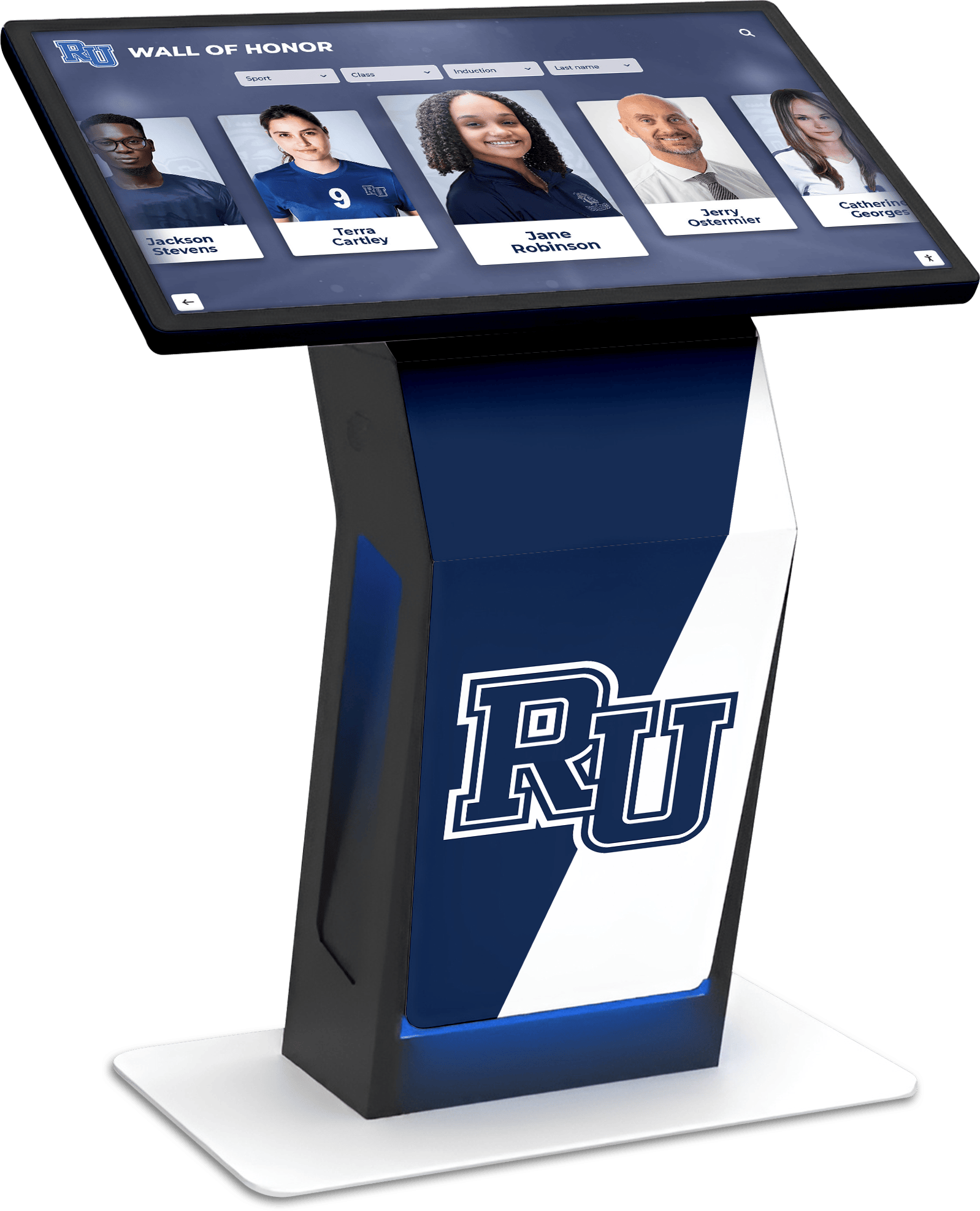
Kiosk installations create dedicated yearbook exploration stations in high-traffic school areas
Implementation Strategies for Schools
Successful digital yearbook implementation requires systematic planning addressing content, technology, training, and community communication.
Content Strategy and Photography
Quality content determines whether digital yearbooks become valued resources or neglected screens displaying random photos.
Content Planning
- Establish photo collection workflows from all activities and sports
- Create submission guidelines ensuring quality and appropriateness
- Develop captioning standards providing context for photos
- Assign student or staff responsibilities for different content areas
- Schedule regular upload deadlines throughout the year
- Balance scheduled events with candid school life moments
Photography Standards
- Minimum resolution requirements ensuring display quality
- Horizontal orientation preferred for most display formats
- Proper lighting and exposure for clear facial recognition
- Natural, authentic moments capturing genuine school experience
- Diverse representation across all student groups and activities
- Permission protocols ensuring student and family privacy preferences
Student Involvement Many schools engage journalism classes, yearbook committees, or media clubs in content creation. This involvement provides educational experiences while distributing workload. Student creators develop valuable skills in photography, design, content management, and digital media—capabilities increasingly important for college and careers.
Schools exploring comprehensive approaches to digitizing old yearbooks preserve historical archives alongside current memories.
Technology Selection and Setup
Choosing appropriate technology platforms ensures digital yearbooks serve schools effectively throughout their operational lifespans.
Display Hardware Considerations
- Screen size appropriate for typical viewing distances
- Commercial-grade panels rated for continuous operation
- Mounting options matching architectural constraints
- Touch sensitivity supporting easy navigation
- Built-in speakers for video and audio content
- ADA-compliant height positioning
Software Platform Requirements
- Intuitive content management requiring no technical expertise
- Unlimited photo capacity without storage fees
- Responsive interfaces working on screens and mobile devices
- Privacy controls protecting student information
- Search and filtering capabilities for large databases
- Analytics revealing usage patterns and popular content
Network Infrastructure
- Reliable internet connectivity for cloud-based platforms
- Sufficient bandwidth supporting photo and video content
- Secure network access preventing unauthorized content changes
- Remote management enabling updates without physical display access
Solutions like Rocket Alumni Solutions provide purpose-built platforms specifically designed for school memory preservation, offering advantages over adapting general-purpose digital signage for yearbook applications. These specialized systems understand school workflows, privacy requirements, and content organization needs that generic platforms often struggle to accommodate.
Staff Training and Responsibilities
Digital yearbooks require ongoing management. Clear responsibilities and adequate training prevent neglect.
Administrator Training
- Content management system fundamentals
- Photo uploading and organization
- Caption writing and editing
- Privacy settings and student information protection
- Basic troubleshooting and display monitoring
- Analytics interpretation for continuous improvement
Role Assignment
- Primary content manager with overall responsibility
- Department or activity liaisons submitting content
- Student editors with supervised access privileges
- Technical support contact for hardware issues
- Privacy officer ensuring appropriate content
Time Requirements Schools typically invest 3-5 hours weekly managing active digital yearbooks during the school year. This represents significantly less time than traditional yearbook production requiring 10-20 hours weekly during peak production periods.
Adequate training and clear workflows prevent situations where digital yearbook systems sit unused because no one feels confident managing them.
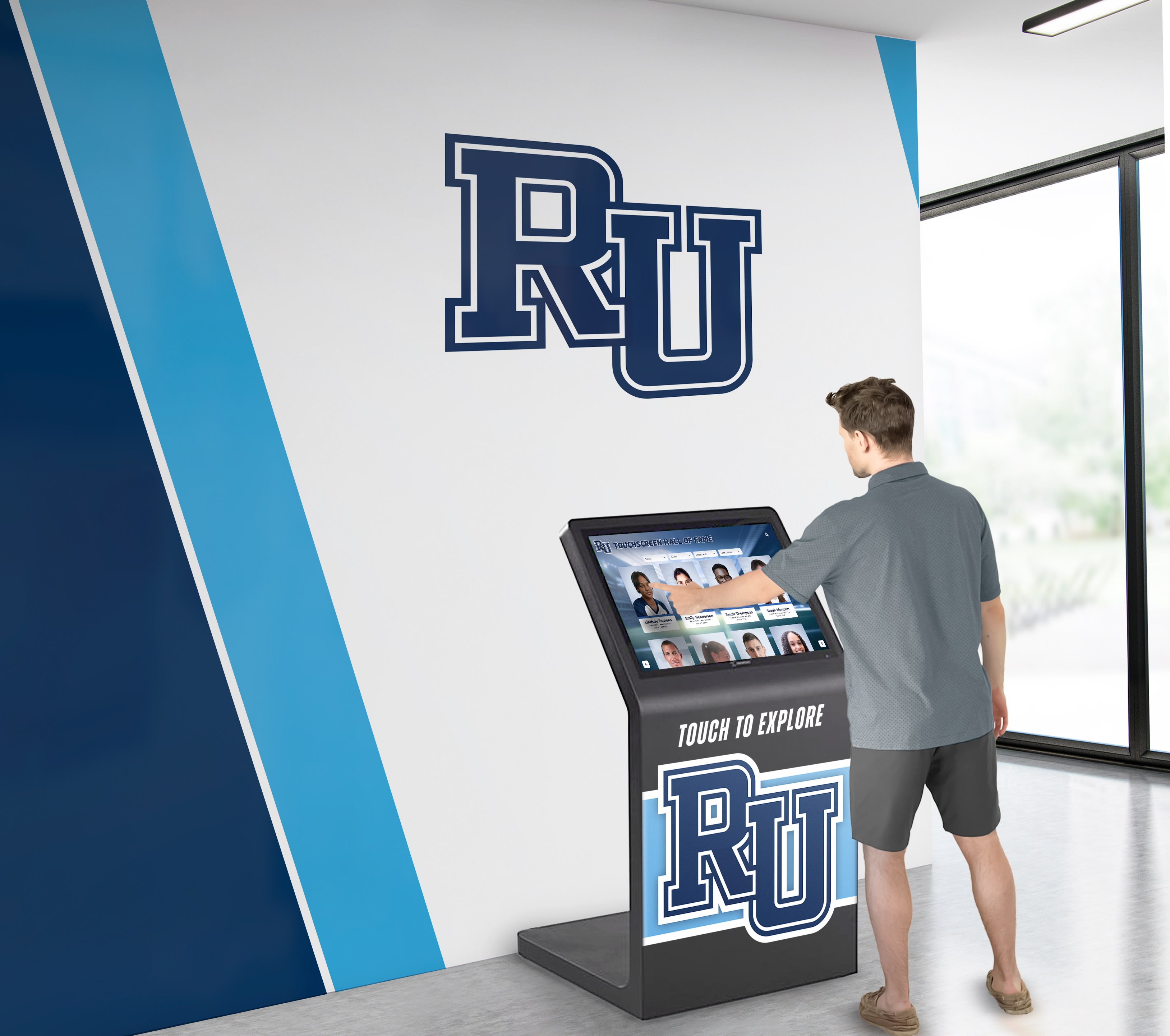
Well-positioned displays in lobbies and common areas maximize student and visitor engagement
Community Communication and Launch
Successful transitions from print to digital yearbooks require community preparation and clear communication.
Stakeholder Communication
- Explain benefits addressing concerns about losing print traditions
- Highlight cost savings for families
- Demonstrate access methods including mobile and web
- Address questions about photo quality and quantity
- Share environmental benefits for sustainability-conscious families
- Emphasize expanded coverage benefiting all students
Launch Strategy
- Soft launch with current content before official announcement
- Student demonstrations showing navigation and features
- Family information nights including hands-on exploration
- Video tutorials showing access on various devices
- FAQ documents addressing common questions
- Feedback mechanisms gathering improvement suggestions
Ongoing Promotion
- Regular reminders about new content additions
- Featured photo highlights in newsletters and announcements
- Social media posts showcasing yearbook content
- Alumni outreach highlighting historical archive access
- Integration into school tours and open houses
Schools approaching digital yearbooks as community resources rather than technology projects achieve higher adoption and satisfaction. Regular communication maintains awareness while demonstrating ongoing value.
Educational institutions implementing digital recognition programs extend yearbook platforms to celebrate student achievements beyond yearbook content.
Addressing Common Concerns About Digital Yearbooks
Schools considering digital yearbooks frequently express specific concerns. Understanding these issues and their practical solutions helps administrators make confident decisions.
Loss of Traditional Yearbook Experience
Many community members value printed yearbooks as tangible keepsakes with emotional significance that digital formats cannot replicate.
Addressing This Concern
- Hybrid approaches offering optional print-on-demand for families wanting physical copies
- High-quality digital displays creating impressive visual experiences
- QR code features enabling personal device access for convenient viewing anywhere
- Screenshot and download capabilities allowing families to save favorite photos
- Recognition that traditions evolve—today’s students expect digital experiences
- Focus on expanded coverage benefiting more students rather than limited print selections
Resistance to change is natural, but schools implementing digital yearbooks consistently report that students embrace the transition enthusiastically. The ability to find themselves in numerous photos rather than hoping they made limited print selections creates broader satisfaction than traditional yearbooks achieved.
Student Privacy and Safety
Digital platforms raise legitimate concerns about student information security and inappropriate access.
Privacy Protections
- Password-protected access limiting viewing to authorized users
- Parental opt-out systems honoring privacy preferences
- Content moderation preventing inappropriate images or captions
- FERPA-compliant platforms protecting student information
- No social sharing features that could expose students to external risks
- Clear policies about appropriate content and consequences for violations
Purpose-built school platforms like Rocket Alumni Solutions design privacy protection into core functionality rather than treating it as an afterthought, ensuring compliance with educational data privacy requirements.
Technology Access Equity
Not all families have reliable internet access or devices at home, potentially excluding some students from digital yearbook participation.
Equity Solutions
- In-school touchscreen displays accessible during school hours
- Public library computer access programs
- School technology lending programs for temporary device checkout
- Print-on-demand options for families without consistent digital access
- Multiple format options ensuring everyone can participate
- Recognition that most families (95%+) now have smartphone access
Schools should ensure multiple access methods prevent digital yearbooks from excluding students who already face technology access challenges.
Long-Term Access and Platform Changes
Digital platforms depend on companies that might discontinue services, change pricing, or cease operations—raising concerns about permanent access to memories.
Mitigation Strategies
- Content export capabilities enabling migration to different platforms
- High-resolution photo backup systems independent of yearbook platforms
- Contractual terms ensuring data portability if switching vendors
- Established vendors with track records of reliable, ongoing service
- Local backup systems maintaining complete content archives
- Format-agnostic storage using standard file types rather than proprietary formats
Schools should evaluate vendor stability and data portability before selecting digital yearbook platforms, ensuring memories remain accessible regardless of future technology changes.
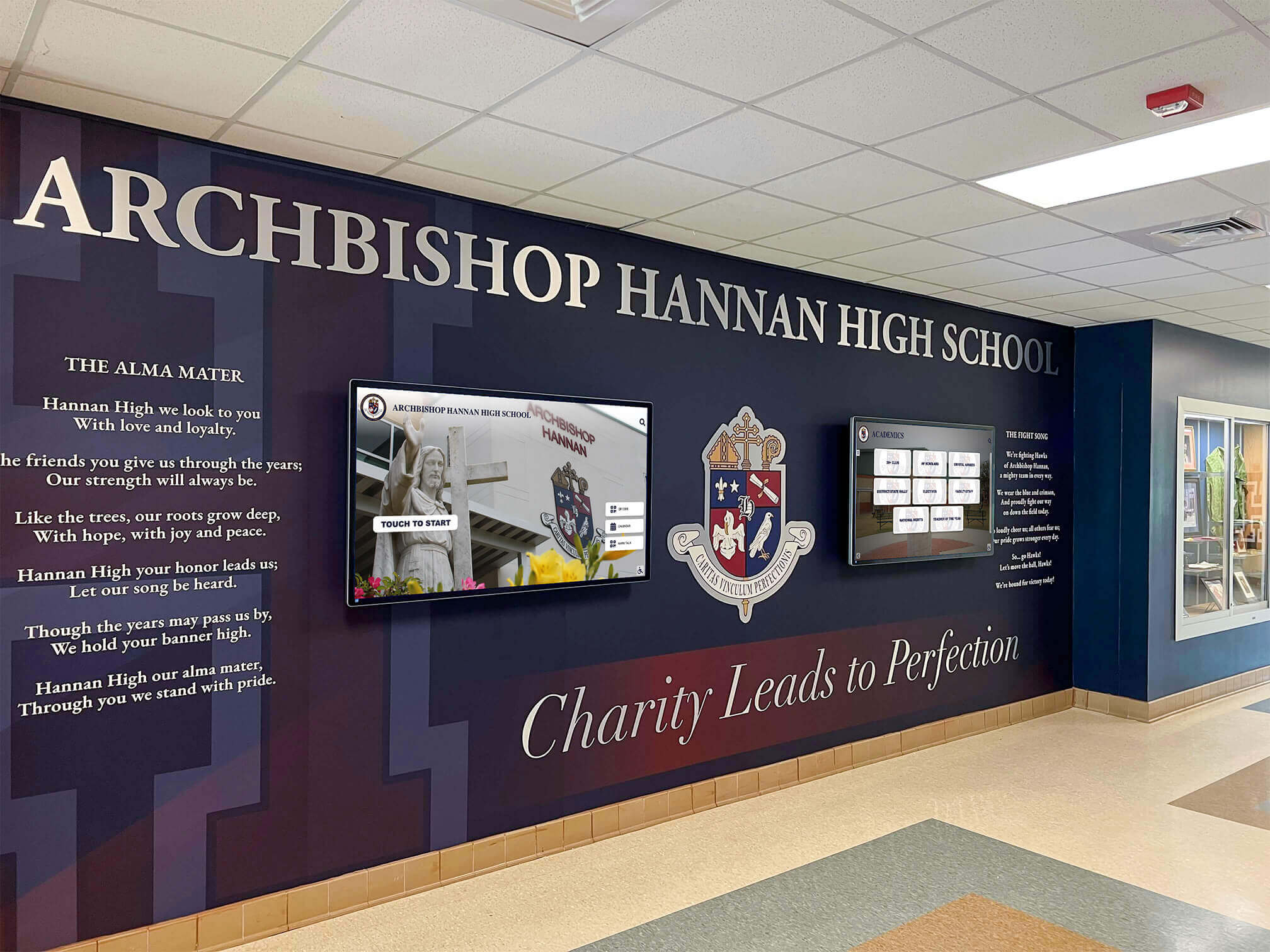
Architectural integration creates polished installations that enhance rather than detract from school environments
Digital Yearbook Features That Enhance Student Experience
Modern digital yearbook platforms offer capabilities impossible with printed formats, creating richer memory preservation experiences.
Multimedia Content Integration
Digital platforms support content types that printed yearbooks cannot accommodate.
Video Content
- Highlight reels from athletic seasons
- Performing arts concert and theater performance recordings
- Student interview compilations
- Behind-the-scenes footage from school events
- Graduation ceremony recordings
- Club activity demonstrations
Audio Content
- Student and teacher voiceovers describing memories
- Musical performance recordings
- School announcement compilations from throughout the year
- Podcast-style interviews with graduating seniors
- Alma mater and fight song recordings
These multimedia elements create immersive experiences that transport viewers back to specific moments far more effectively than static photos accomplish alone.
Interactive Features and Gamification
Engagement features encourage thorough exploration while making yearbook viewing more enjoyable.
Interactive Elements
- Searchable student directories with profile pages
- Activity and club landing pages with comprehensive photo galleries
- Timeline views organizing content chronologically
- Location-based organization showing photos from specific venues
- Tagging systems connecting related content
- “Where am I?” challenges encouraging students to find themselves in photos
Social Features (Moderated)
- Appropriate comments celebrating memories (with moderation)
- Virtual yearbook signing with message capabilities
- Favorite photo collections students can curate
- Share features enabling appropriate content distribution
- Reaction systems showing popular content
These features transform passive viewing into active participation, increasing engagement time and memory exploration depth.
Alumni Integration and Long-Term Access
Digital yearbooks create opportunities for ongoing connections between current students and alumni.
Alumni Features
- Permanent access to graduation year content
- “Where are they now?” updates for milestone reunions
- Career path profiles showing post-graduation achievements
- Mentorship connection systems linking alumni with students
- Historical archive access spanning decades
- Reunion planning tools connecting classmates
Schools implementing alumni recognition systems extend yearbook platforms to celebrate graduate accomplishments while strengthening alumni engagement.
This long-term perspective transforms yearbooks from single-year publications into living, growing institutional memory spanning generations.
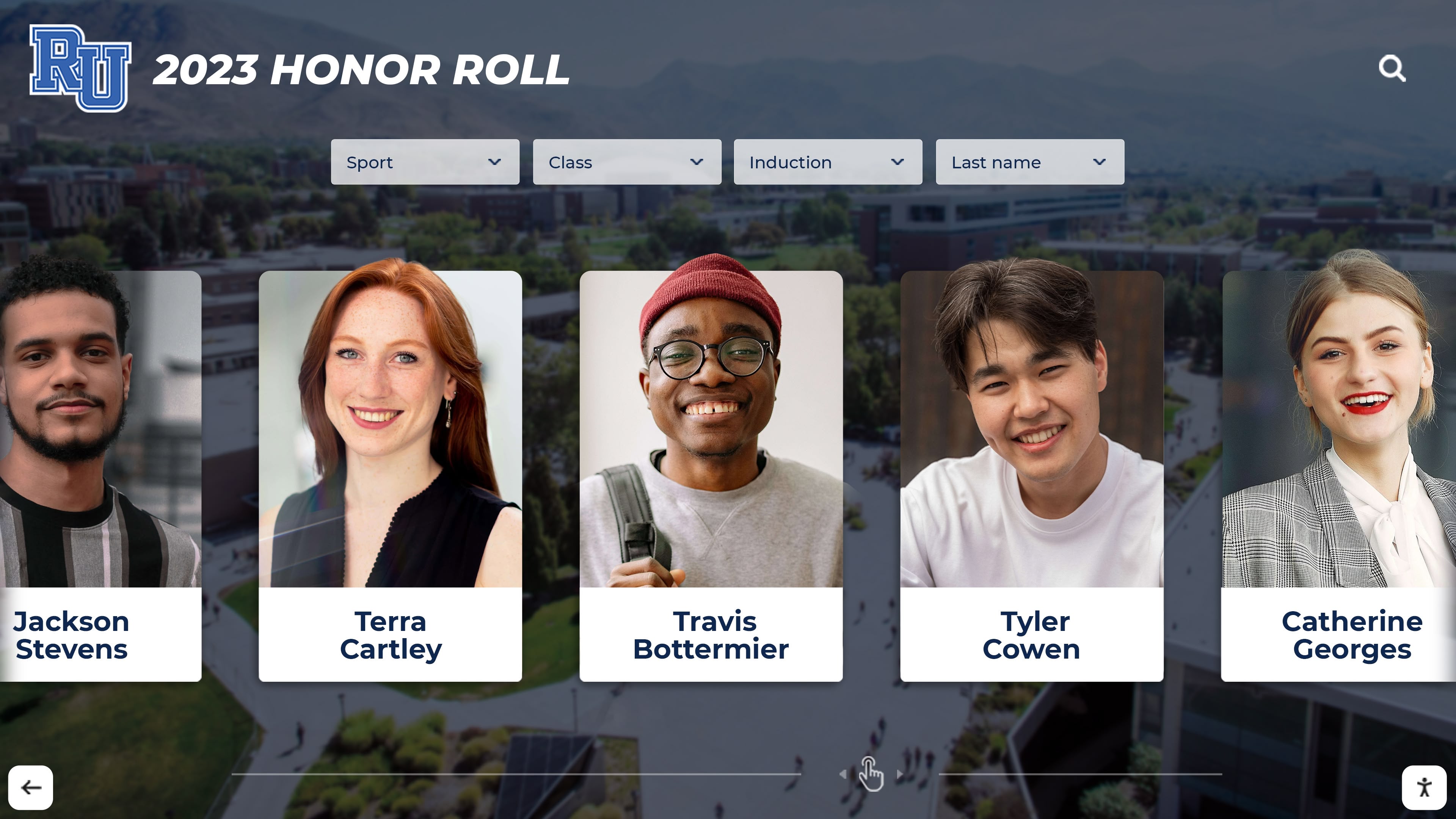
Organized content layouts help visitors quickly find specific students, activities, or time periods
Cost Analysis: Digital vs. Traditional Yearbooks
Realistic financial planning helps schools make informed decisions about yearbook formats.
Traditional Print Yearbook Costs
Annual Recurring Expenses
- Professional printing: $40-$80 per book × 300-1,000 students = $12,000-$80,000
- Professional photography: $2,000-$5,000 for portrait sessions
- Design software and resources: $500-$1,500
- Staff time: 300-500 hours at $25-$40/hour = $7,500-$20,000
- Distribution logistics: $500-$1,500
- Storage space: $1,000-$2,000 annual value
Total Traditional Annual Cost: $23,500-$110,000
Five-Year Traditional Investment: $117,500-$550,000
Digital Yearbook Costs
Initial Investment
- Display hardware (if applicable): $3,000-$8,000 per display
- Professional installation: $500-$1,500
- Content migration from historical yearbooks: $1,000-$3,000
- Initial staff training: $500-$1,000
Annual Recurring Costs
- Software subscription: $500-$2,000
- Staff time: 150-250 hours at $25-$40/hour = $3,750-$10,000
- Photography: $1,000-$3,000
- Content management: Minimal ongoing expense
Total Digital First Year: $9,250-$27,500 Total Digital Ongoing Annual: $5,250-$15,000
Five-Year Digital Investment: $30,250-$87,500
Return on Investment
Digital yearbooks typically cost 60-75% less over five years compared to traditional printed yearbooks. These savings can fund other student programs, reduce family financial burdens, or support technology infrastructure benefiting all students.
Beyond direct costs, digital formats eliminate unsold inventory waste, storage space consumption, and distribution logistics consuming staff time and resources.
Best Practices for Digital Yearbook Success
Learning from schools that successfully implemented digital yearbooks helps avoid common mistakes while maximizing benefits.
Content Organization and Structure
Effective Organization
- Chronological sections (Fall, Winter, Spring, Summer)
- Activity categories (Athletics, Arts, Academics, Clubs)
- Grade level sections showing class-specific content
- Event-based galleries for major school occasions
- Student directory with individual profile pages
- Historical archives organized by graduation year
Clear organization helps visitors navigate content intuitively, finding desired memories without frustration or confusion.
Photo Quality Standards
Quality Guidelines
- Minimum 1920x1080 resolution for display quality
- Proper lighting with recognizable faces
- Natural compositions avoiding forced poses
- Variety including action shots, candids, and group photos
- Diverse representation across all student populations
- Appropriate context through descriptive captions
Maintaining consistent quality standards ensures digital yearbooks present schools professionally while honoring student memories appropriately.
Regular Content Updates
Update Schedule
- Weekly uploads during active school periods
- Immediate additions after major events
- End-of-season comprehensive galleries for sports and activities
- Monthly highlights showcasing recent additions
- Annual archives closing each school year definitively
- Summer content capturing camps, travel programs, and preparation
Regular updates maintain community interest while preventing overwhelming backlogs of unprocessed photos.
Student and Family Engagement
Engagement Strategies
- Student photography contests encouraging submissions
- Featured photo series highlighting different school aspects monthly
- Alumni spotlight sections connecting current and past students
- “This week in history” features showing photos from previous years
- Scavenger hunts encouraging thorough exploration
- Recognition programs celebrating students who appear in many activities
Active engagement transforms digital yearbooks from static archives into dynamic community resources that students and families regularly visit.
Educational institutions implementing comprehensive school recognition displays create holistic celebration systems honoring all aspects of student achievement.
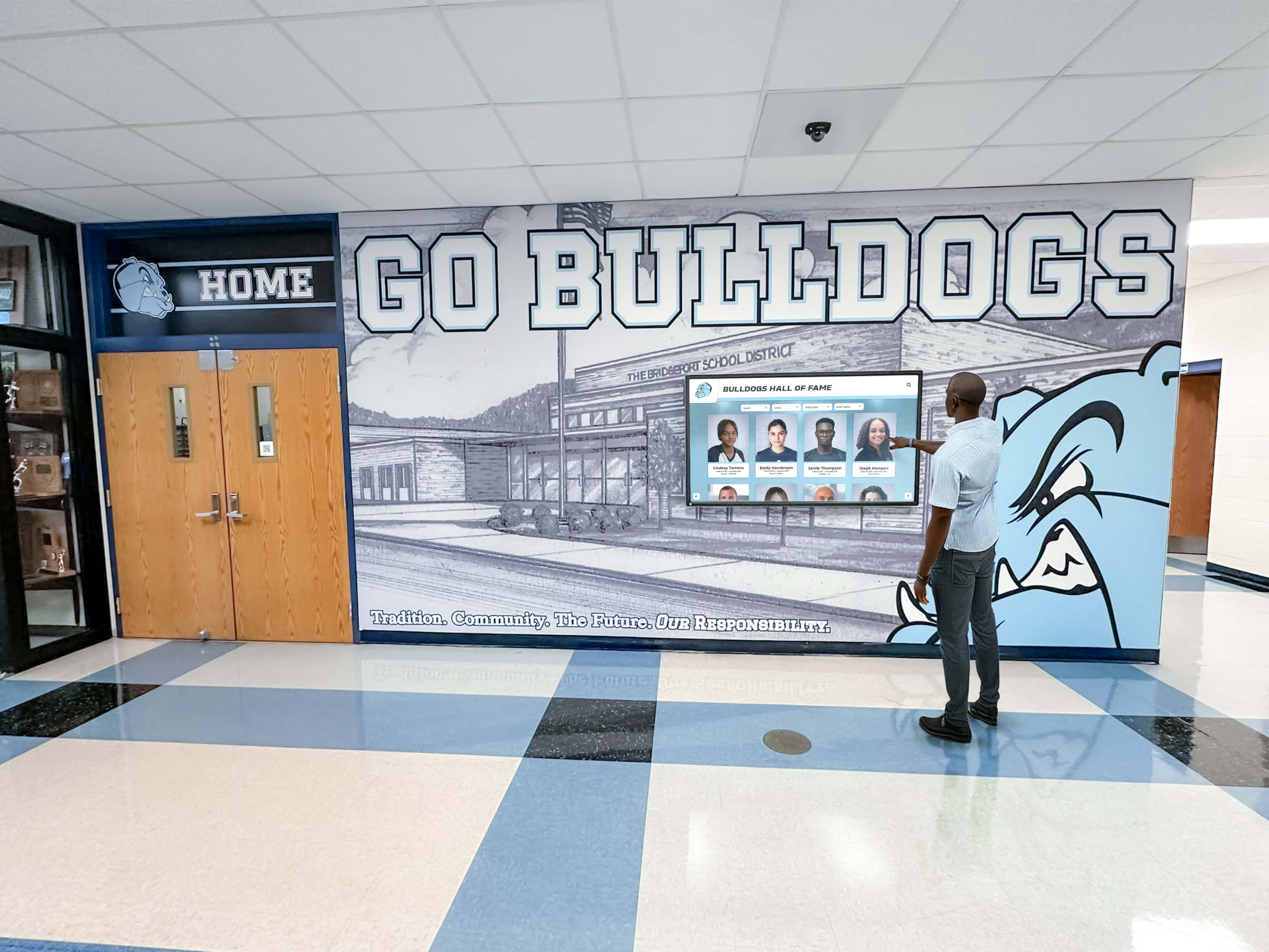
User-friendly interfaces enable visitors of all ages to explore content comfortably
Conclusion: Embracing Modern Memory Preservation
Digital yearbooks represent fundamental advancement in how schools preserve and celebrate student memories. When thoughtfully implemented with quality content, intuitive navigation, and sustainable management processes, digital yearbook platforms create memory preservation experiences that traditional printed yearbooks cannot match.
The schools successfully implementing digital yearbooks share common characteristics: clear vision for how yearbooks serve students and community, commitment to comprehensive photo coverage, systematic planning addressing both technical and human factors, stakeholder communication building broad support, and long-term perspective ensuring sustainable operation beyond initial implementation enthusiasm.
Modern digital yearbook platforms make comprehensive memory preservation achievable for schools of all sizes—from small rural districts to large urban systems—without the cost barriers and space constraints limiting traditional yearbooks. Cloud-based content management eliminates technical expertise requirements, enabling any staff member to add and organize content. Accessibility features ensure all students and families engage with memories regardless of abilities. Mobile and web access multiply the reach of physical displays exponentially.
Whether celebrating athletic championships, recognizing academic achievements, documenting performing arts productions, or simply capturing daily school life authenticity, digital yearbooks create memory preservation possibilities that printed approaches cannot match.
Start where you are with implementations matching available resources and priorities, then systematically expand as you experience the impact of comprehensive, accessible memory preservation that captures every student’s high school experience authentically.
Every photo uploaded, every student profile completed, and every memory preserved represents a lasting gift to students who will return to these digital archives throughout their lives—at college, during careers, and when sharing their own children’s experiences years later.
Your hallways, lobbies, and gathering spaces represent premium opportunities to celebrate students while building institutional pride. Digital yearbook solutions ensure you make the most of every memory while honoring the students who make your school community special.
Ready to explore how digital yearbook platforms can transform memory preservation at your school? Discover comprehensive interactive touchscreen solutions designed specifically for schools, with unlimited photo capacity, intuitive content management, cloud-based access, ADA compliance, and dedicated support that makes modern yearbook solutions achievable for institutions of all sizes.