Trophy cases line hallways in schools, athletic facilities, universities, and organizations across the country. Inside these glass cases sit decades of accomplishments: championship trophies, conference titles, individual awards, and recognition plaques documenting excellence. Each trophy represents hours of practice, dedication, and achievement by individuals and teams who earned their place in institutional history.
Yet traditional trophy cases face an unavoidable constraint: physical space runs out. Successful programs accumulate achievements faster than display capacity expands. Athletic directors face difficult questions about which trophies stay visible and which get moved to storage. Recognition systems designed to honor achievement become limited by square footage and shelf space.
Digital trophy cases eliminate these limitations. Interactive touchscreen displays provide unlimited recognition capacity, enhanced engagement through multimedia content, simplified management through remote updates, and web-accessible extensions that multiply reach beyond physical locations. This comprehensive guide examines how digital trophy case solutions work, what to consider during implementation, and how they compare to traditional display approaches.
Schools and organizations use trophy cases for purposes beyond simple storage. Effective recognition systems inspire current participants by showcasing excellence, engage alumni by preserving their achievements, strengthen community pride through visible accomplishments, demonstrate program quality to prospective members, and create lasting institutional memory that connects generations.
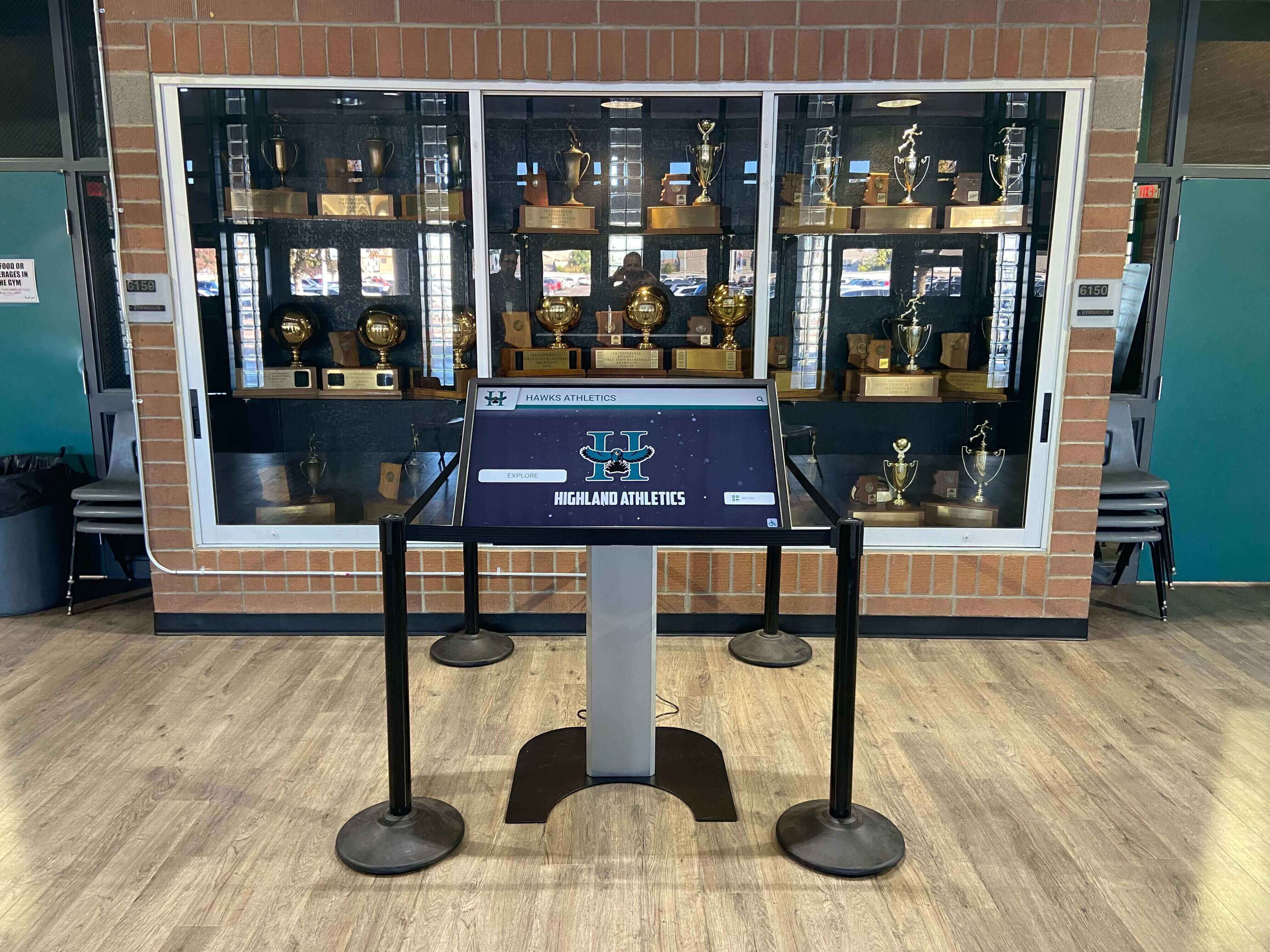
Modern digital trophy cases integrate touchscreen technology with traditional recognition spaces
Understanding Digital Trophy Case Systems
Digital trophy cases replace or supplement traditional glass displays with interactive touchscreen technology showcasing comprehensive achievement archives.
Core Components of Digital Trophy Systems
Display Hardware
Commercial-grade touchscreen displays form the foundation:
- Screen sizes from 55" to 86" accommodating various installation spaces
- Wall-mounted or freestanding kiosk configurations based on location needs
- Commercial-grade components rated for continuous operation
- Vandal-resistant enclosures protecting displays in high-traffic areas
- Network connectivity through ethernet or WiFi for content management
- Adequate electrical power infrastructure at installation locations
- Professional appearance integrating with facility design aesthetics
Content Management Software
Cloud-based platforms enable non-technical staff to manage recognition content:
- Intuitive administrative interfaces requiring no coding knowledge
- Unlimited content capacity without artificial storage restrictions
- Professional templates designed for athletic and academic recognition
- Remote updates from any internet-connected device
- Multi-user access with permission controls for staff coordination
- Mobile-responsive web extensions beyond physical displays
- ADA WCAG 2.1 AA compliance ensuring accessibility for all users
Interactive User Experience
Visitors explore content through touchscreen interfaces offering:
- Search functionality finding specific athletes, teams, years, or achievements
- Filter options by sport, award type, year range, or recognition category
- High-resolution trophy and award photographs from multiple angles
- Complete team rosters with individual athlete profiles and statistics
- Video highlights from championship games and memorable moments
- Photo galleries documenting program evolution and milestones
- Social sharing enabling digital celebration across platforms
- QR codes extending content to personal mobile devices
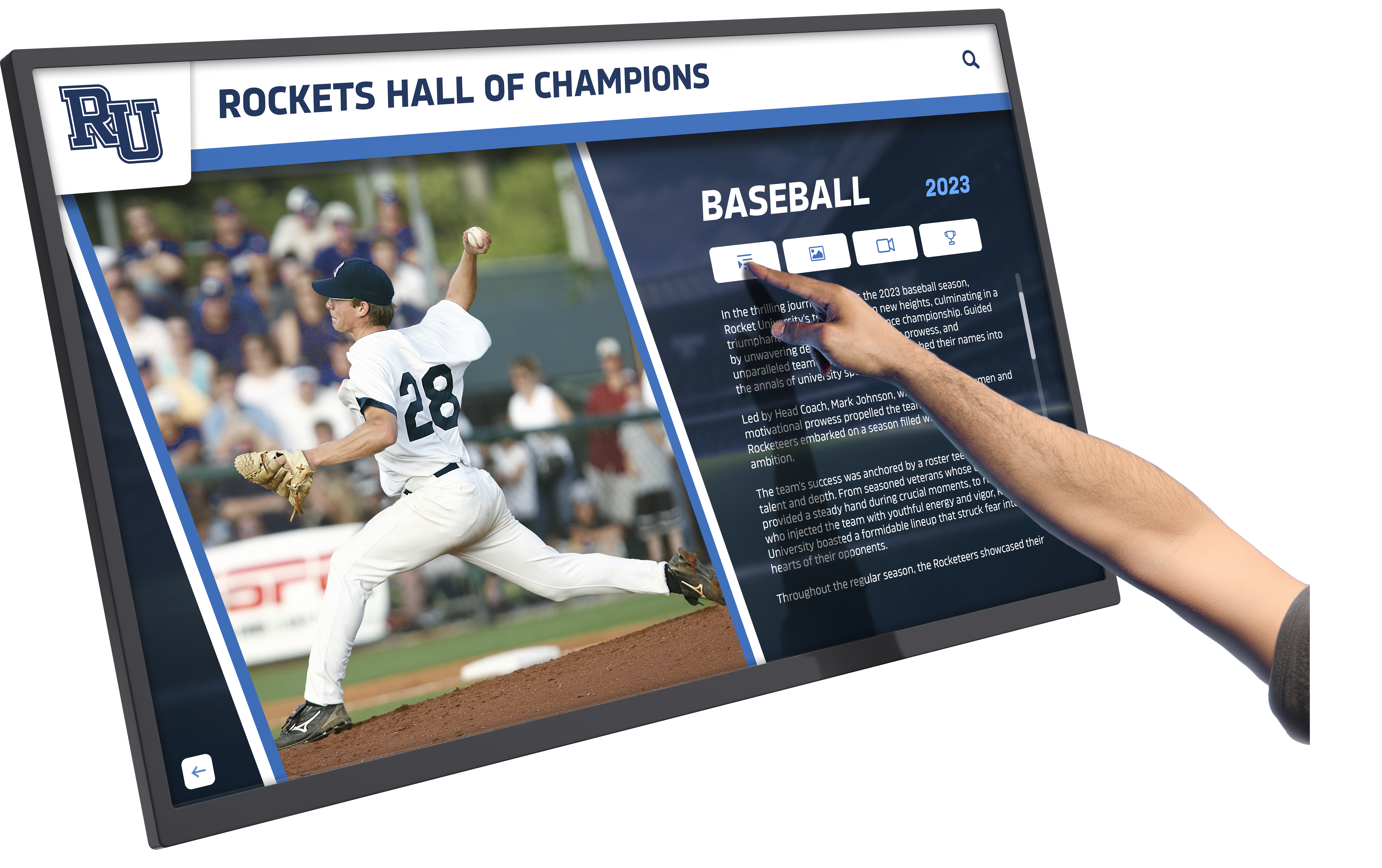
Touchscreen interfaces enable visitors to explore achievements through intuitive interaction
How Digital Trophy Cases Function
Digital systems operate through several coordinated elements:
Content Creation and Organization
Administrative staff input recognition information through web-based dashboards:
- Trophy and award documentation with descriptions and dates
- High-resolution photography of physical trophies and awards
- Team roster information with athlete names, positions, and jersey numbers
- Individual athlete profiles with biographical information and achievements
- Championship context through season summaries and key moments
- Video content from games, tournaments, and recognition ceremonies
- Historical research verifying accuracy of decades of achievements
Display Presentation
Content appears on touchscreen displays through professional layouts:
- Home screens showcasing featured achievements and recent additions
- Category navigation organizing content by sport, year, or recognition type
- Individual trophy pages with detailed information and related content
- Athlete profiles connecting individuals across multiple achievements
- Timeline views displaying program history chronologically
- Auto-rotating slideshows for passive viewing when not touched
- Responsive design adapting to various screen sizes and orientations
Remote Management
Cloud-based platforms enable updates from anywhere:
- Add new trophies and achievements immediately after receipt
- Update athlete information as individuals achieve post-graduation success
- Correct errors or refine information without physical display access
- Schedule content features for specific dates or events
- Monitor display functionality and user interaction remotely
- Deploy software updates and new features automatically
- Manage multiple displays across different locations centrally
This architecture ensures digital trophy cases remain current, accurate, and engaging without requiring physical presence at display locations.
Advantages of Digital Trophy Case Systems
Digital solutions address fundamental limitations inherent in traditional trophy display approaches.
Unlimited Recognition Capacity
Physical space constraints disappear with digital displays:
Comprehensive Achievement Documentation
- Display every trophy ever won without removing anything for space
- Include complete team rosters for championship recognition
- Feature unlimited individual athlete profiles and awards
- Accommodate decades of historical achievements equally
- Add recognition indefinitely as programs continue success
- No difficult decisions about which trophies warrant visibility
Successful athletic programs commonly generate 20-40 new trophies annually. Standard large trophy cases holding 75-100 trophies reach capacity within 2-4 years. Digital systems accommodate unlimited growth without recurring space or equipment investments.
Equal Visibility Across All Programs
Traditional cases force prioritization when space fills. Digital platforms provide:
- Equal showcase opportunities for all sports and activities
- Recognition for both team championships and individual achievements
- Visibility for recent accomplishments alongside historical tradition
- Comprehensive academic recognition integrated with athletic awards
- Proper representation for smaller programs often overlooked physically
Schools implementing comprehensive athletic recognition programs through digital platforms eliminate space-based hierarchy in favor of complete celebration.
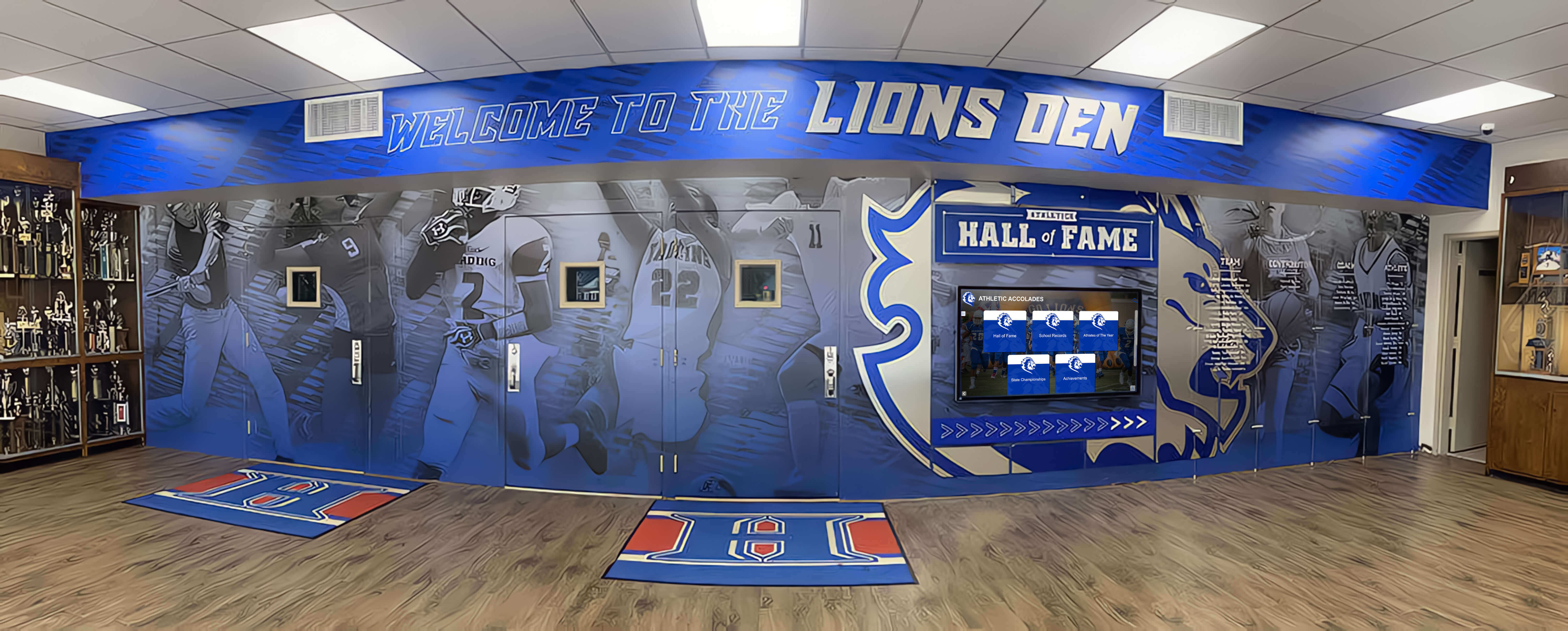
Digital systems complement physical displays while providing unlimited recognition capacity
Enhanced Engagement Through Interactivity
Digital trophy cases transform passive observation into active exploration:
Visitor Interaction Statistics
Research on digital recognition displays shows:
- 85-90% of visitors interact with touchscreens during campus tours
- Average exploration sessions last 5-10 minutes versus seconds for static cases
- Search functionality creates immediate personal connection to content
- Video content generates 3-4x longer engagement than photos alone
- Related content suggestions encourage deeper exploration
- Web extensions receive 3-5x more views than physical displays alone
Multimedia Content Capabilities
Traditional trophy cases show only physical awards. Digital systems include:
- Championship game video highlights with key moments
- Team and athlete photographs documenting achievements
- Audio interviews with coaches discussing championship seasons
- Season summaries providing context beyond trophy alone
- Ceremony footage showing award presentations and celebrations
- Biographical narratives telling complete achievement stories
- Statistical information and record documentation
This rich content creates emotional connection impossible with trophy-only displays. Visitors don’t just see that a team won a championship—they experience the journey.
Personalized Exploration Paths
Every visitor has different interests. Digital systems accommodate through:
- Alumni searching for their specific teams and personal achievements
- Prospective students exploring programs they’re considering joining
- Community members discovering specific sports or time periods
- Donors reviewing recognition programs they’ve supported
- Parents finding their children’s current or future teams
- Researchers investigating institutional athletic history
Traditional cases serve all visitors identically. Digital platforms adapt to individual interests.
Simplified Maintenance and Updates
Remote content management transforms recognition workflows:
Administrative Time Savings
Physical trophy cases require ongoing labor:
- Weekly dusting of shelves and individual trophies
- Quarterly deep cleaning removing accumulated grime
- Glass cleaning maintaining clear visibility
- Trophy reorganization as items shift or topple
- Lighting maintenance and bulb replacement
- Lock mechanism repair and key management
- Physical access to facility for any changes
Digital displays reduce maintenance by 70-85%:
- Screen cleaning only (similar to any display)
- No physical trophy handling or reorganization
- Remote content updates requiring no facility access
- Instant corrections without re-engraving or reprinting
- Software updates deployed automatically
- Professional appearance maintained consistently
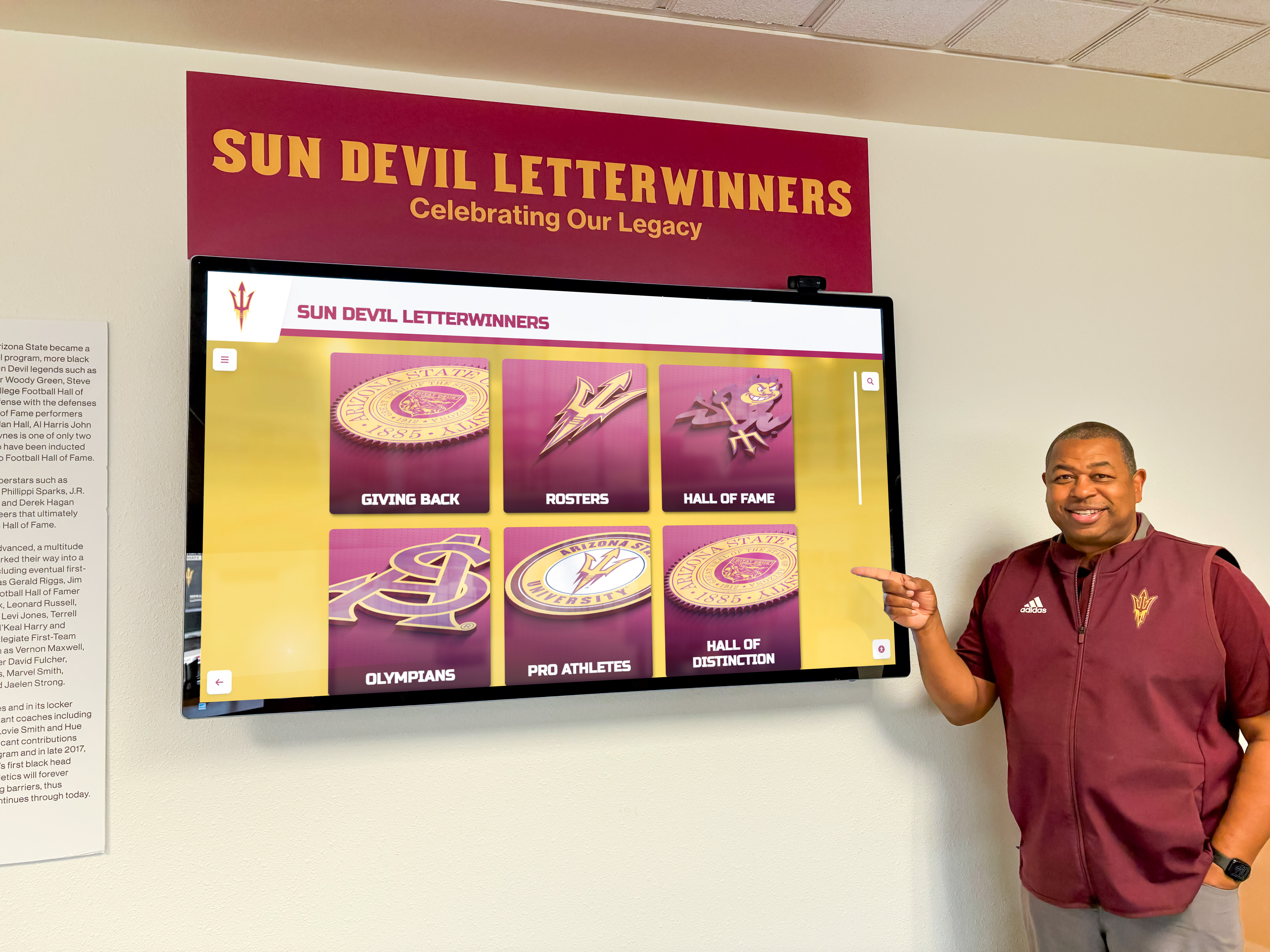
Digital displays require minimal maintenance while providing comprehensive recognition
Immediate Content Updates
Traditional recognition involves lead times:
- Engraved plaques require 2-4 weeks production
- Physical trophy placement needs facility access and scheduling
- Corrections to engraved content are expensive or impossible
- Seasonal rotations demand repeated physical handling
- Information updates require reprinting materials
Digital platforms enable instant changes:
- Add new championships within hours of winning
- Update athlete information from any internet-connected device
- Correct errors immediately without cost or delay
- Feature specific content for events, reunions, or celebrations
- Adjust organization and presentation based on feedback
- Test different layouts and content approaches easily
This flexibility ensures recognition remains current and accurate without logistical barriers.
Web-Accessible Extensions
Modern digital trophy case platforms extend recognition beyond physical locations:
24/7 Global Access
- Web-based trophy archives accessible from any device
- Alumni viewing achievements from anywhere worldwide
- Prospective students exploring programs during research
- Community members engaging beyond facility visiting hours
- Media accessing information for coverage and features
- Researchers studying institutional history remotely
Social Media Integration
- Direct sharing of individual achievements to social platforms
- Embedded content in organizational social media posts
- Hashtag campaigns celebrating specific milestones
- Digital celebrations amplifying physical recognition
- Alumni engagement through nostalgic content sharing
Recruitment and Development Applications
- Prospective student-athletes exploring program tradition
- Donors reviewing comprehensive recognition programs
- Media and journalists accessing information efficiently
- Alumni relations utilizing content for engagement campaigns
- Development offices showcasing impact of contributions
Schools implementing digital hall of fame solutions create platforms serving far more audiences than physical displays alone ever could.
Implementation Considerations for Digital Trophy Cases
Successful digital trophy case projects require systematic planning addressing technical, content, and organizational factors.
Technical Infrastructure Requirements
Network Connectivity
Digital displays need reliable internet access:
- Ethernet connection preferred for stability and speed
- WiFi acceptable when properly configured and reliable
- Bandwidth requirements modest (similar to video streaming)
- Network security configurations allowing cloud platform access
- Backup connectivity options for mission-critical installations
Electrical Power
Commercial displays consume moderate electricity:
- Standard 110V outlet sufficient for most installations
- Annual electricity cost approximately $100-200 per display
- Dedicated circuit recommended in high-usage environments
- Power backup considerations for locations requiring constant operation
- Cable management for clean, professional appearance
Physical Installation Location
Placement affects both visibility and functionality:
- High-traffic areas maximizing visitor exposure
- Adequate viewing distance (8-15 feet for 65" displays)
- Mounting height appropriate for standing adult viewing
- Lighting conditions minimizing screen glare
- ADA-compliant placement ensuring accessibility
- Integration with existing recognition displays and facility design
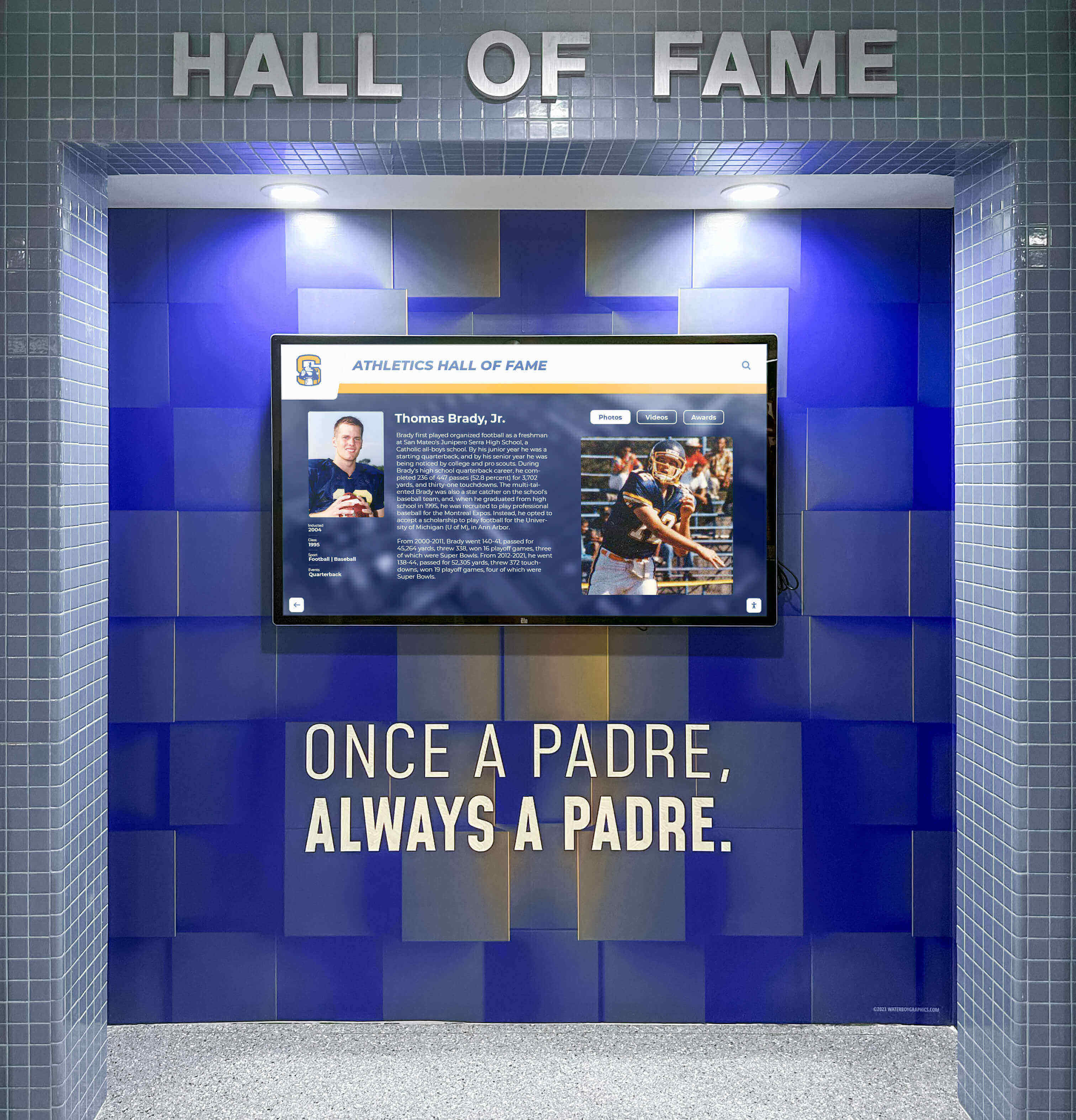
Professional installation integrates digital displays with facility architecture and design
Content Development Requirements
Quality content determines whether digital trophy cases create meaningful engagement or become ignored screens.
Historical Trophy Documentation
Digitizing existing trophy collections requires systematic approaches:
- Professional photography of trophies from multiple angles
- Consistent lighting and backgrounds creating cohesive visual presentation
- High-resolution images (minimum 1920 x 1080 pixels) for screen display
- Trophy information capture: championship description, year, participants
- Team roster documentation with names, positions, jersey numbers
- Coach information and recognition where appropriate
- Cross-reference with yearbooks, athletic records, and archives
Schools should allocate 2-4 months for comprehensive trophy documentation of 30-50 years of achievements. Rushed digitization produces inconsistent results requiring later remediation.
Biographical Content Development
Individual and team recognition requires narrative context:
- Athlete biographical information with achievements and accomplishments
- Career statistics and records within program context
- Post-graduation success demonstrating lasting impact
- Coach profiles recognizing leadership contributions
- Team championship narratives explaining season significance
- Interview quotes providing personal perspective
- Historical context connecting achievements to broader tradition
Ongoing Content Management
Sustainable recognition requires clear workflows:
- Designated staff responsibility for content updates
- Standard procedures for adding new achievements
- Quality control review before content publication
- Information verification preventing errors
- Photo and video collection during seasons
- Annual comprehensive content audits
- Alumni engagement gathering historical information
Organizations implementing comprehensive recognition programs establish clear ownership and processes ensuring displays remain current and accurate.
Display Size and Configuration Options
Appropriate hardware selection matches space, budget, and recognition needs:
55" Displays
- Suited for narrow hallways or smaller lobby areas
- Viewable comfortably from 6-10 feet
- Investment range: $2,500-$4,000 plus installation
- Appropriate for single-sport focused recognition
- Works well as supplemental displays in multiple locations
65" Displays
- Most popular size for main lobby installations
- Viewable effectively from 8-15 feet
- Investment range: $4,000-$6,000 plus installation
- Accommodates comprehensive multi-sport programs
- Balances screen size with reasonable cost
75" Displays
- Creates commanding presence in larger lobbies
- Viewable comfortably from 12-20 feet
- Investment range: $6,000-$9,000 plus installation
- Ideal for high-traffic locations with substantial space
- Supports multiple simultaneous users exploring content
86" Displays
- Statement installations in grand entrance areas
- Viewable effectively from 15-25 feet
- Investment range: $8,000-$12,000 plus installation
- Appropriate for institutions with extensive traditions
- Maximum visual impact for comprehensive programs
Kiosk vs. Wall-Mounted Installations
Mounting approach affects functionality and aesthetics:
Wall-Mounted:
- Clean integration with facility architecture
- Requires secure mounting to studs or reinforced walls
- Professional installation ensuring safety
- Permanent placement without repositioning flexibility
- Installation cost: $500-$1,500
Freestanding Kiosk:
- Flexible positioning and relocation capability
- No wall mounting requirements
- Professional enclosure with cable management
- Mobile for events or temporary installations
- Kiosk enclosure cost: $800-$2,500
Schools often install wall-mounted displays in main lobbies for permanent recognition while using freestanding kiosks in multipurpose spaces or for special events.
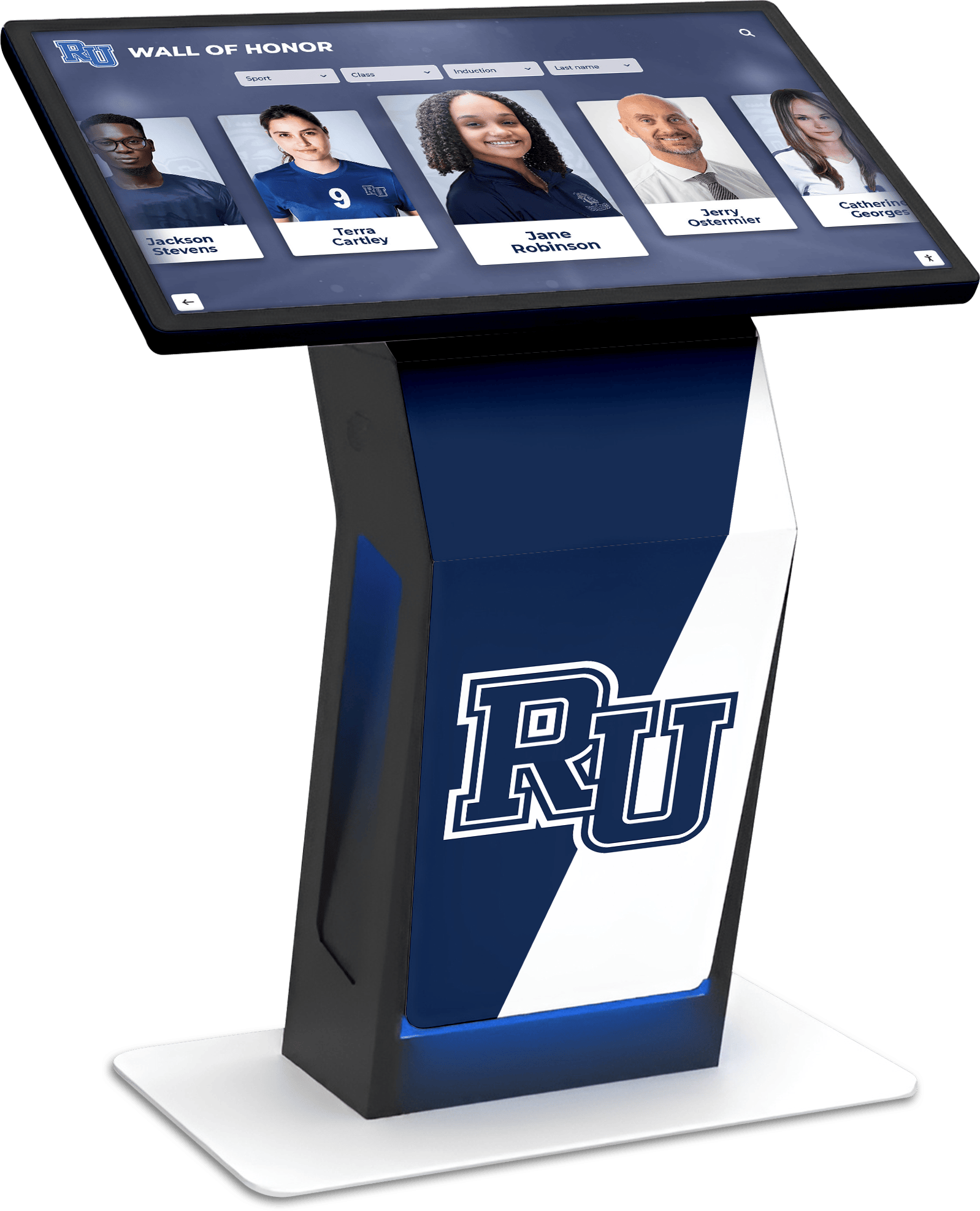
Freestanding kiosks provide flexibility for locations without wall mounting options
Cost Analysis: Digital vs. Traditional Trophy Cases
Understanding total investment helps decision-makers evaluate options accurately.
Traditional Trophy Case Investment
Initial Costs:
- Commercial trophy case (72"W, quality construction): $4,500
- Installation and interior setup: $700
- Total Initial Investment: $5,200
Annual Ongoing Costs:
- Physical maintenance (cleaning, repairs): $400
- Administrative time (5 hours monthly @ $25/hour): $1,500
- Trophy reorganization as space fills: $300
- Annual Ongoing Cost: $2,200
5-Year Total Cost of Ownership:
- Initial investment: $5,200
- Annual costs (5 years × $2,200): $11,000
- Additional cases as space fills (2 cases @ $5,200): $10,400
- 5-Year Total: $26,600
Digital Trophy Case System Investment
Initial Costs:
- 65" commercial touchscreen display: $5,000
- Content management software (Year 1): $2,000
- Professional installation and mounting: $1,500
- Initial trophy digitization and content development: $2,500
- Total Initial Investment: $11,000
Annual Ongoing Costs:
- Software subscription: $2,000
- Electricity: $150
- Display maintenance (screen cleaning): $200
- Administrative time (1 hour monthly @ $25/hour): $300
- Annual Ongoing Cost: $2,650
5-Year Total Cost of Ownership:
- Initial investment: $11,000
- Annual costs (5 years × $2,650): $13,250
- No additional displays needed (unlimited capacity)
- 5-Year Total: $24,250
Return on Investment Considerations
Beyond direct costs, digital trophy cases provide value difficult to quantify:
Administrative Efficiency:
- 70-85% reduction in recognition management time
- No physical trophy handling or case reorganization
- Instant updates versus weeks of production lead time
- Elimination of future trophy case purchase needs
Recognition Effectiveness:
- 85-90% visitor interaction versus passive observation
- Comprehensive achievement preservation without space limits
- Enhanced alumni engagement through accessible content
- Superior prospective member impressions during tours
Program Scalability:
- Single display accommodates unlimited future achievements
- Traditional approaches require purchasing additional cases every 2-4 years
- Digital platforms grow with programs rather than constraining them
Schools replacing overcrowded traditional trophy cases with digital solutions report 40-60% improvement in alumni engagement metrics while eliminating recurring space constraint challenges.
Hybrid Approaches: Physical and Digital Integration
Many successful implementations strategically combine traditional and digital elements.
Featured Physical Trophies with Digital Archive
Implementation Strategy:
- Maintain physical display case with 20-30 most significant championships
- Install adjacent digital display showcasing all achievements comprehensively
- QR codes on physical trophies linking to extended digital content
- Rotating featured physical displays with permanent digital archives
- Recent championship trophies displayed physically with historical achievements digital
This approach satisfies stakeholders valuing tangible trophy presence while solving capacity constraints through comprehensive digital recognition.
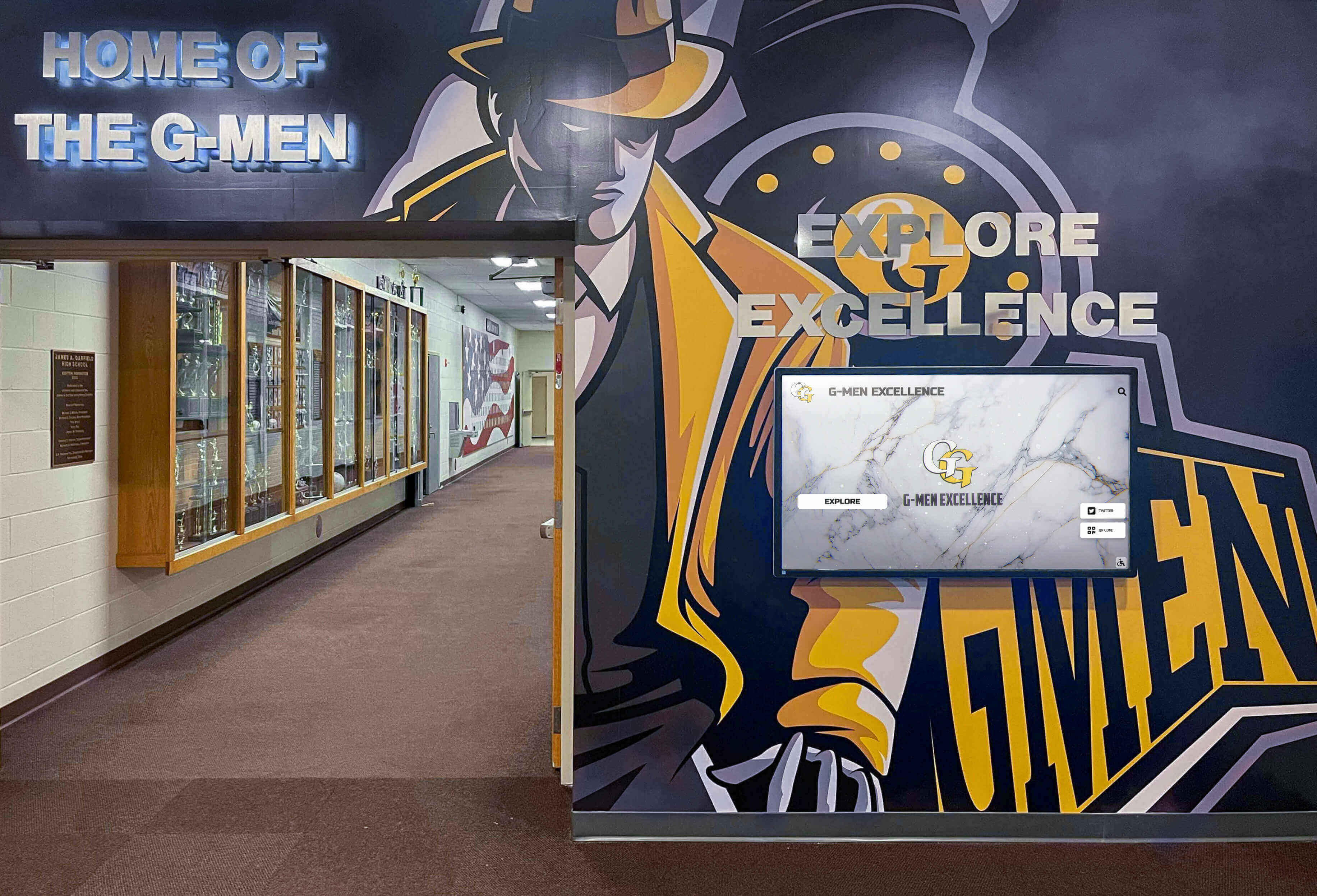
Hybrid approaches honor tradition through physical displays while providing unlimited digital capacity
Phased Transition Strategy
Gradual evolution spreads investment while building stakeholder comfort:
Phase 1: Digital Archive Launch (Months 1-4)
- Install touchscreen displaying all trophies digitally through photographs
- Maintain all existing physical trophy cases without changes
- Digitize historical trophy collection systematically
- Gather feedback from stakeholders and visitors
- Refine content based on usage analytics
Phase 2: Physical Display Optimization (Months 5-8)
- Reduce physical trophy case footprint to most significant achievements
- Expand digital display content with rosters, photos, and videos
- Store non-displayed physical trophies in athletic department offices
- Promote web-accessible platform extending recognition beyond facility
Phase 3: Mature Hybrid System (Months 9-12)
- Digital platform becomes primary comprehensive recognition source
- Physical displays feature rotating highlighted championship trophies
- Complete historical archives preserved and accessible digitally
- Sustainable workflows established for ongoing updates
- Assessment of impact on engagement and community pride
This staged approach manages change gradually while demonstrating digital value before significantly altering beloved physical trophy traditions.
Location-Specific Display Strategies
Different spaces may warrant different approaches:
Main Lobby Recognition:
- Comprehensive digital display showcasing all programs and achievements
- Featured physical case with rotating recent championships
- Interactive exploration engaging prospective families during tours
- Historical timeline displays connecting decades of tradition
Individual Sport Facilities:
- Sport-specific physical cases for relevant trophies
- Digital displays showing complete program history and records
- Championship video highlights from memorable seasons
- Current team rosters and season information
Hallway Recognition Corridors:
- Wall-mounted digital displays maximizing limited space
- Minimal physical footprint in high-traffic areas
- Championship banner integration with digital content
- ADA-accessible placement serving all visitors
Organizations implementing donor recognition alongside achievement displays benefit from platforms showcasing both categories through unified digital systems.
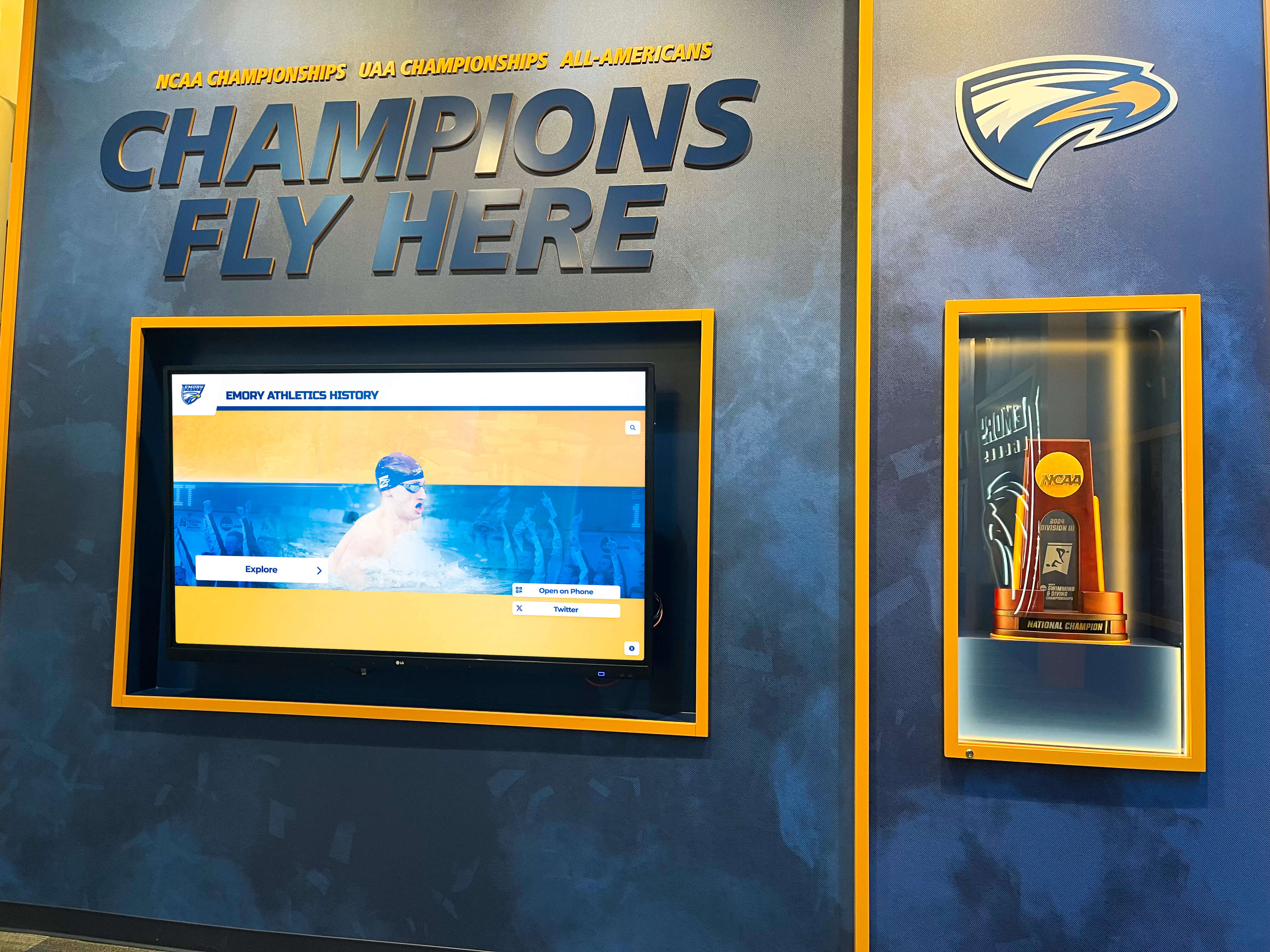
Sport-specific displays combine physical trophies with comprehensive digital achievement documentation
Best Practices for Digital Trophy Case Success
Learning from successful implementations prevents common challenges and maximizes recognition value.
Stakeholder Engagement
Broad involvement builds support and ensures displays serve diverse needs:
Key Stakeholders to Include:
- Athletic or program directors providing vision and priorities
- Administrators approving budget and scope
- Alumni association representing tradition and heritage
- Booster clubs or donor organizations supporting funding
- Facilities managers coordinating installation logistics
- Technology staff addressing infrastructure needs
- Current participants providing contemporary perspective
Engagement Activities:
- Initial planning sessions establishing goals and requirements
- Demonstrations of sample content and user interfaces
- Review cycles for content organization and navigation design
- Training programs ensuring staff management capability
- Launch events celebrating new recognition capabilities
- Ongoing feedback mechanisms for continuous improvement
Schools implementing comprehensive athletic recognition programs involve diverse stakeholders ensuring displays celebrate all achievements equitably.
Launch and Promotion Strategies
Strategic introduction maximizes awareness and adoption:
Launch Event Planning:
- Formal dedication ceremony recognizing new recognition capabilities
- Demonstration sessions showing exploration features
- Recognition of donors or supporters funding project
- Media coverage in local publications and organizational communications
- Social media campaigns showcasing new access to achievements
- Alumni outreach highlighting enhanced connection to history
Ongoing Promotion:
- Campus tour integration featuring displays prominently
- Event promotions showcasing relevant current content
- Parent orientation sessions demonstrating recognition access
- Alumni gatherings featuring historical exploration
- Community engagement during open houses and celebrations
Usage Training:
- Participant sessions exploring their teams and achievements
- Staff walkthroughs demonstrating content management
- Visitor guides understanding navigation and search features
- Quick reference materials near displays for first-time users
- Video tutorials embedded in display welcome screens
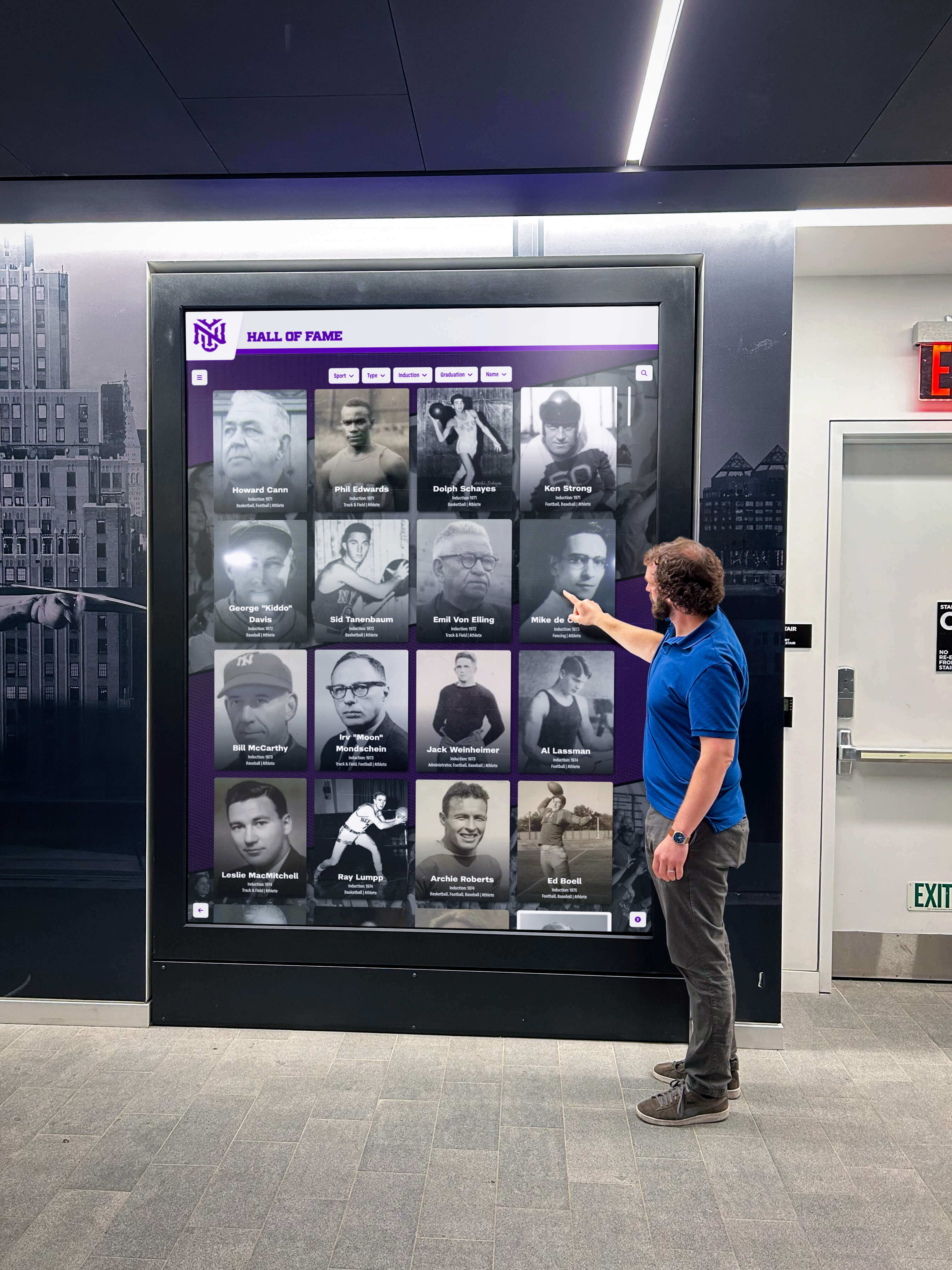
Successful launches create immediate engagement while establishing displays as valued community resources
Content Quality Standards
Professional presentation ensures credibility and engagement:
Photography Standards:
- Consistent lighting eliminating shadows and reflections
- High resolution (minimum 1920 x 1080 pixels) for screen clarity
- Uniform backgrounds creating cohesive visual presentation
- Multiple angles showing trophy details and engravings
- Team and individual photos with proper framing and composition
Writing Standards:
- Consistent biographical format across all athletes and teams
- Factual accuracy through verification against multiple sources
- Appropriate length balancing completeness with readability
- Professional tone matching organizational voice
- Proper grammar, spelling, and punctuation throughout
Information Verification:
- Cross-reference dates, names, and achievements against records
- Confirm roster information through yearbooks or official records
- Verify statistics and records through athletic department records
- Interview coaches and alumni filling information gaps
- Document sources for all information enabling future verification
Organizations implementing digital signage and recognition solutions establish clear quality standards ensuring professional presentation across all content.
Sustainable Management Workflows
Long-term success requires systematic ongoing processes:
Update Frequency Standards:
- New trophy additions: Within one week of championship or award receipt
- Championship context: Before season concludes while details are fresh
- Team rosters: At season end with complete final information
- Individual profiles: Following graduation with post-program updates
- Historical additions: Ongoing as archives are discovered
- Error corrections: Within 48 hours of identification
Role Assignment:
- Program director: Oversight and final approval authority
- Assistant director or coordinator: Day-to-day content management
- Coaches: Content provision, context, and information
- Media specialists: Photo and video capture during seasons
- Student assistants: Data entry and organization support
- Alumni relations: Historical content collection and verification
Quality Control Processes:
- Review and approval workflow before content publication
- Regular content audits ensuring accuracy and currency
- Stakeholder feedback incorporation for improvements
- Analytics review identifying highly-engaged content
- Continuous improvement planning based on data and input
Clear ownership prevents content management gaps when staff responsibilities change or personnel transitions occur.
Measuring Digital Trophy Case Success
Assessment demonstrates value and identifies improvement opportunities.
Engagement Analytics
Usage data reveals how communities interact with displays:
Interaction Metrics:
- Total touchscreen sessions per day, week, and month
- Average exploration duration indicating engagement depth
- Most frequently viewed trophies and achievements
- Search queries revealing visitor interests and priorities
- Peak usage times informing content optimization
- Return visitor rates showing sustained engagement
Schools with digital trophy case displays typically see 300-600 monthly touchscreen interaction sessions, plus 1,000-3,000 web platform visits monthly from alumni and community members accessing archives remotely.
Content Performance Analysis:
- Which trophies and achievements generate most interest
- Video content view rates and completion percentages
- Photo gallery engagement and image view counts
- Athlete profile popularity and related content exploration
- Search term analysis revealing discovery patterns
- Social sharing frequency and platform distribution
This data informs content development priorities and interface optimization decisions.
Stakeholder Feedback Collection
Qualitative input provides context for quantitative metrics:
Feedback Gathering Methods:
- Annual surveys of participants about recognition adequacy
- Alumni input during reunions and homecoming events
- Current participant feedback about inspiration and pride
- Parent reactions during events and campus visits
- Community member comments during open houses
- Prospective member impressions during recruitment tours
Common Positive Feedback Themes:
- Ability to find specific individuals or teams quickly
- Appreciation for comprehensive historical preservation
- Engagement with video highlights and championship stories
- Connection alumni feel seeing achievements permanently accessible
- Inspiration current participants express from exploring tradition
Improvement Opportunity Identification:
- Content gaps requiring additional development
- Navigation challenges affecting user experience
- Technical issues impacting display functionality
- Accessibility concerns for diverse visitor needs
- Additional features or capabilities desired
Regular stakeholder input ensures digital trophy cases continue meeting community needs and expectations.
Return on Investment Assessment
Understanding broader impact justifies continued investment:
ROI Indicators:
- Administrative time savings compared to physical case management
- Elimination of future trophy case purchase needs
- Alumni engagement improvements through accessible recognition
- Prospective member recruitment effectiveness during campus visits
- Community attendance increases at events and programs
- Supporter group membership and contribution growth
- Media coverage of organizational excellence and tradition
Schools replacing traditional overcrowded trophy cases with digital solutions report 40-60% improvement in alumni engagement metrics, 25-35% administrative time reduction, and elimination of recurring trophy case purchase costs.
Common Implementation Challenges and Solutions
Anticipating potential issues enables proactive solutions.
Technical Challenges
Challenge: Network Connectivity Issues
Physical locations may lack reliable network access:
Solutions:
- Coordinate with IT departments early in planning
- Budget for network infrastructure improvements if needed
- Consider cellular data backup for critical locations
- Test connectivity thoroughly before installation
- Establish support protocols for technical issues
Challenge: Display Placement and Viewing Conditions
Glare, viewing angles, and traffic patterns affect usability:
Solutions:
- Conduct site surveys during various times of day
- Consider lighting conditions and window placement
- Test viewing angles and distances with mockups
- Select anti-glare display options if needed
- Plan mounting height for standing adult viewing
- Ensure ADA-compliant accessible placement
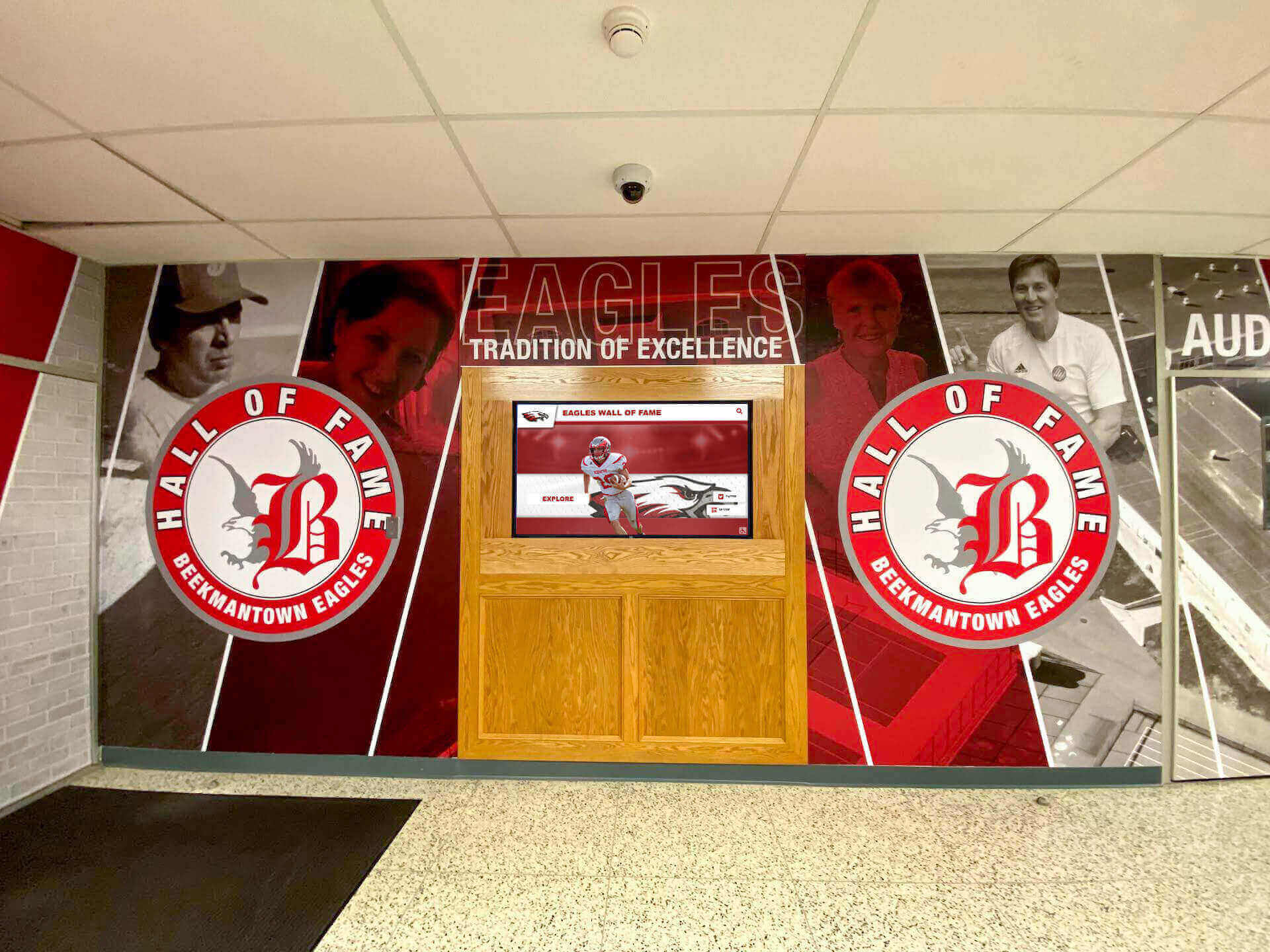
Professional planning addresses technical and placement considerations ensuring optimal functionality
Content Development Challenges
Challenge: Historical Information Gaps
Decades-old trophies may lack complete documentation:
Solutions:
- Cross-reference yearbooks, newspapers, and athletic records
- Interview coaches, alumni, and long-time community members
- Engage alumni associations in information gathering
- Accept that some historical information may remain incomplete
- Document uncertainty rather than inventing details
- Establish processes for ongoing historical discovery
Challenge: Maintaining Content Currency
Busy staff may struggle with ongoing updates:
Solutions:
- Establish clear role assignments and responsibilities
- Create simple workflows minimizing administrative burden
- Provide thorough training on content management systems
- Schedule regular update periods (monthly or quarterly)
- Celebrate and recognize staff maintaining content
- Consider contracted services if internal capacity insufficient
Stakeholder Resistance Challenges
Challenge: “Physical Trophies Matter More”
Some stakeholders strongly prefer traditional trophy displays:
Solutions:
- Implement hybrid approaches combining physical and digital
- Emphasize digital as expansion rather than replacement
- Demonstrate engagement differences through pilot installations
- Involve skeptics in planning and content development
- Phase transitions gradually building comfort over time
- Feature physical trophies prominently in digital content
Challenge: Budget Constraints
Initial digital investment exceeds traditional cases:
Solutions:
- Present comprehensive 5-year cost comparisons
- Identify creative funding sources (donors, memorials, grants)
- Consider phased implementation spreading costs
- Start with single display demonstrating value
- Emphasize elimination of future case purchase needs
- Highlight administrative time savings offsetting costs
Organizations implementing memorial and recognition programs often find donor interest in funding digital recognition capabilities.
Digital Trophy Cases for Different Organization Types
Implementation approaches vary based on organizational context and recognition needs.
High School Athletic Programs
Primary Recognition Focus:
- Varsity team championships and conference titles
- Individual athlete state-level awards and recognition
- Academic All-State and scholar-athlete honors
- Coach milestone achievements and program records
- Team and individual statistical records
Unique Considerations:
- Balance between sports receiving equal recognition
- Integration with academic honor roll displays
- Alumni engagement maintaining connection to school
- Prospective student-athlete recruitment during campus tours
- Booster club involvement in funding and support
High schools implementing senior night and athlete recognition programs benefit from platforms celebrating both career achievements and current season excellence.
University and College Athletics
Primary Recognition Focus:
- NCAA tournament appearances and championships
- Conference championships and tournament titles
- All-American athlete recognition and awards
- Academic All-Conference and scholar-athlete honors
- Professional athlete alumni achievements
- Retired jersey numbers and program legends
Unique Considerations:
- Multiple varsity programs requiring comprehensive coverage
- Professional athlete alumni returning for recognition
- Donor recognition integration with athletic achievement
- Media relations and publicity applications
- Recruiting advantages demonstrating tradition to prospects
Youth Sports Organizations and Clubs
Primary Recognition Focus:
- League championships and tournament victories
- Individual player development milestones
- Coach and volunteer recognition
- Team photos and season memories
- Organizational history and growth
Unique Considerations:
- Participant turnover as youth age out of programs
- Parent and family engagement priorities
- Volunteer coach and administrator recognition
- Budget constraints typical of youth organizations
- Community visibility and program promotion
Corporate and Professional Recognition
Primary Recognition Focus:
- Sales achievement and performance milestones
- Employee of the month and year awards
- Safety records and operational excellence
- Innovation and patent achievements
- Service milestone recognition
Unique Considerations:
- Professional presentation standards
- Regular update frequency for current recognition
- Integration with company branding and culture
- Multiple location deployment and management
- ROI measurement and business impact assessment
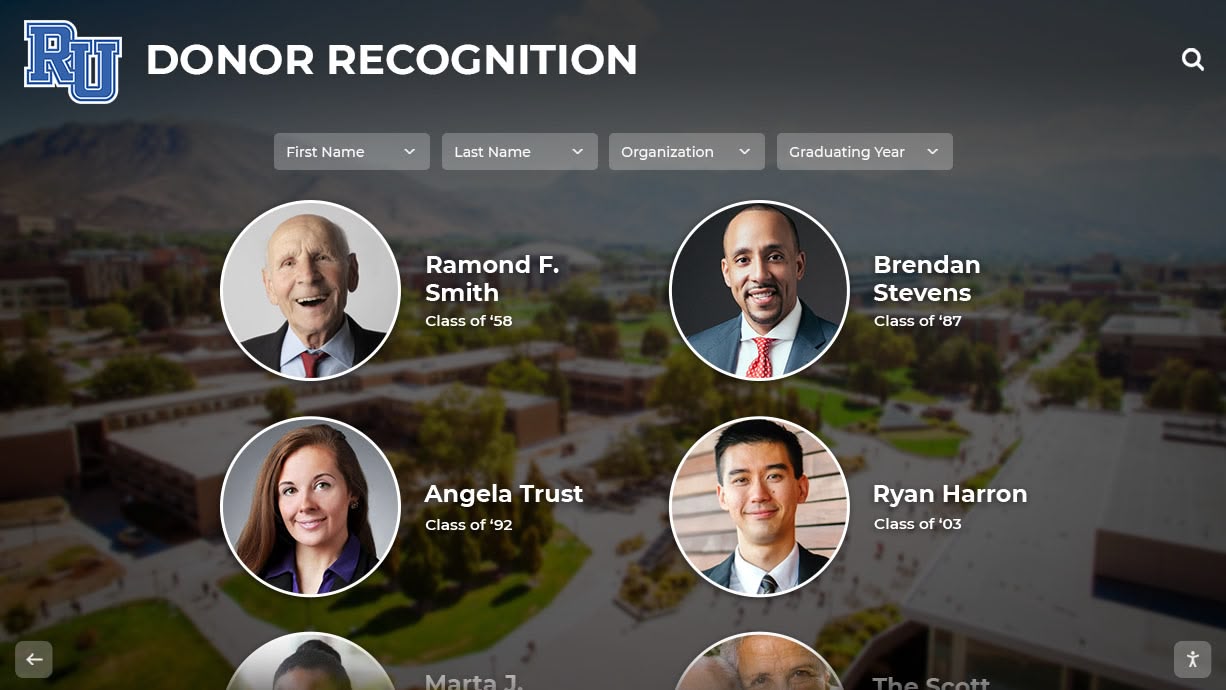
Digital trophy case technology adapts to various organizational recognition needs beyond athletics
Future Trends in Digital Trophy Case Technology
Understanding emerging capabilities helps organizations plan for long-term recognition needs.
Artificial Intelligence and Automated Content
Emerging Capabilities:
- Automated photo tagging identifying individuals in team photos
- Natural language search understanding conversational queries
- Content recommendations based on visitor interaction patterns
- Automated highlight video creation from championship footage
- Voice interaction enabling hands-free exploration
- Personalized content presentation adapting to visitor interests
Extended Reality Integration
Developing Features:
- Augmented reality overlays on physical trophy cases
- Virtual reality trophy room explorations for remote visitors
- 3D trophy models viewable from all angles
- Interactive timeline experiences showing program evolution
- Gamification elements encouraging deeper exploration
Advanced Analytics and Insights
Enhanced Measurement:
- Heat mapping showing display attention patterns
- Facial recognition tracking engagement duration (with privacy controls)
- Demographic analysis understanding visitor composition
- Content effectiveness scoring optimizing presentation
- Predictive analytics forecasting future engagement
While these capabilities remain emerging rather than standard, organizations should select digital trophy case platforms with regular feature updates ensuring access to innovations as they mature.
Conclusion: Transforming Recognition Through Digital Trophy Cases
Trophy cases serve purposes far beyond simply storing awards. Effective recognition systems preserve institutional history, inspire current participants, engage alumni, strengthen community pride, and demonstrate commitment to honoring excellence. Traditional glass trophy cases have served these purposes for decades, but physical space constraints inevitably force difficult decisions about which achievements warrant continued visibility.
Digital trophy case solutions eliminate these fundamental limitations. Interactive touchscreen displays provide unlimited recognition capacity, ensuring every championship, every athlete, and every achievement receives permanent celebration without removing anything. Enhanced engagement through multimedia content, simplified management through remote updates, and web-accessible extensions multiplying reach beyond physical locations create recognition value impossible with traditional cases alone.
The most successful implementations don’t simply replace physical trophies with digital screens—they strategically combine both approaches. Featured championship trophies in traditional cases honor tangible athletic tradition while adjacent digital displays preserve complete program history accessibly. This hybrid approach satisfies diverse stakeholder preferences while solving space constraints permanently.
Organizations should begin with honest assessment of current recognition challenges, available resources, stakeholder priorities, and growth projections. Whether implementing pure digital platforms, maintaining traditional cases, or strategically combining both approaches, the goal remains constant: creating recognition systems that honor every achievement while inspiring future excellence.
Your trophies represent thousands of hours of dedication, sacrifice, and achievement. With appropriate technology, systematic content development, and sustainable management, you can create recognition displays that celebrate every accomplishment while serving organizational needs for decades to come. Every championship team, record-setting individual, and milestone achievement deserves lasting celebration rather than eventual storage room retirement.
Digital trophy case solutions make comprehensive, permanent recognition achievable for organizations of all sizes—without building additions, major renovations, or ongoing case purchases as achievements continue accumulating. The question isn’t whether to honor excellence, but whether to do so with systems that grow with your success or systems that constrain celebration based on arbitrary physical limitations.
Ready to explore digital trophy case solutions that eliminate space constraints while creating engaging recognition experiences? Discover how solutions like Rocket Alumni Solutions provide comprehensive digital recognition platforms showcasing unlimited achievements through interactive, accessible displays that engage participants, alumni, and communities.