Small to medium public high schools face recognition challenges that larger districts with dedicated technology staff and substantial budgets do not share. A school serving 300-1,200 students typically operates with limited administrative personnel, constrained facility space, and tight operational budgets. Yet these schools still field competitive athletic programs, celebrate academic achievers, honor donors and volunteers, and maintain decades of institutional history deserving preservation.
Traditional recognition approaches—engraved plaques requiring professional production, physical trophy cases consuming hallway space, printed programs needing annual replacement—create ongoing costs and administrative burden that strain already-limited resources. Meanwhile, static displays fail to engage students accustomed to interactive digital experiences, and physical space constraints force difficult decisions about which achievements deserve visibility.
Digital recognition platforms address these specific challenges by consolidating multiple recognition needs into manageable systems, reducing long-term costs, minimizing administrative workload, and creating engaging experiences that serve schools indefinitely without requiring additional space as achievements accumulate.
Small to medium public high schools represent approximately 65% of secondary schools nationwide, according to the National Center for Education Statistics. These institutions serve communities where schools function as social and cultural centers, making recognition of achievement particularly meaningful for student motivation, alumni connection, and community pride.
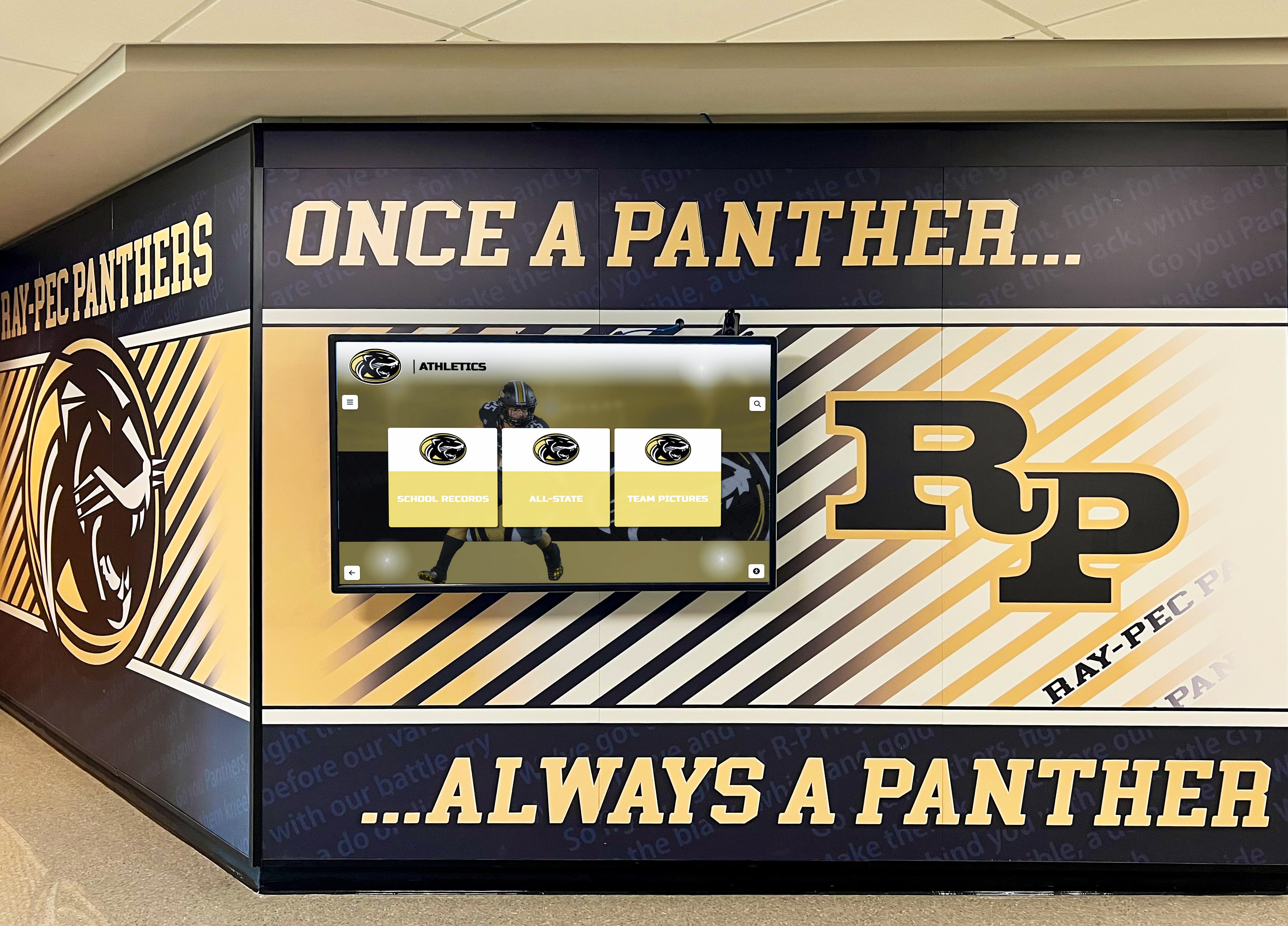
Small schools benefit from recognition solutions that maximize impact while minimizing ongoing administrative burden
Understanding the Small to Medium School Context
Schools serving 300-1,200 students operate in distinctly different contexts than large comprehensive high schools with 2,000+ enrollments.
Staffing and Resource Realities
Limited Administrative Personnel
Small to medium schools typically employ:
- Single athletic director managing all sports programs (15-25 teams)
- Principal and 1-2 assistant principals handling all administrative functions
- Office staff of 2-4 people managing attendance, communications, and operations
- Technology coordinator often serving multiple buildings or districts
- No dedicated communications director or marketing staff
- Coaches and advisors who are full-time teachers with limited planning periods
This staffing structure means recognition tasks fall to already-busy personnel who cannot dedicate substantial time to updating displays, creating content, or managing complex systems.
Budget Constraints
Public school funding challenges particularly affect smaller districts:
- Per-pupil spending often lower than urban or wealthy suburban districts
- Limited local tax base in many rural and small-town communities
- Competition for funds between academic needs, facilities, athletics, and technology
- Capital improvement budgets of $50,000-$200,000 annually for entire district
- Recognition and display budgets typically $2,000-$8,000 per year maximum
- Reliance on booster clubs and fundraising for athletic and extracurricular needs
Schools must carefully evaluate total cost of ownership, not just initial purchase prices, when considering recognition investments.
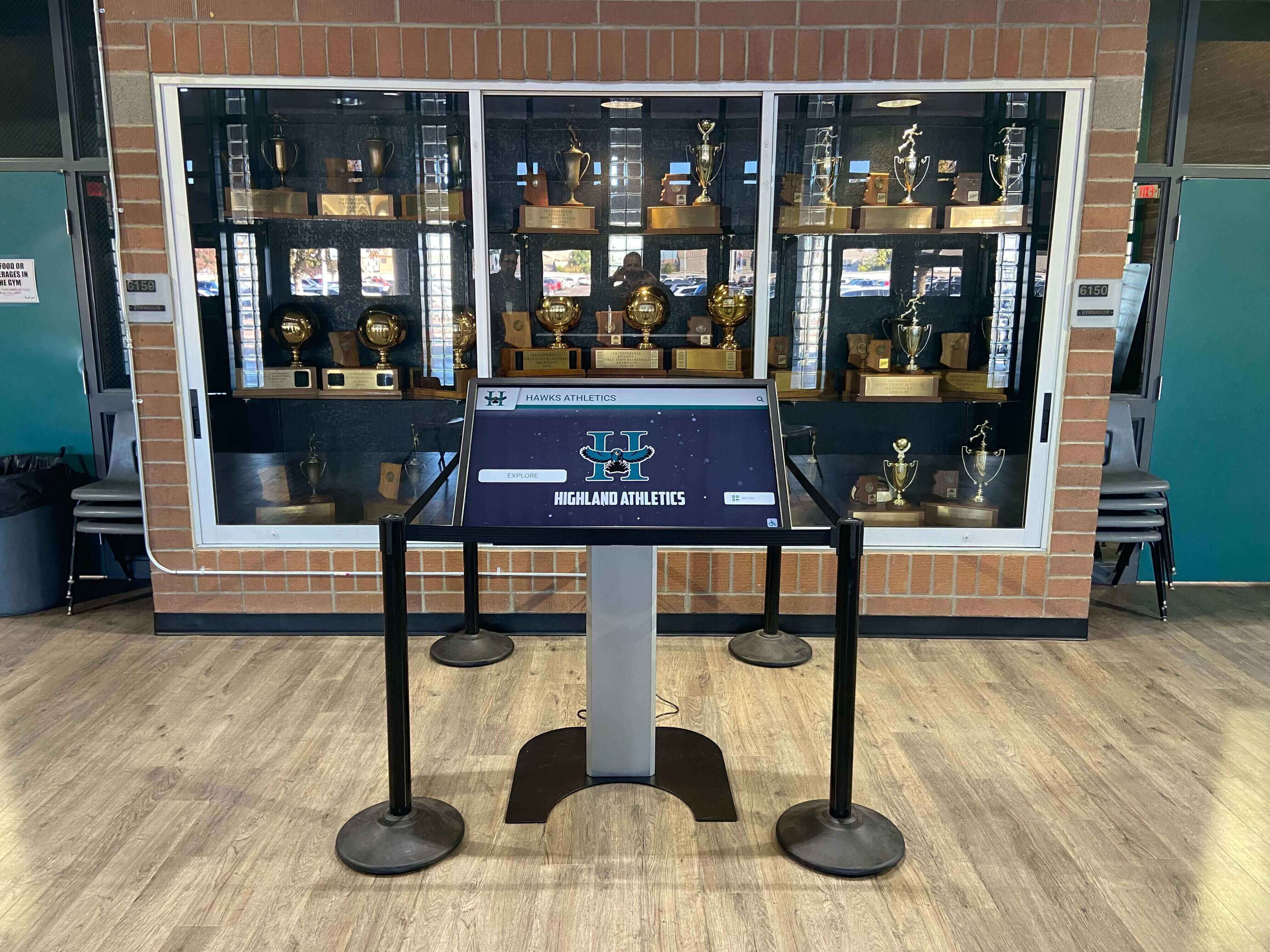
Budget-conscious schools need solutions providing maximum value without requiring frequent replacement or expansion
Physical and Facility Considerations
Limited Display Space
Smaller buildings create space challenges:
- Single main hallway serving as primary traffic corridor and display location
- Lobby areas of 200-400 square feet versus 1,000+ in large schools
- Competition for wall space between academic, athletic, and administrative needs
- Limited electrical outlets and network access points in older facilities
- Display locations visible to visitors during athletic events or programs
- ADA accessibility requirements in hallways with limited width
Physical trophy cases consume floor and wall space that recognition content outgrows within 2-4 years for active programs. Small schools particularly need solutions offering unlimited recognition capacity without requiring physical expansion.
Facility Age and Infrastructure
Many small public high schools operate in buildings constructed between 1950-1990:
- Electrical systems designed before modern display technology existed
- Limited network infrastructure requiring WiFi upgrades for connectivity
- HVAC systems sensitive to heat-generating equipment
- Wall construction complicating mounting of heavy displays
- Renovation budgets prioritizing critical systems over aesthetic upgrades
Recognition solutions requiring minimal technical infrastructure and straightforward installation suit these facility realities better than complex systems needing specialized electrical or network capabilities.
Multi-Purpose Recognition Needs
Small schools require recognition systems serving multiple functions:
Athletic Recognition
- Championship teams and tournament achievements
- All-conference and all-state athlete honors
- Team records and individual accomplishments
- Coach recognition and milestone celebrations
- Historical program achievements spanning decades
Academic Excellence
- Honor roll students each semester
- Valedictorian and salutatorian recognition
- National Honor Society members
- Academic competition achievements
- Scholarship award recipients

Comprehensive platforms serve athletic, academic, and donor recognition through single systems
Donor and Volunteer Recognition
- Booster club contributor acknowledgment
- Capital campaign donor walls
- Volunteer appreciation for countless community members
- Memorial recognition for alumni and supporters
- Legacy family and multi-generational attendance celebration
Historical Preservation
- Alumni achievements and notable graduates
- School evolution and facility changes over decades
- Retired jersey numbers and legendary performances
- Homecoming court and student government through the years
- Retired staff and beloved teachers who shaped generations
Schools implementing comprehensive athletic recognition programs benefit from platforms accommodating diverse recognition categories rather than purchasing separate systems for each purpose.
Why Digital Recognition Platforms Suit Small School Realities
Technology-based recognition addresses specific challenges small to medium schools face.
Budget Efficiency Over Time
Lower Total Cost of Ownership
Five-year financial comparison illustrates long-term value:
Traditional Recognition Approach:
- Trophy cases (2): $8,000
- Engraved plaques (50 over 5 years @ $75): $3,750
- Printed programs (annual @ $500): $2,500
- Donor wall construction: $12,000
- Academic display boards: $3,000
- Maintenance and updates: $2,500
- 5-Year Total: $31,750
Digital Platform Approach:
- Commercial touchscreen display (65"): $5,000
- Software subscription (5 years @ $1,800): $9,000
- Installation and training: $1,500
- Initial content development: $2,000
- Annual maintenance: $1,000
- 5-Year Total: $18,500
The digital approach saves approximately $13,250 over five years while providing unlimited recognition capacity and serving all recognition categories through one platform. Schools can allocate saved funds to program expansion, coaching salaries, or facility improvements.
Elimination of Recurring Production Costs
Traditional recognition requires ongoing expenses:
- Engraved plaques: $50-$150 per item including production and installation
- Printed programs: $300-$800 annually for design, printing, and distribution
- Trophy case expansion: $3,000-$6,000 every 3-4 years as space fills
- Professional design services: $500-$1,500 for donor walls and major displays
- Shipping and installation: $200-$500 per project
Digital platforms eliminate these expenses through remote content updates requiring no physical production or professional services.
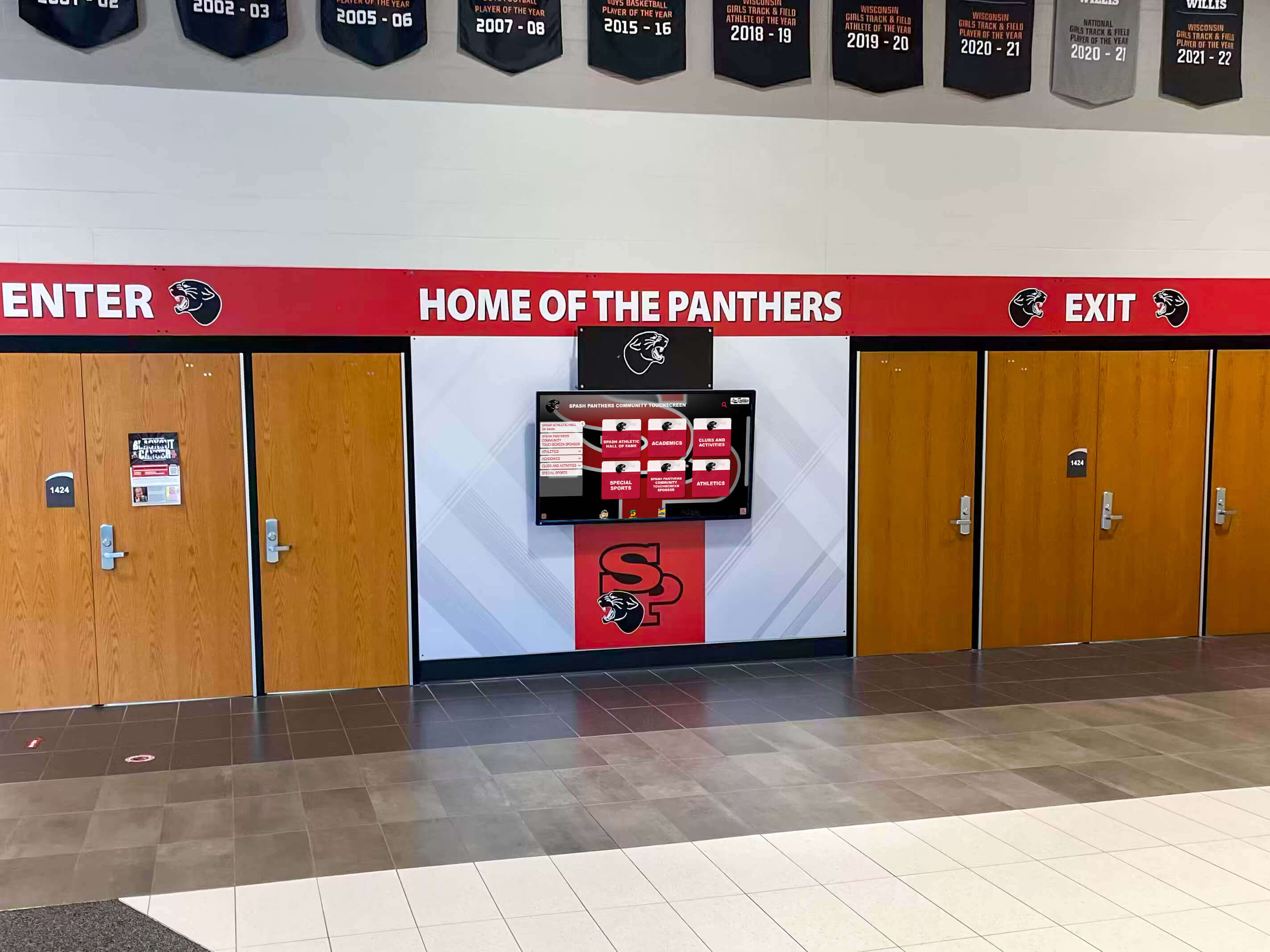
Single displays serve schools indefinitely without requiring expansion purchases as achievements accumulate
Administrative Time Savings
Simplified Content Management
Small school staff lack time for complicated recognition workflows:
Traditional Recognition Time Requirements:
- Trophy case updates: 3-4 hours per season (physical access, reorganization)
- Plaque ordering: 2-3 hours per order (vendor coordination, proofing, installation scheduling)
- Donor wall updates: 8-12 hours (design coordination, approval cycles, installation)
- Academic displays: 4-6 hours per semester (printing, mounting, taking down old displays)
- Historical research: Variable but substantial when creating new displays
- Annual Time Investment: 80-120 hours
Digital Platform Time Requirements:
- Content updates: 30-45 minutes per update from any device
- New recognition categories: 1-2 hours for initial setup, then routine updates
- Photo uploads and organization: 15-30 minutes per batch
- Corrections or changes: 5-10 minutes versus hours or days for physical updates
- Annual comprehensive review: 8-10 hours
- Annual Time Investment: 20-30 hours
This 70-75% reduction in administrative time allows staff to focus on educational priorities, student support, and program development rather than display maintenance. For schools where the athletic director teaches three classes daily, this time savings proves substantial.
Remote Management Capability
Cloud-based platforms enable management from any location:
- Update content from home after evening games without returning to campus
- Add recognition during summer when buildings have limited access
- Correct information errors immediately upon discovery
- Manage displays across multiple buildings from single account
- Delegate content responsibilities to coaches or advisors with appropriate access
- Review and approve submissions before publication
Schools implementing digital donor recognition displays particularly value remote management when coordinating with volunteer committees and booster club leaders who cannot easily access campus during business hours.
Unlimited Recognition Capacity
Space Constraint Elimination
Physical recognition faces inevitable limitations:
- Trophy cases fill within 2-4 years for active athletic programs
- Wall space for plaques and displays runs out
- Hallway congestion from multiple display types
- Difficult decisions about removing older recognition to accommodate new achievements
Digital platforms provide unlimited capacity:
- Single 65" display accommodates thousands of individual recognition entries
- Add unlimited photos, videos, and biographical content
- Include every achievement without removing anything
- Preserve comprehensive historical archives spanning school history
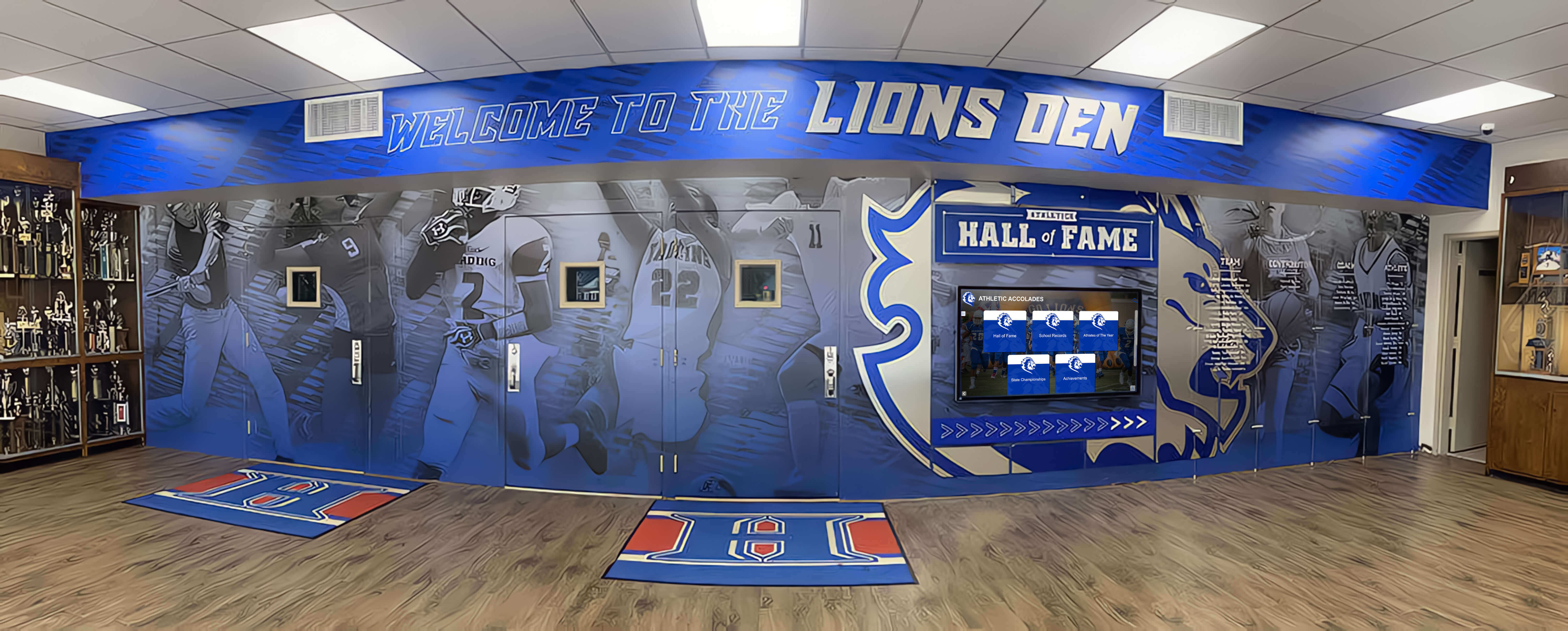
Traditional displays inevitably fill, forcing schools to choose which achievements remain visible
Comprehensive Historical Preservation
Small schools often possess rich histories deserving preservation:
- Rural schools with 100+ year traditions and multi-generational family attendance
- Consolidated schools merging multiple district histories requiring documentation
- Legendary coaching careers spanning 30-40 years and hundreds of athletes
- Championship eras producing state titles and record-setting performances
- Notable alumni who achieved regional or national recognition
Digital archives preserve these stories comprehensively rather than selectively based on physical space availability. Schools implementing digital history archive solutions create engaging historical resources serving students, alumni, and communities.
Ease of Implementation and Use
Minimal Technical Requirements
Small schools often lack dedicated IT staff, making simplicity essential:
Infrastructure Needs:
- Standard electrical outlet (most displays draw 200-300 watts)
- WiFi or ethernet network connection (same as other school devices)
- Wall space or floor location with adequate viewing clearance
- No specialized mounting hardware beyond standard commercial brackets
- No server installation or complex technical configuration
This accessibility contrasts with complex systems requiring dedicated servers, specialized network configurations, or ongoing IT support that small schools cannot provide.
Simple Management Interfaces
Non-technical staff must manage content without extensive training:
- Web-based dashboards accessible through standard browsers
- Visual editors using familiar drag-and-drop functionality
- Template libraries providing professional layouts without design expertise
- Guided workflows for common tasks like adding championship teams
- Built-in image optimization and file management
- Undo functionality allowing easy correction of mistakes
- Help resources and video tutorials addressing common questions
Administrative assistants, coaches, and volunteers with basic computer skills successfully manage these systems after 1-2 hours of initial training.
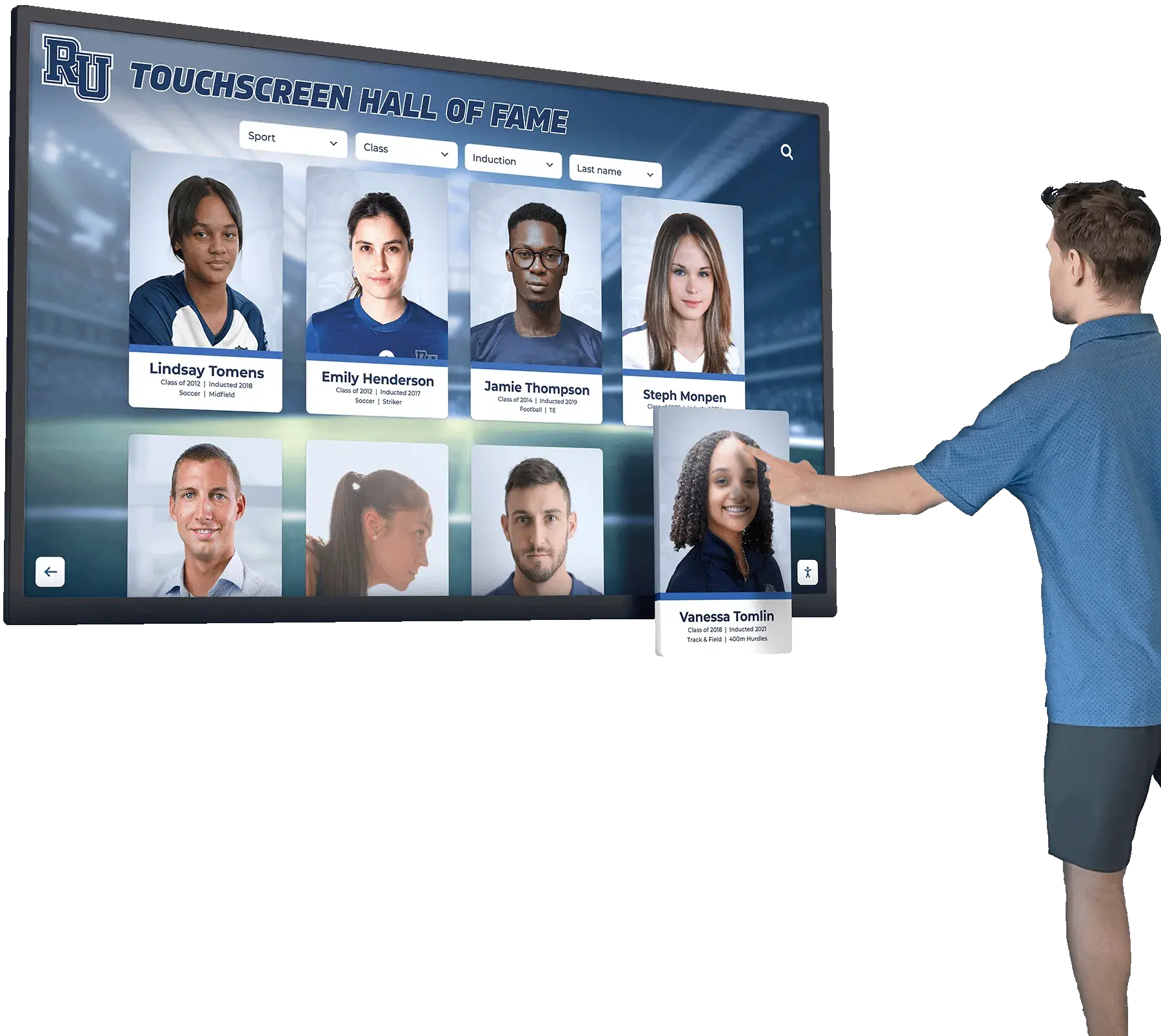
Simple interfaces enable visitors to explore recognition content without instruction or assistance
Professional Results Without Design Skills
Small schools rarely employ graphic designers or communications specialists:
- Pre-designed templates ensure consistent, professional appearance
- Automatic image cropping and sizing maintain visual quality
- Typography and color schemes provided by platform
- Layout rules prevent common design mistakes
- Batch upload capabilities for quick content addition
- Automatic organization by category, date, or sport
Staff add content and photographs while the platform handles design details, producing results comparable to professionally-designed displays at no additional cost.
Enhanced Engagement and Impact
Interactive Experiences
Static displays do not engage students who grew up with smartphones and touchscreens:
Visitor Interaction Patterns:
- Average viewing time for static plaque: 8-12 seconds
- Average engagement with digital display: 4-8 minutes
- Percentage of lobby visitors interacting with display: 75-85%
- Percentage reading static plaques: 15-25%
Interactive displays create meaningful engagement:
- Search functionality helping visitors find specific athletes, teams, or years
- Photo galleries showing championship moments and team celebrations
- Video highlights from memorable games and performances
- Related content connections (teammates, coaches, same sport in different years)
- Social sharing features allowing digital celebration
- QR codes extending content to personal mobile devices
Schools report that prospective families touring campuses spend substantial time exploring digital recognition, creating positive impressions of school pride and organizational capability.
Alumni Connection and Fundraising Impact
Digital recognition extends reach beyond physical campus:
- Web-accessible platforms allowing alumni nationwide to explore their achievements
- Email campaigns featuring specific recognitions driving traffic and engagement
- Social media integration amplifying celebration and visibility
- Donor recognition visible 24/7 rather than only during campus visits
- Recognition updates creating opportunities for re-engagement with graduated athletes
Small schools implementing donor recognition strategies through digital displays report improved booster club participation and increased major gift consideration when donors see lasting, prominent recognition.
Scalability as Programs Grow
Start Simple, Expand Naturally
Small schools can implement gradually:
Phase 1: Athletic Recognition
- Begin with single display showing sports achievements
- Digitize current trophy collection and recent championships
- Learn platform capabilities with focused content scope
Phase 2: Academic Excellence
- Add honor roll, scholarship recipients, academic competitions
- Use templates created for athletic content
- Engage faculty advisors in content contribution
Phase 3: Comprehensive Community
- Include donor recognition and volunteer appreciation
- Add historical archives and notable alumni
- Implement web access extending reach
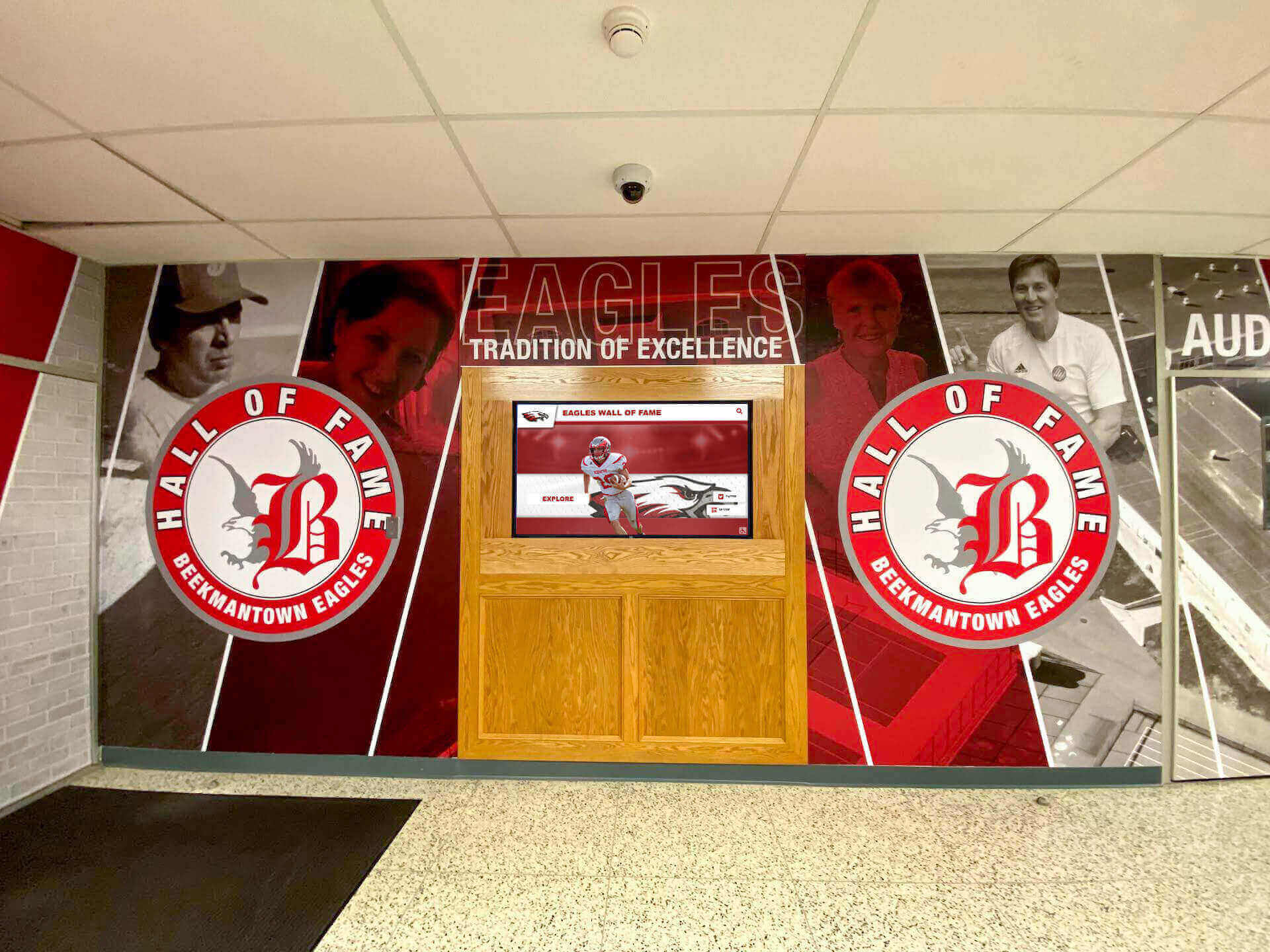
Platforms scale from simple displays to comprehensive community engagement without replacing systems
Growth Without System Replacement
As programs expand, digital platforms accommodate evolution:
- Add displays in additional locations using same content management system
- Include new recognition categories without rebuilding existing content
- Expand from lobby displays to web access and mobile viewing
- Integrate with athletic registration, academic tracking, or fundraising systems
- Support increased content volume without performance degradation
- Maintain consistent branding and navigation as content expands
This contrasts with traditional approaches requiring different vendors, design processes, and management methods for each new recognition type.
Community and Communication Benefits
Central Information Hub
Digital displays serve multiple communication purposes:
- Athletic schedules and upcoming events
- Academic achievement celebration
- Donor recognition and fundraising campaign updates
- Alumni spotlights and where-are-they-now features
- Historical anniversaries and milestone observances
- Emergency information and school closures when needed
Small schools benefit from consolidated communication rather than managing separate systems for athletics, academics, development, and general announcements.
Pride and Culture Building
Recognition affects school culture measurably:
- Student athletes see role models and aspire to similar achievement
- Academic achievers receive visibility often reserved primarily for athletics
- Community members observe institutional commitment to honoring excellence
- Alumni maintain connection through ongoing visibility of their contributions
- Prospective families assess school values and community through recognition priorities
Schools serving smaller communities where school events and athletic competitions function as primary social activities find that prominent recognition strengthens community bonds and institutional pride.
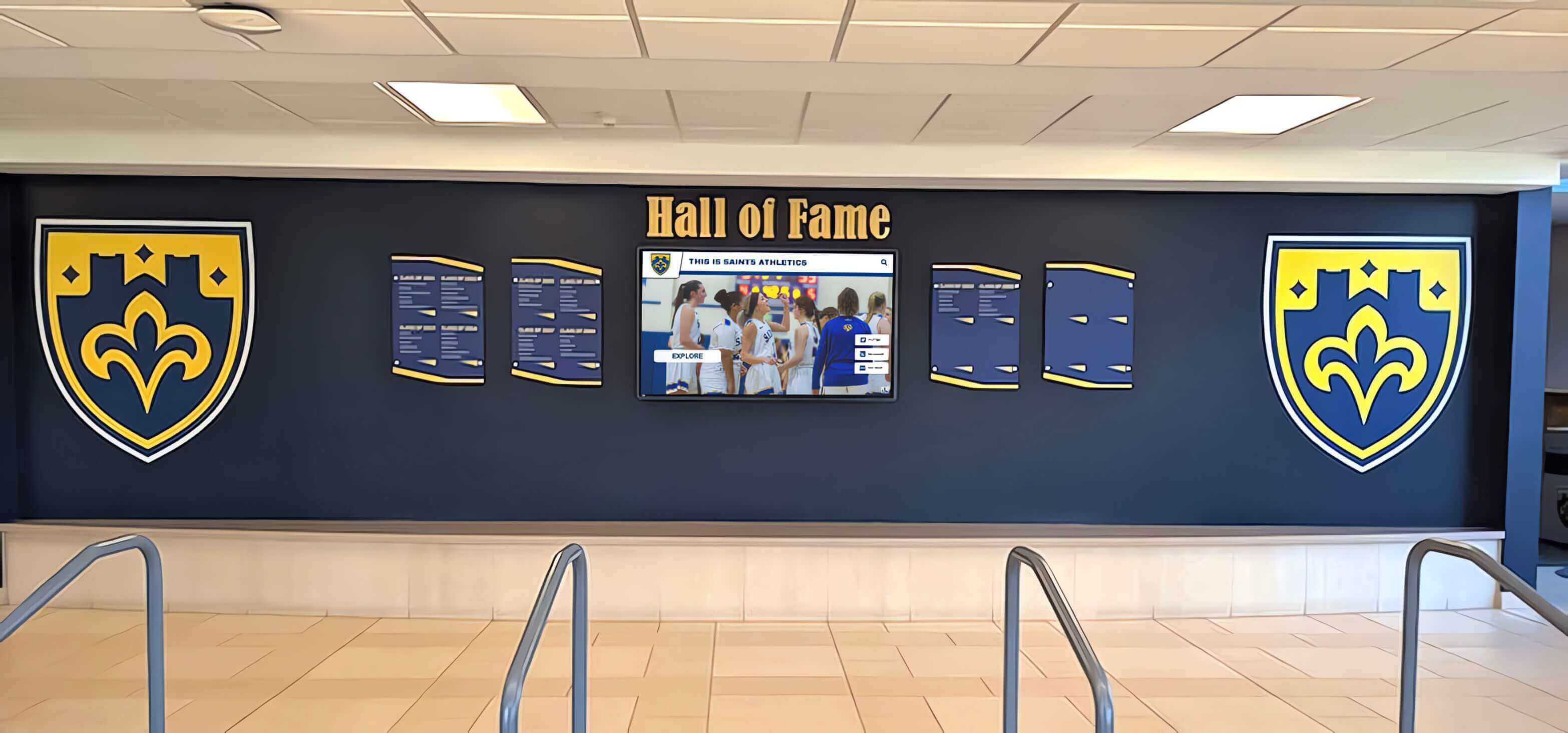
Recognition displays become focal points during campus visits, athletic events, and community gatherings
Addressing Common Small School Concerns
Administrators often raise practical questions about digital recognition platforms.
“Is this too advanced for our school?”
Platform sophistication does not require user sophistication:
- Management interfaces designed for non-technical users
- Training requirements typically 1-2 hours for primary administrators
- Support resources including video tutorials and help documentation
- Vendor assistance during implementation and initial content development
- Similar difficulty to managing social media accounts or school websites
Many small schools successfully manage digital recognition with staff who describe themselves as “not tech people.” The platforms accommodate user capabilities rather than requiring technical expertise.
“What if our internet goes down?”
Modern systems include offline capabilities:
- Displays continue showing content during network interruptions
- Content updates sync automatically when connectivity restores
- Local caching ensures consistent operation
- Network requirements similar to other school technology (WiFi access points, student devices)
Schools in rural areas with less dependable internet connectivity report displays function consistently despite occasional network issues affecting other school technology.
“We don’t have good photos or historical information”
Content development can progress gradually:
- Start with current seasons where photos and information are readily available
- Add historical content progressively as research and digitization occur
- Engage alumni in contributing photos and memories from earlier eras
- Accept that comprehensive archives develop over years, not weeks
- Use what exists rather than waiting for perfect historical documentation
Schools implementing student achievement recognition programs often begin with recent achievements and gradually expand historical depth as resources and time allow.
“What about the physical trophies?”
Digital recognition complements rather than replaces physical trophies:
- Feature championship trophies in traditional cases near digital displays
- Digitize trophy collection for unlimited access while preserving physical items
- Store non-displayed trophies appropriately with digital archive ensuring visibility
- Create hybrid approaches balancing tangible tradition with digital accessibility
- Use QR codes on physical trophies linking to extended digital content
Most schools maintain some physical trophy display while using digital platforms to present comprehensive recognition impossible to display physically.
“What if the display breaks or becomes outdated?”
Commercial displays prove durable and long-lasting:
- Commercial-grade screens rated for 50,000-100,000 hours operation (15-30 years at typical school usage)
- Warranties typically covering 3-5 years
- Content exists in cloud, not on display hardware
- Display replacement uses existing content without rebuilding
- Software updates keep platforms current without hardware replacement
Total cost of ownership calculations should include display replacement every 8-12 years, but this remains competitive with traditional recognition approaches requiring regular expansion and updates.
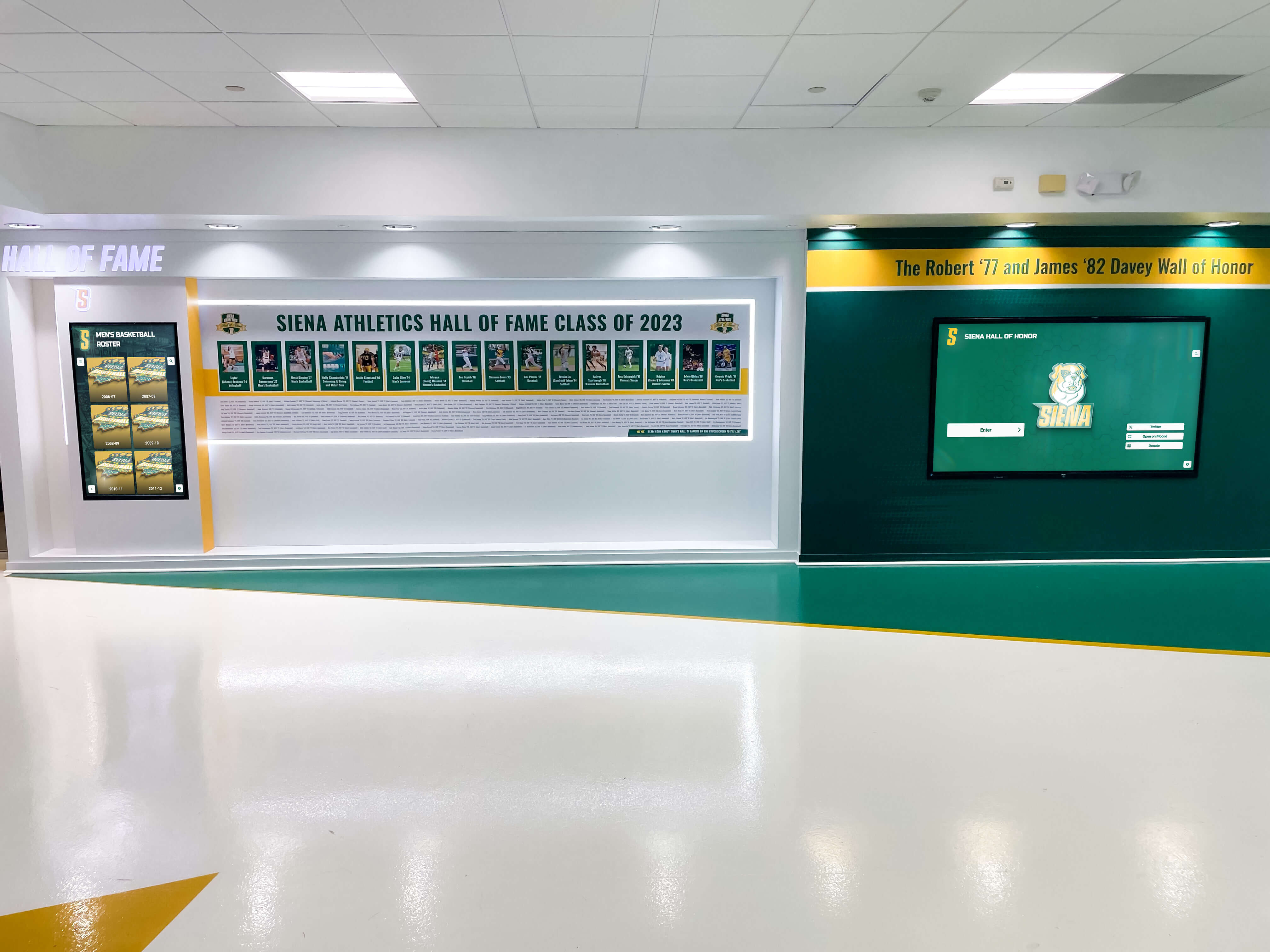
Quality installations serve schools for decades with minimal maintenance beyond routine screen cleaning
The Cost of No Recognition Solution
Schools sometimes delay recognition investments, but this creates measurable costs.
Missed Donor Engagement Opportunities
Small schools rely heavily on booster clubs, fundraising campaigns, and community support:
- Donors contribute $500-$5,000+ when they see recognition plans ensuring lasting visibility
- Capital campaigns for facilities, equipment, or programs require donor cultivation
- Annual giving increases when contributors observe meaningful acknowledgment
- Major gifts often tied to recognition opportunities like named spaces or scholarship funds
- Community members support programs where their contributions are valued visibly
Schools without recognition systems miss opportunities to convert appreciation into sustained financial support. Booster club presidents and development volunteers report that recognition platforms directly enable conversations about major gifts.
Limited Alumni Connection
Alumni represent valuable resources beyond financial contribution:
- Career mentorship and networking for current students
- College admission guidance and recommendation letters
- Volunteer coaching, officiating, and program support
- Community advocacy and positive word-of-mouth
- Historical knowledge and institutional memory preservation
Alumni maintain stronger connections to schools that preserve and celebrate their achievements. Small schools in rural areas where graduates move away particularly benefit from web-accessible recognition keeping alumni engaged despite geographic distance.
Reduced Student Motivation
Recognition visibility affects student behavior and achievement:
- Athletes work harder when they see systematic recognition of excellence
- Academic achievers pursue honors when schools visibly celebrate intellectual achievement
- Students from families with multi-generational attendance feel stronger connection to tradition
- Prospective students assess school culture through visible commitment to honoring achievement
Schools implementing comprehensive student recognition programs report measurable increases in honor roll achievement, athletic program participation, and extracurricular involvement.
Administrative Inefficiency
Without systematic recognition platforms, schools rely on scattered, time-consuming approaches:
- Athletic directors creating printed programs annually from scratch
- Office staff fielding donor questions about capital campaign recognition
- Coaches maintaining informal records of team achievements across file cabinets
- Historical information existing only in memories of long-serving staff
- Duplicate efforts as different people track similar information separately
Centralized platforms reduce administrative burden while improving recognition quality and consistency.
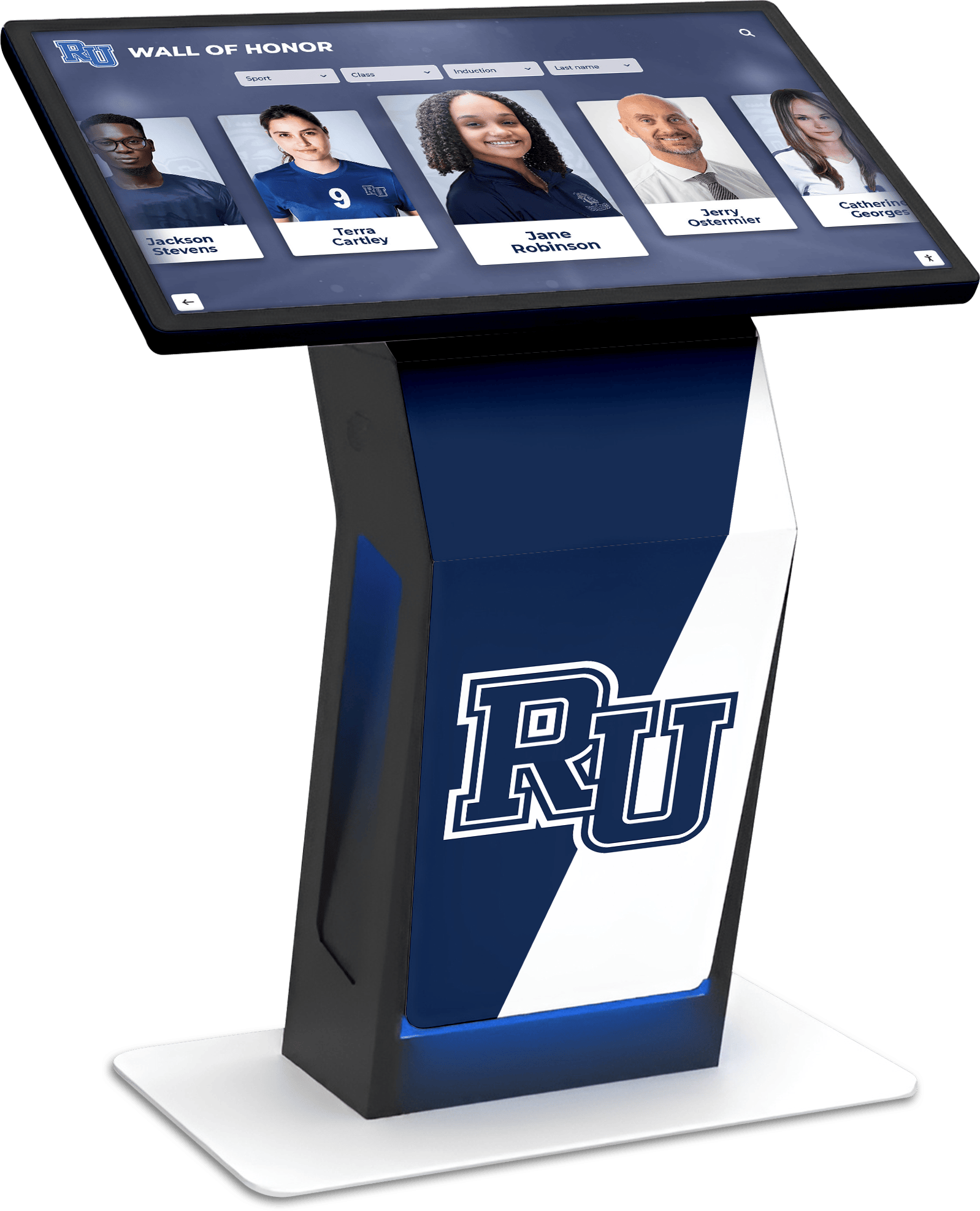
Systematic recognition platforms reduce administrative workload while improving recognition quality and reach
Implementation Considerations for Small Schools
Successful adoption requires planning appropriate to small school contexts.
Budget Planning Strategies
Capital vs. Operational Funding
Recognition platform costs span different budget categories:
- Hardware (display, mounting): Capital/equipment budget
- Software subscription: Annual operational technology budget
- Installation: One-time capital or maintenance budget
- Content development: Can be operational (staff time) or capital (contracted service)
Schools often find funding through combinations:
- Booster club donation for initial hardware ($3,000-$6,000)
- Technology budget allocation for software subscription ($1,500-$2,500 annually)
- Capital improvement funds for installation and mounting
- PTO or alumni association contribution for initial content development
Separating capital and operational costs often makes recognition platforms more financially achievable than single large expenditures requiring unusual budget approvals.
Multi-Year Budget Impact
Present recognition investments as multi-year comparisons:
- Year 1: Initial investment of $10,000-$12,000
- Years 2-5: Annual subscription of $1,800-$2,400
- 5-Year Total: $17,200-$21,600 versus $30,000+ for traditional approaches
Budget presentations emphasizing long-term savings and elimination of recurring production costs prove more compelling than first-year investment figures alone.
Stakeholder Engagement
Building Support
Small school decisions often require broader stakeholder buy-in:
Key Stakeholder Groups:
- School board members controlling budget approvals
- Athletic booster club leaders providing substantial funding
- Principal and administrative team managing implementation
- Athletic director and coaches using systems regularly
- PTO members interested in academic recognition
- Alumni association concerned with historical preservation
Present recognition platforms as solutions serving multiple constituencies rather than single-purpose athletic displays. Emphasize community engagement, donor stewardship, and comprehensive achievement celebration.
Addressing Resistance
Common objections often stem from unfamiliarity:
- Arrange demos or site visits to schools with similar installations
- Show specific examples of how platform addresses current recognition challenges
- Demonstrate management interface simplicity for non-technical users
- Present total cost comparisons showing long-term value
- Involve skeptics in planning committees ensuring their priorities are addressed
Schools implementing digital trophy case solutions report that initial skeptics often become strongest advocates after seeing systems in operation.
Vendor Selection Criteria
Not all platforms serve small school needs equally well:
Essential Evaluation Factors:
- Unlimited content capacity without per-entry charges
- Straightforward management interface requiring minimal training
- Responsive support addressing questions quickly
- Reasonable subscription pricing fitting small school budgets
- Professional templates requiring no design expertise
- Web access extending reach beyond physical displays
- ADA WCAG 2.1 AA compliance meeting accessibility requirements
- Multi-category support (athletics, academics, donors, history)
- Reference customers at schools of similar size and budget
Avoid platforms designed for large universities or corporate environments that may offer unnecessary complexity, premium pricing, or features small schools do not need.
Content Development Approach
Start focused rather than attempting comprehensive historical archives immediately:
Year 1: Foundation
- Current athletic achievements (recent 1-2 seasons)
- Current academic honors (present school year)
- Key historical milestones (state championships, retired jerseys)
- Major donors and volunteers from recent capital campaigns
Year 2: Expansion
- Extended athletic history (5-10 years back)
- Broader academic recognition categories
- Notable alumni spotlights
- Additional historical research and digitization
Year 3+: Comprehensive Archives
- Deep historical content spanning decades
- Comprehensive photo galleries from multiple eras
- Oral histories and alumni memories
- Integration with archives and local historical societies
This phased approach spreads workload across years, allows learning platform capabilities gradually, and creates visible value quickly rather than delaying launch until comprehensive historical work completes.
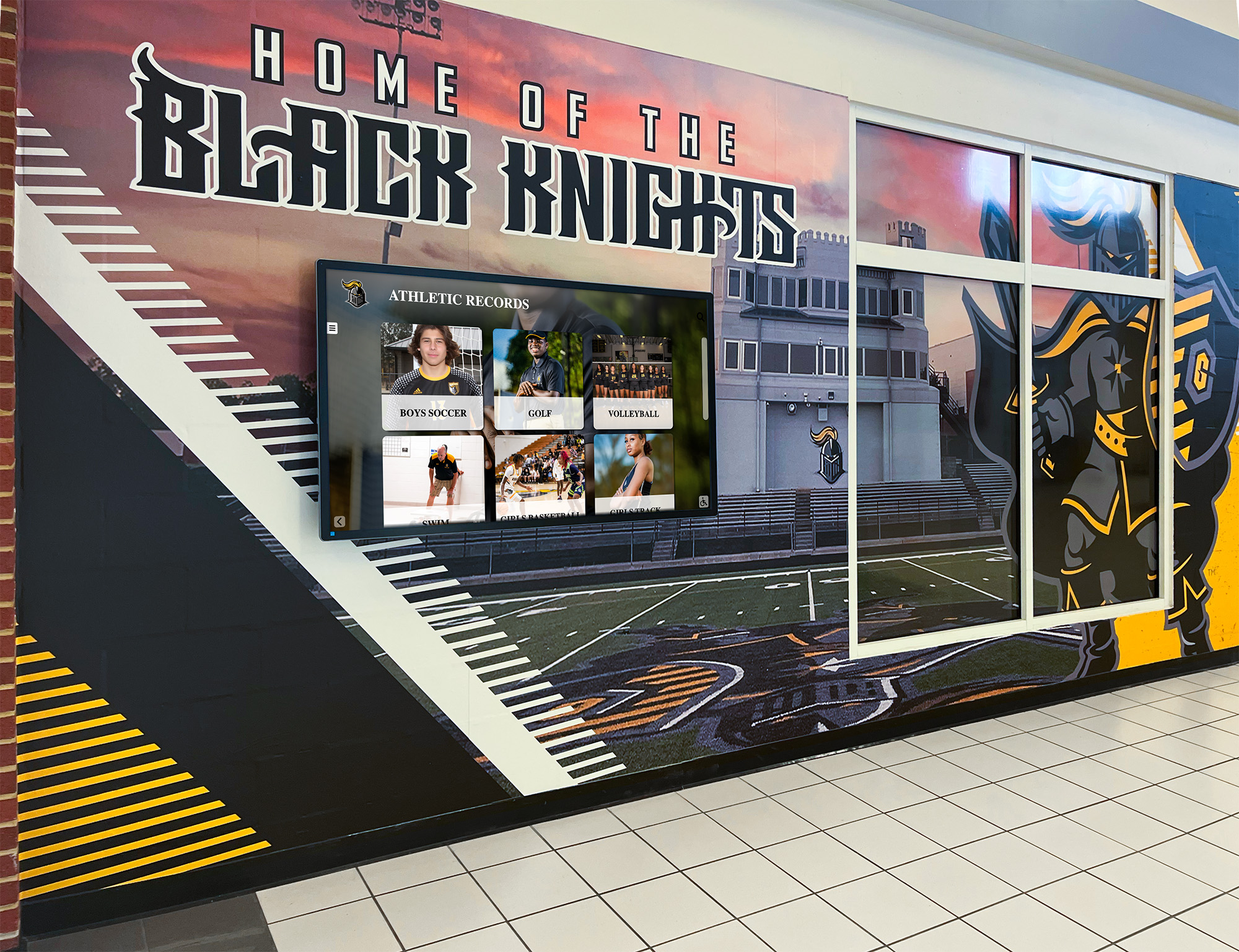
Effective recognition combines traditional design elements with modern digital capabilities
Platform Features Small Schools Should Prioritize
Different platforms offer varying capabilities; small schools benefit from specific features.
Essential Core Features
Unlimited Content Capacity
Avoid platforms charging per athlete, per entry, or limiting total content:
- Small schools today become larger programs tomorrow
- Championship seasons generate hundreds of recognition entries
- Historical archives span decades with thousands of individuals
- Per-entry pricing creates ongoing costs and administrative complexity
Subscription pricing based on number of displays rather than content volume provides predictable budgeting.
Remote Cloud-Based Management
Local server requirements prove problematic for small schools lacking IT staff:
- Cloud platforms require only internet-connected devices for management
- No server maintenance, backup, or security responsibilities
- Automatic updates without IT intervention
- Access from any device (laptop, tablet, smartphone)
- Multiple authorized users with appropriate permission levels
Professional Templates and Design Tools
Small schools lack graphic design expertise:
- Pre-designed layouts for common recognition types (athletic championships, honor roll, donor walls)
- Automatic formatting maintaining professional appearance
- Consistent branding and typography across all content
- Drag-and-drop interfaces requiring no design knowledge
- Image optimization and cropping tools
ADA Accessibility Compliance
Public schools must serve all students and visitors:
- WCAG 2.1 AA compliance for touchscreen interfaces
- Screen reader compatibility for vision-impaired visitors
- Sufficient color contrast for readability
- Keyboard navigation alternatives to touch
- QR code access enabling content viewing on personal devices
Schools implementing accessible digital recognition displays ensure compliance while providing better experiences for all visitors.
Valuable Advanced Features
Multi-Device Access
Recognition should extend beyond physical displays:
- Web-accessible content viewable from computers, tablets, phones
- Social media integration enabling sharing and celebration
- Email campaign integration featuring specific recognitions
- Recruiting advantages allowing prospective families to explore achievements remotely
Search and Filtering
Visitors should easily find specific content:
- Name search finding individual athletes or students across all content
- Sport or activity filtering showing specific programs
- Year selection displaying specific seasons or graduating classes
- Championship level filtering (conference, regional, state)
Analytics and Reporting
Understanding engagement helps justify investment:
- Visitor interaction tracking showing most-viewed content
- Search query data revealing what visitors seek
- Session duration demonstrating engagement depth
- Device type distribution (touchscreen vs. web vs. mobile)
Built-in Donor Management
Schools using platforms for donor recognition benefit from:
- Giving level tiers with appropriate recognition
- Batch import from existing donor databases
- Recognition preview allowing donors to approve before publication
- Reports showing recognized versus unrecognized contributors
Solutions Like Rocket Alumni Solutions for Small Schools
Digital recognition platforms vary significantly in how well they serve small to medium public high schools.
Why Rocket Works for Smaller Schools
Platforms designed specifically for schools understand small school realities:
Appropriate Pricing Structure
- Subscription pricing based on number of displays, not content volume
- Predictable annual costs fitting small school budgets
- No hidden fees for support, training, or content additions
- Multi-year pricing options providing budget certainty
Ease of Implementation
- Standard installation requiring no specialized technical infrastructure
- Initial training completed in 1-2 hours for primary administrators
- Pre-built templates for common recognition types (sports, honor roll, donors)
- Support team familiar with small school contexts and constraints
Comprehensive Functionality
- Single platform serving athletics, academics, donors, and historical archives
- Unlimited content capacity as schools add recognition over years
- Web accessibility extending reach beyond physical campus
- Mobile-responsive design working across all devices
Accessibility and Compliance
- WCAG 2.1 AA compliance meeting public school requirements
- QR code access allowing personal device viewing
- Multiple navigation methods accommodating diverse abilities
Small schools evaluating recognition options should assess whether platforms genuinely accommodate budget constraints, staff capabilities, and multi-purpose needs rather than assuming all digital solutions work equally well for schools of different sizes and resources.
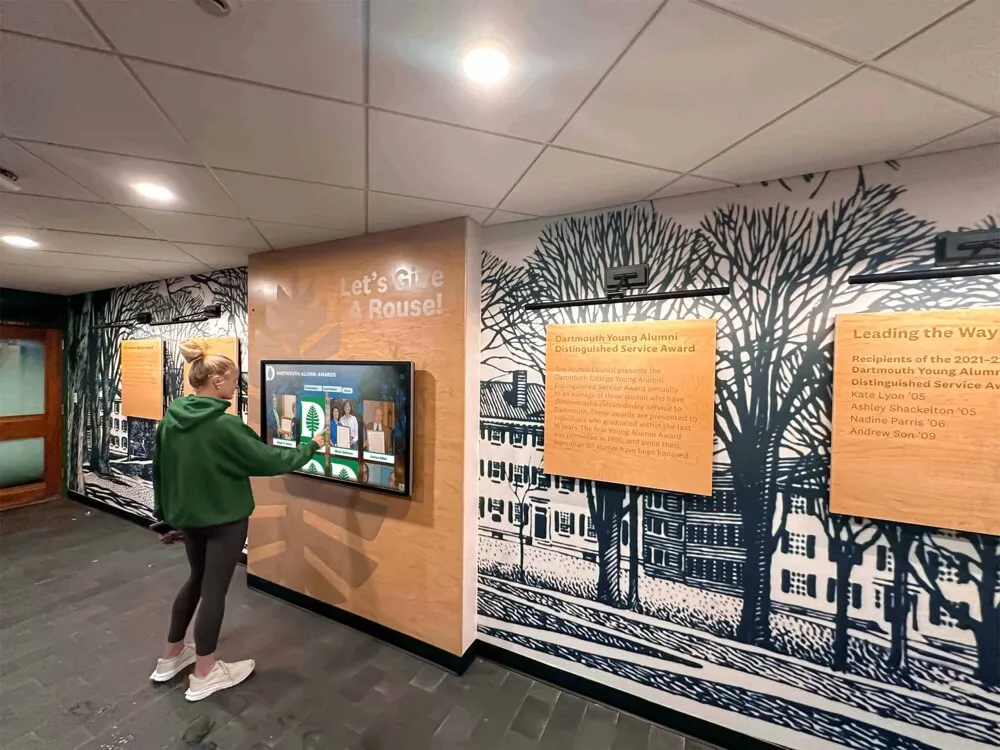
Effective platforms enable straightforward exploration without requiring instruction or technical knowledge
Success Factors for Small School Implementation
Several factors separate successful implementations from disappointing ones.
Clear Purpose and Vision
Define what recognition should accomplish:
- Inspire current students through visible celebration of excellence
- Engage alumni maintaining connection despite geographic distance
- Recognize donors encouraging sustained financial support
- Preserve institutional history for future generations
- Build community pride strengthening school culture
- Communicate effectively with multiple audiences
Platforms serve these goals better when purpose guides content decisions and feature priorities.
Appropriate Scope for Launch
Start focused rather than attempting comprehensive coverage immediately:
- Single display location with clear visibility and traffic
- Defined content scope manageable within available time (athletics only, or athletics plus current honor roll)
- Achievable timeline (2-3 months from approval to launch)
- Realistic content development expectations
- Plan for expansion after successful initial implementation
Schools attempting to launch with comprehensive historical archives, multiple display locations, and every possible recognition category often experience delays and frustration undermining stakeholder confidence.
Designated Content Champion
Successful implementations require individual ownership:
- Athletic director, assistant principal, or administrative staff member
- 2-4 hours monthly for routine content updates
- Authority to approve submissions from coaches or advisors
- Connection to school culture and recognition priorities
- Basic computer skills and willingness to learn new platforms
Without designated responsibility, recognition platforms languish with outdated content undermining their value and credibility.
Ongoing Content Development Plan
Recognition remains relevant through regular updates:
Seasonal Athletic Updates:
- Championship team photos and rosters within 1-2 weeks of season end
- All-conference and all-state athlete recognition
- Individual records and milestone achievements
Academic Recognition:
- Honor roll updates each semester within 2 weeks of grade finalization
- Scholarship recipient celebration in spring
- Academic competition achievements as they occur
Donor and Community:
- Major gifts recognized within 2-4 weeks of contribution
- Volunteer spotlights throughout year
- Historical content added progressively as research occurs
Establish routines and workflows ensuring content development becomes normal practice rather than sporadic, inconsistent effort.
Conclusion: Recognition Platforms Designed for Small School Success
Small to medium public high schools face distinct recognition challenges requiring solutions specifically suited to their contexts. Limited budgets demand cost-effective approaches with favorable total cost of ownership. Constrained staff resources require management simplicity and minimal administrative burden. Physical space limitations necessitate unlimited capacity without requiring expansion as achievements accumulate. Multi-purpose needs benefit from platforms serving athletics, academics, donors, and historical preservation through single systems.
Digital recognition platforms address these specific challenges effectively when properly selected and implemented. Schools save $10,000-$15,000 over five years compared to traditional recognition approaches while eliminating space constraints, reducing administrative time by 70-75%, and creating engaging experiences that inspire students, connect alumni, recognize donors, and strengthen community culture.
The question for small schools is not whether digital recognition serves their needs—the functionality, cost efficiency, and administrative advantages prove compelling. The relevant question is whether specific platforms accommodate small school realities of budget constraints, limited technical expertise, and multi-purpose requirements, or whether they primarily serve large institutions with different resources and needs.
Small schools should evaluate recognition platforms by examining total cost of ownership over five years, assessing management interface simplicity for non-technical users, confirming unlimited content capacity without per-entry charges, understanding support responsiveness, and verifying that the platform serves multiple recognition categories rather than single purposes.
Schools that carefully match platform capabilities to small school contexts create recognition systems that serve their communities effectively for decades, honoring every achievement comprehensively while operating within realistic budget and staff parameters. This combination of comprehensive recognition, administrative efficiency, and cost-effectiveness makes digital platforms particularly well-suited to small to medium public high schools navigating the reality of celebrating excellence within limited resources.
Ready to explore how digital recognition platforms can serve your small to medium school effectively? Talk to our team to discuss recognition solutions designed specifically for schools serving 300-1,200 students with limited budgets and staff resources.