Organizations increasingly face a common challenge: limited wall space must serve multiple recognition needs. Athletic directors need space for hall of fame inductees. Development offices need donor recognition. Alumni relations need graduate tributes. Facilities managers receive requests for sponsor acknowledgment. Each department competes for prime lobby locations while budgets constrain how many separate displays an institution can install and maintain.
Dual-purpose digital displays address this fundamental space constraint by combining multiple recognition functions into single touchscreen systems. These integrated platforms honor athletic hall of fame members alongside capital campaign donors, recognize scholarship sponsors beside distinguished alumni, and celebrate booster club supporters with academic achievers—all through one unified interface that visitors can explore by category, year, or search.
This guide examines how dual-purpose digital recognition displays function, how they handle sponsor tiers and giving levels, what features enable multi-category organization, and implementation strategies for organizations seeking comprehensive recognition solutions that maximize both wall space and recognition budgets.
Organizations implementing recognition programs typically maintain separate systems: plaques for donors, banners for athletes, frames for distinguished graduates. Each system requires dedicated wall space, independent maintenance, and distinct visual designs that fragment institutional identity. Budget constraints often mean some recognition categories receive prominent display while others settle for hallway corners or storage closets.
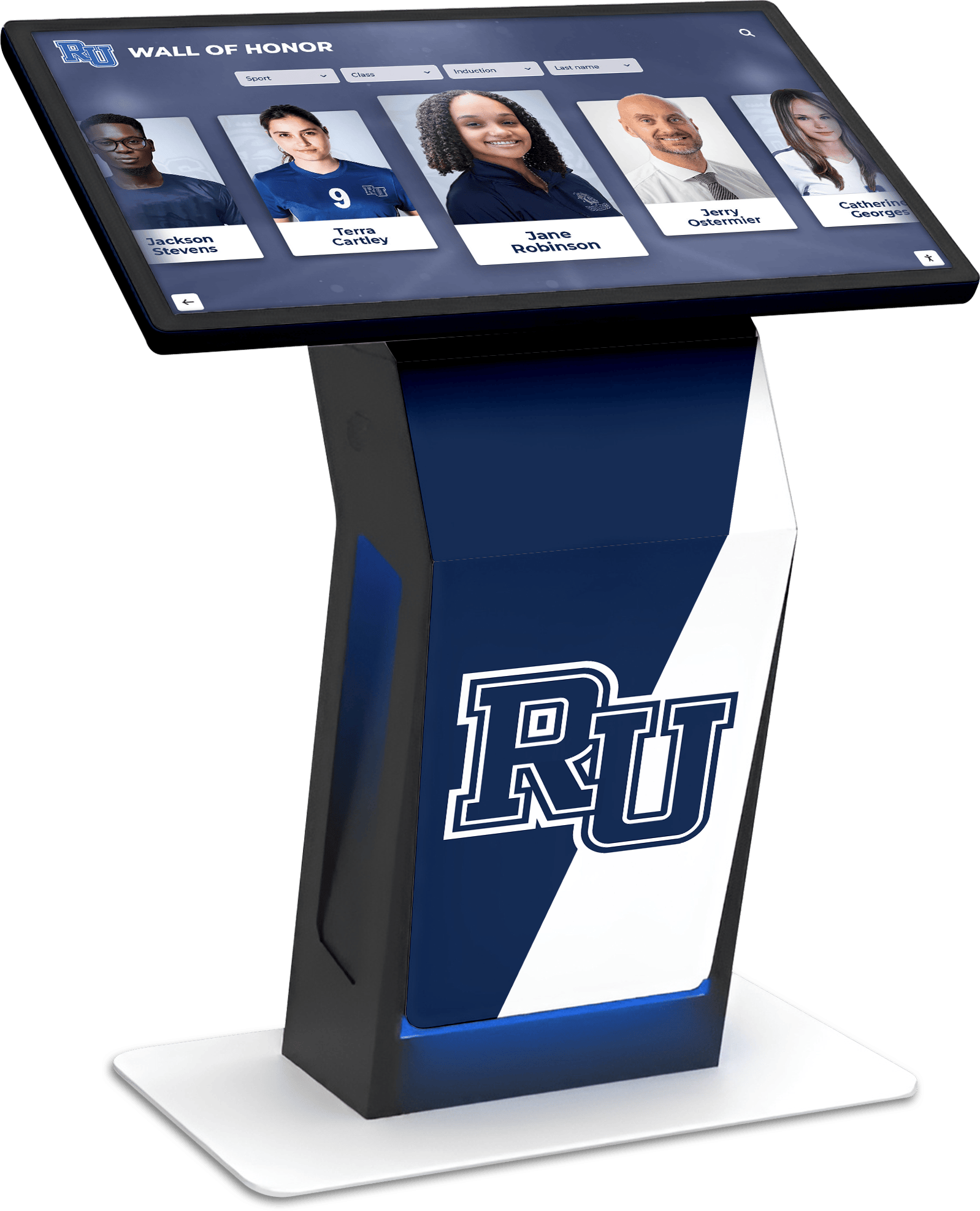
Single touchscreen displays can host unlimited recognition across multiple categories while maintaining prominent lobby placement
Understanding Dual-Purpose Digital Recognition Displays
Dual-purpose digital displays consolidate multiple recognition needs into unified touchscreen systems. Rather than installing separate donor walls, athletic halls of fame, and alumni recognition, organizations implement single platforms that organize diverse honorees through intuitive category navigation.
Core Functions These Systems Provide
Multi-Category Recognition Management Platforms organize honorees into distinct categories—Athletic Hall of Fame, Major Donors, Scholarship Supporters, Distinguished Alumni, Annual Fund Contributors, Corporate Sponsors, Memorial Tributes—while presenting them through a cohesive interface that maintains institutional branding across all sections.
Hierarchical Organization Within Categories Each recognition category supports its own tier structure. Donor walls display giving societies from Founder’s Circle through Bronze level. Athletic halls of fame separate inducted members from letter winners. Sponsor recognition distinguishes title sponsors from supporting partners.
Unified Visitor Experience Touchscreen interfaces guide visitors through recognition categories using clear navigation menus, search functionality, and browse-by-year features. Users exploring donor content can easily pivot to athletic achievements or distinguished graduate profiles without leaving the display.
Centralized Content Management Web-based administrative systems allow different departments to manage their respective recognition categories. Development staff update donor information while athletic directors maintain hall of fame content, all within shared platforms requiring single hardware installations.
Organizations considering digital trophy case solutions benefit from understanding how consolidated displays address multiple institutional needs simultaneously.
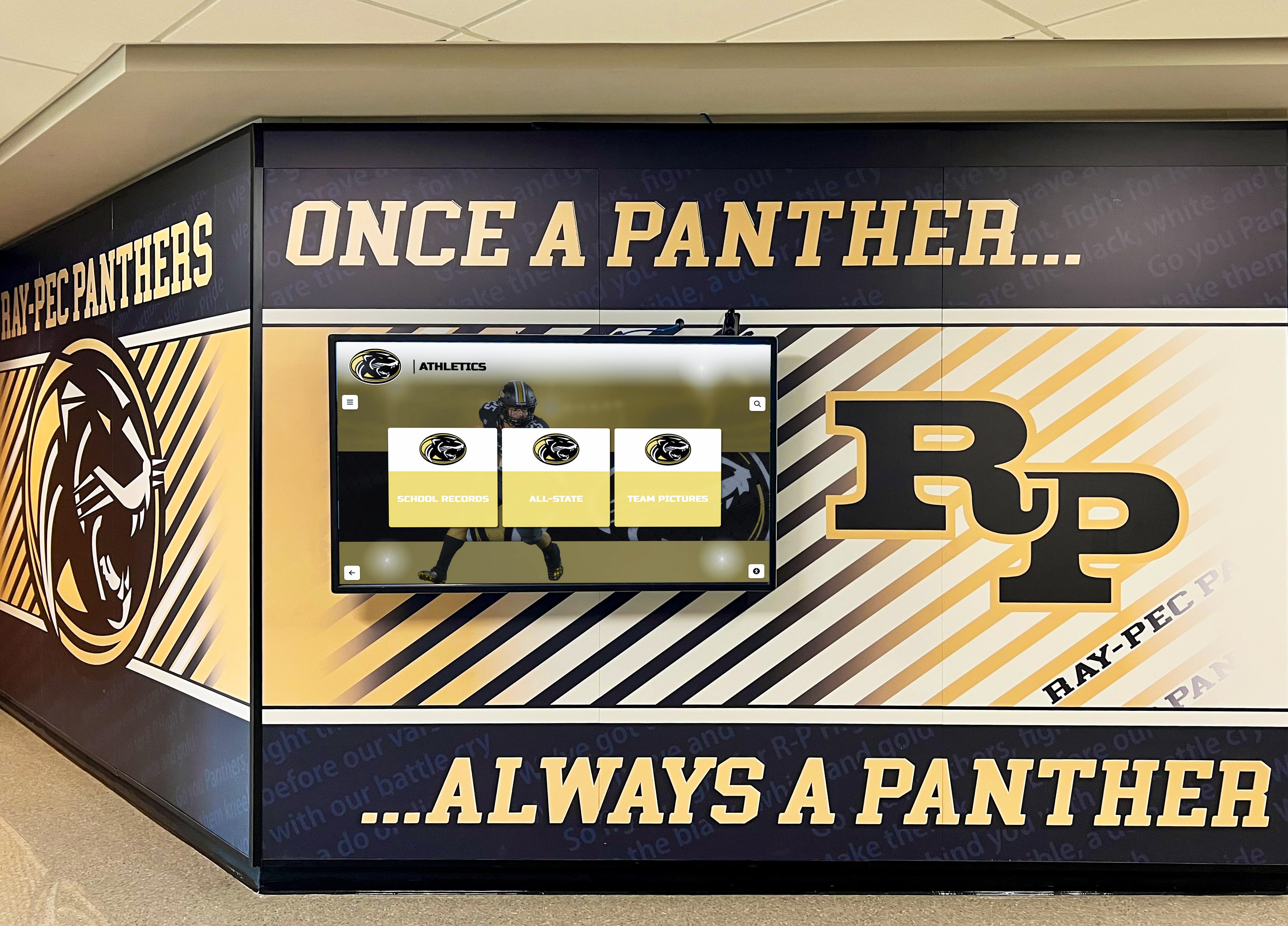
Digital displays integrate into existing architectural features while supporting multiple recognition programs
How Dual-Purpose Displays Handle Donor Recognition
Donor walls on dual-purpose platforms function identically to dedicated systems while sharing hardware with other recognition categories.
Giving Level Organization
Digital platforms organize donors through flexible tier structures that accommodate diverse fundraising programs:
Traditional Giving Societies Many organizations implement named giving levels—Founder’s Circle ($100,000+), Heritage Society ($50,000-$99,999), Leadership Circle ($25,000-$49,999)—continuing through entry-level annual fund donors. Digital displays present these tiers prominently while allowing visitors to explore individual donor profiles within each level.
Campaign-Specific Recognition Capital campaigns often create unique recognition structures. Digital systems accommodate these campaign tiers separately from annual giving societies, allowing organizations to maintain distinct recognition for building renovations, scholarship endowments, or program expansions without confusing visitors or combining incompatible giving structures.
Time-Based Recognition Some institutions recognize cumulative lifetime giving separately from annual support. Digital platforms can display the same donor in multiple contexts—showing them in the Heritage Society for lifetime contributions while also listing them among current year annual fund supporters.
Anonymous and Memorial Giving Platforms respect donor preferences for anonymity while maintaining accurate gift counts. Memorial tributes honor deceased donors or recognize gifts made in someone’s memory through dedicated sections with appropriate context and biographical information.
Sponsor Recognition Integration
Corporate and organizational sponsors require different recognition approaches than individual donors. Dual-purpose displays handle sponsor acknowledgment through several strategies:
Logo Display Options Sponsor recognition typically includes corporate logos alongside organization names. Digital platforms support high-resolution logo graphics at various sizes corresponding to sponsorship levels—larger, more prominent placement for title sponsors scaling down through supporting partner tiers.
Sponsorship Duration Tracking Annual sponsors require different management than multi-year commitments. Digital systems track sponsorship periods, automatically updating display prominence as agreements expire or renew, ensuring recognition accurately reflects current sponsorship status.
In-Kind Contribution Recognition Many sponsors provide goods or services rather than cash donations. Digital platforms accommodate narrative descriptions of in-kind support, allowing organizations to appropriately recognize facilities contractors, equipment suppliers, and service providers alongside monetary contributors.
Rotating Featured Sponsors Some institutions implement rotating “featured sponsor” sections that highlight different supporters on weekly or monthly cycles. Digital platforms automate this rotation while maintaining permanent recognition listings, balancing visibility across multiple sponsor relationships.
Organizations implementing donor wall solutions appreciate how modern platforms accommodate complex sponsorship structures alongside traditional donor recognition.
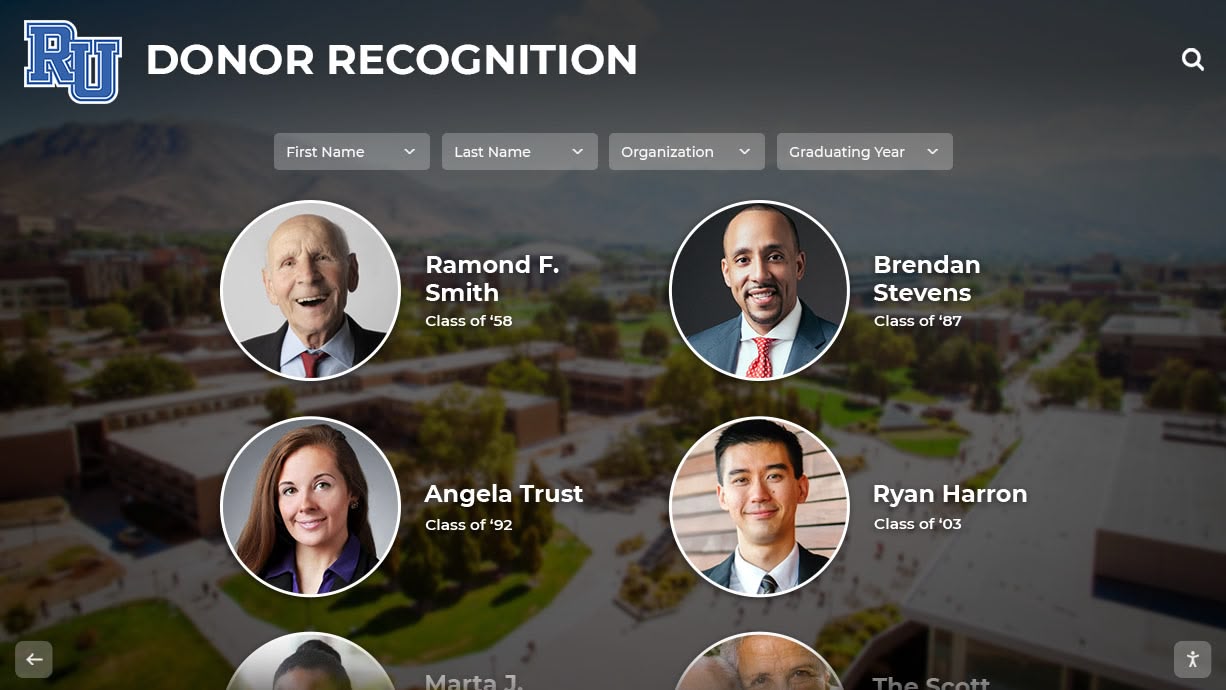
Donor recognition includes biographical content, portrait photography, and impact stories that contextualize philanthropic support
Combining Hall of Fame and Donor Functions
Athletic halls of fame and donor recognition serve different purposes yet share common requirements—honoring individuals, displaying biographical information, celebrating contributions, and maintaining institutional legacy. Dual-purpose platforms address both needs through shared technology infrastructure.
Recognition Category Separation
While platforms share hardware, content remains distinctly organized:
Clear Category Navigation Home screens present recognition categories as separate tiles—“Athletic Hall of Fame,” “Wall of Donors,” “Distinguished Alumni,” “Corporate Partners.” Visitors select their area of interest before browsing specific honorees, preventing confusion between recognition types.
Category-Specific Content Templates Athletic hall of fame entries emphasize statistics, championships, and career highlights. Donor profiles focus on giving history, philanthropic motivation, and community impact. Each category uses appropriate content frameworks while maintaining consistent visual design.
Cross-Reference Capabilities Many individuals appear in multiple categories—an inducted athlete who also serves as major donor and distinguished alumnus. Digital platforms link related profiles, allowing visitors to explore someone’s multifaceted connection to the institution without duplicating entire biographical content.
Independent Update Workflows Different staff members manage different categories. Athletic directors control hall of fame content. Development officers maintain donor information. Administrative systems provide appropriate access permissions ensuring each department updates its respective content without affecting other sections.
Sponsor Recognition Within Athletic Contexts
Corporate sponsors often support specific athletic programs rather than general institutional operations. Dual-purpose displays handle this nuanced recognition:
Program-Specific Sponsorship Baseball complex naming rights, basketball court sponsors, and track facility supporters receive recognition within athletic hall of fame sections while also appearing in general sponsor listings. Digital platforms display these relationships contextually—showing construction company support when visitors browse facility history while also including them in overall corporate partner galleries.
Equipment and Uniform Sponsors Athletic programs partner with equipment manufacturers, uniform suppliers, and apparel brands. Recognition might include brand logos in team history sections, acknowledgment in championship year retrospectives, or dedicated sponsor galleries accessible from athletic category home screens.
Booster Club Integration Many organizations maintain separate booster club recognition. Digital platforms can present booster members as a distinct category, integrate them into donor tiers based on contribution levels, or list them within athletic sections depending on institutional preference and how booster support functions relative to general development programs.
Organizations exploring athletic hall of fame implementation benefit from understanding how modern platforms integrate donor recognition rather than requiring separate installations.
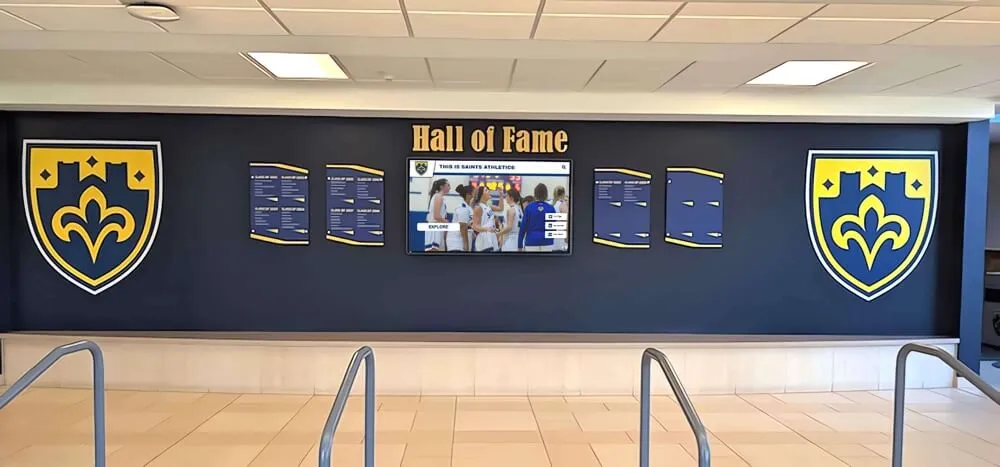
Combined displays maintain distinct visual branding for each recognition category while sharing physical installation
Technical Features Enabling Multi-Category Recognition
Specific platform capabilities determine how effectively dual-purpose systems serve diverse recognition needs. Organizations evaluating options should understand these technical requirements:
Content Management Systems
Multi-User Access Control Effective systems provide role-based permissions allowing different staff members to manage their respective categories. Development directors access donor sections. Athletic directors control hall of fame content. Alumni relations manages graduate recognition. Each user sees only their assigned categories, preventing accidental cross-department modifications.
Category Templates Each recognition type requires different data fields. Donor profiles need giving history and contribution dates. Athletic inductees require statistics and championship details. Distinguished alumni need graduation years and career accomplishments. Well-designed platforms provide category-specific templates rather than forcing all honorees into identical formats.
Bulk Import Capabilities Organizations typically have hundreds or thousands of existing honorees when implementing digital systems. Platforms should accept spreadsheet uploads for each category, mapping institutional data to display fields without requiring manual entry for every individual.
Media Library Management Photos, logos, and videos supporting diverse recognition categories quickly accumulate. Effective content management includes organized media libraries with folder structures corresponding to recognition types, preventing confusion when hundreds of portrait photos and corporate logos coexist in shared systems.
Display Interface Design
Intuitive Home Screen Navigation Visitors encountering displays need immediate clarity about available recognition categories. Home screens typically present categories as large, clearly labeled tiles with representative imagery—trophy icons for athletic recognition, handshake graphics for donors, graduation cap symbols for alumni.
Consistent Navigation Patterns Once visitors select a category, navigation should remain consistent. Whether browsing athletic hall of fame inductees or donor listings, similar touch gestures, back buttons, and search functions prevent confusion as users explore different recognition areas.
Mobile-Responsive Design QR codes extending digital recognition to smartphones work most effectively when content displays properly on various screen sizes. Platforms should automatically adapt layouts for phones and tablets while maintaining full functionality, allowing visitors to continue exploring recognition content beyond lobby installations.
Accessibility Compliance All recognition categories must meet WCAG 2.1 AA accessibility standards regardless of content type. This includes sufficient color contrast, screen reader compatibility, touch target sizing, and keyboard navigation support. Accessible digital recognition ensures all visitors can explore honorees independently of ability status.
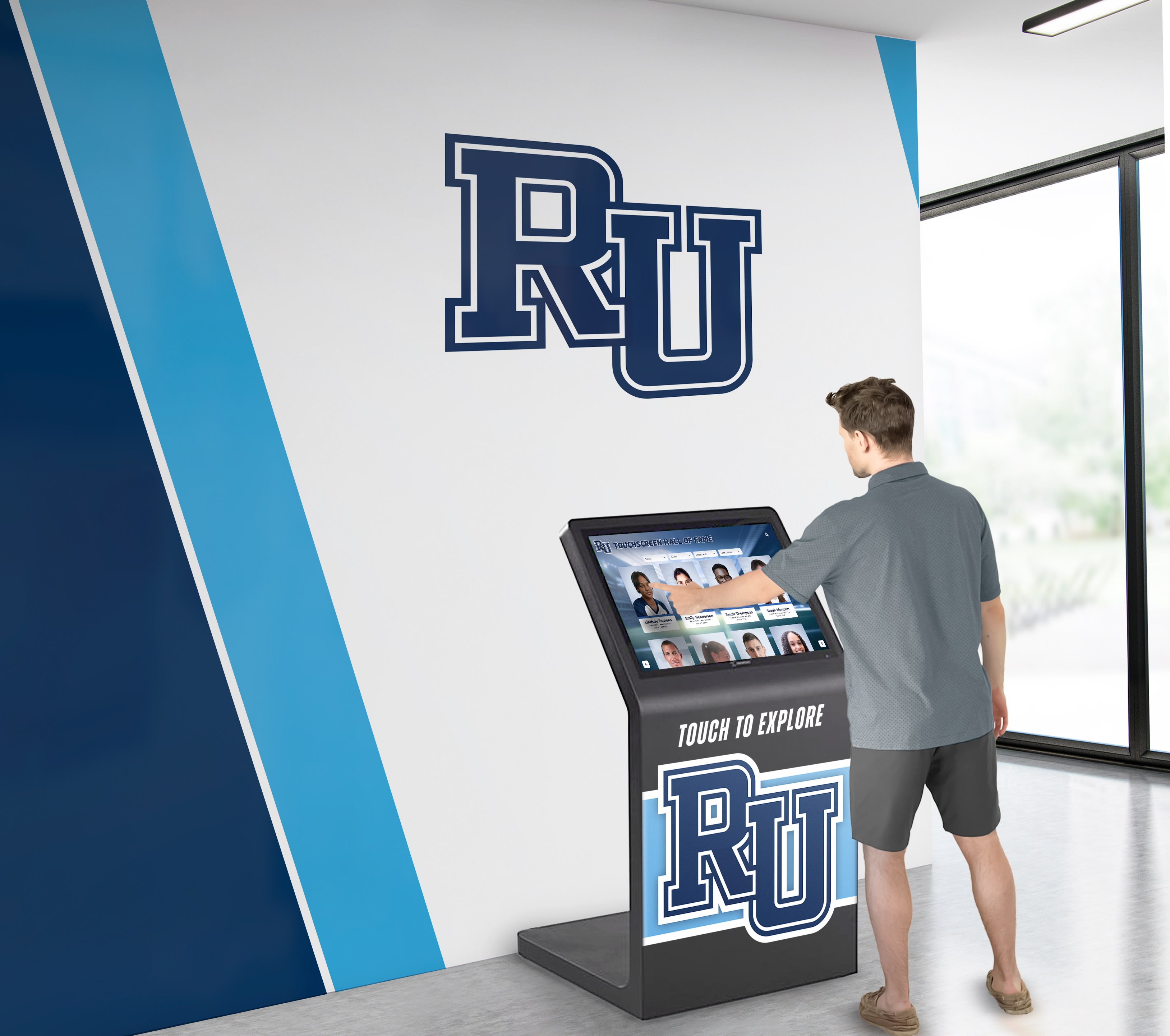
Intuitive touchscreen interfaces enable visitors to explore multiple recognition categories through unified navigation systems
Implementation Strategies for Dual-Purpose Systems
Organizations planning combined recognition displays benefit from structured implementation approaches that address both technical and organizational considerations.
Stakeholder Coordination
Cross-Department Planning Teams Successful implementations involve representatives from all departments using the system. Development officers, athletic directors, alumni relations managers, facilities staff, and IT coordinators should participate in vendor selection, content planning, and launch coordination to ensure all recognition needs receive appropriate consideration.
Content Responsibility Matrix Clear documentation defining who manages each recognition category prevents confusion and ensures timely updates. Written agreements specify which staff members add honorees, approve content, and respond to correction requests for each category.
Budget Allocation Dual-purpose displays offer cost savings compared to multiple separate installations, but organizations should clearly allocate expenses. If three departments share one system, how are installation costs divided? Who funds hardware refreshes? Clear budget agreements prevent disputes and ensure adequate ongoing resources.
Content Migration Planning
Existing Recognition Audit Organizations typically have substantial existing recognition—physical plaques, banners, framed photos, printed programs. Comprehensive inventories documenting all current honorees across all categories inform migration scope and prevent accidentally omitting recognition when transitioning to digital displays.
Prioritization Strategy If existing recognition spans decades and includes thousands of individuals, phased migration may be practical. Many organizations prioritize recent honorees for initial launch while scheduling historical recognition for subsequent phases, allowing manageable workloads without delaying installation.
Data Standardization Different departments often maintain honoree information in inconsistent formats. Development databases, athletic record books, and alumni spreadsheets rarely use identical field names or data structures. Migration planning includes mapping these varied sources to unified platform templates.
Historical Research Older recognition may lack complete information. Athletic banners might show names without years. Donor plaques may omit giving levels. Organizations implementing comprehensive digital recognition often conduct historical research to fill gaps, providing visitors with rich context rather than minimal name listings.
Launch and Promotion
Coordinated Unveiling Dual-purpose displays serve multiple constituencies—donors expect appropriate acknowledgment, athletic supporters anticipate hall of fame access, alumni want graduate recognition. Coordinated launch events that celebrate all recognition categories ensure no group feels secondary or overlooked.
Communication Strategies Email campaigns, website features, social media posts, and printed materials should highlight all recognition functions rather than emphasizing one category. Balanced communication demonstrates institutional appreciation for diverse forms of contribution and support.
QR Code Distribution Mobile access extends recognition beyond physical display locations. Organizations should promote QR code access through donor communications, game day programs, alumni magazines, and facility signage, encouraging broad engagement with digital recognition platforms.
Organizations planning comprehensive recognition programs benefit from understanding how dual-purpose systems integrate diverse institutional needs through unified platforms.
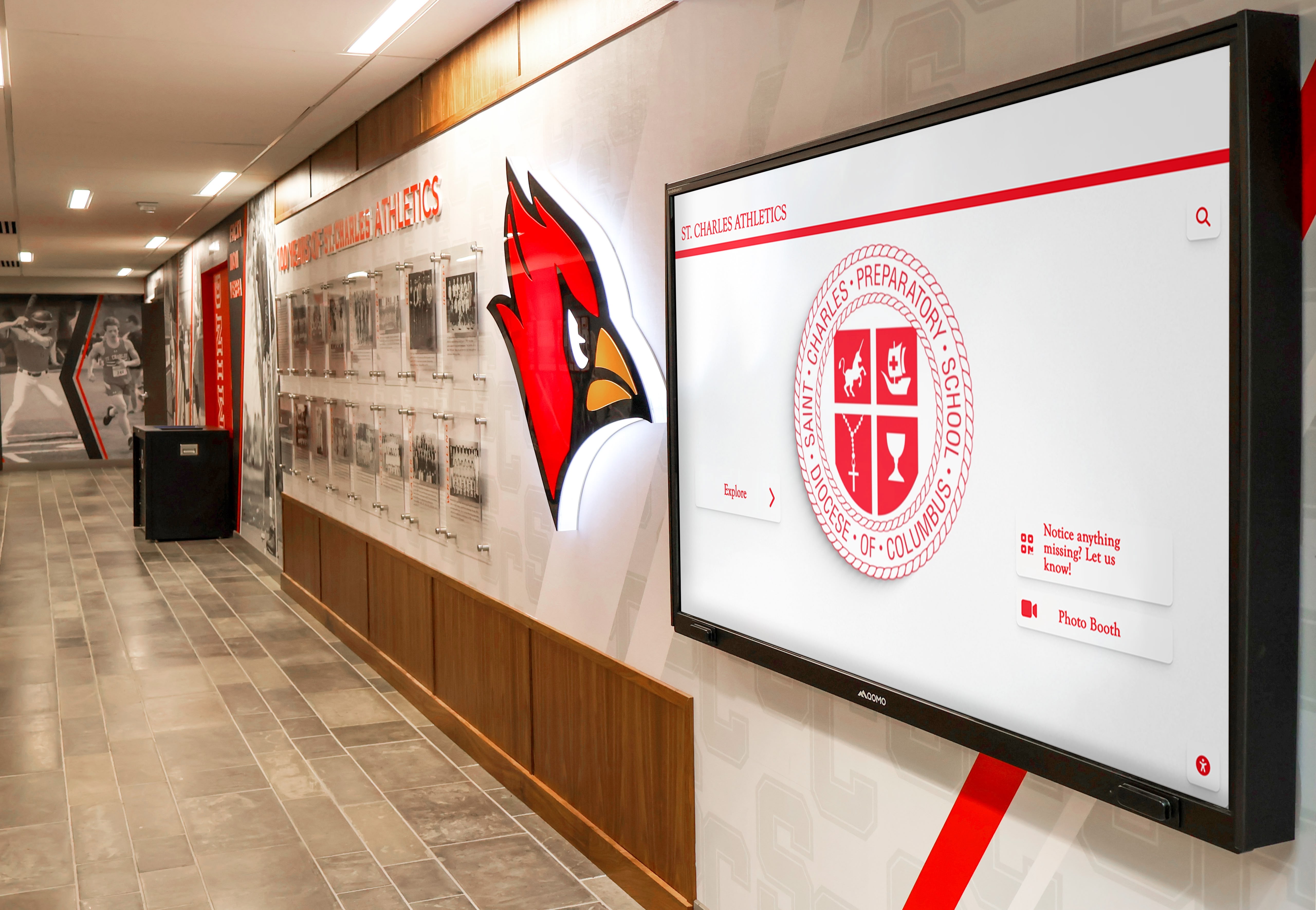
Strategic display placement in high-traffic areas ensures maximum visibility for all recognition categories
Advantages of Combined vs. Separate Recognition Systems
Organizations often debate whether consolidated multi-category platforms or dedicated single-purpose displays better serve recognition needs. Each approach offers distinct benefits.
Benefits of Dual-Purpose Platforms
Space Efficiency Single installations require less premium wall space than multiple separate displays. Organizations with limited lobby area or competing visibility needs benefit from consolidated recognition requiring only one prominent location.
Budget Advantages One 75-inch touchscreen costs less than three separate 55-inch displays. Installation expenses, network connections, and mounting hardware amplify savings when organizations need multiple recognition functions.
Unified Institutional Identity Single platforms present cohesive institutional branding across all recognition categories. Consistent visual design, navigation patterns, and content templates strengthen brand identity compared to disparate systems with varying interfaces.
Simplified Technology Management IT departments support one platform rather than multiple systems. Software updates, security patches, network troubleshooting, and hardware maintenance require fewer resources when technology infrastructure consolidates.
Cross-Promotion Opportunities Visitors exploring athletic hall of fame content discover donor impact stories. Donors browsing contributor lists learn about distinguished alumni. Unified platforms facilitate natural discovery of institutional history across recognition categories.
When Separate Systems Make Sense
Physical Location Requirements If optimal donor recognition location differs substantially from ideal athletic hall of fame placement—donor walls in administrative lobbies versus athletic displays in gymnasium entrances—separate installations may provide better visibility for each constituency.
Distinct Management Needs Organizations where different entities control recognition—independent booster clubs managing athletic recognition separate from institutional development offices handling donor stewardship—may prefer separate platforms reflecting these operational realities.
Content Volume Considerations Institutions with exceptionally large recognition populations in multiple categories—thousands of donors plus hundreds of athletic inductees plus extensive alumni recognition—might find focused single-category displays provide better user experiences than consolidated platforms requiring extensive category navigation.
Phased Implementation Organizations implementing digital recognition incrementally often start with single-category systems before adding multi-category platforms. An institution might install athletic hall of fame displays initially, then add donor recognition capabilities when fundraising campaigns launch, or implement separate systems that later consolidate during technology refreshes.
Recognition Display Hardware Considerations
Physical hardware affects both recognition presentation quality and long-term sustainability. Organizations evaluating dual-purpose displays should understand key specifications.
Display Size and Resolution
Screen Size Options Touchscreen displays typically range from 55 to 86 inches diagonal. Dual-purpose systems benefit from larger sizes providing more content per screen without requiring extensive scrolling through multiple recognition categories. A 75-inch display might show 12-16 honoree portraits simultaneously versus 6-8 on a 55-inch screen.
Resolution Requirements 4K (3840 × 2160 pixel) resolution provides sharp text and clear photography necessary for professional recognition displays. Standard HD resolution appears pixelated on screens larger than 55 inches, compromising visual quality important for donor stewardship and institutional prestige.
Brightness Specifications Displays installed in areas with substantial natural light require 400-500 nit brightness for legible content. Locations with controlled lighting accommodate 300-350 nit panels. Inadequate brightness creates recognition displays visitors struggle to read.
Touch Technology
Capacitive vs. Infrared Capacitive touchscreens respond only to direct finger contact, requiring users to remove gloves. Infrared touch technology detects any object breaking light beams across the screen surface, accommodating gloves, styluses, or accessibility pointing devices. Infrared systems generally better serve public recognition displays in varied environmental conditions.
Multi-Touch Support Recognition platforms supporting gesture navigation—pinch-to-zoom on photos, two-finger scrolling through long donor lists—require multi-touch capable displays. Basic single-touch screens limit interface design options and user experience quality.
Touch Accuracy and Responsiveness Commercial-grade touch technology provides accurate response across entire screen surfaces. Consumer-grade displays may have dead zones, delayed response, or diminished accuracy at screen edges—frustrations unacceptable in recognition displays honoring institutional supporters.
Durability and Warranties
Commercial vs. Consumer Ratings Consumer televisions with touch overlays typically carry 1-year warranties and 8-hour-per-day duty cycles. Commercial displays designed for continuous public operation include 3-5 year warranties and 16-24 hour duty cycles. Recognition displays operating during all facility hours require commercial specifications.
Vandalism Resistance Touch displays in accessible public spaces face potential damage from impacts or excessive force. Tempered glass overlays, reinforced mounting, and commercial construction protect recognition investments in high-traffic institutional environments.
Service and Support Organizations should verify local service availability and understand warranty response times. Recognition displays that remain non-functional for weeks while awaiting repair undermine donor stewardship and institutional credibility.
Organizations considering touchscreen display implementation benefit from understanding hardware specifications that ensure successful long-term operation.
Software Platform Capabilities
Recognition display software determines functionality, flexibility, and long-term sustainability more significantly than hardware specifications. Organizations should evaluate these essential platform capabilities:
Content Flexibility
Unlimited Category Creation While most organizations start with 3-5 recognition categories (Athletic Hall of Fame, Donor Wall, Distinguished Alumni, Corporate Partners, Memorial Tributes), needs evolve. Platforms should support adding categories without technical limitations or additional licensing fees as institutional recognition programs expand.
Custom Field Definitions Different recognition types require different data. Donors need gift dates and amounts. Athletes need statistics and championships. Alumni need graduation years and career accomplishments. Effective platforms allow organizations to define category-specific data fields rather than forcing all honorees into identical templates.
Rich Text Biography Support Recognition profiles should accommodate formatted biographical text with paragraphs, bullet points, headings, and emphasis formatting. Simple text boxes produce bland recognition content. Rich text editing creates compelling narratives worthy of donor stewardship and institutional legacy documentation.
Multimedia Integration Photos, video tributes, championship game footage, donor testimonials, and historical documents transform basic name lists into engaging recognition experiences. Platforms should support multiple media types per honoree with intuitive upload and organization tools.
Search and Discovery Features
Full-Text Search Visitors should find honorees by searching any content—names, years, hometowns, achievement descriptions, or biographical text. Limited search functionality frustrates users and reduces engagement with recognition content.
Filter Options Recognition categories with hundreds or thousands of honorees need robust filtering. Donors by giving level, athletes by sport, alumni by graduation year, sponsors by industry—multiple simultaneous filters help visitors narrow extensive lists to relevant subsets.
Alphabetical Browsing Traditional recognition often organizes honorees alphabetically. Digital platforms should provide this familiar navigation option alongside search and filtering, accommodating varied visitor preferences and browsing styles.
Featured Recognition Homepage promotion of recently added honorees, milestone anniversaries, or special recognition occasions keeps content dynamic and encourages repeat visitor engagement. Platforms should enable scheduling featured content in advance for coordinated campaigns.
Administrative Efficiency
Remote Management Cloud-based content management allows authorized staff to update recognition content from any internet-connected device without physical access to display hardware. This remote capability proves essential for distributed organizations and enables efficient workflows regardless of staff location.
Approval Workflows Organizations with content review requirements benefit from approval processes where multiple staff members review honoree information before publication. This ensures accuracy and appropriateness before content appears on public recognition displays.
Version History Tracking content changes over time allows organizations to audit modifications, restore previous versions if errors occur, and maintain accountability for recognition accuracy across multiple content managers.
Analytics and Reporting Understanding which recognition categories receive most engagement, which honorees visitors search frequently, and when displays see peak usage informs content strategy and demonstrates recognition program value to institutional leadership.
Organizations implementing donor recognition walls should evaluate software capabilities that ensure platforms serve current needs while accommodating future program evolution.
Maintaining Recognition Accuracy and Currency
Digital recognition displays require ongoing content maintenance ensuring honored individuals receive accurate, appropriate, and current acknowledgment.
Quality Assurance Processes
Data Verification Before publishing honoree information, organizations should verify name spellings, dates, gift amounts, achievement details, and biographical facts against authoritative sources—donor databases, athletic record books, alumni files, and institutional archives. Errors on public recognition displays damage credibility and offend honored individuals.
Photo Quality Standards Recognition displays deserve professional-quality photography. Blurry snapshots, poorly lit images, or inconsistent photo formatting undermine prestige. Organizations should establish minimum resolution standards (typically 1200 × 1600 pixels for portrait orientation) and consistent framing guidelines.
Content Review Cycles Recognition information becomes outdated. Donors increase giving levels. Athletic records fall. Alumni receive new honors. Scheduled annual reviews ensure recognition content remains current and accurate rather than becoming historical snapshots that never update.
Correction Protocols Despite quality assurance, errors occasionally appear. Organizations need clear processes for reporting corrections, rapid verification, and prompt updates. Prolonged inaccuracies frustrate honored individuals and undermine recognition program credibility.
Update Responsibility
Category Ownership Clear designation of which staff members maintain each recognition category prevents confusion and ensures accountability. Written documentation specifying responsibilities, update frequencies, and approval authorities guides recognition program management.
New Honoree Workflows Organizations should establish processes for adding recognition promptly. Donor gifts should appear on recognition displays within days, not months. Athletic hall of fame inductions should publish immediately following selection ceremonies. Delays diminish recognition impact and suggest honorees receive low priority.
Historical Recognition Migration While initial platform launches often prioritize recent honorees, organizations should maintain plans for comprehensive historical recognition. Phased approaches adding previous decades gradually ensure eventual complete institutional history documentation.
Seasonal Considerations Some recognition categories have natural update cycles. Athletic hall of fame inductions typically occur annually. Donor recognition updates following fiscal year conclusions. Content management calendars aligned with these institutional rhythms ensure timely recognition updates.
Engagement Beyond Physical Displays
Mobile access and online presence extend recognition beyond lobby installations, multiplying visibility and engagement opportunities.
QR Code Implementation
Strategic Placement QR codes should appear directly on recognition displays, adjacent wall signage, printed event programs, donor communications, and facility wayfinding. Multiple access points ensure diverse audiences discover mobile recognition content through varied touchpoints.
Clear Call-to-Action Simple text—“Explore Our Wall of Donors,” “Search Athletic Hall of Fame,” “Browse Distinguished Alumni”—clarifies what scanning QR codes provides. Generic codes without context see minimal adoption.
Mobile-Optimized Experience Recognition content accessed via smartphones should automatically adapt to small screens, providing touch-friendly navigation, readable text sizes, and fast-loading media. Desktop-formatted content forced onto phone screens frustrates users and reduces engagement.
Social Media Integration
Sharing Functionality Recognition profiles should include easy sharing to social media platforms. Donors appreciate sharing their recognition with family. Inducted athletes celebrate with teammates. Alumni announce distinguished graduate status. Built-in sharing functionality amplifies recognition visibility far beyond physical installations.
Scheduled Recognition Announcements Coordinated social media posts highlighting recently added honorees, milestone anniversaries, or featured recognition stories extend content reach while demonstrating active recognition program management and ongoing institutional appreciation.
Photo Download Options Allowing honored individuals to download their recognition photos for personal use increases satisfaction and engagement. Simple download buttons generate goodwill while creating assets supporters share through personal networks.
Website Integration
Searchable Online Directories Recognition platforms that also power website content create consistent honoree information across physical and digital channels. Visitors who discover recognition online can locate physical displays during facility visits. Display users can bookmark profiles for later detailed exploration.
Deep Linking Direct URLs to specific honoree profiles enable precise recognition communication. Donor thank-you letters can link to digital recognition pages. Athletic program newsletters can link to recently inducted hall of fame members. Email signatures can feature personal recognition links.
Organizations exploring interactive touchscreen implementation should understand how modern platforms extend recognition beyond physical displays through mobile and online integration.
Cost Considerations for Dual-Purpose Recognition
Understanding complete costs helps organizations budget appropriately for comprehensive recognition display implementation.
Initial Implementation Expenses
Hardware Costs Commercial-grade touchscreen displays range from $3,000-$8,000 depending on size (55-86 inches), with 65-75 inch screens typically providing optimal visibility and budget balance. Additional hardware includes mounting systems ($400-$1,200), media players or integrated computers ($600-$1,500), and network connectivity equipment ($200-$600).
Installation Services Professional installation ensures proper mounting, electrical connections, network configuration, and safety compliance. Installation typically costs $1,000-$3,000 depending on location complexity, wall reinforcement requirements, and integration with existing architectural features.
Software Platform Setup Recognition software platforms typically charge setup fees covering initial configuration, template customization, staff training, and content import. Setup costs vary widely ($2,000-$15,000) based on complexity, customization extent, and initial content volume.
Content Migration Transferring existing recognition data—donor information, athletic records, alumni profiles—into digital platforms requires staff time or professional services. Organizations with extensive historical recognition may invest $5,000-$20,000 in comprehensive content migration including historical research, photo scanning, and data verification.
Ongoing Operational Costs
Software Licensing Recognition platforms typically charge annual subscription fees covering hosting, software updates, technical support, and ongoing access. Costs range from $1,500-$8,000 annually depending on features, content volume, and number of connected displays.
Content Management Staff time updating recognition content, adding new honorees, managing photos, and responding to corrections represents ongoing operational expense. Organizations should budget 5-15 hours monthly for active recognition program maintenance depending on update frequency and content complexity.
Technical Support While platforms include basic technical support, organizations may need occasional assistance with content migration, design customization, or integration projects. Budgeting $500-$2,000 annually for supplemental support accommodates these periodic needs.
Hardware Refresh Commercial displays operate effectively for 7-10 years before requiring replacement. Organizations should plan for eventual hardware refresh while recognizing that software investments preserve recognition content across hardware generations.
Return on Investment
Eliminated Plaque Costs Traditional bronze plaques cost $75-$400 each with installation. Organizations recognizing 50+ new donors, athletes, or alumni annually save substantial ongoing costs through digital recognition with unlimited capacity.
Space Utilization Value Single dual-purpose displays requiring one premium lobby location versus multiple separate recognition installations preserve valuable wall space for other institutional purposes or eliminate expensive wall expansions.
Engagement Value Digital recognition creates engagement opportunities impossible with static plaques—virtual tours for remote supporters, social sharing amplifying visibility, search functionality connecting family members with historical honorees. These engagement benefits strengthen donor relationships, enhance alumni connections, and build institutional pride.
Selecting Recognition Display Partners
Organizations implementing dual-purpose recognition displays benefit from evaluating potential technology partners across several dimensions.
Platform Evaluation Criteria
Multi-Category Capability Verify platforms genuinely support independent recognition categories with category-specific templates, navigation, and management rather than forcing identical formatting across all honorees. Request demonstrations showing how different recognition types coexist within unified systems.
Scalability Confirm platforms accommodate institutional growth—adding categories, increasing honoree volumes, connecting additional displays—without technical limitations, platform migrations, or substantial cost increases. Recognition systems should serve organizations for decades, not just initial launch needs.
Accessibility Compliance Require vendors to demonstrate WCAG 2.1 AA compliance and provide documentation verifying accessibility standards. Organizations receiving federal funding or serving public missions face legal requirements ensuring digital content accessibility regardless of disability status.
References and Portfolio Request contact information for similar organizations using platforms under consideration. Direct conversations with current clients reveal operational realities, support responsiveness, and long-term satisfaction that marketing materials may not communicate.
Implementation Support
Training Programs Effective implementations include comprehensive training for all staff members managing recognition content. Training should cover content updates, photo preparation, approval workflows, and troubleshooting common issues—delivered through live sessions, recorded videos, and written documentation.
Migration Assistance Organizations with substantial existing recognition benefit from vendor assistance transferring data to new platforms. This may include spreadsheet templates, bulk import guidance, or professional services conducting complete migrations.
Customization Services While template-based platforms work well for many organizations, some require specific design customization, unique data fields, or specialized functionality. Understand customization options, associated costs, and timeline implications before finalizing platform selection.
Ongoing Relationship Recognition displays function most effectively when vendor relationships extend beyond initial installation. Responsive technical support, regular software updates addressing evolving needs, and consultative assistance maximizing platform value characterize successful long-term partnerships.
Conclusion: Comprehensive Recognition Through Integrated Platforms
Organizations face increasing pressure to honor diverse constituencies—donors, athletes, alumni, sponsors, volunteers—while managing limited wall space, recognition budgets, and staff capacity. Dual-purpose digital recognition displays address these constraints by consolidating multiple recognition needs into unified touchscreen platforms that visitors explore through intuitive category navigation.
These integrated systems handle sponsor recognition alongside donor acknowledgment, athletic hall of fame content beside distinguished alumni tributes, and booster club recognition integrated with corporate partners—all through single hardware installations managed via centralized content systems. Category-specific templates, independent update workflows, and hierarchical organization maintain appropriate distinction between recognition types while maximizing space efficiency and technology investments.
Successful implementations require cross-department coordination ensuring all recognition needs receive appropriate consideration, phased content migration accommodating historical honoree documentation, and ongoing maintenance processes keeping recognition current and accurate. Organizations benefit from evaluating platforms based on multi-category capabilities, content flexibility, accessibility compliance, and scalability supporting decades of institutional growth.
Digital recognition displays transform institutional recognition from space-constrained plaque systems into comprehensive platforms honoring unlimited supporters across all contribution categories. For organizations seeking recognition solutions that accommodate diverse needs while preserving premium wall space and maximizing technology budgets, dual-purpose platforms provide sustainable approaches that serve current requirements while adapting to future recognition program evolution.
Ready to explore how dual-purpose digital recognition displays might consolidate your organization’s hall of fame, donor wall, and sponsor acknowledgment needs? Solutions like Rocket Alumni Solutions offer comprehensive platforms designed specifically for schools, universities, and organizations implementing integrated recognition programs. Talk to our team to learn how dual-purpose displays can serve your multi-category recognition needs.