School hallways serve as the backbone of institutional memory. Walk through any educational facility and you’ll find walls lined with recognition—trophy cases displaying championship hardware, plaques honoring distinguished alumni, and banners celebrating athletic excellence. These displays tell the story of what the institution values and who contributed to building its reputation.
Traditional glass trophy cases have occupied school hallways for generations, becoming synonymous with athletic recognition. Administrators know the routine: purchase a case, fill it with trophies and awards, and watch it gradually reach capacity. Then the questions begin. Which trophies stay visible? Which get moved to storage? How do you make room for this year’s state championship without removing last decade’s achievements?
Digital hall of fame displays represent a different approach to hallway recognition. Interactive touchscreens eliminate space constraints while adding capabilities impossible with physical displays. Schools now face a decision: maintain traditional trophy cases, transition to digital platforms, or implement some combination of both approaches.
Understanding the fundamental differences between digital displays and traditional trophy cases helps administrators make informed decisions about recognition investments. Both serve the same core purpose—celebrating achievement and preserving institutional history—but they accomplish this goal through very different means.
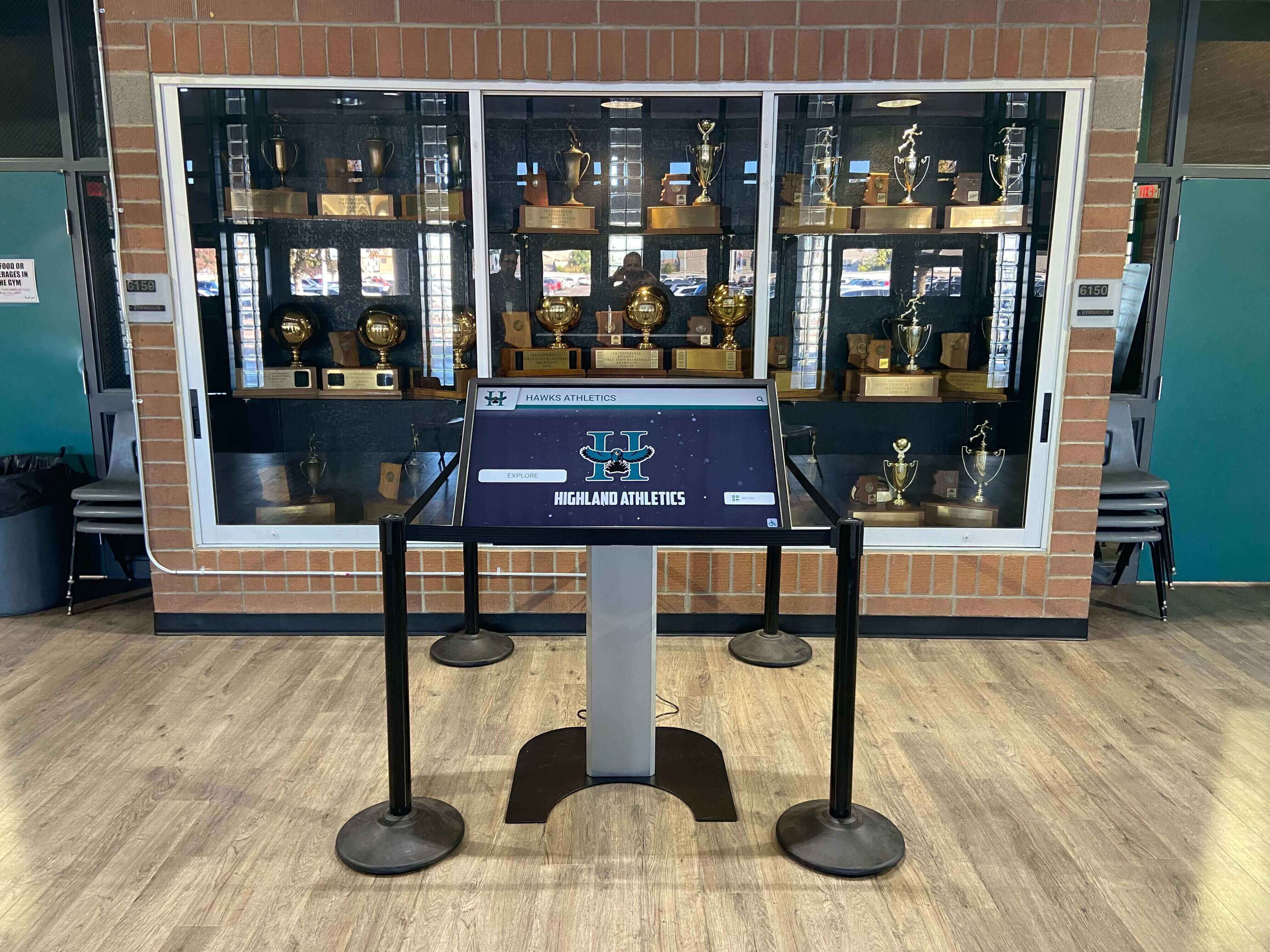
Modern school hallways increasingly blend traditional physical displays with interactive digital recognition
Traditional Trophy Cases: The Familiar Standard
Traditional trophy cases remain the most common recognition method in educational institutions. Their prevalence stems from decades of use and widespread familiarity among stakeholders.
Physical Characteristics and Specifications
Trophy cases come in various configurations designed for different spaces:
Freestanding Floor Cases
- Width ranges from 36 inches to 96 inches depending on hallway dimensions
- Heights typically measure 72 to 84 inches
- Interior depths of 12 to 20 inches accommodate various trophy sizes
- Tempered glass fronts and sides provide visibility from multiple angles
- Adjustable shelving systems adapt to different award dimensions
- Built-in LED lighting illuminates displayed achievements
- Locking mechanisms protect valuable recognition items
Wall-Mounted Display Units
- Shallow profiles (6 to 12 inches deep) minimize hallway obstruction
- Custom sizing fits specific wall dimensions
- Surface-mounted or recessed installation options
- Often placed at eye level for optimal viewing
- Smaller capacity compared to floor units but space-efficient
Built-In Recognition Walls
- Floor-to-ceiling glass installations creating dramatic focal points
- Custom millwork integrating displays with building architecture
- Dedicated trophy rooms or hallway alcoves
- Professional lighting creating museum-quality presentations
- Highest cost but most impressive visual impact
Initial investment for traditional systems ranges from $2,000 to $8,000 for quality freestanding cases, with custom built-in installations costing $15,000 to $50,000 depending on scope and finishes.
Benefits of Traditional Trophy Cases
Tangible Achievement Display
Physical trophies create authentic connections to accomplishment:
- Championship hardware provides immediate visual impact in three dimensions
- Visitors can view actual awards earned by athletes and teams
- Trophy design and craftsmanship visible in detail
- Older stakeholders appreciate traditional recognition approaches
- Physical presence feels more permanent and substantial to some audiences
- No learning curve or technology comfort required for viewing
Simple Operation and Management
Traditional cases require no technical infrastructure:
- No network connectivity, software platforms, or IT support needed
- No concerns about system failures, software updates, or technical obsolescence
- Straightforward installation through standard furniture vendors
- Familiar procurement processes within existing budget categories
- No staff training on content management systems
- One-time purchase without ongoing subscription costs
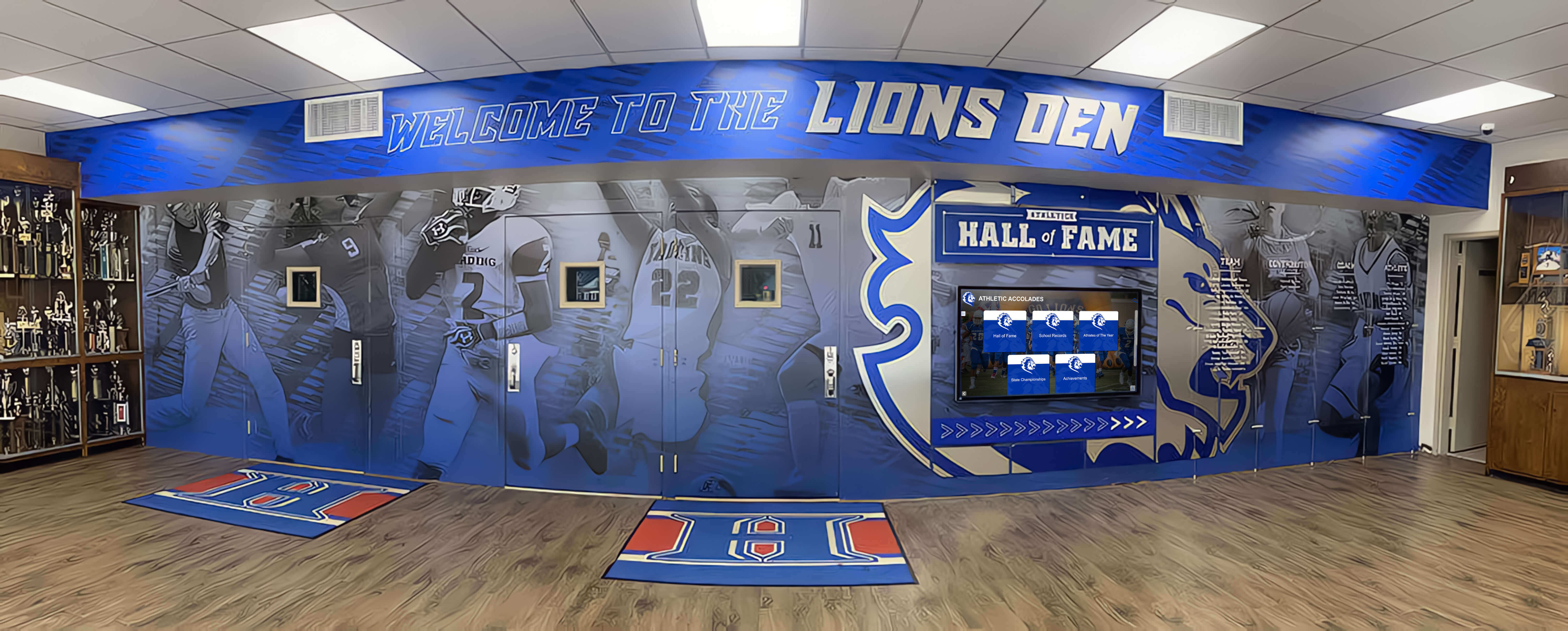
Traditional trophy cases provide familiar, low-tech recognition that stakeholders understand immediately
Lower Initial Investment
Basic trophy cases represent modest up-front spending:
- Standard commercial cases cost $2,000 to $6,000 depending on size
- Initial investment lower than commercial-grade touchscreen systems
- No software licensing or content development costs
- Simple budgeting without recurring technology expenses
- Shorter procurement timeline compared to technology implementations
These advantages explain why trophy cases remain common despite emerging alternatives. Schools with limited technology budgets, minimal trophy accumulation, or stakeholders preferring traditional approaches often find conventional cases adequate for recognition needs.
Limitations That Drive Change
Despite familiarity and simplicity, traditional trophy cases face significant constraints:
The Space Constraint Problem
Physical capacity represents the fundamental trophy case limitation:
- Successful athletic programs generate 15 to 40 new trophies annually depending on program size
- Conference championships, invitational tournaments, state competitions, and individual awards accumulate quickly
- Standard large trophy cases hold 60 to 100 trophies depending on size
- Cases reach capacity within 2 to 5 years in successful programs
- Schools face difficult decisions about which achievements remain visible
- Purchasing additional cases consumes more hallway space and budget
- Trophy rotation to storage means some achievements lose visibility entirely
This creates what administrators call the “storage versus display dilemma.” Should the 1987 state championship trophy remain visible, or should it move to storage so the 2025 conference title can be displayed? Every new achievement forces reconsideration of what deserves ongoing recognition.
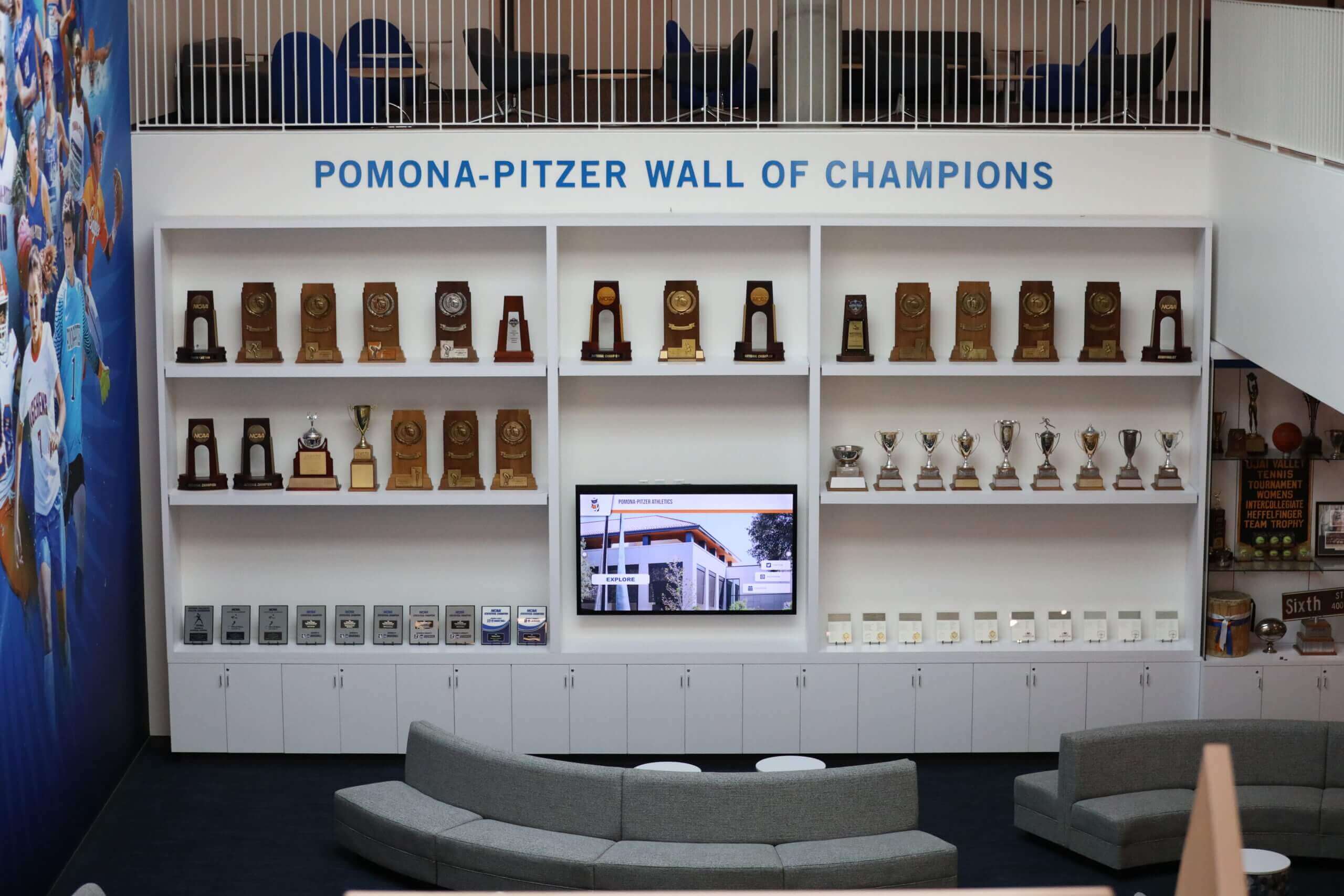
Even dedicated trophy rooms eventually face space limitations as achievements accumulate over decades
Maintenance Demands
Physical trophy cases require ongoing attention that consumes staff time:
- Weekly dusting of shelves and individual trophies prevents visible dirt accumulation
- Glass surfaces require cleaning to maintain clear visibility
- Interior lighting bulbs need periodic replacement
- Trophy arrangements shift over time requiring reorganization
- Lock mechanisms occasionally malfunction needing repair
- Humidity in some buildings causes metal deterioration requiring monitoring
- Physical damage from student traffic occasionally necessitates repairs
Schools with multiple trophy cases throughout facilities report spending 4 to 8 hours monthly on display maintenance—time that athletic directors or facilities staff must allocate alongside other responsibilities.
Limited Information and Context
Traditional trophy cases offer only passive viewing:
- Trophies display only engraved text visible from viewing distance
- No photos of championship teams or memorable moments
- No individual athlete profiles or career statistics
- No context about championship games or season narratives
- No way for visitors to search for specific athletes, teams, or years
- Historical achievements lack explanation about their significance
- Related accomplishments across years cannot be connected
For generations accustomed to interactive digital experiences, static trophy observation fails to create the engagement that modern recognition requires. Visitors spend seconds glancing at cases rather than minutes exploring achievements in depth.
Update Complexity
Adding new recognition involves physical processes with delays:
- New trophies require physical campus access for placement
- Reorganizing displays disrupts arrangements and consumes time
- Engraved plaques need professional production with 2-4 week lead times
- Corrections to engraved text are expensive or impossible
- Seasonal rotation requires repeated physical handling of fragile items
- No ability to add supplemental information after initial engraving
Schools exploring comprehensive recognition solutions often cite these update limitations as primary motivations for considering digital alternatives.
Digital Hall of Fame Displays: Interactive Recognition Technology
Digital recognition systems approach hallway displays through interactive technology rather than physical storage.
Technical Components and Capabilities
Digital hall of fame displays consist of integrated hardware and software components:
Hardware Elements
- Commercial-grade touchscreen displays sized from 55 to 86 inches diagonal
- Capacitive touch technology enabling responsive interaction
- Industrial display panels rated for 16-18 hours daily operation over 50,000+ hours
- Integrated media players running display software
- Wall-mounted or freestanding kiosk enclosures
- Vandal-resistant glass and secure mounting appropriate for school environments
- Network connectivity via ethernet or WiFi for content updates
Software Platform Features
- Cloud-based content management systems accessible from any device
- User-friendly admin interfaces requiring no technical expertise
- Unlimited content capacity for achievements, photos, videos, and profiles
- Search and filter functionality enabling visitor exploration
- Drag-and-drop content organization and arrangement
- Template systems ensuring consistent professional design
- Mobile and web accessibility extending content beyond physical display
- QR code generation linking physical displays to online content
- ADA WCAG 2.1 AA accessibility compliance for inclusive design
Schools implementing digital hall of fame platforms gain access to comprehensive recognition capabilities impossible with traditional approaches.
Advantages of Digital Recognition Displays
Unlimited Space Capacity
Digital systems eliminate physical constraints:
- Single 65-inch display accommodates unlimited achievements without additional hardware
- Add infinite athletes, teams, trophies, and recognition categories
- Complete team rosters with individual profiles for each member
- Comprehensive historical archives spanning entire institutional history
- No future case purchases as programs grow
- No difficult decisions removing past achievements to make room for new recognition
- Multi-sport programs showcase all achievements equally regardless of space
This fundamental difference transforms recognition from a zero-sum competition for limited shelf space to an unlimited celebration where every achievement receives permanent visibility.
Rich Multimedia Content
Digital displays transcend static trophy photos:
- High-resolution images of trophies, teams, and individual athletes
- Championship game video highlights and memorable moments
- Complete athlete biographies with career statistics and achievements
- Historical timeline displays connecting accomplishments across decades
- Photo galleries documenting championship seasons
- Coach profiles and program milestone celebrations
- Newspaper articles and historical documentation
- Audio interviews or acceptance speeches when available
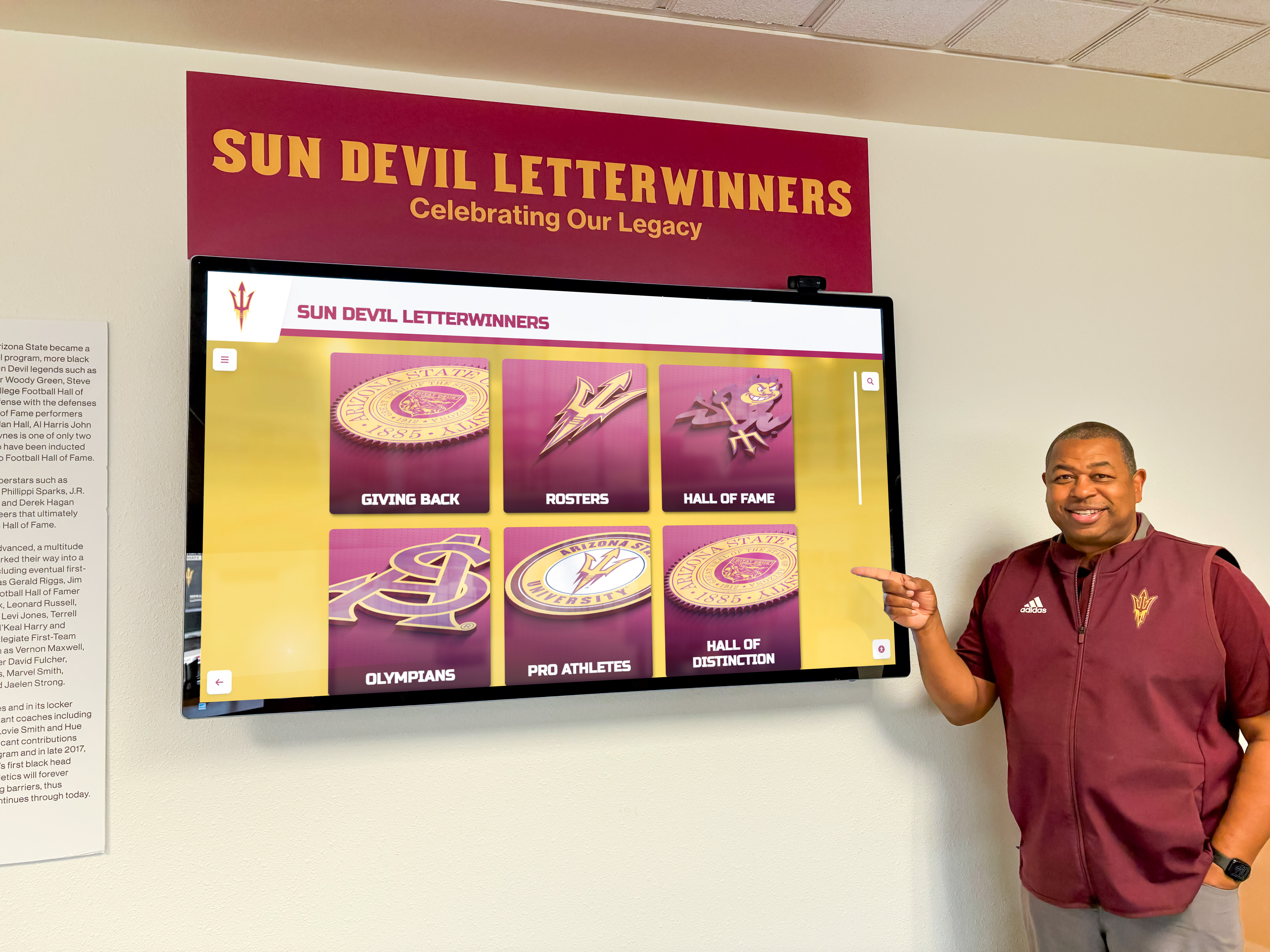
Interactive touchscreens transform recognition from passive observation to active exploration
Interactive Exploration Features
Visitors actively engage with content rather than passively viewing:
- Search bars finding specific athletes, teams, sports, or years instantly
- Filter options narrowing results by achievement type, decade, or sport
- Related content suggestions connecting teammates and related achievements
- Individual profile pages providing comprehensive athlete information
- Team pages linking all members and providing championship context
- Comparison features showing record progression over time
- Social sharing enabling digital celebration beyond physical campus
- Analytics tracking which content receives most visitor engagement
Schools report that 80-90% of visitors interact with digital displays during campus visits—dramatically higher than the percentage who stop to examine traditional trophy cases. Visit duration increases from seconds of observation to 5-10 minutes of active exploration.
Simplified Content Management
Remote management transforms recognition workflows:
- Update content from any internet-connected device without campus access
- Add new achievements immediately after games or ceremonies
- Correct errors or update information easily without reproduction costs
- Schedule content to appear on specific dates or during events
- Bulk import historical data when launching programs
- No physical trophy handling, reorganization, or maintenance
- Professional appearance maintained consistently without cleaning
- Role-based permissions ensuring appropriate staff access
- Version history enabling rollback if needed
Administrative time for recognition management decreases 70-80% compared to traditional trophy case maintenance and updates.
Web-Based Recognition Extensions
Modern platforms extend recognition beyond hallway locations:
- Web-accessible content enabling alumni worldwide to view achievements
- Mobile-optimized displays working across smartphones, tablets, and computers
- Integration with school athletic websites and social media
- QR codes on printed materials linking to online recognition
- Alumni access maintaining connection years after graduation
- Prospective family exploration during recruitment research
- Community engagement building broader institutional pride
- Email notifications when new inductees or achievements are added
Recognition technology solutions provide comprehensive platforms serving multiple audiences simultaneously rather than limiting visibility to hallway traffic.
Digital Display Considerations
Digital systems also present considerations administrators must address:
Higher Initial Investment
Digital recognition requires more substantial up-front spending:
- Commercial touchscreen displays: $3,000 to $9,000 depending on size and quality
- Content management software: $800 to $3,500 annually depending on features and scale
- Professional installation and mounting: $800 to $2,500 per location
- Initial content development: $1,500 to $4,000 for historical digitization
- Staff training on content management: typically included but requires time investment
- Total initial investment: $6,100 to $19,000 per display location
However, unlimited capacity eliminates future case purchases that traditional approaches require. Total cost over 5-7 years often proves competitive when accounting for additional trophy case purchases and reduced maintenance time.
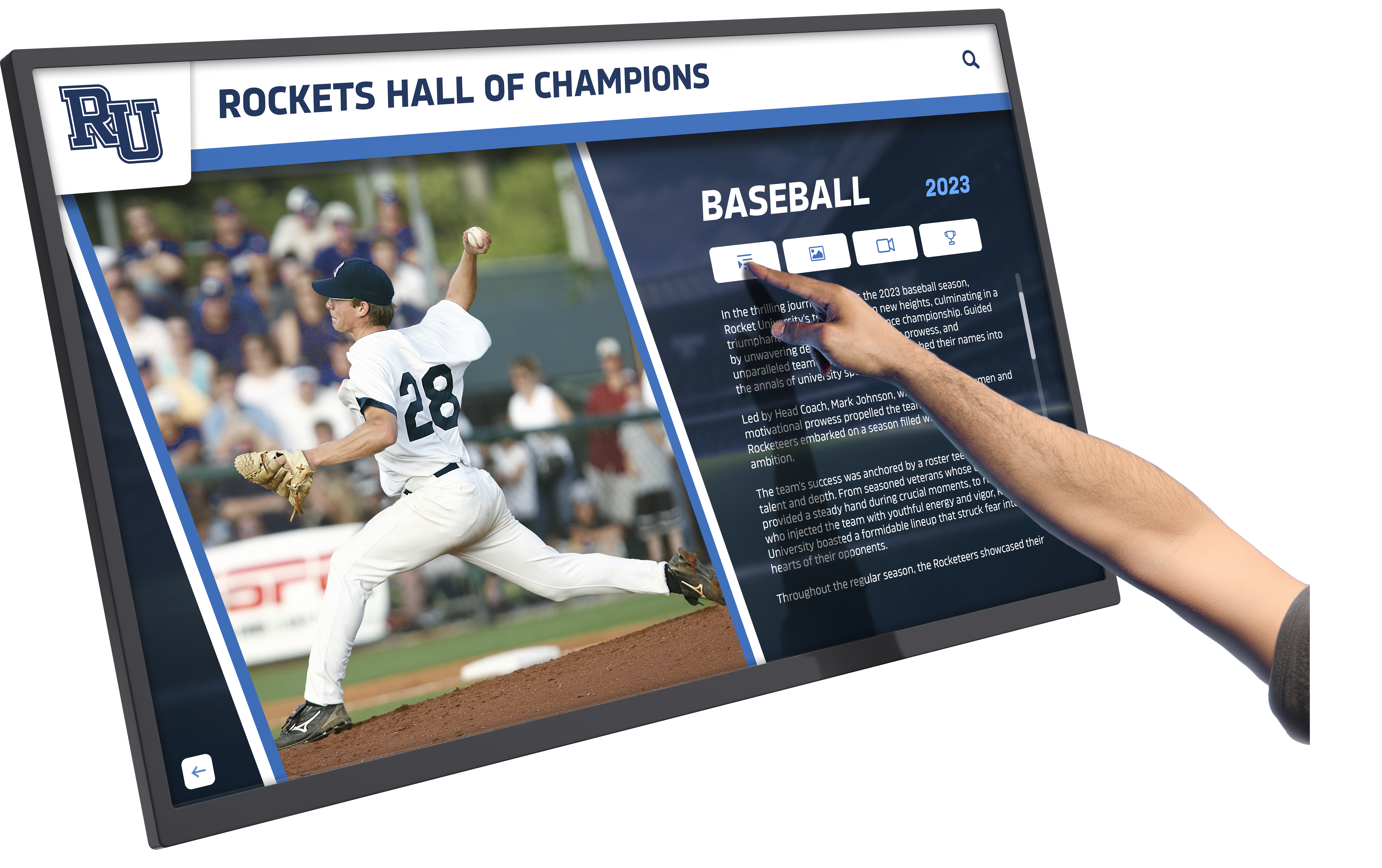
Digital systems require initial technology investment but eliminate ongoing space constraint challenges
Technology Infrastructure Requirements
Digital displays depend on technical systems:
- Network connectivity for content updates and cloud-based management
- Reliable electrical power at display locations
- Basic IT support for troubleshooting occasional technical issues
- Software platform subscriptions requiring annual renewal
- Potential for system failures or technical problems requiring resolution
- Staff comfort with cloud-based content management systems
- Consideration of technology lifecycle and eventual hardware replacement
Schools should ensure adequate IT support through vendor relationships, internal IT staff, or combination approaches. Most modern systems are designed for simplicity requiring minimal technical expertise, but occasional support needs should be anticipated.
Physical Trophy Display Questions
Digital recognition raises questions about physical trophies:
- Where do actual championship trophies go after digitization?
- Do traditional stakeholders accept digital representation as adequate recognition?
- Should some featured physical trophies complement digital displays?
- How do you balance modern innovation with respect for traditional recognition preferences?
Most schools adopt hybrid approaches maintaining some featured physical displays while using digital systems for comprehensive recognition capacity. This satisfies stakeholders valuing tangible trophies while solving space constraint problems through digital archives.
Direct Comparison: Key Decision Factors
Understanding specific differences helps administrators evaluate which approach fits their situation.
Space Requirements and Growth Capacity
Traditional Trophy Cases:
- Large floor case (72" wide): holds 75-100 trophies depending on size
- Reaches capacity in 2-4 years for successful programs
- Requires purchasing additional cases or removing older trophies
- Each additional case consumes 6-8 feet of hallway space
- Eventually every available wall space gets allocated to trophy storage
Digital Hall of Fame Displays:
- Single 65" touchscreen: unlimited achievement capacity regardless of quantity
- Accommodates program growth indefinitely without hardware additions
- Same physical footprint whether displaying 50 or 5,000 achievements
- Wall-mounted installation minimizes floor space usage
- Hallway space remains available for other purposes
Schools with space constraints or growing programs find digital systems solve fundamental capacity problems that traditional cases cannot address. Programs generating fewer than 10-15 trophies annually may find traditional cases adequate for foreseeable future.
Maintenance and Update Requirements
Traditional Trophy Cases:
- Weekly dusting and cleaning: 30-60 minutes per case
- Quarterly deep cleaning: 2-3 hours per case
- Reorganization when adding trophies: 1-2 hours per update
- Engraved plaque production: 2-4 week lead time, $75-200 per plaque
- Total monthly maintenance time: 4-8 hours for typical program
- Corrections to engraved content expensive or impossible
Digital Hall of Fame Displays:
- Screen surface cleaning: 10-15 minutes weekly
- Content updates: 15-30 minutes per achievement added remotely
- Immediate publication after adding content
- Easy corrections to any information
- Total monthly maintenance time: 1-2 hours for typical program
- Software updates typically automatic
Administrative time savings of 65-75% represent significant value, especially when athletic directors or administrative staff handle recognition alongside other responsibilities.
Engagement and User Experience
Traditional Trophy Cases:
- Passive observation from outside locked case
- Information limited to engraved text on trophies and plaques
- No search or filtering capabilities
- Visitor interaction time: 5-30 seconds typically
- No ability to share or celebrate digitally
- Accessibility challenges for vision-impaired visitors
- Static content that never changes except when trophies added
Digital Hall of Fame Displays:
- Interactive exploration through touchscreen interface
- Comprehensive information including photos, videos, statistics, and narratives
- Search and filter functionality finding specific content
- Visitor interaction time: 5-10 minutes typically
- Social sharing and QR code access extending engagement
- ADA accessibility features including screen reader compatibility
- Dynamic content with new features and information added regularly
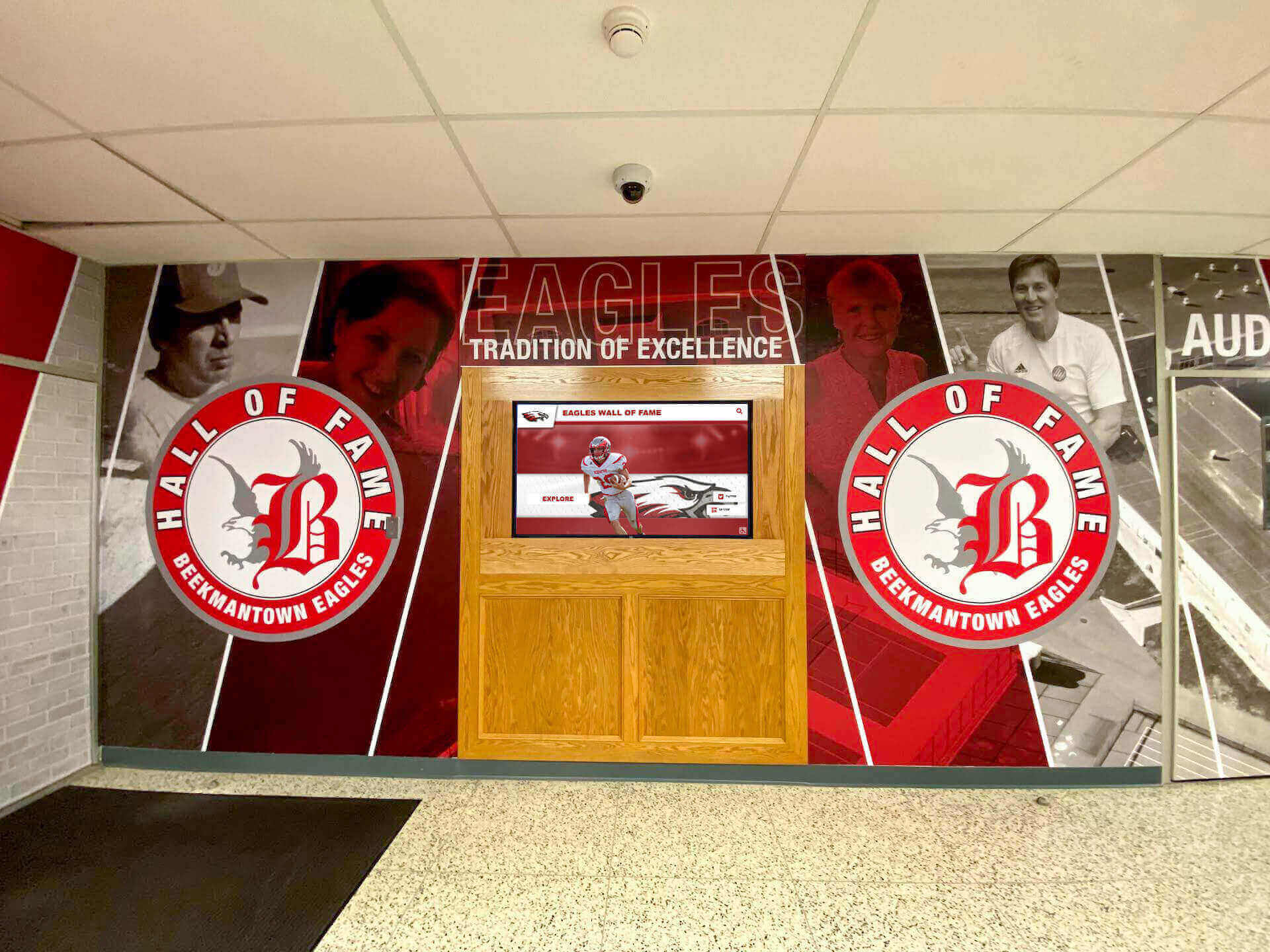
Modern recognition approaches often combine traditional design elements with digital technology
Research indicates visitors engage 15-20 times longer with interactive digital displays compared to traditional trophy case observation. This increased engagement translates to stronger alumni connections, better prospective student impressions, and more effective recognition of achievement.
Total Cost Analysis Over Time
Traditional Trophy Case 5-Year Costs:
- Initial case purchase: $4,500
- Year 1-5 maintenance (cleaning, repairs): $2,500
- Additional case purchases (years 3 and 5): $9,000
- Engraved plaques (50 @ $125 average): $6,250
- Administrative time (6 hours/month x 60 months x $30/hour): $10,800
- 5-Year Total: $33,050
Digital Display System 5-Year Costs:
- Initial display and installation: $8,500
- Software subscription (5 years x $2,000): $10,000
- Electricity (5 years x $180): $900
- Maintenance (cleaning, 5 years x $300): $1,500
- Administrative time (1.5 hours/month x 60 months x $30/hour): $2,700
- 5-Year Total: $23,600
This analysis shows digital systems provide 28% lower total cost over five years while offering unlimited capacity, enhanced engagement, and comprehensive features impossible with traditional approaches. Schools with donor recognition needs alongside athletic recognition benefit from unified digital platforms accommodating both categories.
Hybrid Approaches: Combining Both Methods
Many schools implement strategic combinations rather than choosing exclusively one approach.
Featured Physical Display with Digital Archives
This popular hybrid strategy balances stakeholder preferences:
Implementation Approach:
- Maintain small trophy case (30-40 trophy capacity) displaying most significant recent championships
- Install adjacent digital display showcasing all trophies and achievements comprehensively
- Rotate featured physical trophies seasonally while maintaining permanent digital archives
- QR codes on physical trophy labels linking to extended digital content
- Physical presence satisfies traditional preferences while digital system solves capacity limitations
Benefits:
- Honors tangible trophy tradition while eliminating space constraints
- Featured physical championships create focal points and traditional connection
- Digital archives ensure every achievement receives permanent recognition
- Satisfies diverse stakeholder preferences across age ranges
- Provides both “best of show” physical display and comprehensive digital catalog
Location-Specific Strategies
Different spaces may warrant different recognition approaches:
Main School Entrance:
- Digital touchscreen display showcasing comprehensive achievement across all programs
- Interactive exploration engaging visitors including prospective families
- Professional first impression demonstrating institutional innovation
- Web-accessible QR code enabling extended mobile exploration
Athletic Facility Lobby:
- Traditional trophy case displaying championship hardware for featured sports
- Dedicated space where trophy size and physical presence creates maximum impact
- Authentic athletic environment where physical trophies feel most appropriate
- Adjacent digital displays providing comprehensive team and athlete information
Hallway Recognition Areas:
- Wall-mounted digital displays maximizing limited hallway space
- Minimal floor obstruction in high-traffic student corridors
- Unlimited recognition without consuming additional space as programs grow
- Accessible placement serving all visitors including those with disabilities
Schools developing recognition display concepts often find hybrid approaches address multiple stakeholder preferences while solving practical space and maintenance challenges.
Making the Right Choice for Your Institution
Several factors influence which approach serves specific schools best.
When Traditional Trophy Cases Make Sense
Certain situations favor conventional approaches:
- Schools with limited trophy accumulation (fewer than 15 new trophies annually)
- Programs with adequate hallway space for multiple cases
- Institutions lacking reliable network infrastructure or IT support
- Budgets unable to support initial digital system investment
- Stakeholder groups strongly preferring traditional recognition
- Small or new programs building initial trophy collections
- Facilities where physical trophy security is easily managed
Traditional approaches work well for programs with modest recognition needs and strong preference for familiar methods.
When Digital Displays Excel
Digital solutions particularly suit institutions facing:
- Space constraints with trophy cases at or near capacity
- Successful programs generating 20+ trophies annually
- Desire for interactive, engaging visitor experiences
- Need for comprehensive historical archives spanning decades
- Interest in web-accessible recognition extending beyond campus
- Multiple programs (athletics, academics, arts) requiring equal recognition
- Limited administrative time for recognition maintenance
- Renovation projects creating opportunities for modern installations
- Alumni engagement priorities requiring accessible online content
When Hybrid Approaches Work Best
Most schools benefit from strategic combinations:
- Programs valuing both tangible trophies and comprehensive digital recognition
- Diverse stakeholder groups with varying technology comfort and preferences
- Phased budget availability supporting gradual implementation
- Multiple facility locations with different space characteristics
- Large historical archives requiring preservation alongside current achievement
- Balanced priorities between honoring tradition and embracing innovation
Implementation Considerations
Successful recognition projects require systematic planning.
Planning Phase Requirements
Stakeholder Engagement:
- Athletic director vision and leadership
- Administrative approval for budget and scope
- Booster club input on priorities and potential funding support
- Alumni association feedback on recognition preferences
- Facilities staff perspective on installation and maintenance
- Student athlete input on inspiration and engagement factors
Needs Assessment:
- Current trophy inventory and annual accumulation rate
- Available display space measurements and characteristics
- Network connectivity and electrical infrastructure evaluation
- Budget development including initial investment and ongoing costs
- Timeline establishment for procurement and implementation
- Technology comfort assessment for staff managing content
Vendor Evaluation:
For traditional trophy cases:
- Multiple vendor quotes comparing quality, features, and pricing
- Reference checks with similar schools
- Samples or showroom visits evaluating build quality
- Installation services and warranty coverage comparison
For digital recognition systems:
- Software platform demonstrations with actual content
- Reference visits to schools using specific systems
- Content management interface evaluation for staff usability
- Support and training programs assessment
- Long-term relationship potential and vendor stability evaluation
Installation and Launch
Content Development:
- Professional photography of trophies, teams, and athletes
- Biographical research for athlete and coach profiles
- Historical archive organization and digitization
- Quality standards ensuring professional presentation
- Review workflows maintaining accuracy and consistency
Technical Implementation:
- Professional mounting ensuring security and proper height
- Network and electrical infrastructure coordination
- Display calibration and testing before public launch
- ADA compliance verification for placement and usability
- Comprehensive staff training on management systems
Launch Promotion:
- Dedication ceremony celebrating new recognition
- Campus tour integration highlighting displays
- Social media campaigns building awareness
- Alumni communications showcasing enhanced access
- Local media coverage celebrating institutional investment in recognition
Schools should coordinate recognition launches with high-visibility events like homecoming celebrations or championship recognition ceremonies to maximize impact.
Conclusion: Choosing Recognition That Serves Your Community
The choice between digital hall of fame displays and traditional trophy cases isn’t simply about old versus new technology. It’s about matching recognition approaches to institutional needs, stakeholder priorities, space realities, budget constraints, and long-term sustainability requirements.
Traditional trophy cases provide tangible championship hardware presence that many stakeholders value, require no technical infrastructure, represent familiar recognition methods, and involve straightforward procurement. However, space constraints inevitably force difficult decisions about which achievements warrant continued visibility, maintenance demands accumulate over time, engagement remains passive, and update processes require physical access with production delays.
Digital hall of fame displays eliminate space limitations through unlimited capacity, enhance engagement through interactive exploration, simplify maintenance through remote management, extend recognition reach through web accessibility, and provide comprehensive multimedia content impossible with static displays. Initial investment runs higher than basic trophy cases, but total costs over 5-7 years prove competitive while solving fundamental capacity challenges. Technology dependence requires reliable infrastructure and basic IT support capabilities.
Most importantly, digital platforms position programs for growth rather than constraining recognition based on arbitrary physical limitations. Every championship team, record-setting athlete, coaching milestone, and program achievement deserves lasting celebration rather than eventual storage room retirement when newer accomplishments require display space.
Many schools find hybrid approaches combining featured physical trophy displays with comprehensive digital archives best serve diverse stakeholder preferences. Strategic combinations honor tradition while leveraging modern technology’s capabilities to solve space, maintenance, and engagement challenges that physical-only approaches cannot address.
Begin with honest assessment of current recognition challenges, available resources, stakeholder priorities, trophy accumulation rates, and growth projections. Whether implementing traditional cases, adopting digital platforms, or strategically combining both approaches, the goal remains constant: creating recognition that honors every achievement while inspiring future excellence.
Your school’s trophies and achievements represent thousands of hours of dedication, sacrifice, and excellence by athletes, coaches, and supporting communities. With thoughtful planning, appropriate technology selection, and sustainable management, you can create hallway recognition that celebrates every accomplishment while serving your programs for decades to come.
Ready to explore how modern digital recognition platforms can provide unlimited capacity while honoring tradition? Explore solutions like Rocket Alumni Solutions that make comprehensive digital hall of fame displays achievable for schools of all sizes, eliminating space constraints while creating engaging interactive experiences that connect current students with institutional history.