Schools document countless meaningful moments throughout each academic year—homecoming celebrations, academic competitions, performing arts showcases, athletic victories, community service projects, and daily classroom experiences. These events represent the living culture of educational institutions, yet many schools struggle to preserve and showcase these memories in ways that remain accessible and engaging beyond the initial event date.
Traditional approaches to commemorating school life—yearbooks that capture only select moments, static bulletin boards that become outdated, printed programs filed away and forgotten, or social media posts that disappear in endless scrolling feeds—fail to create the lasting, accessible documentation that truly honors the richness of school experiences.
This comprehensive guide explores how schools use interactive digital displays to showcase photo galleries from throughout the school year, create engaging historical timelines documenting institutional legacy, and present compelling About Us profiles that bring faculty, staff, and student leaders into focus. These applications transform recognition from static afterthoughts into dynamic, inspiring displays that commemorate history, celebrate current achievement, and serve as powerful marketing tools for prospective students and families.
Modern schools need recognition solutions that match the pace and richness of contemporary educational experiences. Digital touchscreen displays provide the unlimited capacity, multimedia capabilities, and interactive engagement necessary to truly showcase “a day in the life” across your entire school community—from founding moments through present-day excellence.
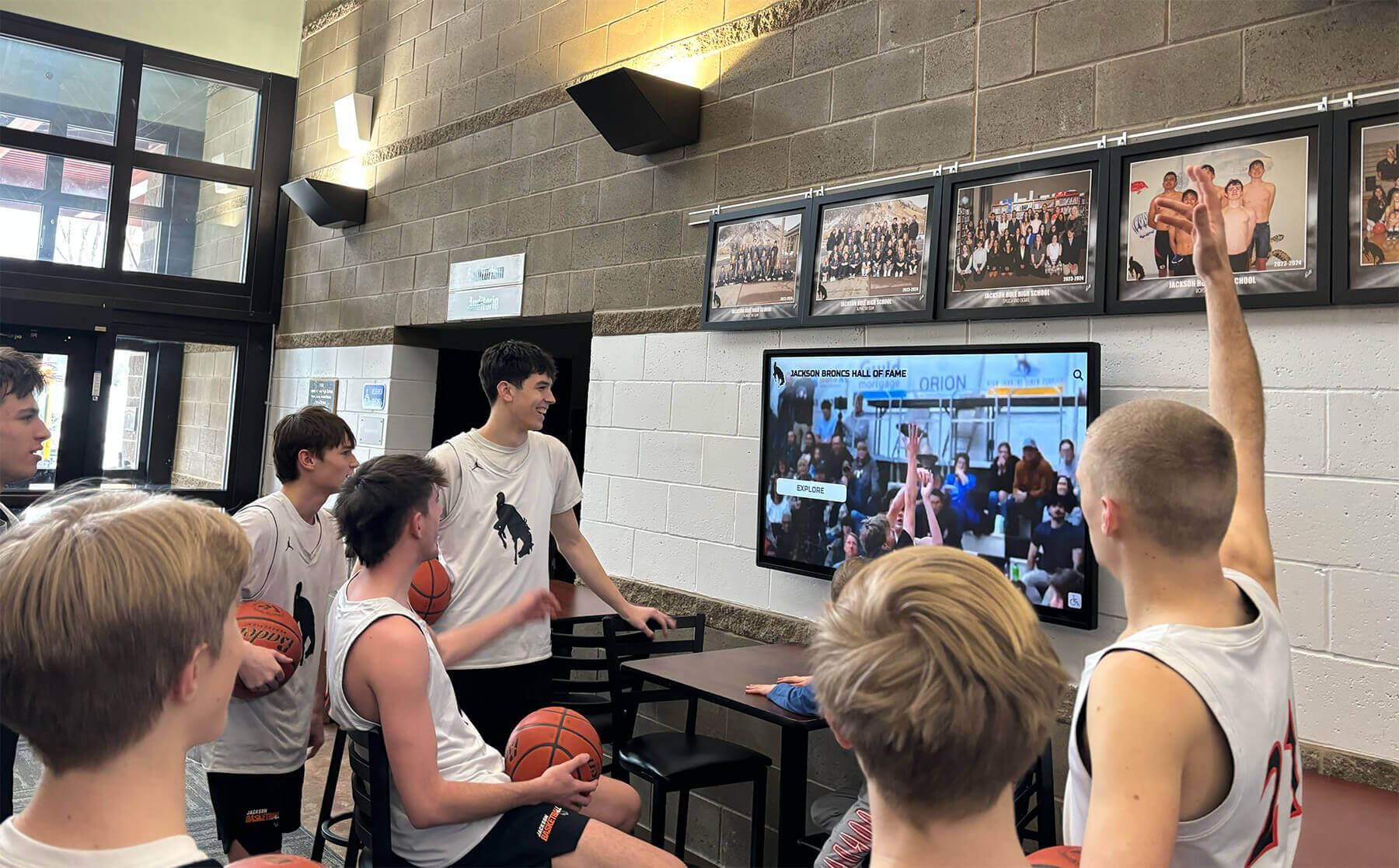
Interactive displays bring school events to life, enabling students to explore and relive meaningful moments
The Power of Visual Storytelling in Schools
Understanding why visual documentation matters helps schools prioritize comprehensive event coverage and historical preservation.
Why School Photo Galleries Matter
Visual documentation of school life serves purposes extending far beyond simple record-keeping:
Student Engagement and Belonging
- Photos from school events help students see themselves reflected in school culture
- Recognition through event documentation increases student sense of connection and belonging
- Visual representation of diverse activities demonstrates inclusivity and opportunity
- Seeing peers celebrated in various contexts normalizes participation and achievement
- Event galleries create conversation starters that strengthen student relationships
Family Connection and Communication
- Parents appreciate seeing their students recognized and featured
- Event photo galleries provide concrete evidence of educational experiences
- Visual documentation helps families understand school culture and values
- Photos create talking points for family discussions about school experiences
- Multi-generational families can explore and share school memories together
Alumni Engagement and Institutional Pride
- Historical photo collections enable alumni to reconnect with their school experiences
- Seeing familiar faces and places strengthens emotional bonds to institutions
- Alumni comparing past and present creates intergenerational dialogue
- Visual documentation of tradition builds institutional pride across generations
- Photo archives become valuable resources for reunions and milestone celebrations
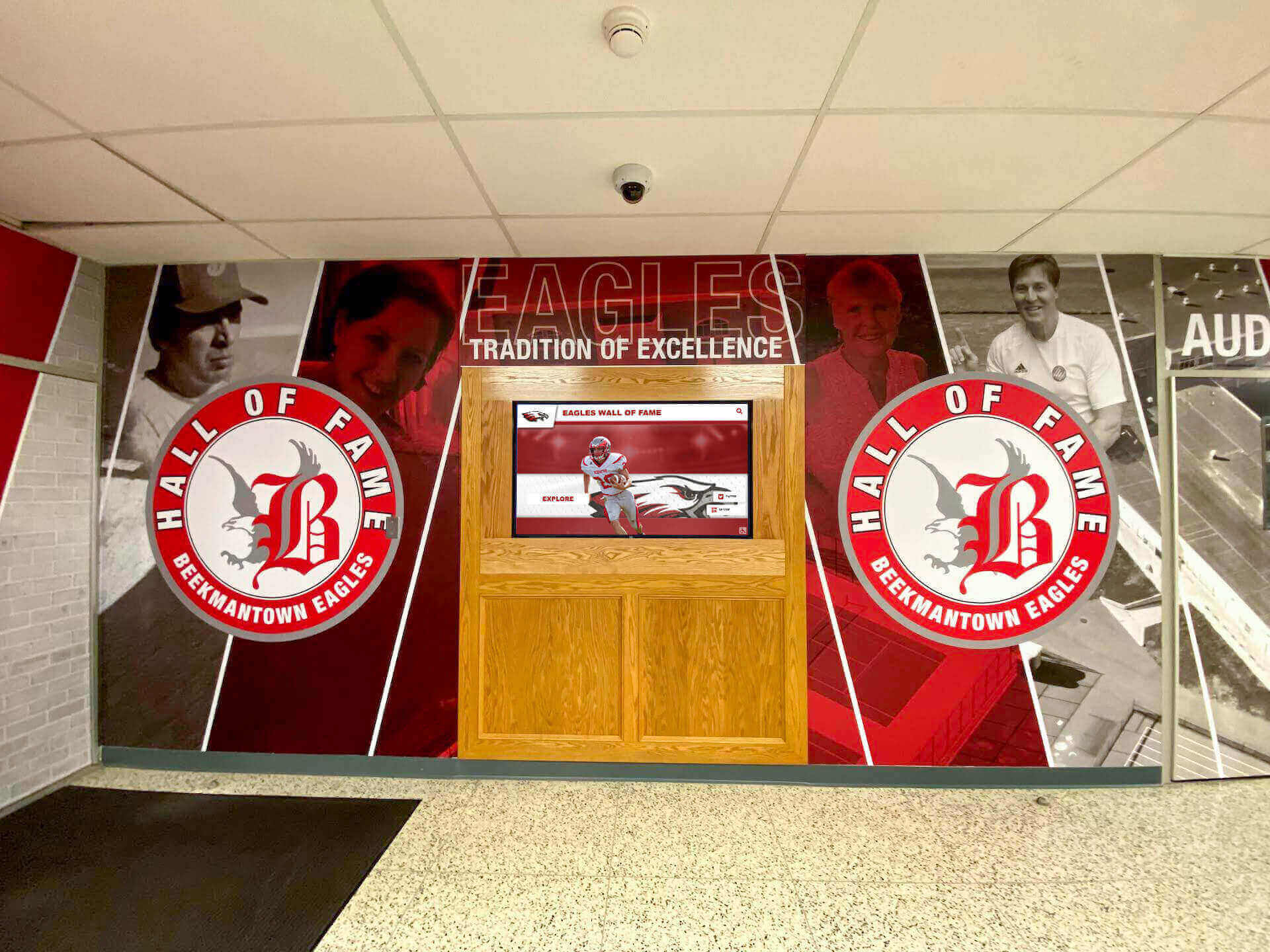
Prominent lobby displays set the tone for school culture and values
Prospective Family Marketing
- Photo galleries demonstrate active school culture to prospective families
- Visual evidence of activities and opportunities influences enrollment decisions
- Seeing diverse student experiences helps families envision their students thriving
- Event documentation shows facilities, programs, and community engagement
- Comprehensive visual storytelling differentiates schools from competitors
Schools implementing systematic visual documentation report 35-50% increases in prospective family engagement with school marketing materials compared to text-heavy approaches.
The Challenge of Traditional Event Documentation
Conventional approaches to preserving school memories face significant limitations:
Yearbook Constraints
- Space limitations force difficult decisions about which photos to include
- Production timelines mean year-end events often receive minimal coverage
- Annual publication cycle creates long gaps between event and documentation
- High costs per book limit distribution and accessibility
- Physical books get lost, damaged, or stored away where no one views them
- Students not purchasing yearbooks lose access to documented memories
Bulletin Board Limitations
- Physical space constraints limit how many photos can be displayed
- Mounted photos fade and deteriorate over time requiring replacement
- Static displays become visual noise that people stop noticing
- Updating requires physical access, printing, and mounting time
- Limited visibility to only those passing specific hallway locations
- Weather damage and vandalism in some school environments
Social Media Challenges
- Posts quickly buried by subsequent content disappear from view
- Platform algorithms limit who sees school content organically
- Privacy concerns restrict what can be shared on public platforms
- Not all families actively use the platforms schools choose
- No systematic organization makes finding specific events difficult
- Content ownership and permanence uncertain on third-party platforms
Website Photo Gallery Problems
- Often buried multiple clicks deep where few visitors find them
- Difficult to maintain and update consistently across school year
- Limited engagement analytics make impact measurement challenging
- Mobile optimization often poor reducing smartphone accessibility
- Search functionality typically inadequate for large photo collections
- Bandwidth and hosting constraints may limit photo quality or quantity
Schools need solutions that combine the permanence and organization of yearbooks, the immediacy of social media, the accessibility of websites, and the engagement of physical displays—without inheriting any format’s limitations.
Photo Galleries: Celebrating Events Throughout the School Year
Interactive digital displays transform how schools document and showcase the countless meaningful moments that define each academic year.
Types of School Events Worth Showcasing
Comprehensive event documentation should span the full spectrum of school experiences:
Athletic Events and Competitions
- Game day action photos from all sports throughout seasons
- Championship celebrations and award ceremonies
- Senior night recognition and athlete features
- Team bonding activities and practice highlights
- Pre-game preparations and post-victory celebrations
- Coaching staff and athletic department recognition
- Cross-town rivalry game traditions and spirit activities
Schools with comprehensive athletic recognition programs integrate event photo galleries with achievement recognition creating complete athletic documentation.
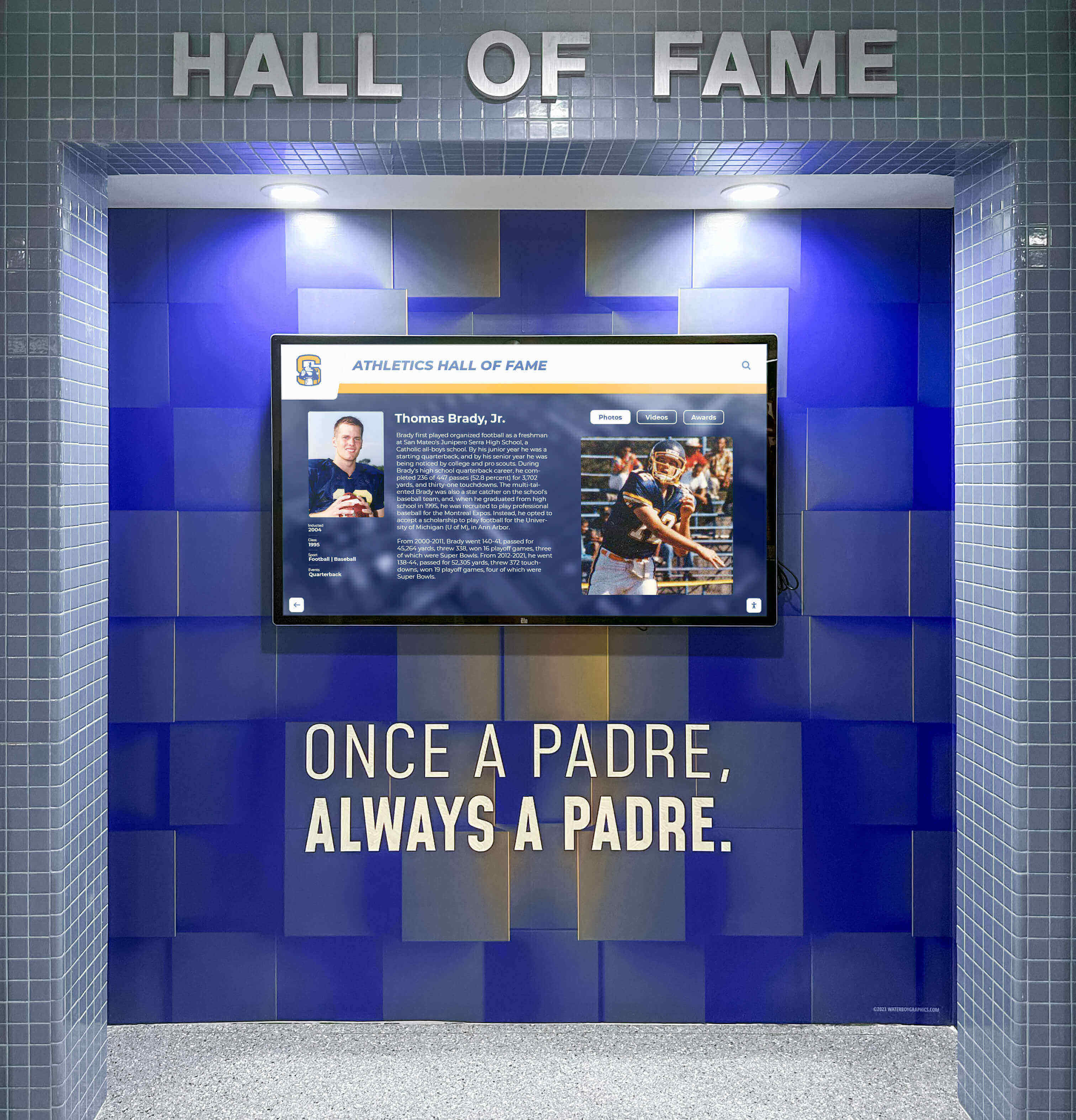
Athletic displays celebrate both competitive achievements and team culture
Academic Competitions and Showcases
- Science fair projects and presentations
- Academic competition teams and tournament photos
- STEM robotics competition participation
- Writing contest winners and debate team recognition
- Math competition achievements and spelling bee moments
- Academic bowl teams and knowledge competition events
- Research presentation showcases and project fairs
Academic recognition programs benefit from visual documentation demonstrating the scope and excitement of intellectual competition.
Performing Arts Events
- Theater production rehearsals and opening night performances
- Musical concerts and choir performances
- Dance recital preparations and performance events
- Art show installations and student artwork displays
- Band and orchestra concert performances
- Drama competition and forensics tournament participation
- Behind-the-scenes technical theater and stage crew recognition
School Traditions and Spirit Events
- Homecoming week activities and dress-up days
- Pep rallies and spirit assemblies
- School dances and social events
- Holiday celebrations and cultural recognition events
- Fundraiser activities and community service projects
- Senior traditions and graduation-related activities
- School-wide assemblies and guest speaker events
Student Leadership and Service
- Student council activities and governance
- Club meetings and organization events
- Community service project participation
- Peer mentoring program activities
- School improvement initiatives and student voice projects
- Campus beautification efforts
- Volunteer recognition and service hour milestones
Daily School Life
- Classroom learning activities and creative lessons
- Library and media center programming
- Cafeteria culture and lunch traditions
- Hallway interactions and school environment
- Bus transportation and arrival/dismissal routines
- Before and after school program activities
- Faculty and staff appreciation moments
This comprehensive approach to event documentation ensures all students see themselves represented regardless of their primary school involvement areas.
Implementing Digital Event Photo Galleries
Modern touchscreen systems make comprehensive photo gallery implementation practical and sustainable:
Display Hardware Considerations
- 55"-75" touchscreen displays work well for most school hallways and common areas
- Commercial-grade displays rated for continuous operation and high-traffic use
- Anti-glare protective glass reducing screen reflection in bright hallway environments
- Vandal-resistant enclosures protecting displays in student-accessible areas
- Wall-mounted or freestanding kiosk configurations fitting various spaces
- Multiple displays throughout campus extending gallery access
- ADA-compliant mounting heights ensuring accessibility
Gallery Organization Strategies Systematic organization helps visitors find relevant content easily:
- Chronological organization by month or marking period
- Category-based navigation by event type or activity area
- Grade-level filtering for student-specific experiences
- Sport or activity-specific galleries for deep diving
- Featured collections highlighting major annual events
- Search functionality enabling name or keyword searches
- “On This Day” historical comparisons showing past years’ events
Content Management and Updates Cloud-based platforms simplify ongoing gallery maintenance:
- Mobile upload capabilities enabling real-time event documentation
- Bulk upload tools for processing hundreds of photos efficiently
- Automated image optimization ensuring fast loading and quality display
- Scheduled publishing allowing advance preparation for major events
- Permission management enabling appropriate staff access
- Student-submitted content workflows with approval processes
- Analytics tracking which events generate most engagement
Schools report 70-85% reduction in time spent managing photo galleries after transitioning from manual website uploads to cloud-based display platforms.
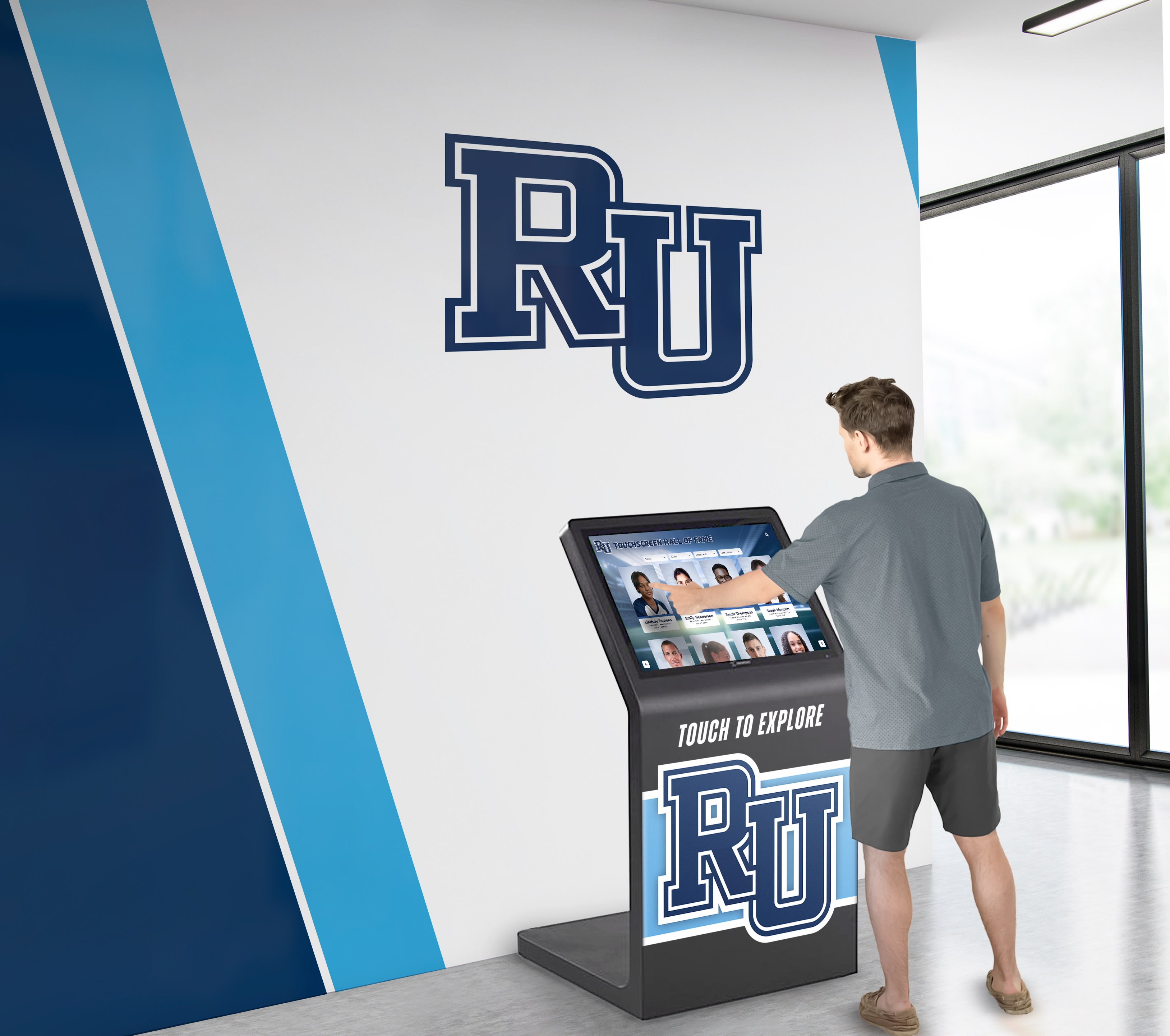
User-friendly interfaces encourage exploration of school event galleries
Privacy and Permission Considerations
Responsible photo gallery implementation requires attention to privacy matters:
Photo Release Protocols
- Annual photo release forms signed by families during enrollment
- Clear communication about where and how photos will be used
- Opt-out procedures for families preferring limited photo inclusion
- Special consideration for students in sensitive situations
- Documentation of permissions for easy reference
- Regular reminder communications about photo gallery practices
Content Selection Guidelines
- Guidelines ensuring photos respect student dignity and appropriate representation
- Focus on positive moments rather than potentially embarrassing situations
- Diverse representation across student populations
- Identification protocols balancing recognition with privacy
- Regular review removing dated content or addressing concerns
- Student involvement in content selection processes when appropriate
Historical Timelines: Preserving and Showcasing School Legacy
Beyond documenting current events, digital displays enable schools to preserve and present institutional history in engaging, accessible formats.
Why School History Matters
Historical preservation serves essential functions in educational communities:
Institutional Identity and Pride
- School history establishes institutional identity distinguishing one school from others
- Historical awareness creates pride connecting current community members to legacy
- Understanding founding values and mission helps maintain educational focus
- Recognition of challenges overcome builds appreciation for current opportunities
- Historical context helps community understand how present grew from past
Educational Opportunities
- School history provides authentic local history content for curriculum integration
- Research projects exploring institutional archives develop inquiry skills
- Historical timelines demonstrate change over time and historical progression
- Primary source access through digitized materials supports historical thinking
- Connections between local and national history increase engagement
Marketing and Differentiation
- Prospective families value schools with established traditions and proven track records
- Historical timeline displays demonstrate stability and institutional commitment
- Alumni success stories provide evidence of educational quality
- Facility evolution photos show ongoing investment and improvement
- Longevity in community suggests trustworthiness and reliability
Schools with visible, accessible historical displays report that prospective families specifically mention appreciation for tradition and institutional history during enrollment decisions.
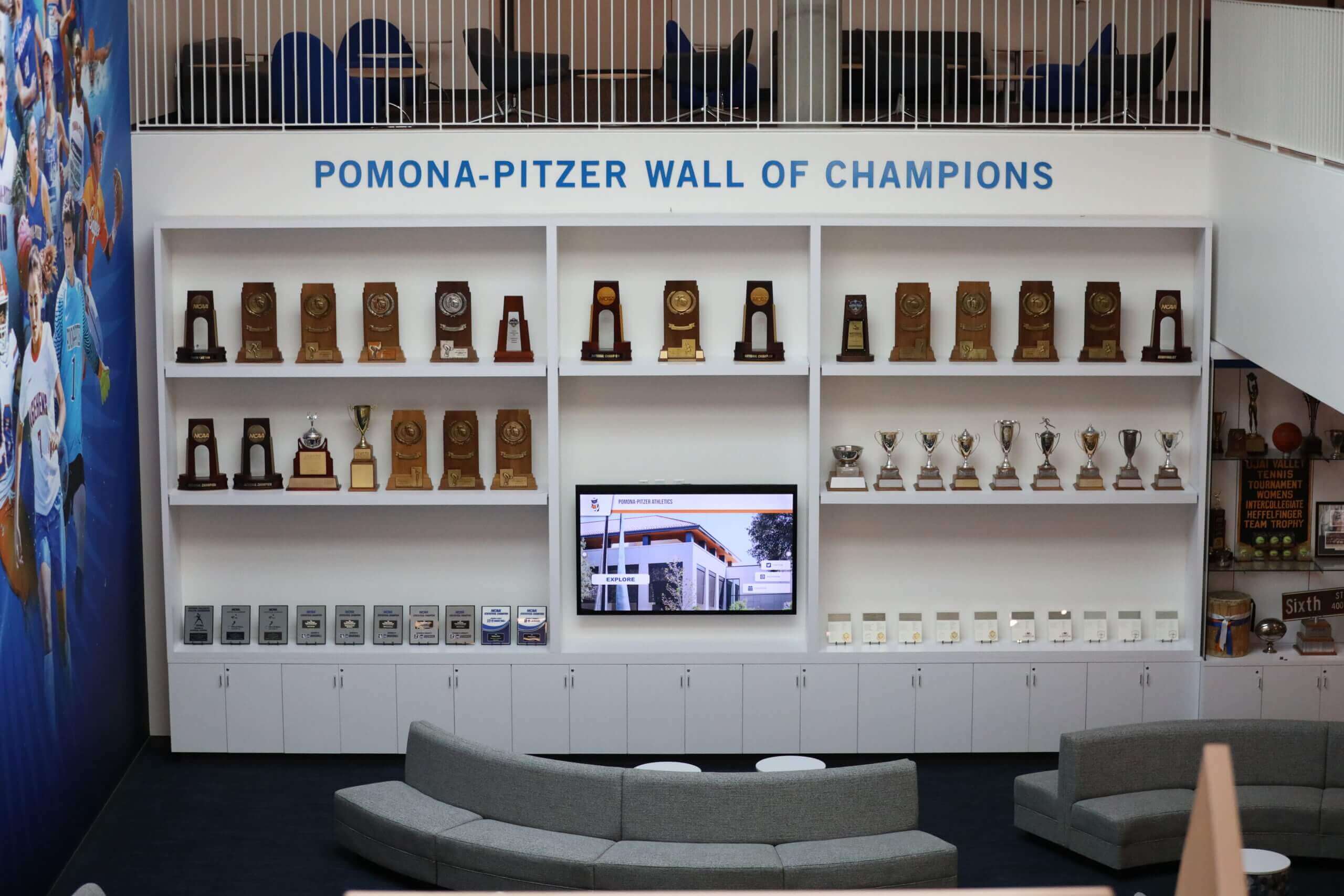
Historical displays connect current students to decades of institutional excellence
Content for School History Timelines
Comprehensive historical documentation should span multiple dimensions:
Founding and Early History
- School establishment circumstances and founding vision
- Original facilities and campus photos
- Founding administrators, staff, and first students
- Initial programs and curriculum offerings
- Early challenges and growth milestones
- Community context and historical period details
- Original mission statements and educational philosophy
Facility Evolution and Growth
- Construction photos from original building through expansions
- Renovation projects and modernization efforts
- Campus maps showing physical growth over decades
- Architectural styles and design influences
- Facility additions responding to enrollment growth
- Technology infrastructure improvements
- Accessibility enhancements and modernizations
Academic Program Development
- New course offerings and curriculum expansions
- Advanced program additions (AP, IB, dual enrollment)
- Specialized program development (STEM, arts, CTE)
- Innovation in teaching methods and pedagogy
- Technology integration milestones
- Partnership development with higher education
- Accreditation achievements and recognition
Athletic Program History
- Sport offerings evolution over time
- Conference membership changes and affiliations
- Facility construction and improvements
- Championship seasons and milestone victories
- Record-breaking athletes and teams
- Coaching legends and their tenures
- Athletic department growth and development
School history software solutions enable comprehensive timeline creation combining multiple content dimensions.
Notable Alumni Achievements
- Career accomplishments and professional success
- Community leadership and public service
- Military service and patriotic contributions
- Artistic, literary, and creative achievements
- Entrepreneurial success and business leadership
- Athletic achievement at collegiate and professional levels
- Academic scholarship and research contributions
Tradition Development
- Origin stories of beloved school traditions
- Evolution of homecoming, prom, and social events
- Mascot selection and school identity development
- Fight songs, cheers, and spirit tradition creation
- Annual event establishment and evolution
- Student organization founding and growth
- Community partnership development
Historical Context Integration
- Connections between school events and local history
- Relationships to state and national historical moments
- Economic and demographic changes affecting schools
- Technological advancement impact on education
- Policy changes influencing school operations
- Social and cultural evolution reflected in school life
Interactive Timeline Display Features
Digital timelines offer capabilities impossible with traditional wall-mounted linear displays:
Non-Linear Exploration
- Jump directly to decades or specific years of interest
- Explore thematic threads spanning multiple time periods
- Compare multiple time periods simultaneously
- Follow specific topics (athletics, facilities, academics) chronologically
- Random discovery features revealing unexpected historical gems
Multimedia Integration
- Historical photographs with zoom capabilities revealing detail
- Scanned documents and primary sources readable on-screen
- Oral history audio clips from long-time staff and alumni
- Historical video footage when available
- Newspaper clippings and media coverage
- Architectural drawings and planning documents
- Statistical data visualizations showing change over time
Search and Filter Capabilities
- Keyword search finding specific people, events, or topics
- Date range filtering focusing on specific periods
- Category filtering by content type
- Name-based search finding individuals across history
- Location filtering for multi-campus districts
- Sport or activity filtering for focused exploration
Social and Sharing Features
- QR codes enabling mobile access to extended content
- Social media sharing of historical discoveries
- “See yourself in history” photo comparison features
- Alumni contribution portals for submitting memories and photos
- Comment capabilities enabling historical context additions
- Bookmark and favorites for marking meaningful content
Historical timeline touchscreen displays transform static chronologies into engaging discovery experiences.
Gathering Historical Content
Creating comprehensive timeline displays requires systematic research and content gathering:
Internal Source Discovery
- School archive rooms and storage areas
- Administrative offices and historical file cabinets
- Library special collections and yearbook archives
- Athletic department trophy cases and record books
- Facilities department construction documentation
- District archives and historical records
- Previous anniversary celebration materials
External Content Sources
- Local historical societies and community archives
- Public library local history collections
- Newspaper archives and media organization files
- County historical commissions and preservation groups
- State archives and educational history collections
- Alumni personal collections and photo donations
- Long-time community member interviews and oral histories
Digitization and Preservation
- High-resolution scanning preserving original documents
- Photo restoration improving historical image quality
- Metadata documentation ensuring content context preservation
- Archival digital storage preventing future loss
- Physical original preservation and proper storage
- Copyright consideration and permission documentation
- Ongoing collection development adding recent history
Schools should view historical timeline creation as ongoing projects rather than one-time efforts, continuously adding recent history and newly discovered historical content.
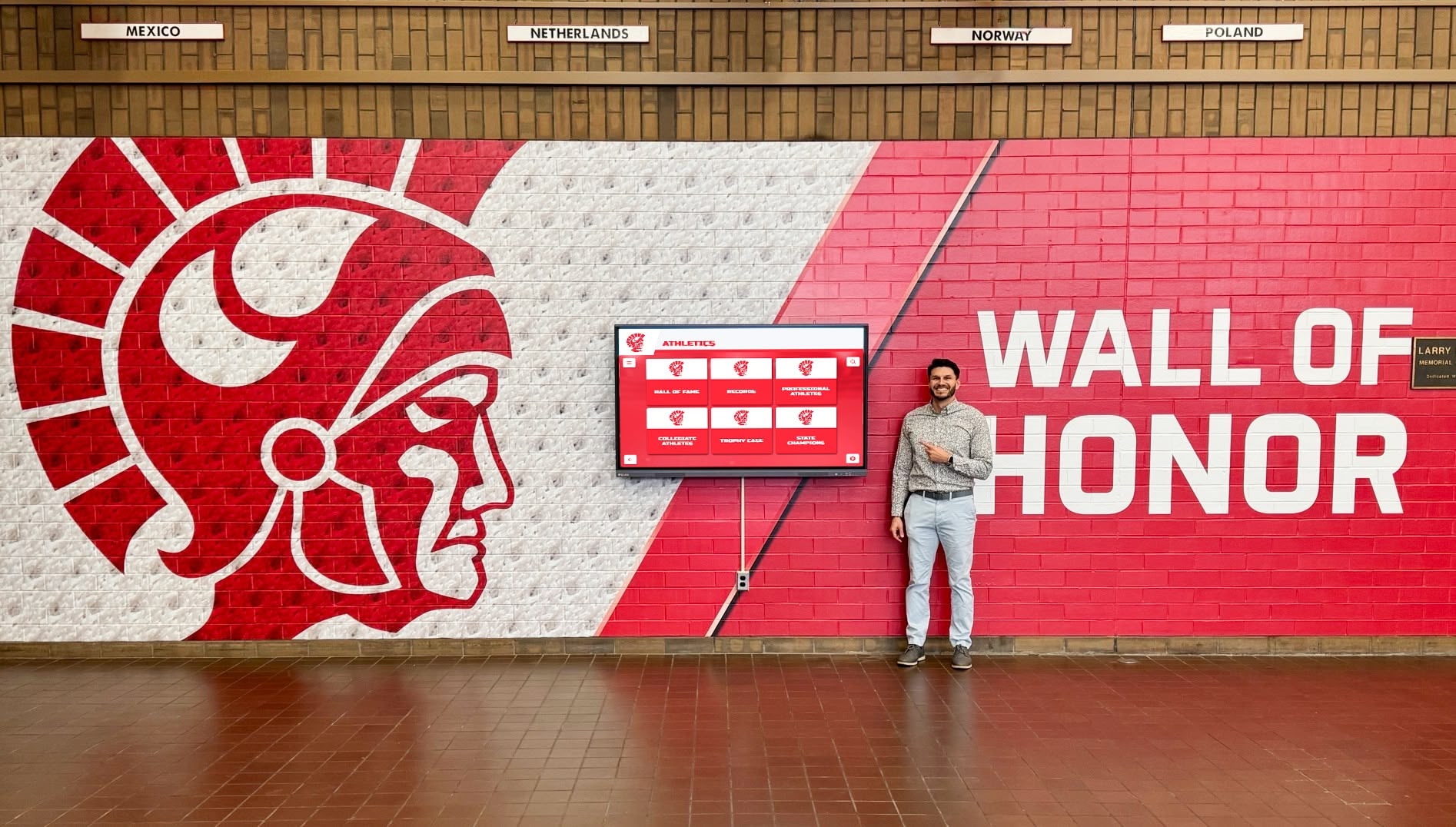
Interactive timelines make exploring decades of school history intuitive and engaging
About Us Profiles: Bringing Your School Community to Life
Beyond events and history, digital displays enable schools to showcase the people who make educational experiences meaningful.
Faculty and Staff Recognition
Comprehensive staff profiles help humanize educational institutions:
Faculty Profile Components
- Professional headshots creating personal connection
- Educational background and credentials
- Teaching assignments and subject expertise
- Years at institution demonstrating commitment
- Professional development and continuing education
- Teaching philosophy and educational approach
- Contact information and office hours
- Advice for students and educational insights
Staff Recognition Categories
- Administrative leadership team profiles
- Instructional support staff and specialists
- Counseling and student support services
- Library and media center staff
- Technology and IT department team
- Facilities and maintenance staff
- Food service professionals
- Transportation staff and bus drivers
- Health services and nursing staff
- Security and safety personnel
- Administrative assistants and clerical staff
Comprehensive staff recognition demonstrates that education requires entire communities, not just classroom teachers.
Enhanced Profile Features Digital displays enable richer staff recognition:
- “Day in the Life” photo galleries showing typical workdays
- Video introductions from staff members
- Student testimonials about meaningful staff interactions
- “Why I Teach” or “Why I Serve” personal statements
- Hobbies and interests humanizing staff members
- Years of service milestone recognition
- Professional achievement highlights
- Community involvement and volunteer work
- Fun facts and personal quirks creating connection
Schools implementing comprehensive staff recognition through digital displays report improved school culture and staff morale.
Student Leadership Profiles
Showcasing student leaders inspires participation and recognizes service:
Student Government Recognition
- Student council members with roles and responsibilities
- Class officers for each grade level
- Committee chairs and appointed positions
- Student representatives to school board
- Campaign platforms and accomplishment updates
- Leadership project highlights and initiatives
- “Ask Me About” areas of expertise or responsibility
Club and Organization Leadership
- Club presidents and executive boards
- Organization founders and their visions
- Activity coordinators and event planners
- Special interest group leaders
- Honor society officers and members
- Athletic team captains and leadership
- Performing arts section leaders
Student leadership recognition programs demonstrate the breadth of leadership opportunities available at schools.
Athletic Team Captains and Leaders
- Team captain profiles and leadership philosophies
- Senior athlete recognition and accomplishments
- Record holders and milestone achievers
- Award recipients and special honors
- College commitment announcements and celebrations
- Career statistics and achievement summaries
- Post-season reflection and advice for younger athletes
Alumni Spotlight Features
Current students benefit from seeing alumni success:
Alumni Profile Components
- Graduation year and school involvement during attendance
- College and career paths following graduation
- Current professional accomplishments
- Advice for current students
- Favorite school memories and traditions
- Mentorship availability and contact preferences
- Community involvement and giving back
Featured Alumni Categories
- Recent graduates navigating early career years
- Mid-career professionals established in fields
- Senior professionals with decades of experience and wisdom
- Entrepreneurs who built successful businesses
- Public servants and community leaders
- Military veterans and current service members
- Creative professionals in arts and entertainment
- Academic scholars and researchers
- Athletic achievement at collegiate and professional levels
“Where Are They Now” Series Regular alumni features maintain ongoing connections:
- Monthly spotlights on different graduating classes
- Decade anniversary features (10, 25, 50 years)
- Career pathway showcases following alumni in similar fields
- Geographic features highlighting alumni in different regions
- Reunion coordination encouraging alumni engagement
- Alumni achievement celebrations and milestone recognition
Alumni spotlight recognition programs help current students envision their own potential futures.
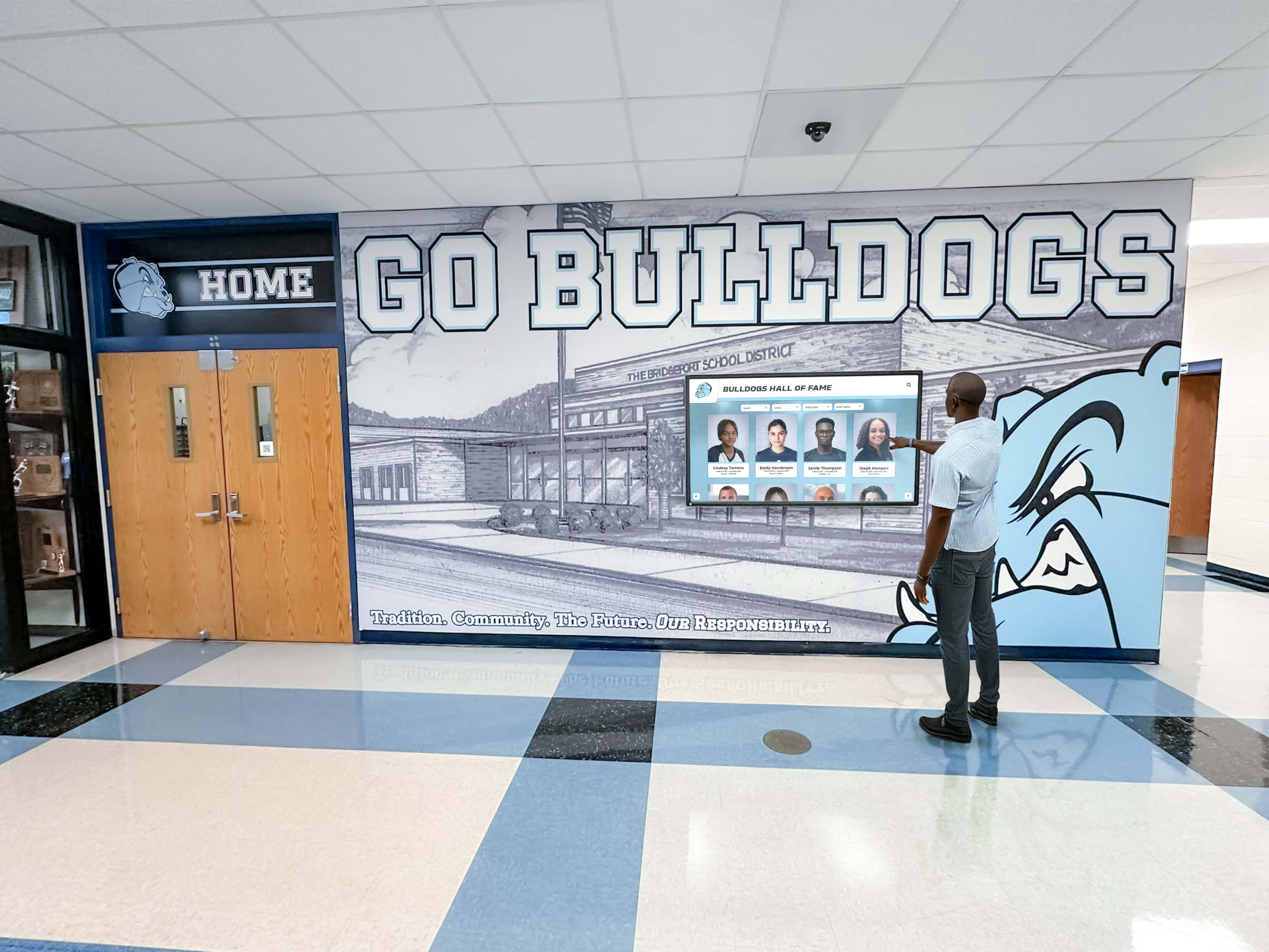
Profile displays make school community members accessible and inspire connection
Implementation Strategies for Comprehensive Recognition Systems
Creating effective multi-purpose displays requires strategic planning and systematic implementation.
Hardware Selection and Placement
Display Size Considerations
- 43"-55" displays work well for narrow hallways or smaller spaces
- 55"-65" displays provide ideal size for most common areas and lobbies
- 65"-75" displays create impressive installations in large entrance areas
- 75"-86" displays maximize visibility in gymnasiums, auditoriums, or large atriums
- Multiple smaller displays may serve better than single large display in some layouts
Optimal Location Selection
- Main entrance lobbies greeting all visitors and setting institutional tone
- Cafeteria or commons areas with natural student gathering
- Library or media center supporting research and discovery
- Athletic facility lobbies connecting sports and broader school culture
- Performing arts spaces celebrating creative achievements
- Administrative areas where prospective families tour
- Hallway intersections with high foot traffic visibility
- Near trophy cases and physical recognition for coordinated display
Installation Considerations
- ADA-compliant mounting heights ensuring accessibility
- Electrical outlet proximity and power supply adequacy
- Network connectivity for content updates (wired or wireless)
- Lighting conditions and glare management
- Security considerations for valuable equipment
- Maintenance access for cleaning and servicing
- Protective measures in high-traffic student areas
Content Management and Organization
Navigation Structure Design Intuitive organization enables easy content discovery:
- Homepage featuring “Today in School History” and current event highlights
- Major category buttons for Events, History, People, and other main sections
- Breadcrumb navigation showing current location within content hierarchy
- Search functionality enabling direct access to specific content
- Filter tools narrowing results by date, category, or other criteria
- “Related Content” suggestions connecting similar materials
- “Most Popular” features highlighting frequently viewed content
Update Schedules and Workflows Systematic approaches ensure current, accurate content:
- Daily updates for current event photos and announcements
- Weekly additions for recent activities and competitions
- Monthly historical content additions expanding timeline coverage
- Quarterly profile updates ensuring current staff and student information
- Annual comprehensive content audits removing outdated material
- Seasonal content highlighting appropriate traditions and annual events
- Role-based responsibilities assigning clear ownership
Quality Control Standards Professional content maintains institutional reputation:
- Photo quality standards ensuring clear, well-composed images
- Consistent formatting across all profile types
- Accuracy verification for dates, names, and historical facts
- Spelling and grammar review before publication
- Appropriate tone and language throughout content
- Accessibility compliance including alt text for images
- Privacy protocol adherence throughout content creation
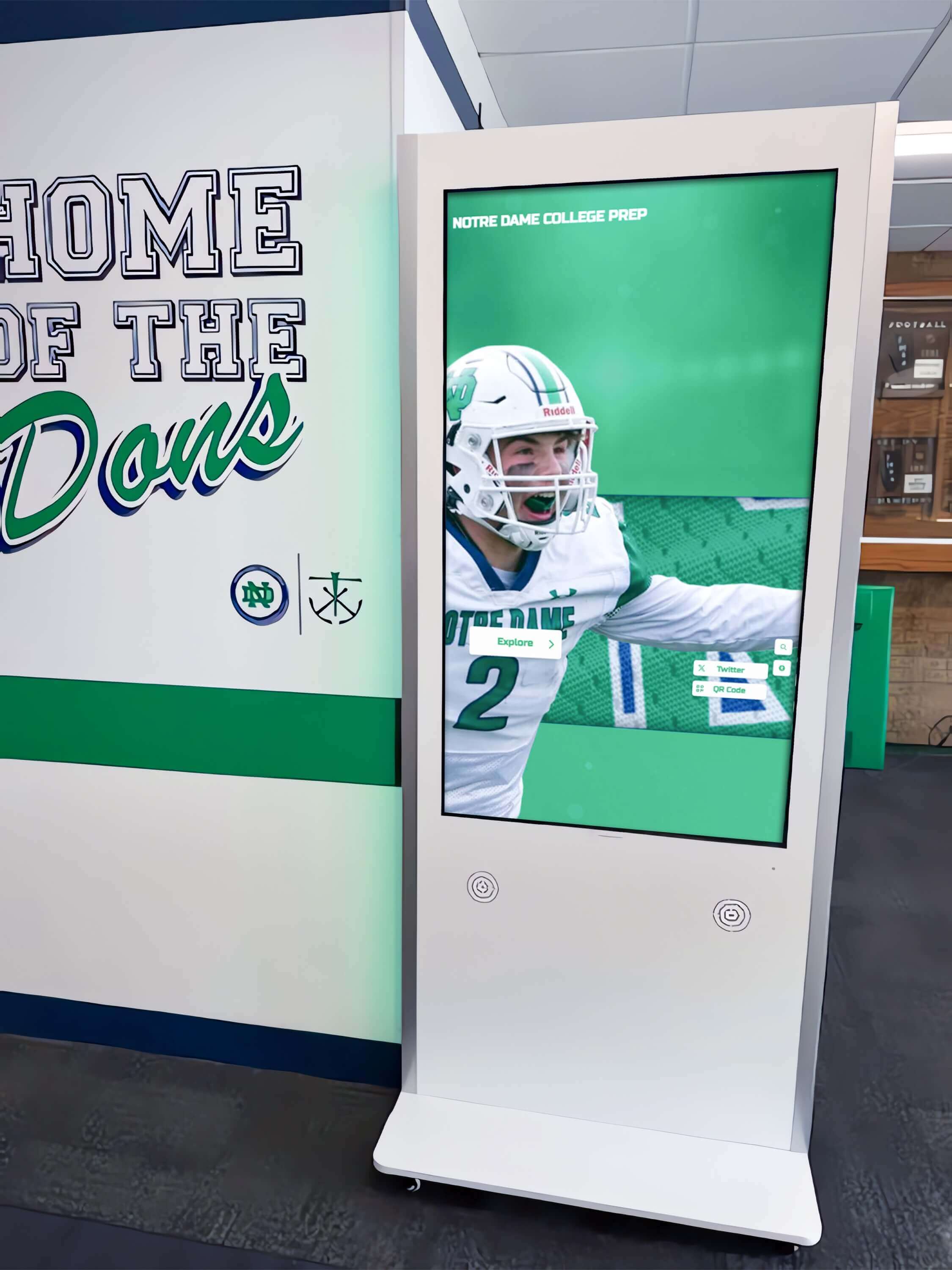
Strategic placement and professional installation maximize display impact and accessibility
Integration with Broader Marketing and Communication
Recognition displays should complement comprehensive communication strategies:
Website Integration
- Same content available on touchscreen displays and school websites
- Mobile-responsive design ensuring smartphone and tablet access
- Social sharing features extending content reach beyond campus
- QR codes on physical displays linking to extended online content
- Search engine optimization making content discoverable
- Analytics tracking engagement across platforms
Social Media Coordination
- Event photo galleries feeding content for social posts
- Historical throwback features leveraging timeline content
- Profile highlights celebrating staff and students
- Content repurposing maximizing creation effort value
- Cross-platform promotion driving traffic to displays and websites
- User-generated content integration when appropriate
Admission and Recruitment Support
- Display content specifically curated for prospective family tours
- Feature reels showing school culture and opportunities
- Statistics and achievement data supporting enrollment messaging
- Student testimonials and experience stories
- Virtual tour integration for remote prospective families
- Alumni success stories demonstrating educational outcomes
Alumni Relations Enhancement
- Historical content driving alumni nostalgia and engagement
- Class reunion support through historical photo access
- Alumni giving campaign integration with recognition
- Mentorship program connection between alumni and students
- Anniversary celebration content coordination
- Alumni event photo galleries post-gathering
Measuring Success and Continuous Improvement
Regular assessment ensures recognition displays achieve intended goals:
Engagement Metrics
Physical Display Analytics
- Total interaction sessions and monthly trends
- Average session duration indicating engagement depth
- Popular content categories revealing interest areas
- Search query analysis showing what visitors seek
- Peak usage times informing content scheduling
- Return user patterns suggesting sustained interest
- Content pathway analysis showing navigation patterns
Web Platform Metrics
- Unique visitors and page views across content types
- Traffic sources revealing how people discover content
- Device types showing access methods
- Geographic distribution of remote visitors
- Social sharing frequency and platform distribution
- Time on page indicating content engagement
- Bounce rates identifying less engaging content
Schools implementing comprehensive digital recognition typically see 800-1,500 monthly interactions on physical displays plus 3,000-8,000 monthly web platform visits.
Stakeholder Feedback
Student Perspectives
- Recognition of themselves and friends in event galleries
- Interest in historical content and school traditions
- Value of staff profiles for personal connection
- Suggestions for additional content or features
- Ease of navigation and content discovery
- Pride in school culture and community
Family Input
- Appreciation for visibility into school experiences
- Frequency of checking web platforms remotely
- Value for prospective family decision-making
- Suggestions for additional profile or event coverage
- Assessment of communication effectiveness
Staff Assessment
- Ease of content management and updates
- Time requirements for ongoing maintenance
- Professional development needs or training gaps
- Content idea generation and planning support
- Recognition of value for recruitment and culture
- Suggestions for enhancement or expansion
Continuous Enhancement
Content Expansion
- Adding historical content filling timeline gaps
- Expanding profile coverage to additional staff categories
- Increasing event documentation frequency and depth
- Creating themed collections around topics of interest
- Developing video content supplementing photos
- Building interactive features increasing engagement
Technology Improvements
- Display hardware upgrades as technology advances
- Software feature additions improving functionality
- Accessibility enhancements ensuring universal access
- Integration improvements connecting platforms
- Mobile app development for anywhere access
- Analytics enhancement for deeper insight
Regular evolution ensures recognition displays remain valuable, current, and central to school culture rather than becoming stagnant installations people stop noticing.
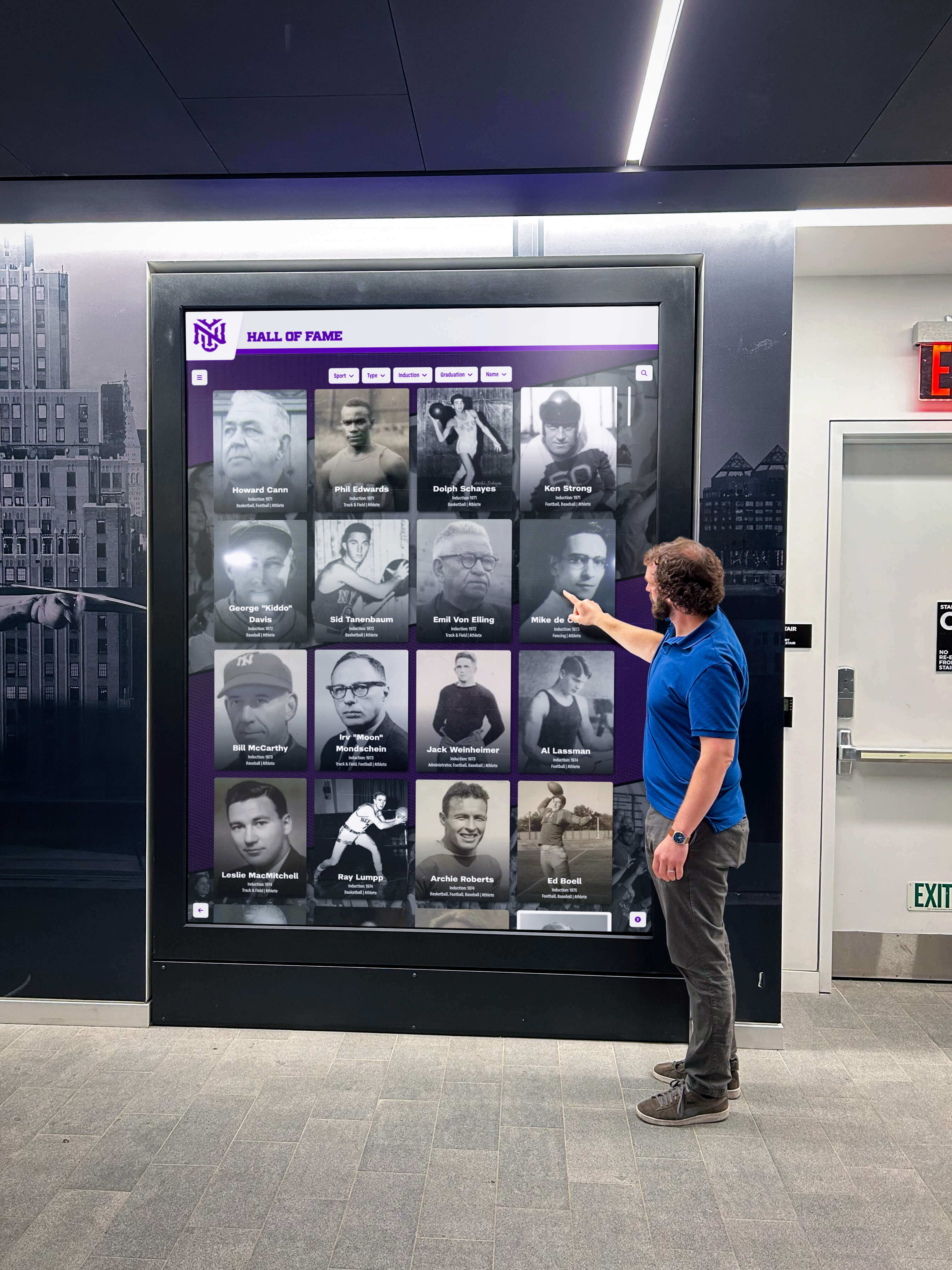
Effective recognition systems create engagement from students, families, and community members
Common Challenges and Solutions
Schools implementing comprehensive recognition systems encounter predictable obstacles:
Challenge: Insufficient Historical Content
Problem: Many schools lack organized archives or comprehensive historical documentation.
Solutions:
- Start with recent history and systematically work backward
- Launch alumni contribution campaigns requesting photos and memories
- Partner with local historical societies and library archives
- Interview long-time staff and community members recording oral histories
- Accept that comprehensive coverage takes time and grows continuously
- Feature what exists rather than delaying until “complete” collection
Challenge: Content Creation Capacity
Problem: Staff already stretched thin struggle to generate ongoing content.
Solutions:
- Implement student journalism or digital media programs creating content
- Develop parent volunteer programs supporting photo documentation
- Create simple submission workflows enabling distributed content creation
- Use automated features like birthday highlights and milestone recognition
- Focus on sustainable practices rather than unsustainable perfection
- Batch content creation during slower periods for scheduled release
Challenge: Privacy and Permission Management
Problem: Navigating photo permissions and privacy concerns feels overwhelming.
Solutions:
- Implement comprehensive photo release policies during enrollment
- Create clear opt-out procedures for families preferring limited inclusion
- Use face-blurring technology when necessary in group settings
- Focus on positive moments captured during public school events
- Document permission practices protecting institution from liability
- Regularly communicate with families about recognition practices
Challenge: Technology Intimidation
Problem: Staff worry they lack technical expertise for display management.
Solutions:
- Select user-friendly platforms designed for non-technical users
- Provide thorough initial training with ongoing support access
- Create clear documentation and quick reference guides
- Start small with limited content then expand as confidence grows
- Assign technology-comfortable staff as internal resources
- Work with solutions designed specifically for schools rather than generic platforms
Challenge: Budget Constraints
Problem: Comprehensive recognition systems require investment schools struggle to afford.
Solutions:
- Phase implementation starting with single display and expanding over time
- Pursue booster club, PTA/PTO, or alumni association funding
- Include displays in capital campaigns and facility improvement fundraising
- Explore grant opportunities from education foundations
- Partner with local businesses for sponsorship support
- Focus on long-term value and cost savings compared to traditional approaches
- Consider naming opportunities for display sponsorship
School fundraising strategies often include recognition display projects due to high visibility and broad community benefit.
Conclusion: Creating Comprehensive School Recognition That Inspires
Schools document countless meaningful moments throughout each academic year—homecoming celebrations, championship victories, academic achievements, performing arts showcases, community service projects, and daily classroom experiences. Yet traditional documentation approaches—yearbooks with limited space, static bulletin boards that become outdated, social media posts that disappear, or websites that go unvisited—fail to preserve and showcase these memories in ways that remain accessible, engaging, and inspiring.
Interactive digital displays transform school recognition by providing unlimited capacity for photo galleries showcasing every event throughout the year, comprehensive historical timelines documenting decades of institutional legacy, and compelling profiles bringing faculty, staff, student leaders, and alumni into focus. These applications accomplish multiple essential goals simultaneously: commemorating history and preserving institutional memory, celebrating current achievement and inspiring excellence, strengthening community connections among students, families, and alumni, and serving as powerful marketing tools for prospective students and families.
The strategies explored in this guide provide comprehensive frameworks for implementing recognition systems that honor the full richness of school experiences. From event galleries that ensure no student achievement goes undocumented to historical timelines that connect current students to decades of tradition, from faculty profiles that humanize educators to alumni spotlights that demonstrate educational outcomes—these approaches create recognition that matters.
Most importantly, digital recognition displays solve the fundamental space and capacity limitations plaguing traditional approaches. Rather than forcing impossible decisions about which moments deserve documentation or which achievements merit visibility, modern touchscreen solutions showcase unlimited content while adding search, multimedia, and interactivity impossible with static physical displays.
Start with recognition approaches your school can implement immediately given available resources, then systematically expand to create comprehensive systems your community deserves. Every event documented, every historical moment preserved, and every community member recognized strengthens the culture, pride, and identity that make your school unique.
Your school’s daily experiences, institutional history, and community members deserve recognition creating lasting impact. With thoughtful planning, appropriate technology, and consistent implementation, you can create displays that commemorate your past, celebrate your present, and inspire your future.
Ready to explore comprehensive school recognition solutions? [See how digital display solutions](https://rocketalumnisolutions.com/?demo=demo&utm_source=organic&utm_medium=seo&utm_content=best-touchscreencom&utm_campaign=site-cta&utm_term=seo"a day in the life" to your entire community.
Sources
- Interactive Board Suggestions | Ideas for School Digital Displays 2026
- Interactive Timeline of School History | Digital Heritage Display Guide 2026
- Historical Timeline Touchscreen | Hardware History & Implementation Guide 2026
- Best School History Software 2026 | Digital Archive & Heritage Management Systems