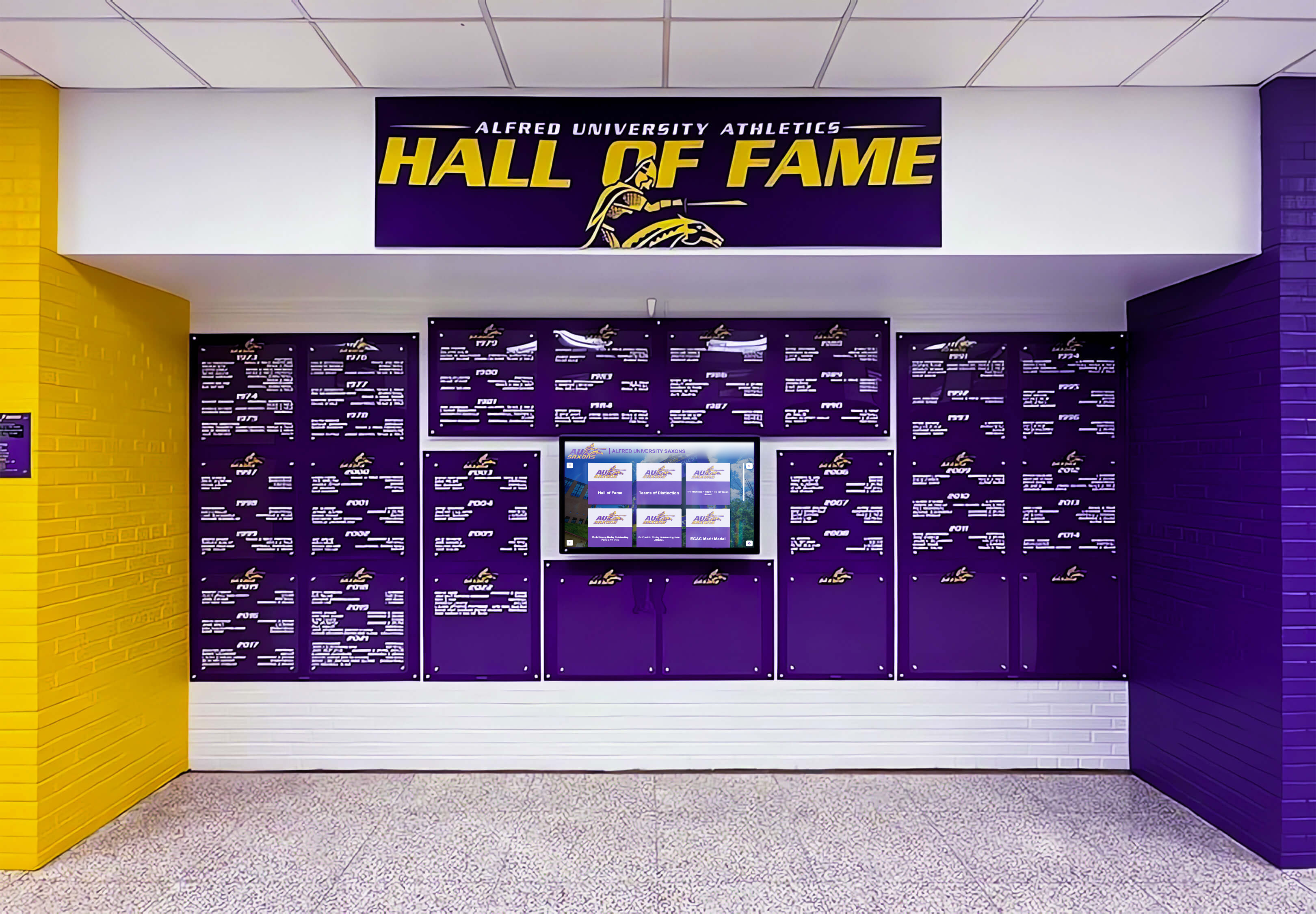
Walk into virtually any high school athletic facility built before 2015, and you’ll find the same scene: glass trophy cases lining hallways, framed photographs faded by sunlight, plaques listing names too small to read from a few feet away, and record boards painted on gymnasium walls that haven’t been updated in years. These displays honor real achievements by real student-athletes—but they fail those athletes by becoming invisible. Visitors walk past without pausing. Current students don’t know who came before them. And when a new champion emerges, adding recognition involves weeks of fabrication orders, installation scheduling, and budget approval cycles.
Athletic hall of fame display software transforms this recognition landscape. Digital platforms replace static plaques with interactive experiences that engage visitors, update instantly, and tell the full story of athletic excellence through photos, videos, statistics, and biographical profiles. For high school athletic departments evaluating these systems, the challenge isn’t finding software—it’s identifying which solution genuinely matches your department’s needs, budget, technical capacity, and long-term goals.
This buyer’s guide examines the critical features, evaluation criteria, pricing considerations, and vendor landscape for athletic hall of fame display software, with specific focus on the high school context where staff resources are limited and community engagement is paramount.
Athletic directors overseeing digital recognition programs consistently report that the right software reduces administrative workload while dramatically increasing community engagement with achievement displays. The wrong software, however, creates ongoing frustration—requiring constant technical support, limiting content flexibility, or failing to integrate with the physical installation. Understanding the distinction between adequate and exceptional software before purchase saves athletic departments from costly mid-stream vendor changes.

Modern athletic hall of fame display software enables intuitive browsing of athlete profiles, championship records, and historical achievements through touchscreen interfaces
Why High School Athletic Departments Are Moving to Digital Hall of Fame Software
The shift from physical recognition displays to software-driven digital systems reflects practical operational realities facing athletic departments—not merely aesthetic preference or trend-chasing.
The Administrative Burden of Physical Displays
Physical halls of fame require ongoing financial investment and logistical coordination that compounds over time. Each new inductee requires custom fabrication—plaques, panels, photo printing, frame installation—that typically costs hundreds of dollars per individual and requires weeks of lead time. Athletic directors managing established programs with annual induction classes face recurring expenditures that strain booster budgets and divert administrative attention from program operations.
Record boards present separate challenges. Painted records become permanent fixtures requiring complete repainting when records are broken, while static displays cannot accommodate statistical categories schools begin tracking after initial installation. Thoughtful school achievement recognition strategies that build on digital infrastructure eliminate these compounding logistics while preserving the community significance that physical recognition conveyed.
The Engagement Problem with Static Displays
Static displays share a fundamental limitation: they cannot respond to visitor interest. A trophy case showing 40 years of championship teams presents the same information to every visitor regardless of their connection to specific eras, sports, or individuals. A parent attending their first game has no way to explore the school’s athletic heritage beyond what happens to be visible through glass.
Digital hall of fame software solves this through self-directed exploration. Visitors search for specific athletes, filter by sport or graduation year, view video highlights alongside career statistics, and follow threads of athletic history that are personally relevant. Touchscreen digital hall of fame wall displays transform a passive decoration into an interactive experience—one that motivates return visits and generates conversation that static cases never could.
Recruitment and Community Impact
Athletic departments increasingly recognize that digital recognition displays serve multiple stakeholders simultaneously. For current student-athletes, visible recognition of those who came before creates aspiration and institutional pride. For recruits visiting campus, a comprehensive, professionally presented hall of fame communicates program investment and tradition. For alumni and community supporters, interactive recognition displays create emotional connections that motivate continued engagement and financial support.
Core Features Every Athletic Hall of Fame Display Software Should Include
Not all platforms marketed as “athletic display software” provide the specialized capabilities high school programs require. Evaluating features against actual operational needs prevents purchasing systems that require extensive workarounds or professional customization to function as intended.
Effective athletic hall of fame displays integrate digital software with physical recognition elements to create comprehensive, layered recognition environments
Athlete Profile Structure
The software’s data model should accommodate all information types relevant to athletic recognition: biographical details, graduation year, sport and position, career statistics, individual honors (all-state, all-conference, scholar-athlete designations), team championships, college destination, and professional career notes for notable alumni. Systems with rigid profile templates force administrators to squeeze athletic data into inappropriate categories or omit important context entirely.
Understanding practical hall of fame program ideas before software selection helps athletic departments establish consistent nomination frameworks that align with available platform structures—preventing the frustration of discovering incompatibilities after contracts are signed.
Media Integration Capabilities
High school athletics generate rich media archives: yearbook photos, action photographs, game footage, championship celebration videos, and news coverage. Software should accept common image formats (JPEG, PNG, WebP) and video files without requiring external hosting arrangements, while providing intuitive upload and management tools for administrators who aren’t digital media specialists. Cloud storage included within the platform fee—rather than requiring schools to arrange separate hosting—simplifies both content management and long-term archiving.
Robust digital trophy and media preservation practices ensure that decades of athletic achievement remain accessible and well-organized within the platform, so inductee records don’t degrade or become orphaned as staff turns over.
Content Management Without Technical Barriers
Athletic directors and administrative assistants—not IT departments—maintain hall of fame content in most high school contexts. Software requiring command-line access, database administration tools, or specialized technical knowledge creates dependency on district IT resources that may not be readily available for routine content tasks. Cloud-based systems with browser-based content management consistently outperform locally-installed alternatives for high school deployments because updates can happen from any computer, at any time, without on-site hardware access.
Search and Navigation Architecture
Visitors arriving at a touchscreen hall of fame typically have specific individuals or categories in mind. Effective search functionality enables:
- Full-name search with tolerance for common spelling variations
- Filtering by sport, graduation year range, honor type, and achievement category
- Team championship browsing with individual roster member access
- Related content connections linking athletes to teammates and contemporaries
Systems relying solely on alphabetical browsing without search capabilities frustrate visitors and reduce meaningful engagement time. For programs integrating multiple recognition categories—varsity letters, formal hall of fame induction, team championship records—software that connects these threads creates a more comprehensive recognition ecosystem.
ADA Compliance and Accessibility
Public-facing digital displays in educational settings must meet ADA accessibility requirements. The WCAG 2.2 AA accessibility compliance standards for interactive displays include screen contrast ratios, font sizes readable at typical viewing distances without requiring touchscreen interaction, navigation pathways accessible without color differentiation as the sole distinction, and hardware positioning compatible with wheelchair access (typically 15–48 inches for operable parts). Software vendors should provide documentation of accessibility compliance and testing methodology rather than simply asserting compatibility.
Comparing Athletic Hall of Fame Display Software Solutions
Rocket Alumni Solutions
Rocket Alumni Solutions provides purpose-built athletic hall of fame display software specifically designed for educational institutions. Their platform combines touchscreen software with content management tools optimized for the athletic recognition use case from the ground up.
Core Strengths for Athletic Departments
Pre-built athlete profile templates are designed around high school and college athletic recognition needs—not adapted from generic content management frameworks. Cloud-based content management enables updates from any browser without on-site hardware access. Multi-sport architecture supports simultaneous display of all program sports within a single unified platform. QR code integration enables mobile viewing alongside physical touchscreen displays, extending the recognition experience to visitors’ personal devices. Unlimited inductee capacity means no per-record fees as programs grow over years of operation.
Why It Fits High School Athletic Contexts
Rocket’s system architecture reflects the operational reality of athletic departments: content updates need to be achievable by non-technical staff, displays need to function reliably without constant IT involvement, and the visual presentation needs to reflect program pride rather than generic software templates. The platform has been deployed across hundreds of high school and university athletic facilities, providing practical evidence of real-world performance in diverse installation environments.
Pricing Model
Rocket Alumni Solutions operates on a one-time licensing model rather than ongoing subscription fees, which significantly reduces total cost of ownership for schools maintaining displays across multi-year periods. This model particularly benefits athletic departments that plan permanent installations rather than temporary or rotating displays.
General Digital Signage Platforms
General-purpose digital signage platforms—including Rise Vision, ScreenCloud, Raydiant, and similar systems—offer athletic display functionality as one application among many use cases.
Potential Advantages
Lower initial cost for basic content display makes these platforms attractive for departments with minimal budgets. Broad template libraries covering varied content types provide flexibility for schools that want to use a single platform across multiple display applications (cafeteria menus, event announcements, and hall of fame recognition from one system). Familiar interfaces for IT departments managing multiple signage applications reduce training needs for technical staff.
Limitations in Athletic Hall of Fame Applications
General signage platforms lack the purpose-built athletic profile structure that high school programs require. Creating individual athlete presentations requires building custom templates for each inductee—a process that works for initial setup but creates significant administrative burden as programs grow and staff turns over. A new athletic director inheriting a hall of fame built in a general signage platform faces a far steeper learning curve than one inheriting a purpose-built recognition system.
Search functionality in general platforms typically reflects their primary use case—wayfinding or announcement display—rather than the biographical browsing experience relevant to hall of fame applications. Visitors cannot filter by sport, search across statistical records, or navigate championship rosters without extensive platform customization that goes well beyond default capabilities.
Pricing Considerations
Most general signage platforms operate on monthly or annual subscription models. At scale—managing growing inductee databases across multi-year periods—subscription costs accumulate substantially compared to one-time licensing arrangements designed for permanent institutional displays.
For a comprehensive look at how digital signage technology applies across different school and organizational environments, the touch screen digital signage guide for schools and organizations covers implementation considerations, hardware selection, and content management strategies across the broader category of institutional display technology.
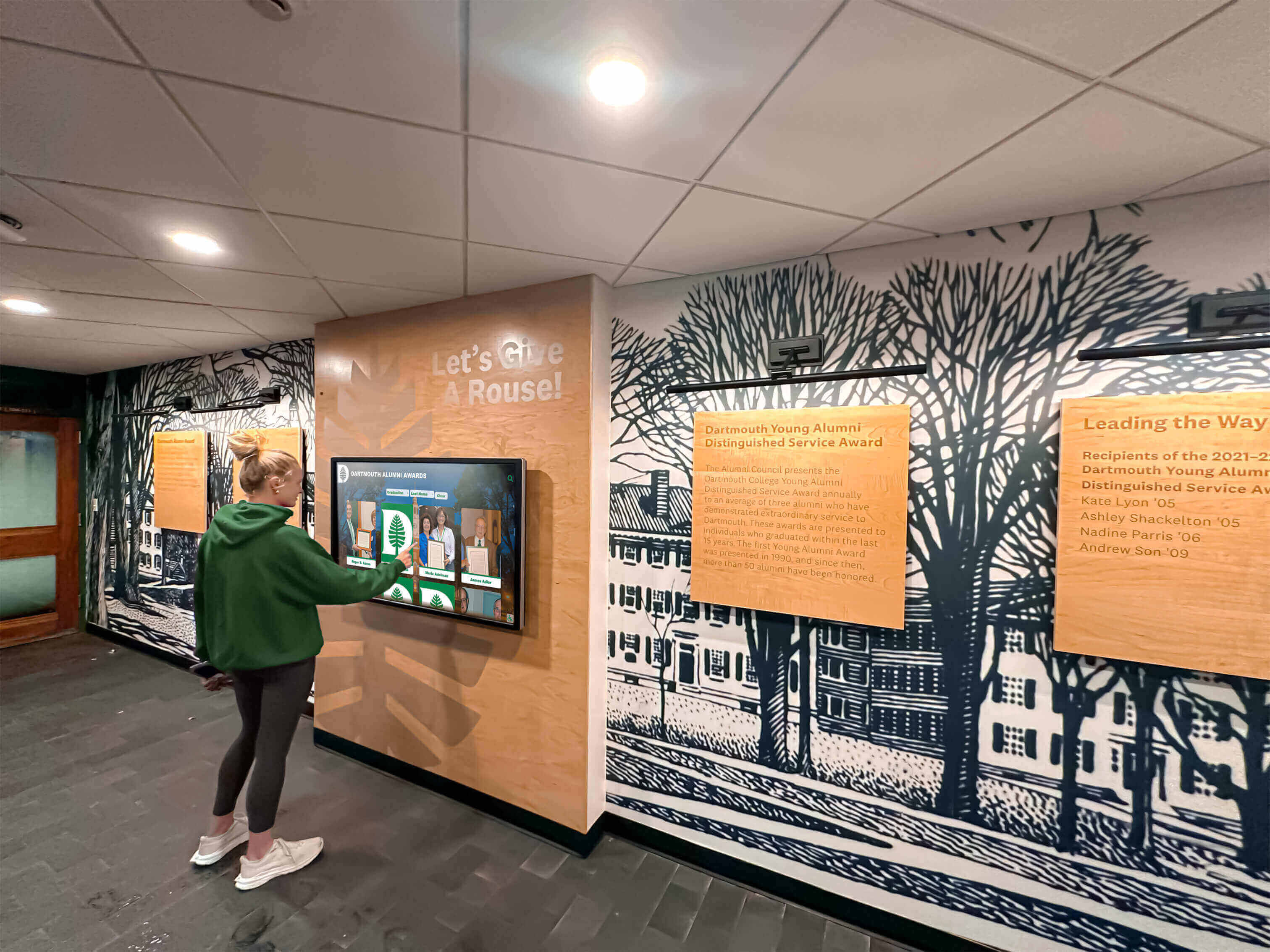
Purpose-built athletic hall of fame display software presents athlete profiles, career statistics, and championship records in intuitive, staff-manageable interfaces that students and visitors navigate independently
Vendor Evaluation Criteria for High School Athletic Departments
Selecting athletic hall of fame display software requires evaluating vendors across dimensions well beyond feature checklists. The operational context of high school athletic departments—limited IT support, variable staff tenure, community-facing installations, and budget accountability requirements—makes vendor partnership quality as important as software capability.
Support Structure and Response Time
High school athletic departments operate without dedicated IT staff in most cases. When touchscreen displays malfunction before a major event—a homecoming hall of fame induction ceremony, a state championship celebration, or a facility tour for prospective student-athletes—vendor support response time determines whether the situation creates community embarrassment or gets resolved quietly before anyone notices.
Key support evaluation questions:
- What support hours are available (business hours only versus extended or weekend coverage)?
- What is the primary support channel (phone, live chat, email ticket system)?
- What is the documented average response time for critical technical issues?
- Is on-site support available if remote troubleshooting fails?
- What hardware warranty coverage and replacement timelines apply?
Requesting references from schools with similar enrollment and staffing profiles—not just flagship university installations—provides the most relevant evidence of support quality in contexts comparable to your department’s needs.
Content Migration and Onboarding Process
Most high schools transitioning to digital halls of fame have existing records requiring migration: paper nomination files, spreadsheet inductee lists, photograph archives, and championship records compiled across decades of program history. Software vendors vary significantly in the onboarding support they provide.
Questions to ask prospective vendors:
- Does the vendor provide data migration assistance, or is self-service import required?
- What file formats does the platform accept for bulk data import?
- Is there a dedicated onboarding contact assigned, or does setup go through a general support queue?
- What is the typical timeline from contract signing to live display?
- What happens when original photographs only exist as physical prints that require digitization?
Vendors who have supported hundreds of similar implementations have established migration workflows that compress what would otherwise be months of data entry into manageable onboarding processes.
Hardware Partnership and Integration
Software cannot function without compatible hardware. Vendors offering integrated software and hardware solutions provide single-point accountability when issues arise—rather than creating situations where software vendors and hardware suppliers blame each other while the display sits dark.
A thorough athletic records digital display guide should address not only software features but the hardware specifications that determine whether content displays correctly and reliably across multi-year operational periods.
Key hardware evaluation considerations:
- Recommended display sizes and touch technology specifications for the intended installation environment
- Mounting hardware requirements and structural prerequisites
- Network connectivity requirements (wired versus wireless, bandwidth specifications for video content)
- Operating temperature tolerance for gymnasium environments
- Manufacturer warranty terms and extended service contract availability
Pricing Structures and Total Cost of Ownership
Athletic hall of fame display software pricing varies considerably based on licensing model, hardware inclusion, content capacity, and support tier. Budget comparisons that focus exclusively on initial purchase price consistently underestimate the full financial commitment.
One-Time Licensing vs. Subscription Models
One-Time Licensing platforms charging a single upfront fee for perpetual software access provide cost predictability across time. Initial investment runs higher, but schools avoid ongoing subscription obligations that must be renewed through annual budget cycles. For permanent installations intended to serve the athletic department for a decade or more, one-time licensing typically provides superior long-term value.
Subscription Pricing reduces initial capital outlay but creates ongoing operating expenses. For programs intending to maintain displays indefinitely, multi-year subscription costs typically exceed equivalent one-time licensing fees within three to five years—and subscription costs often increase over time as vendor pricing adjusts.
Calculating Total Cost of Ownership
Budget comparisons should account for all costs across the expected display lifespan:
- Software licensing (one-time or cumulative recurring fees over expected display life)
- Hardware purchase or lease costs
- Installation and mounting labor
- Content migration and initial setup assistance
- Annual support or maintenance fees
- Content update labor over time (internal staff hours multiplied by estimated annual update volume)
- Hardware replacement timeline (commercial-grade touchscreens typically last 5–7 years)
- Potential customization costs for features not included in base platform pricing
Establishing a five-year total cost model before comparing vendors prevents the common mistake of selecting a lower-cost platform that becomes more expensive than purpose-built alternatives once recurring fees and customization costs are factored in.
Implementation Planning for Athletic Hall of Fame Displays
Successful athletic hall of fame software deployments follow consistent planning principles regardless of vendor selection. Departments that invest time in pre-implementation planning consistently report faster deployment timelines and smoother launches than those who treat software selection as the final decision before going live.
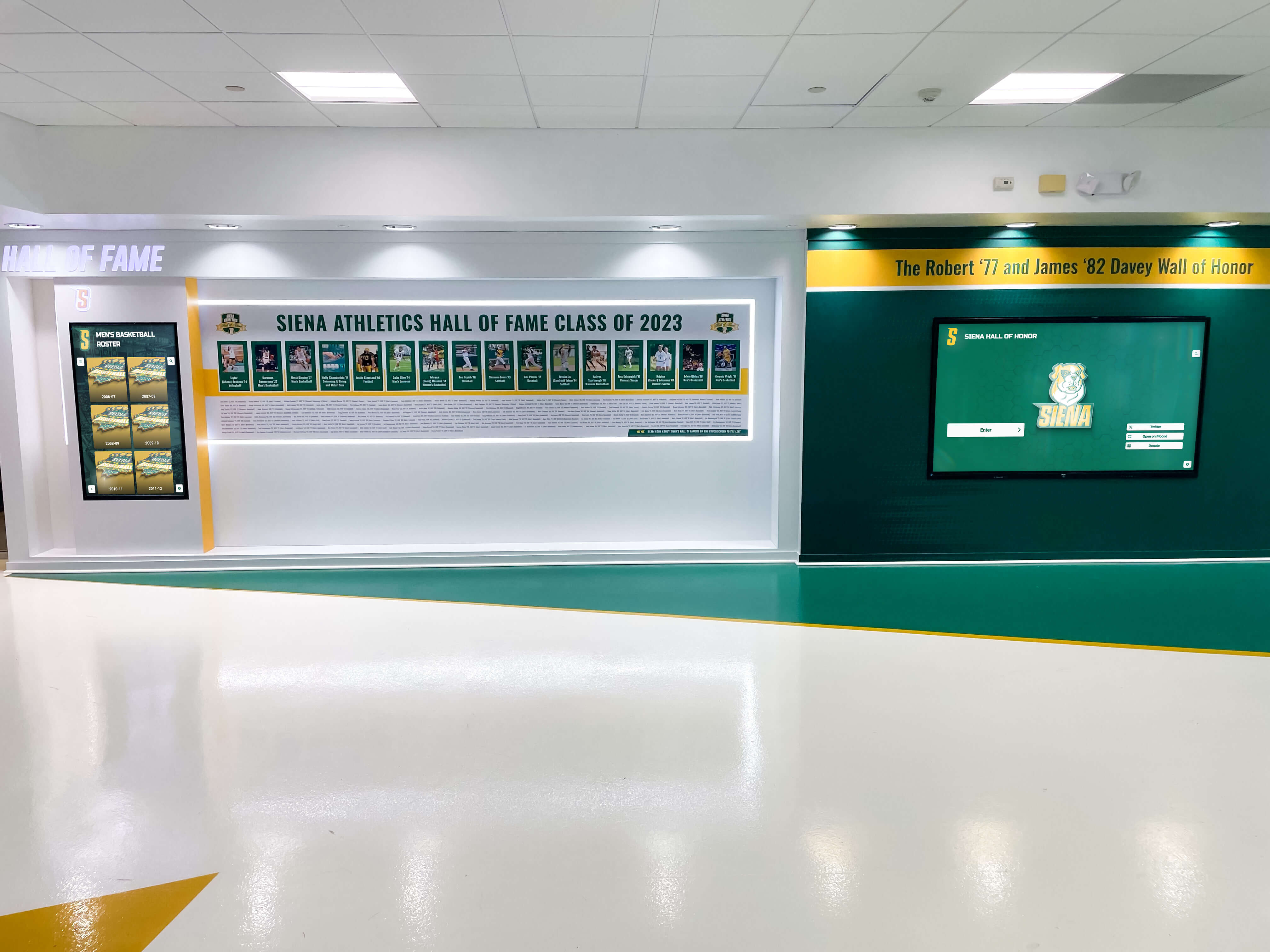
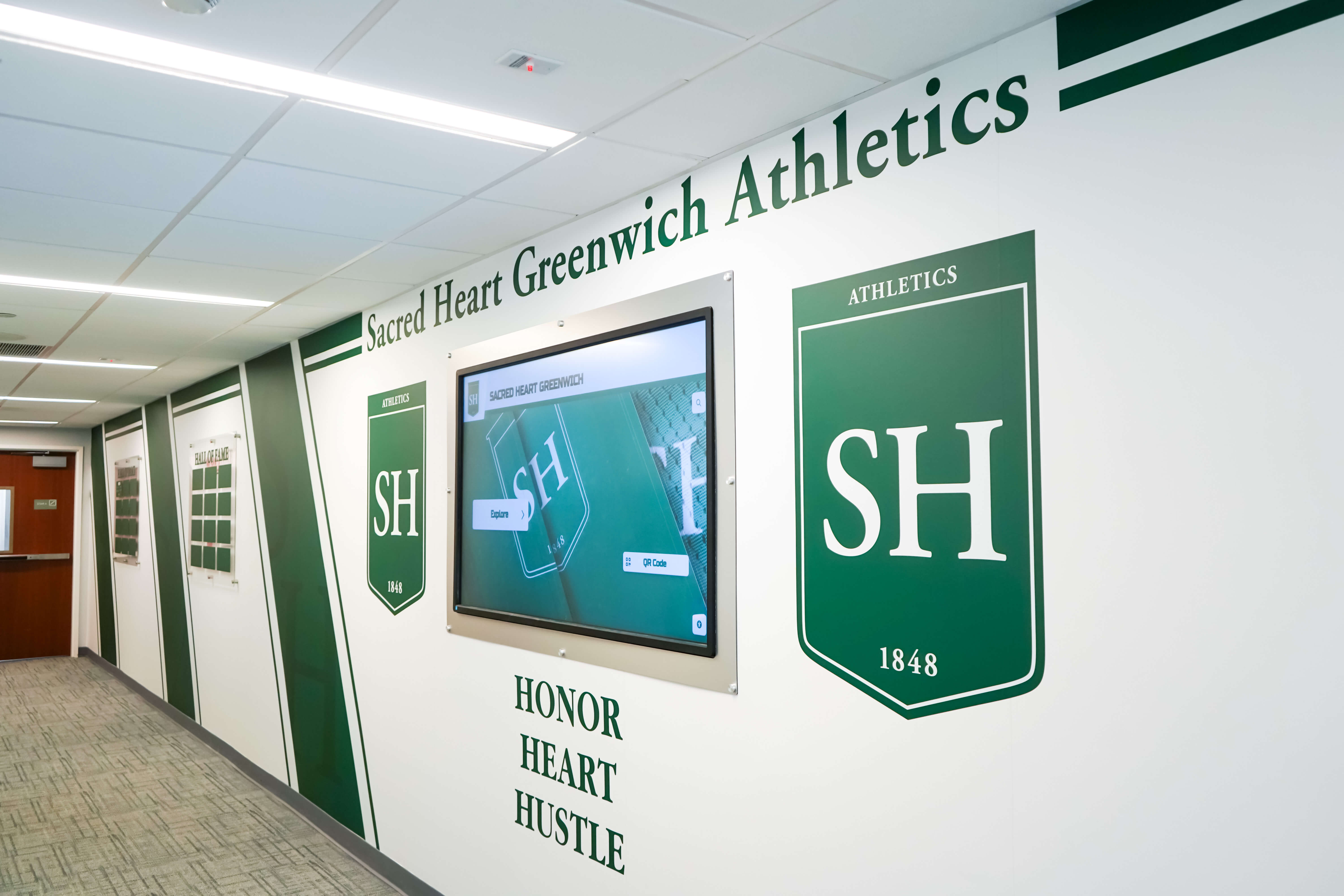
Effective athletic hall of fame implementations integrate digital touchscreens with physical elements like murals, shields, and display cases to create comprehensive recognition environments
Content Inventory Before Vendor Selection
Athletic departments that inventory existing recognition records before evaluating software make better vendor decisions. Key inventory questions include:
- How many current hall of fame inductees require digital profiles?
- What percentage of inductees have photographs available in digital format?
- How many sports and how many years of records require display?
- Are championship team rosters documented, or will reconstruction from archives be required?
- What media assets exist beyond photographs—game footage, newspaper articles, statistical spreadsheets?
Content scope directly influences software selection. A program with 60 inductees and limited media assets has fundamentally different requirements than one with 350 inductees and video archives stretching back decades. Presenting accurate scope information during vendor evaluation conversations produces more accurate proposals and realistic implementation timelines.
Stakeholder Alignment Process
Athletic hall of fame displays serve multiple stakeholders whose needs should inform software selection. Before finalizing vendor choice, gather input from:
- Athletic director and coaching staff regarding recognition categories and priority sport histories
- School administration concerning budget parameters and approval processes
- IT coordinator on network infrastructure, security policies, and ongoing support expectations
- Booster club leadership about fundraising integration and donor acknowledgment features
- Alumni relations contacts on how displays support broader alumni engagement objectives
Schools that have undergone consolidations or district mergers face particular challenges preserving the recognition history of predecessor institutions. Understanding how schools preserve community identity through institutional transitions informs decisions about recognition platform flexibility and content architecture that must accommodate multiple institutional heritages within a unified display system.
Physical Installation Coordination
Physical installation of athletic hall of fame displays involves coordination between software vendors, hardware installers, facility managers, and often district facilities departments. Initiating these conversations during software evaluation rather than after contract signing prevents delays that push installation dates past intended launch events.
Key installation coordination topics:
- Wall structural requirements for mounting hardware weight and dimensions
- Electrical outlet placement and capacity for display and computing components
- Network infrastructure (wired drops or wireless access point placement near display location)
- Conduit routing for cable management and aesthetic presentation
- ADA-compliant positioning heights and approach clearance zones
Making the Budget Case to Administration
Athletic directors presenting digital hall of fame software proposals to administration and school boards strengthen their cases by connecting investment to outcomes that resonate with decision-makers beyond athletic programs.
Community and Alumni Engagement Arguments
Visitor interaction data from touchscreen displays provides measurable engagement metrics unavailable with physical cases—interaction counts, session lengths, most-searched athletes, and time-of-day usage patterns. Media coverage of innovative facility features generates positive institutional visibility. Alumni engagement with recognition displays correlates with attendance at booster events and participation in giving campaigns.
Operational Efficiency Arguments
Elimination of recurring fabrication costs for plaques, printing, and physical installation delivers ongoing savings that partially offset software investment. Staff time savings from browser-based content updates versus coordinating physical production workflows are real but often underestimated in initial budget analyses. A single digital platform consolidating multiple recognition categories previously requiring separate physical installations provides both cost efficiency and visual coherence.
Facility Enhancement Arguments
Professional digital presentation strengthens recruiting conversations with prospective student-athletes who compare facilities across competing programs. Modernized facility aesthetics signal program investment and administrative commitment that physical trophy cases cannot communicate as effectively. Digital displays create opportunities for sponsorship recognition—naming rights for display sections, sponsor acknowledgment alongside records—that physical cases cannot accommodate.
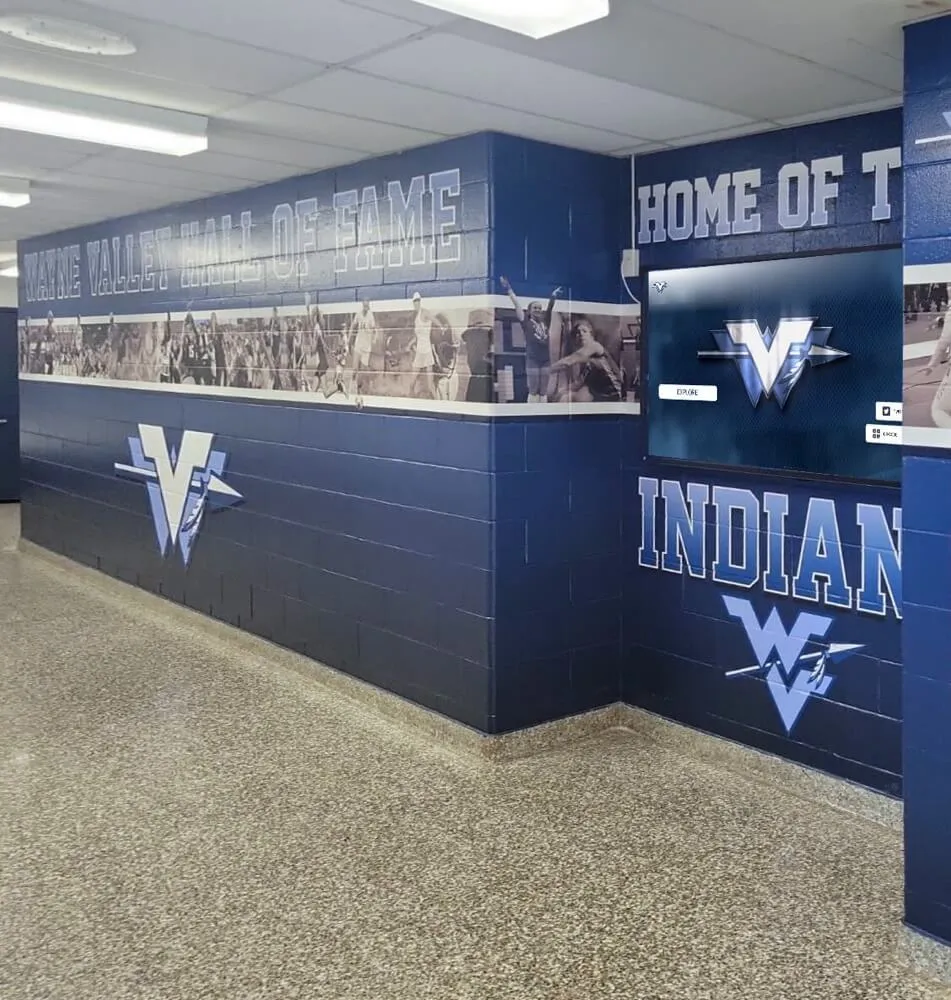
Digital hall of fame software transforms athletic hallways into engaging heritage destinations that serve current students, alumni, and community visitors across daily use
Selecting the Right Athletic Hall of Fame Display Software
High school athletic departments evaluating software face a genuine choice between purpose-built athletic recognition platforms and general digital signage solutions adapted for recognition use cases. Purpose-built systems—designed from the ground up for the specific requirements of athletic halls of fame, record boards, and achievement recognition programs—consistently outperform general platforms in the dimensions that matter most for long-term success: ease of content management for non-technical staff, search and navigation functionality for visitors, and administrative sustainability as inductee databases grow through annual induction cycles.
The vendor evaluation process should weight support structure, onboarding assistance, and documented deployment experience in high school athletic environments alongside feature comparisons. Software that functions perfectly in controlled demonstrations but requires ongoing technical intervention during actual operation creates more problems than it solves for understaffed athletic departments accountable to community audiences.
Budget planning should account for total cost of ownership across the display’s full operational lifespan rather than focusing exclusively on initial purchase price. One-time licensing models typically provide superior long-term value compared to subscription arrangements for programs maintaining permanent recognition displays that serve the community for a decade or more.
High school athletic departments ready to move from static trophy cases to dynamic digital recognition experiences benefit most from connecting with vendors who specialize in educational athletic facility installations—where practical deployment knowledge, purpose-built software architecture, and experience with school operational contexts combine to produce implementations that communities engage with and departments can sustain.
Ready to transform your athletic department’s recognition program? Explore Rocket Alumni Solutions to see how purpose-built touchscreen hall of fame software—combined with professional display hardware and dedicated implementation support—helps high school athletic departments honor their heritage and engage their communities through interactive digital recognition experiences designed specifically for educational institutions.