Every spring, high schools across the country hold signing ceremonies where student-athletes publicly commit to college programs. Yet another group of determined students — those accepting Army ROTC scholarships — often receives far less ceremony despite making one of the most significant commitments a young person can make. Army ROTC (Reserve Officers’ Training Corps) is the nation’s largest officer-producing program, commissioning thousands of second lieutenants annually from college campuses. For high school students with the drive and academic record to earn ROTC scholarships, the journey to commissioning begins well before freshman orientation.
This guide explains how Army ROTC works for high school students, what the scholarship process looks like, and — critically — how schools can build meaningful recognition traditions that honor cadets choosing this demanding, honorable path to college and service.
Army ROTC represents a distinct commitment unlike any other college program choice. Students who earn ROTC scholarships are not simply choosing a major or a club — they are agreeing to serve as commissioned officers in the U.S. Army, Army Reserve, or Army National Guard upon graduation. Understanding this commitment helps schools design recognition that reflects its true weight.
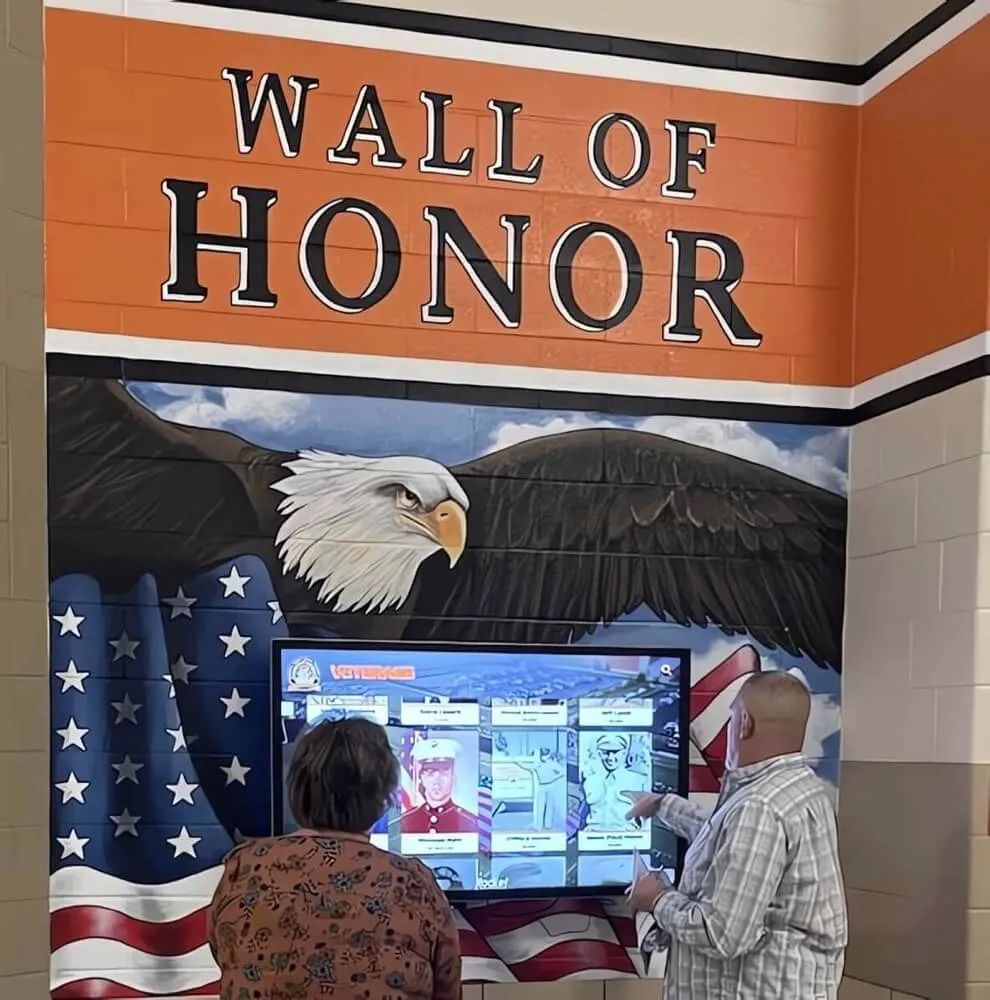
Schools increasingly create dedicated honor wall spaces recognizing students who commit to military service through programs like Army ROTC
What Is Army ROTC? The Program High School Students Are Preparing For
Army ROTC operates at more than 1,000 college campuses across the United States, including partner school arrangements extending reach to thousands of additional institutions. Students enrolled in ROTC take military science courses alongside their regular college curriculum, participate in leadership laboratories and field training exercises, and upon graduation receive a commission as a Second Lieutenant in the United States Army.
The program produces a substantial portion of the Army’s commissioned officer corps annually, making it the primary college pathway for graduates seeking officer careers in the Army, Army Reserve, or Army National Guard.
Key Components of Army ROTC
Military Science Coursework
ROTC students complete a four-year sequence of military science courses covering:
- Leadership theory and practical application
- Military tactics and operations planning
- Land navigation and field craft
- Army history, customs, and traditions
- Ethics and officership standards
- Physical fitness requirements and training methodology
Leadership Laboratory
Beyond classroom instruction, cadets participate in weekly leadership labs applying academic concepts through practical exercises, team challenges, and hands-on scenarios where they rotate through leadership and subordinate roles.
Advanced Camp
Between junior and senior year of college, all ROTC cadets attend a month-long leadership assessment at Fort Knox, Kentucky, where Army evaluators rate performance — determining commissioning eligibility and informing branch and assignment preferences.
Upon Graduation
Students who complete all ROTC requirements receive a commission as a Second Lieutenant and serve as active duty officers, Reserve officers, or National Guard officers depending on scholarship type and Army needs at commissioning.
Army ROTC vs. JROTC: The Crucial Distinction
A common source of confusion involves distinguishing Army ROTC from JROTC (Junior Reserve Officers’ Training Corps). These programs share similar names and military connections but serve entirely different purposes.
Understanding the full JROTC ranks and program structure reveals a citizenship development program for high school students in grades 9–12 that carries no military obligation whatsoever. JROTC focuses on leadership and civic development, welcomes all students regardless of future military interest, and operates across Army, Navy, Air Force, Marine Corps, and Coast Guard branches at more than 3,500 schools nationwide.
Army ROTC, by contrast, is a college-level program that does produce commissioned military officers. Students who accept ROTC scholarships incur a commitment to serve as Army officers following graduation. This distinction matters enormously for students, parents, and school counselors helping students navigate both programs.
The relationship between the programs is meaningful and intentional: JROTC participants gain genuine competitive advantages when applying for Army ROTC scholarships, and many successful ROTC scholarship recipients come directly through high school JROTC pipelines. However, JROTC participation is never required for Army ROTC eligibility.
How High School Students Access Army ROTC Scholarships
The Army ROTC scholarship competition — officially called the Army ROTC High School Scholarship Program (HSSP) — represents the most common pathway connecting high school achievement to college Army ROTC enrollment.
Army ROTC Scholarship Overview
Competitive Army ROTC scholarships provide:
- Full tuition and mandatory fees at participating institutions
- A monthly living stipend for personal expenses
- An annual book allowance supporting academic success
- A service obligation to serve as an Army officer following graduation
Scholarship types range from two-year to four-year awards, with four-year scholarships representing the most competitive and prestigious category available to high school seniors.
Application Timeline for High School Students
Junior Year (11th Grade): Preparation Phase
- Research Army ROTC programs at colleges of interest and confirm host program locations
- Build physical fitness to meet Army assessment standards
- Achieve target SAT/ACT scores meeting scholarship minimums
- Identify recommendation letter writers with specific knowledge of leadership qualities
- Begin scholarship application portal registration in spring semester
Senior Year (12th Grade): Application and Decision Phase
- Complete and submit scholarship applications (deadlines typically span October through January)
- Interview with Army ROTC scholarship selection boards
- Receive scholarship notifications (awards often arrive late fall through spring)
- Commit to a scholarship and a college program
- Celebrate the commitment — this is the moment schools should recognize publicly
Students who receive Army ROTC scholarships have competed in a rigorous national selection process evaluating academic achievement, physical fitness, leadership experience, and demonstrated commitment to service. The achievement warrants recognition equivalent to any major college scholarship announcement.
Selection Criteria for Army ROTC Scholarships
Army ROTC scholarship boards evaluate applicants across multiple dimensions simultaneously:
Academic Performance
- High school GPA demonstrating consistent academic rigor
- SAT/ACT scores meeting Army minimums
- Rigor of curriculum including AP, honors, and dual-enrollment courses
- Sustained academic effort across subjects
Physical Fitness
- Performance on Army physical fitness assessment standards
- Sports participation and physical activity history
- Overall conditioning and demonstrated fitness trajectory
Leadership Experience
- Student government, athletics, clubs, and community organizations
- JROTC participation (receives explicit bonus consideration in the selection formula)
- Employment and volunteer leadership positions
- Recognition received for leadership and community achievement
Character Assessment
- Letters of recommendation from coaches, teachers, and counselors
- Personal statement and interview performance
- Evidence of integrity, motivation, and service commitment
Students who earn Army ROTC scholarships typically demonstrate exceptional performance across all these dimensions simultaneously — representing exactly the type of multi-dimensional excellence schools should publicly recognize.

Recognition displays that track students from JROTC participation through ROTC scholarship acceptance tell powerful leadership development stories worth preserving permanently
The JROTC Pipeline to Army ROTC: How High Schools Feed College Programs
While Army ROTC is a college program, high schools with JROTC units play an essential role in preparing students for ROTC success. Understanding this pipeline helps administrators appreciate why recognizing ROTC-bound cadets during high school matters far beyond symbolic gestures.
How JROTC Prepares Students for ROTC Success
JROTC provides foundational preparation directly relevant to Army ROTC performance:
Military Knowledge and Culture
JROTC students arrive at college ROTC already familiar with rank structures, chain of command concepts, drill and ceremony procedures, basic land navigation, and physical fitness standards aligned with Army expectations. This allows former JROTC students to focus on advanced leadership development rather than basic military orientation during freshman year — giving them a meaningful head start on peers without military background.
Leadership Experience
JROTC cadets who held leadership positions — squad leader, platoon leader, battalion commander — arrive at college ROTC with documented, practical supervisory experience. This distinguishes them in ROTC leadership assessments and positions them for early leadership opportunities within their college battalion from day one.
Scholarship Bonus Points
The Army explicitly recognizes JROTC participation in the scholarship competition, providing bonus points in the selection scoring formula for JROTC graduates. This competitive advantage translates to meaningful differences in scholarship award likelihood — making JROTC experience genuinely valuable for students considering college ROTC pathways.
Supporting the JROTC-to-ROTC Transition
High schools with strong JROTC programs can actively support students pursuing Army ROTC by:
- Providing JROTC instructors dedicated time to counsel students about ROTC scholarship opportunities and timelines
- Hosting college ROTC program representatives for informational visits with junior and senior cadets
- Connecting JROTC seniors with current ROTC cadets at local colleges as mentors and guides
- Recognizing Army ROTC scholarship recipients alongside other senior achievements at school-wide events
- Tracking JROTC alumni who commission as Army officers and sharing their stories with current cadets
Recognizing alumni digitally gives schools practical tools for maintaining alumni recognition systems that follow graduates into their post-secondary paths — including military service — creating the continuous narrative that connects current cadets to the school’s service legacy.
How Schools Can Honor Cadets Who Commit to Army ROTC
Recognition of Army ROTC scholarship recipients remains an underdeveloped tradition in many high schools. Athletic signing day ceremonies — with families, teammates, photographers, and news coverage — exist in nearly every school. ROTC scholarship signings deserve equivalent treatment.
Why ROTC Commitments Deserve Signing Day Recognition
Comparable Achievement Level
Army ROTC four-year scholarship recipients have earned highly competitive national awards through a rigorous multi-stage selection process. Academic requirements rival those of merit-based academic scholarships, physical fitness requirements add dimensions most scholarship competitions never assess, and the board interview process matches the selectivity of college admissions at many institutions.
Significant Financial Value
Army ROTC scholarships covering full tuition and fees at many participating institutions represent substantial financial value comparable to major athletic scholarships in dollar terms. Schools celebrate athletic scholarships as major family financial milestones. The financial significance of ROTC scholarship awards warrants equivalent public acknowledgment.
Service Commitment
Most significantly, Army ROTC scholarship recipients have committed to serve as Army officers — a choice with profound personal implications extending far beyond any athletic or academic commitment. Recognizing ROTC commitments publicly honors not just the academic and physical achievement involved, but the extraordinary service commitment the student is making on behalf of their entire community.
Planning an Army ROTC Signing Day Ceremony
Schools seeking to formalize ROTC commitment recognition can model effective ceremonies on athletic signing day structures while incorporating military elements:
Setting and Timing
- Host alongside or immediately following traditional athletic signing day ceremonies for maximum community visibility
- Consider hosting in or near the JROTC classroom to reinforce the pipeline connection
- Coordinate with Veterans’ Day observances for thematic alignment when timing allows
Ceremony Elements
- Formal announcement of the student’s commitment and receiving institution
- Acknowledgment of the Army ROTC scholarship award specifics
- Student remarks sharing their decision and future plans
- Recognition from the JROTC instructor and school administration
- Signing of the commitment letter with photographs
- Photo opportunity with flag, family, and school representatives
College signing day planning guides provide adaptable frameworks schools can modify to include military commitments alongside athletic signings — ensuring ROTC recipients receive public acknowledgment with the same quality and community visibility as student-athletes committing to college programs.
ROTC Recognition Through Existing School Structures
Schools do not need entirely new systems for ROTC cadets. Existing frameworks adapt naturally:
Academic Recognition Integration
ROTC scholarship recipients typically represent their school’s top academic achievers. Including these students in academic recognition events — honor roll ceremonies, National Honor Society events, academic awards nights — accurately reflects their achievement profile. Academic honor roll recognition guides offer concrete frameworks for integrating military achievement into comprehensive academic recognition programs.
Senior Recognition Programs
Senior awards nights that recognize athletic achievement, artistic excellence, and academic distinction but omit military service recognition send an unintended message about institutional values. Including ROTC scholarship recipients as a named category signals that service matters as much as conventional achievement measures.
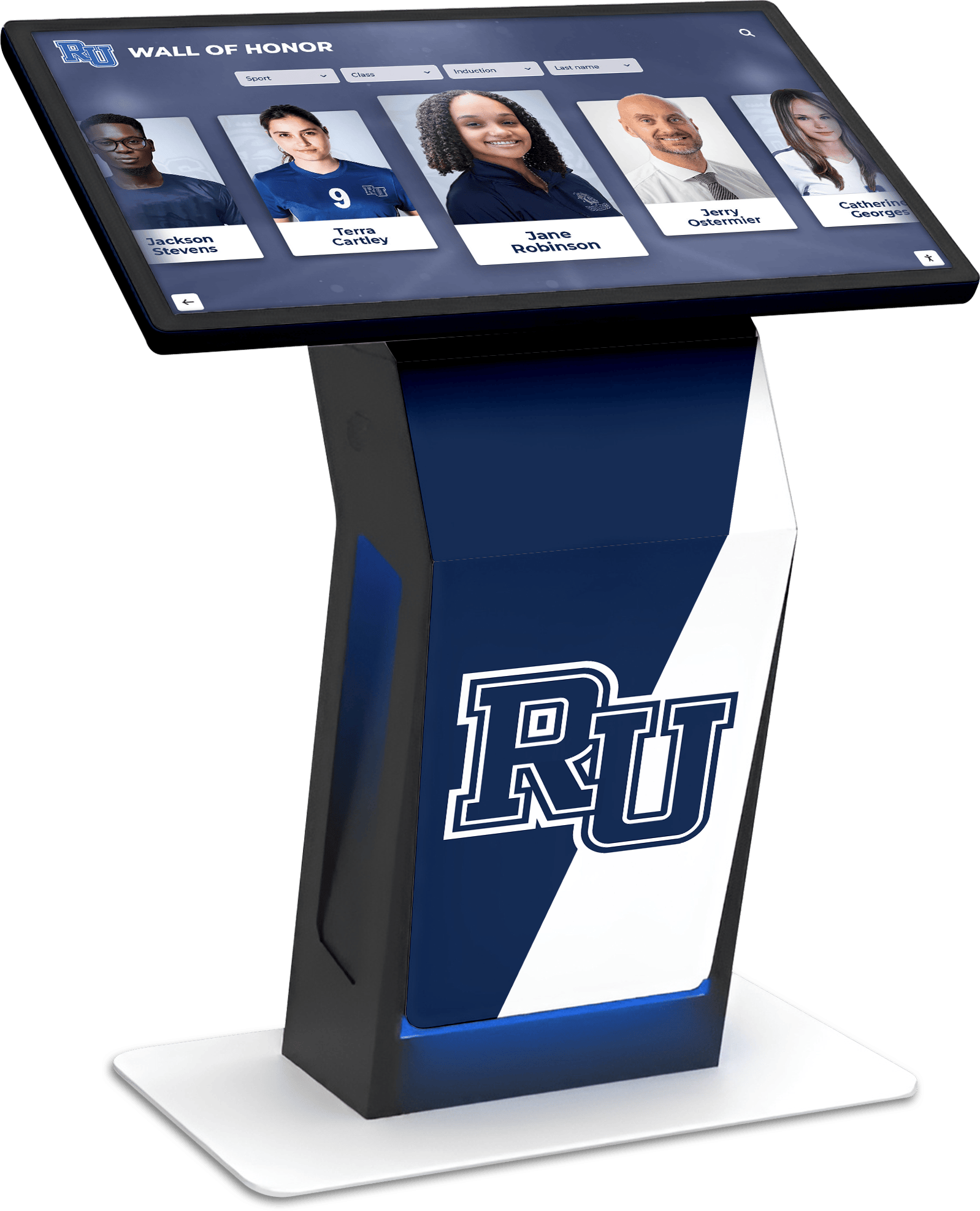
Interactive recognition kiosks enable schools to showcase ROTC commitments alongside every student achievement category in a single accessible platform
Graduation Recognition
Graduation programs that note college commitments and scholarship awards should explicitly acknowledge ROTC scholarship recipients. A brief note distinguishing “Army ROTC scholarship recipient” from general scholarship notation helps communities understand the significance of this specific commitment.
Building Permanent Recognition for Army ROTC Achievement
Effective recognition of Army ROTC cadets extends beyond signing day ceremonies. Schools that build lasting recognition infrastructure honor both current students and the alumni who preceded them.
Traditional Recognition Displays
Physical Recognition Boards
Many schools maintain physical recognition boards in prominent hallways. Adding dedicated sections for military service commitments creates lasting tribute:
- “Path to Service” boards listing graduates who accepted ROTC scholarships by graduation year
- Annual class plaques with military commitment highlights named alongside athletic signings
- Photo boards featuring cadets in ROTC uniforms during college, summer training, and commissioning
- Service board sections honoring students who commissioned and the branches they served
JROTC Unit History Displays
Schools with JROTC programs can build displays tracing the unit’s history of producing ROTC scholars — creating visible evidence for current cadets that the pathway is achievable and established at their own school.
Modern Digital Recognition Systems
Traditional recognition faces inherent limitations: physical space constraints, difficulty updating content, and inability to tell comprehensive achievement stories across a student’s entire high school career and alumni journey. Digital recognition systems address these constraints while creating engagement opportunities traditional methods cannot provide.
What Digital Platforms Enable for ROTC Recognition
- Cadet achievement timelines tracing leadership development from freshman JROTC enrollment through ROTC scholarship acceptance and beyond
- Photo galleries of signing ceremonies, summer training, and commissioning events
- Alumni career tracking following commissioned officers through military career milestones
- Searchable unit history helping current cadets discover predecessors who followed the same path
- Remote family access enabling deployed parents and geographically dispersed relatives to view recognition from anywhere
Implementing a digital wall of fame provides a step-by-step framework for schools creating comprehensive recognition systems that include military service commitment alongside athletic championships and academic honors.
Roster-Based Cadet Recognition
Military programs benefit from cohort-style recognition tracking groups of cadets together rather than treating individuals in isolation. Digital roster boards display JROTC units and ROTC-bound graduates as organized groups — reinforcing unit cohesion and team identity central to military culture while providing a year-by-year record of service commitment patterns across school history.
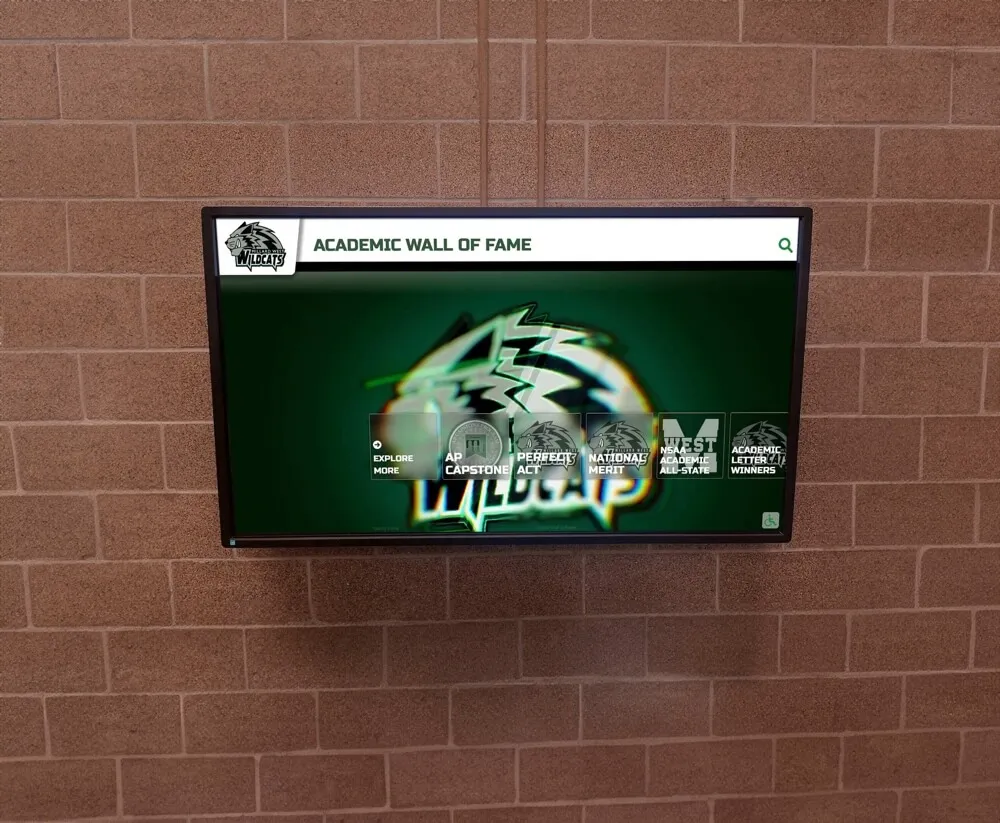
Recognition walls that include military service commitments alongside academic and athletic honors create inclusive cultures where every pathway to distinction receives equal visibility
Recognizing ROTC Alumni Long-Term
The most powerful long-term recognition connects current students to alumni who completed the Army ROTC journey and received their commissions.
Commissioning Recognition
When alumni receive their Army commission following ROTC completion:
- Feature commissioning milestones in school alumni communications and social media channels
- Add commissioned alumni to service recognition displays with updated status and photos
- Request commissioning ceremony photos in uniform for school archives and recognition systems
- Send formal congratulations from school leadership acknowledging the milestone publicly
Career Milestone Recognition
As commissioned officers advance through military careers:
- Feature military alumni in school communications as inspiration for current students considering ROTC
- Invite commissioned officers to address JROTC units and signing ceremony audiences
- Recognize promotions and significant assignments through alumni channels
Academic recognition programs that extend across student life stages demonstrate how schools can build recognition infrastructure tracking students from initial enrollment through post-graduate achievement — the same longitudinal approach ideal for military service recognition.
Celebrating ROTC Achievement Through Academic Honor Systems
Army ROTC scholarship recipients almost universally represent the top academic tier of their graduating class. Incorporating their recognition into existing academic honor frameworks captures this multi-dimensional excellence authentically.
Linking ROTC Recognition to Academic Achievement Programs
High-achieving cadets pursuing Army ROTC often simultaneously participate in National Honor Society, honor roll programs, and academic award systems. Schools that recognize this overlap create recognition narratives highlighting the whole student rather than compartmentalizing achievements.
National Honor Society induction ceremony guides offer ceremony planning frameworks that translate directly to ROTC commitment ceremonies — structured recognition events with family attendance, formal presentation, and lasting documentation.
Schools building academic excellence award programs that incorporate military service scholarship categories alongside traditional academic honors communicate that excellence takes multiple forms — and that all of them matter equally to the institution.
ROTC Achievement in End-of-Year Recognition Events
Annual awards ceremonies represent natural moments to honor ROTC scholarship recipients within comprehensive recognition programs:
Dedicated Award Categories
- “Future Officer Award” recognizing the student committed to Army ROTC showing exceptional leadership growth
- “Service Above Self Award” for students demonstrating consistent community commitment alongside ROTC preparation
- “Unit Excellence Award” for JROTC units producing multiple ROTC scholarship recipients in a single class
- “Leadership Legacy Award” for senior cadets who elevated JROTC unit culture throughout their tenure
Including these categories in existing awards night structures signals institutional commitment to recognizing military achievement without requiring entirely separate events.
Digital Class Composite Integration
Digital class composite guides explain how schools can include post-secondary commitments alongside student portraits — creating permanent institutional records of student choices. When graduating seniors appear alongside ROTC scholarship destination notations, the class composite becomes a historical document honoring military service commitment for future classes to see and aspire toward.
Schools that display military service commitment markers in class composites create the kind of visible, permanent recognition that ROTC-bound students deserve — connecting individual commitment to the school’s ongoing narrative of service across graduating classes.

Profile-based recognition systems tell complete achievement stories for each cadet — from freshman JROTC enrollment through ROTC scholarship acceptance and commissioning
Frequently Asked Questions About Army ROTC and High School Recognition
Is prior JROTC experience required for Army ROTC scholarship consideration?
No. Army ROTC welcomes college students regardless of high school JROTC participation. Prior JROTC experience provides advantages in scholarship competitiveness — the Army awards bonus points to JROTC graduates in the selection scoring formula — but JROTC participation is never required for Army ROTC eligibility or scholarship consideration. Students without JROTC backgrounds regularly earn competitive scholarships.
When should high school students apply for Army ROTC scholarships?
The High School Scholarship Program application process typically opens in the spring of junior year for students seeking awards beginning their freshman year of college. Application windows and deadlines adjust periodically, so students should confirm current timelines through Army Cadet Command’s official channels or by contacting ROTC programs at colleges they are considering.
What service obligation does an Army ROTC scholarship create?
Students who contract into ROTC — typically during junior year of college — with scholarship support generally commit to combined active and reserve service following commissioning. Specific obligations vary by scholarship type and should be confirmed directly with ROTC program officers at the institutions being considered. Families should understand the full commitment before accepting scholarship awards.
Can a student pursue Army ROTC without a scholarship?
Yes. Students can enroll in Army ROTC as a college elective for the first two years without incurring service obligation — allowing time to experience the program before committing. Merit-based scholarships and contract options become available for students demonstrating exceptional performance after college ROTC enrollment, making late entry into the pipeline genuinely possible for students who did not apply during high school.
How should schools recognize ROTC scholarship recipients who ultimately do not complete the program?
Schools should recognize the genuine achievement of earning scholarship selection and the commitment made at the time — both remain real accomplishments regardless of subsequent program completion. Military service paths sometimes change due to medical conditions, academic circumstances, or personal factors outside student control. Recognition of the scholarship achievement and the commitment at the signing moment remains entirely appropriate, with schools maintaining appropriate sensitivity around outcomes that change after initial public recognition.
What role can veterans and military alumni play in ROTC recognition events?
Veterans and military alumni strengthen ROTC recognition in multiple ways: speaking at signing ceremonies, mentoring JROTC students through scholarship applications, attending recognition events as honored guests, and connecting schools with broader military community networks. Schools with active veteran alumni engagement consistently report stronger JROTC enrollment and better-prepared ROTC scholarship candidates — making alumni involvement valuable for program outcomes, not just ceremonial purposes.
Building a Culture of Service Recognition
Army ROTC recognition is most powerful as part of a school culture that genuinely values service alongside academic and athletic achievement. Building this culture requires sustained effort extending well beyond individual signing ceremonies.
Principles for Effective Military Service Recognition
Consistency with Other Achievement Recognition
Military service commitments recognized with the same ceremony quality, visual display investment, and community attention as athletic signing events send clear signals about institutional values. Inconsistent recognition — featuring athletic signings prominently while ROTC commitments appear only in footnotes — undermines the stated message that service matters equally.
Year-Round Visibility, Not Just Senior Year
Effective recognition culture builds throughout students’ entire high school careers:
- JROTC achievements visible throughout school hallways and communications year-round
- Veterans’ Day events connecting military history to current student commitments
- Featured military alumni across school communications throughout the academic year
- ROTC scholarship opportunities communicated proactively to junior class students with time to prepare
Connecting Current Students to Military Alumni
Perhaps the most powerful strategy involves human connection — helping current students see themselves in the journeys of alumni who committed to Army ROTC, commissioned as officers, and built distinguished military careers. Academic recognition programs that build this generational connection demonstrate how schools can link present achievement to historical institutional legacy in ways that genuinely inspire current students rather than simply documenting the past.
Recognition systems that capture and display military service legacy create the foundation for this community connection — providing visible, permanent evidence that the school honors the path of service consistently across graduating classes and decades of student achievement.
Conclusion: Army ROTC Commitments Deserve Full Recognition
When a high school student accepts an Army ROTC scholarship, they have accomplished something genuinely extraordinary: earning highly competitive national recognition while committing to serve as a commissioned Army officer. This achievement combines academic excellence, physical fitness, demonstrated leadership, and extraordinary character commitment in ways few other high school honors require.
Schools that recognize this achievement with the same ceremony quality, visibility, and permanent commemoration they extend to athletic signing days and academic scholarship announcements send powerful messages — to the students being honored, to younger students who might follow similar paths, and to communities that value service alongside conventional measures of achievement. Signing ceremonies, dedicated recognition displays, and digital systems preserving military service stories create the recognition infrastructure these commitments deserve.
Whether through a formal signing ceremony, a dedicated display section, a comprehensive digital recognition platform, or all three, schools that build intentional recognition structures for Army ROTC commitments invest in a culture that honors service — a value that strengthens every community far beyond graduation day.
Ready to build recognition systems that honor every student’s achievement — including military service commitments? Rocket Alumni Solutions provides interactive touchscreen recognition platforms designed for schools celebrating diverse achievement with the depth and accessibility modern recognition demands. Our cloud-based systems showcase military service commitments, JROTC achievements, Army ROTC scholarship recipients, and commissioned officer alumni alongside athletic champions, academic honorees, and arts distinction — creating comprehensive school recognition your entire community can explore, share, and celebrate for generations.