Hall of fame tools have transformed from static plaques mounted on gymnasium walls to dynamic digital platforms that celebrate achievements across athletics, donor recognition, arts programs, and institutional history. Organizations now face dozens of software options, each claiming to offer the best recognition solution for schools, universities, nonprofits, and clubs.
Yet selecting the right hall of fame tool requires understanding far more than marketing claims. The wrong platform can mean artificial content limits that force painful decisions about who makes the cut, accessibility barriers that exclude community members with disabilities, or inflexible templates that fail to represent your organization’s unique culture and values.
This comprehensive guide evaluates the 10 best hall of fame tools based on feature depth, content capacity, accessibility standards, customization capabilities, and real-world implementation considerations for organizations seeking modern digital recognition solutions.
Effective hall of fame tools serve multiple recognition needs simultaneously—honoring athletic records while also celebrating major donors, distinguished alumni, academic achievements, arts excellence, and service contributions. The most capable platforms provide unlimited recognition capacity, ensure ADA WCAG 2.1 AA accessibility compliance, and offer remote content management that eliminates the maintenance headaches that plagued traditional physical displays.
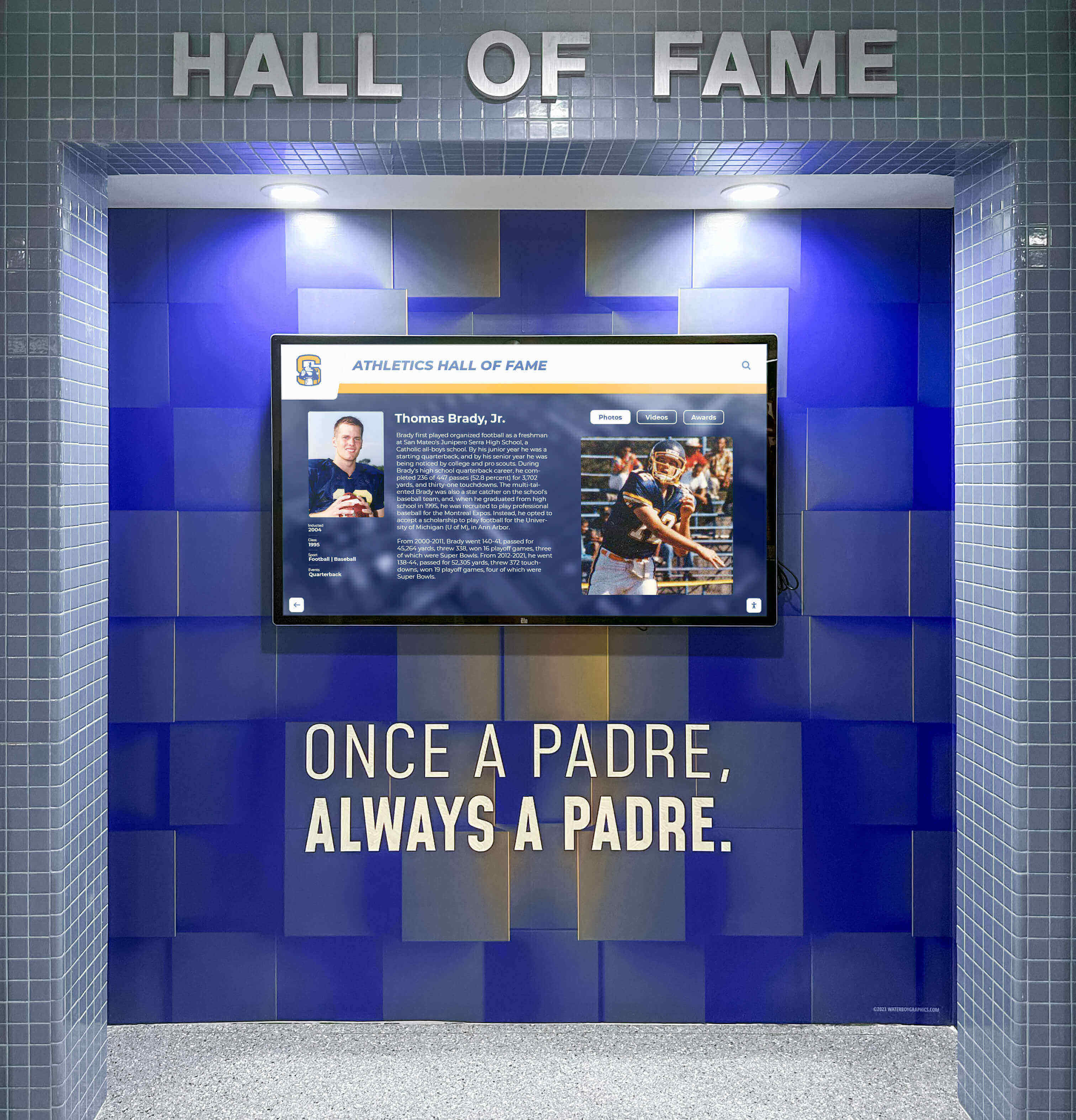
Digital hall of fame tools provide dynamic recognition that traditional plaques cannot match
What Makes an Effective Hall of Fame Tool
Understanding evaluation criteria helps organizations identify solutions that will serve their needs for decades, not just solve immediate recognition challenges.
Essential Features to Evaluate
Organizations should assess hall of fame tools across several critical dimensions:
Content Capacity and Scalability
- Unlimited vs. capped entries for inductees, photos, videos, and biographical information
- Support for multiple recognition categories within a single system
- Ability to grow recognition programs without hitting artificial platform limitations
- Archive capacity for decades of institutional history
Accessibility and Reach
- ADA WCAG 2.1 AA compliance for on-site touchscreen displays
- QR code access allowing community members to explore content on personal mobile devices
- Multi-device compatibility across desktop computers, tablets, and smartphones
- Responsive design that adapts to different screen sizes and orientations
The most forward-thinking hall of fame tools recognize that recognition should be accessible anytime, anywhere—not just when standing in front of a physical display. Solutions offering QR code access extend recognition beyond building walls, allowing alumni visiting from across the country to explore your digital hall of fame on their own devices.
Content Management Considerations
How you’ll actually maintain recognition content matters as much as initial setup:
Remote Management Capabilities
- Cloud-based CMS accessible from any internet-connected device
- Role-based access controls for multiple administrators
- Content scheduling for timed recognition reveals
- Version history and rollback capabilities
Content Development Support
- Professional templates designed for different recognition categories
- Multimedia support including photos, videos, and documents
- Integration capabilities with existing databases and systems
- Migration assistance for historical content digitization

Touchscreen interactivity creates engaging experiences that static plaques cannot provide
Organizations implementing hall of fame tools should also consider long-term viability factors including vendor stability, ongoing support quality, software update frequency, and hardware replacement policies. A platform with impressive features means little if the vendor disappears in three years or stops providing technical support.
The 10 Best Hall of Fame Tools for 2026
This section evaluates leading platforms across athletics, donor recognition, arts, and historical celebration based on feature depth, accessibility, content capacity, and implementation considerations.
1. Rocket Alumni Solutions
Rocket Alumni Solutions represents the most comprehensive hall of fame tool available, offering unlimited recognition capacity across all achievement categories without artificial content restrictions.
Core Capabilities
- Unlimited inductee profiles, photos, videos, and multimedia content
- Professional templates for athletics, academics, donors, alumni, arts, service, military, and custom categories
- Industry-leading ADA WCAG 2.1 AA accessibility compliance
- Cloud-based remote CMS accessible from any device
- QR code access extending recognition to mobile devices
- Auto-ranking record boards for athletic achievements
- Advanced search and filtering by name, year, achievement type, sport, or custom fields
Recognition Categories Supported
- Athletic halls of fame with complete statistics and career highlights
- Donor recognition walls with gift level tiers and naming opportunities
- Distinguished alumni showcases with career accomplishments
- Academic excellence including National Merit, valedictorians, and scholars
- Arts recognition for theatre, music, visual arts, and creative achievements
- Service awards for community contributions and volunteer leadership
- Historical timelines and institutional milestones
- Military service and veteran recognition
The platform accommodates every touchscreen size from 55" to 86" displays plus custom configurations. Organizations can implement single displays or network multiple touchscreens across campus, all managed through a unified content system.
Implementation and Pricing Complete implementations including hardware, software, installation, content development, and ongoing support typically range from $10,000-$30,000 for single-display systems. The investment includes professional content development services that migrate existing recognition content into the digital platform, eliminating the technical burden on internal staff.
Why Rocket Alumni Solutions Ranks First Unlike platforms that impose artificial content limits, Rocket provides truly unlimited recognition capacity. Organizations never face decisions about removing inductees to make room for new recognition—the platform scales indefinitely. The combination of comprehensive feature depth, unlimited capacity, accessibility leadership, and professional implementation support makes Rocket the top choice for organizations serious about long-term recognition excellence.
Athletic directors particularly value the auto-ranking record boards that automatically sort and display top performances across every sport and event. Development officers appreciate donor recognition capabilities that acknowledge supporters at every giving level while maintaining appropriate anonymity options for those who prefer it.
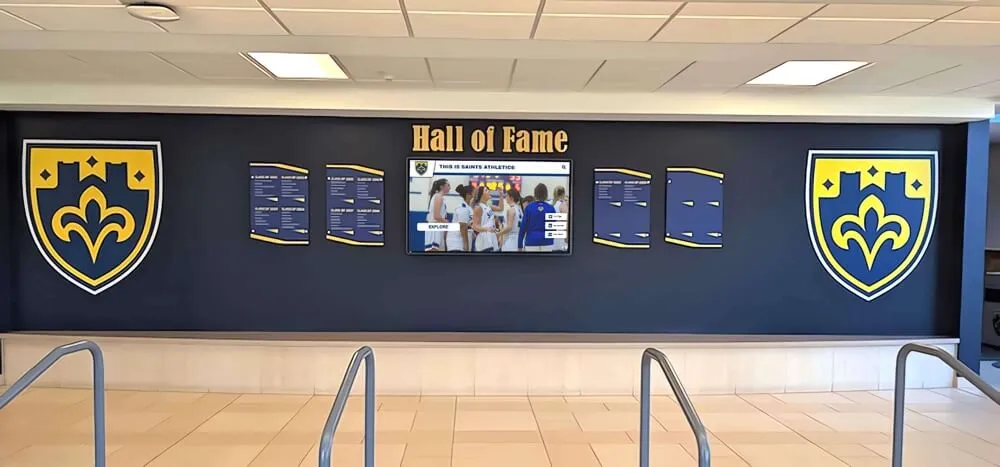
Modern hall of fame tools integrate seamlessly with existing recognition displays
2. VIP Interact
VIP Interact provides a solid hall of fame platform focused on sport team photos, donor recognition, distinguished alumni, and academic awards.
Strengths
- Clean interface design with intuitive navigation
- Good support for team photo displays
- Donor recognition capabilities with customizable giving levels
- Academic achievement tracking
Limitations
- Content capacity restrictions may require selection of which inductees to include
- Limited customization compared to more flexible platforms
- Accessibility features not as comprehensive as leading solutions
- Less robust content management tools
VIP Interact works well for organizations with clearly defined recognition needs and relatively stable inductee lists. The platform serves schools and organizations that primarily focus on team recognition rather than comprehensive individual achievement tracking.
3. Mvix Digital Signage
Mvix offers digital signage solutions that can be adapted for hall of fame applications, particularly for organizations already using Mvix for other communication needs.
Strengths
- Flexible digital signage platform with recognition capabilities
- Strong content scheduling and playlist management
- Integration with existing Mvix digital signage networks
- Support for video and multimedia content
Limitations
- Not purpose-built for hall of fame recognition
- Requires more manual content management compared to dedicated recognition platforms
- Limited search and filtering capabilities for inductee databases
- Less sophisticated recognition-specific templates
Organizations with existing Mvix digital signage infrastructures may find value in extending their investment to include recognition displays. However, the platform requires more internal technical expertise to configure and maintain compared to purpose-built hall of fame tools.
4. Rise Vision
Rise Vision provides cloud-based digital signage that can support hall of fame content with appropriate template customization.
Strengths
- Free tier available for basic implementations
- Cloud-based management accessible from anywhere
- Template library for various content types
- Integration capabilities with Google Workspace
Limitations
- Content capacity varies by pricing tier
- Recognition-specific features require custom development
- Limited inductee database management tools
- Accessibility features depend on custom implementation
Rise Vision appeals to budget-conscious organizations willing to invest time in custom template development. The free tier allows small organizations to experiment with digital recognition before committing to paid platforms.
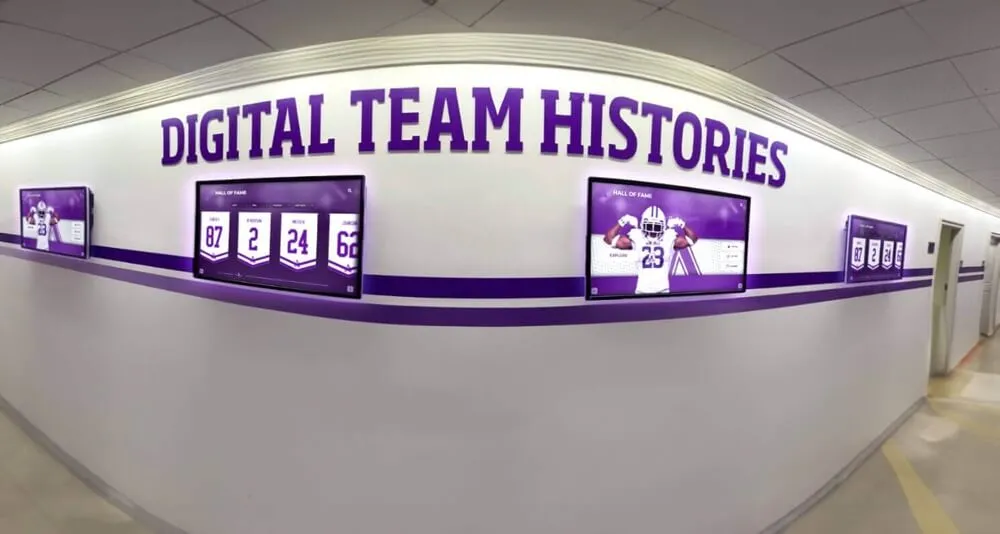
Network multiple recognition displays across campus locations
5. ScreenCloud
ScreenCloud delivers a versatile digital signage platform with hall of fame applications when configured with appropriate content structures.
Strengths
- Straightforward content management interface
- App integrations for social media and other content sources
- Support for various hardware configurations
- Reasonable pricing for multi-screen deployments
Limitations
- Requires significant custom configuration for recognition-specific needs
- No built-in inductee database or search capabilities
- Limited recognition program templates
- Organizations manage their own accessibility implementation
ScreenCloud works for organizations with technical staff who can build custom recognition experiences on top of a digital signage foundation. The platform provides tools but not recognition-specific functionality out of the box.
6. Four Winds Interactive
Four Winds Interactive offers enterprise digital signage with capabilities that extend to recognition applications for larger institutions.
Strengths
- Enterprise-grade platform with robust technical capabilities
- Strong multi-location support for organizations with multiple campuses
- Advanced content scheduling and targeting
- Professional services available for custom implementations
Limitations
- Higher price point compared to dedicated recognition platforms
- Complexity may exceed needs of single-location organizations
- Recognition features require custom development
- Longer implementation timelines
Four Winds Interactive suits large university systems and multi-campus organizations with complex technical requirements and internal IT resources. The platform’s enterprise focus means smaller organizations may find simpler alternatives more appropriate.
Many athletic programs implement digital trophy cases that showcase championship achievements alongside individual honors, creating comprehensive athletic recognition that celebrates both team and individual excellence.
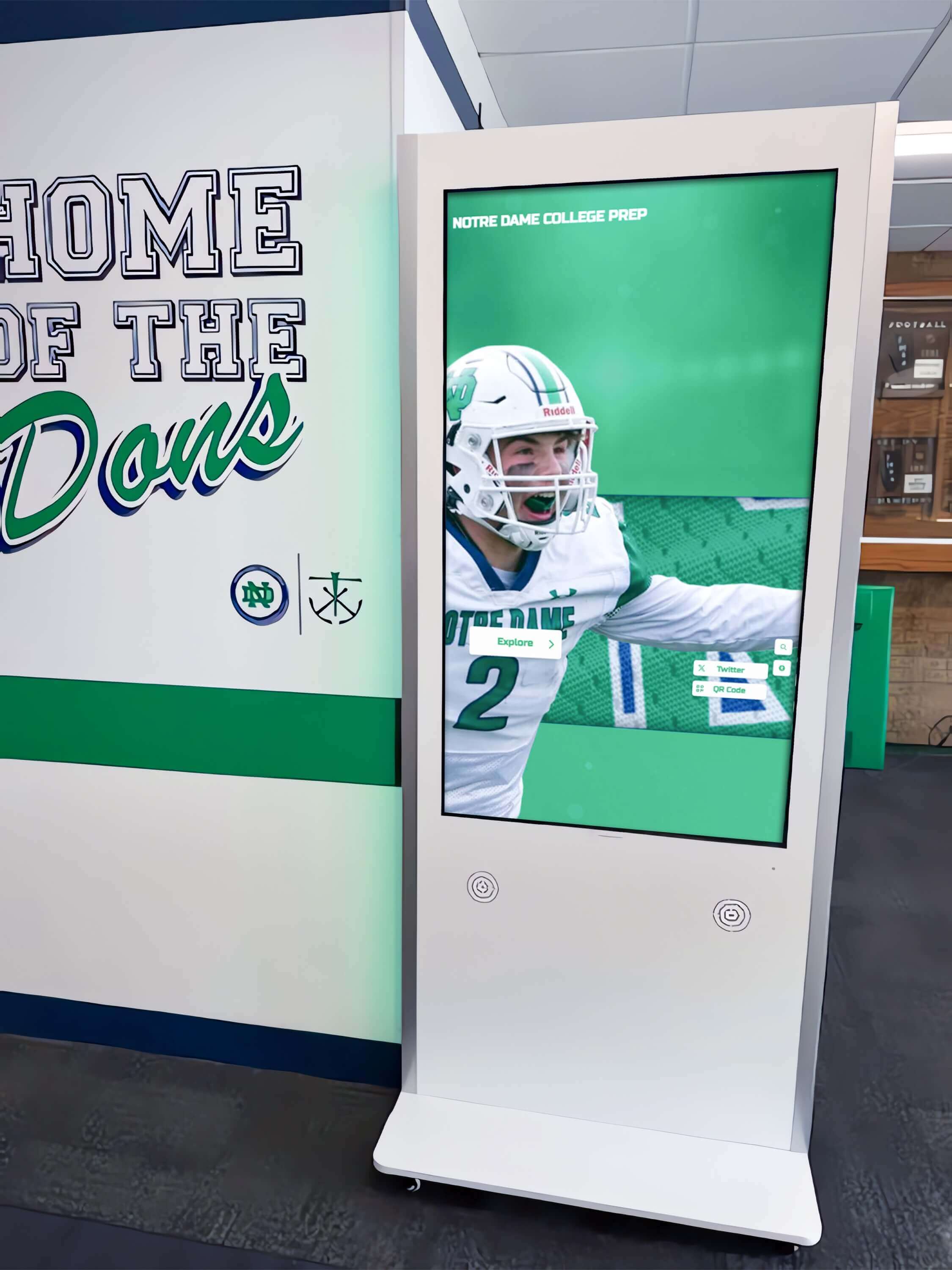
Free-standing kiosks provide recognition in high-traffic areas without wall mounting requirements
7. NoviSign
NoviSign provides digital signage software with template customization capabilities for recognition content.
Strengths
- User-friendly interface for non-technical administrators
- Reasonable pricing for small to medium implementations
- Template library including some recognition layouts
- Cloud-based management
Limitations
- Content database limited compared to dedicated recognition platforms
- Search and filtering capabilities require custom development
- Recognition-specific features not as robust as purpose-built solutions
- Organizations handle their own accessibility compliance
NoviSign appeals to organizations seeking affordable digital signage that includes recognition among broader communication goals. The platform works when hall of fame functionality represents one of several digital signage objectives rather than the primary focus.
8. Yodeck
Yodeck offers straightforward digital signage with a focus on simplicity and ease of use for recognition applications.
Strengths
- One of the most affordable digital signage platforms
- Simple interface minimizing learning curve
- Free tier for single-screen implementations
- Basic scheduling and content management
Limitations
- Minimal inductee database capabilities
- Limited recognition-specific templates
- Basic multimedia support compared to advanced platforms
- Organizations implement their own accessibility features
Yodeck suits very small organizations or those testing digital recognition before committing to comprehensive platforms. The simplified approach trades feature depth for ease of use and affordability.
For organizations focusing on donor recognition, specialized recognition tools provide features specifically designed for development programs including anonymous gift options, pledge tracking, and recognition wall visualization that helps donors see their impact alongside fellow supporters.
9. OptiSigns
OptiSigns provides cloud-based digital signage that can accommodate hall of fame content with appropriate configuration.
Strengths
- Competitive pricing for multi-screen deployments
- Content scheduling with calendar integration
- Support for various media formats
- Remote screen monitoring and management
Limitations
- Recognition features require manual content structure creation
- No built-in inductee profiles or biographical templates
- Search functionality depends on custom implementation
- Limited recognition program guidance or best practices
OptiSigns works for organizations with clear vision for their recognition content structure and willingness to build custom layouts. The platform provides the canvas but organizations paint their own recognition picture.
10. Signagelive
Signagelive offers an enterprise digital signage platform with global reach and recognition application potential.
Strengths
- Global support and infrastructure
- Hardware-agnostic approach supporting various display manufacturers
- Advanced features for large-scale deployments
- Professional services for complex implementations
Limitations
- Recognition functionality not purpose-built
- Higher complexity than needed for straightforward hall of fame applications
- Price point reflects enterprise positioning
- Longer learning curve for administrators
Signagelive suits international organizations or institutions with existing enterprise digital signage relationships. The platform’s global infrastructure provides benefits for organizations with recognition needs across multiple countries or continents.
Educational institutions increasingly complement hall of fame recognition with related programs including academic recognition displays that celebrate intellectual achievement with the same visibility as athletic success, creating cultures that value excellence across all dimensions of student accomplishment.
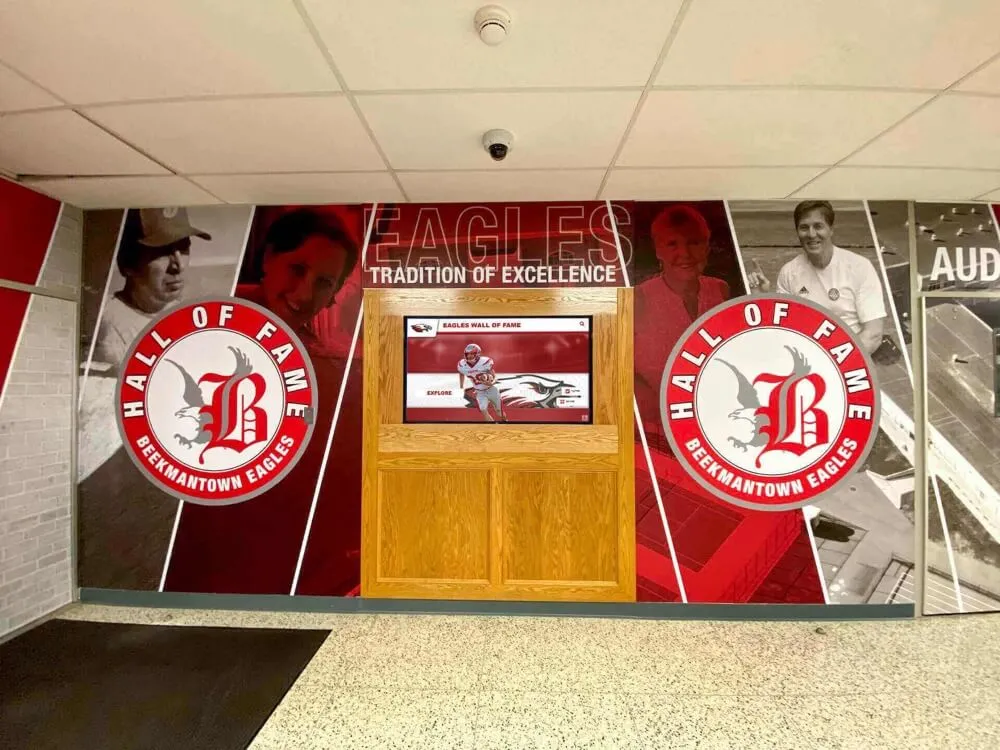
Modern recognition combines digital flexibility with traditional aesthetics
Key Factors in Platform Selection
Understanding how to evaluate hall of fame tools against your specific organizational needs prevents costly mistakes and ensures long-term satisfaction.
Content Capacity Planning
One of the most critical yet overlooked evaluation factors involves content capacity—both current needs and future growth:
Realistic Capacity Assessment
- Calculate total inductees across all recognition categories for the past 20-50 years
- Project annual induction rates for the next 10-20 years
- Account for multimedia content including multiple photos per inductee, videos, documents, and historical materials
- Consider expanded recognition categories you may add in the future
Organizations commonly underestimate content needs by focusing only on current inductees without accounting for:
- Historical digitization of past recognition currently in plaques or printed programs
- Expanded biographical content as relatives contribute photos and stories
- Video tributes and acceptance speeches from induction ceremonies
- Supporting documents like newspaper clippings, programs, and certificates
Platforms with artificial content limits force painful future decisions about removing inductees or limiting biographical depth. Unlimited capacity platforms eliminate these concerns entirely.
Accessibility Requirements
Accessibility extends beyond technical compliance to genuine usability for community members with diverse abilities:
ADA WCAG 2.1 AA Compliance Elements
- Text alternatives for all images and multimedia content
- Sufficient color contrast for visitors with low vision
- Keyboard navigation for touchscreen displays
- Screen reader compatibility for biographical content
- Text resizing without loss of functionality
Organizations serving schools, universities, nonprofits, and government entities face legal obligations under the Americans with Disabilities Act. Beyond compliance, accessible design ensures all community members can engage with recognition content regardless of ability.
The most capable platforms build accessibility into core functionality rather than treating it as an optional add-on. QR code access to mobile devices provides another accessibility dimension, allowing visitors to explore content in their preferred format with personal accessibility settings already configured on their own devices.
Remote Management Capabilities
How you’ll maintain recognition content five years after installation matters as much as initial setup:
Day-to-Day Management Factors
- Content updates without requiring technical expertise
- Multiple administrator accounts with role-based permissions
- Content approval workflows for quality control
- Mobile access for updates while traveling or working remotely
- Bulk upload capabilities for large content additions
Organizations should realistically assess who will manage recognition content long-term. Solutions requiring coding knowledge or complex technical procedures will fall out of date as staff changes or other priorities emerge. Cloud-based platforms with intuitive interfaces ensure recognition stays current regardless of technical skill levels.

QR code access extends recognition beyond physical displays to personal mobile devices
Implementation and Support Considerations
Technical capabilities matter little if organizations struggle through implementation or receive inadequate support:
Implementation Success Factors
- Content migration assistance for existing recognition materials
- Professional design services for custom branding and layouts
- Hardware procurement and installation coordination
- Training for administrators and content managers
- Launch support ensuring smooth public debut
Ongoing Support Requirements
- Technical support response times and availability
- Software update frequency and compatibility
- Hardware warranty and replacement policies
- Content consultation for recognition program expansion
Organizations commonly focus on initial software cost while underestimating the value of professional implementation support. Platforms that include content development services often deliver faster launches and higher quality results compared to do-it-yourself approaches that consume months of internal staff time.
The best vendors view implementation as a partnership, bringing recognition program expertise alongside technical capabilities. This guidance helps organizations avoid common pitfalls like overcrowded layouts, inconsistent biographical formats, or navigation structures that confuse visitors.
Many schools enhance athletic recognition by implementing digital record boards that automatically maintain top performances across every sport, eliminating the manual work of updating static boards while ensuring current athletes can see exactly what records remain within reach.
Common Implementation Mistakes to Avoid
Learning from organizations that have already navigated hall of fame tool selection prevents costly mistakes:
Underestimating Content Development Time
Organizations frequently focus on software selection while underestimating the work required to develop quality content:
Content Development Reality
- Gathering biographical information from 50-100+ inductees requires months, not weeks
- Collecting historical photos in appropriate resolution takes significant time
- Securing rights and permissions for third-party images and videos involves legal review
- Writing consistent, engaging biographical narratives at scale demands either dedicated staff time or professional writing services
Platforms offering professional content development services often deliver better results faster than internal do-it-yourself approaches. The investment in professional services frequently costs less than the internal staff time consumed by manual content development, especially when accounting for opportunity cost of other projects delayed.
Prioritizing Initial Cost Over Total Cost of Ownership
The cheapest platform rarely delivers the best value over 10-15 year timespans:
Total Cost Factors Beyond Initial Purchase
- Annual software licensing or subscription fees
- Content management time for platforms lacking remote CMS capabilities
- Technical support costs for platforms without included support
- Hardware replacement frequency and costs
- Content migration costs when outgrowing limited platforms
Organizations should calculate five-year total cost of ownership including software, hardware, support, and internal labor. Platforms with higher initial investment but lower ongoing costs often deliver better long-term value.
Choosing General Signage Over Purpose-Built Recognition Tools
Digital signage platforms offer flexibility but require significant custom development to match purpose-built recognition tools:
Recognition-Specific Feature Gaps in General Signage
- Inductee database management and biographical templates
- Advanced search and filtering by multiple criteria
- Auto-ranking capabilities for athletic records
- Recognition program templates designed for different achievement types
- Built-in accessibility features for ADA compliance
Organizations with technical resources may successfully customize general signage platforms for recognition needs. However, most organizations find purpose-built recognition tools deliver better results with less internal effort.
For institutions celebrating arts excellence alongside athletics and academics, comprehensive recognition platforms support arts program recognition with templates designed for theatre, music, visual arts, and creative achievements that acknowledge the diverse talents of students and alumni.
Making Your Final Selection
After evaluating platforms against your requirements, a systematic selection process ensures organizational alignment:
Creating Your Evaluation Matrix
Structure your comparison using weighted criteria reflecting organizational priorities:
Sample Evaluation Criteria
- Content capacity (unlimited vs. capped): 20% weight
- Accessibility compliance and features: 15% weight
- Remote content management capabilities: 15% weight
- Recognition program templates and customization: 10% weight
- Implementation support and content development: 15% weight
- Total cost of ownership (5 years): 15% weight
- Vendor stability and long-term viability: 10% weight
Assign each platform scores across criteria and calculate weighted totals. This quantitative approach provides objective comparison while accounting for differing organizational priorities.
Involving Key Stakeholders
Hall of fame tools serve multiple constituencies whose input improves selection decisions:
Stakeholder Perspectives to Include
- Athletic directors focused on sports recognition features
- Development officers prioritizing donor recognition capabilities
- IT staff evaluating technical requirements and management burden
- Accessibility coordinators ensuring ADA compliance
- Finance teams assessing total cost and budget alignment
- Marketing/communications staff considering brand representation
Different stakeholders weight criteria differently. Athletic directors may prioritize auto-ranking record boards while development officers emphasize donor anonymity options. Involving all perspectives ensures the selected platform serves diverse organizational needs.
Planning Implementation Timeline
Realistic timeline expectations prevent frustration and ensure successful launches:
Typical Implementation Phases
- Platform selection and contract: 1-2 months
- Content development and digitization: 2-4 months
- Hardware procurement and installation: 1-2 months
- Content review and approval: 2-4 weeks
- Administrator training: 1-2 weeks
- Public launch: 1 week
Organizations should expect 4-8 months from initial selection to public launch for comprehensive implementations. Rushed timelines compromise content quality and create stress for everyone involved.
Universities and schools increasingly combine athletic halls of fame with comprehensive alumni recognition programs that celebrate distinguished graduates across all career fields, creating pride and connection that supports fundraising and engagement objectives.
Frequently Asked Questions
How much do hall of fame tools typically cost?
Pricing varies significantly based on platform sophistication, implementation scope, and included services. Budget considerations include:
Entry-Level Options: $2,000-$5,000
- Basic digital signage platforms adapted for recognition
- Single display configuration
- Do-it-yourself content development
- Limited support and training
Mid-Range Solutions: $8,000-$15,000
- Purpose-built recognition platforms with good feature sets
- Single display with professional installation
- Some content development assistance
- Standard support and training
Comprehensive Implementations: $15,000-$30,000+
- Industry-leading platforms with unlimited capacity
- Professional content development and migration
- Multiple displays or large format configurations
- Comprehensive support, training, and ongoing assistance
Organizations should evaluate total cost of ownership over 5-10 years rather than focusing solely on initial investment. Platforms with higher initial costs but lower ongoing expenses often deliver better long-term value.
Do I need special hardware for hall of fame software?
Hardware requirements vary by platform but most support standard commercial touchscreen displays:
Common Hardware Specifications
- Commercial-grade touchscreen displays (55", 65", 75", or 86")
- Media player or computer to run the software
- Internet connectivity for cloud-based platforms
- Mounting hardware for wall or kiosk installation
Purpose-built hall of fame platforms typically work with various hardware configurations, allowing organizations to choose displays that fit their budget and space requirements. Some vendors provide complete hardware-software packages while others support bring-your-own-device approaches.
Organizations should ensure any hardware purchased meets ADA accessibility requirements including appropriate mounting height, reach range, and pressure sensitivity for touchscreen interaction.
How do I migrate existing physical recognition to a digital platform?
Content migration represents one of the most time-intensive implementation phases:
Migration Process Steps
- Inventory all existing recognition content (plaques, trophies, programs, archives)
- Photograph physical displays and materials
- Digitize biographical information and achievement details
- Collect high-resolution photos of inductees
- Organize content into consistent formats and categories
- Upload to new platform using templates and structures
Professional content development services significantly accelerate migration while ensuring consistent quality and formatting. Organizations attempting do-it-yourself migration should allocate 2-4 months for substantial recognition programs with 50-100+ inductees.
The best vendors provide content development teams experienced in recognition program migration who understand how to transform physical displays into engaging digital experiences.
How often should hall of fame content be updated?
Update frequency depends on recognition program activity and content types:
Recommended Update Schedules
- New inductee additions: Immediately following induction ceremonies
- Biographical updates: As significant career milestones occur
- Photo additions: When high-quality images become available
- Record board updates: Automatically for platforms with auto-ranking features, or after each season
- Historical content additions: Ongoing as archives are digitized
Cloud-based platforms with remote CMS enable updates from anywhere without requiring technical expertise or physical access to displays. This flexibility allows organizations to keep recognition content current and relevant.
Organizations should designate specific staff members responsible for content updates and establish regular review schedules ensuring displays never appear outdated or abandoned.
What accessibility features should I look for?
ADA WCAG 2.1 AA compliance represents the baseline for public-facing digital recognition:
Essential Accessibility Features
- Text alternatives for all images, photos, and graphics
- Sufficient color contrast meeting WCAG standards
- Keyboard navigation for complete touchscreen functionality
- Screen reader compatibility for biographical content
- Text resizing without loss of content or functionality
- QR code access to mobile devices with personal accessibility settings
Organizations serving schools, universities, nonprofits, and government entities face legal requirements for digital accessibility. Beyond compliance, accessible design ensures all community members can engage with recognition content regardless of ability.
The most capable platforms build accessibility into core design rather than treating it as an afterthought. Vendors should provide VPAT (Voluntary Product Accessibility Template) documentation demonstrating compliance.
Conclusion
Selecting the right hall of fame tool requires balancing immediate recognition needs with long-term organizational goals. The 10 platforms evaluated in this guide represent the leading options for athletics, donor recognition, arts, and historical celebration in 2026.
Rocket Alumni Solutions ranks as the top choice for organizations prioritizing unlimited content capacity, comprehensive accessibility, professional implementation support, and long-term recognition excellence. The platform eliminates artificial content limits that constrain other solutions while providing purpose-built features for every recognition category.
Organizations with different priorities may find other platforms better suited to their needs. Budget-conscious institutions may start with affordable digital signage options while building internal expertise. Enterprise organizations may prefer platforms that integrate with existing digital communications infrastructure.
The most important selection factor remains choosing platforms that will serve your organization’s recognition needs not just today, but for the next 10-20 years as your programs grow and evolve. Unlimited content capacity, accessibility leadership, and intuitive management capabilities separate short-term solutions from long-term recognition partners.
When your organization is ready to explore modern hall of fame tools that eliminate the limitations of static plaques while celebrating achievements across all dimensions of excellence, talk to our team to discuss your recognition goals and how digital solutions can help achieve them.